
INFOMAR data supports offshore energy development and marine
- Slides: 13
INFOMAR data supports offshore energy development and marine spatial planning in the Irish offshore via the EMODnet Geology portal by J. Guinan, C. Mc. Keon, E. O'Keeffe, X. Monteys, F. Sacchetti, M. Coughlan, and C. Nic Aonghusa Quarterly Journal of Engineering Geology and Hydrogeology Volume 54(1): qjegh 2020 -033 December 3, 2020 © 2020 Geological Survey Ireland & Marine Institute. Published by The Geological Society of London
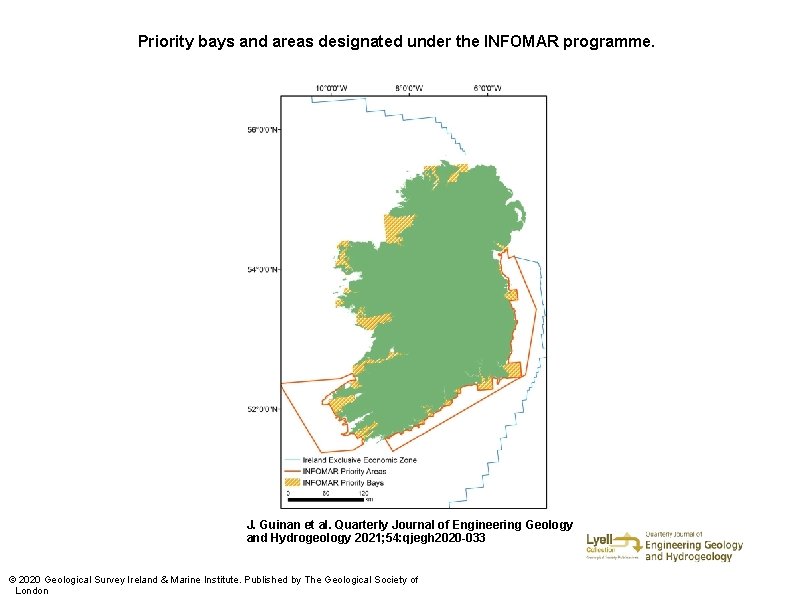
Priority bays and areas designated under the INFOMAR programme. J. Guinan et al. Quarterly Journal of Engineering Geology and Hydrogeology 2021; 54: qjegh 2020 -033 © 2020 Geological Survey Ireland & Marine Institute. Published by The Geological Society of London
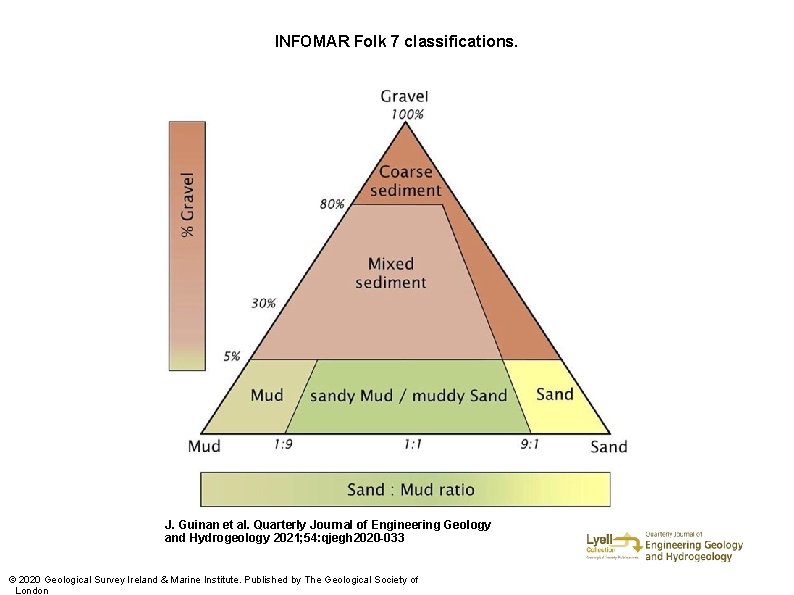
INFOMAR Folk 7 classifications. J. Guinan et al. Quarterly Journal of Engineering Geology and Hydrogeology 2021; 54: qjegh 2020 -033 © 2020 Geological Survey Ireland & Marine Institute. Published by The Geological Society of London
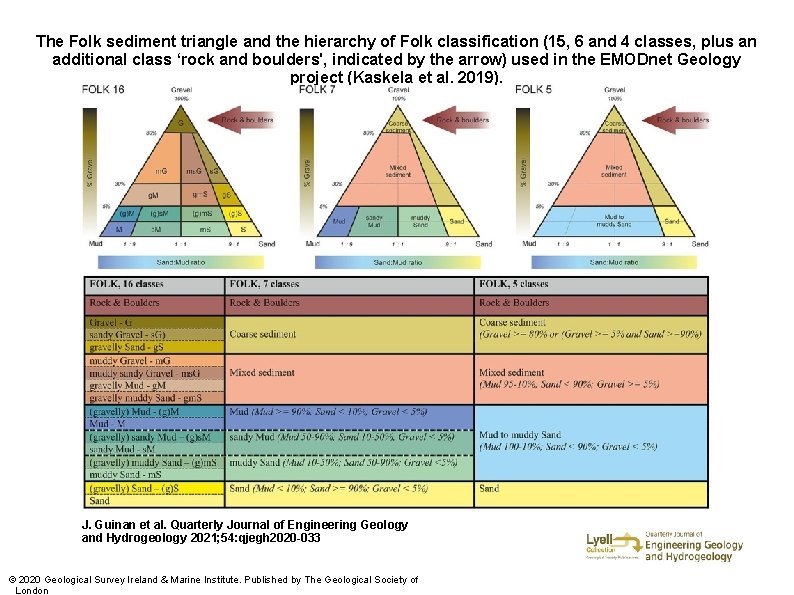
The Folk sediment triangle and the hierarchy of Folk classification (15, 6 and 4 classes, plus an additional class ‘rock and boulders', indicated by the arrow) used in the EMODnet Geology project (Kaskela et al. 2019). J. Guinan et al. Quarterly Journal of Engineering Geology and Hydrogeology 2021; 54: qjegh 2020 -033 © 2020 Geological Survey Ireland & Marine Institute. Published by The Geological Society of London
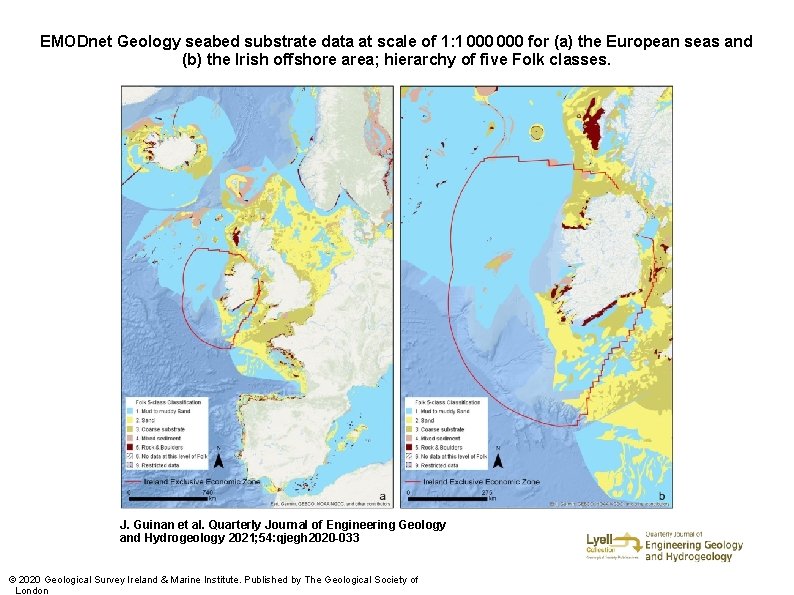
EMODnet Geology seabed substrate data at scale of 1: 1 000 for (a) the European seas and (b) the Irish offshore area; hierarchy of five Folk classes. J. Guinan et al. Quarterly Journal of Engineering Geology and Hydrogeology 2021; 54: qjegh 2020 -033 © 2020 Geological Survey Ireland & Marine Institute. Published by The Geological Society of London
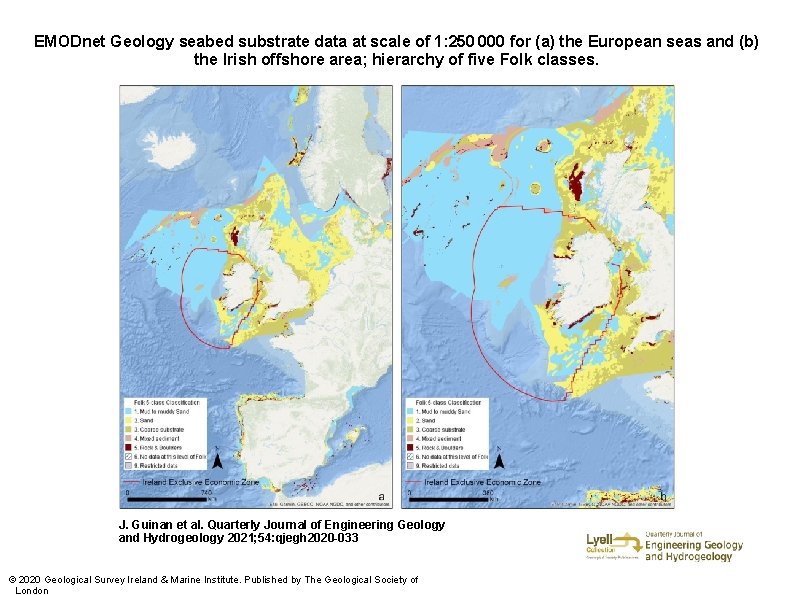
EMODnet Geology seabed substrate data at scale of 1: 250 000 for (a) the European seas and (b) the Irish offshore area; hierarchy of five Folk classes. J. Guinan et al. Quarterly Journal of Engineering Geology and Hydrogeology 2021; 54: qjegh 2020 -033 © 2020 Geological Survey Ireland & Marine Institute. Published by The Geological Society of London
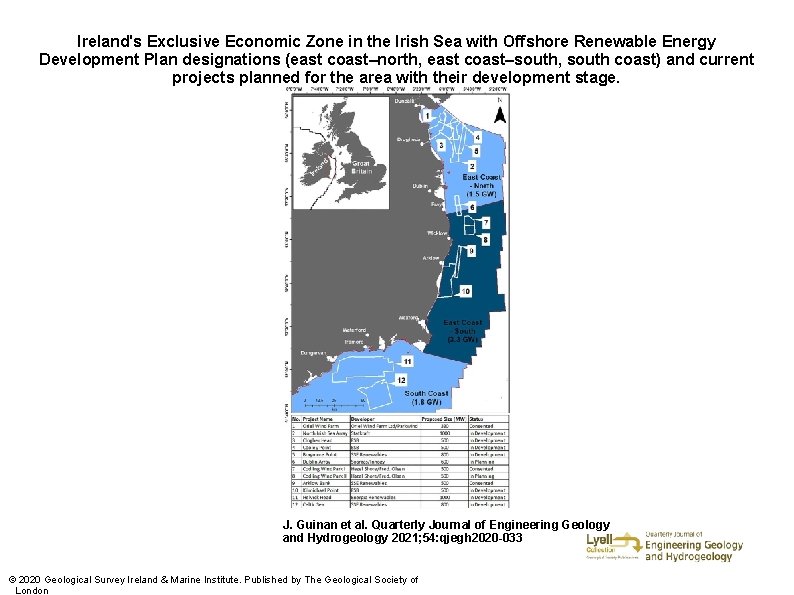
Ireland's Exclusive Economic Zone in the Irish Sea with Offshore Renewable Energy Development Plan designations (east coast–north, east coast–south, south coast) and current projects planned for the area with their development stage. J. Guinan et al. Quarterly Journal of Engineering Geology and Hydrogeology 2021; 54: qjegh 2020 -033 © 2020 Geological Survey Ireland & Marine Institute. Published by The Geological Society of London
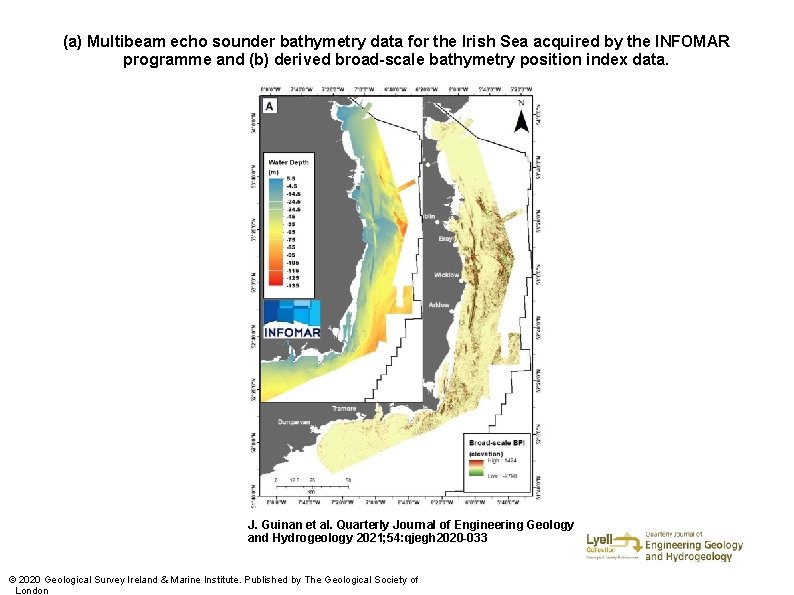
(a) Multibeam echo sounder bathymetry data for the Irish Sea acquired by the INFOMAR programme and (b) derived broad-scale bathymetry position index data. J. Guinan et al. Quarterly Journal of Engineering Geology and Hydrogeology 2021; 54: qjegh 2020 -033 © 2020 Geological Survey Ireland & Marine Institute. Published by The Geological Society of London
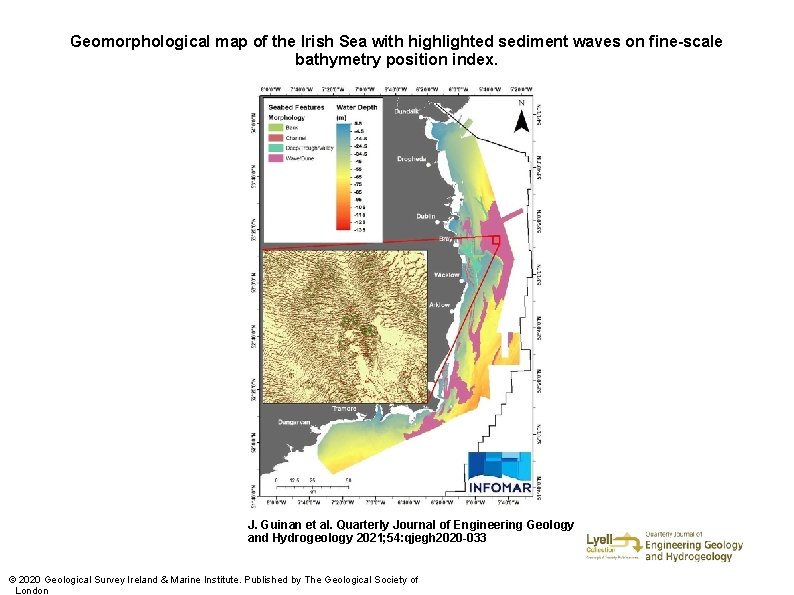
Geomorphological map of the Irish Sea with highlighted sediment waves on fine-scale bathymetry position index. J. Guinan et al. Quarterly Journal of Engineering Geology and Hydrogeology 2021; 54: qjegh 2020 -033 © 2020 Geological Survey Ireland & Marine Institute. Published by The Geological Society of London
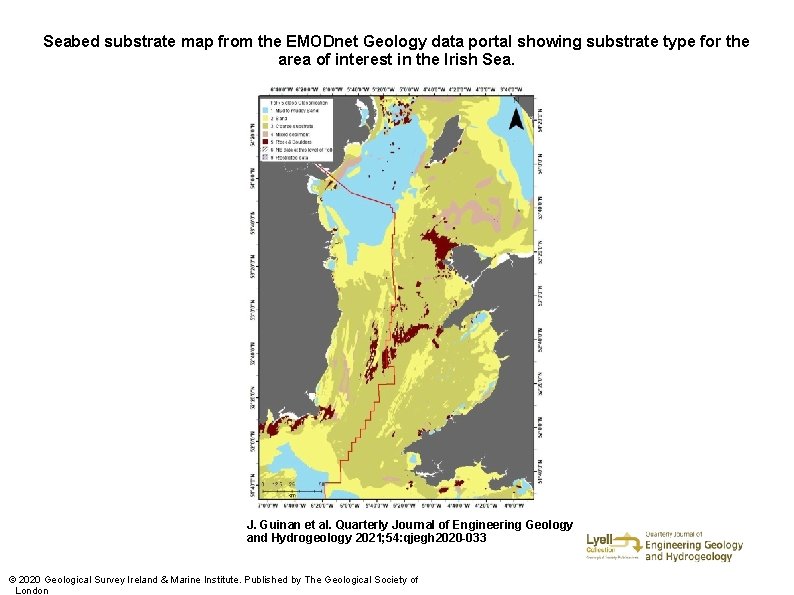
Seabed substrate map from the EMODnet Geology data portal showing substrate type for the area of interest in the Irish Sea. J. Guinan et al. Quarterly Journal of Engineering Geology and Hydrogeology 2021; 54: qjegh 2020 -033 © 2020 Geological Survey Ireland & Marine Institute. Published by The Geological Society of London
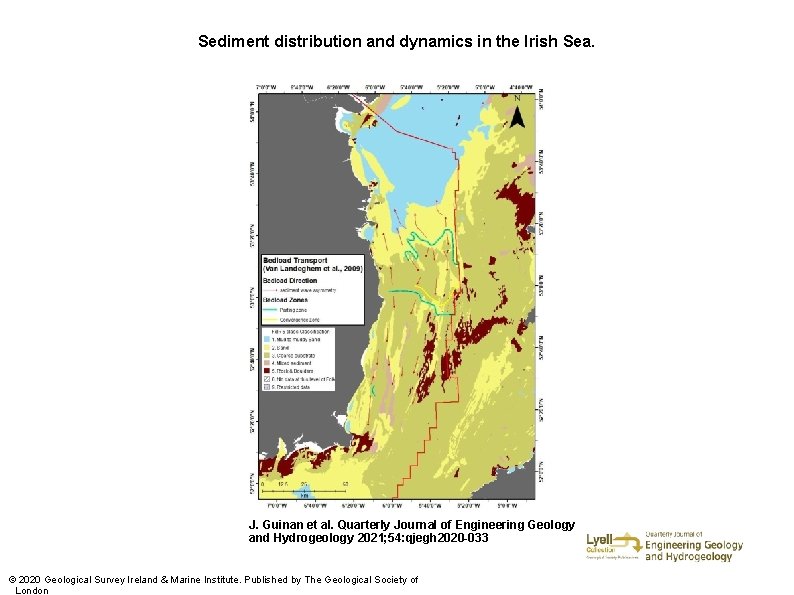
Sediment distribution and dynamics in the Irish Sea. J. Guinan et al. Quarterly Journal of Engineering Geology and Hydrogeology 2021; 54: qjegh 2020 -033 © 2020 Geological Survey Ireland & Marine Institute. Published by The Geological Society of London
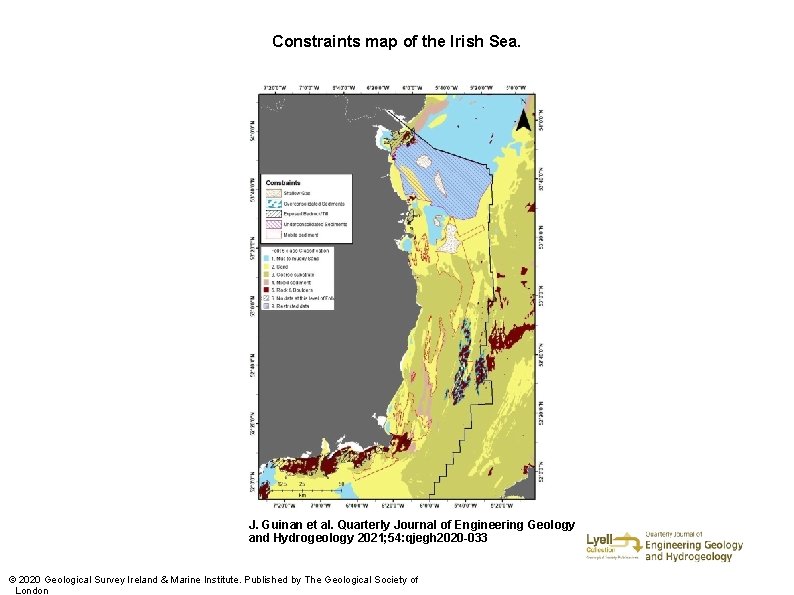
Constraints map of the Irish Sea. J. Guinan et al. Quarterly Journal of Engineering Geology and Hydrogeology 2021; 54: qjegh 2020 -033 © 2020 Geological Survey Ireland & Marine Institute. Published by The Geological Society of London
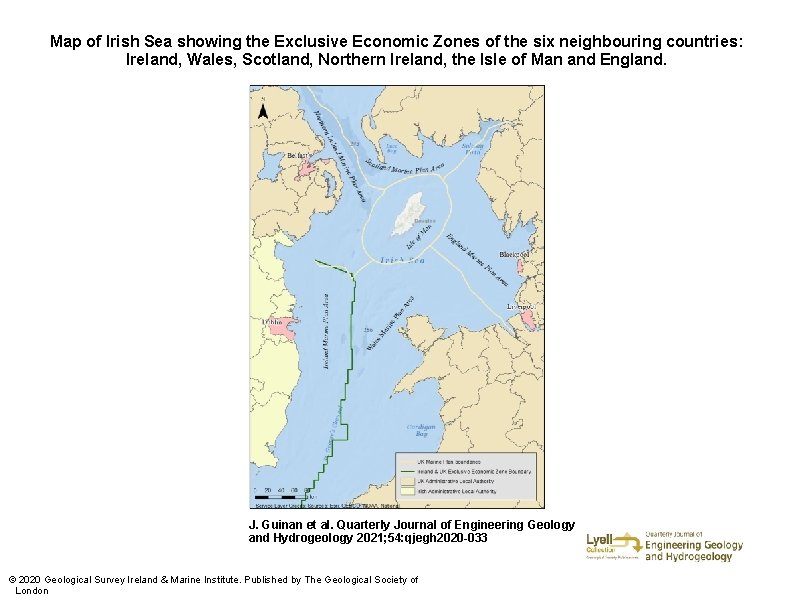
Map of Irish Sea showing the Exclusive Economic Zones of the six neighbouring countries: Ireland, Wales, Scotland, Northern Ireland, the Isle of Man and England. J. Guinan et al. Quarterly Journal of Engineering Geology and Hydrogeology 2021; 54: qjegh 2020 -033 © 2020 Geological Survey Ireland & Marine Institute. Published by The Geological Society of London