
INFO ANTIMIC EN 1822 EN 779 2012 Antibacterial

INFO ANTIMIC
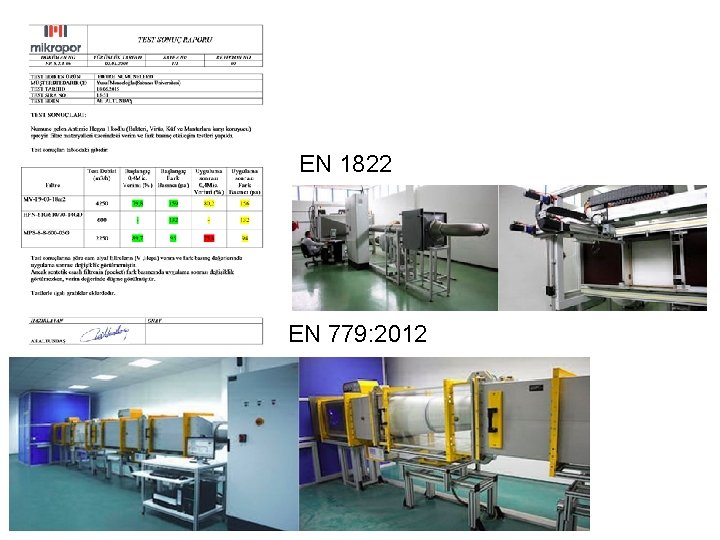
EN 1822 EN 779: 2012
Antibacterial Activity of Air Filters with Modified • Tested AATCC Test Method 147 -2004 Techniques – Antibacterial Activity Assesment of Textile Materials: Parallel Streak Methods • I. S. EN ISO 20645: 2005 – Textile Fabrics-Determination of Antibacterial Activity-Agar Difusion Plate Test • AATCC Test Method 100 -2004 – Antibacterial Finishes on Textile Materials: Assesment of • Fluorecence Staining (DAPI/CTC)
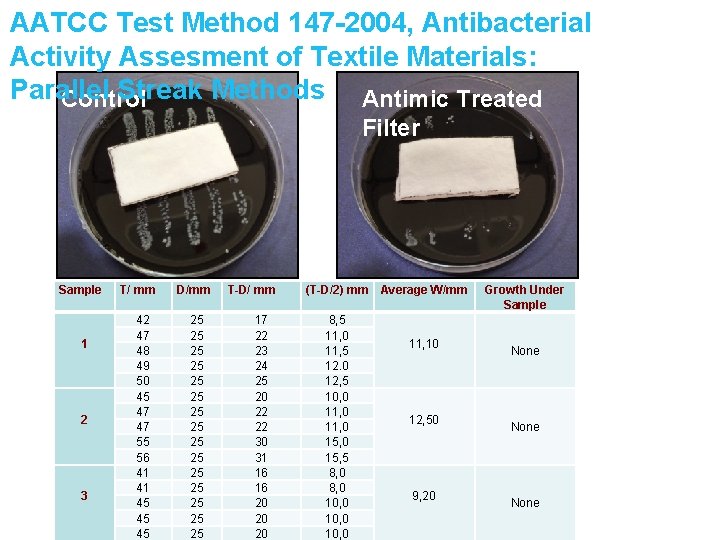
AATCC Test Method 147 -2004, Antibacterial Activity Assesment of Textile Materials: Parallel Streak Methods Antimic Treated Control Filter Sample 1 2 3 T/ mm 42 47 48 49 50 45 47 47 55 56 41 41 45 45 45 D/mm 25 25 25 25 T-D/ mm 17 22 23 24 25 20 22 22 30 31 16 16 20 20 20 (T-D/2) mm 8, 5 11, 0 11, 5 12. 0 12, 5 10, 0 11, 0 15, 5 8, 0 10, 0 Average W/mm 11, 10 12, 50 9, 20 Growth Under Sample None
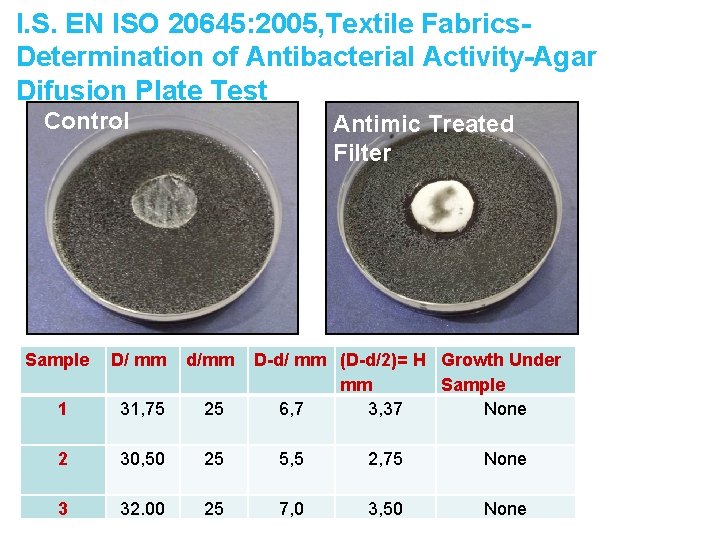
I. S. EN ISO 20645: 2005, Textile Fabrics. Determination of Antibacterial Activity-Agar Difusion Plate Test Control Sample Antimic Treated Filter D/ mm d/mm D-d/ mm (D-d/2)= H Growth Under mm Sample 6, 7 3, 37 None 1 31, 75 25 2 30, 50 25 5, 5 2, 75 None 3 32. 00 25 7, 0 3, 50 None

AATCC Test Method 100 -2004, Antibacterial Finishes on Textile Materials: Assesment of % reduction of Legionella pneumophila Sample Control Bacterial number Kill Rate % Polyester (0. hour contact with L. pneumophila) 4. 75 x 105 5. 33 x 104 88. 76 Polyester (1 hour contact with L. pneumophila) 4. 75 x 105 <100 > 99. 978 Polyester (24 hour contact with L. pneumophila) 4. 75 x 105 <100 > 99. 978 Glass fiber (0. hour contact with L. pneumophila) 5. 25 x 105 6. 85 x 104 86. 94 Glass fiber (1 hour contact with L. pneumophila) 5. 25 x 105 <100 >99. 98 Glass fiber (24 hour contact with L. pneumophila) 5. 25 x 105 <100 >99. 98
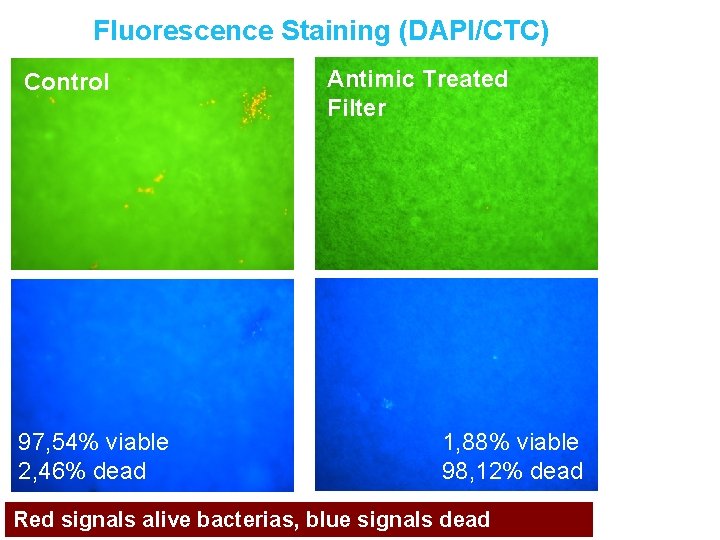
Fluorescence Staining (DAPI/CTC) Control 97, 54% viable 2, 46% dead Antimic Treated Filter 1, 88% viable 98, 12% dead Red signals alive bacterias, blue signals dead
Summary • No pressure drop and effective air filtration • Permanently bonds to the filter fibers to form a new durable antimicrobial surface. • Non-migrating. It will not leach, off-gas or volatize. • Long-term, effective control of microorganisms which are commonly associated with building health problems. • Controls the growth of microorganisms on the air filter surface and has been shown in laboratory testing to lower microbial contamination in recirculated air.
- Slides: 8