
INFO 272 Qualitative Research Methods 9 April 2009


![[Source: Bowker and Star, Sorting Things Out]](https://slidetodoc.com/presentation_image_h2/14d3df77bc6c943844db2fb55d0d7933/image-14.jpg "[Source: Bowker and Star, Sorting Things Out]")

- Slides: 20
INFO 272. Qualitative Research Methods 9 April 2009 OPERATIONALIZING THEORY IN TECHNOLOGY/ INFORMATION STUDIES
Outline ‘Operationalizing’ theory – translating from theory into methodological procedure 2. Some theories about technology in society 3. Note on Ethnographic Writing 1.
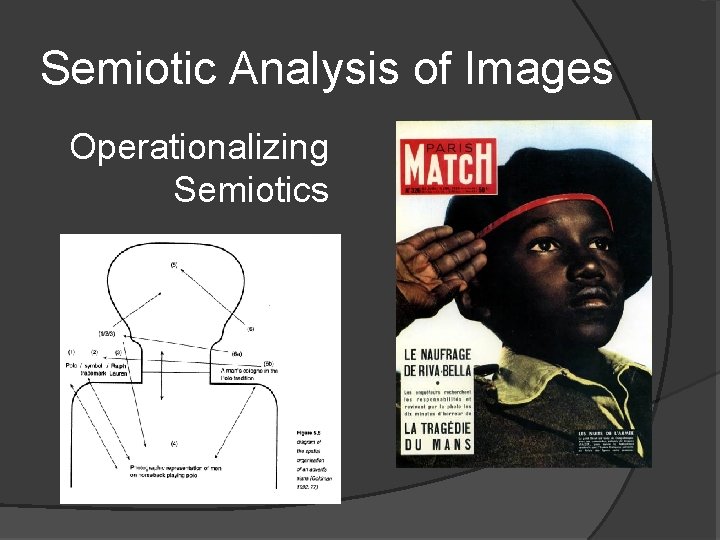
Semiotic Analysis of Images Operationalizing Semiotics
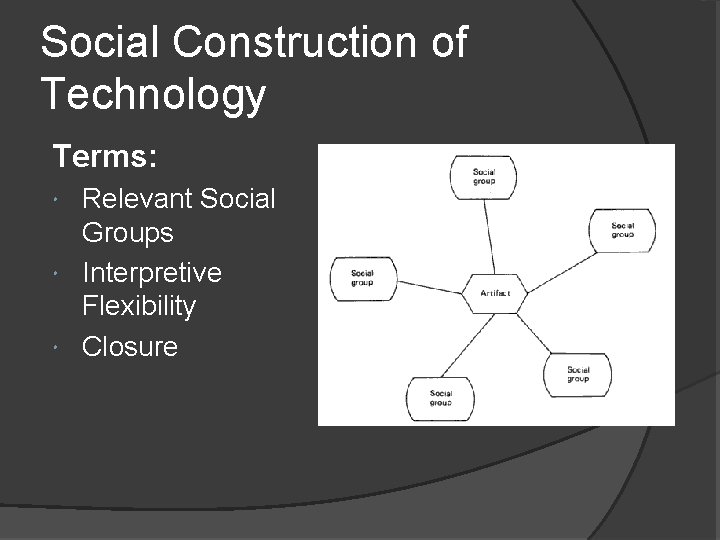
Social Construction of Technology Terms: Relevant Social Groups Interpretive Flexibility Closure
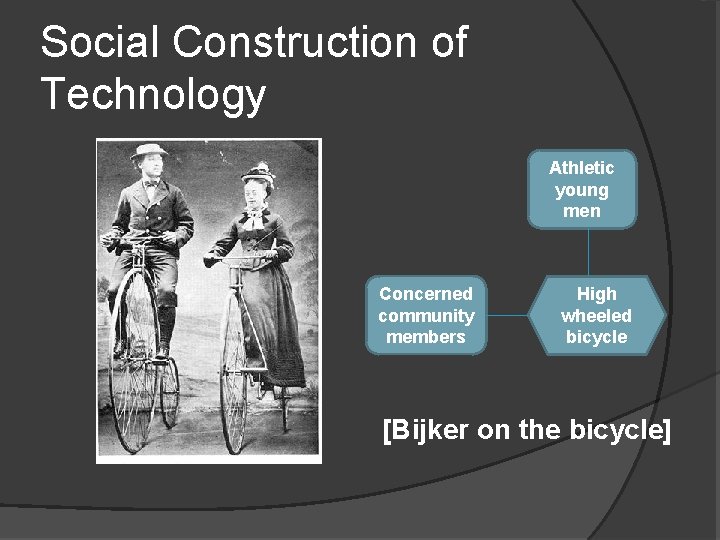
Social Construction of Technology Athletic young men Concerned community members High wheeled bicycle [Bijker on the bicycle]
Operationalizing SCOT Subject/Topic: a new, unsettled technology under development (or from historical archives) Who are the relevant social groups? Identify the divergent interpretations of the artifact held by these groups Look for evidence of how interpretive conflicts are resolved materially resulting in closure
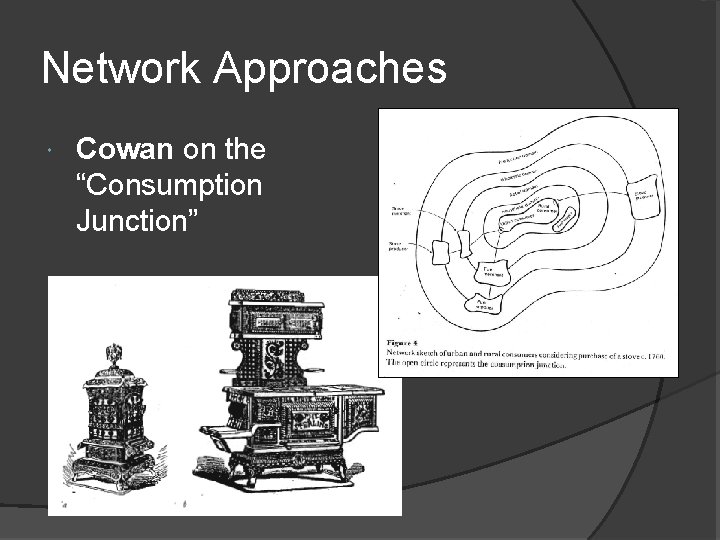
Network Approaches Cowan on the “Consumption Junction”
Operationalizing Network Approaches Subject/Topic: the “consumption junction” Q: how do consumers arrive at the decision to choose one technology over its alternatives? How do we account for delayed success? Approach: Parallel treatment of failed and successful tech Center on the consumer – then move through and map out other domains -- household, retail, wholesale, production, government
Revisiting Grounded Theory
What Use for Theory? Here’s a counter-argument to a grounded theory analytical approach Theory can sensitize, suggest ways of studying, analyzing a case Challenge received wisdom, ordinary, habitual interpretations To transcend our own socialization
The status of ‘things’ in society In social theory - a new appreciation of the material world and the socializing effect of ‘things’ (in contrast to fixation on language, discourse, and a dematerialized social structure) “the performative and integrative capacity of ‘things’ to help make what we call society. ” [Pels, pg. 2]
Three theoretical frames for thinking about (technological) objects
1) Objects Enforce the Normative Order Visible vs. invisible The Humility of Objects – “The less aware of [things we are], the more powerfully they can determine our expectations by setting the scene and ensuring normative behavior. ” [Miller, Material Culture and Mass Consumption] Research Question: what is visible or invisible? Who’s interests are served by this state of visibility?
[Source: Bowker and Star, Sorting Things Out]
2) Objects Form a Semiotic System Function, exchange, symbolic, and sign values Objects are realized through relations (i. e. Actor-Network Theory) [See Baudrillard, The System of Objects] Research Question: what systems of objects exist? In a home? In an office? How are the social properties of an object produced through its relationships?
3) The Self is Constructed Through Possession of Objects "artifacts as culture derives…from their active participation in a process of social self-creation in which they are directly constitutive of our understanding of ourselves and others. . . ” [Miller, Material Culture and Mass Consumption] Identity display, class distinctions Research Question: how is status or identity accomplished through possessions? [see also Bourdieu, Distinction]
Ethnographic Writing
Ethnographic Writing Woolgar took a position within an IT company to study the development of a new technological object and a series of usability studies. What is his data? How does he reference his subjective position?
Usability vs. Ethnographic Research A usability trial vs. ethnographic study of a usability trial The broader institution within which research takes place
Summary How theory can be used to guide site selection, suggest novel questions, and define procedures A case for embracing existing theory rather than eschewing it entirely for ‘grounded’ theory. Ways of thinking about objects/ documents/ info as integral to the social Ethnography vs. Usability