
INFO 272 Qualitative Research Methods 12 March 2009

![cultural/technology probes [Gaver et al. ]](https://slidetodoc.com/presentation_image_h2/8083ae95de49351c184c4770de4621cd/image-13.jpg "cultural/technology probes [Gaver et al. ]")
![RECALL: 1 Advantage & 1 Disadvantage [of interviewing] efficiency: generate a large amount of](https://slidetodoc.com/presentation_image_h2/8083ae95de49351c184c4770de4621cd/image-14.jpg "RECALL: 1 Advantage & 1 Disadvantage [of interviewing] efficiency: generate a large amount of")

- Slides: 20
INFO 272. Qualitative Research Methods 12 March 2009 PROJECTIVE INTERVIEWING
Assignment 2 You must record your interviews
Themes reviewed interviewing as a negotiation: letting the interviewee lead the way guiding toward topics, providing prompts and encouragement, memory jogs
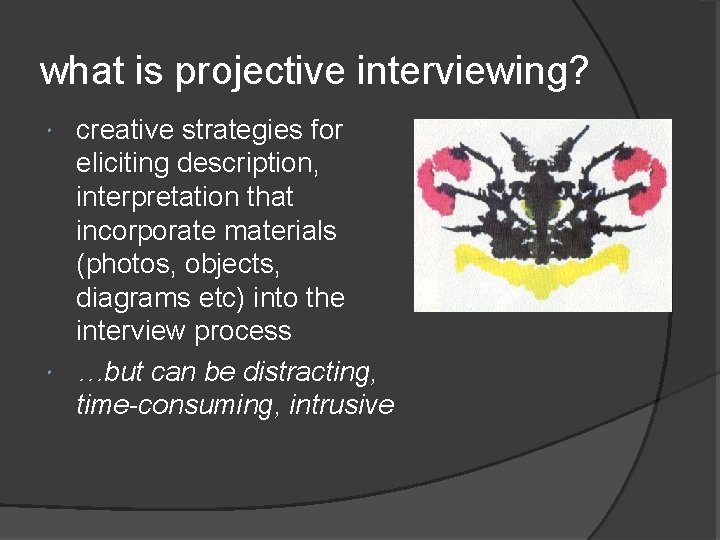
what is projective interviewing? creative strategies for eliciting description, interpretation that incorporate materials (photos, objects, diagrams etc) into the interview process …but can be distracting, time-consuming, intrusive
what is projective interviewing? Mapping Exercises Spatial maps Social maps Tours Photoelicitation Photo diaries Sorting Tasks Personal construct interviews Technology/Cultural Probes
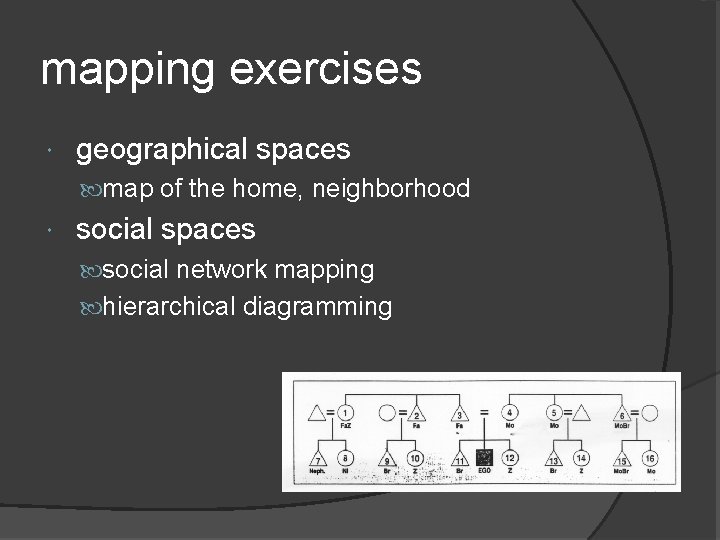
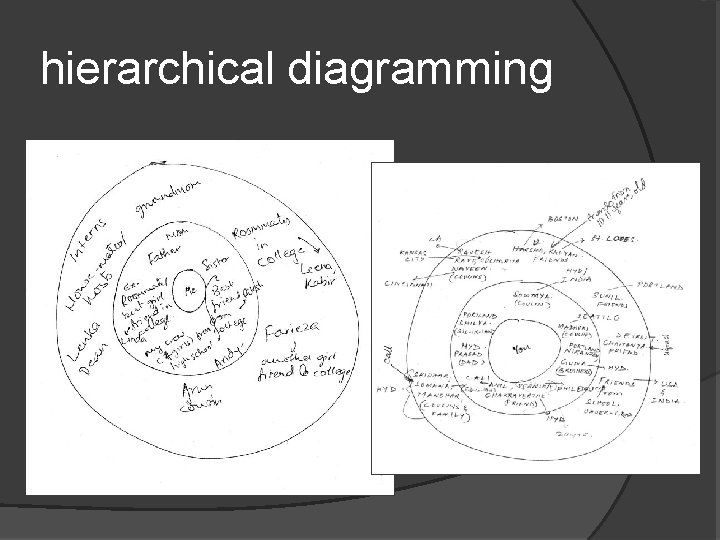
mapping exercises geographical spaces map of the home, neighborhood social spaces social network mapping hierarchical diagramming
hierarchical diagramming
touring spaces home tours - to elicit responses to the material environment, comments on arrangement of space tour of computer ‘interior’ tour of a mobile phone – address book, text messages, call log
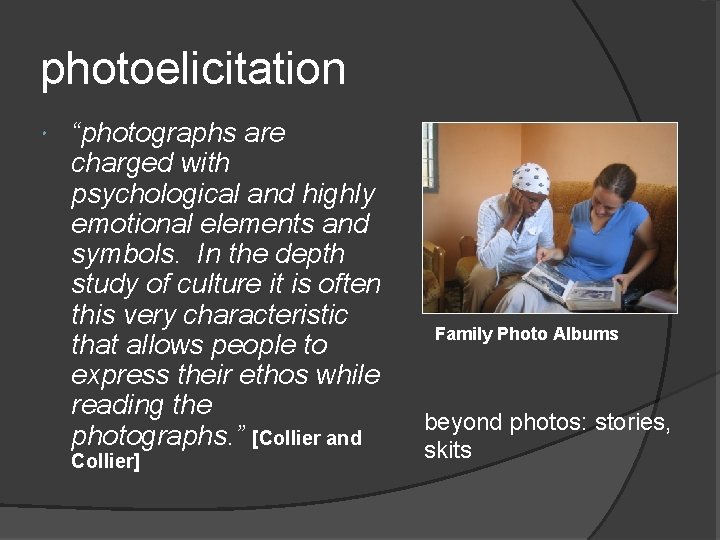
photoelicitation “photographs are charged with psychological and highly emotional elements and symbols. In the depth study of culture it is often this very characteristic that allows people to express their ethos while reading the photographs. ” [Collier and Collier] Family Photo Albums beyond photos: stories, skits
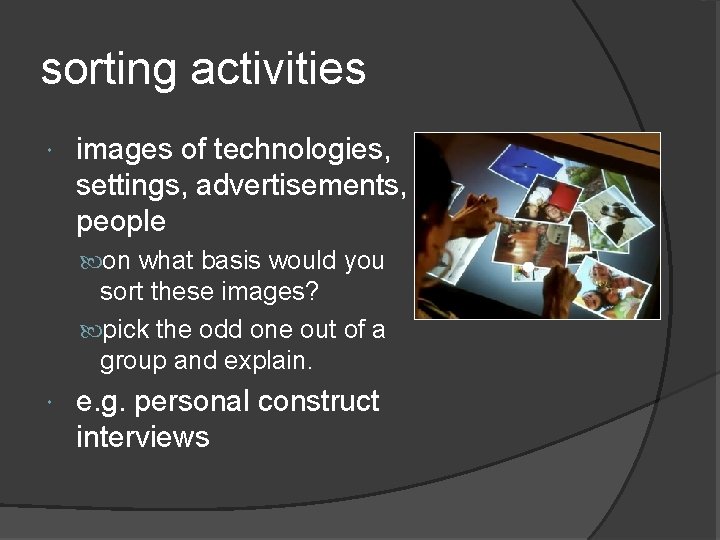
sorting activities images of technologies, settings, advertisements, people on what basis would you sort these images? pick the odd one out of a group and explain. e. g. personal construct interviews
Example: “The Meaning of Domestic Technologies: a personal construct analysis of familial gender relations” – Sonia Livingstone Topic: Looking at how husbands and wives separately experience and account for their domestic technologies Method: separate interviews with husband wife, in home, for 45 minutes. Asked to sort technologies into groups and explain. outcome: women emphasize domestic technologies as necessities, different notions of control over tech, the telephone as key difference
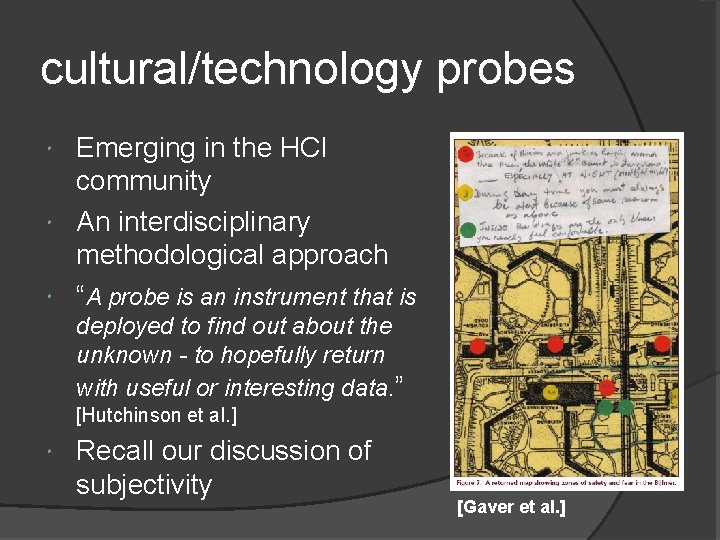
cultural/technology probes Emerging in the HCI community An interdisciplinary methodological approach “A probe is an instrument that is deployed to find out about the unknown - to hopefully return with useful or interesting data. ” [Hutchinson et al. ] Recall our discussion of subjectivity [Gaver et al. ]
cultural/technology probes [Gaver et al. ]
RECALL: 1 Advantage & 1 Disadvantage [of interviewing] efficiency: generate a large amount of material on a specific topic in a short amount of time artificiality: distance from event/experience
Projective Techniques: some benefits Bridging the distance between lived experience and the artificiality of the interview event Aiding memory (cognitive assistance) Accessing the affective dimension of experience Engagement and the research partnership -keeping interviewees committed to the task
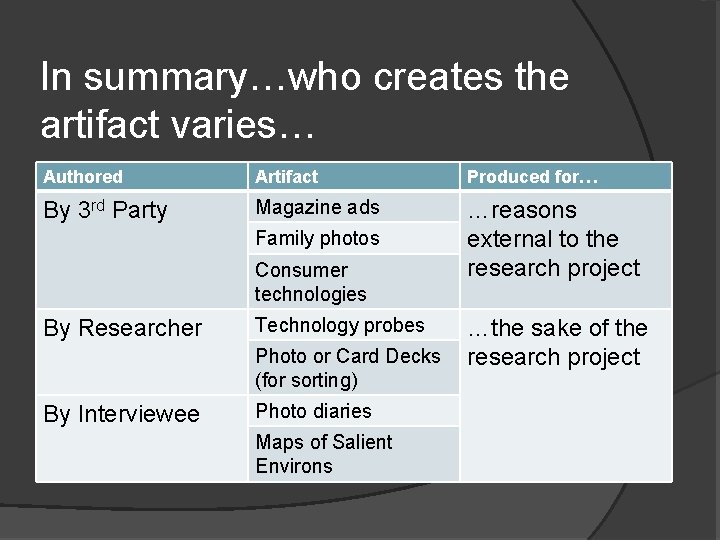
In summary…who creates the artifact varies… Authored Artifact Produced for… By 3 rd Party Magazine ads …reasons external to the research project Family photos Consumer technologies By Researcher Technology probes Photo or Card Decks (for sorting) By Interviewee Photo diaries Maps of Salient Environs …the sake of the research project
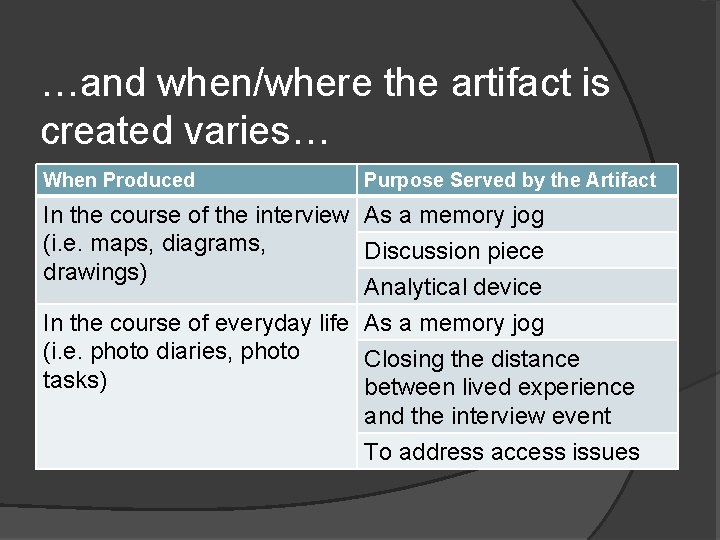
…and when/where the artifact is created varies… When Produced Purpose Served by the Artifact In the course of the interview As a memory jog (i. e. maps, diagrams, Discussion piece drawings) Analytical device In the course of everyday life As a memory jog (i. e. photo diaries, photo Closing the distance tasks) between lived experience and the interview event To address access issues
BACKUP
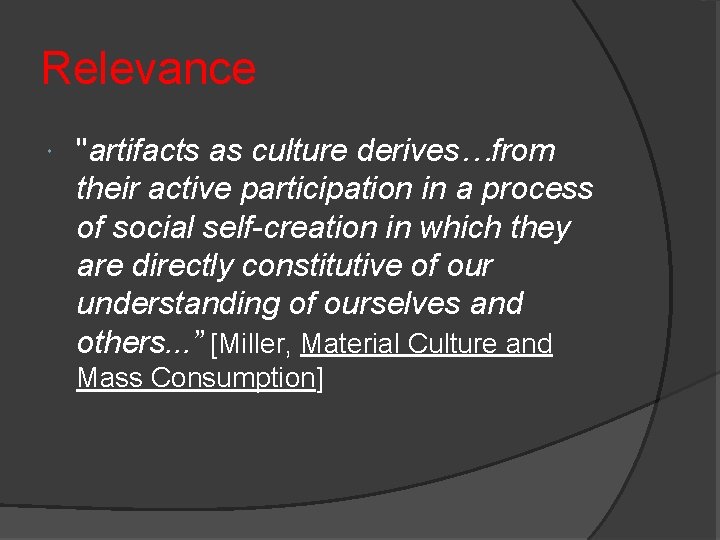
Relevance "artifacts as culture derives…from their active participation in a process of social self-creation in which they are directly constitutive of our understanding of ourselves and others. . . ” [Miller, Material Culture and Mass Consumption]
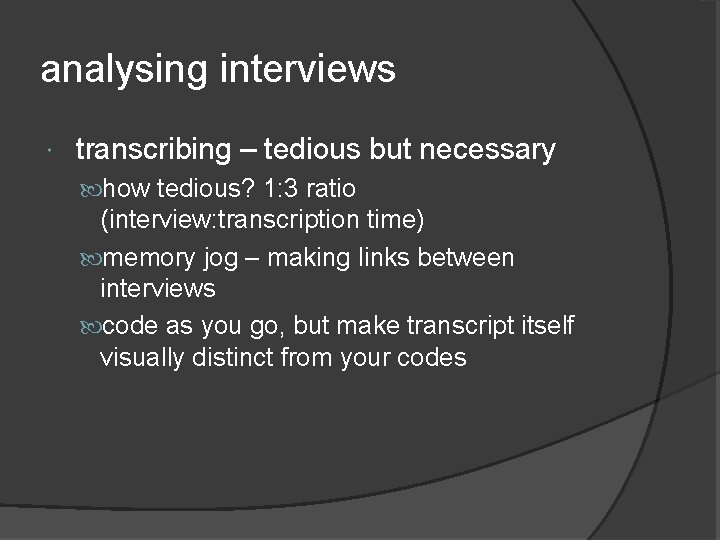
analysing interviews transcribing – tedious but necessary how tedious? 1: 3 ratio (interview: transcription time) memory jog – making links between interviews code as you go, but make transcript itself visually distinct from your codes