
Influenza Update Eliane Haron M D Influenza Viruses
- Slides: 60
Influenza Update Eliane Haron, M. D.
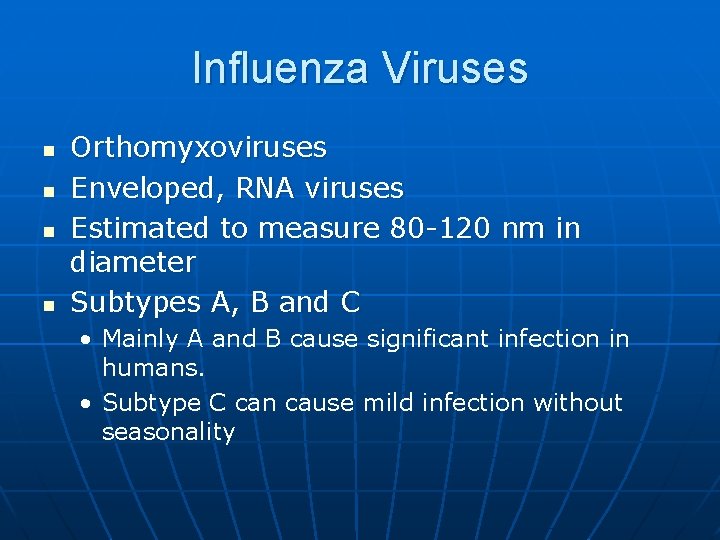
Influenza Viruses n n Orthomyxoviruses Enveloped, RNA viruses Estimated to measure 80 -120 nm in diameter Subtypes A, B and C • Mainly A and B cause significant infection in humans. • Subtype C can cause mild infection without seasonality
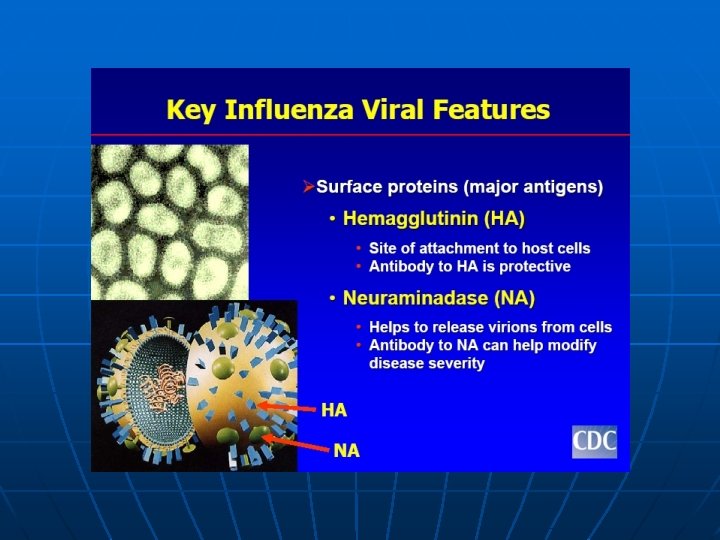
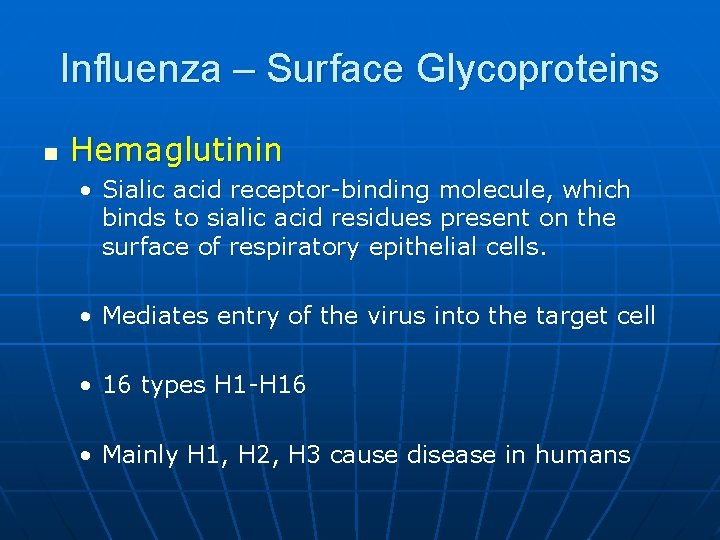
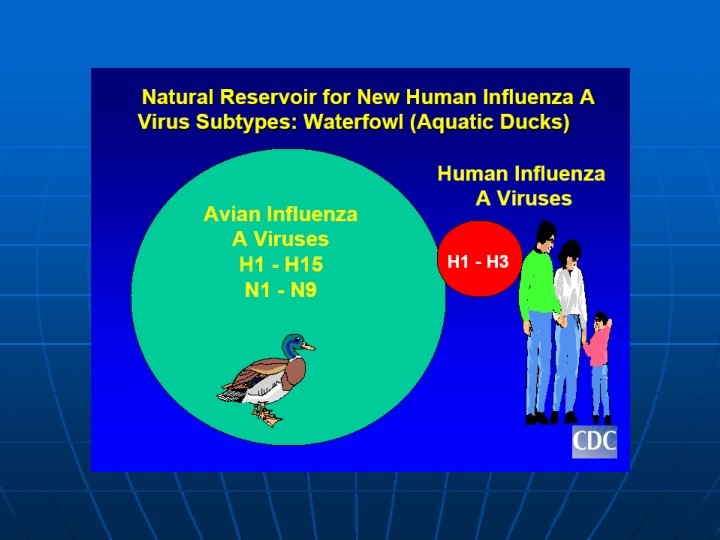
Influenza – Surface Glycoproteins n Hemaglutinin • Sialic acid receptor-binding molecule, which binds to sialic acid residues present on the surface of respiratory epithelial cells. • Mediates entry of the virus into the target cell • 16 types H 1 -H 16 • Mainly H 1, H 2, H 3 cause disease in humans
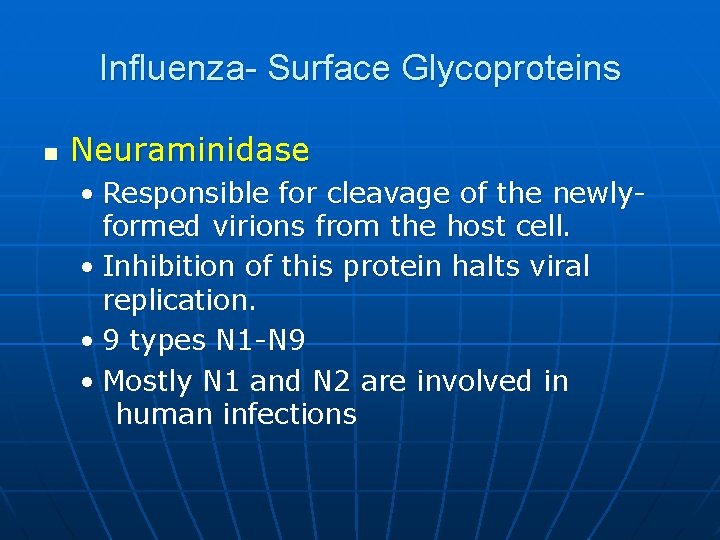
Influenza- Surface Glycoproteins n Neuraminidase • Responsible for cleavage of the newlyformed virions from the host cell. • Inhibition of this protein halts viral replication. • 9 types N 1 -N 9 • Mostly N 1 and N 2 are involved in human infections
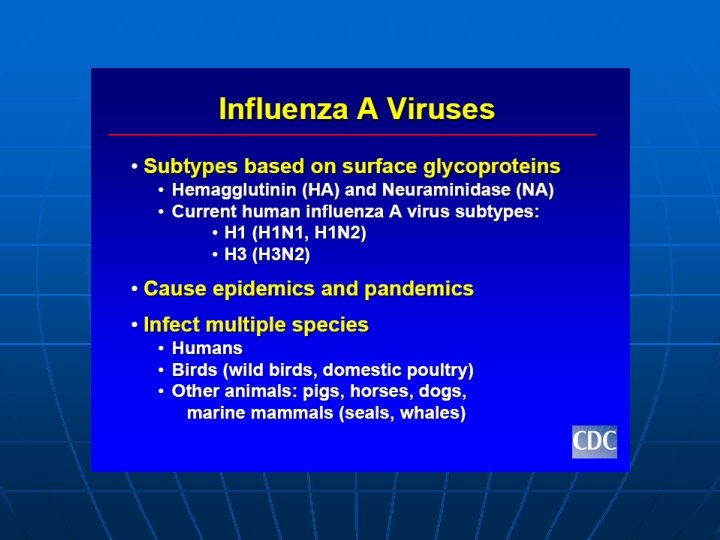
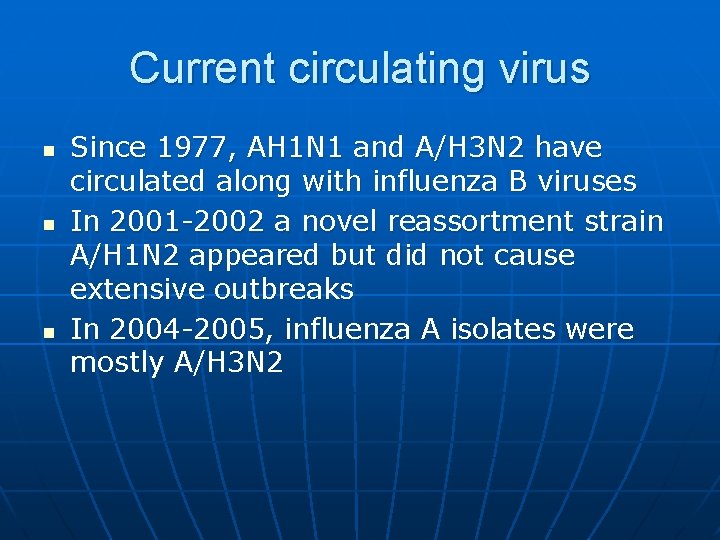
Current circulating virus n n n Since 1977, AH 1 N 1 and A/H 3 N 2 have circulated along with influenza B viruses In 2001 -2002 a novel reassortment strain A/H 1 N 2 appeared but did not cause extensive outbreaks In 2004 -2005, influenza A isolates were mostly A/H 3 N 2
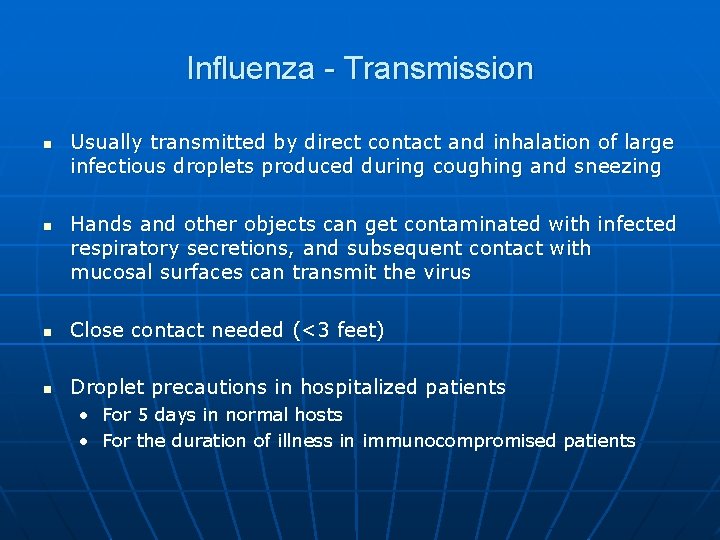
Influenza - Transmission n n Usually transmitted by direct contact and inhalation of large infectious droplets produced during coughing and sneezing Hands and other objects can get contaminated with infected respiratory secretions, and subsequent contact with mucosal surfaces can transmit the virus n Close contact needed (<3 feet) n Droplet precautions in hospitalized patients • For 5 days in normal hosts • For the duration of illness in immunocompromised patients
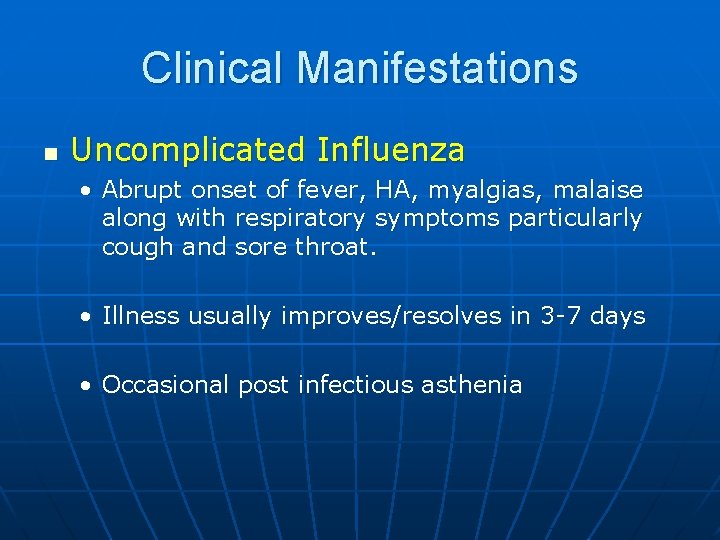
Clinical Manifestations n Uncomplicated Influenza • Abrupt onset of fever, HA, myalgias, malaise along with respiratory symptoms particularly cough and sore throat. • Illness usually improves/resolves in 3 -7 days • Occasional post infectious asthenia
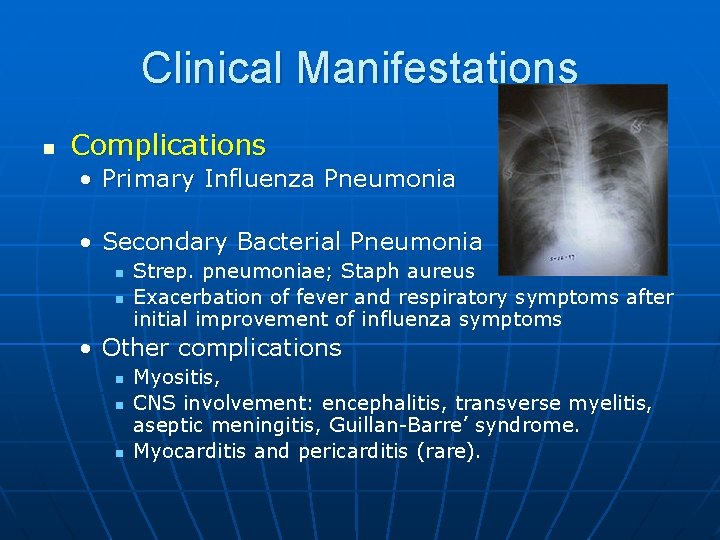
Clinical Manifestations n Complications • Primary Influenza Pneumonia • Secondary Bacterial Pneumonia n n Strep. pneumoniae; Staph aureus Exacerbation of fever and respiratory symptoms after initial improvement of influenza symptoms • Other complications n n n Myositis, CNS involvement: encephalitis, transverse myelitis, aseptic meningitis, Guillan-Barre’ syndrome. Myocarditis and pericarditis (rare).
Influenza- Diagnosis n Clinical Diagnosis • Clinical diagnosis is straightforward during a flu epidemic • In sporadic cases, symptoms can be indistinguishable from other acute respiratory infections n Laboratory Diagnosis • Viral cultures of respiratory secretions (nasal washes, sputum, throat swab, BAL) • Rapid detection tests (EIA, IF, PCR) • Serologic tests
Influenza- Treatment n Adamantanes (Amantadine/Rimantadine) • Inhibition of viral uncoating inside the host cell due to interaction with the M 2 protein of susceptible viruses • Active against Influenza A, • No activity against Influenza B • Both drugs have shown a decrease in clinical symptoms and a reduction in the levels and duration of viral shedding • Need to be started within 48 hours of symptoms • Resistant isolates can develop
Influenza- Treatment n Amantadine • Dose: n n • • • 100 mg PO q 12 hs x 5 days for rx acute infection 100 mg PO q 12 hs x 10 days post exposure, 2 -4 wks post vaccine Excreted unaltered in urine Needs dose correction in renal insufficiency CNS side effects such as insomnia, dizziness, difficulty concentrating, seizures • Main use: Treatment and prophylaxis
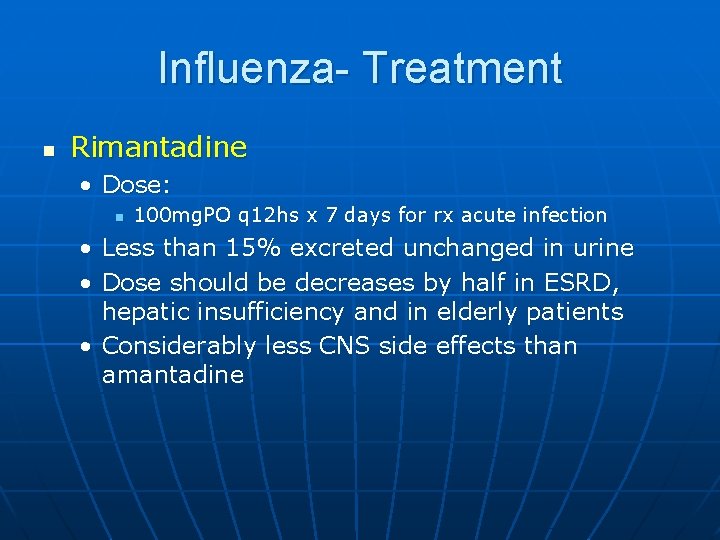
Influenza- Treatment n Rimantadine • Dose: n 100 mg. PO q 12 hs x 7 days for rx acute infection • Less than 15% excreted unchanged in urine • Dose should be decreases by half in ESRD, hepatic insufficiency and in elderly patients • Considerably less CNS side effects than amantadine
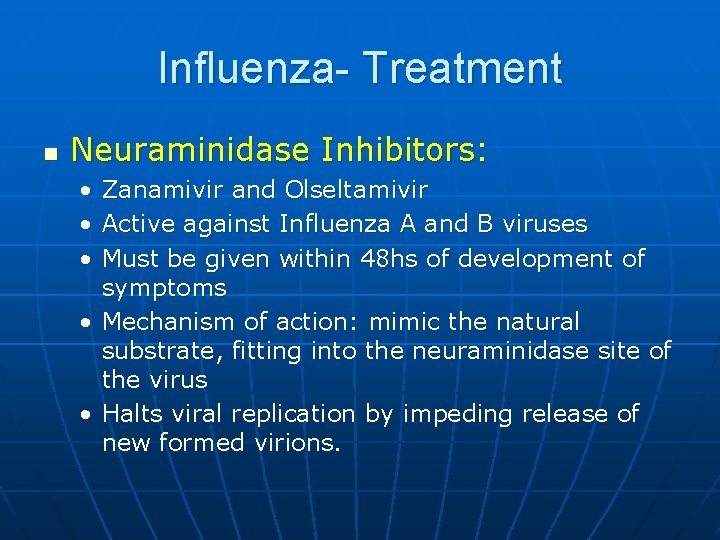
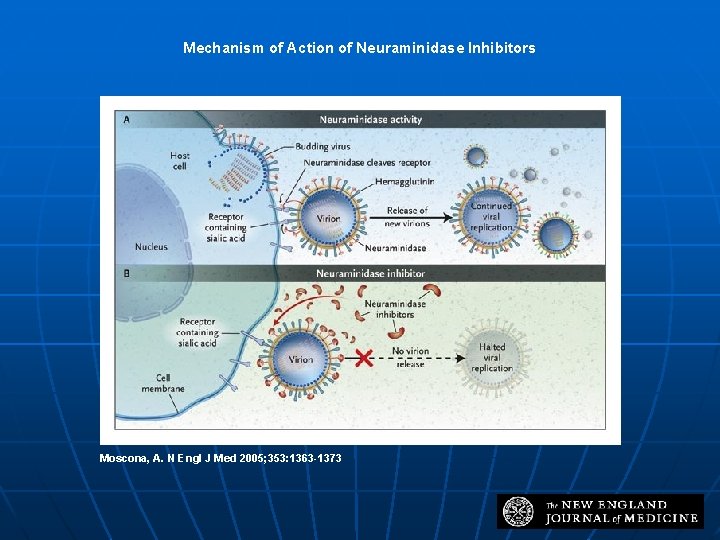
Influenza- Treatment n Neuraminidase Inhibitors: • Zanamivir and Olseltamivir • Active against Influenza A and B viruses • Must be given within 48 hs of development of symptoms • Mechanism of action: mimic the natural substrate, fitting into the neuraminidase site of the virus • Halts viral replication by impeding release of new formed virions.
Mechanism of Action of Neuraminidase Inhibitors Moscona, A. N Engl J Med 2005; 353: 1363 -1373
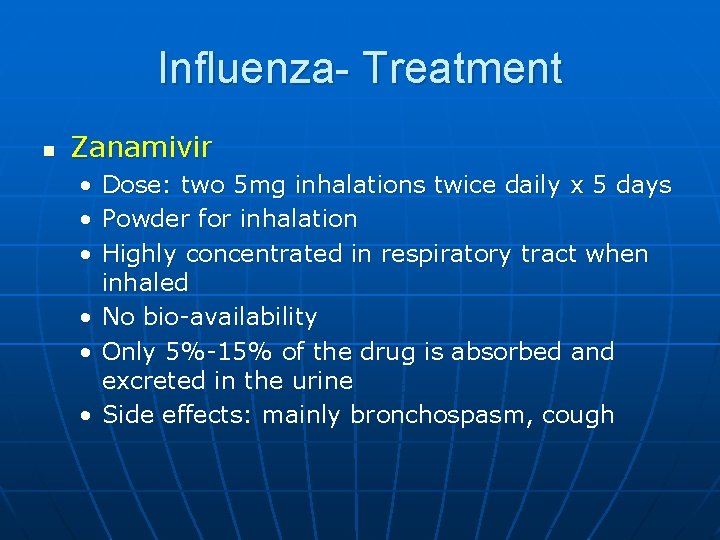
Influenza- Treatment n Zanamivir • • • Dose: two 5 mg inhalations twice daily x 5 days Powder for inhalation Highly concentrated in respiratory tract when inhaled No bio-availability Only 5%-15% of the drug is absorbed and excreted in the urine Side effects: mainly bronchospasm, cough
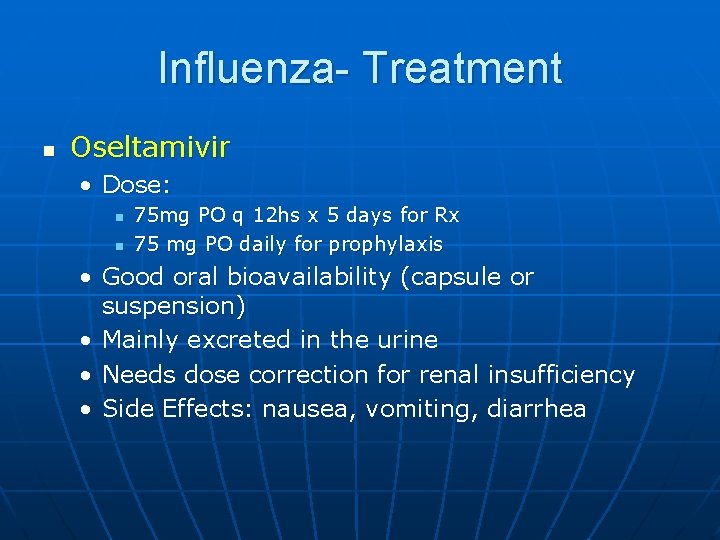
Influenza- Treatment n Oseltamivir • Dose: n n 75 mg PO q 12 hs x 5 days for Rx 75 mg PO daily for prophylaxis • Good oral bioavailability (capsule or suspension) • Mainly excreted in the urine • Needs dose correction for renal insufficiency • Side Effects: nausea, vomiting, diarrhea
Influenza - Prevention
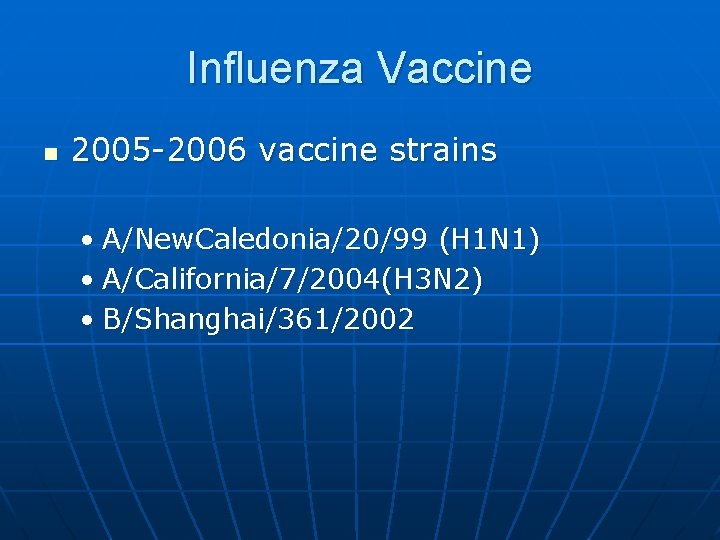
Influenza Vaccine n 2005 -2006 vaccine strains • A/New. Caledonia/20/99 (H 1 N 1) • A/California/7/2004(H 3 N 2) • B/Shanghai/361/2002
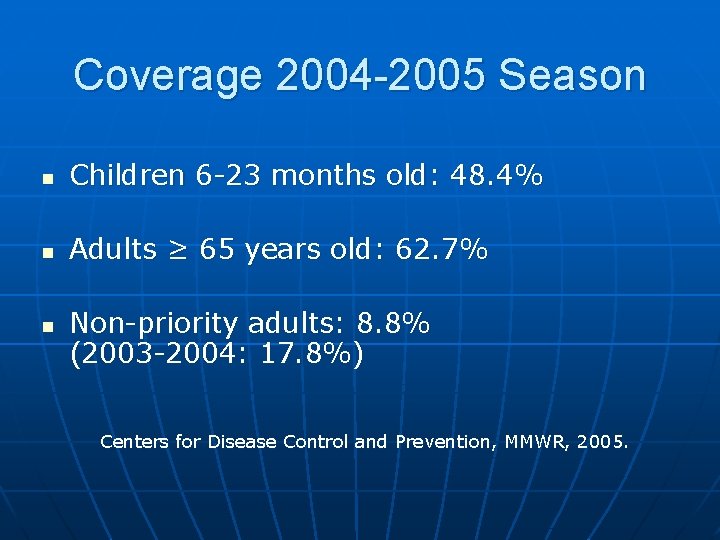
Coverage 2004 -2005 Season n Children 6 -23 months old: 48. 4% n Adults ≥ 65 years old: 62. 7% n Non-priority adults: 8. 8% (2003 -2004: 17. 8%) Centers for Disease Control and Prevention, MMWR, 2005.
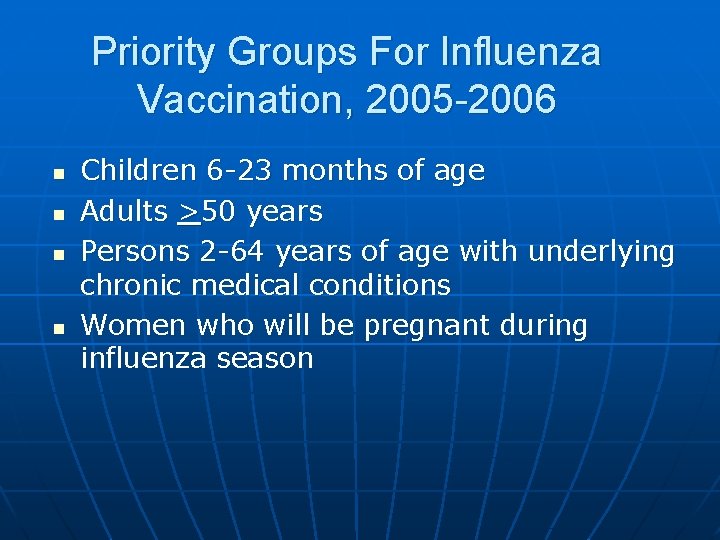
Priority Groups For Influenza Vaccination, 2005 -2006 n n Children 6 -23 months of age Adults >50 years Persons 2 -64 years of age with underlying chronic medical conditions Women who will be pregnant during influenza season
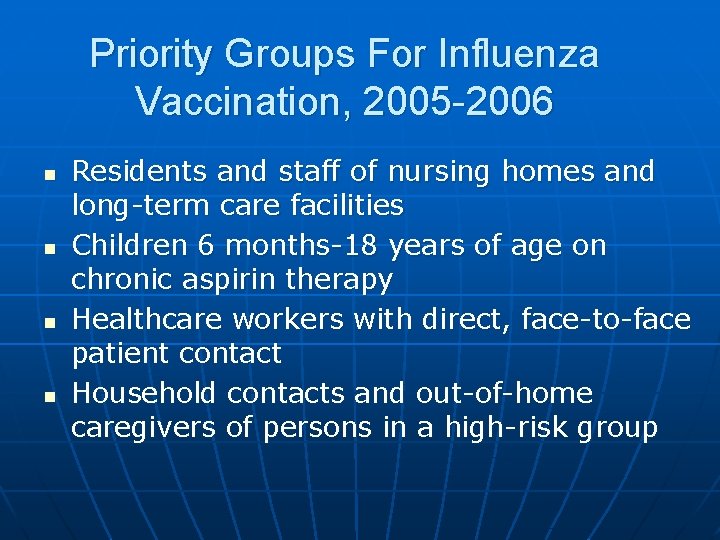
Priority Groups For Influenza Vaccination, 2005 -2006 n n Residents and staff of nursing homes and long-term care facilities Children 6 months-18 years of age on chronic aspirin therapy Healthcare workers with direct, face-to-face patient contact Household contacts and out-of-home caregivers of persons in a high-risk group
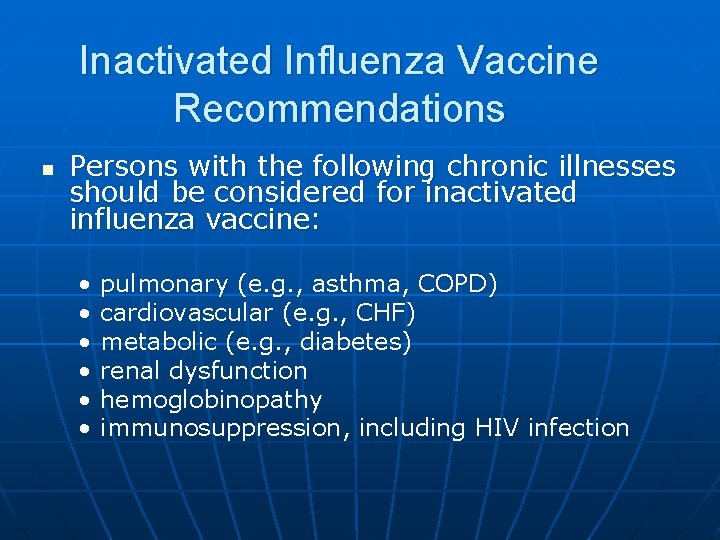
Inactivated Influenza Vaccine Recommendations n Persons with the following chronic illnesses should be considered for inactivated influenza vaccine: • • • pulmonary (e. g. , asthma, COPD) cardiovascular (e. g. , CHF) metabolic (e. g. , diabetes) renal dysfunction hemoglobinopathy immunosuppression, including HIV infection
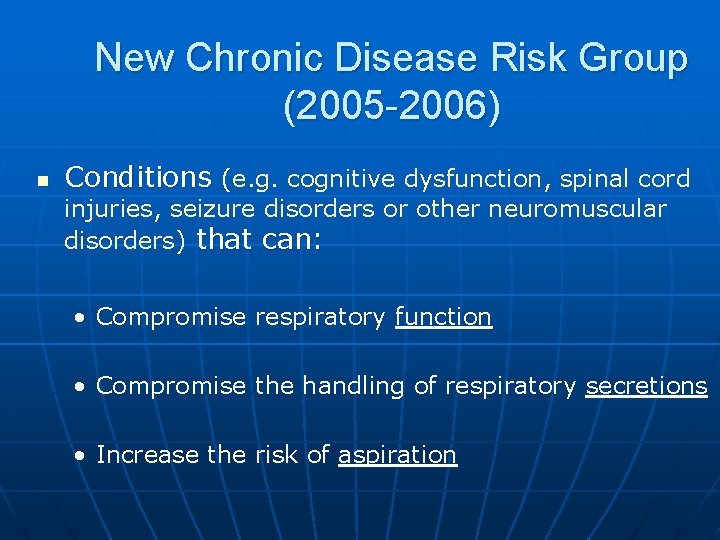
New Chronic Disease Risk Group (2005 -2006) n Conditions (e. g. cognitive dysfunction, spinal cord injuries, seizure disorders or other neuromuscular disorders) that can: • Compromise respiratory function • Compromise the handling of respiratory secretions • Increase the risk of aspiration
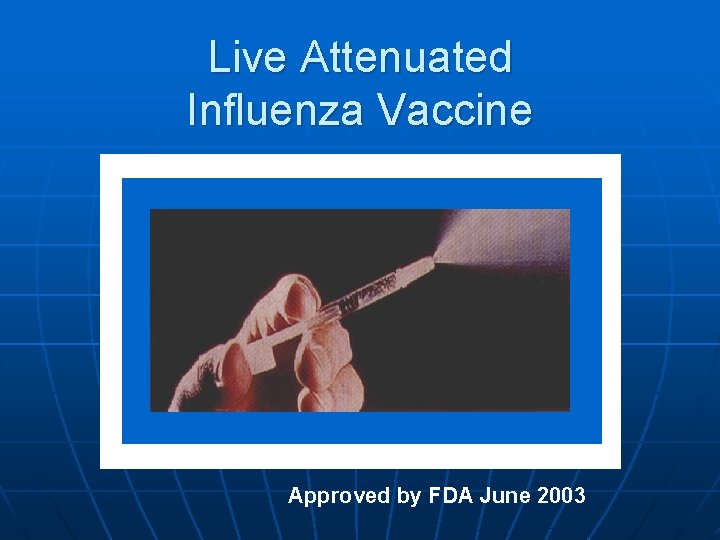
Live Attenuated Influenza Vaccine Approved by FDA June 2003
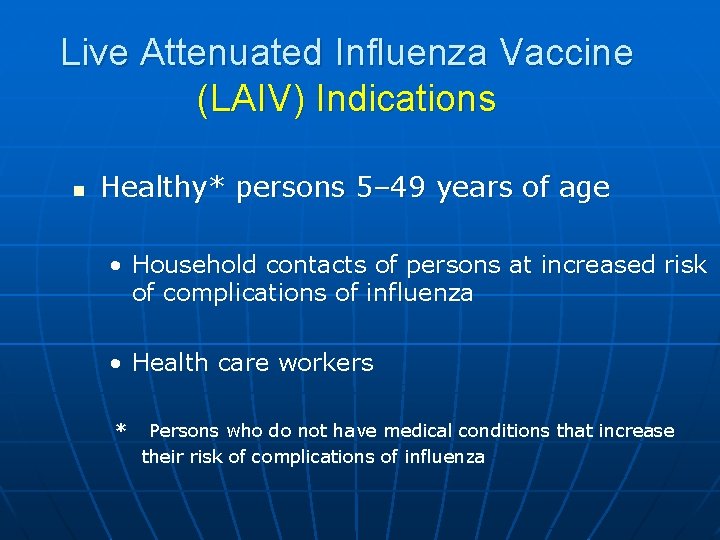
Live Attenuated Influenza Vaccine (LAIV) Indications n Healthy* persons 5– 49 years of age • Household contacts of persons at increased risk of complications of influenza • Health care workers * Persons who do not have medical conditions that increase their risk of complications of influenza
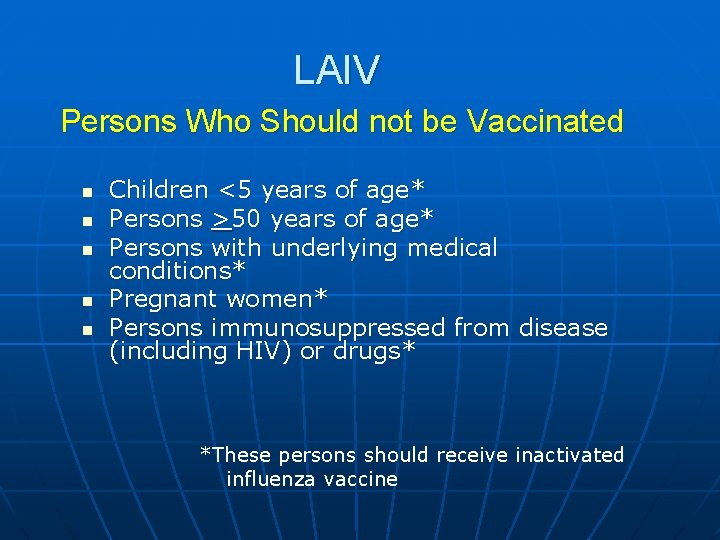
LAIV Persons Who Should not be Vaccinated n n n Children <5 years of age* Persons >50 years of age* Persons with underlying medical conditions* Pregnant women* Persons immunosuppressed from disease (including HIV) or drugs* *These persons should receive inactivated influenza vaccine
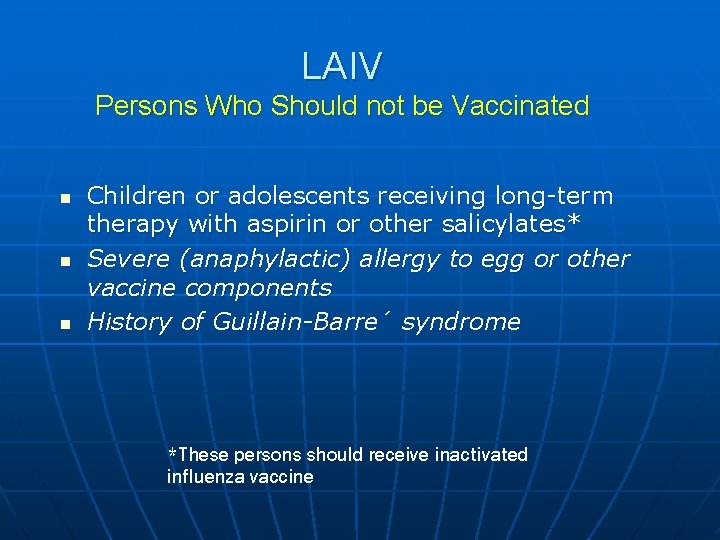
LAIV Persons Who Should not be Vaccinated n n n Children or adolescents receiving long-term therapy with aspirin or other salicylates* Severe (anaphylactic) allergy to egg or other vaccine components History of Guillain-Barre´ syndrome *These persons should receive inactivated influenza vaccine
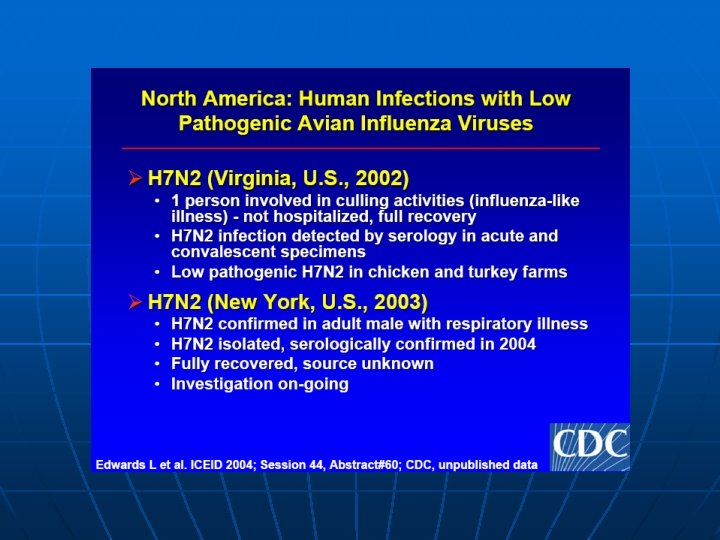
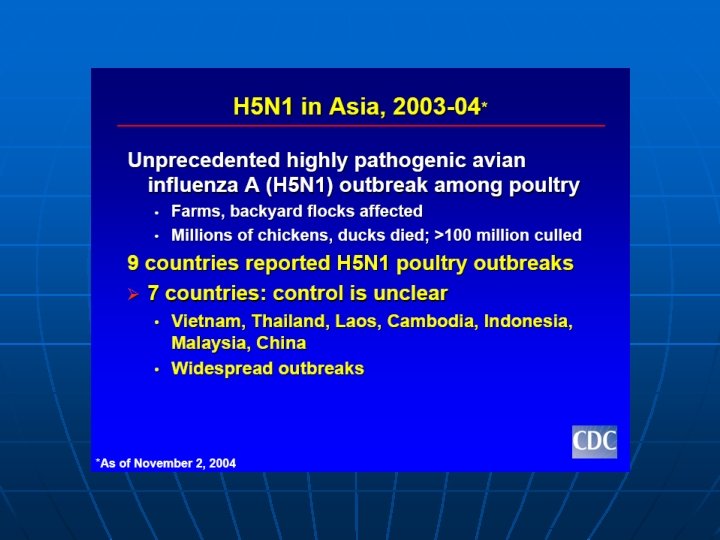
Avian Influenza n n n Caused by Influenza A viruses Can affect domestic poultry and wild birds Migratory birds are considered the natural reservoir of influenza viruses
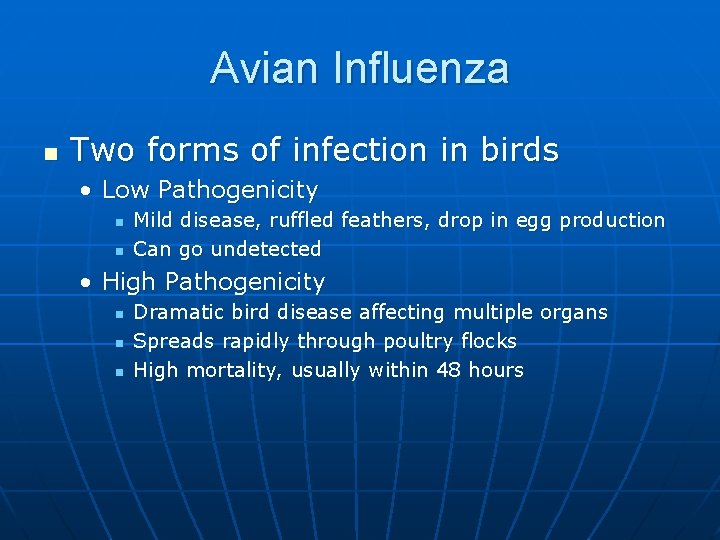
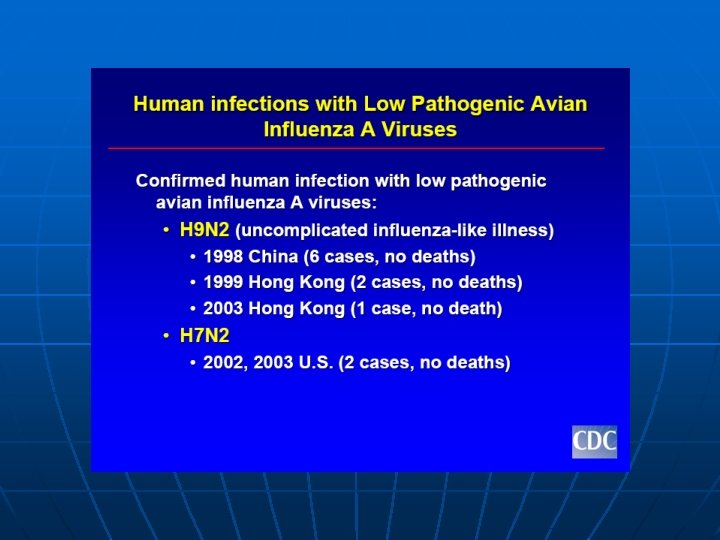
Avian Influenza n Two forms of infection in birds • Low Pathogenicity n n Mild disease, ruffled feathers, drop in egg production Can go undetected • High Pathogenicity n n n Dramatic bird disease affecting multiple organs Spreads rapidly through poultry flocks High mortality, usually within 48 hours
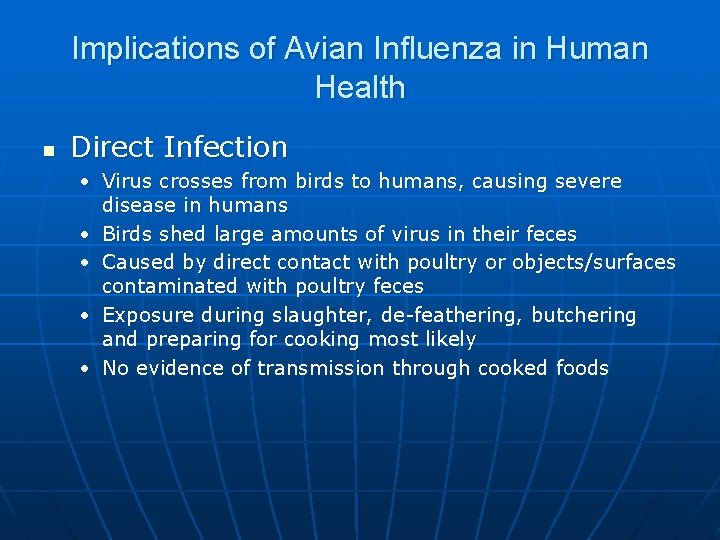
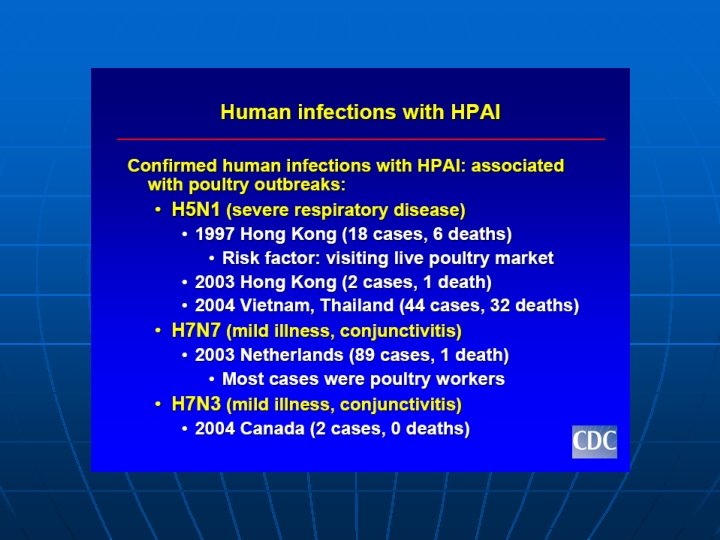
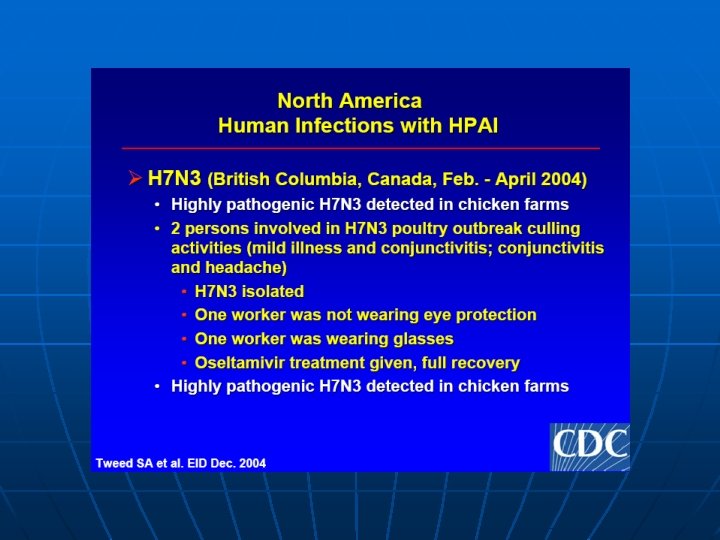
Implications of Avian Influenza in Human Health n Direct Infection • Virus crosses from birds to humans, causing severe disease in humans • Birds shed large amounts of virus in their feces • Caused by direct contact with poultry or objects/surfaces contaminated with poultry feces • Exposure during slaughter, de-feathering, butchering and preparing for cooking most likely • No evidence of transmission through cooked foods
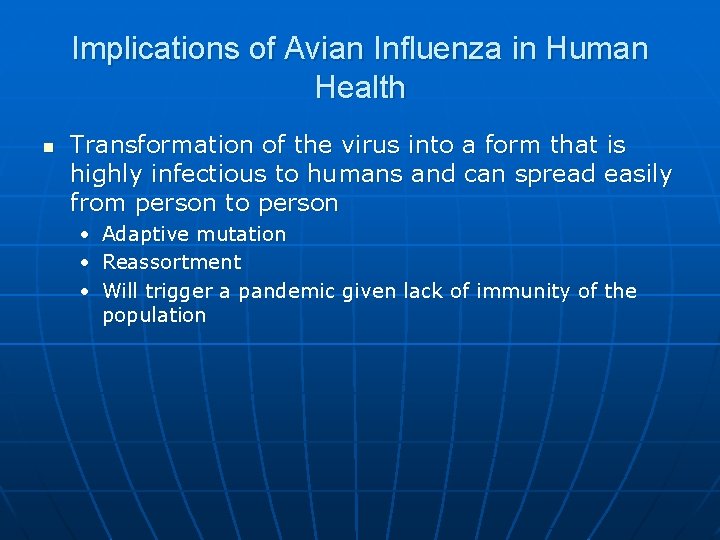
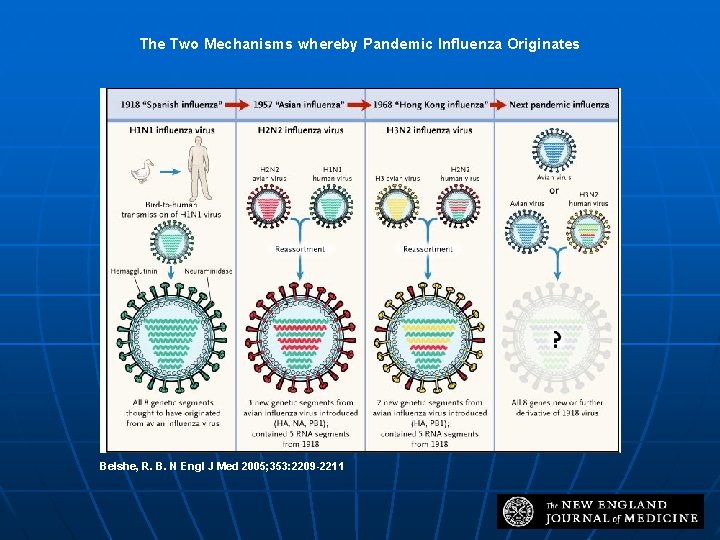
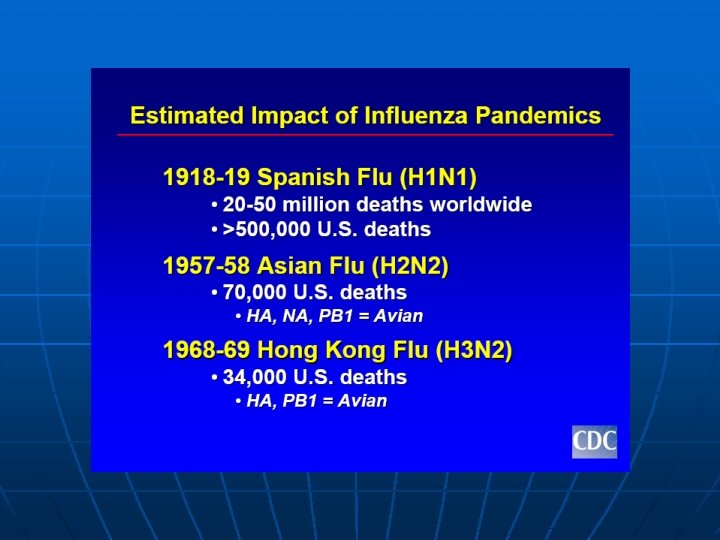
Implications of Avian Influenza in Human Health n Transformation of the virus into a form that is highly infectious to humans and can spread easily from person to person • Adaptive mutation • Reassortment • Will trigger a pandemic given lack of immunity of the population
The Two Mechanisms whereby Pandemic Influenza Originates Belshe, R. B. N Engl J Med 2005; 353: 2209 -2211
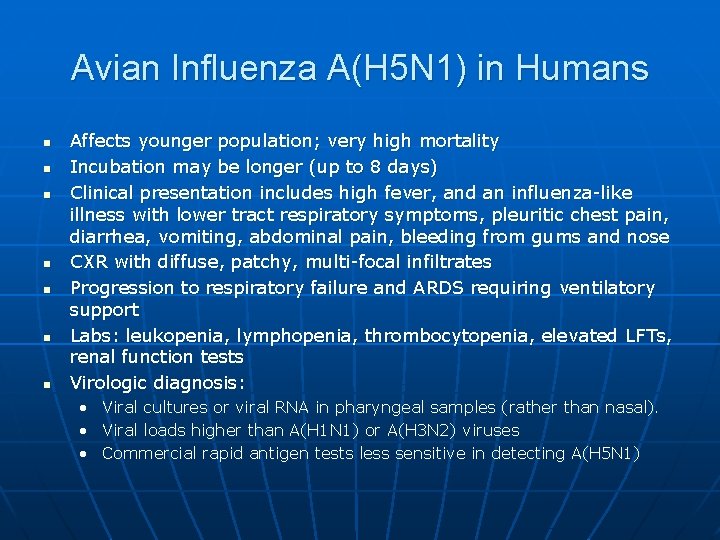
Avian Influenza A(H 5 N 1) in Humans n n n n Affects younger population; very high mortality Incubation may be longer (up to 8 days) Clinical presentation includes high fever, and an influenza-like illness with lower tract respiratory symptoms, pleuritic chest pain, diarrhea, vomiting, abdominal pain, bleeding from gums and nose CXR with diffuse, patchy, multi-focal infiltrates Progression to respiratory failure and ARDS requiring ventilatory support Labs: leukopenia, lymphopenia, thrombocytopenia, elevated LFTs, renal function tests Virologic diagnosis: • • • Viral cultures or viral RNA in pharyngeal samples (rather than nasal). Viral loads higher than A(H 1 N 1) or A(H 3 N 2) viruses Commercial rapid antigen tests less sensitive in detecting A(H 5 N 1)
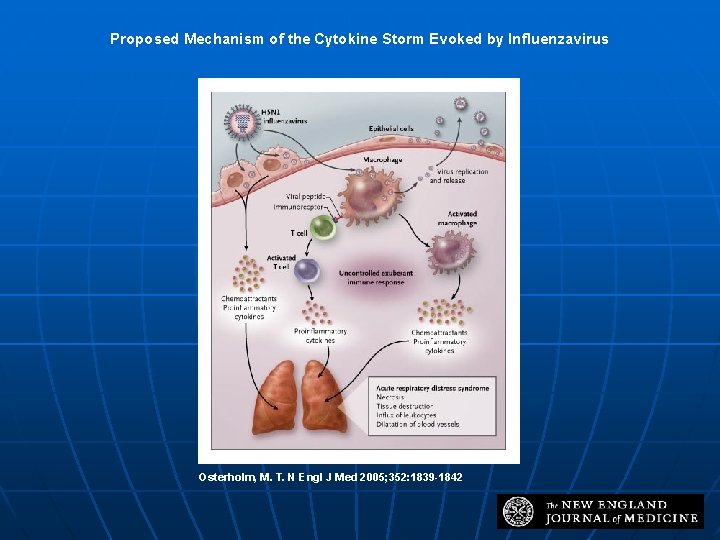
Proposed Mechanism of the Cytokine Storm Evoked by Influenzavirus Osterholm, M. T. N Engl J Med 2005; 352: 1839 -1842
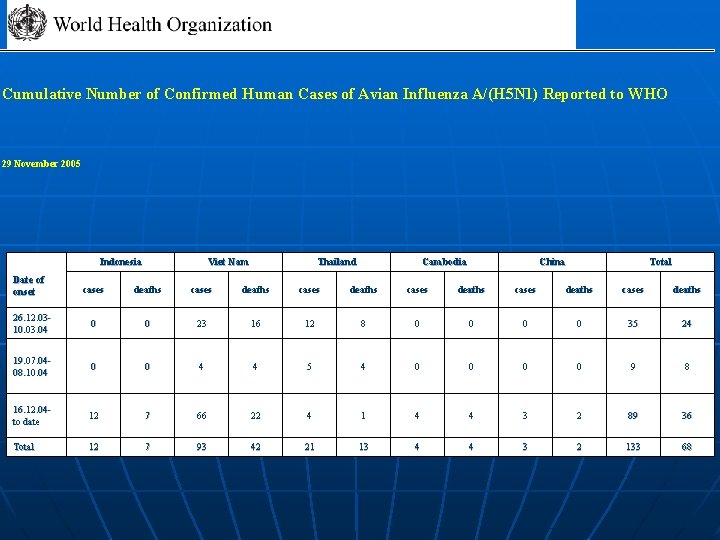
Cumulative Number of Confirmed Human Cases of Avian Influenza A/(H 5 N 1) Reported to WHO 29 November 2005 Indonesia Date of onset Viet Nam Thailand Cambodia China Total cases deaths cases deaths 26. 12. 0310. 03. 04 0 0 23 16 12 8 0 0 35 24 19. 07. 0408. 10. 04 0 0 4 4 5 4 0 0 9 8 16. 12. 04 to date 12 7 66 22 4 1 4 4 3 2 89 36 Total 12 7 93 42 21 13 4 4 3 2 133 68
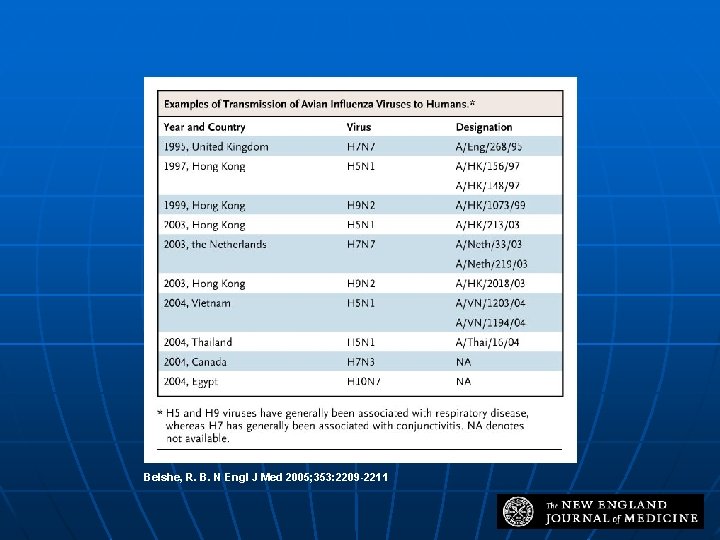
Belshe, R. B. N Engl J Med 2005; 353: 2209 -2211
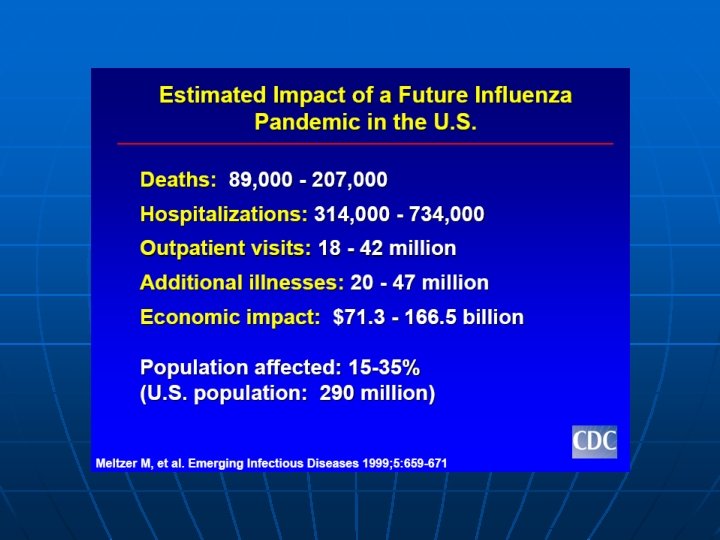
Pandemic Risk n Three conditions need to be met • New influenza virus sub-type emerges • Can infect and cause serious illness in humans • It spreads easily and in a sustainable fashion among humans
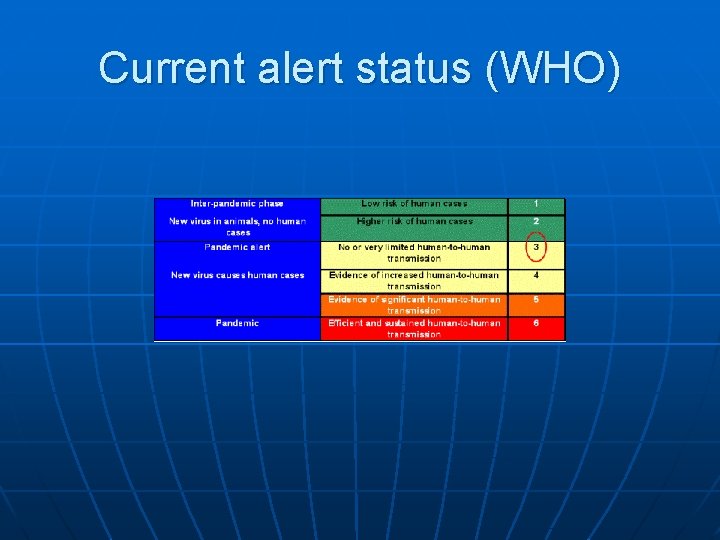
Current alert status (WHO)
Pandemic Risk n Causes for concern • Current outbreak is the largest and most severe outbreak of avian influenza on record, with many countries simultaneously affected • Expanding geographic distribution, making more human populations at risk • Current virus more lethal in experimental conditions to mice and ferrets when compared with A(H 1 N 5) viruses from 1997 and early 2004 • A(H 5 N 1) virus transmission to felids has occurred by feeding chickens to leopards and tigers in zoos in Thailand • Behavior of the virus in its natural reservoir, waterfowl, may be changing
Treatment and prevention n Antiviral agents • Adamantanes n Recent A(H 5 N 1) isolates are highly resistant to these drugs • Neuraminidase inhibitors - early treatment n Oseltamivir: • likely higher doses, for a longer duration are needed • High level resistance, resulting from the substitution of a single amino acid in the N 1 neuraminidase has been detected in up to 16% of children with influenza A(H 1 N 1) and recently in several patients with A(H 5 N 1) infection treated with oseltamivir n Zanamivir: Active in vitro, but has not been studied in cases of human influenza A(H 5 N 1)
Treatment and prevention n No specific vaccine is currently available Production cannot start until the new virus has emerged, because the vaccine needs to closely match the pandemic virus Earlier H 5 vaccines were poorly immunogenic and required two doses to generate neutralizing antibody response
Pandemic Warning Signal n Most important warning signal: • Clusters of A(H 5 N 1) influenza cases closely related in time and place are detected, suggesting that human-to-human transmission is taking place.
Bibliography n n n n www. cdc. gov www. who. org www. uptodate. com Treanor John. Influenza Virus. Principles and Practice of Infectious Diseases. Mandell/Bennett/Dolin. Fifth Edition. Sanford, Jay P. Influenza: Considerations on Pandemics. Advances in Internal Medicine Vol. 15, 1969 Prevention and control of Influenza. MMWR July 29, 2005/ 54(RR 08); 1 -40 Osterholm, M. Preparing for the next pandemic. NEJM May 5, 2005
Bibliography n n n n Moscona, A. Neuraminidase Inhibitors for Influenza. NEJM, Sept 29, 2005 WHO writing committee. Avian influenza A infections in humans. NEJM, Sept 29, 2005 Avian Influenza Symposium. CDC, November 3, 2004 Uyeki T. Public Health Impact of Avian Influenza. CDC, November 3, 2004 Belshe R. The origins of pandemic influenza. NEJM, Nov. 24, 2005 Stöhr, K. Avian Influenza and Pandemics. NEJM, January 27, 2005 Meltzer M. Emerging Infectious Diseases 1999; 5: 659 -671