
Influenza Causative Agent Orthomyxovirus Influenza A virus Infulenza
- Slides: 17
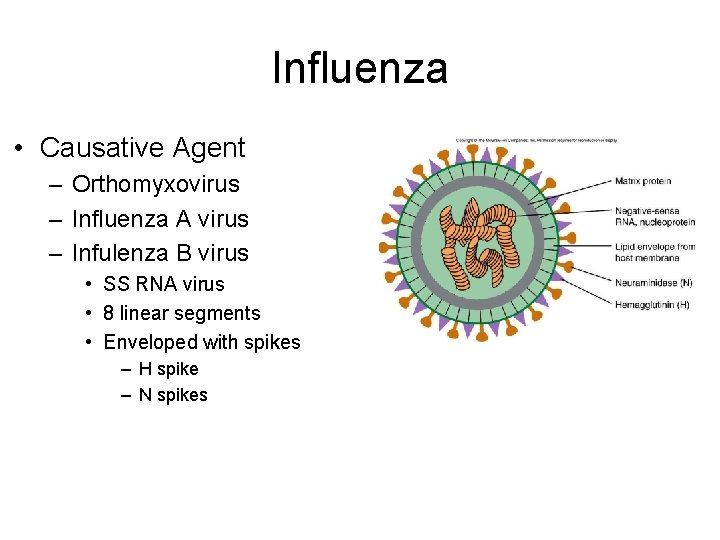
Influenza • Causative Agent – Orthomyxovirus – Influenza A virus – Infulenza B virus • SS RNA virus • 8 linear segments • Enveloped with spikes – H spike – N spikes
• Signs and symptoms • Sudden high fever, pharyngitis, congestion, dry cough, headache and myalgia – Acute symptoms decline within a week • Cough, fatigue and generalized weakness may persist
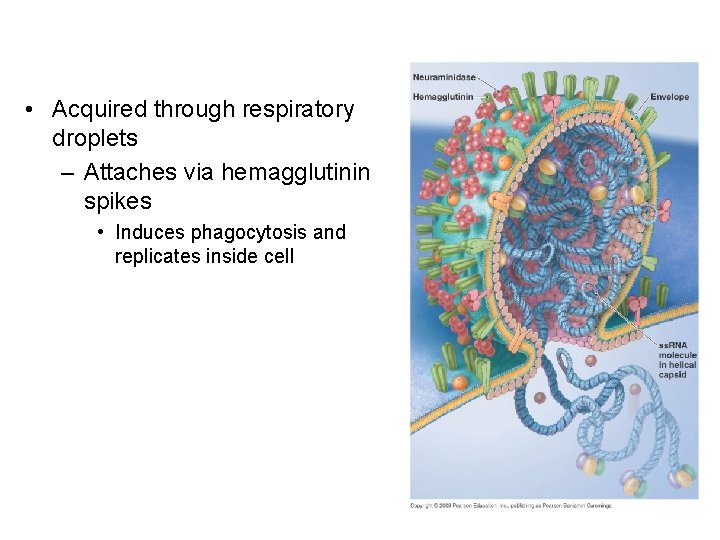
• Acquired through respiratory droplets – Attaches via hemagglutinin spikes • Induces phagocytosis and replicates inside cell
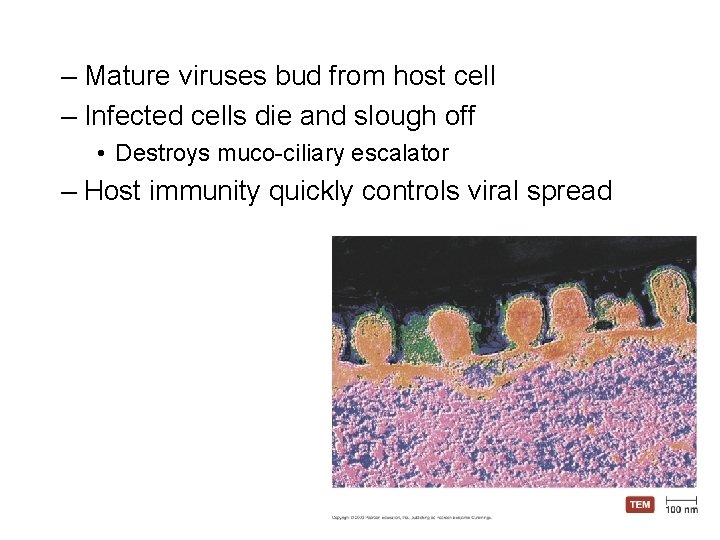
– Mature viruses bud from host cell – Infected cells die and slough off • Destroys muco-ciliary escalator – Host immunity quickly controls viral spread
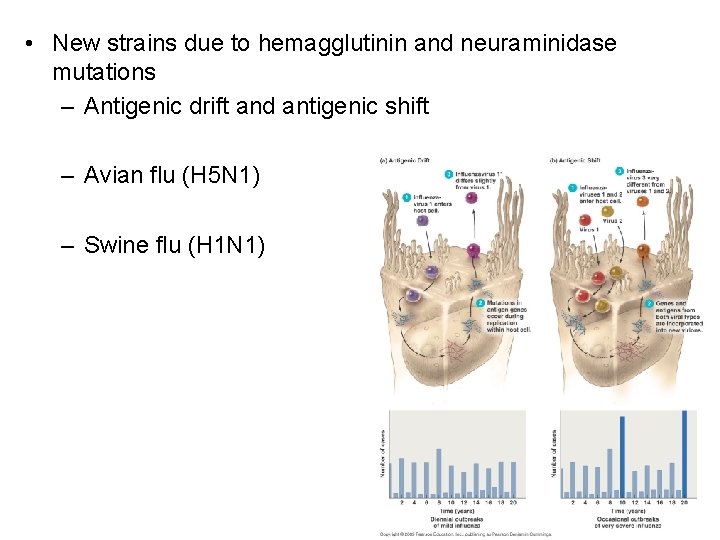
• New strains due to hemagglutinin and neuraminidase mutations – Antigenic drift and antigenic shift – Avian flu (H 5 N 1) – Swine flu (H 1 N 1)
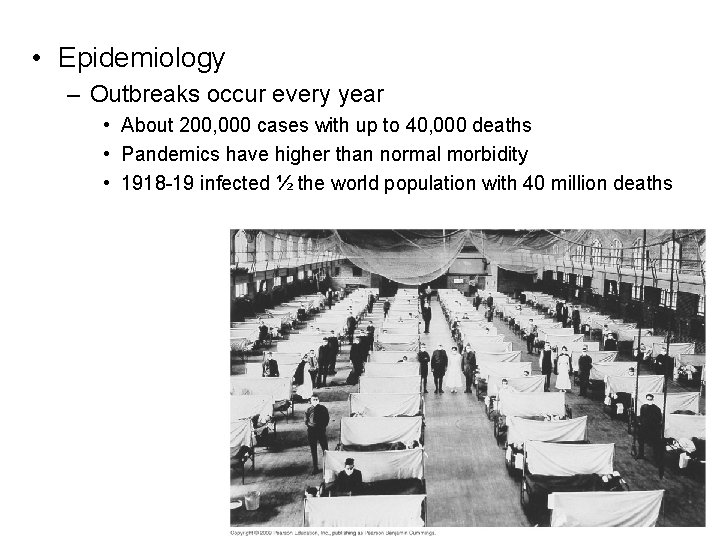
• Epidemiology – Outbreaks occur every year • About 200, 000 cases with up to 40, 000 deaths • Pandemics have higher than normal morbidity • 1918 -19 infected ½ the world population with 40 million deaths
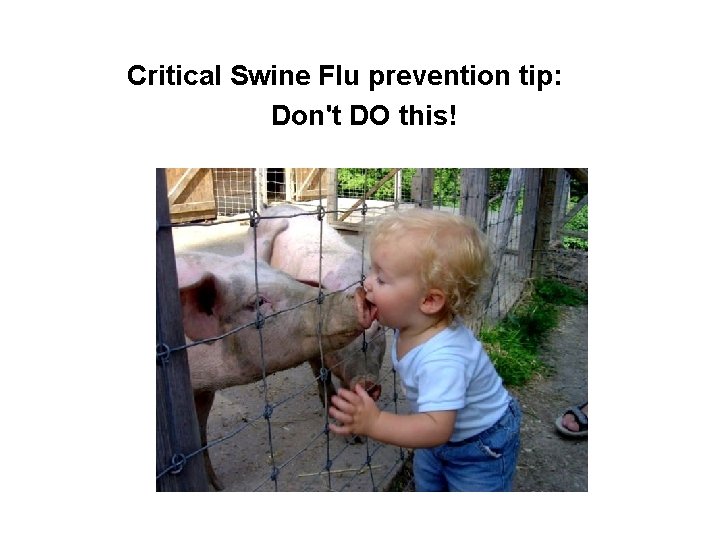
Critical Swine Flu prevention tip: Don't DO this!
• Prevention – Vaccine – New vaccine required every year • Treatment – Antiviral medications – amantidine and rimantidine resistance common – Inhaled zanamivir mist or oral oseltamivir must be taken with in 48 hours – No aspirin for children!
Respiratory Syncytial Virus Infection • Most common childhood respiratory disease – Leading respiratory killer of infants • Pathogen – Respiratory syncytial virus (RSV) – Enveloped, -ss. RNA Paramyxovirus
– Signs and symptoms • Fever, runny nose, and coughing • Wheezing and difficulty breathing may occur – Dusky skin tone • Leading cause of bronchiolitis in children under one • Some children develop croup • May lead to pneumonia if alveoli become involved
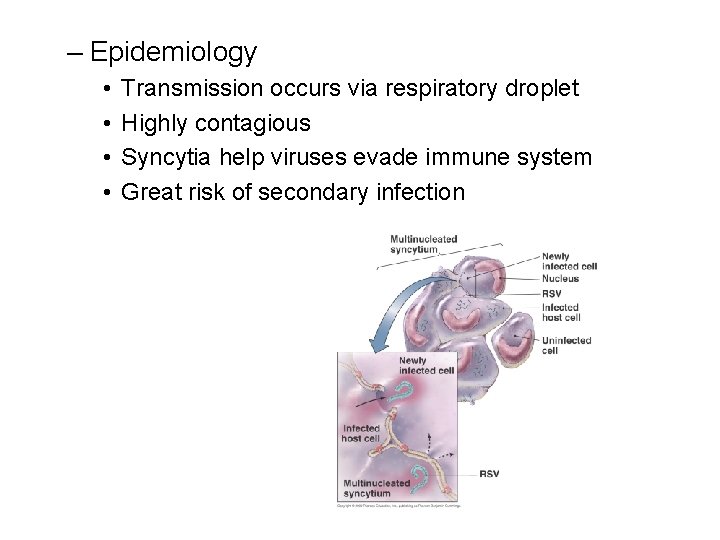
– Epidemiology • • Transmission occurs via respiratory droplet Highly contagious Syncytia help viruses evade immune system Great risk of secondary infection
– Prevention • No vaccine • Aseptic technique • Isolation of infected individuals – Treatment • Typically only supportive care • Ribavirin in extreme cases • No Aspirin!
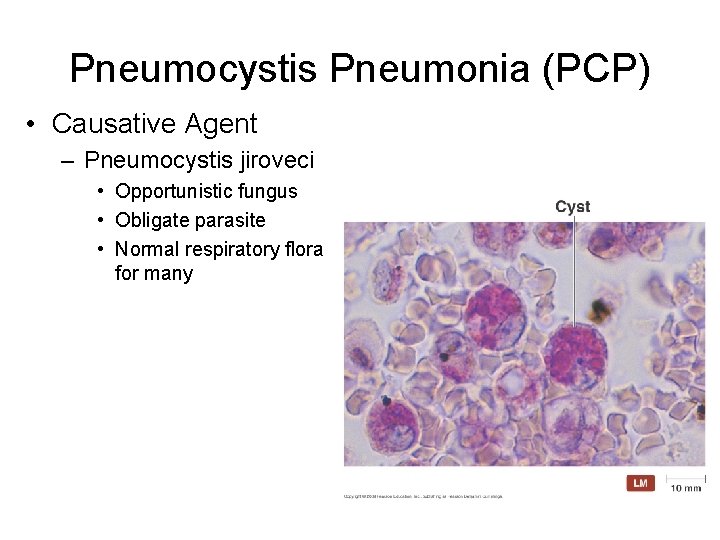
Pneumocystis Pneumonia (PCP) • Causative Agent – Pneumocystis jiroveci • Opportunistic fungus • Obligate parasite • Normal respiratory flora for many
• Signs and Symptoms: – Difficulty breathing; mild anemia; hypoxia; and fever – Non-productive cough in some cases – In rare cases, extra pulmonary lesions develop in lymph nodes, spleen, liver and bone marrow
• Acquired through respiratory droplets • In healthy individuals usually no symptoms – Life long immunity is conferred – Some may remain carriers for life • Fungus multiplies rapidly in immunocompromised patients and extensively colonizes lungs – Causes substantial damage
• Epidemiology – Worldwide distribution – 75% of healthy children exposed by age five • Based on presence of antibodies – Disease limited to immunocompromised individuals • One of the diagnostic diseases of AIDS
• Prevention – Virtually impossible due to ubiquitous nature • Treatment – oral or IV TMP-SMX (combination of trimethoprim and sulfamethoxazole)