
INFLUENCES ON EVALUATION IMPLEMENTATION SCIENCE AND ITS USEFULNESS


- Slides: 30
INFLUENCES ON EVALUATION: IMPLEMENTATION SCIENCE AND ITS USEFULNESS FOR EVALUATION Robyn Mildon, Ph. D Parenting Research Centre Annette Michaux & Andrew Anderson The Benevolent Society annettem@bensoc. org. au
This session covers • What is implementation and why does it matter? • Move to, and importance of, evaluating implementation of services and programs • Evidence informed approaches to implementation • Approaches to evaluating implementation • Case study
Implementing Evidence-Informed Practice World of Research Adapted from Riley, 2005 World of Practice 3
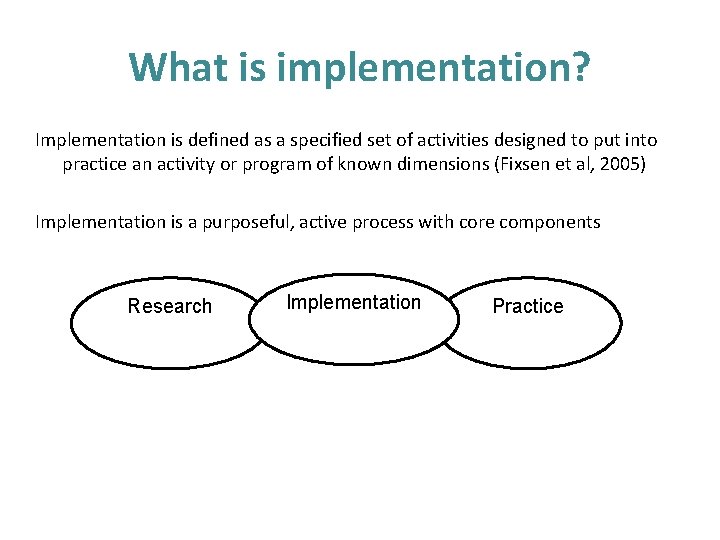
What is implementation? Implementation is defined as a specified set of activities designed to put into practice an activity or program of known dimensions (Fixsen et al, 2005) Implementation is a purposeful, active process with core components Research Implementation Practice
Why focus on implementation? • Many programs and practices found to be effective in child and family support research fail to translate into meaningful outcomes across a number service settings • Some research indicates that two-thirds of organisations’ efforts to implement change fail (Burns, 2004).
“Evidence” on effectiveness helps you select what to implement for whom This “Evidence” does not help you implement the program or practice Fixsen & Blase (2008)
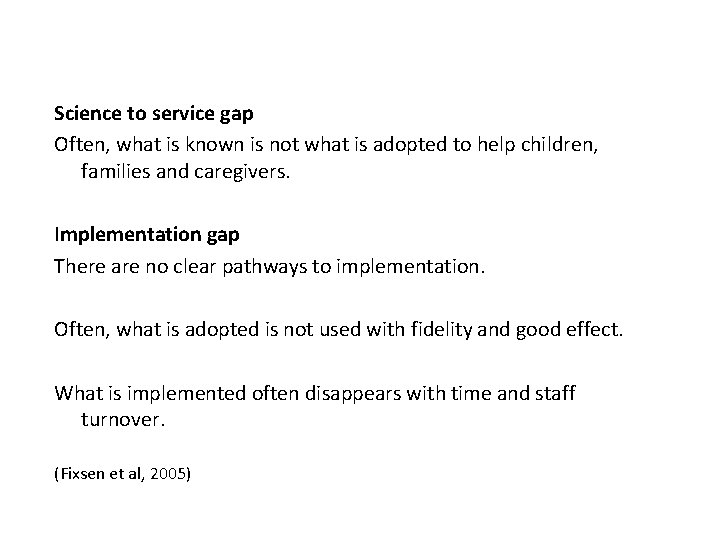
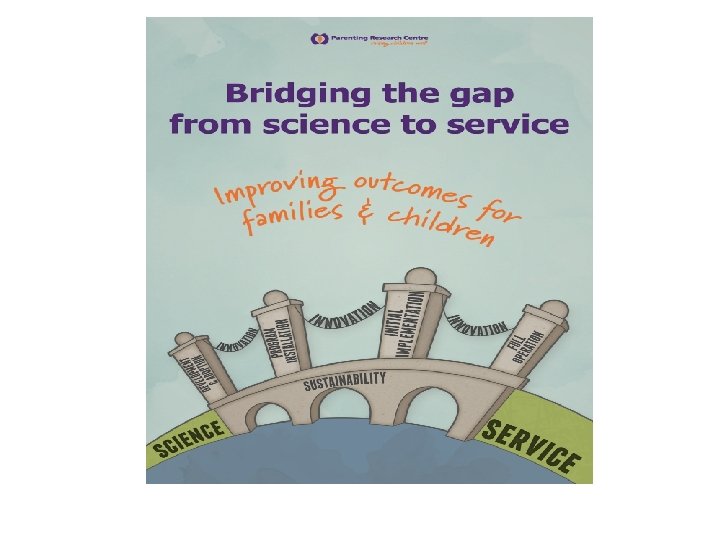
Science to service gap Often, what is known is not what is adopted to help children, families and caregivers. Implementation gap There are no clear pathways to implementation. Often, what is adopted is not used with fidelity and good effect. What is implemented often disappears with time and staff turnover. (Fixsen et al, 2005)
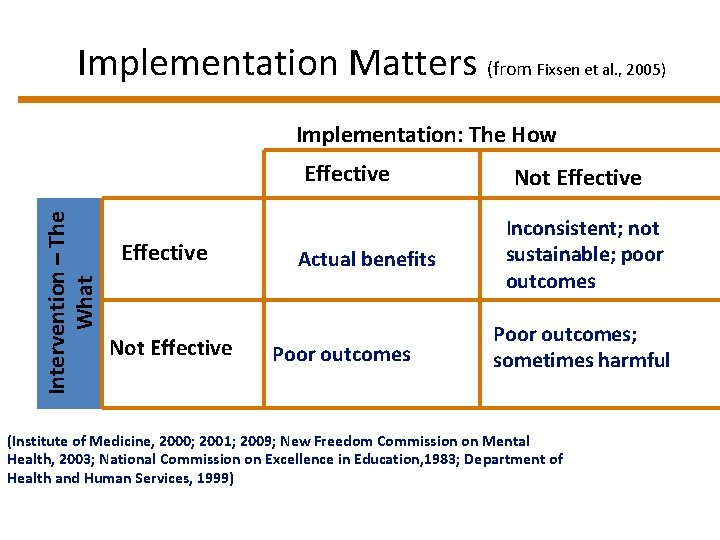
Implementation Matters (from Fixsen et al. , 2005) Implementation: The How Intervention – The What Effective Not Effective Actual benefits Poor outcomes Not Effective Inconsistent; not sustainable; poor outcomes Poor outcomes; sometimes harmful (Institute of Medicine, 2000; 2001; 2009; New Freedom Commission on Mental Health, 2003; National Commission on Excellence in Education, 1983; Department of Health and Human Services, 1999)
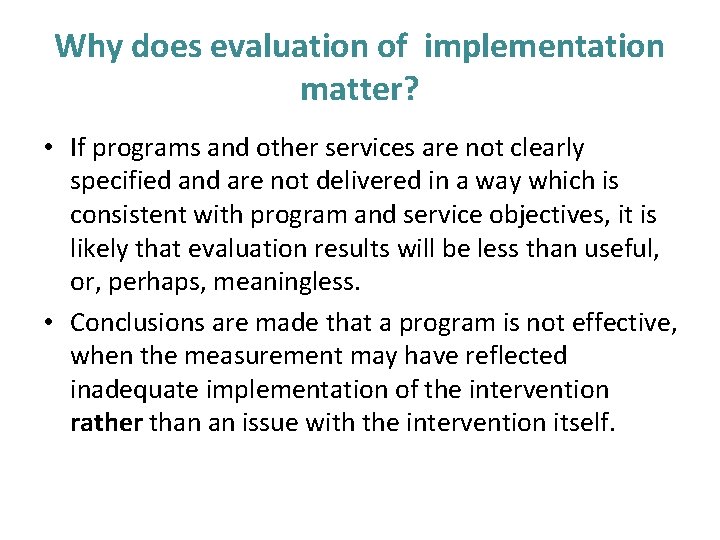
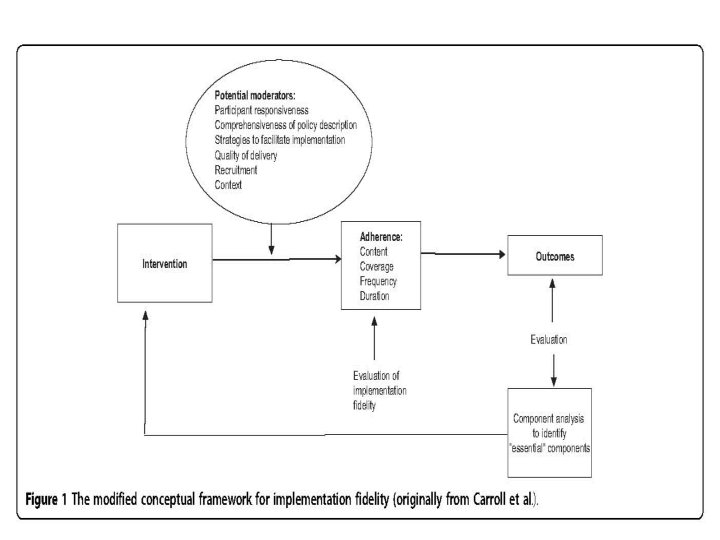
Why does evaluation of implementation matter? • If programs and other services are not clearly specified and are not delivered in a way which is consistent with program and service objectives, it is likely that evaluation results will be less than useful, or, perhaps, meaningless. • Conclusions are made that a program is not effective, when the measurement may have reflected inadequate implementation of the intervention rather than an issue with the intervention itself.
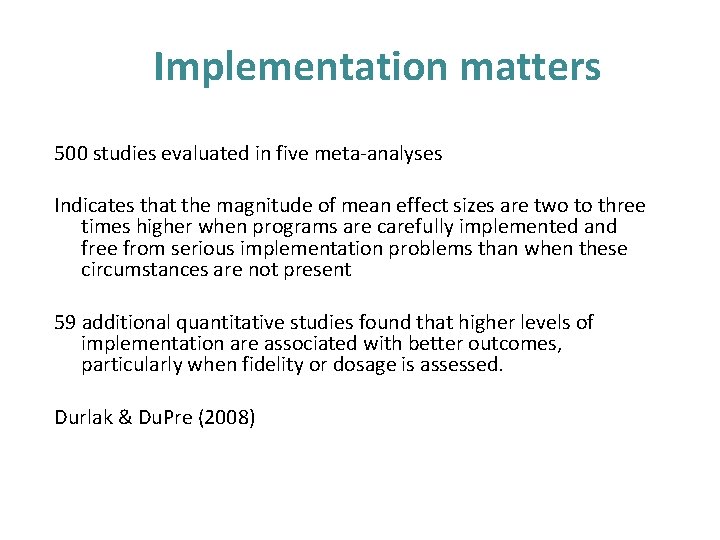
Implementation matters 500 studies evaluated in five meta-analyses Indicates that the magnitude of mean effect sizes are two to three times higher when programs are carefully implemented and free from serious implementation problems than when these circumstances are not present 59 additional quantitative studies found that higher levels of implementation are associated with better outcomes, particularly when fidelity or dosage is assessed. Durlak & Du. Pre (2008)
Implementation matters • Dissemination of effective programs, which involves their adaptation to new settings, cannot be accomplished without a clear understanding of how the program accomplishes its effects. • Reinvention of a program is acceptable, but only if its’ causal mechanisms are understood and preserved. In addition, the original mission or intent of the program must also be understood and preserved.
Including evaluation of implementation Necessary to gain insight into the “black box” of interventions. Process evaluations including information about program implementation is needed to evaluate services and the programs they offer A study of program implementation process could improve the validity of findings and help to explain why a program succeeded or failed
To implement evidence-based practices and programs we need. . . The What: What is the program/practice The How: Effective implementation frameworks (e. g. strategies to change and maintain behaviour of practitioners and create hospitable organisational systems) The Who: Expert implementation assistance
Evidence-based practice and programs Evidence-based practices • skills, techniques, and strategies that can be used by a practitioner. • common elements (Chorpita et al) / kernels (Embry, 2004) Evidence-based programs • collections of practices that are done within known parameters (philosophy, values, service delivery structure, and treatment components)
Evidence informed implementation: Implementation frameworks The value of frameworks is • To promote the ability to generalise beyond the immediate project or initiative • To enhance communication among partners (e. g. better understanding of one another) • To more easily share and apply improvements • To increase the relevance of the “lessons learned”
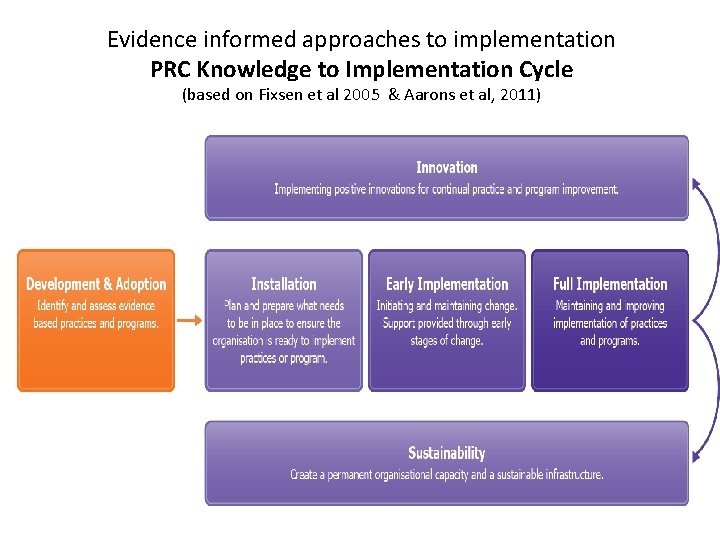
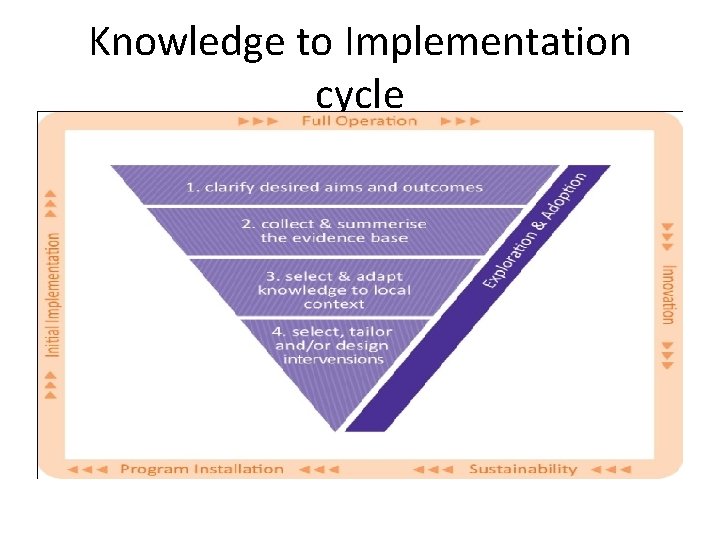
Evidence informed approaches to implementation PRC Knowledge to Implementation Cycle (based on Fixsen et al 2005 & Aarons et al, 2011)
Agency Level The ‘what’ is in further development Refinement of an agency wide practice framework aimed at promoting the resilience in vulnerable children and their families
Case study Consultation phase, where is the agency at? • Exploration? Assess readiness and fit, ensure platform built through implementation teams (planning) • Installation? Are the resources which are necessary to start project ready and available (installing) • Initial Implementation? frequent problem-solving at the practice and program levels. (supporting) • Full Implementation? Assure components are integrated into the organization and are functioning effectively to achieve desired outcomes. • (improving and sustaining)
Exploration – Resilience Practice Framework • Past implementation failure – demonstrated by previous research NEW APPROACH – phase 1 exploration • Learning circles to raise awareness • Phase 1 evaluation – usefulness of learning circles
Project Scale • Who does it involve : • 350 Child and Family staff • 5 large geographic areas (60 sites in two states in Metropolitan, Regional & Rural contexts) • Across program types 21
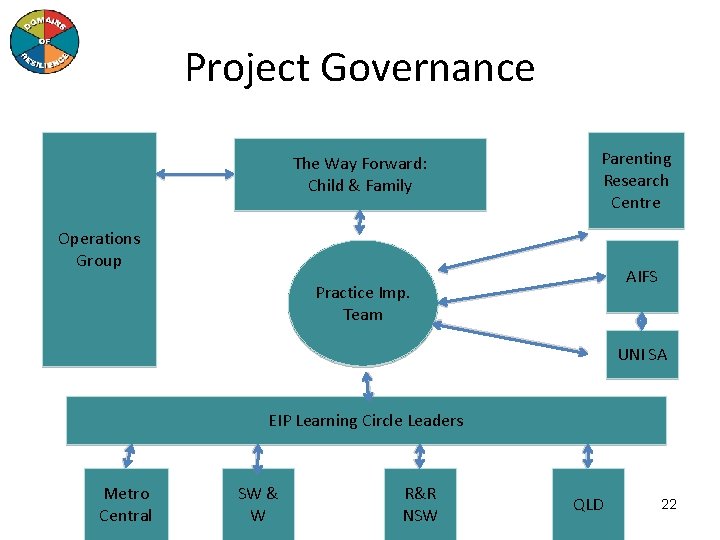
Project Governance The Way Forward: Child & Family Parenting Research Centre Operations Group AIFS Practice Imp. Team UNI SA EIP Learning Circle Leaders Metro Central SW & W R&R NSW QLD 22
Knowledge to Implementation cycle
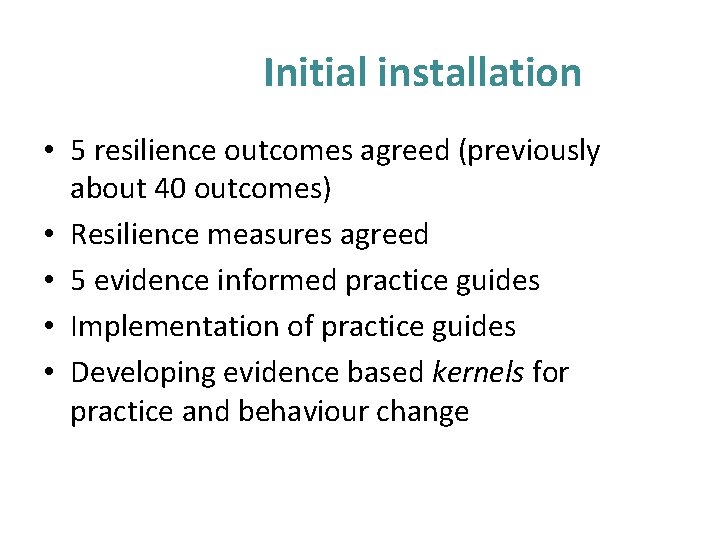
Initial installation • 5 resilience outcomes agreed (previously about 40 outcomes) • Resilience measures agreed • 5 evidence informed practice guides • Implementation of practice guides • Developing evidence based kernels for practice and behaviour change
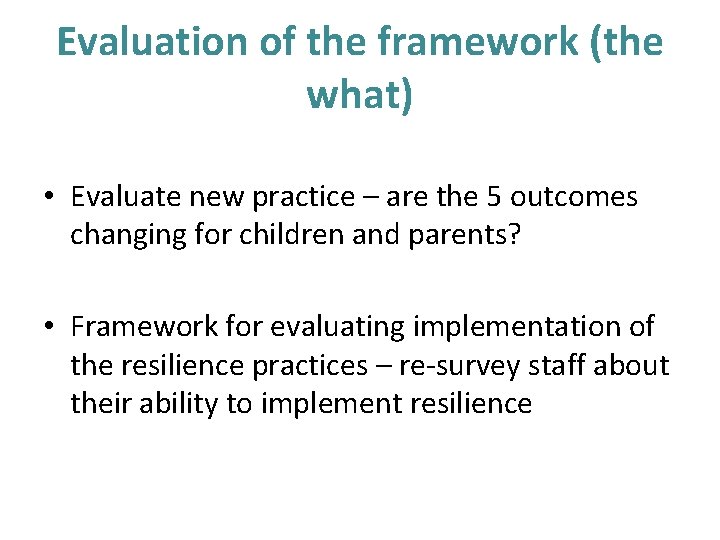
Evaluation of the framework (the what) • Evaluate new practice – are the 5 outcomes changing for children and parents? • Framework for evaluating implementation of the resilience practices – re-survey staff about their ability to implement resilience
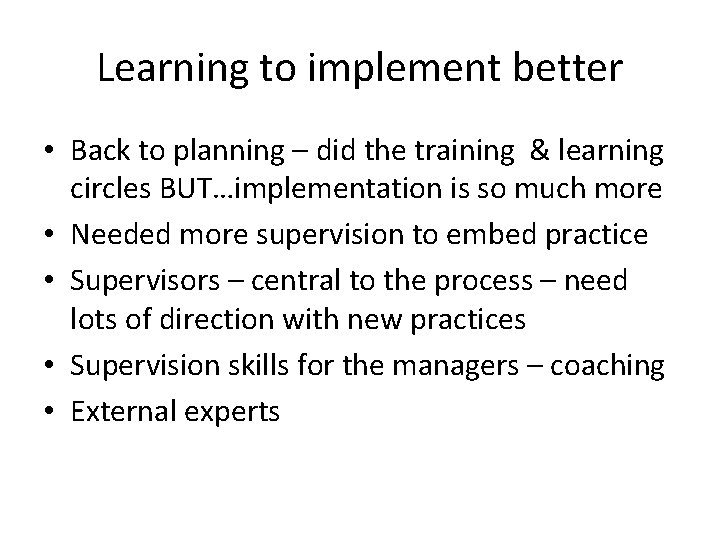
Learning to implement better • Back to planning – did the training & learning circles BUT…implementation is so much more • Needed more supervision to embed practice • Supervisors – central to the process – need lots of direction with new practices • Supervision skills for the managers – coaching • External experts
Next steps • How are we going with the How: Evaluating implementation…… • We have been struggling…
Why this has been hard? Priority is program evaluation rather than implementation evaluation • • competing demands less investment in implementation evaluation time in planning v pressure to execute lack of sophistication in some org systems
Celebrate what we are getting right implementation – highly planned… more than ever before – not cracked it but better than we were – now have one language of practice – technical assistance