
Influence and Persuasion The Psychology of Social and
- Slides: 24
Influence and Persuasion The Psychology of Social and Individual Behaviour Change
Social Change: Psychology • Psychologists focus on changing an individual’s thinking – broad social change can flow out of this • 3 methods of social change: – behaviour modification – modelling theory – social persuasion
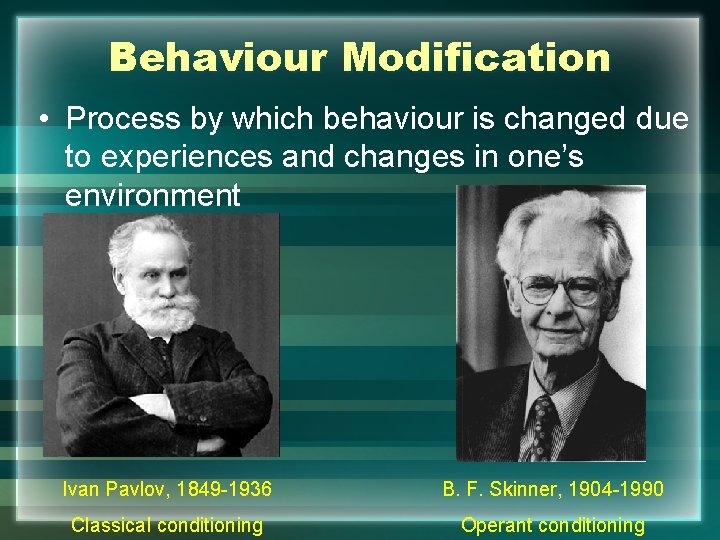
Behaviour Modification • Process by which behaviour is changed due to experiences and changes in one’s environment Ivan Pavlov, 1849 -1936 B. F. Skinner, 1904 -1990 Classical conditioning Operant conditioning
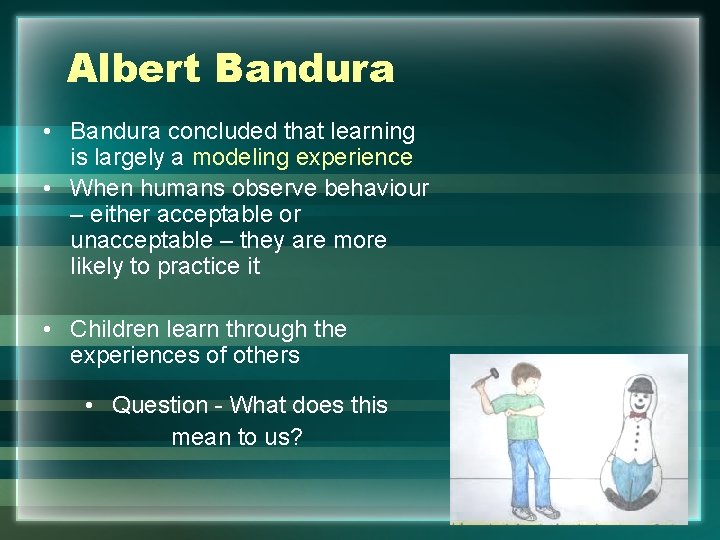
Albert Bandura • Bandura concluded that learning is largely a modeling experience • When humans observe behaviour – either acceptable or unacceptable – they are more likely to practice it • Children learn through the experiences of others • Question - What does this mean to us?
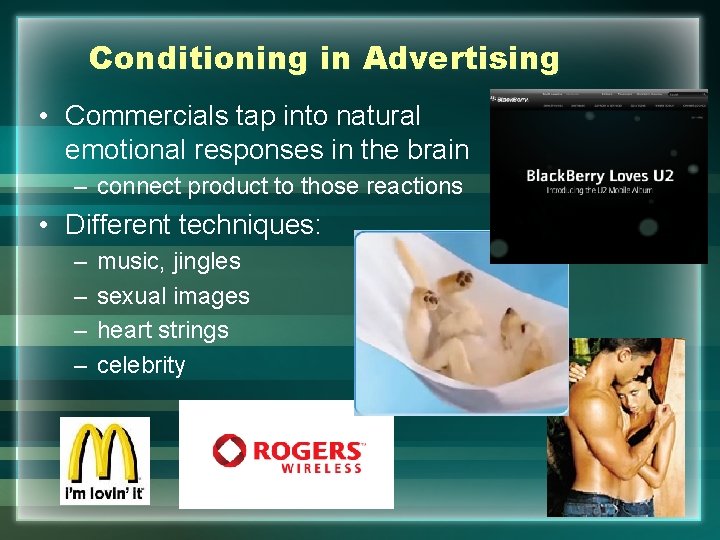
Conditioning in Advertising • Commercials tap into natural emotional responses in the brain – connect product to those reactions • Different techniques: – – music, jingles sexual images heart strings celebrity
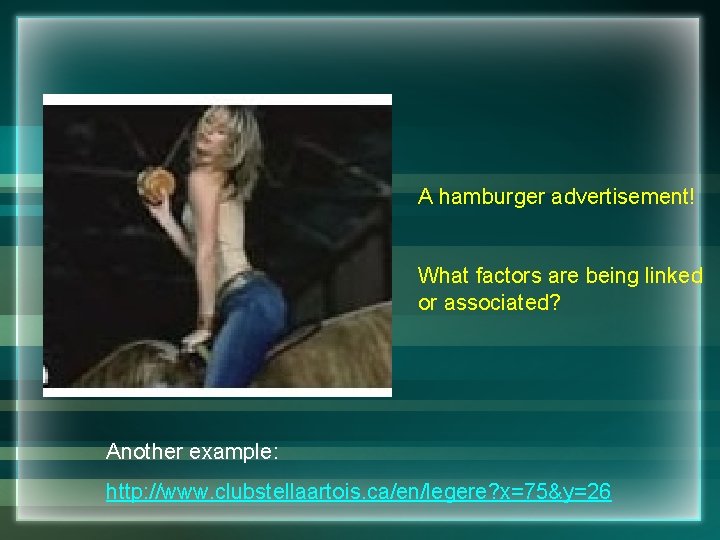
A hamburger advertisement! What factors are being linked or associated? Another example: http: //www. clubstellaartois. ca/en/legere? x=75&y=26
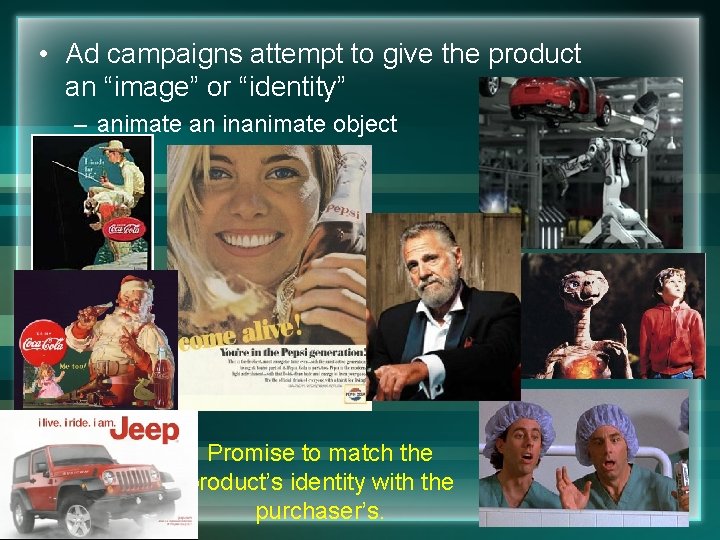
• Ad campaigns attempt to give the product an “image” or “identity” – animate an inanimate object Promise to match the product’s identity with the purchaser’s.
• See all types everyday in society • All shape our behaviour, effect broader social change • Above and other tactics used especially by ADVERTISERS! • Try to shape: – buying patterns – thinking patterns – social trends
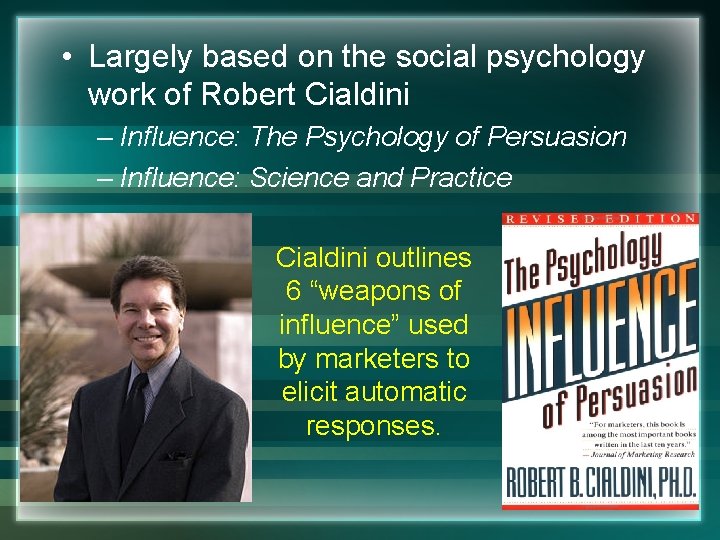
• Largely based on the social psychology work of Robert Cialdini – Influence: The Psychology of Persuasion – Influence: Science and Practice Cialdini outlines 6 “weapons of influence” used by marketers to elicit automatic responses.
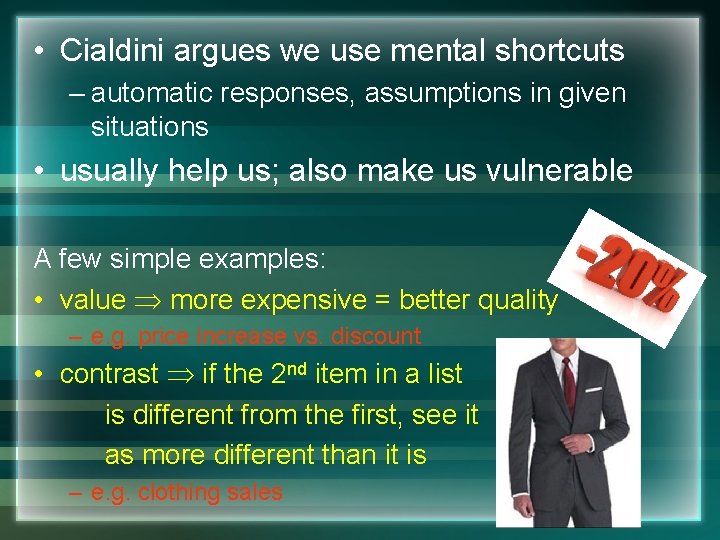
• Cialdini argues we use mental shortcuts – automatic responses, assumptions in given situations • usually help us; also make us vulnerable A few simple examples: • value more expensive = better quality – e. g. price increase vs. discount • contrast if the 2 nd item in a list is different from the first, see it as more different than it is – e. g. clothing sales
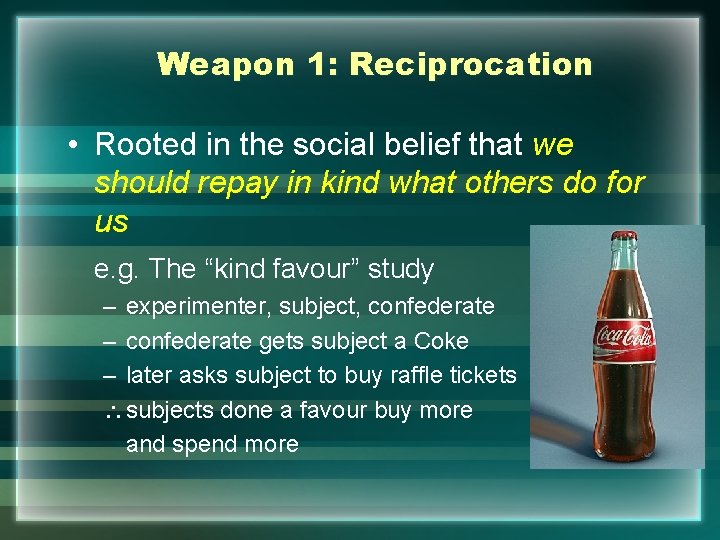
Weapon 1: Reciprocation • Rooted in the social belief that we should repay in kind what others do for us e. g. The “kind favour” study – experimenter, subject, confederate – confederate gets subject a Coke – later asks subject to buy raffle tickets subjects done a favour buy more and spend more
Also used in negotiations and requests: – e. g. “Happy Days” and TV censors – e. g. counselling juvenile delinquents? Common uses Come across this in marketing – free sample of products – charities that mail out a “gift” Hard to counter: obligation to the cycle Redefine: concession or “compliance trick”?
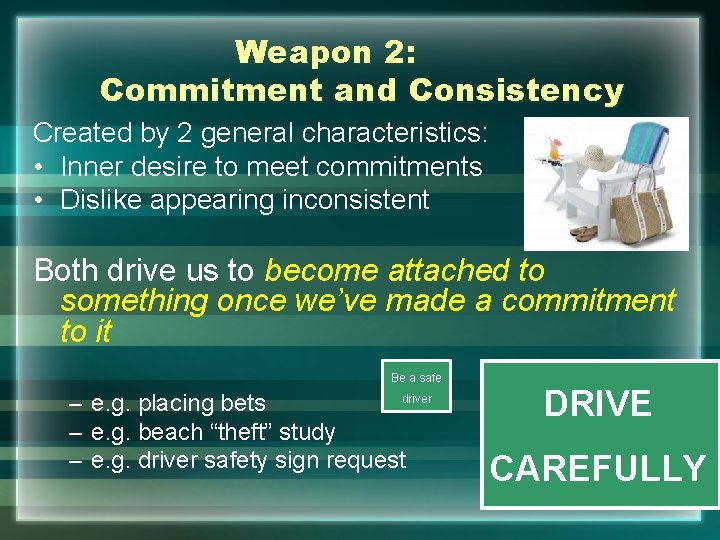
Weapon 2: Commitment and Consistency Created by 2 general characteristics: • Inner desire to meet commitments • Dislike appearing inconsistent Both drive us to become attached to something once we’ve made a commitment to it Be a safe driver – e. g. placing bets – e. g. beach “theft” study – e. g. driver safety sign request DRIVE CAREFULLY
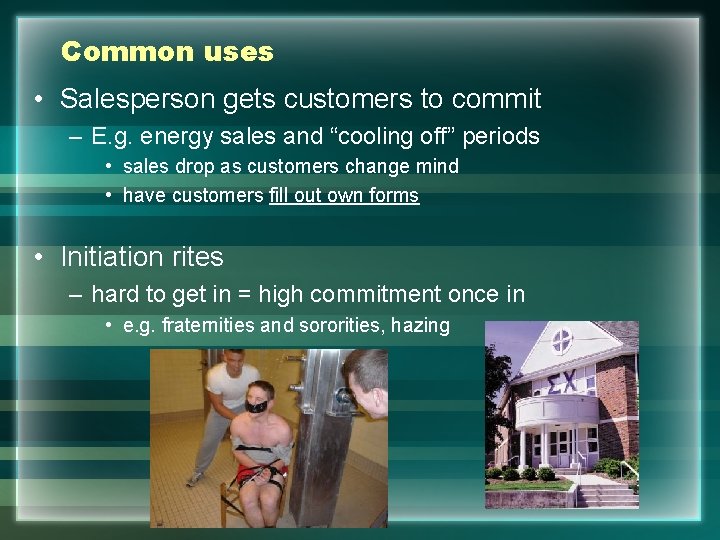
Common uses • Salesperson gets customers to commit – E. g. energy sales and “cooling off” periods • sales drop as customers change mind • have customers fill out own forms • Initiation rites – hard to get in = high commitment once in • e. g. fraternities and sororities, hazing
Weapon 3: Liking Basic behavioural characteristics: – more likely to buy from those we like – like those who are similar to us Common uses company has people sell product to family, friends; sell in homes
Supporting studies • “lost” wallet study • Subjects find a lost wallet (planted) – has money, cheque, ID, note • Finder is similar to note writer = 70 % return it • Finder is dissimilar to note writer = 33 % return it Other Common uses • Sales people finding “connections”
Weapon 4: Social Proof Human behaviour: “we view a behaviour as more correct in a given situation to the degree that we see others performing it” Again, usually a helpful strategy, but makes us vulnerable – e. g. canned laughter effect
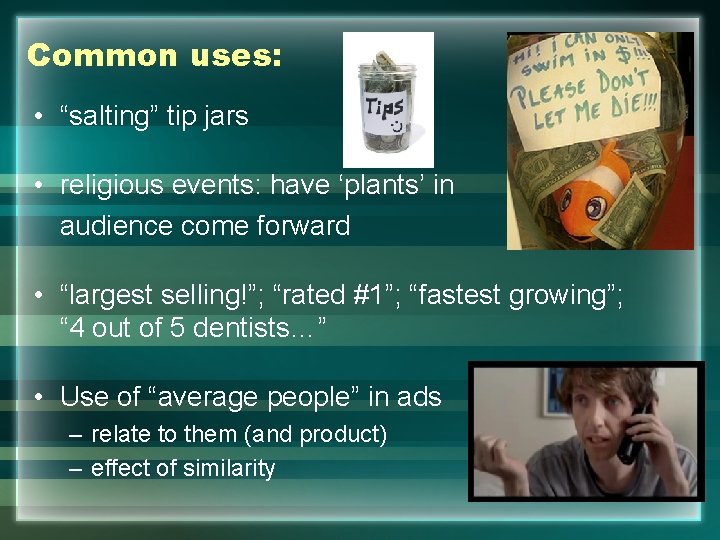
Common uses: • “salting” tip jars • religious events: have ‘plants’ in audience come forward • “largest selling!”; “rated #1”; “fastest growing”; “ 4 out of 5 dentists…” • Use of “average people” in ads – relate to them (and product) – effect of similarity
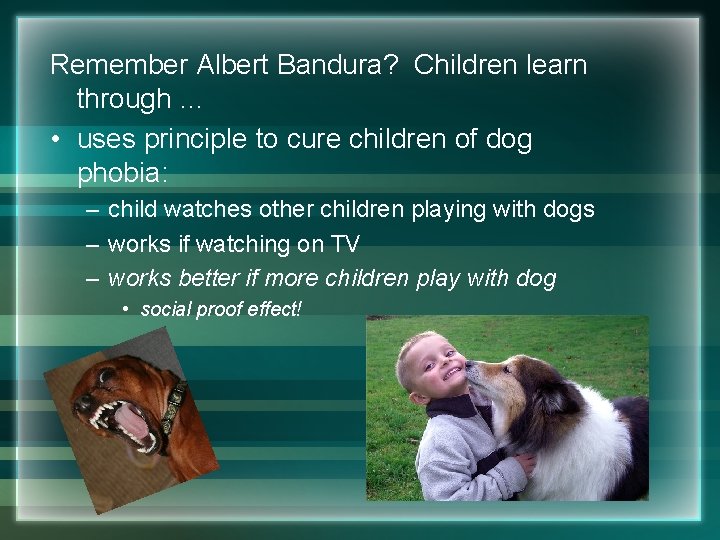
Remember Albert Bandura? Children learn through … • uses principle to cure children of dog phobia: – child watches other children playing with dogs – works if watching on TV – works better if more children play with dog • social proof effect!
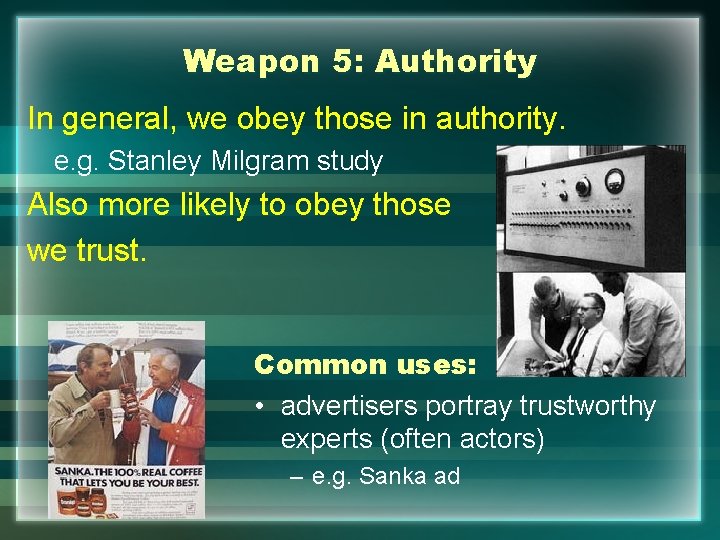
Weapon 5: Authority In general, we obey those in authority. e. g. Stanley Milgram study Also more likely to obey those we trust. Common uses: • advertisers portray trustworthy experts (often actors) – e. g. Sanka ad
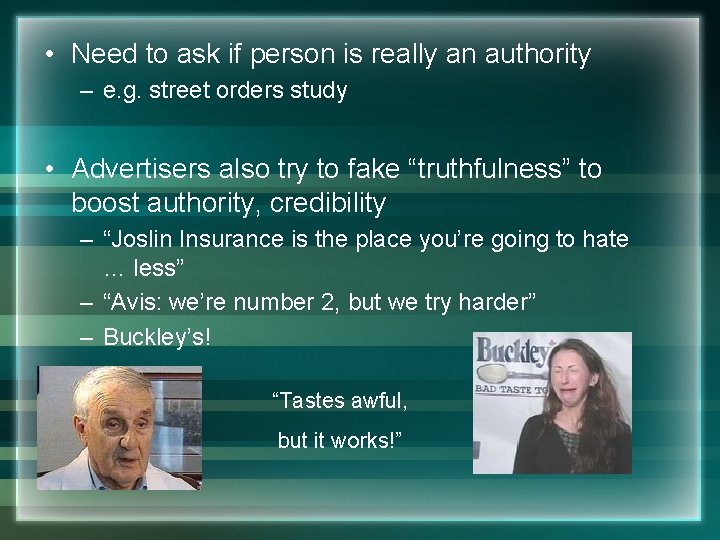
• Need to ask if person is really an authority – e. g. street orders study • Advertisers also try to fake “truthfulness” to boost authority, credibility – “Joslin Insurance is the place you’re going to hate … less” – “Avis: we’re number 2, but we try harder” – Buckley’s! “Tastes awful, but it works!”
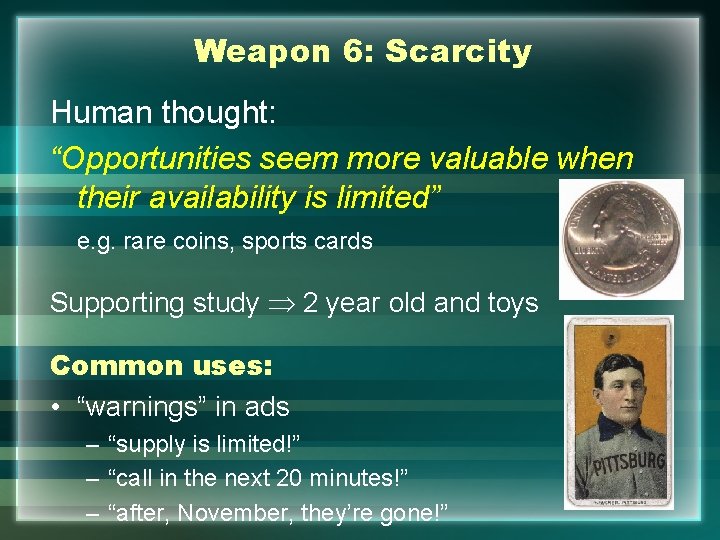
Weapon 6: Scarcity Human thought: “Opportunities seem more valuable when their availability is limited” e. g. rare coins, sports cards Supporting study 2 year old and toys Common uses: • “warnings” in ads – “supply is limited!” – “call in the next 20 minutes!” – “after, November, they’re gone!”
• Dade County, Florida phosphate detergent ban, 1971 – public smuggling – changed attitude towards detergent with phosphates • “poured better, gentler, better in cold water” • Real estate: “goosing them off the fence” – tell customers of another “potential buyer” • Used car salesperson – “double-booking” technique
Your (optional) assignment: • Find one ad: print, TV, radio, Internet – bring it in if possible • Analyze how the ad is working, its techniques – try to incorporate concepts we’ve studied – can include others as well • Work on your own or with a partner • DUE DATE: