
Inflorescences Fruits Spring 2011 What is an inflorescence
- Slides: 41
Inflorescences & Fruits Spring 2011
What is an inflorescence? • Harris & Harris = The flowering part of a plant; a flower cluster; the arrangement of flowers on the flowering axis • Judd et al. = The shoot system which serves for the formation of flowers and which is modified accordingly
Look for the flowering zone! Fig. 4. 27 from the text
Fig. 4. 28 from the text
Determinate inflorescences Fig. 4. 29 from the text
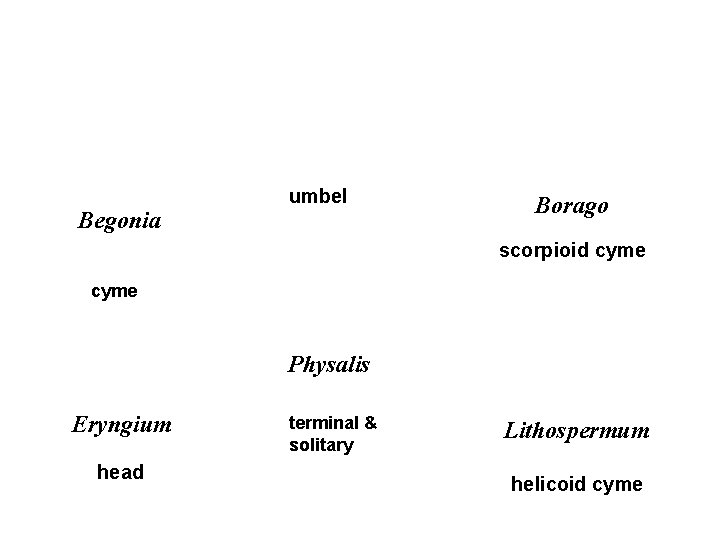
Begonia umbel Borago scorpioid cyme Physalis Eryngium head terminal & solitary Lithospermum helicoid cyme
Indeterminate inflorescences Fig. 4. 30 from the text
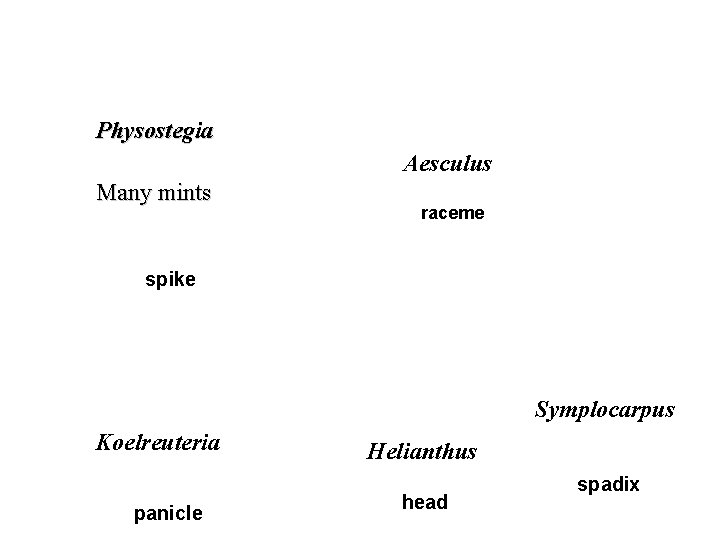
Physostegia Aesculus Many mints raceme spike Symplocarpus Koelreuteria panicle Helianthus head spadix
Maturation • An inflorescence matures into an infructescence. • An ovary (simple or compound) matures into the fruit (but may include additional structures (e. g. , hypanthium). • A fertilized ovule matures into a seed.
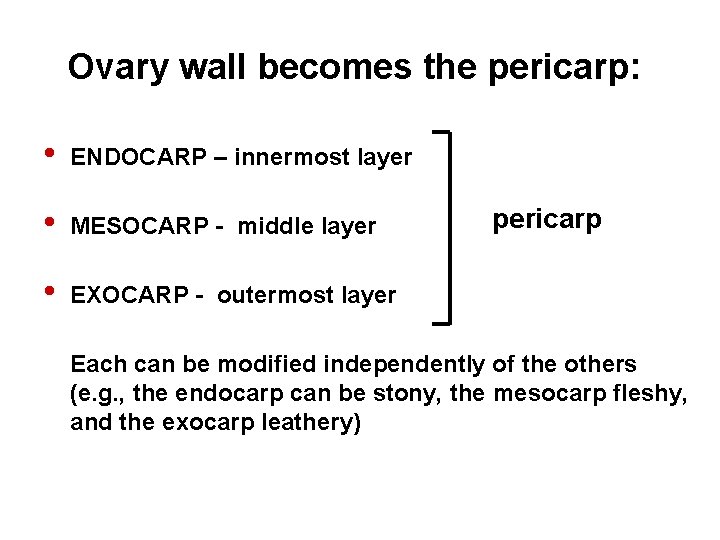
Ovary wall becomes the pericarp: • ENDOCARP – innermost layer • MESOCARP - middle layer • EXOCARP - outermost layer pericarp Each can be modified independently of the others (e. g. , the endocarp can be stony, the mesocarp fleshy, and the exocarp leathery)
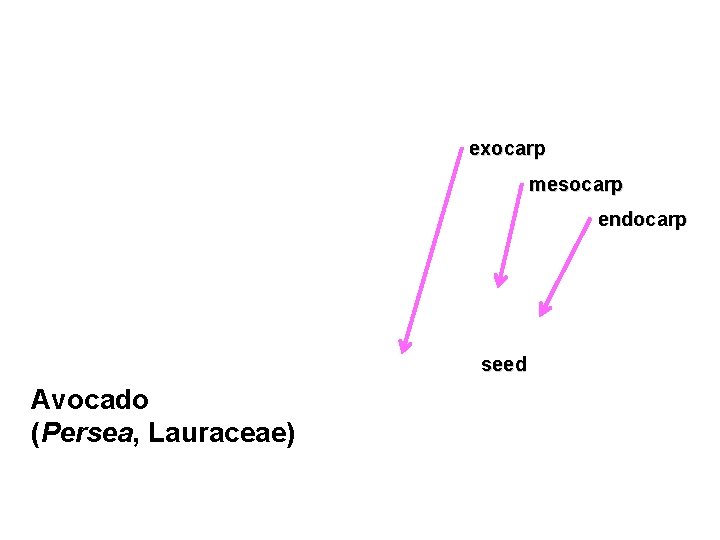
exocarp mesocarp endocarp seed Avocado (Persea, Lauraceae)
Fruit diversity Fig. 4. 31 from the text
Simple vs. multiple fruits • Simple fruit = a fruit that develops from a single flower • Multiple fruit = a fruit derived from the gynoecia of several closely clustered flowers
Simple fruits: two types • “Simple” simple fruits = fruits developing from a single carpel or a compound ovary (2 or more fused carpels) (e. g. , apple) • Aggregate simple fruits = fruits developing from several separate carpels of a single gynoecium (e. g. , blackberry)
Dry Simple Fruits • Dry at maturity • Does fruit open (dehisce) or not? (Dehiscent versus indehiscent) • Number of carpels? Number of seeds? • Are any wings present?
Follicle: one suture opens Asclepias (Milkweed, Apocynaceae)
Legume: opens along 2 sutures Bean Family Fabaceae (Leguminosae)
Cruciferous Dry Fruits Silique Silicle Mustard Family Brassicaceae (Cruciferae)
Capsule: a fruit formed from 2 or more united carpels and dehiscing at maturity to release the seeds
Loculicidal Capsule
Septicidal Capsule
Poricidal Capsule Papaver (Poppy, Papaveraceae)
Indehiscent Dry Fruits
Samara Acer (Sapindaceae)
Achene: single-seeded, seed coat not fused to pericarp Sunflower (Helianthus)
Caryopsis: “Grains”; singledseeded, seed coat fused to pericarp; unique to grasses Wheat (Triticum aestivum) Maize (Zea mays)
Dry Indehiscent Fruits: Nuts hard-shelled, one-seeded e. g. , acorns (Quercus)
Fleshy Fruits One or more layers of the pericarp become fleshy; may be brightly colored. If the ovary is inferior, then the hypanthium may also be involved and it may be the conspicuously fleshy part of the fruit.
Fleshy Fruits • Berry – Entire pericarp fleshy or exocarp • • may be leathery, one to many seeds Drupe - Exocarp & mesocarp fleshy, endocarp hard Pome – Fleshy mesocarp; exocarp fused to hypanthium/receptacle (Rosaceae)
Berry Capsicum (Solanaceae)
Berry Tomato (Solanum)
Berry (Pepo) Found in the Cucumber Family (Cucurbitaceae)
Berry (hesperidium) Found in the citrus family (Rutaceae)
Drupe Prunus
Drupe - Coconut Cocos nucifera (Arecaceae)
Pome Malus (apple)
Aggregate Fruit Rubus (Rosaceae)
Multiple Fruit - Pineapple Ananas (Bromeliaceae)
Multiple Fruit: Syconium (Fig) Ficus (Moraceae)
Accessory fruits Fruit or cluster of fruits in which structures in addition to the matured gynoecium form a functional part of the fruit. Simple accessory fruit: e. g. , strawberry Multiple accessory fruit: e. g. , pineapple
Accessory “Fruit” – Aggregate of Achenes Fragaria (strawberry)