
INFLATION STAGFLATION EDGENUITY LESSON 4 4 DEFINITIONS Inflation
- Slides: 19
INFLATION & STAGFLATION EDGENUITY LESSON 4. 4
DEFINITIONS Inflation A sustained increase in prices Goods and services get more expensive Reduces purchasing power Causes money to lose value over time Deflation Occurs when prices steadily decrease Causes falling prices Usually accompanies falling demand economic problems
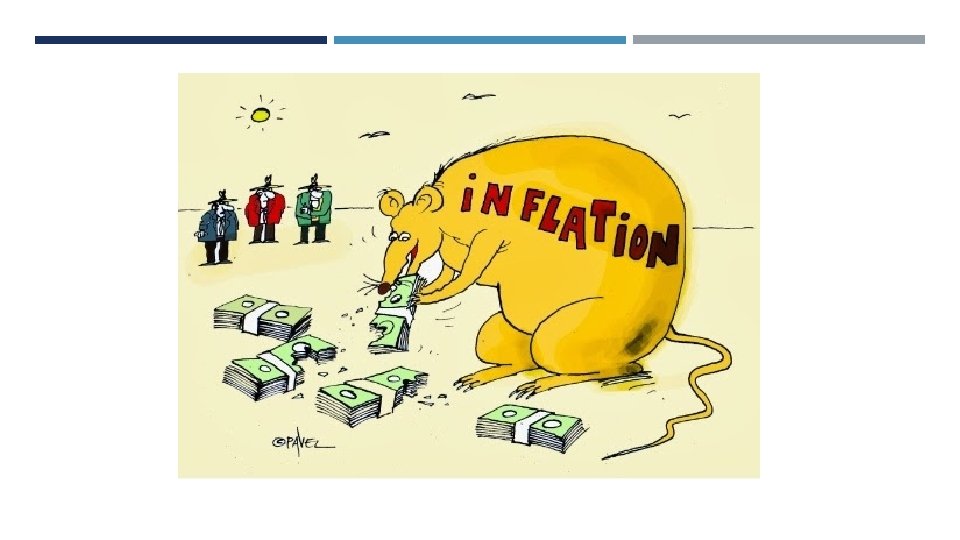
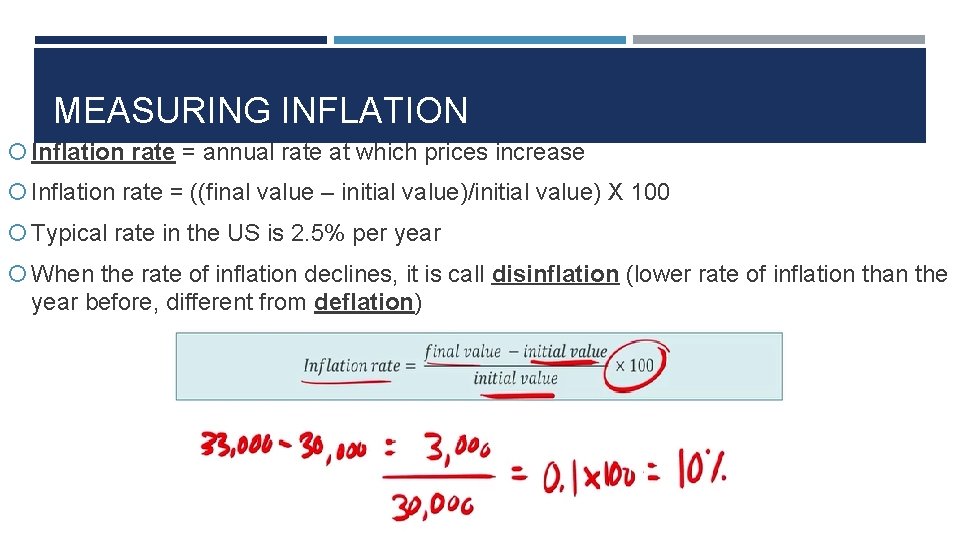
MEASURING INFLATION Inflation rate = annual rate at which prices increase Inflation rate = ((final value – initial value)/initial value) X 100 Typical rate in the US is 2. 5% per year When the rate of inflation declines, it is call disinflation (lower rate of inflation than the year before, different from deflation)
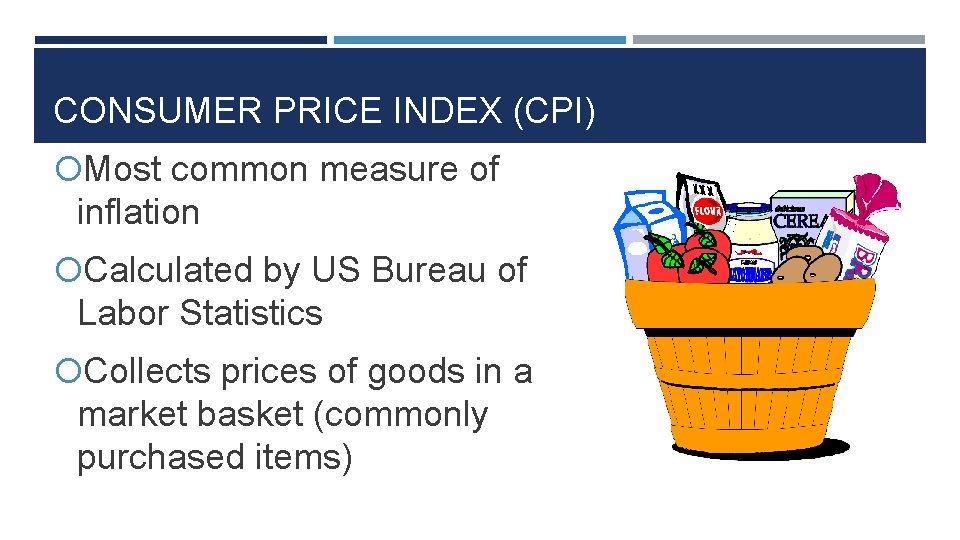
CONSUMER PRICE INDEX (CPI) Most common measure of inflation Calculated by US Bureau of Labor Statistics Collects prices of goods in a market basket (commonly purchased items)
WHY IS GASOLINE WEIGHTED MORE HEAVILY THAN TOMATOES IN A CALCULATION OF THE ANNUAL INFLATION RATE IN THE UNITED STATES? a. Gasoline costs more to produce and purchase than tomatoes. b. Gasoline is imported from other nations at a higher rate than tomatoes. c. Americans purchase many more boxes of tomatoes than barrels of gasoline. d. Americans spend more money on gasoline than tomatoes, on average.
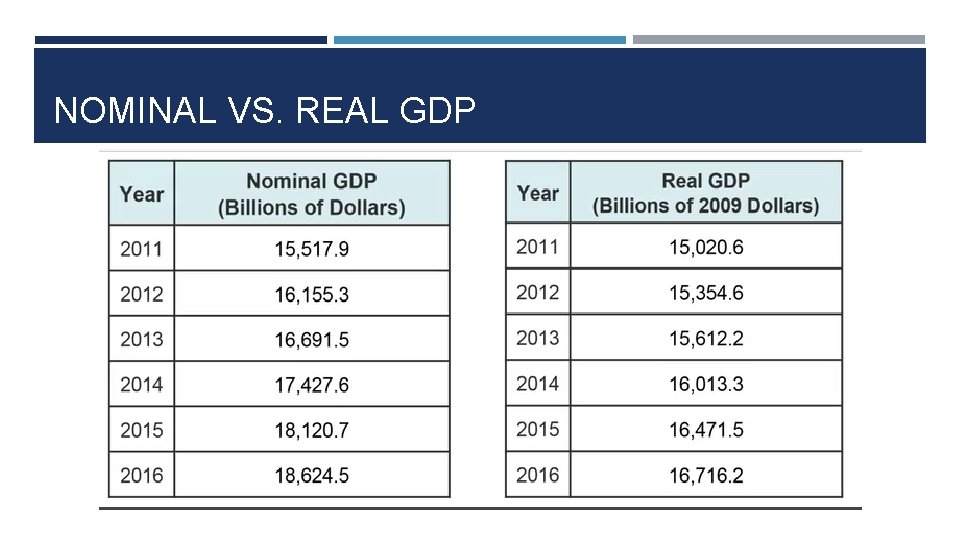
NOMINAL VS. REAL GDP – Gross Domestic Product (economic indicator) Nominal measurements do not account for outside factors Real measurements account for inflation and price changes
NOMINAL VS. REAL GDP
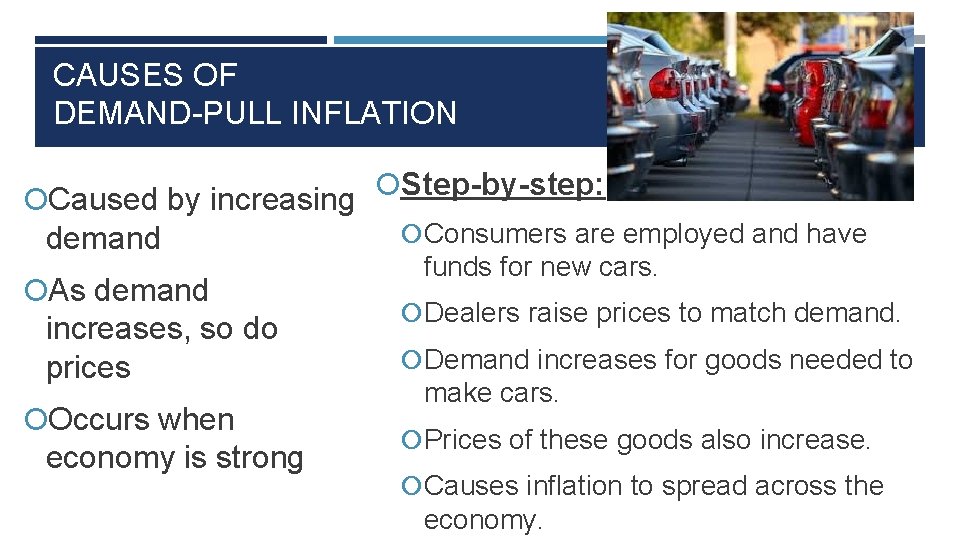
CAUSES OF DEMAND-PULL INFLATION Step-by-step: Caused by increasing demand As demand increases, so do prices Occurs when economy is strong Consumers are employed and have funds for new cars. Dealers raise prices to match demand. Demand increases for goods needed to make cars. Prices of these goods also increase. Causes inflation to spread across the economy.
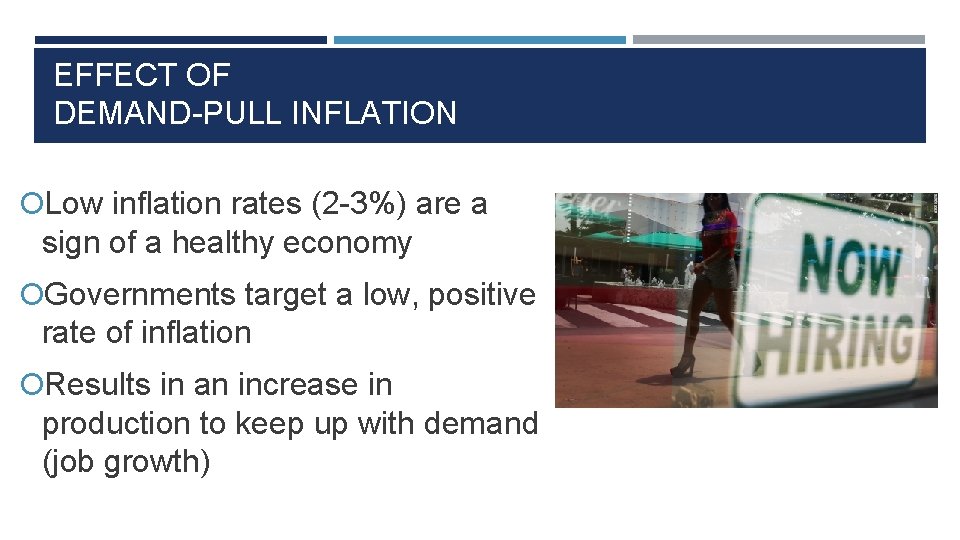
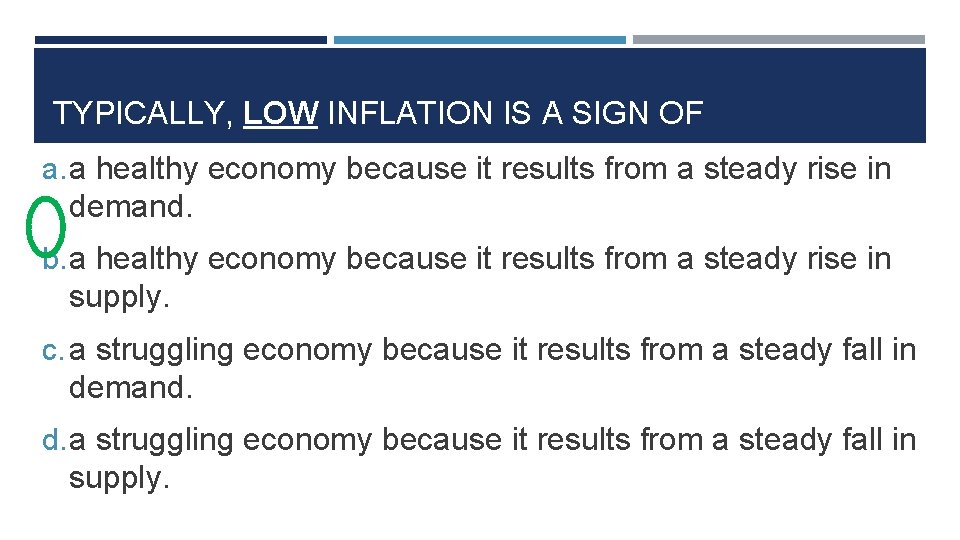
EFFECT OF DEMAND-PULL INFLATION Low inflation rates (2 -3%) are a sign of a healthy economy Governments target a low, positive rate of inflation Results in an increase in production to keep up with demand (job growth)
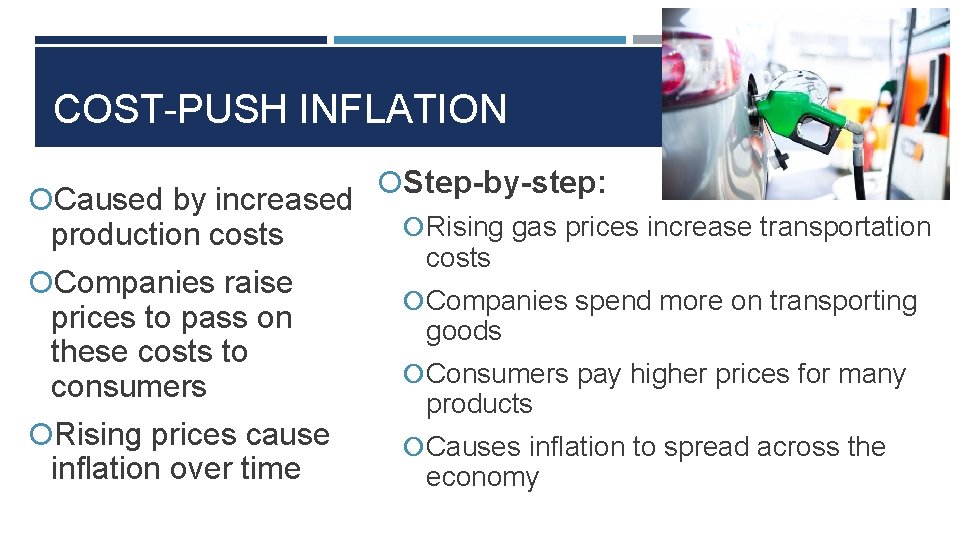
COST-PUSH INFLATION Caused by increased production costs Companies raise prices to pass on these costs to consumers Rising prices cause inflation over time Step-by-step: Rising gas prices increase transportation costs Companies spend more on transporting goods Consumers pay higher prices for many products Causes inflation to spread across the economy
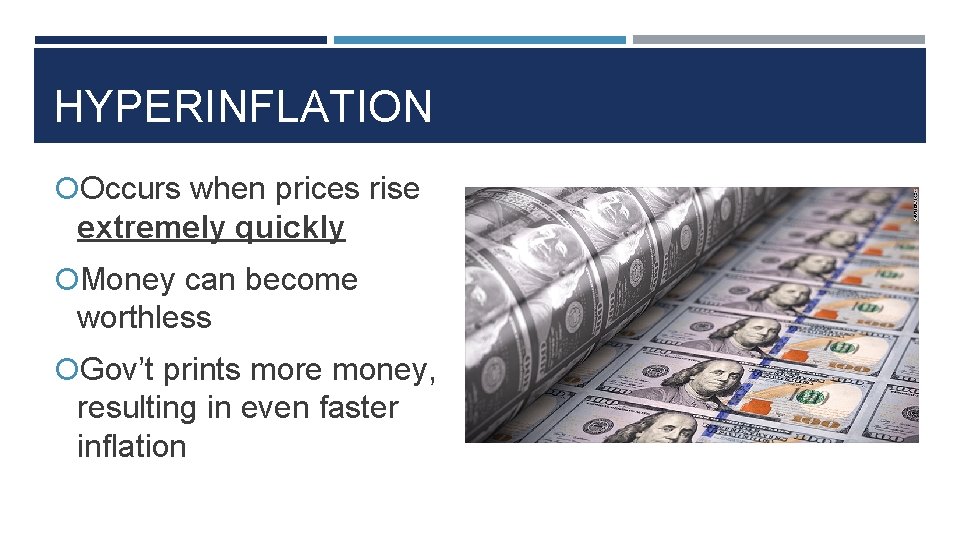
HYPERINFLATION Occurs when prices rise extremely quickly Money can become worthless Gov’t prints more money, resulting in even faster inflation
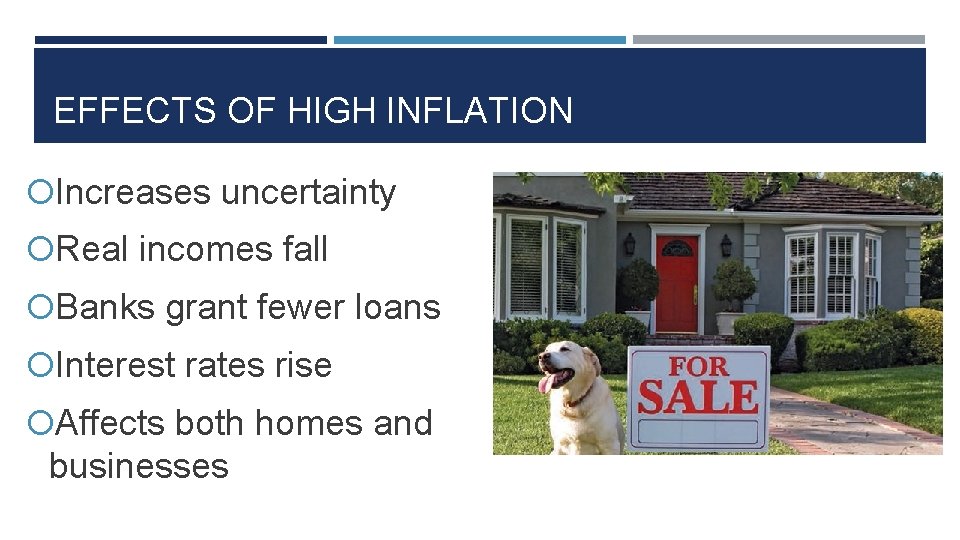
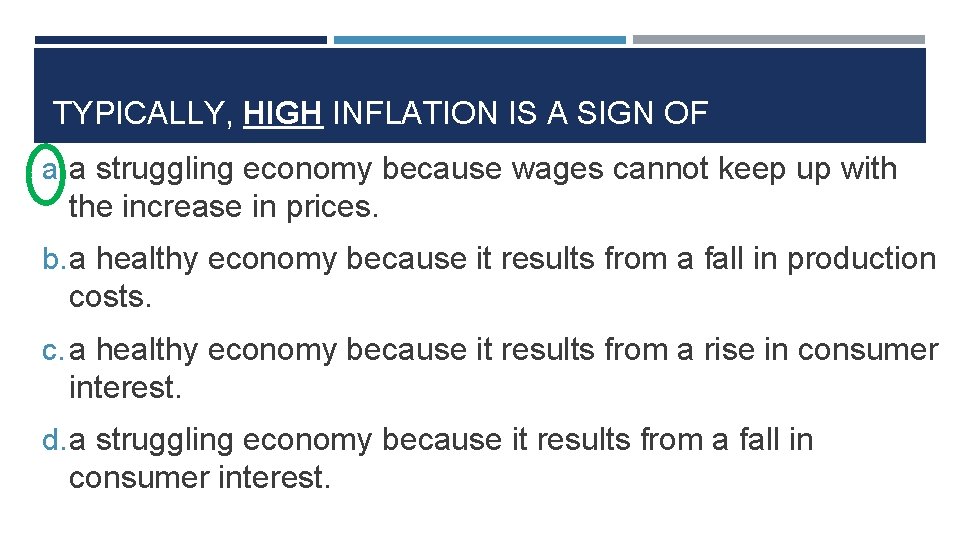
EFFECTS OF HIGH INFLATION Increases uncertainty Real incomes fall Banks grant fewer loans Interest rates rise Affects both homes and businesses
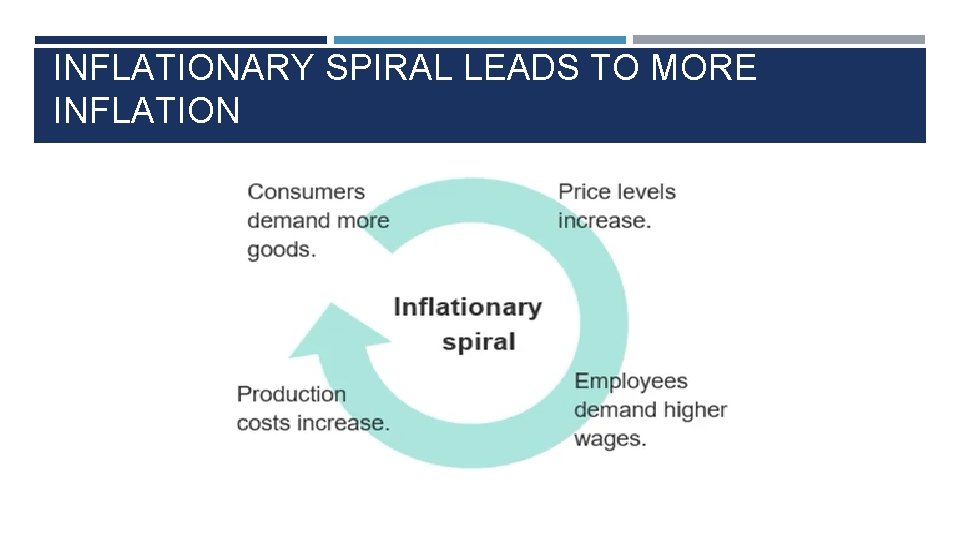
INFLATIONARY SPIRAL LEADS TO MORE INFLATION
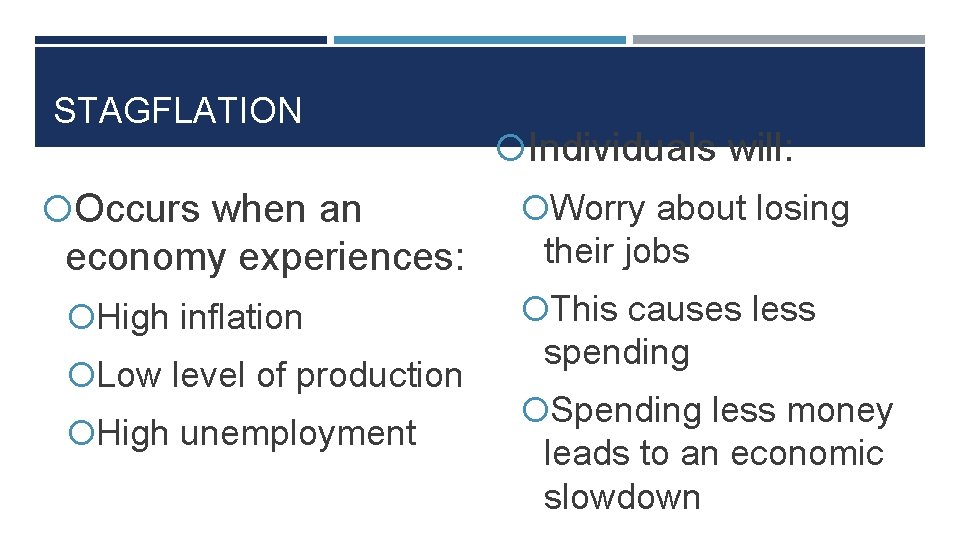
STAGFLATION Occurs when an economy experiences: High inflation Low level of production High unemployment Individuals will: Worry about losing their jobs This causes less spending Spending less money leads to an economic slowdown
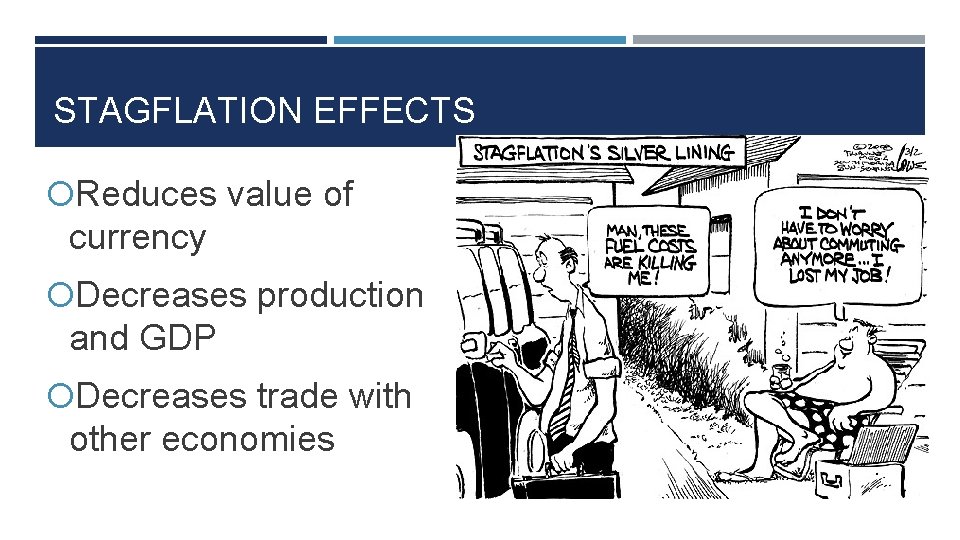
STAGFLATION EFFECTS Reduces value of currency Decreases production and GDP Decreases trade with other economies
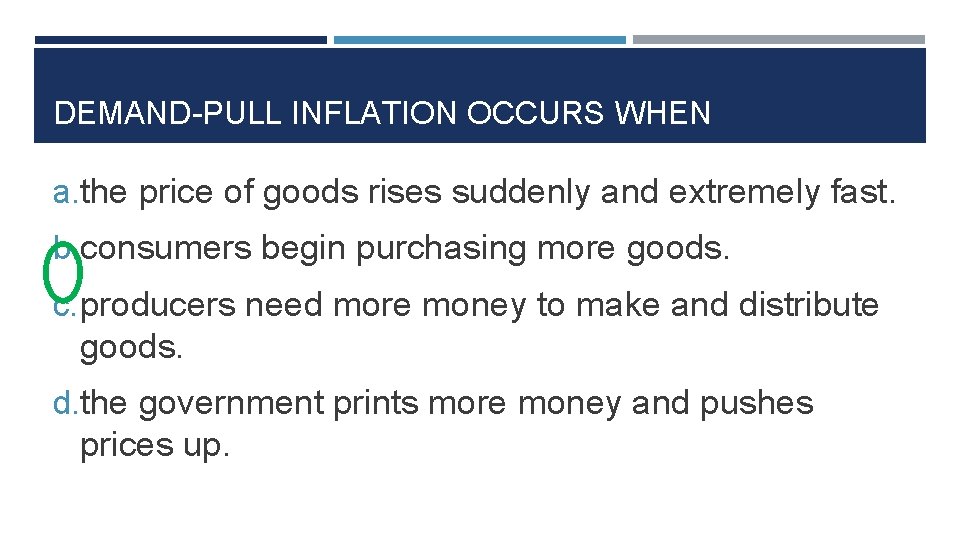
DEMAND-PULL INFLATION OCCURS WHEN a. the price of goods rises suddenly and extremely fast. b. consumers begin purchasing more goods. c. producers need more money to make and distribute goods. d. the government prints more money and pushes prices up.
TYPICALLY, LOW INFLATION IS A SIGN OF a. a healthy economy because it results from a steady rise in demand. b. a healthy economy because it results from a steady rise in supply. c. a struggling economy because it results from a steady fall in demand. d. a struggling economy because it results from a steady fall in supply.
TYPICALLY, HIGH INFLATION IS A SIGN OF a. a struggling economy because wages cannot keep up with the increase in prices. b. a healthy economy because it results from a fall in production costs. c. a healthy economy because it results from a rise in consumer interest. d. a struggling economy because it results from a fall in consumer interest.