
INFLATION Definition In economics inflation is a sustained

- Slides: 6
INFLATION
Definition In economics, inflation is a sustained increase in the price level of goods and services in an economy over a period of time. When the price level rises, each unit of currency buys fewer goods and services; consequently, inflation reflects a reduction in the purchasing power per unit of money – a loss of real value in the medium of exchange and unit of account within the economy.
Inflation Rate � The inflation rate is the percent increase or decrease in prices during a specified period. It's usually over a month or a year. The percentage tells you how quickly prices rose during the period. For example, if the inflation rate for a gallon of gas is 2 percent a year, then gas prices will be 2 percent higher next year. That means a gallon that costs $2. 00 this year will cost $2. 04 next year.
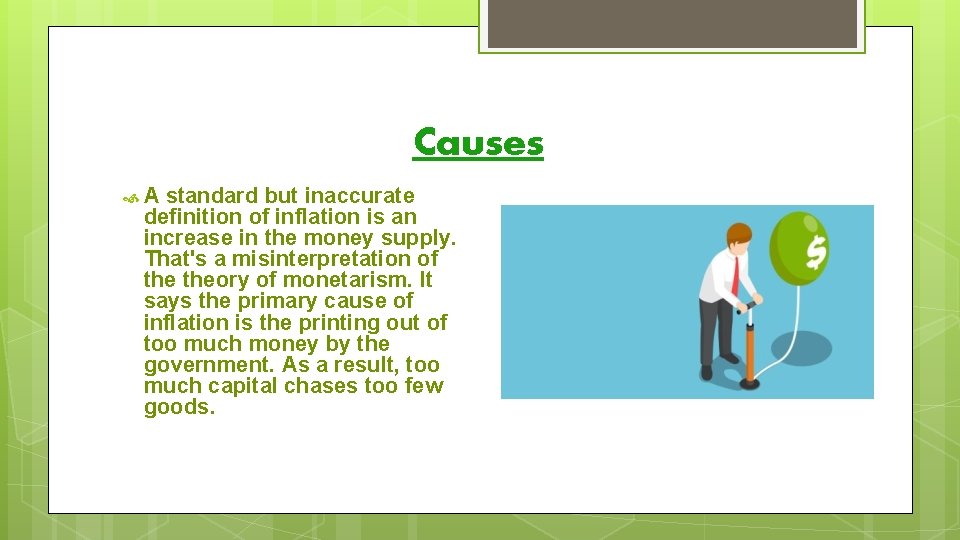
Causes A standard but inaccurate definition of inflation is an increase in the money supply. That's a misinterpretation of theory of monetarism. It says the primary cause of inflation is the printing out of too much money by the government. As a result, too much capital chases too few goods.
General Negative • An increase in the general level of prices implies a decrease in the purchasing power of the currency. That is, when the general level of prices rise, each monetary unit buys fewer goods and services. The effect of inflation is not distributed evenly in the economy, and as a consequence there are hidden costs to some and benefits to others from this decrease in the purchasing power of money. • High or unpredictable inflation rates are regarded as harmful to an overall economy. They add inefficiencies in the market, and make it difficult for companies to budget or plan long-term. Inflation can act as a drag on productivity as companies are forced to shift resources away from products and services to focus on profit and losses from currency inflation. Uncertainty about the future purchasing power of money discourages investment and saving. Inflation can also impose hidden tax increases. Effects
Example of inflation Imagine your grandma stuffed a $10 bill in her old wallet in the year 1975 and then forgot about it. Cost of gasoline during that year was around $0. 5 per gallon, which means she could have then bought 20 gallons of gasoline with that $10 note. Twenty-five years later in the year 2000, the cost of gasoline was around $1. 6 per gallon. If she finds the forgotten note in the year 2000 and then went on to purchase gasoline, she would have got only 6. 25 gallons. Although the $10 note remained the same for its value, it lost its purchasing power by around 69 percent over the 25 year period. This simple example explains how money loses its value over time when prices rise. This phenomenon is called inflation.