
Inflation Causes and Impacts Lower 6 th Macroeconomic
- Slides: 12
Inflation Causes and Impacts Lower 6 th Macroeconomic Objectives
Causes of Inflation - Causes and Impacts Mr O’Grady
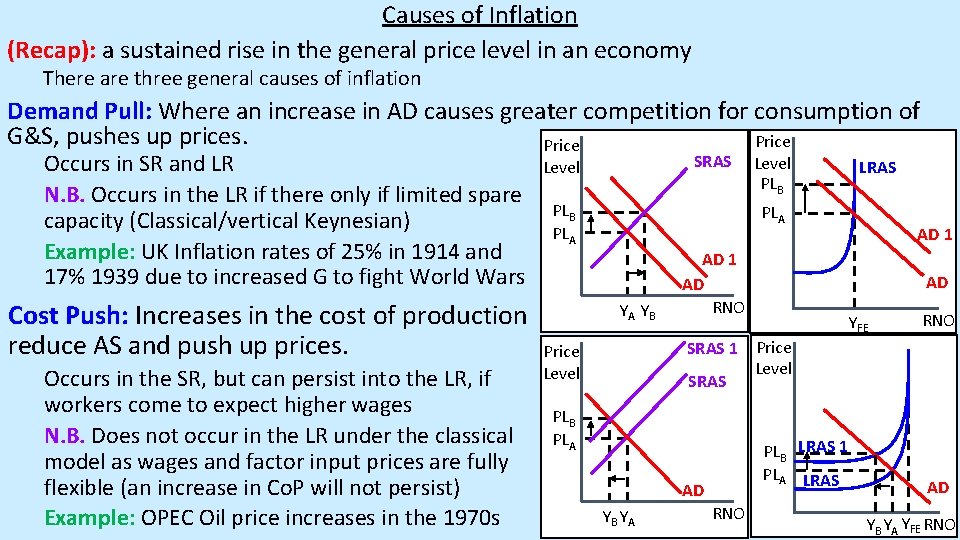
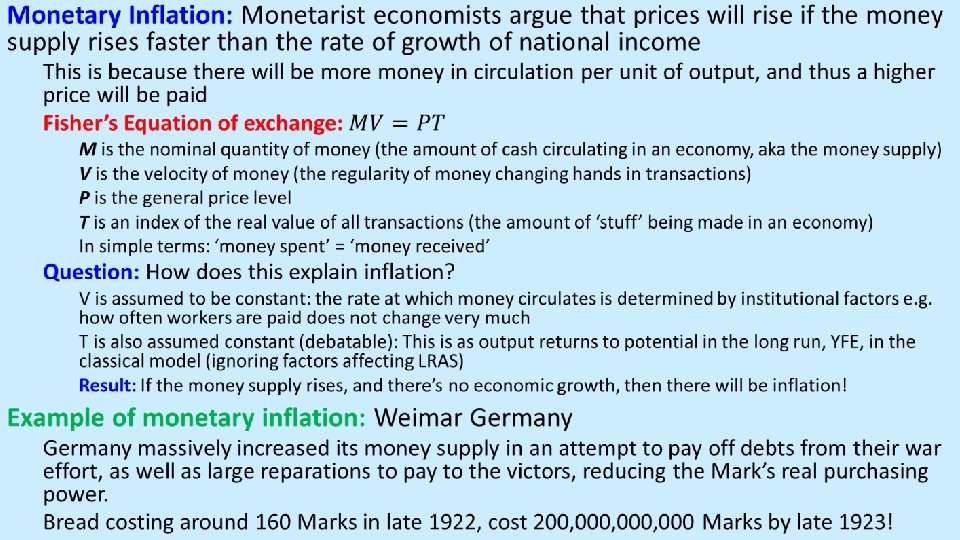
Causes of Inflation (Recap): a sustained rise in the general price level in an economy There are three general causes of inflation Demand Pull: Where an increase in AD causes greater competition for consumption of G&S, pushes up prices. Price Occurs in SR and LR N. B. Occurs in the LR if there only if limited spare capacity (Classical/vertical Keynesian) Example: UK Inflation rates of 25% in 1914 and 17% 1939 due to increased G to fight World Wars Cost Push: Increases in the cost of production reduce AS and push up prices. Occurs in the SR, but can persist into the LR, if workers come to expect higher wages N. B. Does not occur in the LR under the classical model as wages and factor input prices are fully flexible (an increase in Co. P will not persist) Example: OPEC Oil price increases in the 1970 s SRAS Level PLB PLA Level PLB LRAS PLA YA YB AD 1 AD RNO AD 1 AD YFE RNO SRAS 1 Price Level SRAS Price Level PLB PLA PLB LRAS 1 PLA LRAS AD YB YA RNO AD YB YA YFE RNO
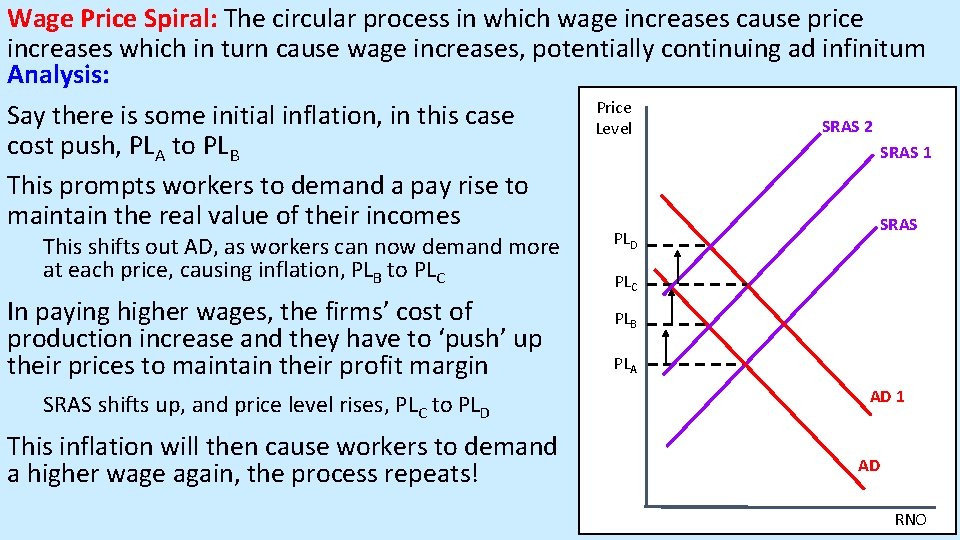
Wage Price Spiral: The circular process in which wage increases cause price increases which in turn cause wage increases, potentially continuing ad infinitum Analysis: Price Say there is some initial inflation, in this case SRAS 2 Level cost push, PLA to PLB SRAS 1 This prompts workers to demand a pay rise to maintain the real value of their incomes SRAS This shifts out AD, as workers can now demand more at each price, causing inflation, PLB to PLC In paying higher wages, the firms’ cost of production increase and they have to ‘push’ up their prices to maintain their profit margin SRAS shifts up, and price level rises, PLC to PLD This inflation will then cause workers to demand a higher wage again, the process repeats! PLD PLC PLB PLA AD 1 AD RNO
Costs of Inflation - Causes and Impacts Mr O’Grady
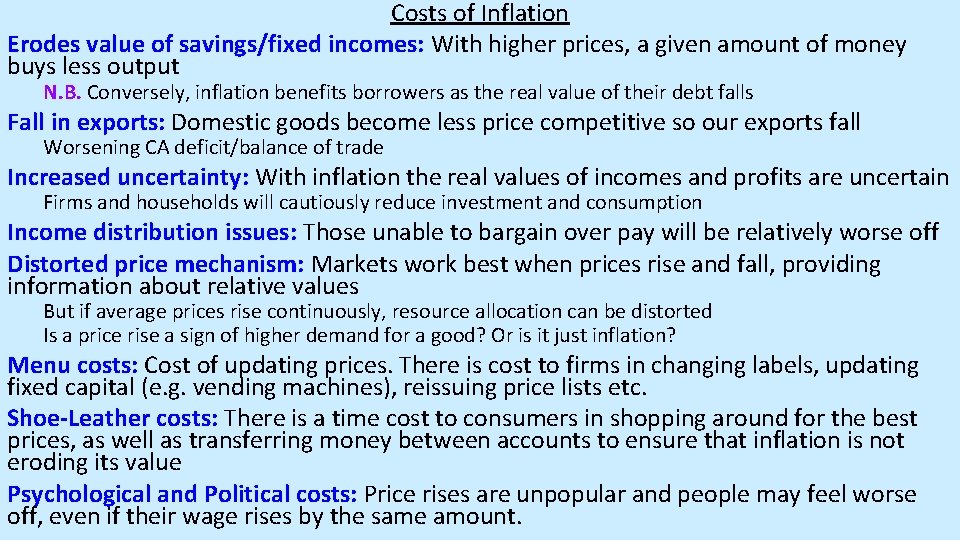
Costs of Inflation Erodes value of savings/fixed incomes: With higher prices, a given amount of money buys less output N. B. Conversely, inflation benefits borrowers as the real value of their debt falls Fall in exports: Domestic goods become less price competitive so our exports fall Worsening CA deficit/balance of trade Increased uncertainty: With inflation the real values of incomes and profits are uncertain Firms and households will cautiously reduce investment and consumption Income distribution issues: Those unable to bargain over pay will be relatively worse off Distorted price mechanism: Markets work best when prices rise and fall, providing information about relative values But if average prices rise continuously, resource allocation can be distorted Is a price rise a sign of higher demand for a good? Or is it just inflation? Menu costs: Cost of updating prices. There is cost to firms in changing labels, updating fixed capital (e. g. vending machines), reissuing price lists etc. Shoe-Leather costs: There is a time cost to consumers in shopping around for the best prices, as well as transferring money between accounts to ensure that inflation is not eroding its value Psychological and Political costs: Price rises are unpopular and people may feel worse off, even if their wage rises by the same amount.
Why do we not want Zero Inflation? Inflation - Causes and Impacts Mr O’Grady
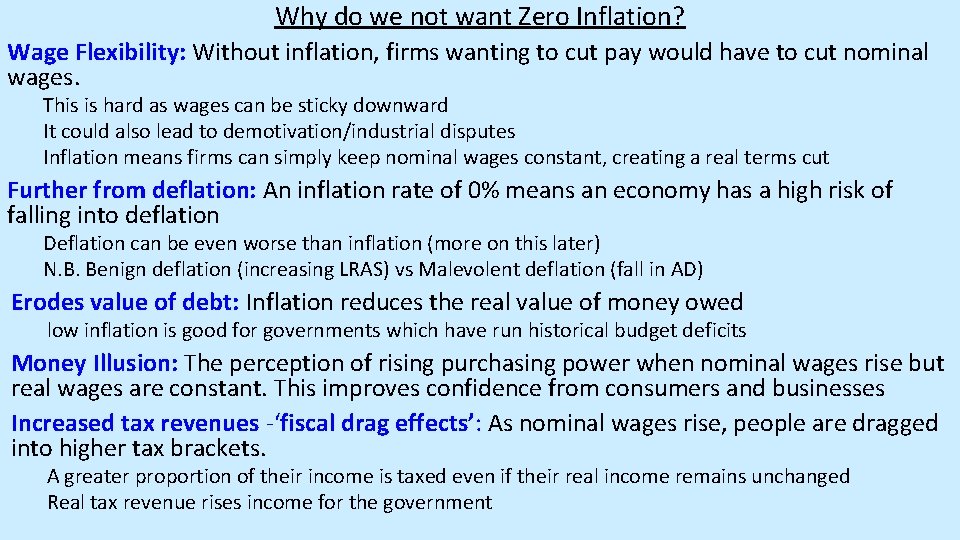
Why do we not want Zero Inflation? Wage Flexibility: Without inflation, firms wanting to cut pay would have to cut nominal wages. This is hard as wages can be sticky downward It could also lead to demotivation/industrial disputes Inflation means firms can simply keep nominal wages constant, creating a real terms cut Further from deflation: An inflation rate of 0% means an economy has a high risk of falling into deflation Deflation can be even worse than inflation (more on this later) N. B. Benign deflation (increasing LRAS) vs Malevolent deflation (fall in AD) Erodes value of debt: Inflation reduces the real value of money owed low inflation is good for governments which have run historical budget deficits Money Illusion: The perception of rising purchasing power when nominal wages rise but real wages are constant. This improves confidence from consumers and businesses Increased tax revenues -‘fiscal drag effects’: As nominal wages rise, people are dragged into higher tax brackets. A greater proportion of their income is taxed even if their real income remains unchanged Real tax revenue rises income for the government
Deflation Inflation - Causes and Impacts Mr O’Grady
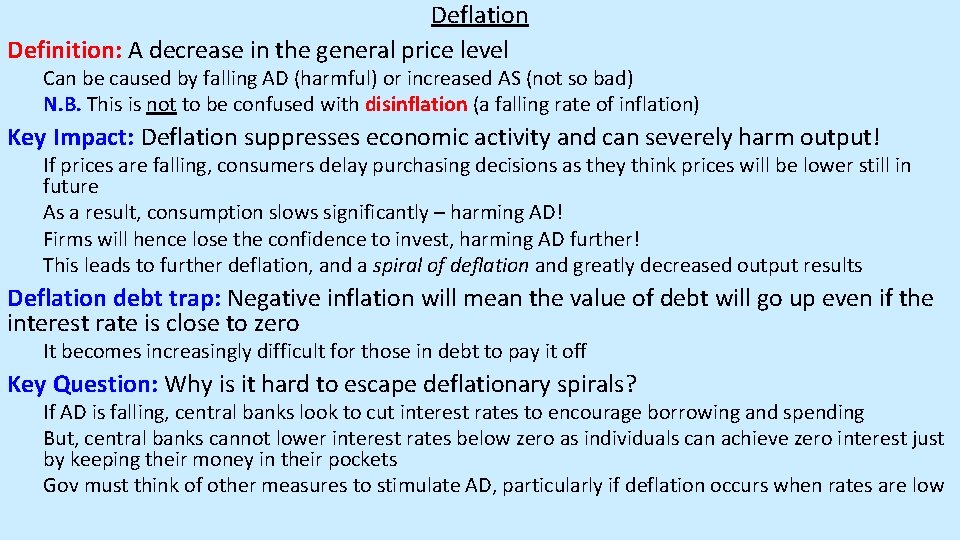
Deflation Definition: A decrease in the general price level Can be caused by falling AD (harmful) or increased AS (not so bad) N. B. This is not to be confused with disinflation (a falling rate of inflation) Key Impact: Deflation suppresses economic activity and can severely harm output! If prices are falling, consumers delay purchasing decisions as they think prices will be lower still in future As a result, consumption slows significantly – harming AD! Firms will hence lose the confidence to invest, harming AD further! This leads to further deflation, and a spiral of deflation and greatly decreased output results Deflation debt trap: Negative inflation will mean the value of debt will go up even if the interest rate is close to zero It becomes increasingly difficult for those in debt to pay it off Key Question: Why is it hard to escape deflationary spirals? If AD is falling, central banks look to cut interest rates to encourage borrowing and spending But, central banks cannot lower interest rates below zero as individuals can achieve zero interest just by keeping their money in their pockets Gov must think of other measures to stimulate AD, particularly if deflation occurs when rates are low
Where next? Don’t forget to SUBSCRIBE! Visit our website: www. smootheconomics. co. uk Find more resources, extension materials, details of courses, competitions, and more! Follow our socials: Instagram: @smootheconomics Twitter: @Smooth. Economics Facebook: @Smooth. Economics