
Inflammation Definition Inflammation is a local vascular and
- Slides: 4
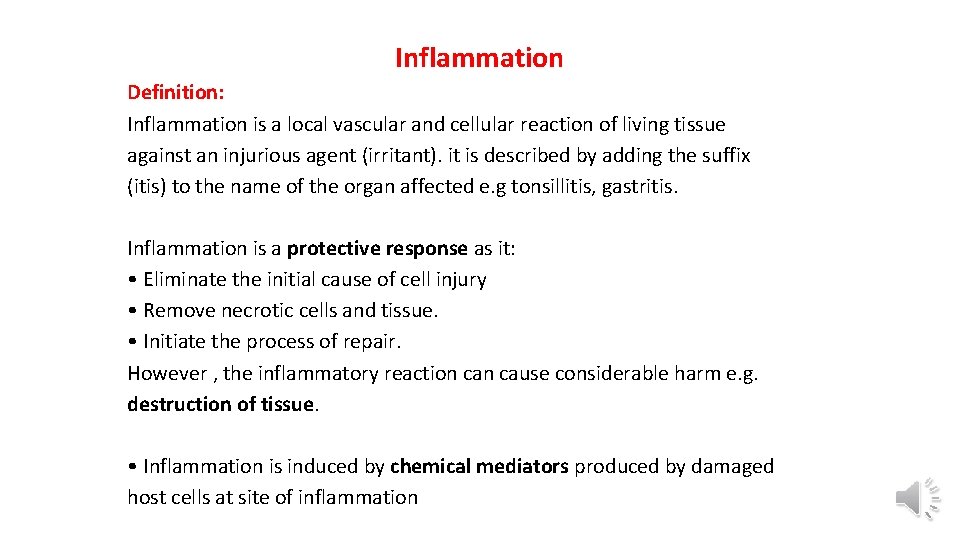
Inflammation Definition: Inflammation is a local vascular and cellular reaction of living tissue against an injurious agent (irritant). it is described by adding the suffix (itis) to the name of the organ affected e. g tonsillitis, gastritis. Inflammation is a protective response as it: • Eliminate the initial cause of cell injury • Remove necrotic cells and tissue. • Initiate the process of repair. However , the inflammatory reaction cause considerable harm e. g. destruction of tissue. • Inflammation is induced by chemical mediators produced by damaged host cells at site of inflammation
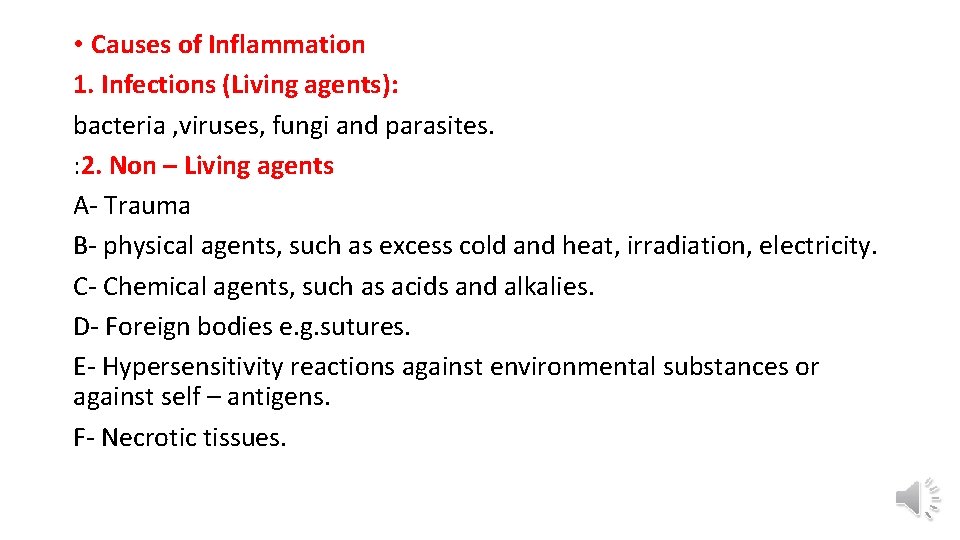
• Causes of Inflammation 1. Infections (Living agents): bacteria , viruses, fungi and parasites. : 2. Non – Living agents A- Trauma B- physical agents, such as excess cold and heat, irradiation, electricity. C- Chemical agents, such as acids and alkalies. D- Foreign bodies e. g. sutures. E- Hypersensitivity reactions against environmental substances or against self – antigens. F- Necrotic tissues.
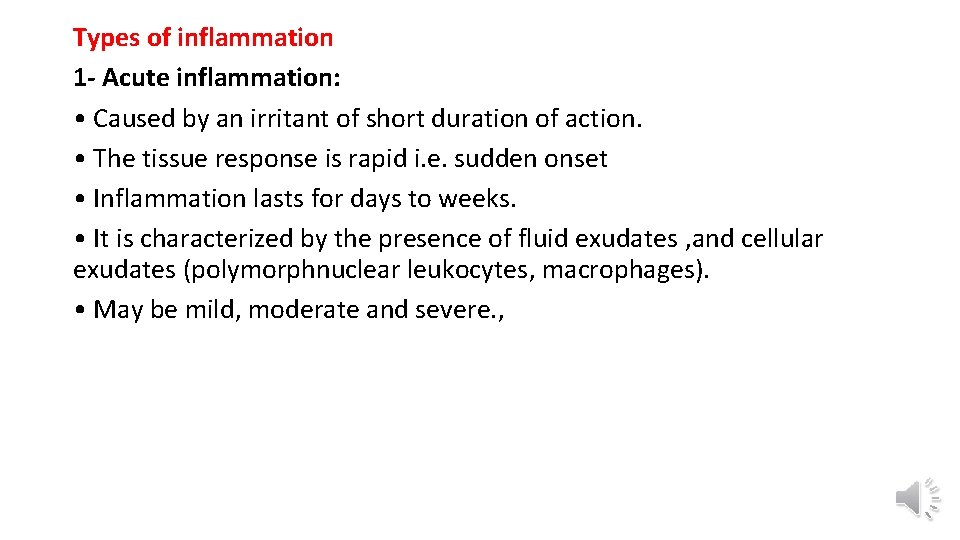
Types of inflammation 1 - Acute inflammation: • Caused by an irritant of short duration of action. • The tissue response is rapid i. e. sudden onset • Inflammation lasts for days to weeks. • It is characterized by the presence of fluid exudates , and cellular exudates (polymorphnuclear leukocytes, macrophages). • May be mild, moderate and severe. ,
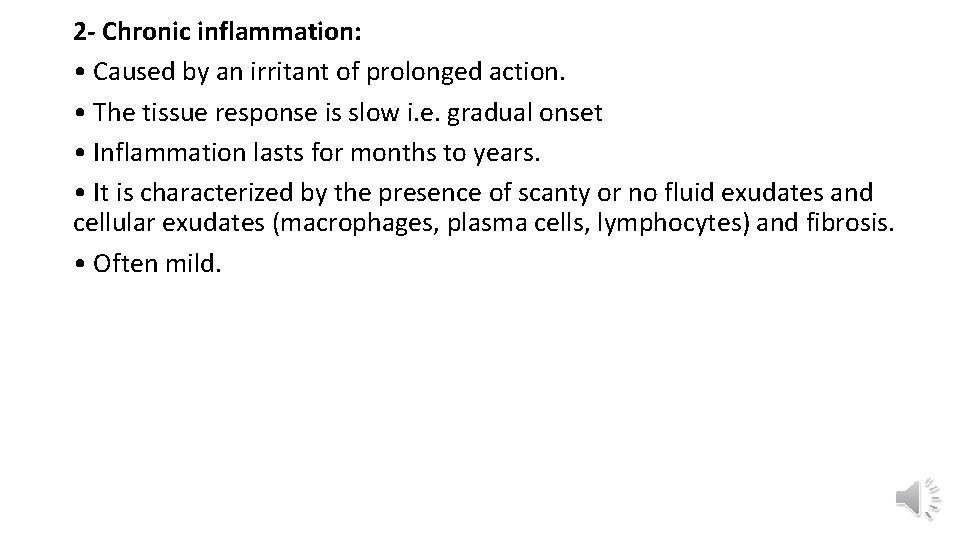
2 - Chronic inflammation: • Caused by an irritant of prolonged action. • The tissue response is slow i. e. gradual onset • Inflammation lasts for months to years. • It is characterized by the presence of scanty or no fluid exudates and cellular exudates (macrophages, plasma cells, lymphocytes) and fibrosis. • Often mild.