
INFINITIVE OR ING FORM MARIANA KOLARSKA Jogging is
- Slides: 34
INFINITIVE OR ‘–ING’ FORM MARIANA KOLARSKA
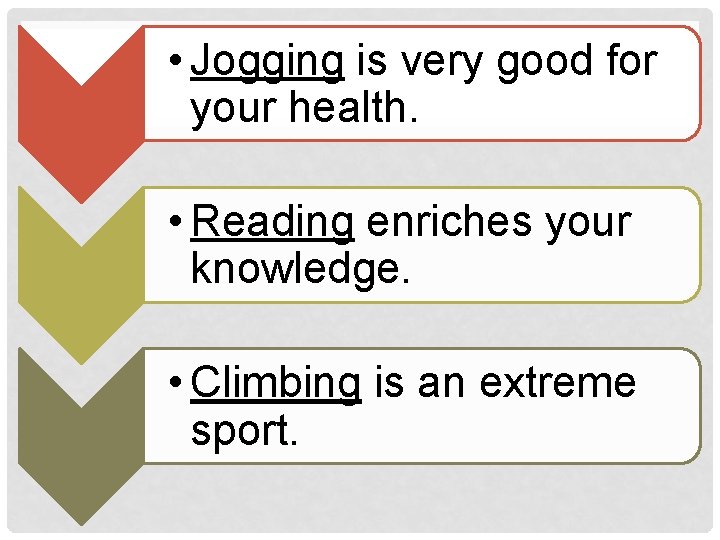
• Jogging is very good for your health. • Reading enriches your knowledge. • Climbing is an extreme sport.
THE –ING FORM IS USED AS 1 • a noun
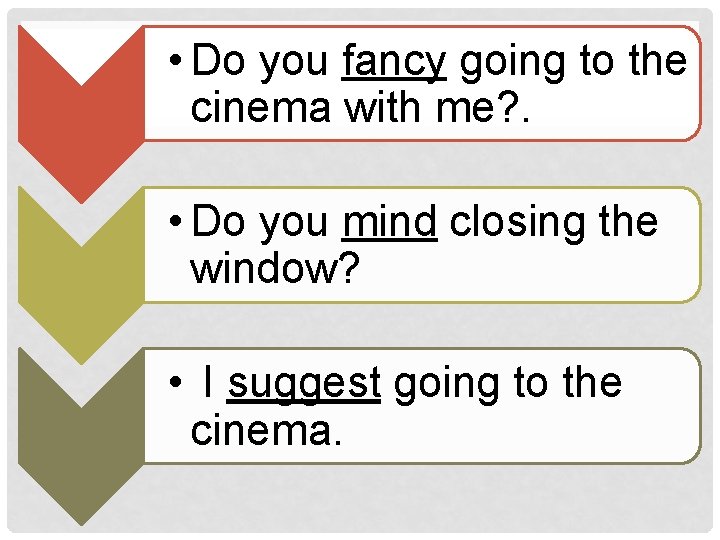
• Do you fancy going to the cinema with me? . • Do you mind closing the window? • I suggest going to the cinema.
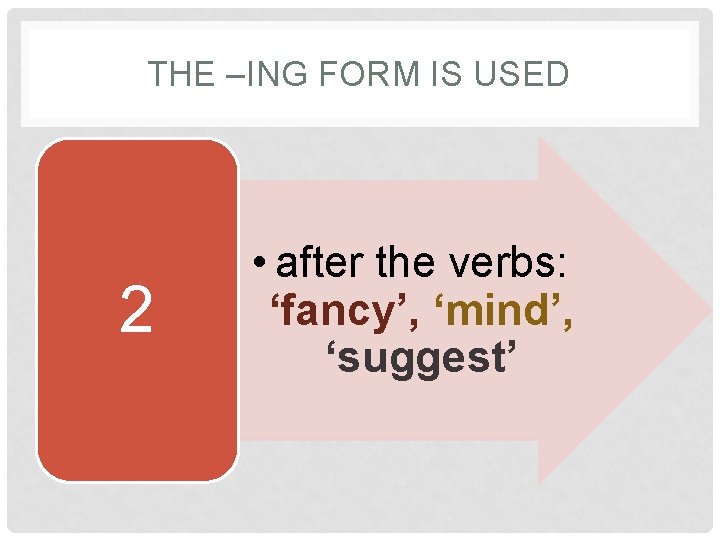
THE –ING FORM IS USED 2 • after the verbs: ‘fancy’, ‘mind’, ‘suggest’
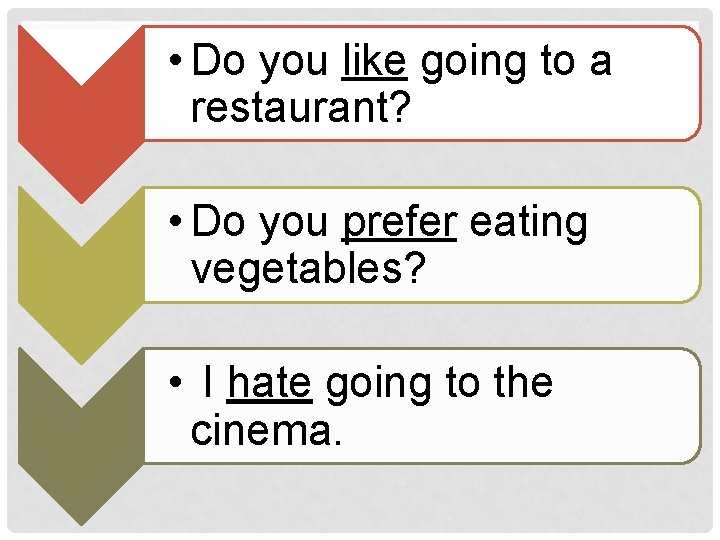
• Do you like going to a restaurant? • Do you prefer eating vegetables? • I hate going to the cinema.
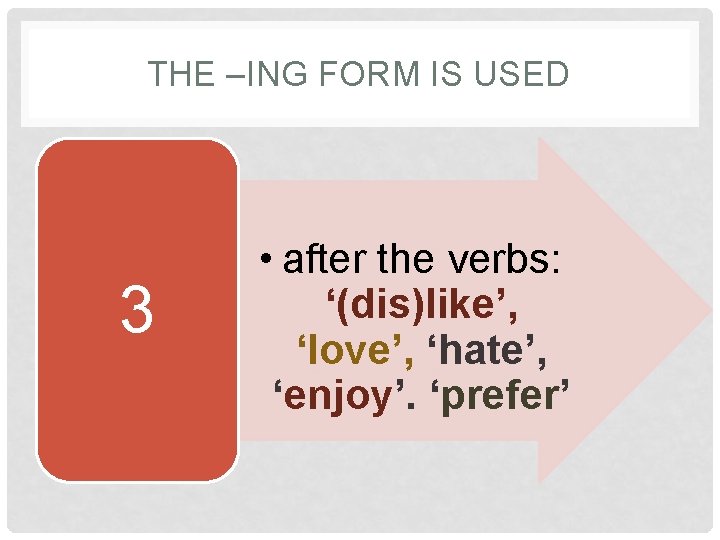
THE –ING FORM IS USED 3 • after the verbs: ‘(dis)like’, ‘love’, ‘hate’, ‘enjoy’. ‘prefer’
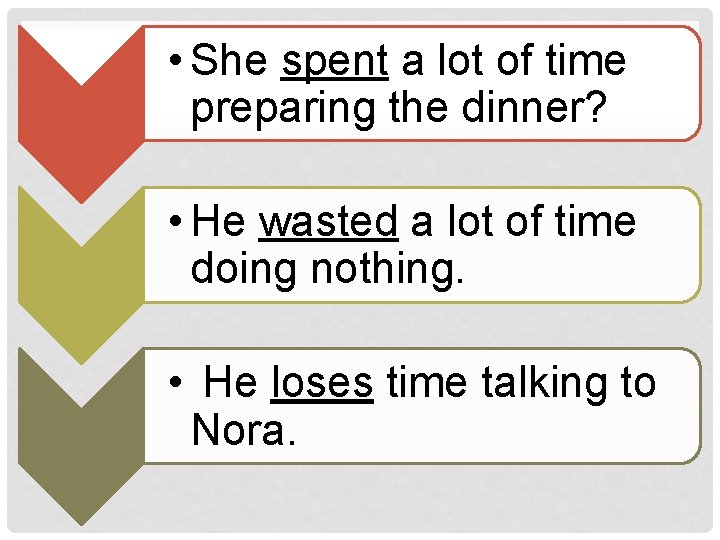
• She spent a lot of time preparing the dinner? • He wasted a lot of time doing nothing. • He loses time talking to Nora.
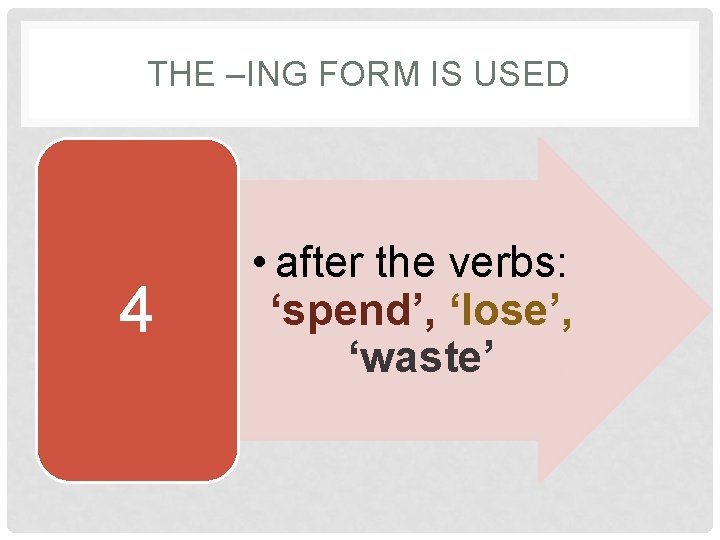
THE –ING FORM IS USED 4 • after the verbs: ‘spend’, ‘lose’, ‘waste’
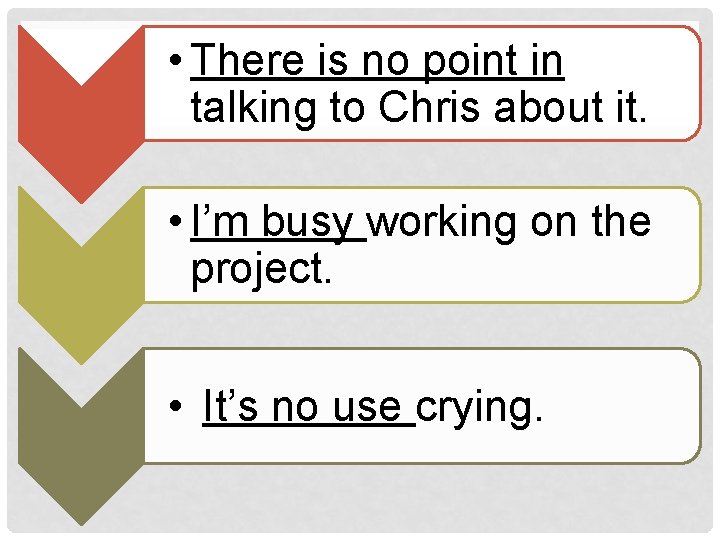
• There is no point in talking to Chris about it. • I’m busy working on the project. • It’s no use crying.
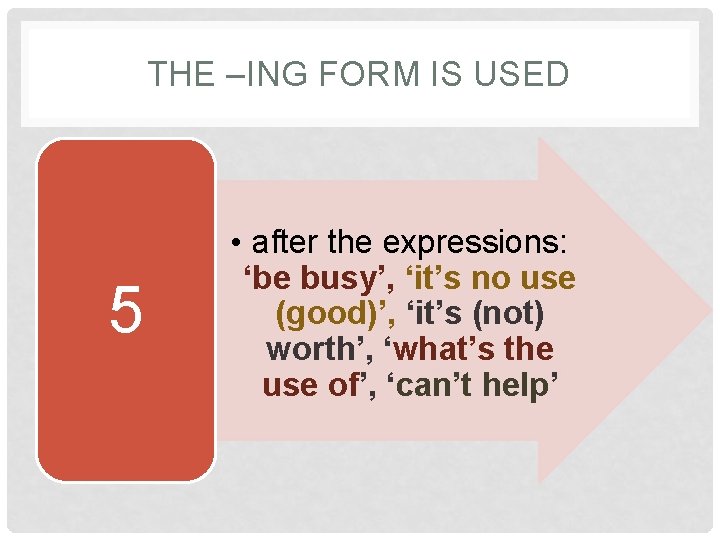
THE –ING FORM IS USED 5 • after the expressions: ‘be busy’, ‘it’s no use (good)’, ‘it’s (not) worth’, ‘what’s the use of’, ‘can’t help’
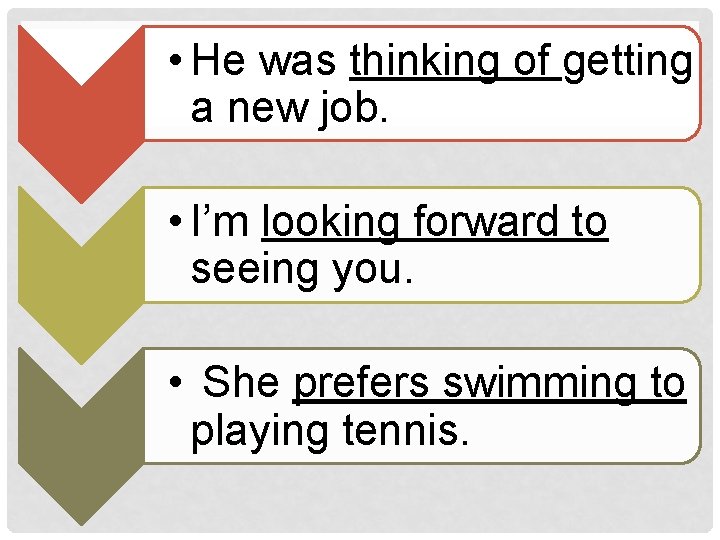
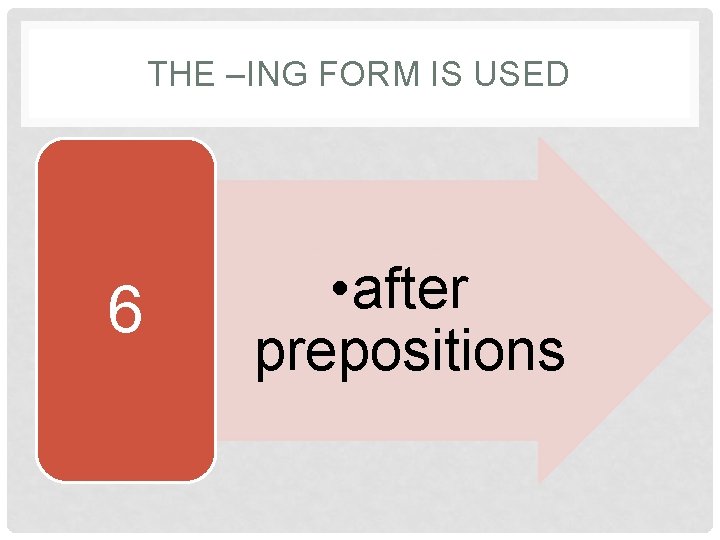
• He was thinking of getting a new job. • I’m looking forward to seeing you. • She prefers swimming to playing tennis.
THE –ING FORM IS USED 6 • after prepositions
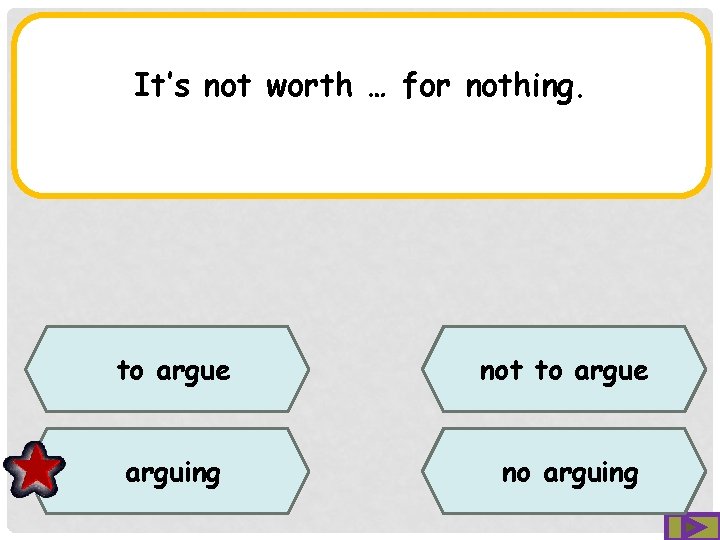
It’s not worth … for nothing. to argue not to argue arguing no arguing
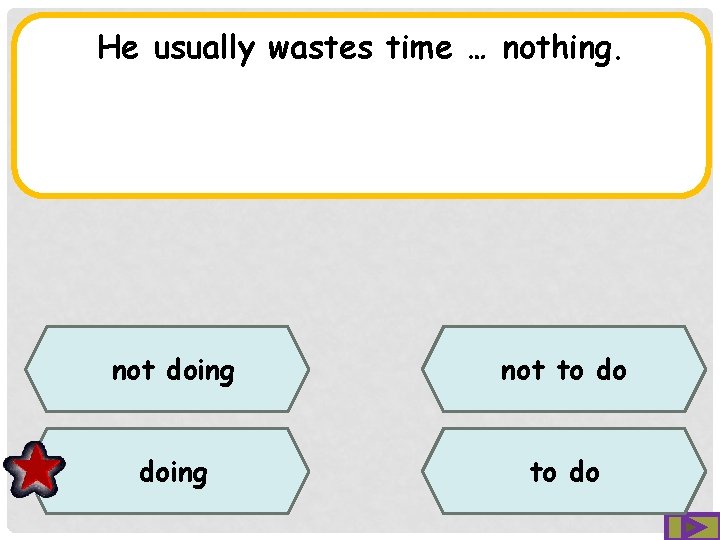
He usually wastes time … nothing. not doing not to do doing to do
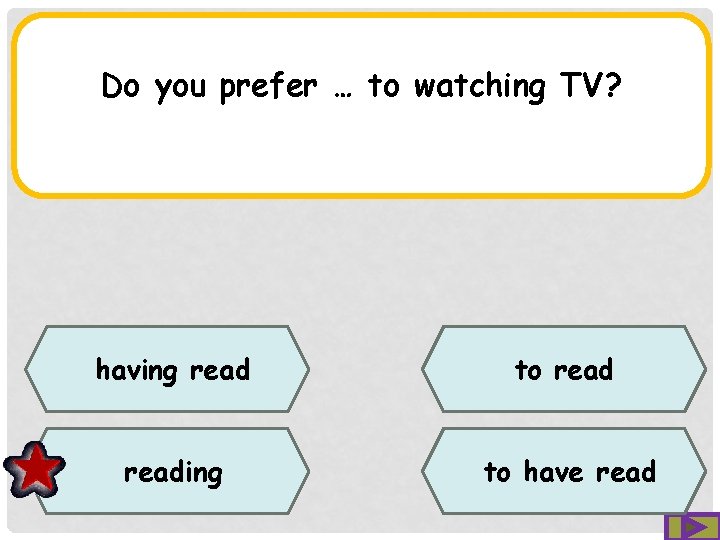
Do you prefer … to watching TV? having read to reading to have read
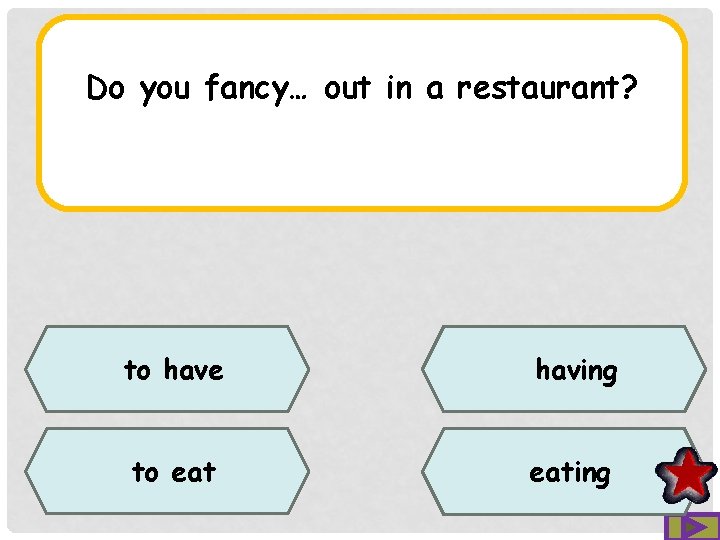
Do you fancy… out in a restaurant? to have having to eating
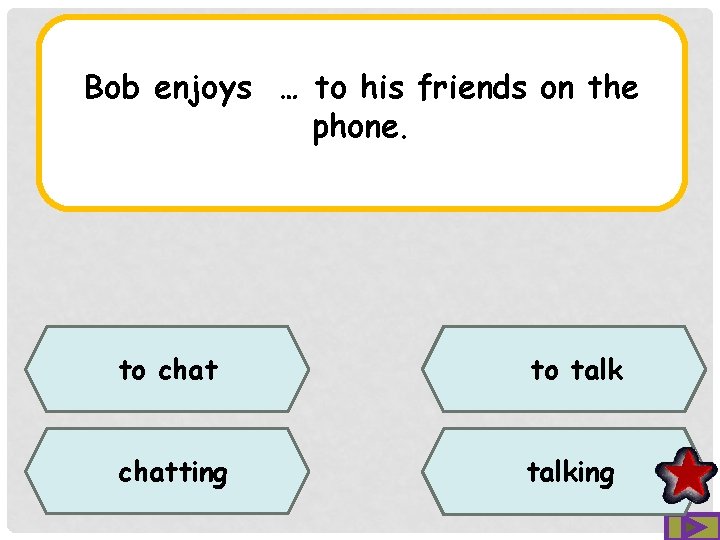
Bob enjoys … to his friends on the phone. to chat to talk chatting talking
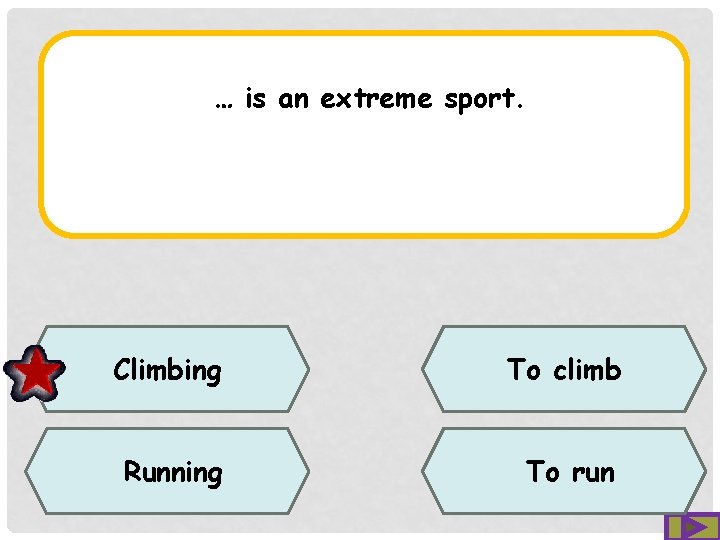
… is an extreme sport. Climbing To climb Running To run
INFINITIVE
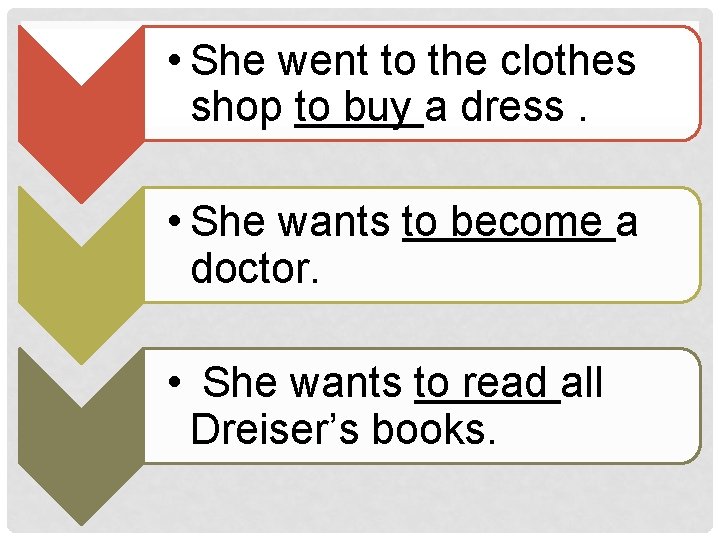
• She went to the clothes shop to buy a dress. • She wants to become a doctor. • She wants to read all Dreiser’s books.
THE TO-INFINITIVE IS USED 1 • to express purpose
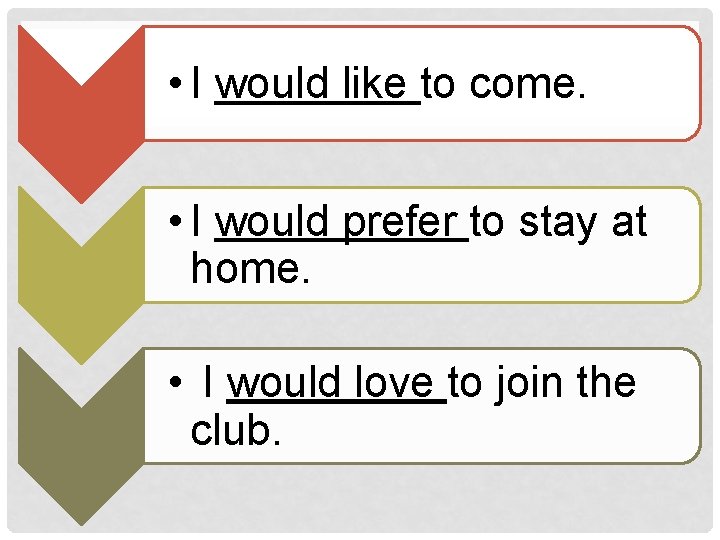
• I would like to come. • I would prefer to stay at home. • I would love to join the club.
THE TO-INFINITIVE IS USED 2 • After ‘would like’, ‘would love’, ‘would prefer’.
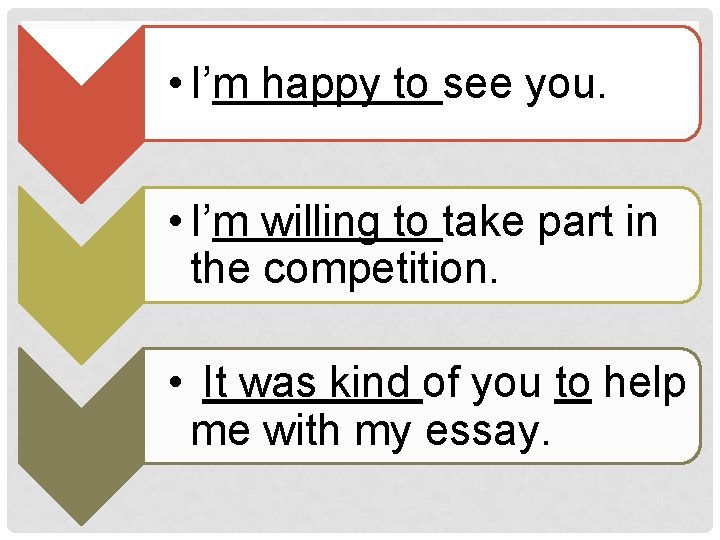
• I’m happy to see you. • I’m willing to take part in the competition. • It was kind of you to help me with my essay.
THE TO-INFINITIVE IS USED 3 • After adjectives for feelings/emotions; (un)willingness
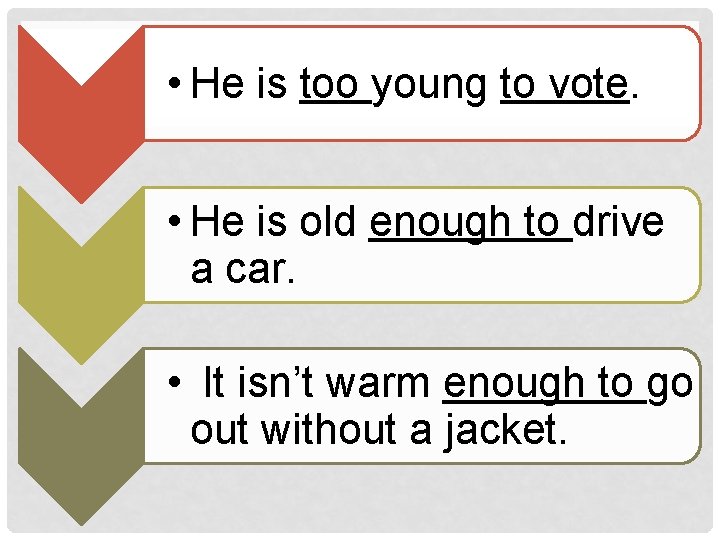
• He is too young to vote. • He is old enough to drive a car. • It isn’t warm enough to go out without a jacket.
THE TO-INFINITIVE IS USED 3 • After ‘too’ and ‘enough’
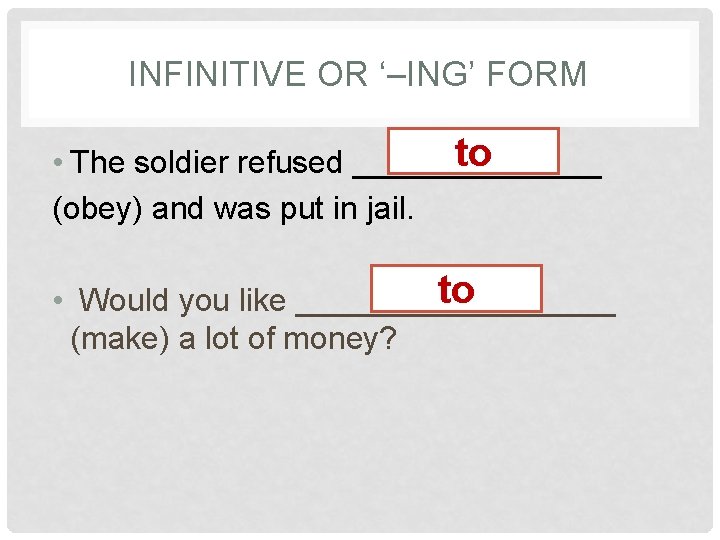
INFINITIVE OR ‘–ING’ FORM to • The soldier refused _______ (obey) and was put in jail. to • Would you like _________ (make) a lot of money?
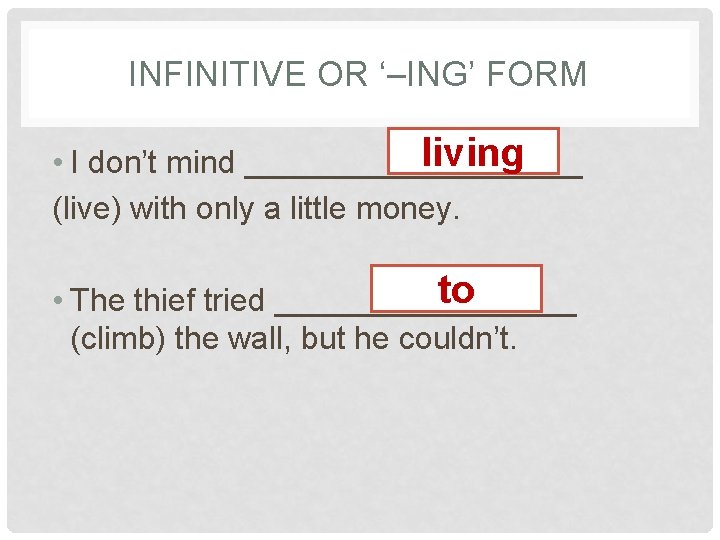
INFINITIVE OR ‘–ING’ FORM living • I don’t mind __________ (live) with only a little money. to • The thief tried _________ (climb) the wall, but he couldn’t.
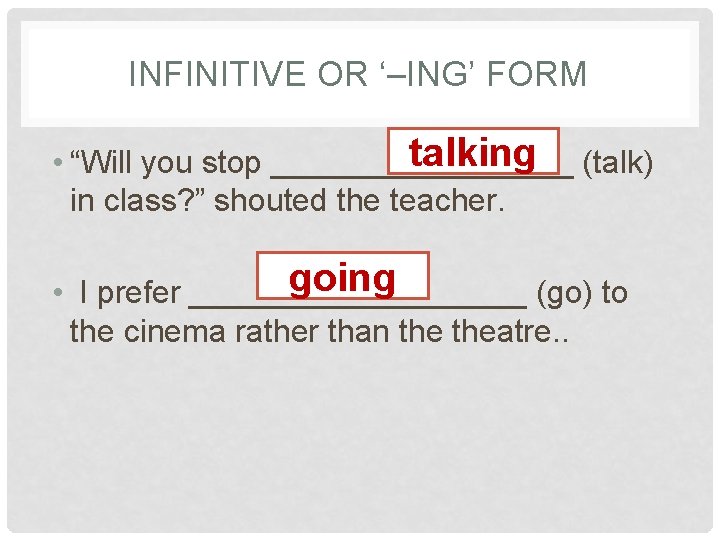
INFINITIVE OR ‘–ING’ FORM talking (talk) • “Will you stop _________ in class? ” shouted the teacher. going • I prefer __________ (go) to the cinema rather than theatre. .
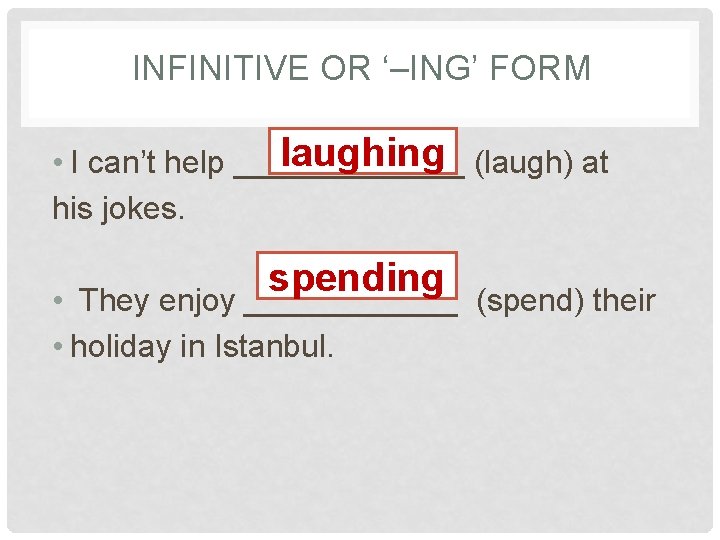
INFINITIVE OR ‘–ING’ FORM laughing (laugh) at • I can’t help _______ his jokes. spending • They enjoy ______ (spend) their • holiday in Istanbul.
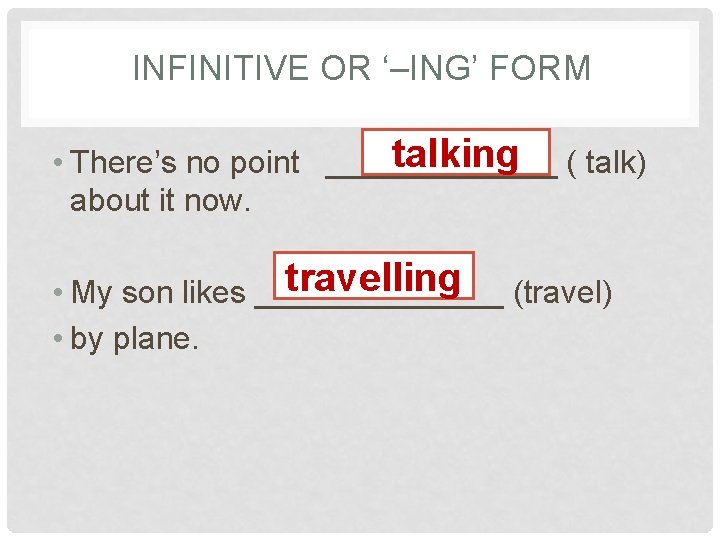
INFINITIVE OR ‘–ING’ FORM talking ( talk) • There’s no point _______ about it now. travelling (travel) • My son likes _______ • by plane.
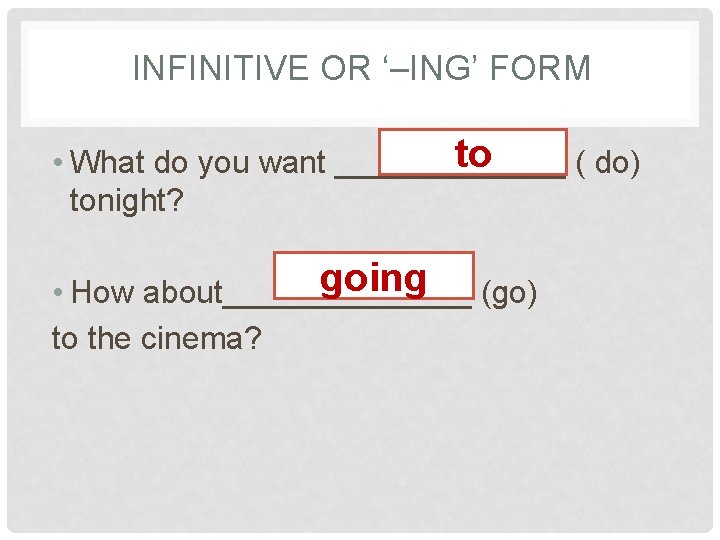
INFINITIVE OR ‘–ING’ FORM to • What do you want _______ ( do) tonight? going (go) • How about_______ to the cinema?