
Inferior water quality Is it the end of

- Slides: 42
Inferior water quality? Is it the end of the road? © 2016 Lindi Grobler
General A few definitions Impurities in water Processes My operation? My choice? © 2016 Lindi Grobler
General We are not all super heroes but we still function © 2016 Lindi Grobler
General Horses for courses © 2016 Lindi Grobler
A few definitions © 2016 Lindi Grobler
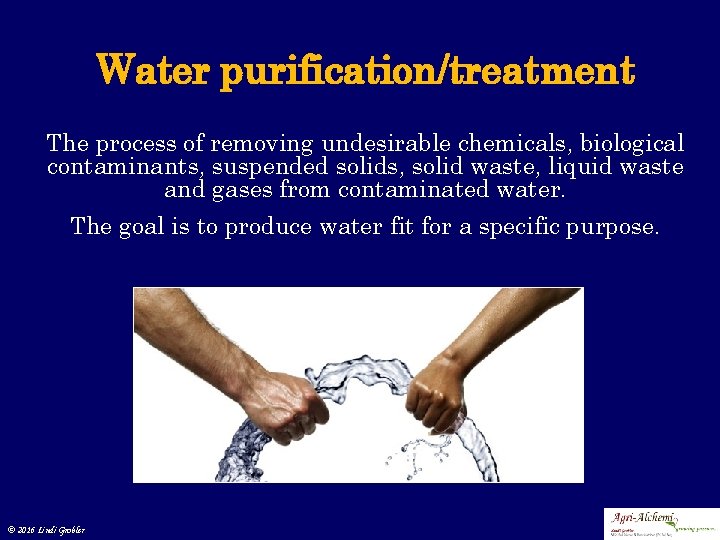
Water purification/treatment The process of removing undesirable chemicals, biological contaminants, suspended solids, solid waste, liquid waste and gases from contaminated water. The goal is to produce water fit for a specific purpose. © 2016 Lindi Grobler
© 2016 Lindi Grobler
© 2016 Lindi Grobler
Impurities in water © 2016 Lindi Grobler
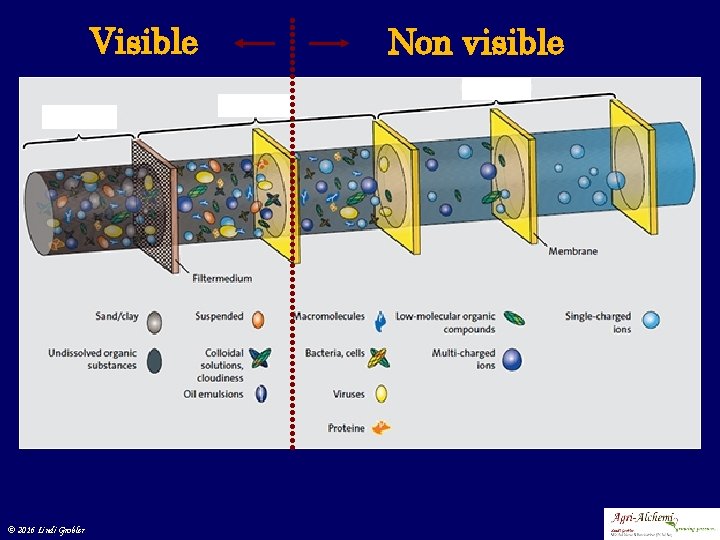
Visible © 2016 Lindi Grobler Non visible
© 2016 Lindi Grobler
Processes of purification or treatment © 2016 Lindi Grobler
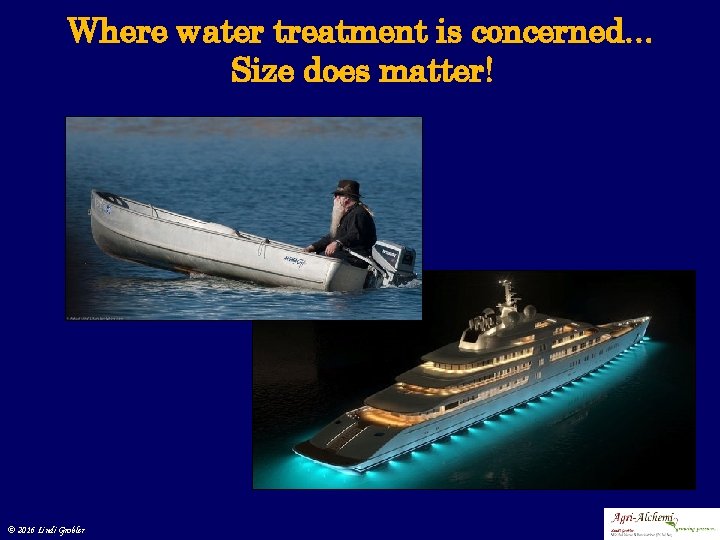
Where water treatment is concerned… Size does matter! © 2016 Lindi Grobler
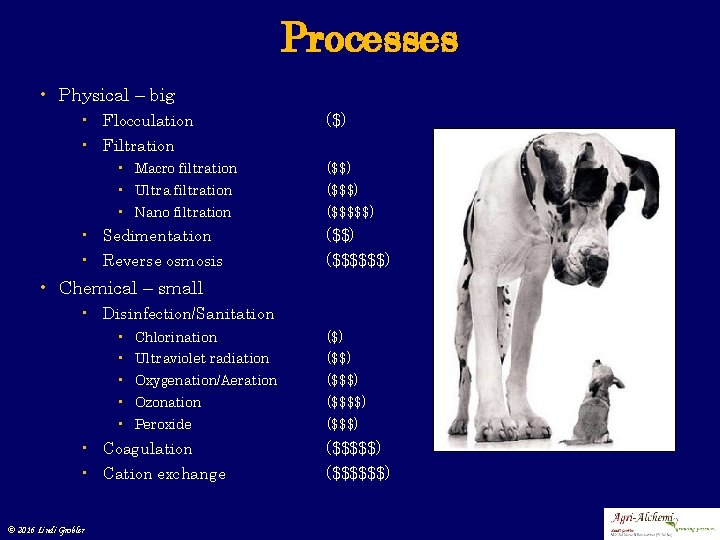
Processes • Physical – big • Flocculation ($) • Filtration • Macro filtration ($$) • Ultra filtration ($$$) • Nano filtration ($$$$$) • Sedimentation ($$) • Reverse osmosis ($$$$$$) • Chemical – small • Disinfection/Sanitation • Chlorination ($) • Ultraviolet radiation ($$) • Oxygenation/Aeration ($$$) • Ozonation ($$$$) • Peroxide ($$$) • Coagulation ($$$$$) • Cation exchange ($$$$$$) © 2016 Lindi Grobler
Physical processes © 2016 Lindi Grobler
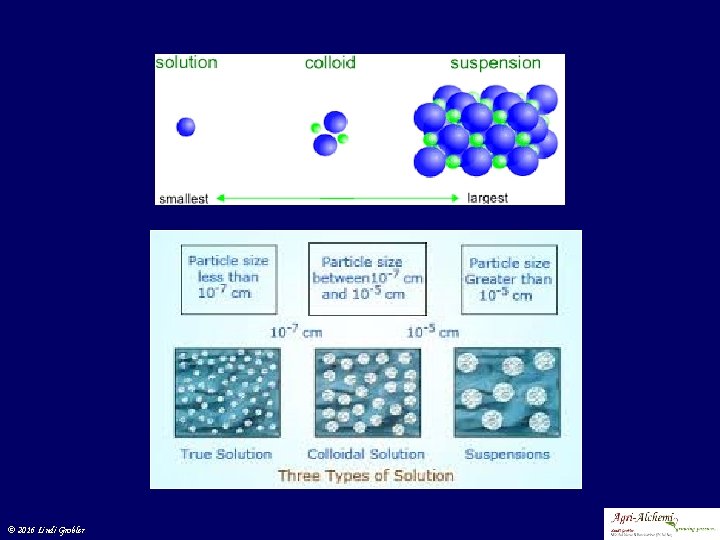
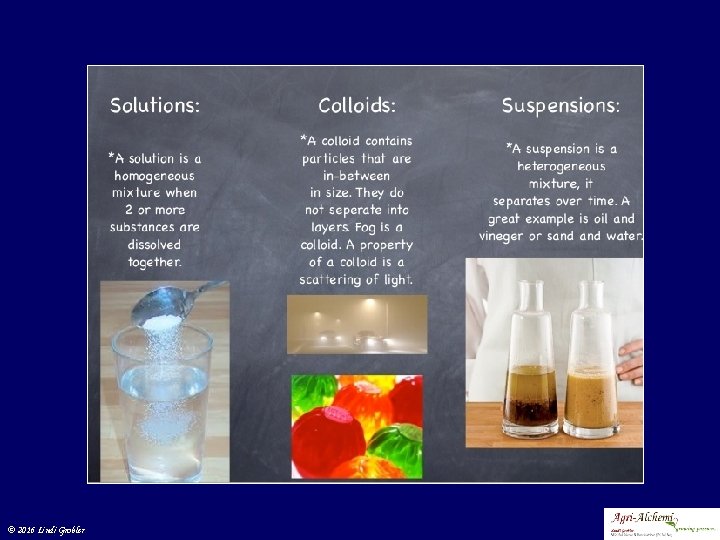
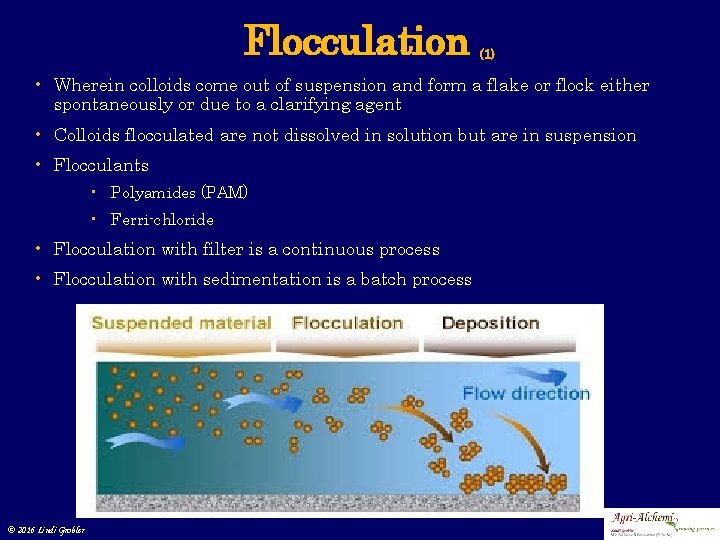
Flocculation (1) • Wherein colloids come out of suspension and form a flake or flock either spontaneously or due to a clarifying agent • Colloids flocculated are not dissolved in solution but are in suspension • Flocculants • Polyamides (PAM) • Ferri-chloride • Flocculation with filter is a continuous process • Flocculation with sedimentation is a batch process © 2016 Lindi Grobler
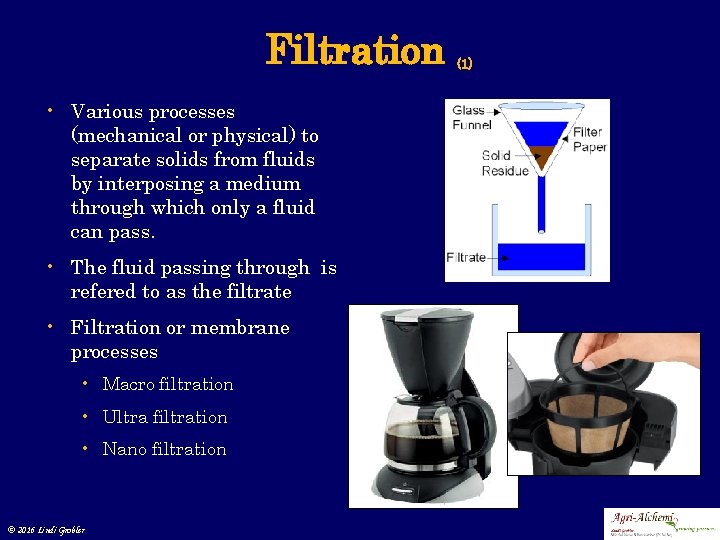
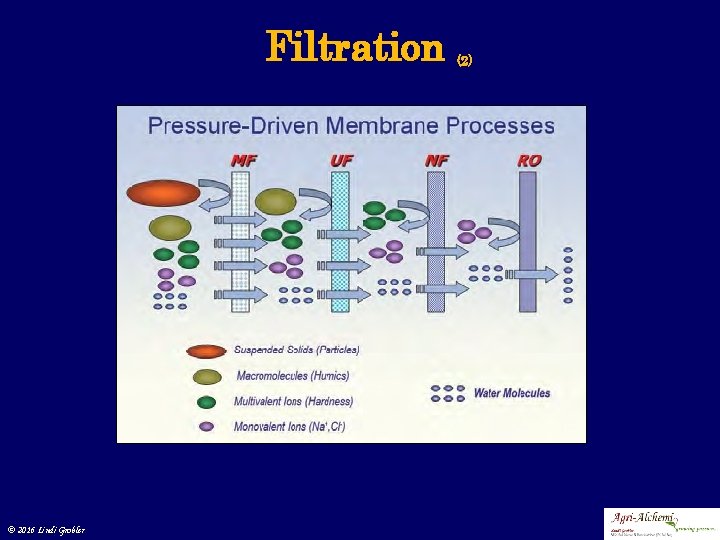
Filtration • Various processes (mechanical or physical) to separate solids from fluids by interposing a medium through which only a fluid can pass. • The fluid passing through is refered to as the filtrate • Filtration or membrane processes • Macro filtration • Ultra filtration • Nano filtration © 2016 Lindi Grobler (1)
Filtration © 2016 Lindi Grobler (2)
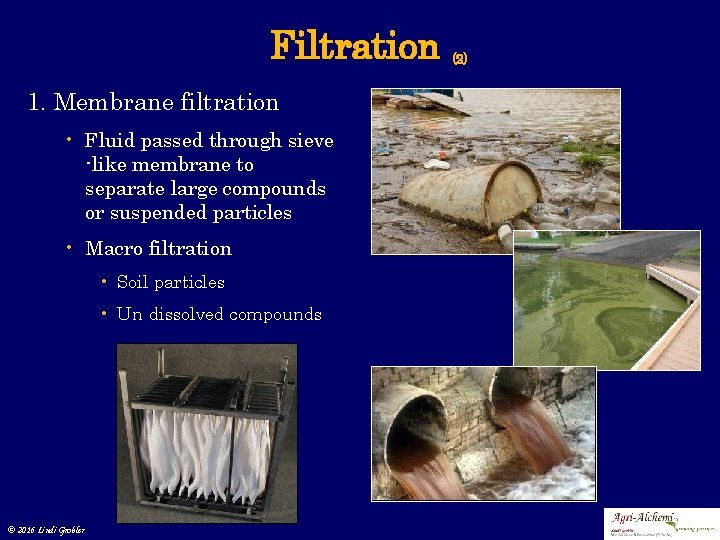
Filtration 1. Membrane filtration • Fluid passed through sieve -like membrane to separate large compounds or suspended particles • Macro filtration • Soil particles • Un-dissolved compounds © 2016 Lindi Grobler (2)
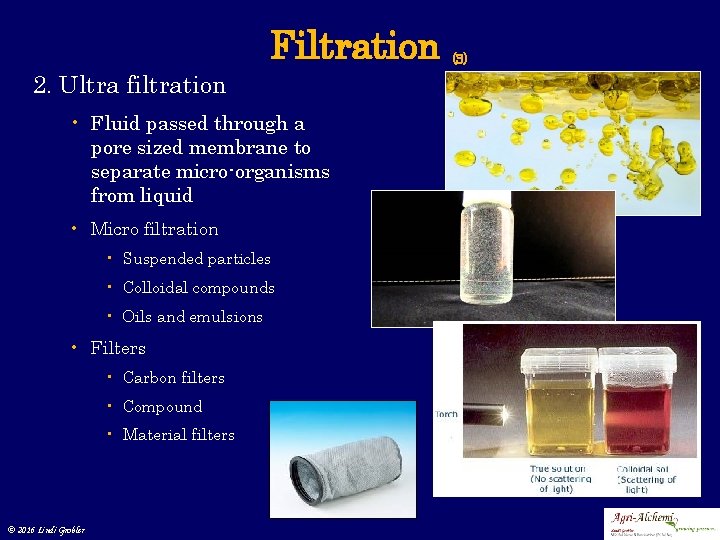
Filtration 2. Ultra filtration • Fluid passed through a pore sized membrane to separate micro-organisms from liquid • Micro filtration • Suspended particles • Colloidal compounds • Oils and emulsions • Filters • Carbon filters • Compound • Material filters © 2016 Lindi Grobler (3)
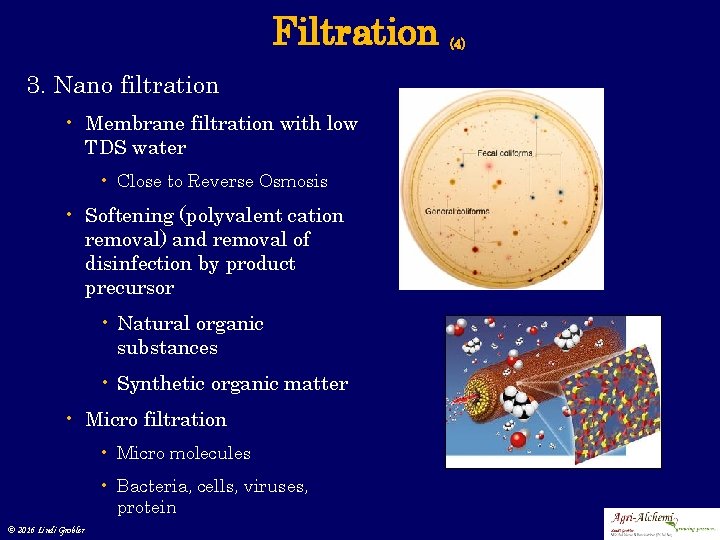
Filtration 3. Nano filtration • Membrane filtration with low TDS water • Close to Reverse Osmosis • Softening (polyvalent cation removal) and removal of disinfection by product precursor • Natural organic substances • Synthetic organic matter • Micro filtration • Micro molecules • Bacteria, cells, viruses, protein © 2016 Lindi Grobler (4)
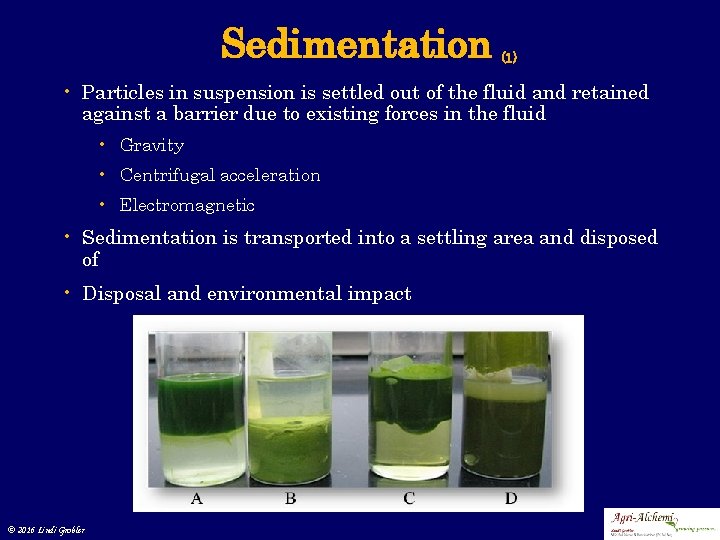
Sedimentation (1) • Particles in suspension is settled out of the fluid and retained against a barrier due to existing forces in the fluid • Gravity • Centrifugal acceleration • Electromagnetic • Sedimentation is transported into a settling area and disposed of • Disposal and environmental impact © 2016 Lindi Grobler
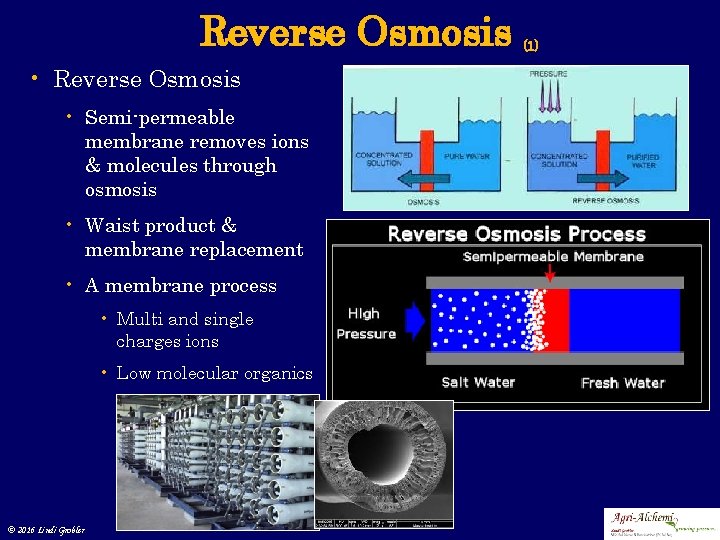
Reverse Osmosis • Semi-permeable membrane removes ions & molecules through osmosis • Waist product & membrane replacement • A membrane process • Multi and single charges ions • Low molecular organics © 2016 Lindi Grobler (1)
Reverse osmosis (2) Single and multi charged ions © 2016 Lindi Grobler
Chemical processes © 2016 Lindi Grobler
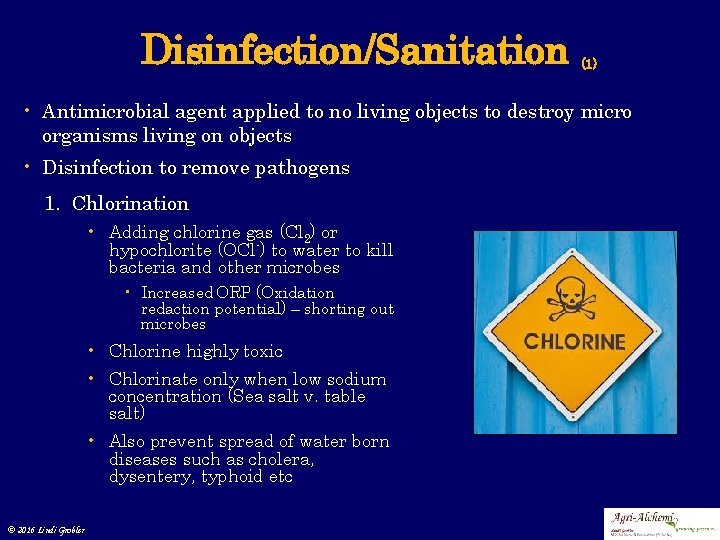
Disinfection/Sanitation (1) • Antimicrobial agent applied to no living objects to destroy micro organisms living on objects • Disinfection to remove pathogens 1. Chlorination • Adding chlorine gas (Cl 2) or hypochlorite (OCl-) to water to kill bacteria and other microbes • Increased ORP (Oxidation redaction potential) – shorting out microbes • Chlorine highly toxic • Chlorinate only when low sodium concentration (Sea salt v. table salt) • Also prevent spread of water born diseases such as cholera, dysentery, typhoid etc © 2016 Lindi Grobler
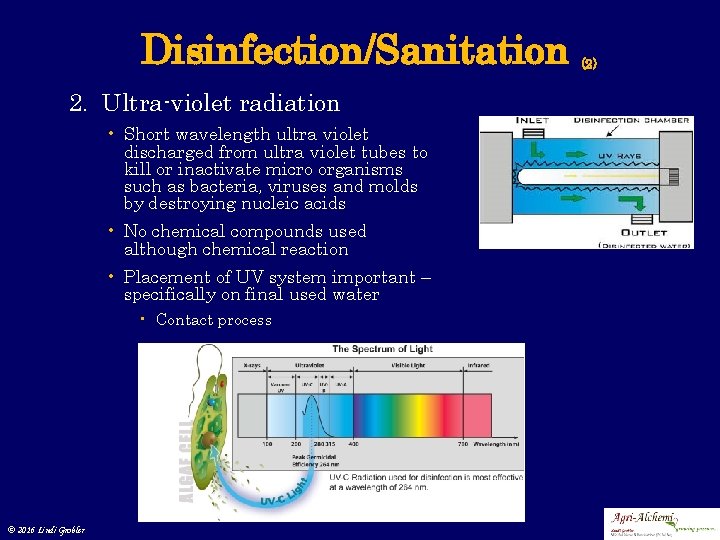
Disinfection/Sanitation 2. Ultra-violet radiation • Short wavelength ultra-violet discharged from ultra-violet tubes to kill or inactivate micro organisms such as bacteria, viruses and molds by destroying nucleic acids • No chemical compounds used although chemical reaction • Placement of UV system important – specifically on final used water • Contact process © 2016 Lindi Grobler (2)
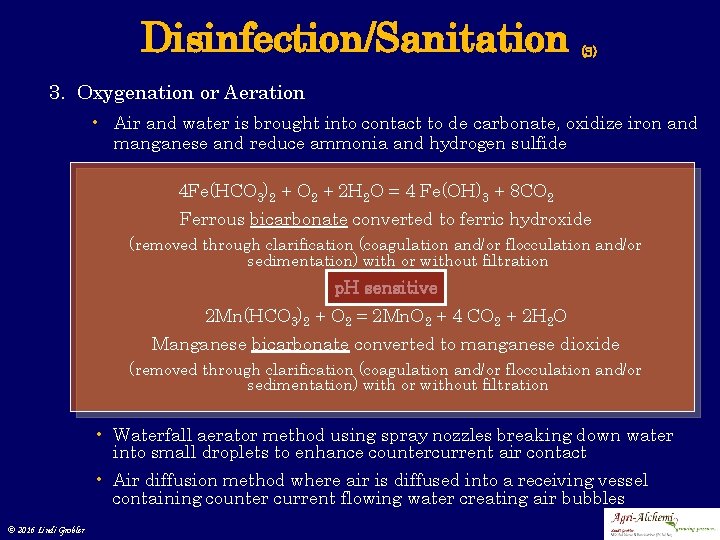
Disinfection/Sanitation (3) 3. Oxygenation or Aeration • Air and water is brought into contact to de-carbonate, oxidize iron and manganese and reduce ammonia and hydrogen sulfide 4 Fe(HCO 3)2 + O 2 + 2 H 2 O = 4 Fe(OH)3 + 8 CO 2 Ferrous bicarbonate converted to ferric hydroxide (removed through clarification (coagulation and/or flocculation and/or sedimentation) with or without filtration p. H sensitive 2 Mn(HCO 3)2 + O 2 = 2 Mn. O 2 + 4 CO 2 + 2 H 2 O Manganese bicarbonate converted to manganese dioxide (removed through clarification (coagulation and/or flocculation and/or sedimentation) with or without filtration • Waterfall aerator method using spray nozzles breaking down water into small droplets to enhance countercurrent air contact • Air diffusion method where air is diffused into a receiving vessel containing counter current flowing water creating air bubbles © 2016 Lindi Grobler
Disinfection/Sanitation (3) • Supplies increased oxygen concentration in water • Recycling systems – have to cascade water • Soil water always need aeration – cascading of water • Important facts • Temperature dependant • 10% O 2 in water naturally – temperature determines • High temperature = between 8 to 10% (water quality dependent) • Temperature increased necessary • above 24 ºC – loss of 1% O 2 for every degree increase – anaerobic conditions follow • p. H dependant • p. H < 4 – highly oxidized Mn & Fe • Not effective at p. H above 5. 5 © 2016 Lindi Grobler
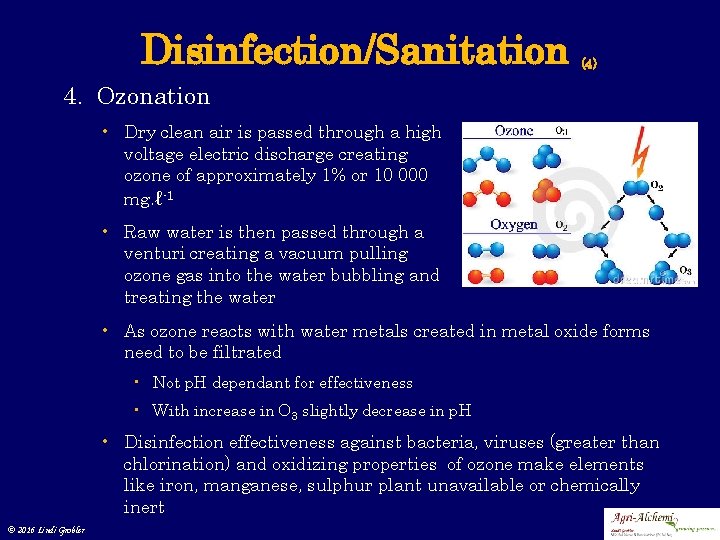
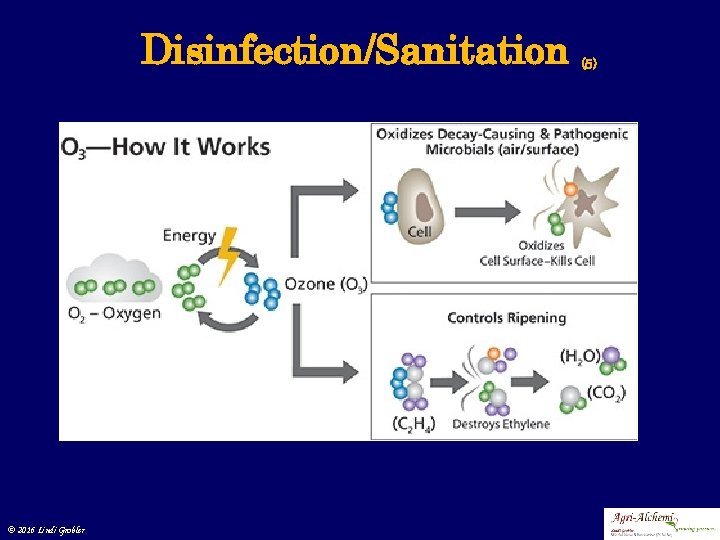
Disinfection/Sanitation (4) 4. Ozonation • Dry clean air is passed through a high voltage electric discharge creating ozone of approximately 1% or 10 000 mg. ℓ-1 • Raw water is then passed through a venturi creating a vacuum pulling ozone gas into the water bubbling and treating the water • As ozone reacts with water metals created in metal oxide forms need to be filtrated • Not p. H dependant for effectiveness • With increase in O 3 slightly decrease in p. H • Disinfection effectiveness against bacteria, viruses (greater than chlorination) and oxidizing properties of ozone make elements like iron, manganese, sulphur plant unavailable or chemically inert © 2016 Lindi Grobler
Disinfection/Sanitation © 2016 Lindi Grobler (5)
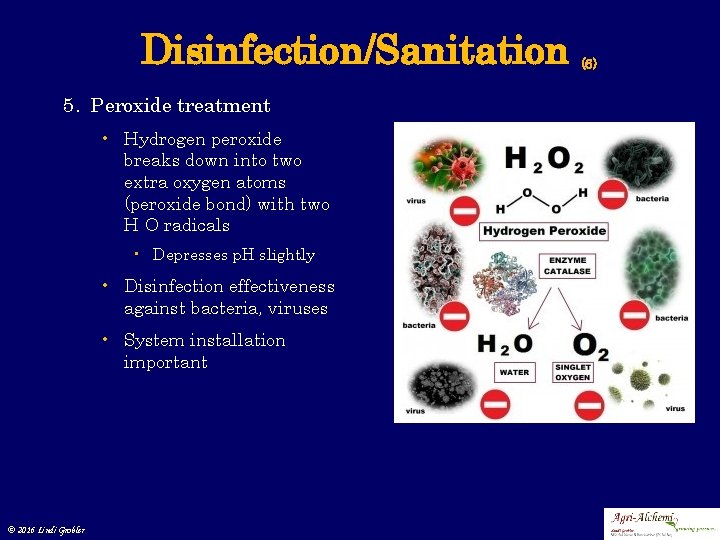
Disinfection/Sanitation 5. Peroxide treatment • Hydrogen peroxide breaks down into two extra oxygen atoms (peroxide bond) with two H-O radicals • Depresses p. H slightly • Disinfection effectiveness against bacteria, viruses • System installation important © 2016 Lindi Grobler (6)
Disinfection/Sanitation © 2016 Lindi Grobler (7)
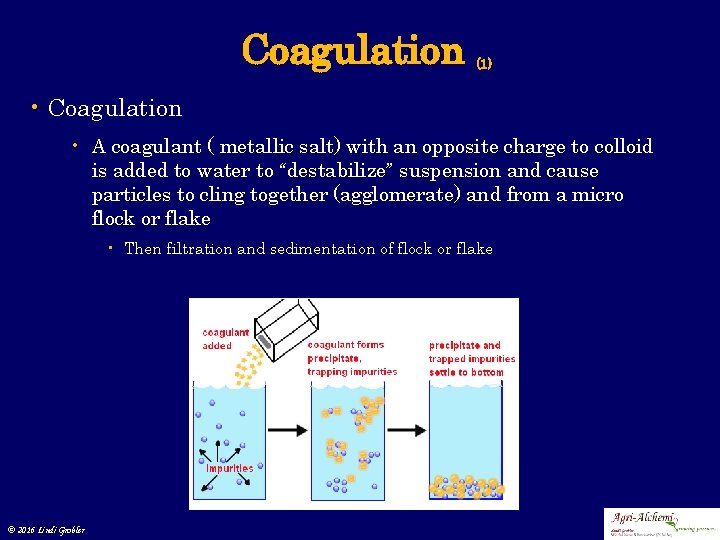
Coagulation (1) • Coagulation • A coagulant ( metallic salt) with an opposite charge to colloid is added to water to “destabilize” suspension and cause particles to cling together (agglomerate) and from a micro flock or flake • Then filtration and sedimentation of flock or flake © 2016 Lindi Grobler
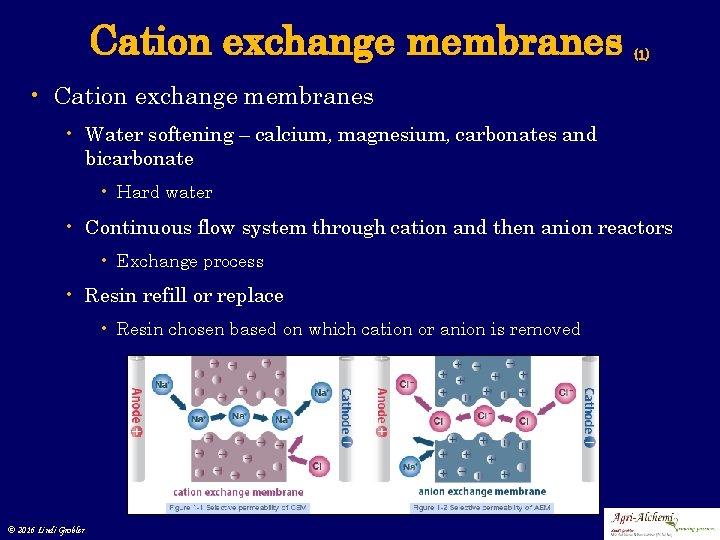
Cation exchange membranes (1) • Cation exchange membranes • Water softening – calcium, magnesium, carbonates and bicarbonate • Hard water • Continuous flow system through cation and then anion reactors • Exchange process • Resin refill or replace • Resin chosen based on which cation or anion is removed © 2016 Lindi Grobler
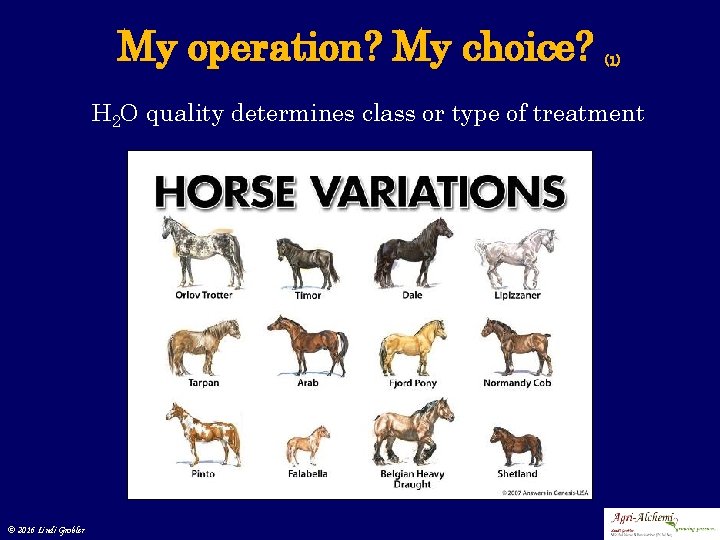
My operation? My choice? (1) H 2 O quality determines class or type of treatment © 2016 Lindi Grobler
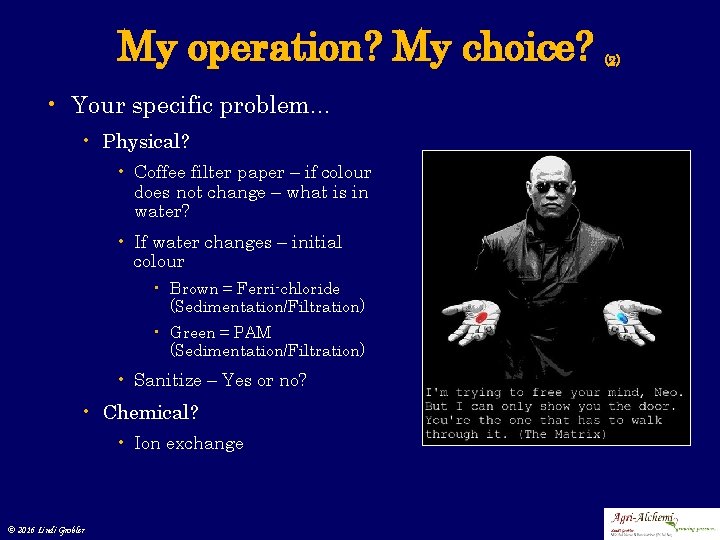
My operation? My choice? • Your specific problem… • Physical? • Coffee filter paper – if colour does not change – what is in water? • If water changes – initial colour • Brown = Ferri-chloride (Sedimentation/Filtration) • Green = PAM (Sedimentation/Filtration) • Sanitize – Yes or no? • Chemical? • Ion exchange © 2016 Lindi Grobler (2)
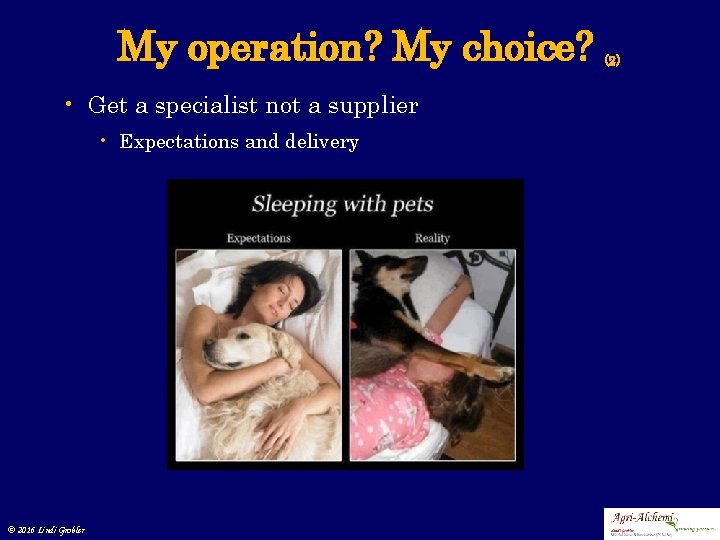
My operation? My choice? • Get a specialist not a supplier • Expectations and delivery © 2016 Lindi Grobler (2)
My operation? My choice? (2) • Usual problems for a chosen installed system not working • Common sense • p. H • Temperature • Flow direction • Pipe diameters • Time © 2016 Lindi Grobler
My operation? My choice? (3) • Water quality changes • The only constants are taxes, death and water quality changes • Choose carefully! • Future problems • Chemical pollution • Increased salt contamination © 2016 Lindi Grobler
Problem? What problem? © 2016 Lindi Grobler