
Inferential Statistics and Probability a Holistic Approach Chapter
Inferential Statistics and Probability a Holistic Approach Chapter 7 Central Limit Theorem This Course Material by Maurice Geraghty is licensed under a Creative Commons Attribution -Share. Alike 4. 0 International License. Conditions for use are shown here: https: //creativecommons. org/licenses/by-sa/4. 0/ 1

Distribution of Sample Mean n Random Sample: X 1, X 2, X 3, …, Xn n n Each Xi is a Random Variable from the same population All Xi’s are Mutually Independent is a function of Random Variables, so is itself Random Variable. In other words, the Sample Mean change if the values of the Random Sample change. What is the Probability Distribution of ? 2
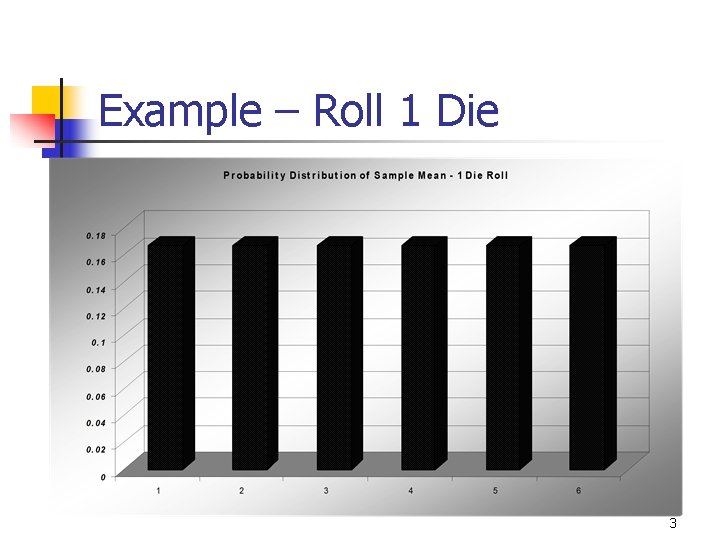
Example – Roll 1 Die 3
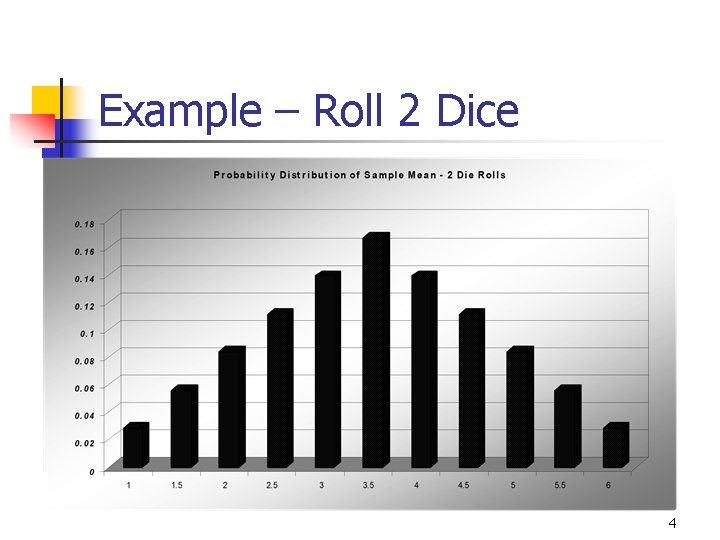
Example – Roll 2 Dice 4
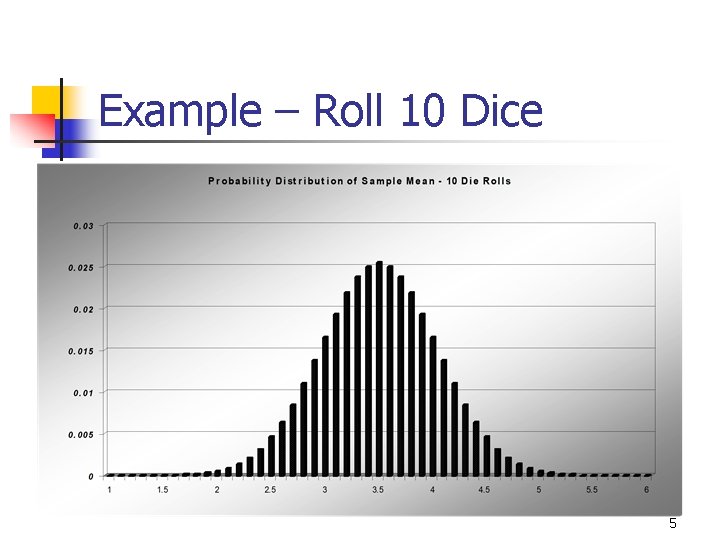
Example – Roll 10 Dice 5
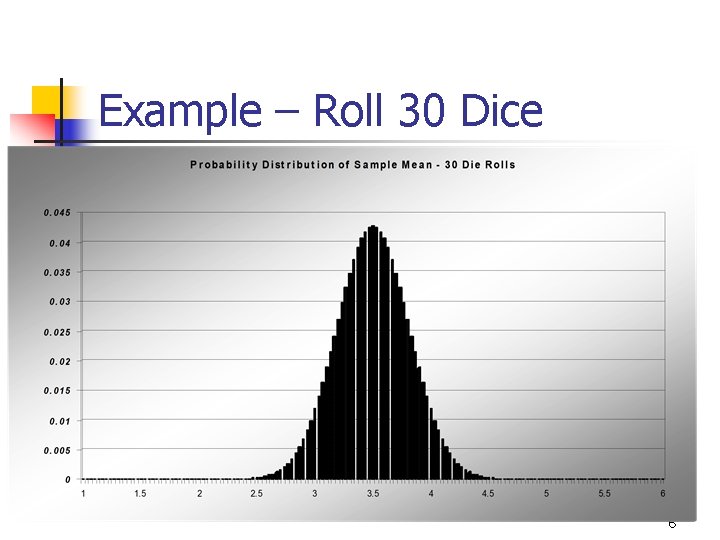
Example – Roll 30 Dice 6
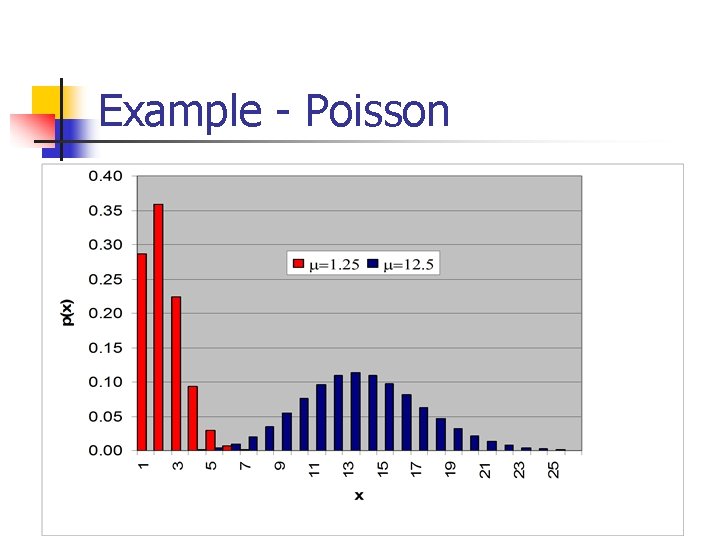
Example - Poisson 7
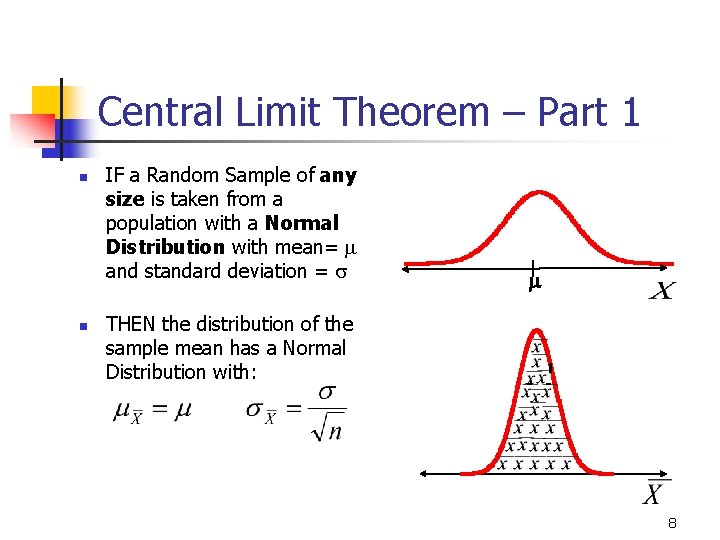
Central Limit Theorem – Part 1 n n IF a Random Sample of any size is taken from a population with a Normal Distribution with mean= and standard deviation = s | m THEN the distribution of the sample mean has a Normal Distribution with: 8
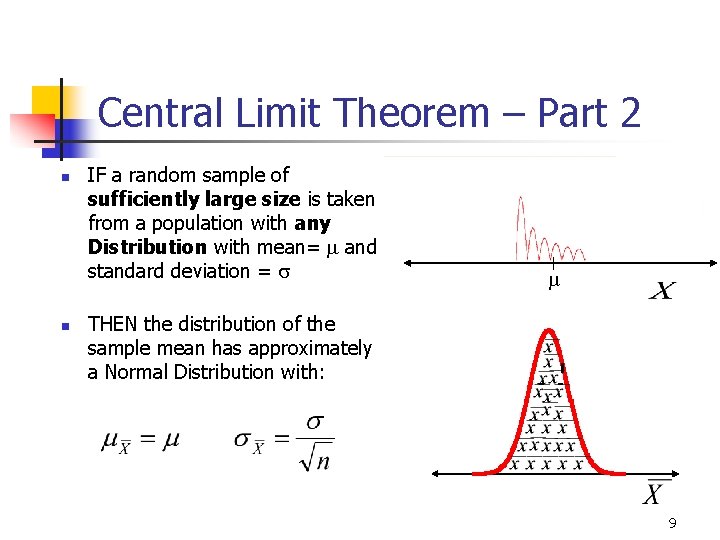
Central Limit Theorem – Part 2 n n IF a random sample of sufficiently large size is taken from a population with any Distribution with mean= and standard deviation = s μ THEN the distribution of the sample mean has approximately a Normal Distribution with: 9
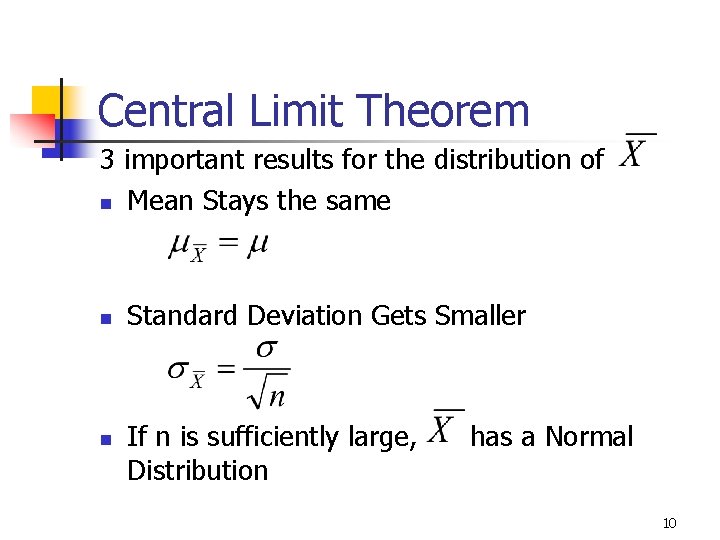
Central Limit Theorem 3 important results for the distribution of n Mean Stays the same n n Standard Deviation Gets Smaller If n is sufficiently large, Distribution has a Normal 10
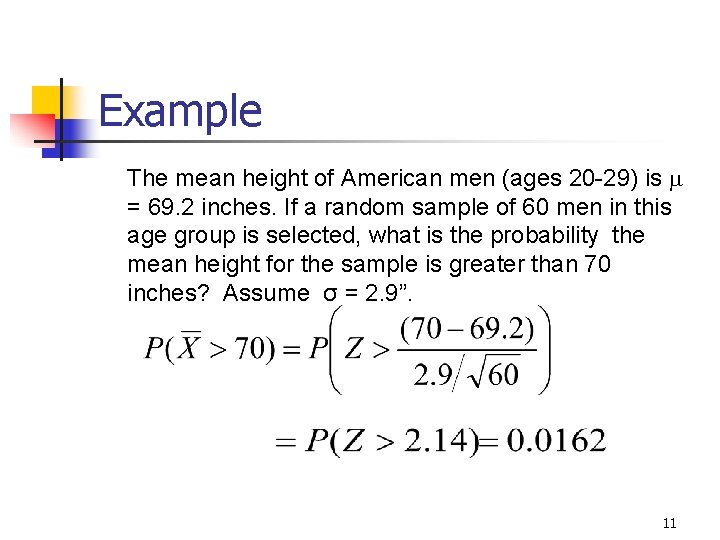
Example The mean height of American men (ages 20 -29) is = 69. 2 inches. If a random sample of 60 men in this age group is selected, what is the probability the mean height for the sample is greater than 70 inches? Assume σ = 2. 9”. 11
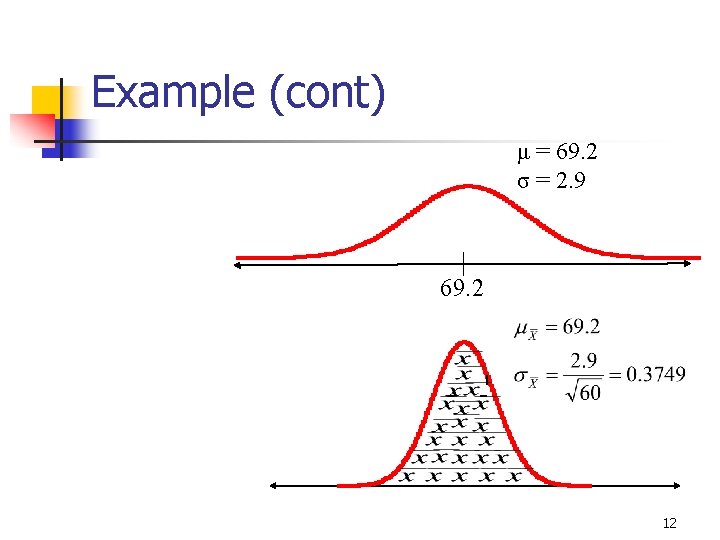
Example (cont) μ = 69. 2 σ = 2. 9 69. 2 12
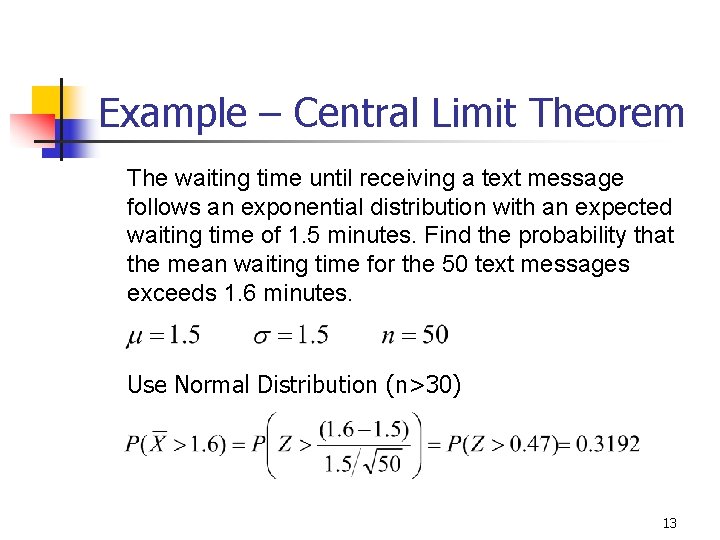
Example – Central Limit Theorem The waiting time until receiving a text message follows an exponential distribution with an expected waiting time of 1. 5 minutes. Find the probability that the mean waiting time for the 50 text messages exceeds 1. 6 minutes. Use Normal Distribution (n>30) 13
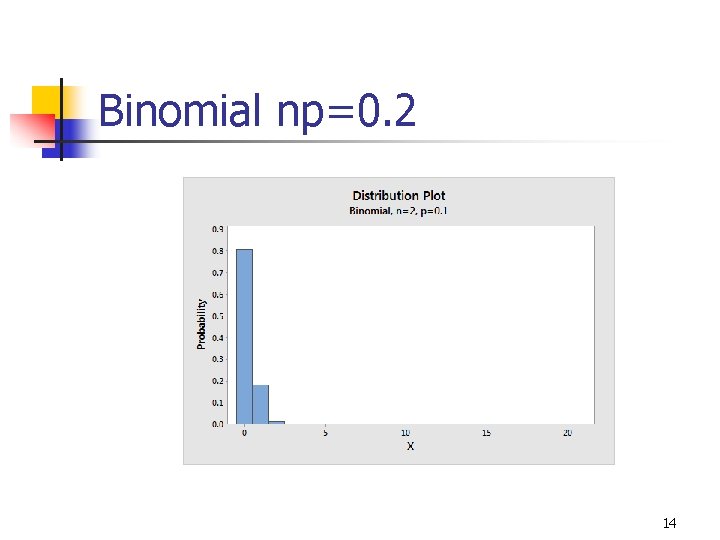
Binomial np=0. 2 14
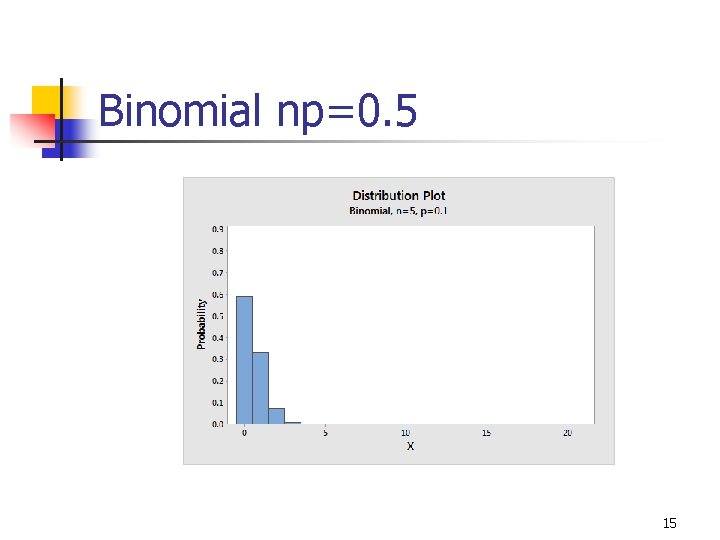
Binomial np=0. 5 15

Binomial np=2. 5 16
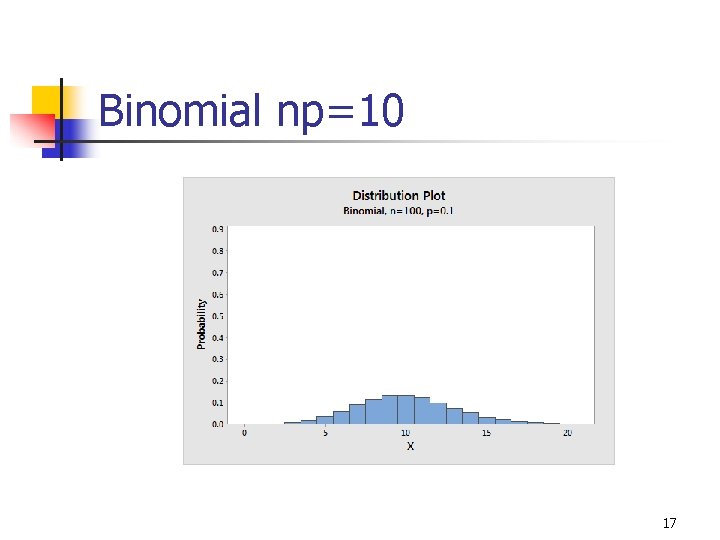
Binomial np=10 17
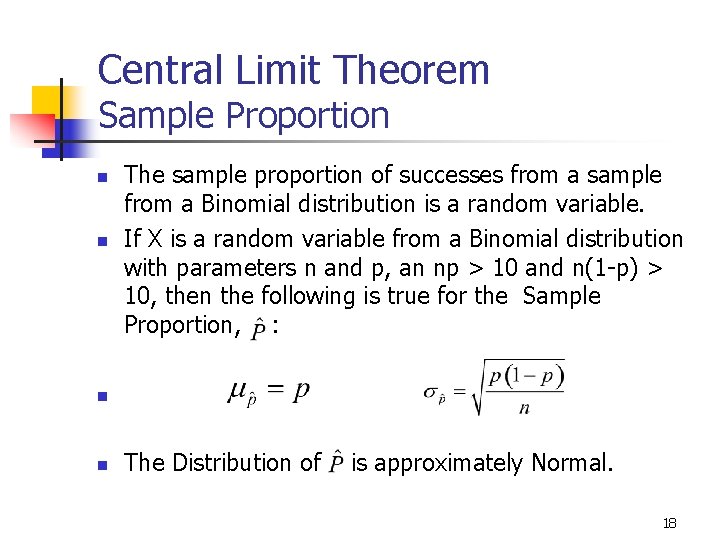
Central Limit Theorem Sample Proportion n n The sample proportion of successes from a sample from a Binomial distribution is a random variable. If X is a random variable from a Binomial distribution with parameters n and p, an np > 10 and n(1 -p) > 10, then the following is true for the Sample Proportion, : n n The Distribution of is approximately Normal. 18
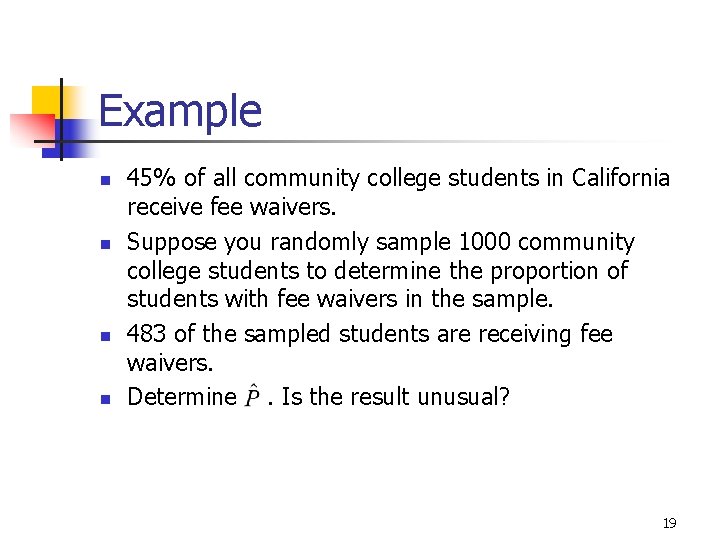
Example n n 45% of all community college students in California receive fee waivers. Suppose you randomly sample 1000 community college students to determine the proportion of students with fee waivers in the sample. 483 of the sampled students are receiving fee waivers. Determine. Is the result unusual? 19
- Slides: 19