
Infectious Laryngotracheitis ILT Penyakit Mikrobial Parasiter II Tim
Infectious Laryngotracheitis (ILT) Penyakit Mikrobial & Parasiter II Tim Mikrobiologi & Imunologi FKHUB
Acute respiratory disease Chicken in both adult & young (broiler the vast mayority of outbreak), pheasants (3 -9 month) Highly contagious Mordibity: 50 -100% Mortality up to 50% in adults by hemorrhage or exudate occlusion of the trachea Sign by severe dyspnea, coughing, rales It may subacute: nasal & ocular discharge, tracheitis, conjunctivitis, mild rales
Causative agent Infectious laryngotracheitis virus (ILTV) is a member of the family Herpesviridae, s u b f a m i l y Alphaherpesvirinae, genus Varicellovirus. The species is named gallid herpesvirus I. ILTV one family with herpes simplex virus-1 in human. Virus latency in nerves trigeminal ganglia (in the brain, main sensory innervation to the tisue of upper respiratory tract, mouth, ayes, trachea). Invasion of trigeminal ganglion by field and vaccine strain of ILTV (days 3 -6) during acute phase, regularly. Herpesvirus can be transmitted during latency and vaccinated animals Residual pathogenicity of vaccine strains
Antigenic uniformity, strains differ in virulence Impact of environment (iritation of resp. tract, low temperature, concurrent infections) Cell immunity – non-transmissible to the newborns Sensitivity: highly resistant outside host Susceptible to disinfectants: mild (halogendetergents + iodophors, heating (inactive at 600 C for 15’), lipolytic solvent, extreme p. H
Transmission Respiratory route Conjunctival route Oral route
Clinical findings Acute : a suddent increase in daily mortality in single house of a farm & progressively increase 1. Gasping 2. Sinusitis, coughing 3. Rattling sound 4. Reduced productivity 5. Anorectic, inactive 6. Bloody mucous secretion-bloody tracheal exudate (mouth & beak) 7. Severe laryngotracheitis
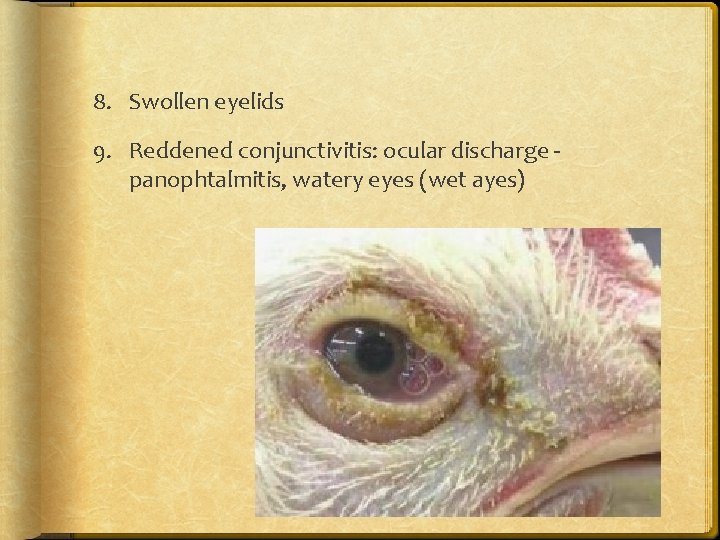
8. Swollen eyelids 9. Reddened conjunctivitis: ocular discharge panophtalmitis, watery eyes (wet ayes)
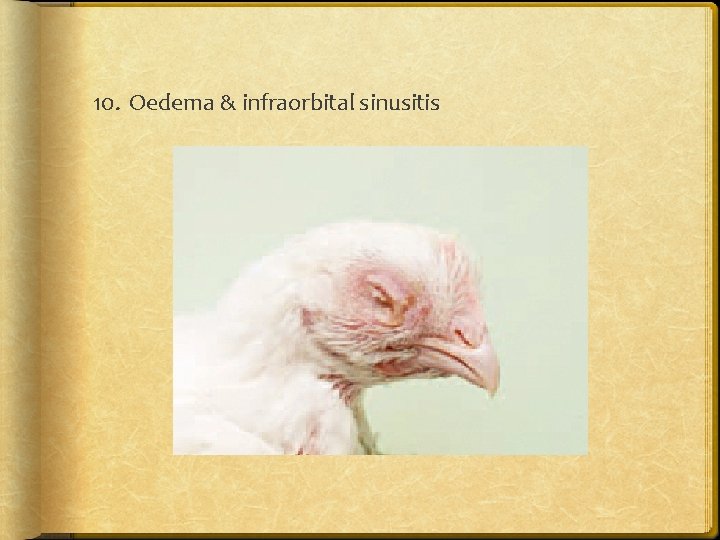
10. Oedema & infraorbital sinusitis
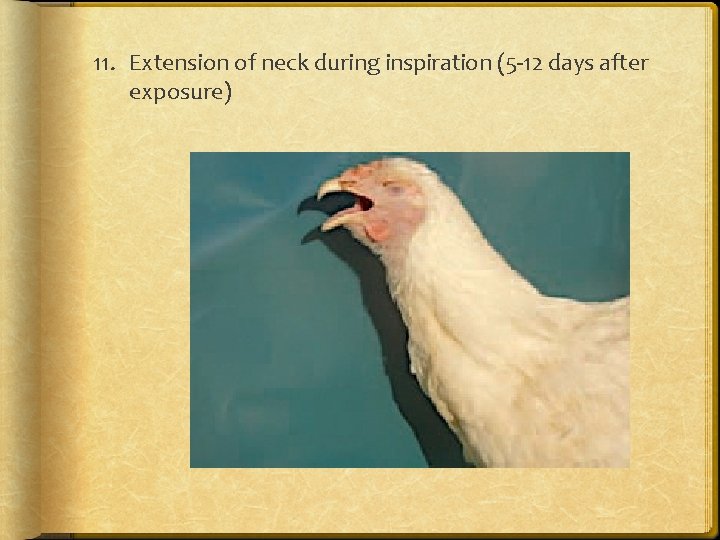
11. Extension of neck during inspiration (5 -12 days after exposure)

After recovery: carrier, become source of infection for susceptible birds Recurrent : under stressful condition Movement & mixing of stock, & reaching point of lay are predisposising factors epidemics!!! Low virulence: mild respiratory signs, no mortality, slight decrease of egg production
Diagnosis Acute disease Bloody-yellow caseous exudates Macroanatomic Microscopic: intranuclear inclusion bodies - tracheal, larynx, conjunctiva epithelium PCR assays Isolation and identification : chicken embryonated eggs (912 days old) onto CAM----- poxs Culture cells: plaque (multinucleated cell/syncytia)
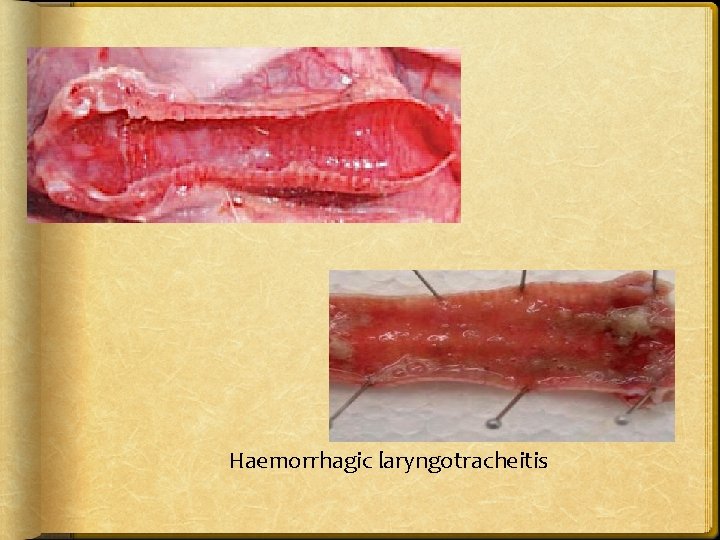
Haemorrhagic laryngotracheitis
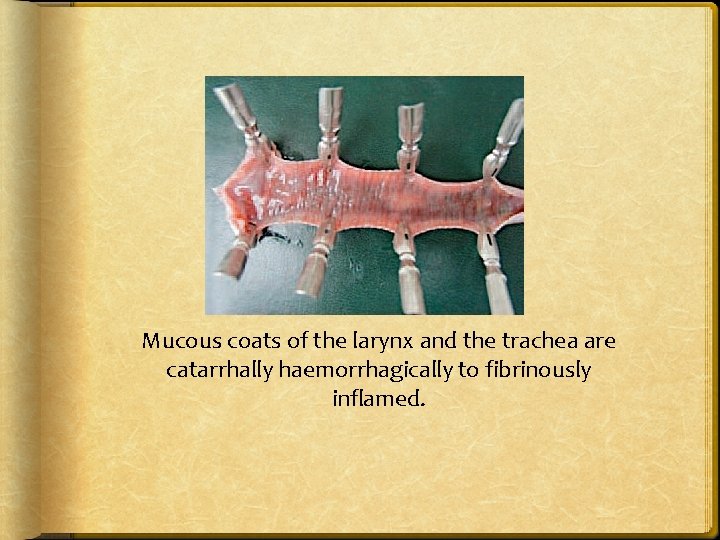
Mucous coats of the larynx and the trachea are catarrhally haemorrhagically to fibrinously inflamed.
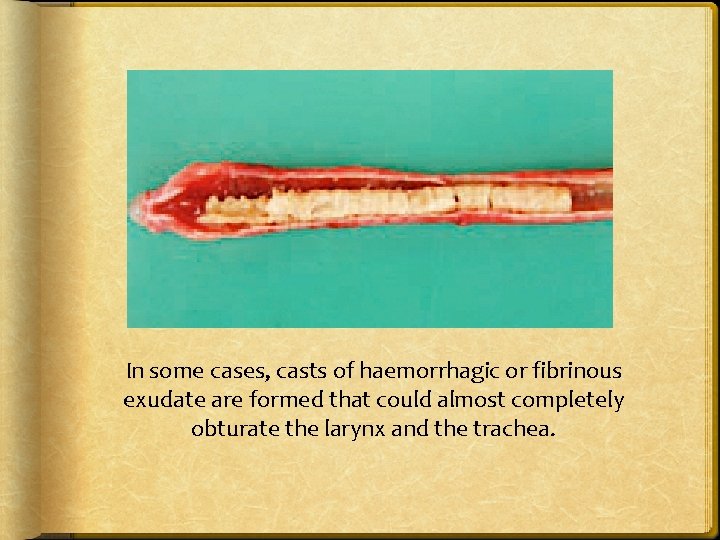
In some cases, casts of haemorrhagic or fibrinous exudate are formed that could almost completely obturate the larynx and the trachea.
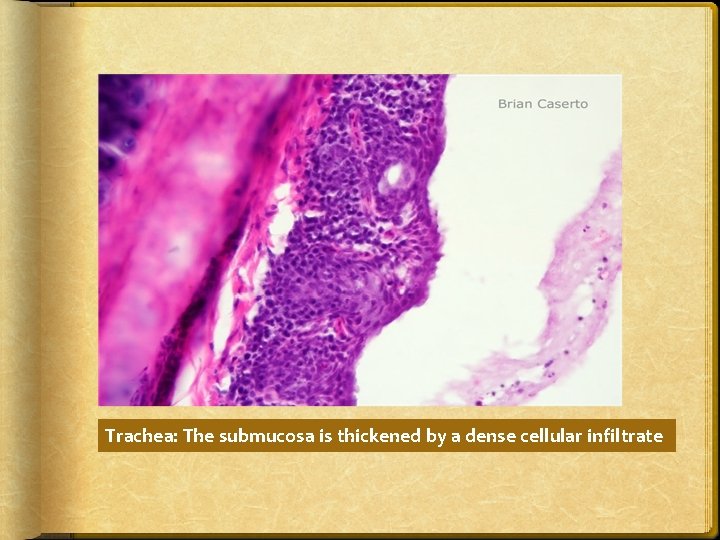
Trachea: The submucosa is thickened by a dense cellular infiltrate
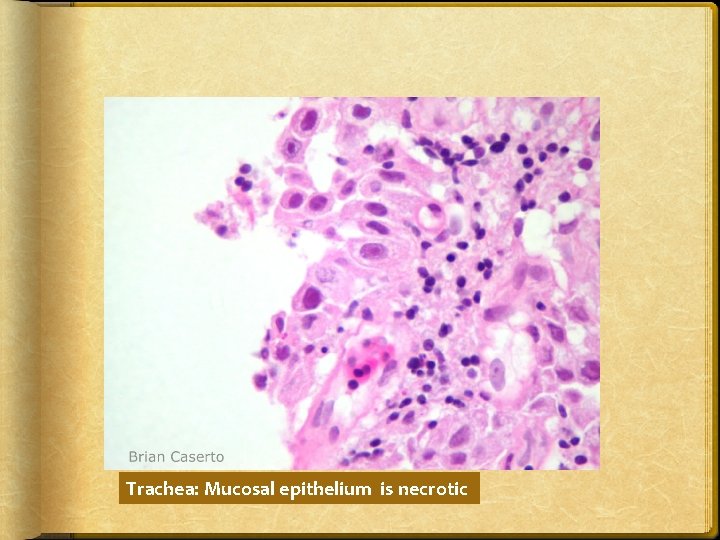
Trachea: Mucosal epithelium is necrotic
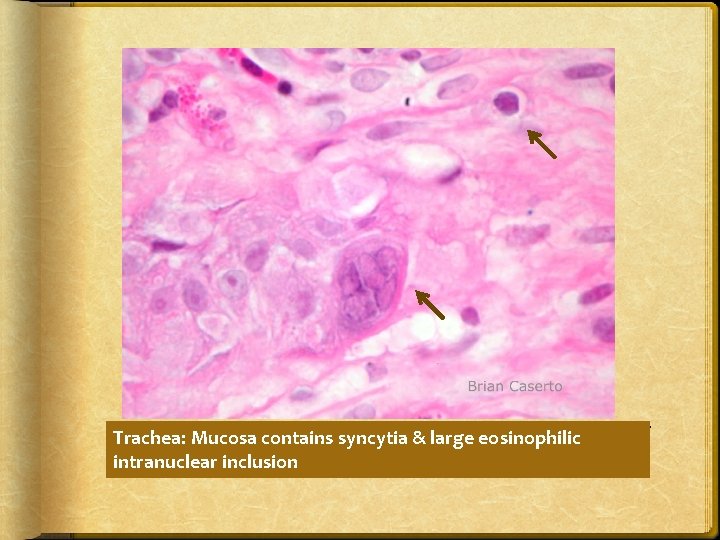
Trachea: Mucosa contains syncytia & large eosinophilic intranuclear inclusion
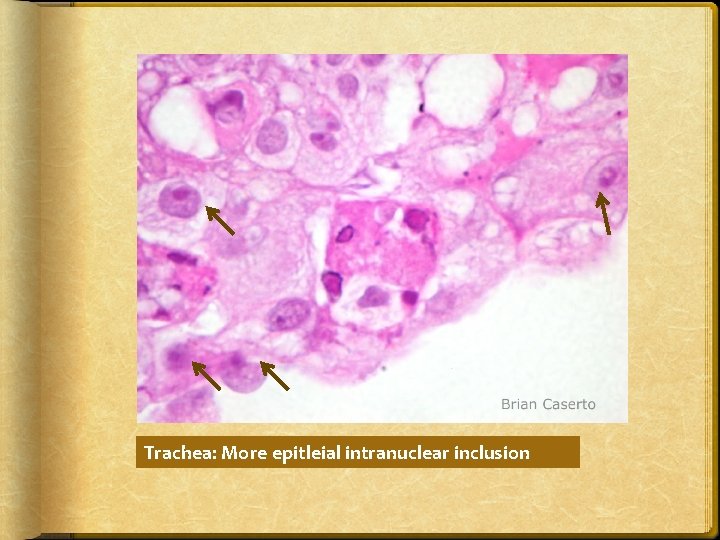
Trachea: More epitleial intranuclear inclusion
Treatment No specific drug Supportive Antibacterial for secondary infection Where early diagnosis is made, vaccination can be administered in the face of infection to help reduce further morbidity and mortality.
Control ILT can be effectively controlled by vaccination. Live attenuated virulent strain (eye drops, spray, via drinking water) Vaccinated and unvaccinated birds should not be mixed due to the possibility of reversion to virulence. Adequate biosecurity, quarantine and disinfection is also essential. Wild birds and vermin should be prevented from accessing poultry and their food/water sources.

Terima kasih
- Slides: 21