
Infectious Diseases What are infectious diseases Diseases caused
- Slides: 35
Infectious Diseases
What are infectious diseases? • Diseases caused by the entrance and reproduction of infectious agents including: – Bacteria – Viruses – Protozoa – Fungi
Examples of infectious diseases • • Common cold Flu Malaria Cholera Lyme Disease Hepatitis A, B, or C Small pox
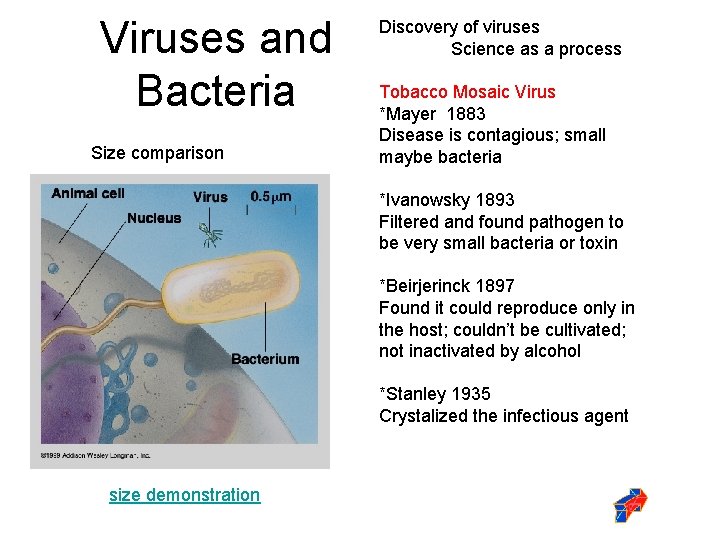
Viruses and Bacteria Size comparison Discovery of viruses Science as a process Tobacco Mosaic Virus *Mayer 1883 Disease is contagious; small maybe bacteria *Ivanowsky 1893 Filtered and found pathogen to be very small bacteria or toxin *Beirjerinck 1897 Found it could reproduce only in the host; couldn’t be cultivated; not inactivated by alcohol *Stanley 1935 Crystalized the infectious agent size demonstration
How are people infected? • Contact with infected body fluids. – Mucous from a cough or sneeze – Blood – Feces • Contact with the air, water, or food borne infectious agent. • Contact with a contaminated surface. – Door knob – Telephone
How are the diseases spread? • From person-to-person. – Colds, Flu, Small pox, Polio • From animal-to-person. – Rabies, Brucellosis, Cat Scratch Fever • Through contaminated food, soil, water, or other material. • By disease vectors including: – Mosquitoes – Fleas – Ticks
Long term effects of infection • Bacterial and viral infections can damage the heart tissue. • Viral infections can cause nerve damage and are suspected as a factor in the development of chronic neuromuscular syndromes including: – Multiple sclerosis – Fibromyalgia – Chronic Fatigue Syndrome
Heart Disease and Infections • Rheumatic Fever – Begins as Strep throat but toxin produced by bacteria damages heart valves. • Chronic Inflammation and atherosclerosis – Long term exposure to the immune products made in response to infections may lead to hardening of the arteries.
Treatment • Bacterial infections: – Antibiotics • Viral infections: – Drugs that block attachment of the virus to cell – Drugs that block production of viral particles • Protozoan and Fungi infections: – Drugs that kill or block the reproduction of the organism
Pathogens evolve quickly Antibiotic resistance Multidrug resistant tuberculosis (and others): huge problem All nosocomial infections: >20, 000 deaths/year in the US Evasion of immune surveillance New strains of influenza every few years Influenza infections alone: >35, 000 deaths/year in the US Graphic examples of evolution in action, but not happy ones
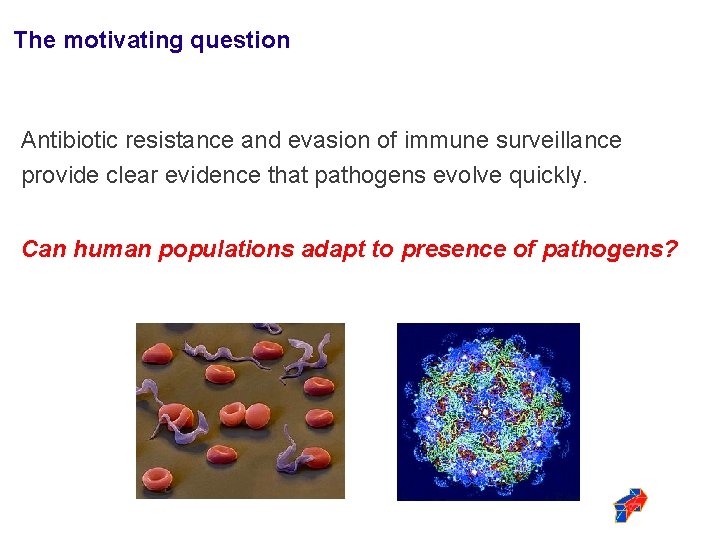
The motivating question Antibiotic resistance and evasion of immune surveillance provide clear evidence that pathogens evolve quickly. Can human populations adapt to presence of pathogens?
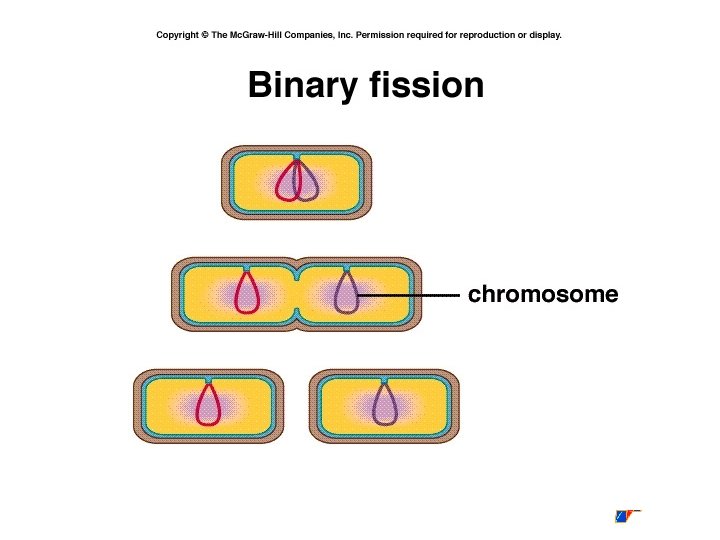
Bacteria Short generation time facilitates evolutionary adaptation. Binary fission -Asexual reproduction -under optimal conditions E. coli can reproduce every 20 minutes Spontaneous mutation rate: 1 * 107 per cell division, therefore: approx. 2000 mutations per gene per day
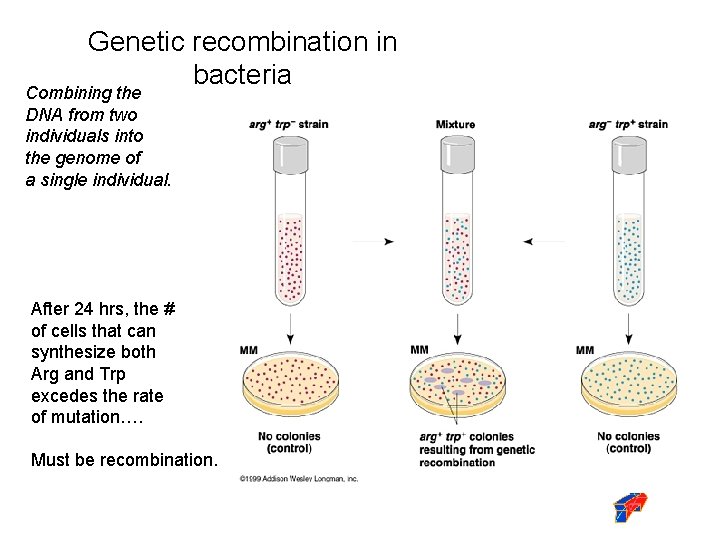
Genetic recombination in bacteria Combining the DNA from two individuals into the genome of a single individual. After 24 hrs, the # of cells that can synthesize both Arg and Trp excedes the rate of mutation…. Must be recombination.
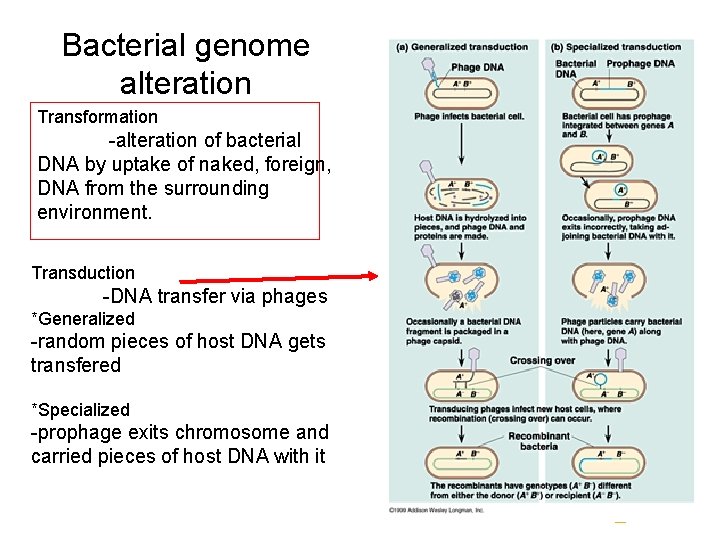
Bacterial genome alteration Transformation -alteration of bacterial DNA by uptake of naked, foreign, DNA from the surrounding environment. Transduction -DNA transfer via phages *Generalized -random pieces of host DNA gets transfered *Specialized -prophage exits chromosome and carried pieces of host DNA with it
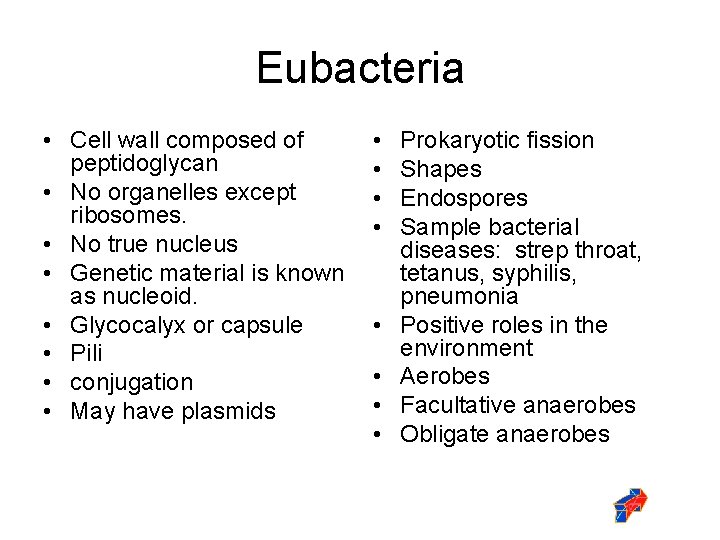
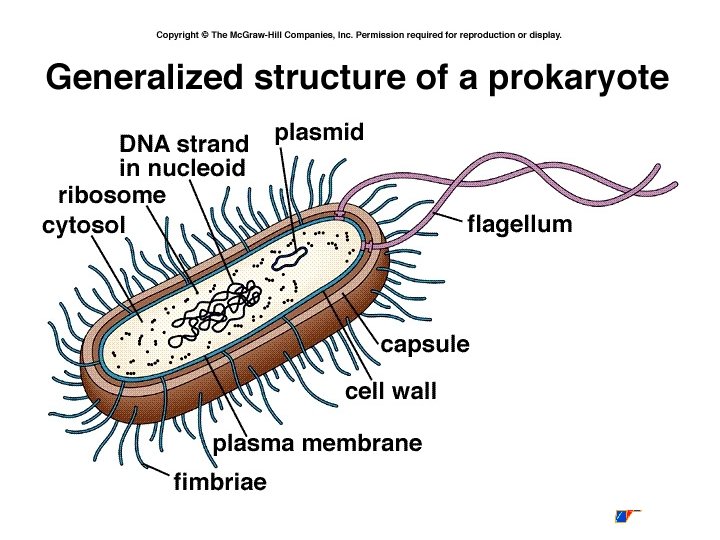
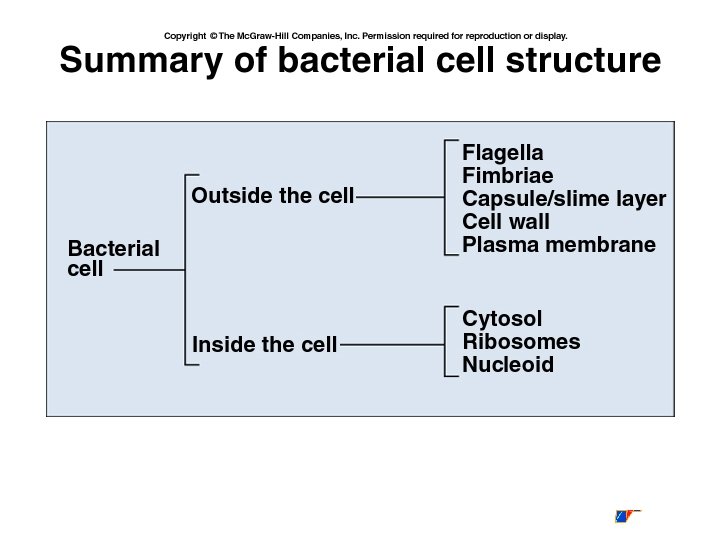
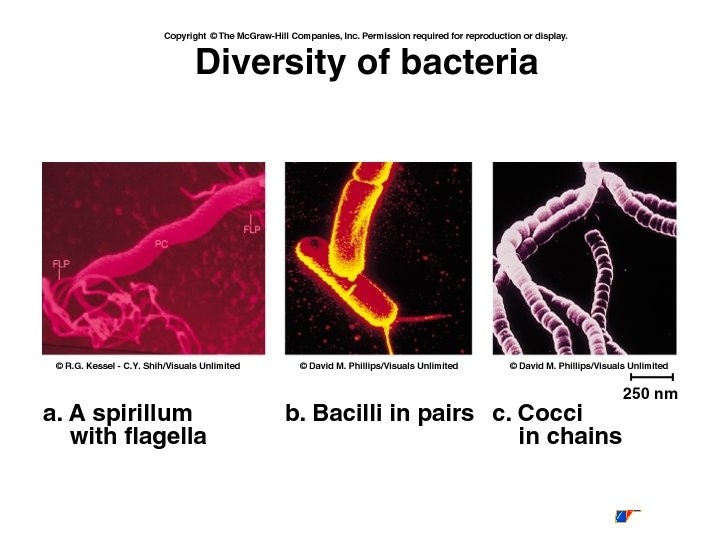
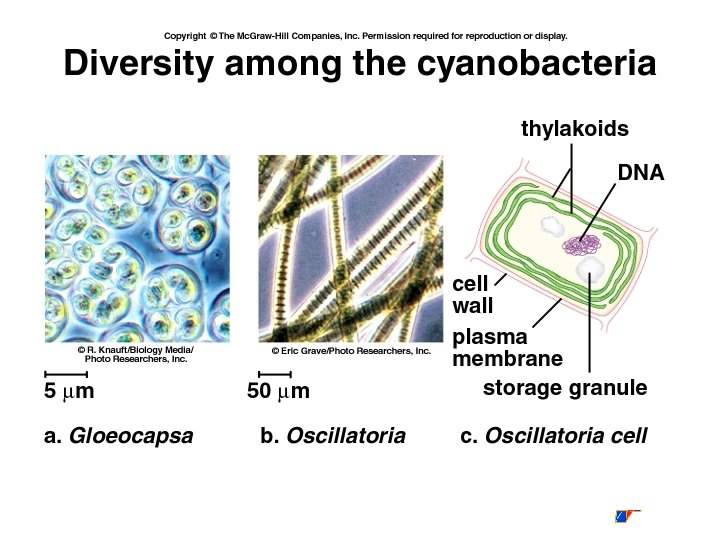
Eubacteria • Cell wall composed of peptidoglycan • No organelles except ribosomes. • No true nucleus • Genetic material is known as nucleoid. • Glycocalyx or capsule • Pili • conjugation • May have plasmids • • Prokaryotic fission Shapes Endospores Sample bacterial diseases: strep throat, tetanus, syphilis, pneumonia Positive roles in the environment Aerobes Facultative anaerobes Obligate anaerobes
Check out these websites to learn more about bacteria • http: //216. 239. 63. 104/search? q=cache: sdyrdll 7 G _EJ: www. sirinet. net/~jgjohnso/monerans. html+a rchaebacteria+characteristics&hl=en • http: //www. cat. cc. md. us/courses/bio 141/lecguide /unit 2/viruses/charvir. html • http: //www. thinkquest. org/library/site_sum. html? t name=23054&url=23054/basics/ • http: //www. southalabama. edu/biology/notes/delc hamps%20122/bly 122 ch 26. pdf • http: //cureresearch. com/v/viral/intro. htm
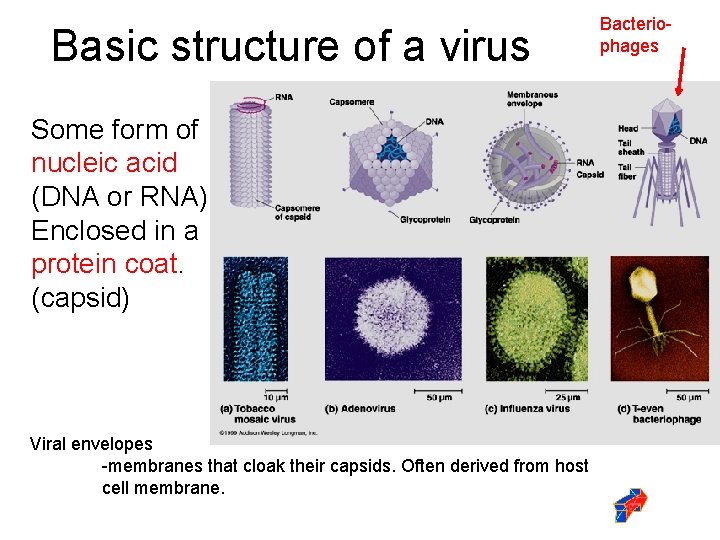
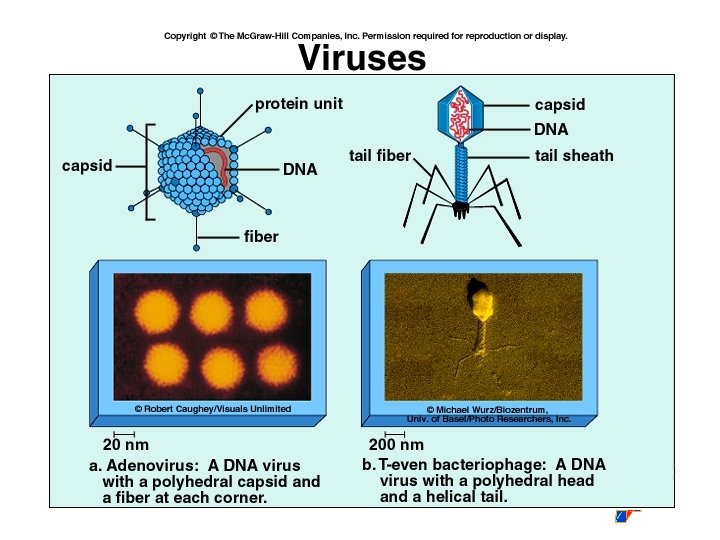
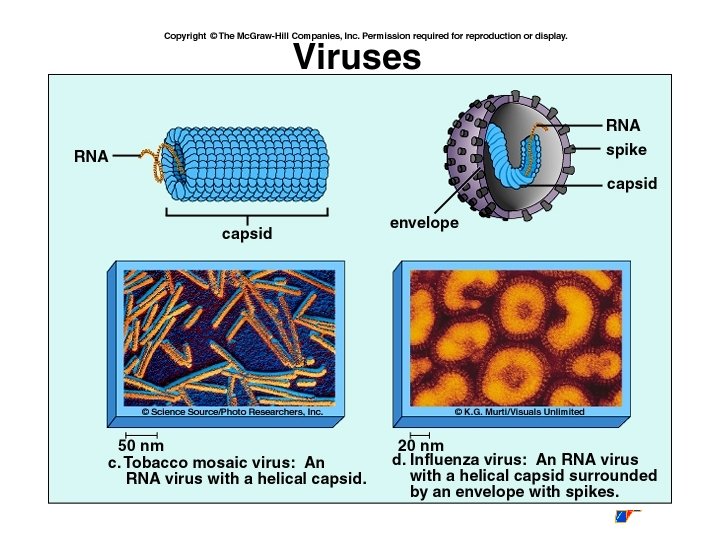
Basic structure of a virus Some form of nucleic acid (DNA or RNA) Enclosed in a protein coat. (capsid) Viral envelopes -membranes that cloak their capsids. Often derived from host cell membrane. Bacteriophages
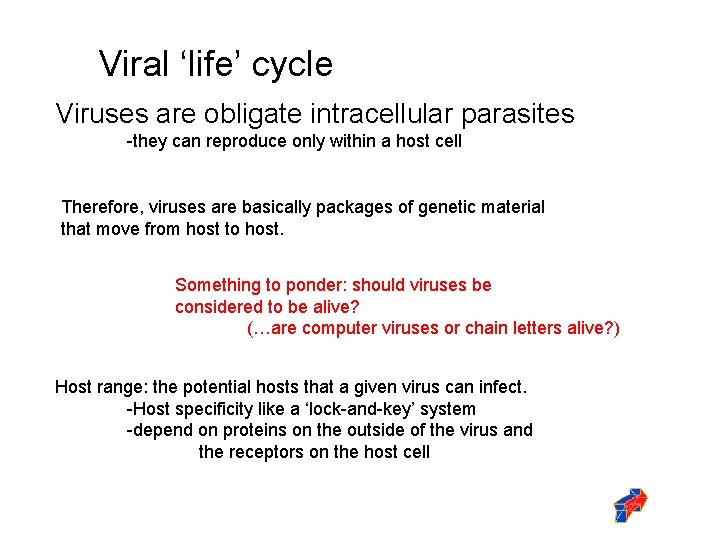
Viral ‘life’ cycle Viruses are obligate intracellular parasites -they can reproduce only within a host cell Therefore, viruses are basically packages of genetic material that move from host to host. Something to ponder: should viruses be considered to be alive? (…are computer viruses or chain letters alive? ) Host range: the potential hosts that a given virus can infect. -Host specificity like a ‘lock-and-key’ system -depend on proteins on the outside of the virus and the receptors on the host cell
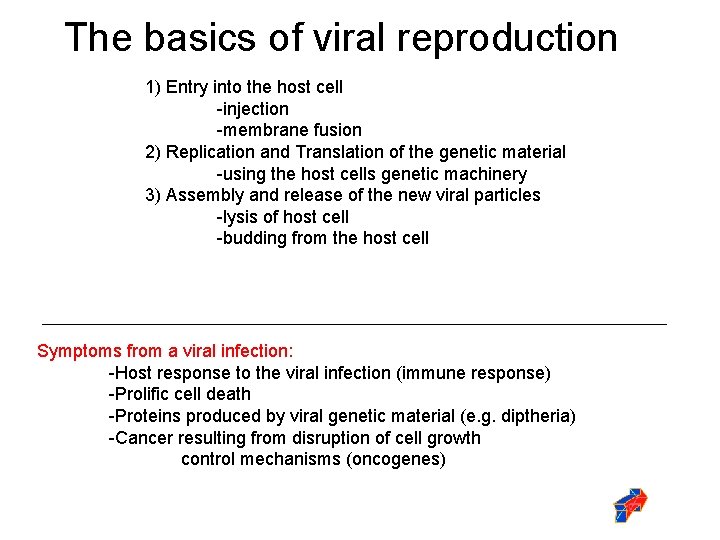
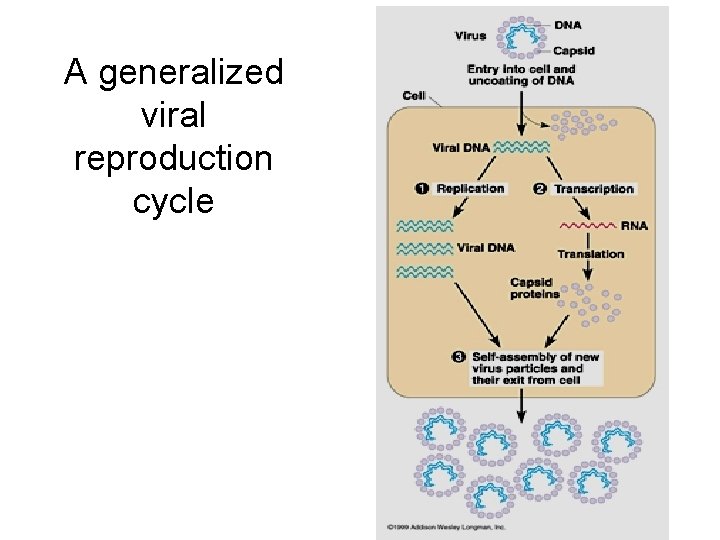
The basics of viral reproduction 1) Entry into the host cell -injection -membrane fusion 2) Replication and Translation of the genetic material -using the host cells genetic machinery 3) Assembly and release of the new viral particles -lysis of host cell -budding from the host cell Symptoms from a viral infection: -Host response to the viral infection (immune response) -Prolific cell death -Proteins produced by viral genetic material (e. g. diptheria) -Cancer resulting from disruption of cell growth control mechanisms (oncogenes)
A generalized viral reproduction cycle
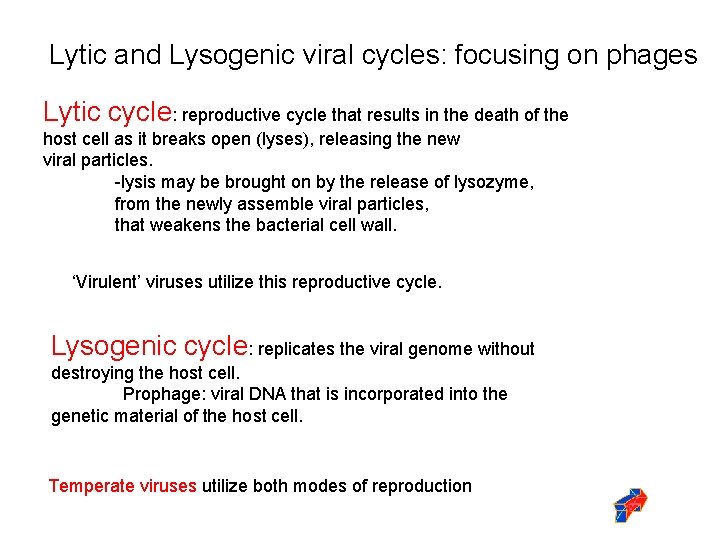
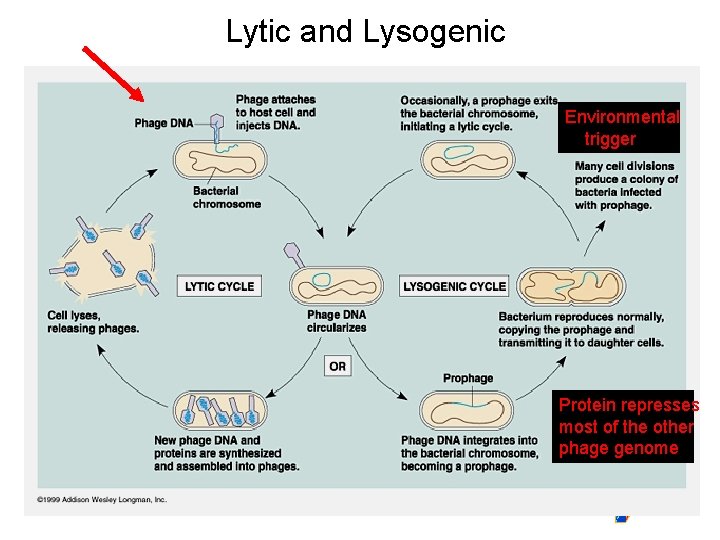
Lytic and Lysogenic viral cycles: focusing on phages Lytic cycle: reproductive cycle that results in the death of the host cell as it breaks open (lyses), releasing the new viral particles. -lysis may be brought on by the release of lysozyme, from the newly assemble viral particles, that weakens the bacterial cell wall. ‘Virulent’ viruses utilize this reproductive cycle. Lysogenic cycle: replicates the viral genome without destroying the host cell. Prophage: viral DNA that is incorporated into the genetic material of the host cell. Temperate viruses utilize both modes of reproduction
Lytic
Lytic and Lysogenic Environmental trigger Protein represses most of the other phage genome
Lysogenic
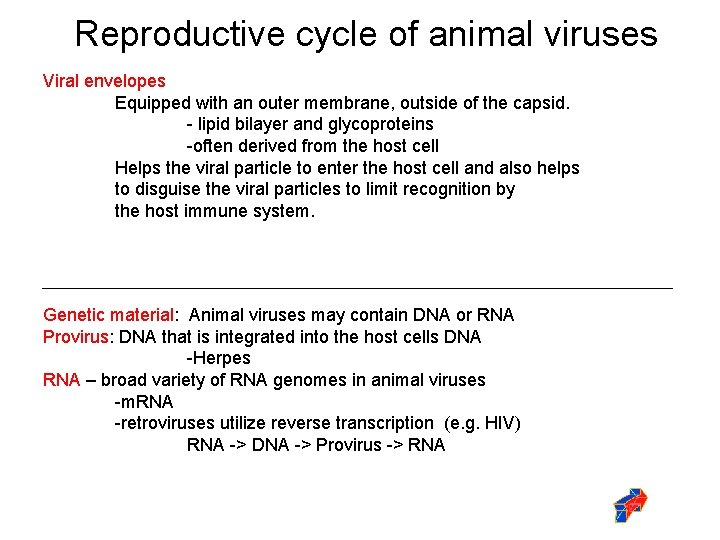
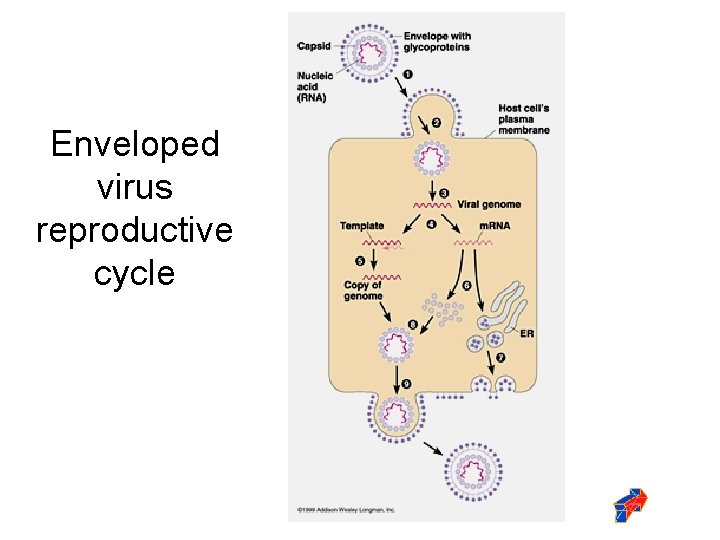
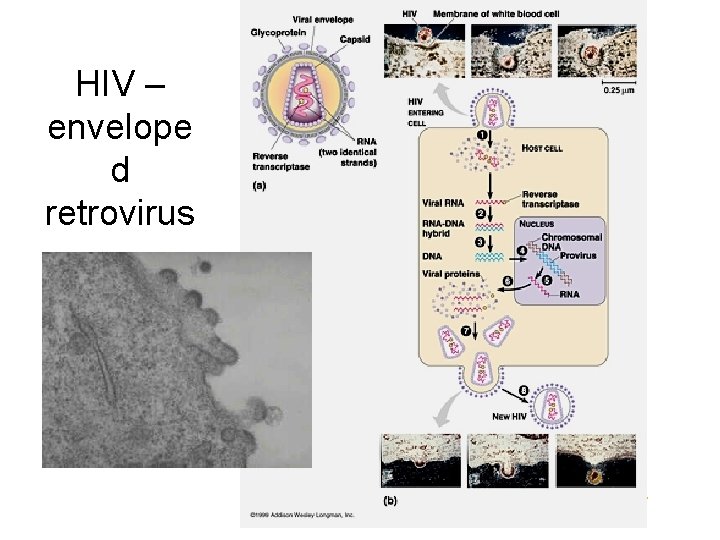
Reproductive cycle of animal viruses Viral envelopes Equipped with an outer membrane, outside of the capsid. - lipid bilayer and glycoproteins -often derived from the host cell Helps the viral particle to enter the host cell and also helps to disguise the viral particles to limit recognition by the host immune system. Genetic material: Animal viruses may contain DNA or RNA Provirus: DNA that is integrated into the host cells DNA -Herpes RNA – broad variety of RNA genomes in animal viruses -m. RNA -retroviruses utilize reverse transcription (e. g. HIV) RNA -> DNA -> Provirus -> RNA
Enveloped virus reproductive cycle
HIV – envelope d retrovirus