
Infectious Diseases Chapter 12 Medical Considerations Contraction Transmission
- Slides: 28
Infectious Diseases Chapter 12 Medical Considerations
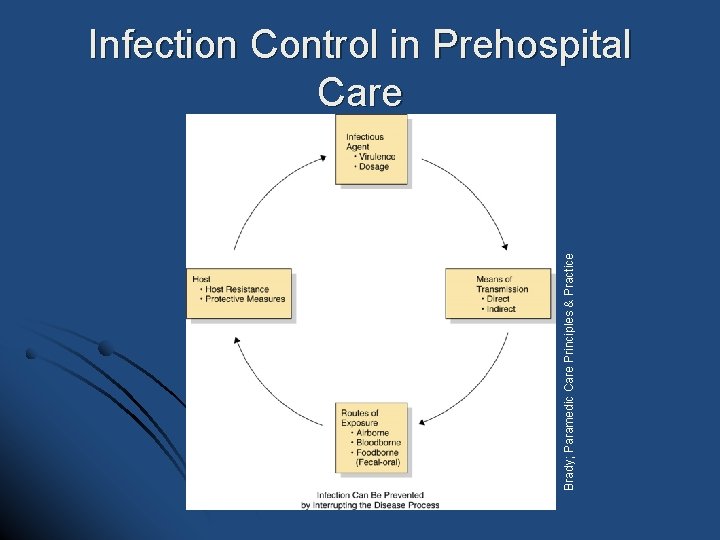
Contraction, Transmission, and Stages of Disease l Transmission of Infectious Disease l Interaction of Host, Infectious Agent, and Environment l Reservoirs l Direct vs. Indirect Transmission l Routes l Bloodborne, airborne, sexual, fecal-oral, and foodborne l Risk l of Exposure of Infection Theoretical vs. measurable
Contraction, Transmission, and Stages of Disease l Factors Affecting Disease Transmission l Mode of Entry l Virulence l Number of Organisms Transmitted l Host Resistance l Other Host Factors
Contraction, Transmission, and Stages of Disease l Phases of the Infectious Process l Latent Period l Communicable Period l Incubation Period l Seroconversion l Disease Period and the window phase
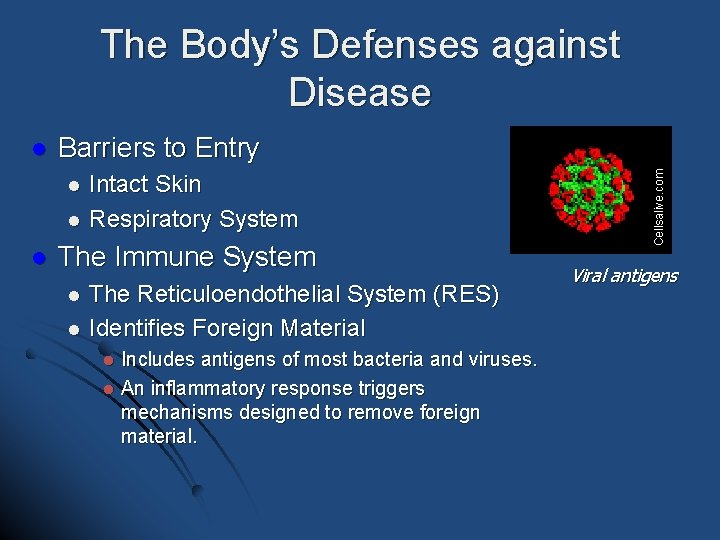
The Body’s Defenses against Disease Barriers to Entry l l l Intact Skin Respiratory System The Immune System l l The Reticuloendothelial System (RES) Identifies Foreign Material Includes antigens of most bacteria and viruses. l An inflammatory response triggers mechanisms designed to remove foreign material. l Cellsalive. com l Viral antigens
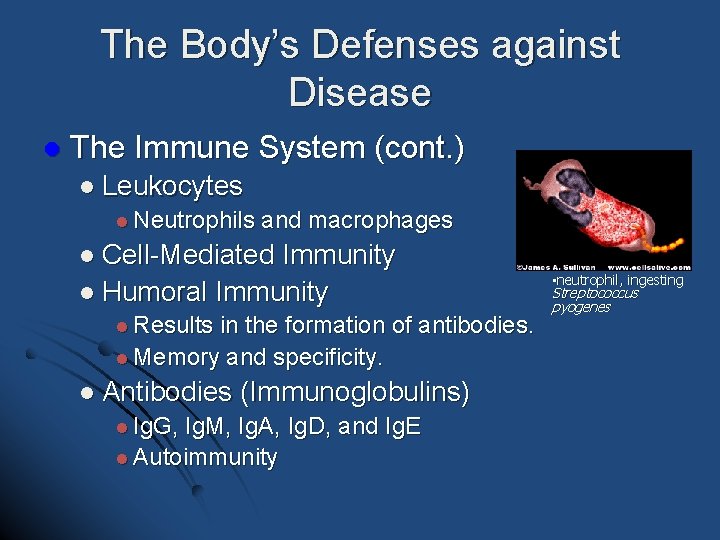
The Body’s Defenses against Disease l The Immune System (cont. ) l Leukocytes l Neutrophils and macrophages l Cell-Mediated Immunity l Humoral Immunity l Results in the formation of antibodies. l Memory and specificity. l Antibodies l Ig. G, (Immunoglobulins) Ig. M, Ig. A, Ig. D, and Ig. E l Autoimmunity • neutrophil, ingesting Streptococcus pyogenes
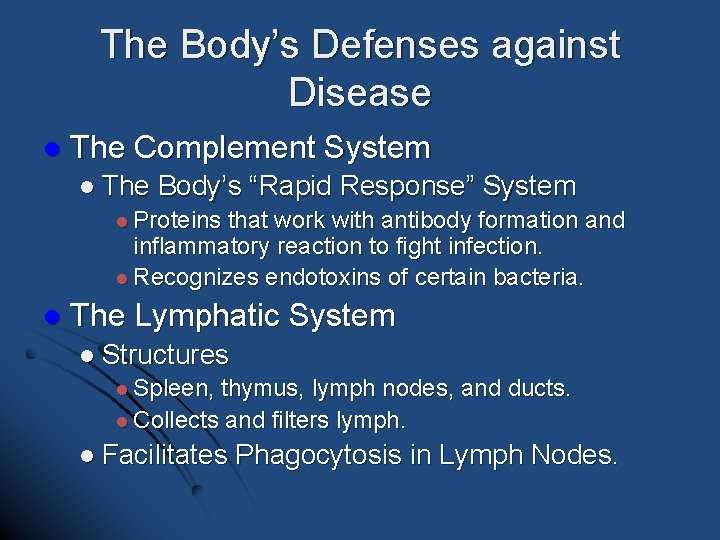
The Body’s Defenses against Disease l The Complement System l The Body’s “Rapid Response” System l Proteins that work with antibody formation and inflammatory reaction to fight infection. l Recognizes endotoxins of certain bacteria. l The Lymphatic System l Structures l Spleen, thymus, lymph nodes, and ducts. l Collects and filters lymph. l Facilitates Phagocytosis in Lymph Nodes.
Brady; Paramedic Care Principles & Practice Infection Control in Prehospital Care
Infection Control l Recovery l Wash your hands immediately after patient contact. l If you sustain a wound are exposed to the body fluids of others, wash the wound with soap and water immediately. l Dispose of biohazardous wastes in accordance with local laws and regulations.
Infection Control l Recovery l Place (cont. ) potentially infectious wastes in leak proof biohazard bags. Bag and label soiled linen. l Decontaminated clothing and reusable equipment. l Handle uniforms in accordance with agency policy.
Infectious Diseases of Immediate Concern l Human Immunodeficiency Virus l l Pathogenesis Risk to the General Public Found in blood, blood products, and body fluids. l Common methods of transmission include sexual contact and shared needles. l l Risk to Health Care Workers Transmission to health care workers is actually rare. l Accidental needlesticks are the most common source. l High-risk exposures are those involving a large volume of blood, deep percutaneous injury, actual intramuscular injection, or a high antibody-retrovirus titer in the source l
Diseases of Immediate Concern l HIV (cont. ) l Clinical Presentation l Fatigue, fever, sore throat, lymphadenopathy, splenomegaly, rash, and diarrhea. l Kaposi’s sarcoma. l Secondary (opportunistic) infections and weight loss. l Dementia, psychosis, and peripheral neurological disorders develop as AIDS progresses.
Diseases of Immediate Concern to EMS Providers l Hepatitis l General Signs & Symptoms are similar regardless of type of infection. l Headache, fever, weakness, joint pain, anorexia, nausea, vomiting, and URQ abdominal pain. l Jaundice, clay-colored stool, and dark urine develop as the disease progresses. l l Hepatitis A (Infectious or Viral Hepatitis) (HVA) Transmitted by fecal-oral route. l Typically is mild; many patients are asymptomatic. l Rarely serious and lasts 2– 6 weeks. l
Diseases of Immediate Concern to EMS Providers l Hepatitis (cont. ) l Hepatitis B (Serum Hepatitis) (HBV) l Virus is transmitted through direct contact with infected blood, semen, vaginal fluids, or saliva. l Risk is significantly higher for EMS providers. l 5 -35% of all needlesticks result in infection. l Vaccination is available and recommended for all EMS workers. l 60– 80% of infected individuals are asymptomatic.
Diseases of Immediate Concern to EMS Providers l Hepatitis (cont. ) l Hepatitis C (HCV) Primarily transmitted by IV drug abuse and sexual contact. l Chronic infection that can cause active disease years later. l May cause cirrhosis and end-stage liver disease. l l Hepatitis D (HDV) l l Exists only concurrently with HBV. Hepatitis E (HEV) l Is similar to HAV but primarily associated with contaminated drinking water.
Diseases of Immediate Concern to EMS Providers l Tuberculosis l General Info l Most common preventable infectious disease l Drug-resistant TB l Skin Testing l Pathogenesis l Clinical Presentation l Chills, fever, fatigue, chronic cough, weight loss l Night sweats l Hemoptysis
Diseases of Immediate Concern to EMS Providers l Tuberculosis (cont. ) l EMS Response l Index of suspicion l N 95 and HEPA respirators l Postexposure Identification and Management
Diseases of Immediate Concern to EMS Providers l Pneumonia l General Differentiating pneumonia from CHF l Source pathogens l At-risk patient populations l l History and Assessment Community-acquired pneumonia. l Signs include acute onset of chills, fever, dyspnea, pleuritic chest pain, cough, adventitious breath sounds. l In geriatric patients, the primary sign may be an altered mental state. l
Diseases of Immediate Concern to EMS Providers l Pneumonia l Patient Management and PPE l Management should support oxygenation and ventilation. l Consider the possibility of TB. l Consider placing a mask on yourself or the patient. l Immunization l Routine and Postexposure Management vaccination is not necessary. l Antimicrobial agents and multidrug-resistant strains.
Diseases of Immediate Concern to EMS Providers l Chickenpox l Varicella Zoster Virus (VCV) l Clinical Presentation l Respiratory symptoms, malaise, and low-grade fever followed by a rash. l Rash may be the first sign of illness and may be limited or widespread; often prolific on the trunk. l Transmission is through airborne droplets and direct contact with lesions. l Can be lethal in adult immunocompromised patients.
Diseases of Immediate Concern to EMS Providers l Chickenpox (cont. ) l Assessing l Past Immunity history of chickenpox is sufficient. l Immunization l EMS Response and Postexposure l Observe universal (standard) precautions. l Get postexposure vaccination.
Diseases of Immediate Concern to EMS Providers l Meningitis l Inflammation l Caused by a variety of pathogens. l Transmission l Host of the Meninges Factors resistance factors, weather l Contact with oral secretions l Crowding, close contact, smoking
Diseases of Immediate Concern to EMS Providers l Meningitis (cont. ) l Clinical Presentation Incubation period of 4– 10 days l Fever, chills, headache, nuchal rigidity, arthralgia, lethargy, malaise, altered mental status, vomiting, and seizures l Brudzinski’s and Kernig’s signs l l l Immunization EMS Response and Postexposure Observe universal (standard) precautions. l Perform postexposure prophylaxis within 24 hours. l
Other Airborne Diseases l Influenza and the Common Cold l Viral Infection l Mutation and virulence l Epidemics l Symptoms l Fever, chills, malaise, muscle aches, nasal discharge, mild cough l Secondary infections l Management l Immunization
Other Airborne Diseases l Measles l Viral Infection Highly communicable, with lifelong immunity after disease. l Transmitted by airborne droplets and direct contact. l l Symptoms Presents similar to severe cold with fever, conjunctivitis, photophobia, cough, and congestion. l Rash. l l l Management Immunization
Other Airborne Diseases l Mumps l Viral Infection Transmitted by airborne droplets and direct contact with saliva of infected patient. l Occurs primarily in 5 - to 15 -year-old patients. l l Symptoms Painful enlargement of salivary glands l Symptoms of cold with earache, difficulty chewing, and swallowing l l l Management Immunization
Other Airborne Diseases l Rubella l Systemic Viral Infection l Symptoms l Sore throat, low-grade fever, and fine pink rash l Management l and Immunization Respiratory Syncytial Virus (RSV) l Viral Infection l Common cause of pneumonias and bronchiolitis l Commonly associated with lower respiratory infections during the winter
Other Airborne Diseases l RSV (cont. ) l Symptoms l l l Runny nose and congestion, followed by wheezing, tachypnea, and signs of respiratory distress Management Pertussis (Whooping Cough) l l Bacterial Infection Symptoms l l Catarrhal, paroxysmal, and convalescent phases Management and Immunization