
Infections in Pregnancy Objectives of lecture To describe
Infections in Pregnancy
Objectives of lecture • To describe the main infectious complications during and after pregnancy • To describe principles for prevention of infections • To describe principles of treating infections
Magnitude of the problem Infections in pregnancy is a main cause of maternal deaths. • Early pregnancy complications (septic abortion) • Infections during pregnancy • Infection after delivery
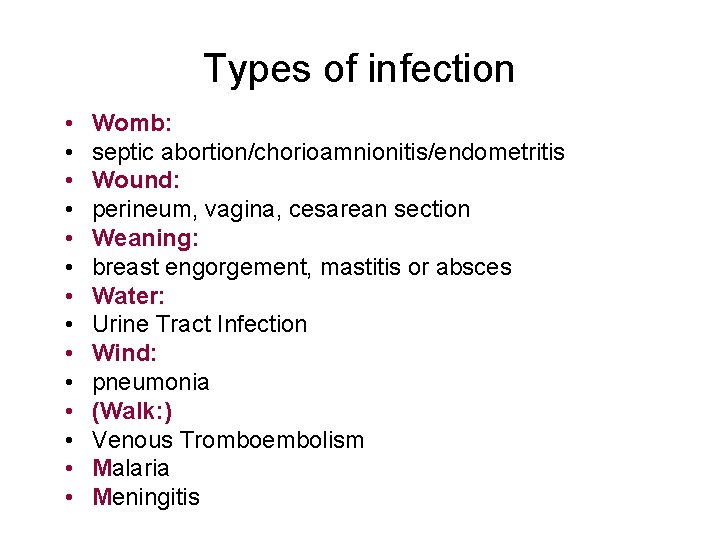
Types of infection • • • • Womb: septic abortion/chorioamnionitis/endometritis Wound: perineum, vagina, cesarean section Weaning: breast engorgement, mastitis or absces Water: Urine Tract Infection Wind: pneumonia (Walk: ) Venous Tromboembolism Malaria Meningitis
Preventing infection Complications to abortion: • Prevent adolescent pregnancies • Prevent unwanted pregnancies • Prevent unsafe abortions
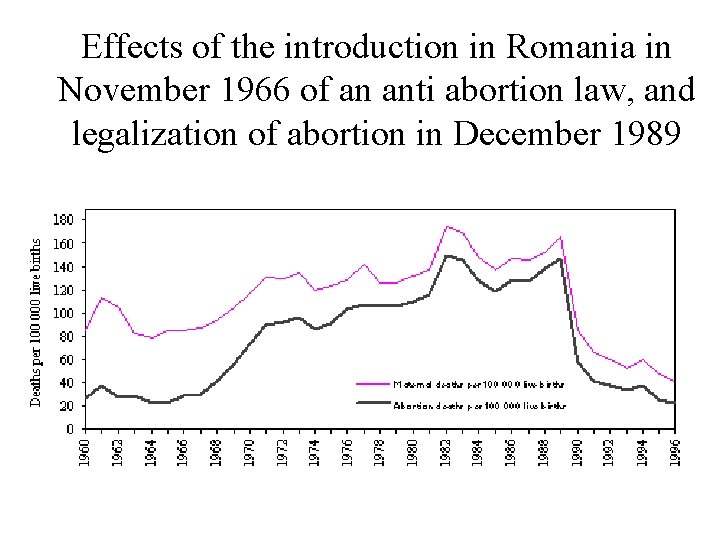
Effects of the introduction in Romania in November 1966 of an anti abortion law, and legalization of abortion in December 1989
Preventing infections At the antenatal clinic • Treat anaemia • Treat worms • Treat malaria and distribute bednets • Screen for HIV • Discuss good nutrition and maybe micronutrients • Discuss hygiene
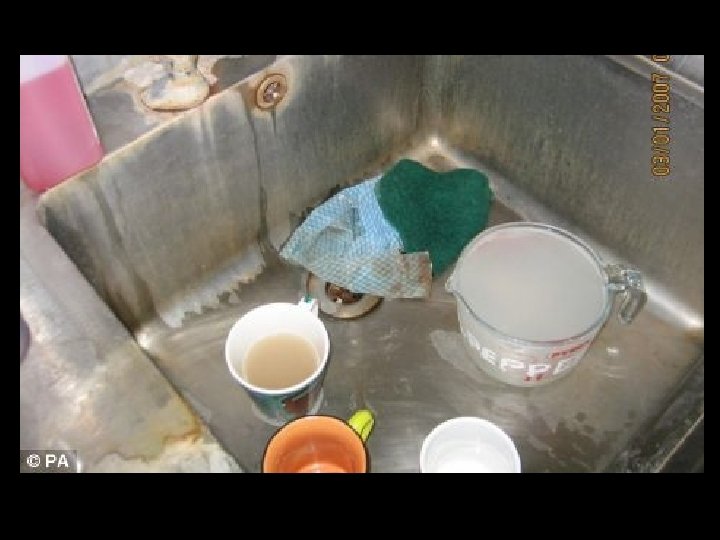
Preventing bacterial infections Clean procedures: • Don’t wear watches or rings at work • Cut you nails short • Clean your hands before and after touching a patient - always • Do not share soap and towel! • Alcohol is the best desinfecter • Keep the labour room clean and tidy
Preventing bacterial infections Good obstetric and surgical procedures • Use sterile techniques • Prevent and stop bleeding: Anaemia is a major risk factor for infection and a hematoma is likely to become infected • Avoid unnecessary episiotomies • Do not perform cesarean section at a stilbirth unless on a vital indication
Preventing bacterial infection PPROM • Treat with Ampicillin IV 2 g. STAT followed by 1 g/6 hrs until delivery At PROM >18 -24 hrs: • Treat with antibiotics as above • Induce labour
Induction of labour If cervix is ripe: soft, short, open 2 -3 cm: 10 IU oxytocin in one liter N/S or R/L • Start dose: 12 drops/minute Each 15 -20 minutes • Increase by: 2 -12 drops/minute Until desired effect • Maximum dose: 80 -84 drops/minute
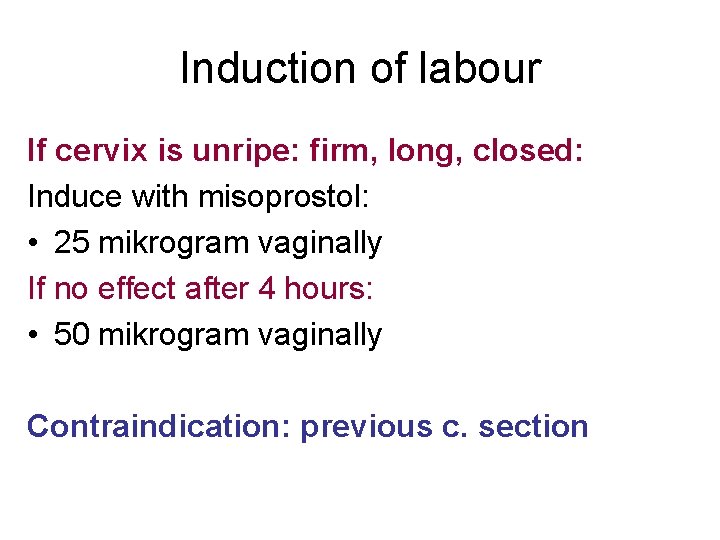
Induction of labour If cervix is unripe: firm, long, closed: Induce with misoprostol: • 25 mikrogram vaginally If no effect after 4 hours: • 50 mikrogram vaginally Contraindication: previous c. section
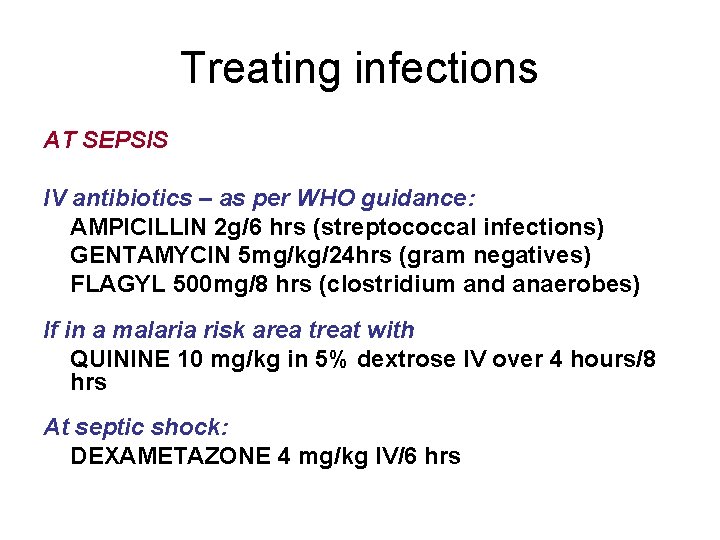
Treating infections AT SEPSIS IV antibiotics – as per WHO guidance: AMPICILLIN 2 g/6 hrs (streptococcal infections) GENTAMYCIN 5 mg/kg/24 hrs (gram negatives) FLAGYL 500 mg/8 hrs (clostridium and anaerobes) If in a malaria risk area treat with QUININE 10 mg/kg in 5% dextrose IV over 4 hours/8 hrs At septic shock: DEXAMETAZONE 4 mg/kg IV/6 hrs
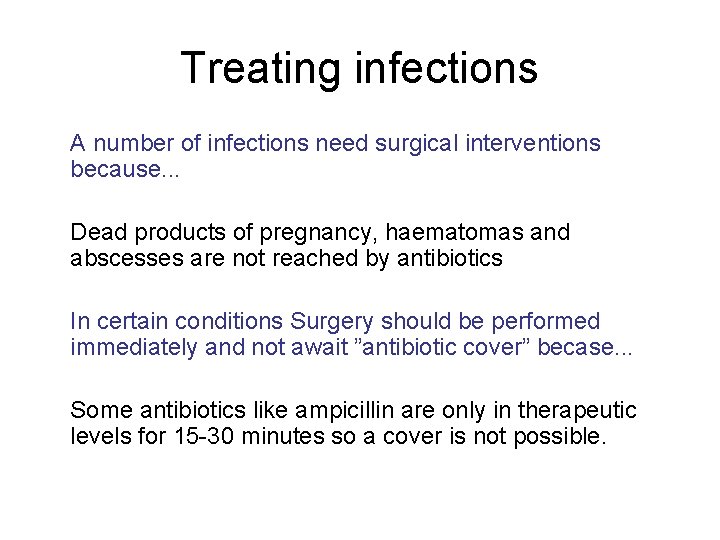
Treating infections A number of infections need surgical interventions because. . . Dead products of pregnancy, haematomas and abscesses are not reached by antibiotics In certain conditions Surgery should be performed immediately and not await ”antibiotic cover” becase. . . Some antibiotics like ampicillin are only in therapeutic levels for 15 -30 minutes so a cover is not possible.
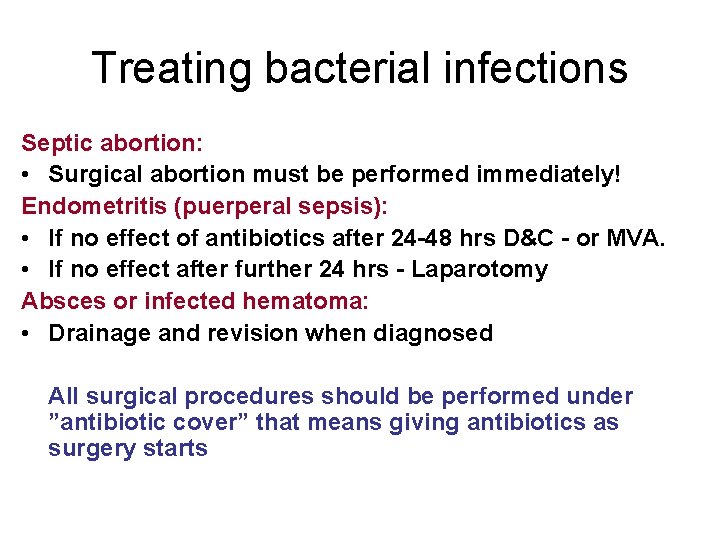
Treating bacterial infections Septic abortion: • Surgical abortion must be performed immediately! Endometritis (puerperal sepsis): • If no effect of antibiotics after 24 -48 hrs D&C - or MVA. • If no effect after further 24 hrs - Laparotomy Absces or infected hematoma: • Drainage and revision when diagnosed All surgical procedures should be performed under ”antibiotic cover” that means giving antibiotics as surgery starts

Questions?
- Slides: 17