
Infections in Pregnancy Dr Shahnaz Aram General Principles
- Slides: 33
Infections in Pregnancy Dr Shahnaz Aram
General Principles Pregnancy does not alter resistance to infection Severe infections have greater effects on the fetus Maternal antibodies cross the placenta and give passive immunity to the fetus Fetus becomes immunologically competent from the 14 th week
Fetus and Infection • Indirect effect - O 2 transport, nutrient exchange • Direct effect - invasion of placenta and infection of fetus • Viruses more than bacteria • rarely effect fetus unless maternal infection is severe – exception: Rubella, CMV, Herpes Simplex
Fetus and Infections cause - miscarriage - congenital anomalies - fetal hydrops - fetal death - preterm delivery - preterm rupture of the membranes
Viral Diseases • • Rubella Parvovirus Cytomegalovirus Varicella Zoster Herpes Hepatitis HIV Rubeola
Measles (Rubeola) • • Paramyxovirus Incubation - 10 -14 days Respiratory droplet inoculation Fever, rash, cough, rhinorrhea, conjunctivitis and Koplik’s spots • Pneumonia (2 nd bacterial) main cause of death • Encephalomyolitis, SSPE, Hepatitis
Measles (Rubeola) • • No increased maternal or fetal deaths Risk of preterm delivery No specific syndrome Neonatal measles and pneumonia if active disease in mother • Increased PNM in developing countries
Measles (Rubeola) • Prevention vaccine (95% recipients protected) • Treatmentantipyrexials cough suppresants Antibiotics for bacteria Suppress uterine contractions ? Immune serum globulin • Isolation precautions
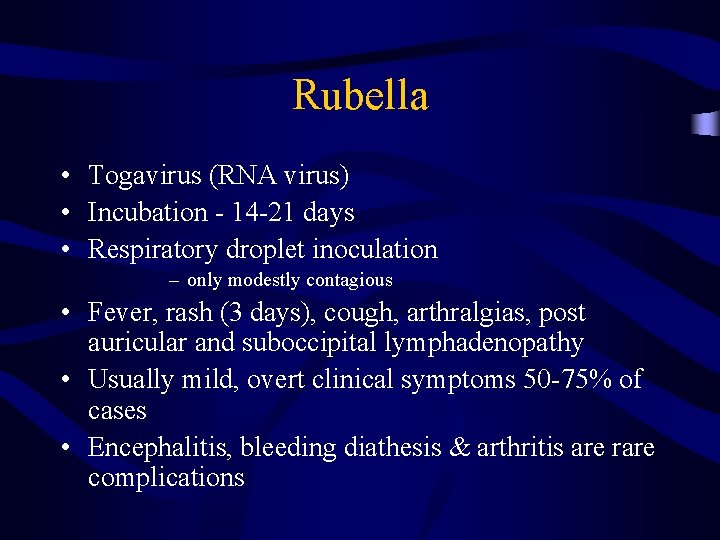
Rubella • Togavirus (RNA virus) • Incubation - 14 -21 days • Respiratory droplet inoculation – only modestly contagious • Fever, rash (3 days), cough, arthralgias, post auricular and suboccipital lymphadenopathy • Usually mild, overt clinical symptoms 50 -75% of cases • Encephalitis, bleeding diathesis & arthritis are rare complications
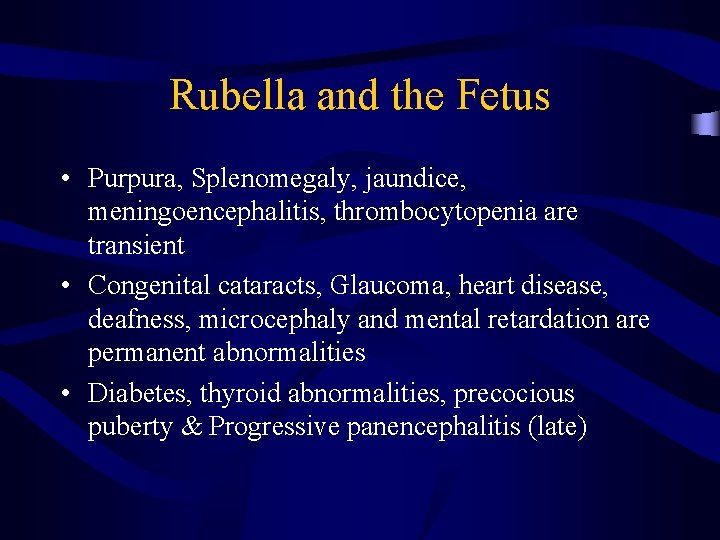
Rubella and the Fetus • Purpura, Splenomegaly, jaundice, meningoencephalitis, thrombocytopenia are transient • Congenital cataracts, Glaucoma, heart disease, deafness, microcephaly and mental retardation are permanent abnormalities • Diabetes, thyroid abnormalities, precocious puberty & Progressive panencephalitis (late)
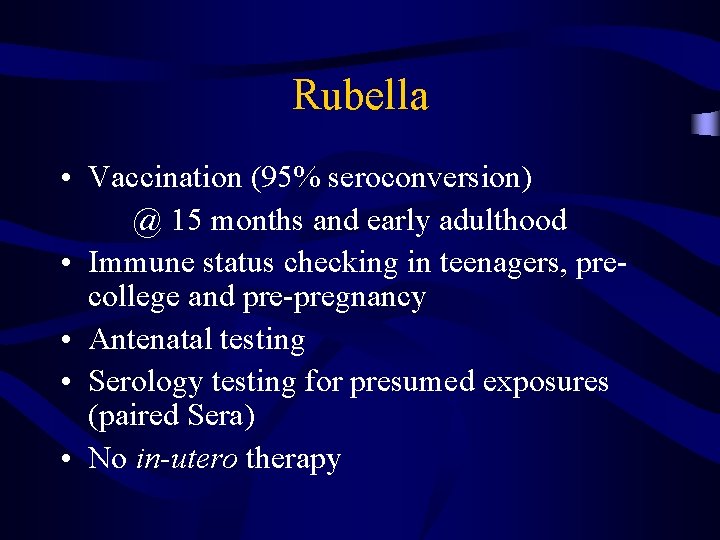
Rubella • Vaccination (95% seroconversion) @ 15 months and early adulthood • Immune status checking in teenagers, precollege and pre-pregnancy • Antenatal testing • Serology testing for presumed exposures (paired Sera) • No in-utero therapy
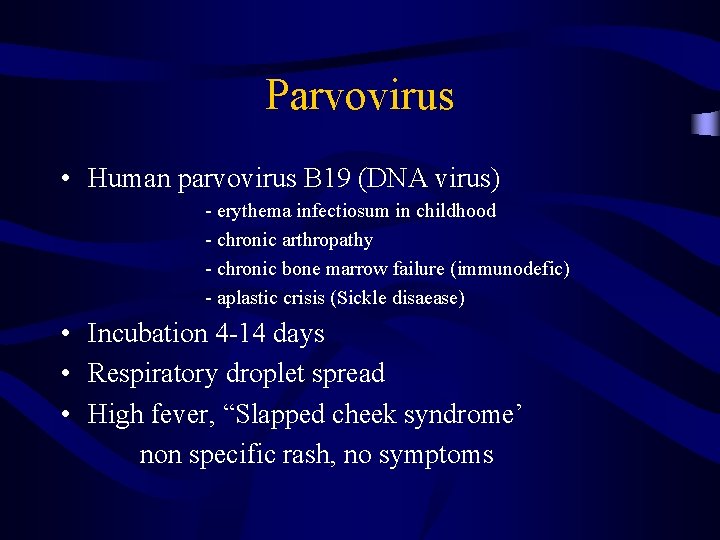
Parvovirus • Human parvovirus B 19 (DNA virus) - erythema infectiosum in childhood - chronic arthropathy - chronic bone marrow failure (immunodefic) - aplastic crisis (Sickle disaease) • Incubation 4 -14 days • Respiratory droplet spread • High fever, “Slapped cheek syndrome’ non specific rash, no symptoms
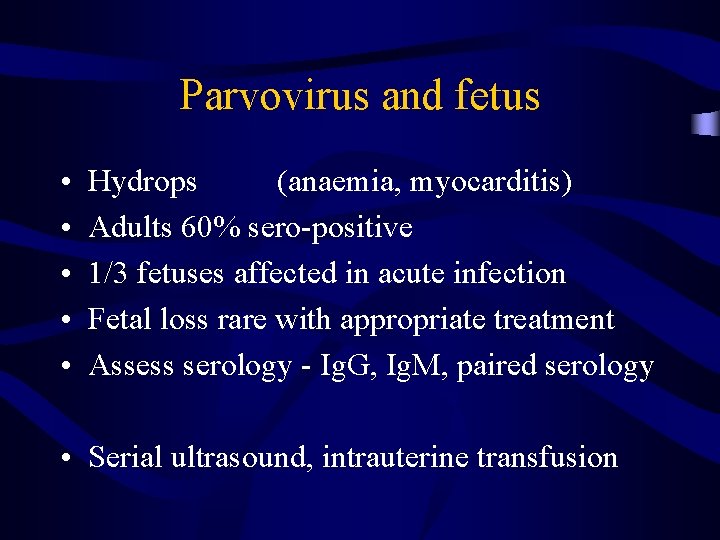
Parvovirus and fetus • • • Hydrops (anaemia, myocarditis) Adults 60% sero-positive 1/3 fetuses affected in acute infection Fetal loss rare with appropriate treatment Assess serology - Ig. G, Ig. M, paired serology • Serial ultrasound, intrauterine transfusion
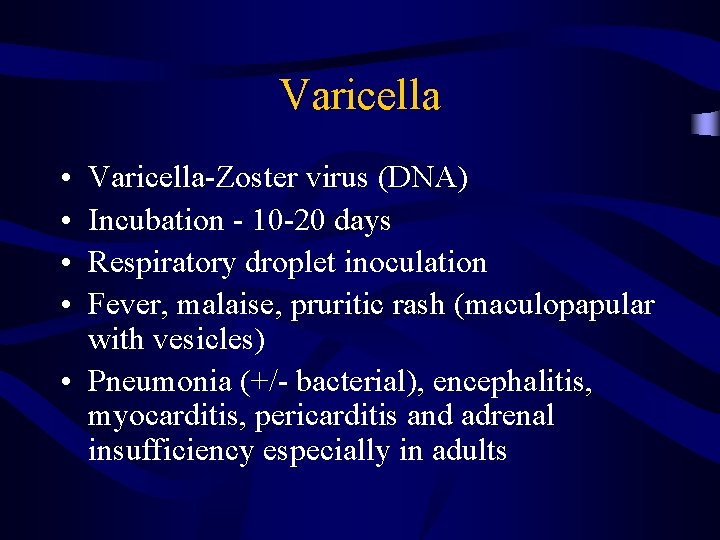
Varicella • • Varicella-Zoster virus (DNA) Incubation - 10 -20 days Respiratory droplet inoculation Fever, malaise, pruritic rash (maculopapular with vesicles) • Pneumonia (+/- bacterial), encephalitis, myocarditis, pericarditis and adrenal insufficiency especially in adults
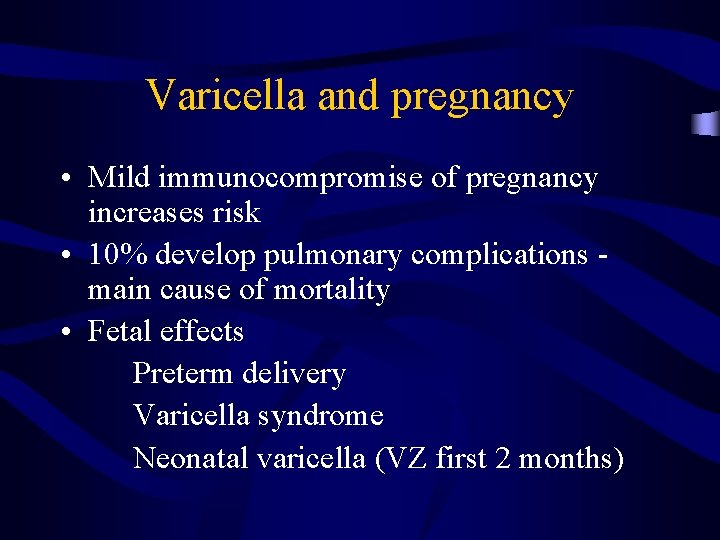
Varicella and pregnancy • Mild immunocompromise of pregnancy increases risk • 10% develop pulmonary complications main cause of mortality • Fetal effects Preterm delivery Varicella syndrome Neonatal varicella (VZ first 2 months)
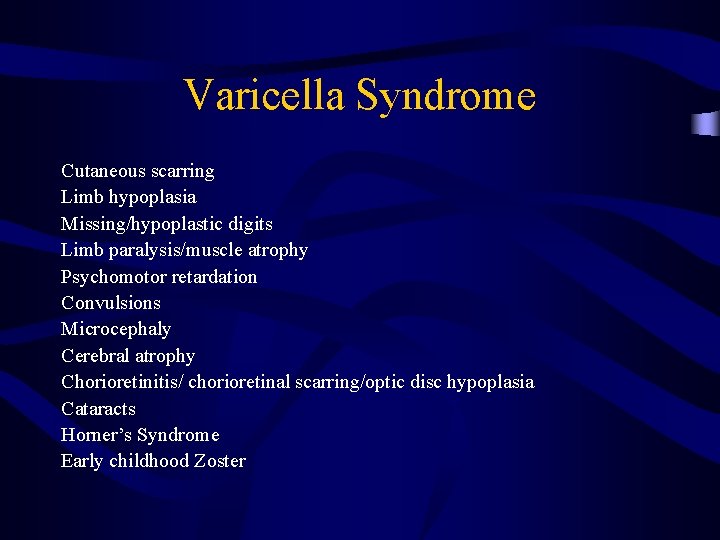
Varicella Syndrome Cutaneous scarring Limb hypoplasia Missing/hypoplastic digits Limb paralysis/muscle atrophy Psychomotor retardation Convulsions Microcephaly Cerebral atrophy Chorioretinitis/ chorioretinal scarring/optic disc hypoplasia Cataracts Horner’s Syndrome Early childhood Zoster
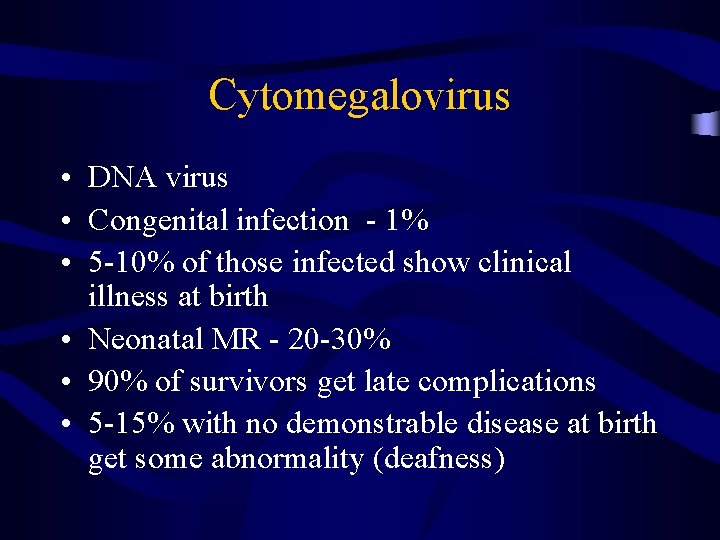
Cytomegalovirus • DNA virus • Congenital infection - 1% • 5 -10% of those infected show clinical illness at birth • Neonatal MR - 20 -30% • 90% of survivors get late complications • 5 -15% with no demonstrable disease at birth get some abnormality (deafness)
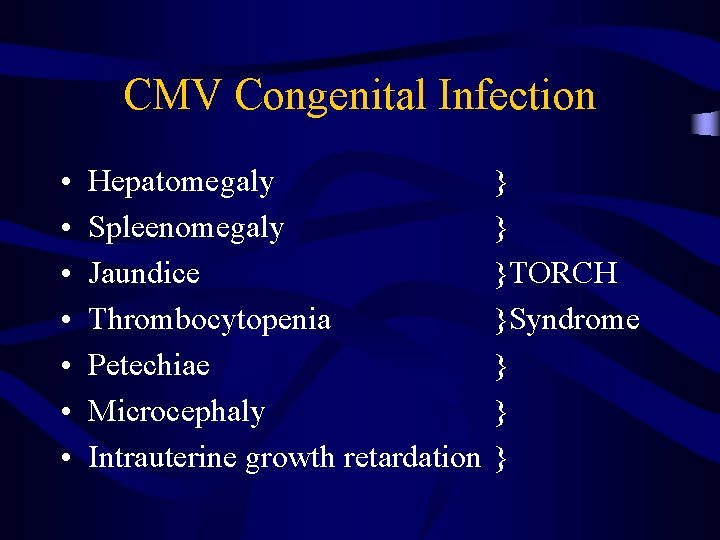
CMV Congenital Infection • • Hepatomegaly Spleenomegaly Jaundice Thrombocytopenia Petechiae Microcephaly Intrauterine growth retardation } } }TORCH }Syndrome } } }
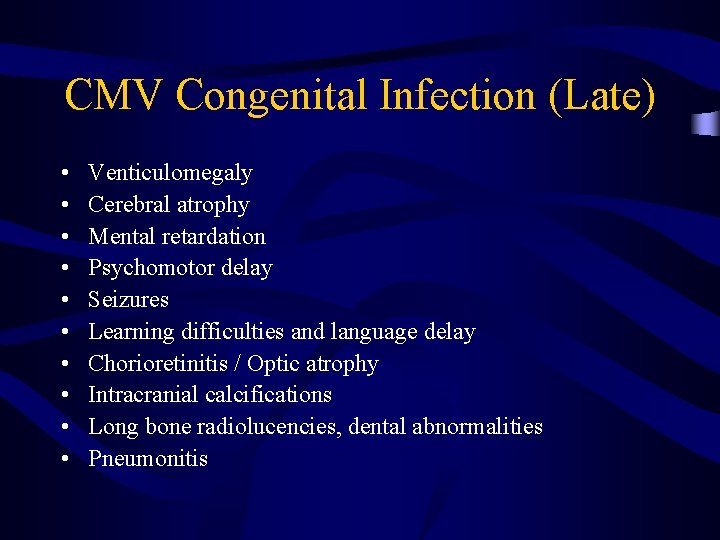
CMV Congenital Infection (Late) • • • Venticulomegaly Cerebral atrophy Mental retardation Psychomotor delay Seizures Learning difficulties and language delay Chorioretinitis / Optic atrophy Intracranial calcifications Long bone radiolucencies, dental abnormalities Pneumonitis
CMV Congenital Infection • Prolonged virus shedding • No vaccine • No treatment • Risk group advice
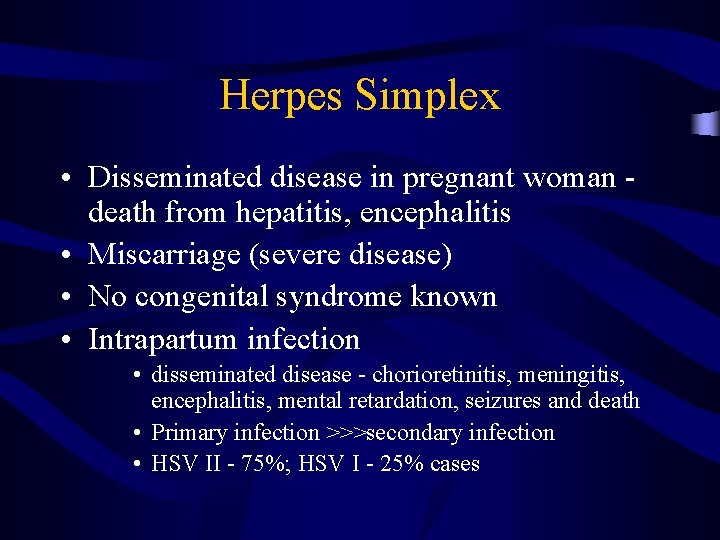
Herpes Simplex • Disseminated disease in pregnant woman death from hepatitis, encephalitis • Miscarriage (severe disease) • No congenital syndrome known • Intrapartum infection • disseminated disease - chorioretinitis, meningitis, encephalitis, mental retardation, seizures and death • Primary infection >>>secondary infection • HSV II - 75%; HSV I - 25% cases
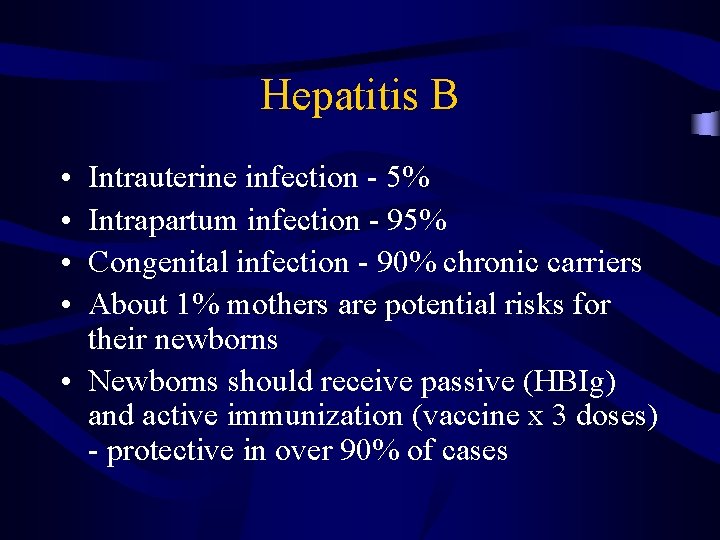
Hepatitis B • • Intrauterine infection - 5% Intrapartum infection - 95% Congenital infection - 90% chronic carriers About 1% mothers are potential risks for their newborns • Newborns should receive passive (HBIg) and active immunization (vaccine x 3 doses) - protective in over 90% of cases
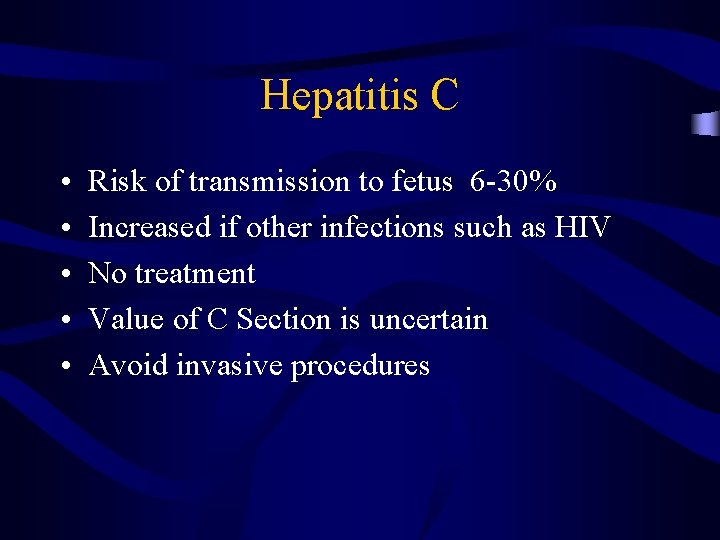
Hepatitis C • • • Risk of transmission to fetus 6 -30% Increased if other infections such as HIV No treatment Value of C Section is uncertain Avoid invasive procedures
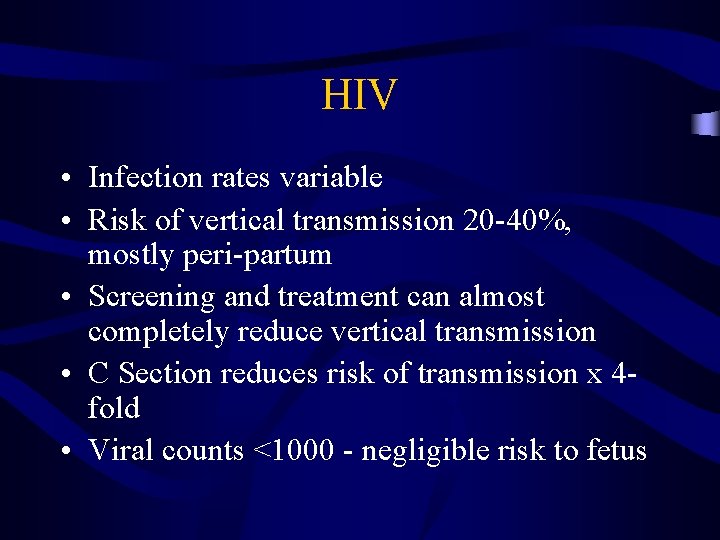
HIV • Infection rates variable • Risk of vertical transmission 20 -40%, mostly peri-partum • Screening and treatment can almost completely reduce vertical transmission • C Section reduces risk of transmission x 4 fold • Viral counts <1000 - negligible risk to fetus
Bacterial Infections • • Bacteruria* Vaginal infections (BV, TV, Candida) Group B Streptococci* Gonorrhoea* Chlamydia* Toxoplasmosis* Listeria
Bacteruria • • Asymptomatic 5 -8% of all pregnancies (2% Non-preg) Urinary stasis, tract dilatation 30% symptomatic UTI (Pyelonephritis) Diagnosis Treatment Subsequent care (MSU v Prophylaxis)
Group B Streptococci • • • 25% women are carriers 50% of babies born will be colonized 1 -2% will have Grp B Strep infection 1: 1000 babies Pneumonia (early), Meninigitis (Late) • Screening v Risk factor prophylaxis
Gonorrhoea • Neissseria Gonorrhoea (1 -6% pop) • Pre-term labour, PPROM, Chorioamniionitis, Endometritis • Gonococcal opthalmia neonatorum (40%) • 80% asymptomatic • Screening needed? • Cephtriaxone IM stat
Chlamydia • 5 -7% reproductive population • Pre-term labour, PPROM, Chorioamniionitis, Endometritis • Conjunctivitis (18 -50%), Pneumonia (18%) • Most are asymptomatic • Screening needed • Azithromycin 1 gram stat
Syphilis • • T. Pallidum <1: 1000 pregnant women Can infect trans placenta from 15 th week Second stage by birth if not treated Screening – VDRL, RPR Diagnostic tests – TPI, FTA-Abs High dose Penicillin's
Toxoplasmosis • • Toxoplasma Gondii (Protozoa) Cat faeces, raw/undercooked meats TORCH syndrome Chorioretinitis, Encephalitis, Neonatal Jaundice • Serology =/- PCR • Sulfonamides + Pyrimethamine
Intra-Amniotic Infection • 1 -2% all deliveries • Clinical Diagnosis – fever, uterine tenderness, Leucocytosis • Histologic chorioamnionitis more common • Ascending infection, rarely haematogenous • Polymicrobial • Increased PTD, PNMR, C Palsy, Endometritis • Treatment – Antibiotics and delivery
Miscellaneous • • Malaria Mycoplasma HPV Tropical diseases