
Infections in Patients With Cancer A clinical review
- Slides: 11
Infections in Patients With Cancer A clinical review of risks to patients with immunocompromised systems Topics Discussed: • Risk factors for infections in patients with cancer • Microbial etiology of infection • Antimicrobial resistance • Impact of febrile neutropenia • Risk factors for febrile neutropenia February 2015 Infections in Patients With Cancer 1
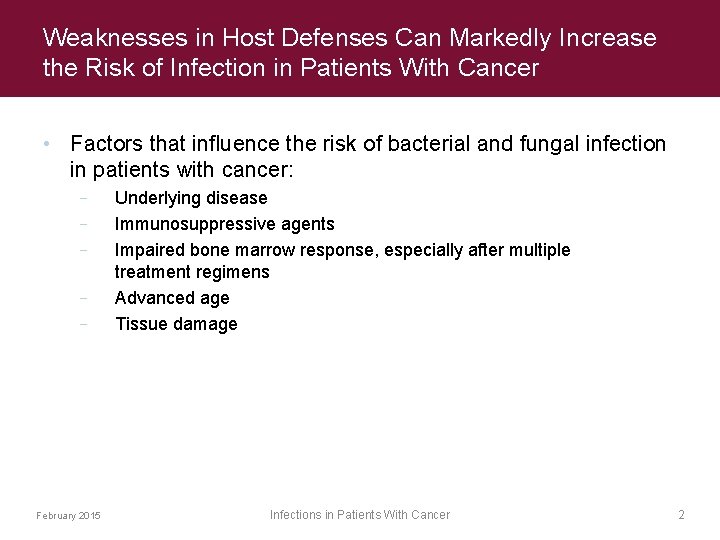
Weaknesses in Host Defenses Can Markedly Increase the Risk of Infection in Patients With Cancer • Factors that influence the risk of bacterial and fungal infection in patients with cancer: − − − February 2015 Underlying disease Immunosuppressive agents Impaired bone marrow response, especially after multiple treatment regimens Advanced age Tissue damage Infections in Patients With Cancer 2
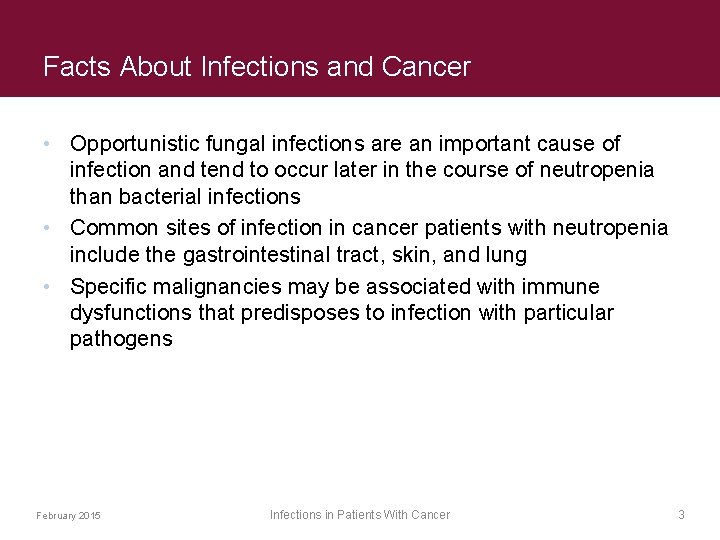
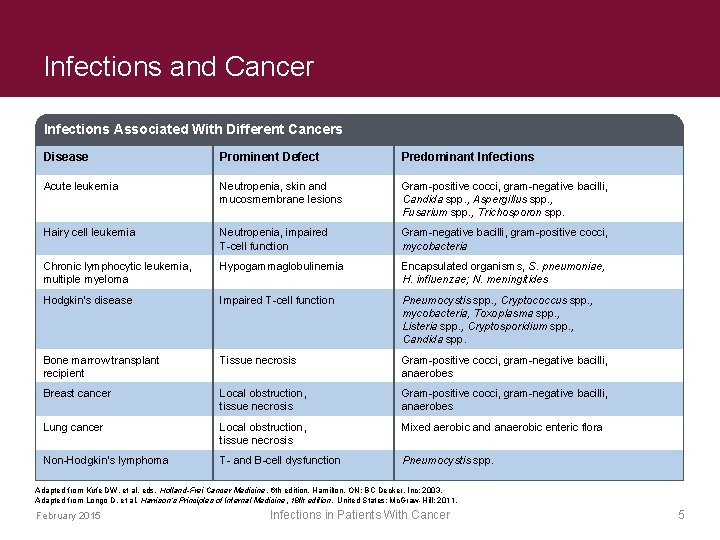
Facts About Infections and Cancer • Opportunistic fungal infections are an important cause of infection and tend to occur later in the course of neutropenia than bacterial infections • Common sites of infection in cancer patients with neutropenia include the gastrointestinal tract, skin, and lung • Specific malignancies may be associated with immune dysfunctions that predisposes to infection with particular pathogens February 2015 Infections in Patients With Cancer 3
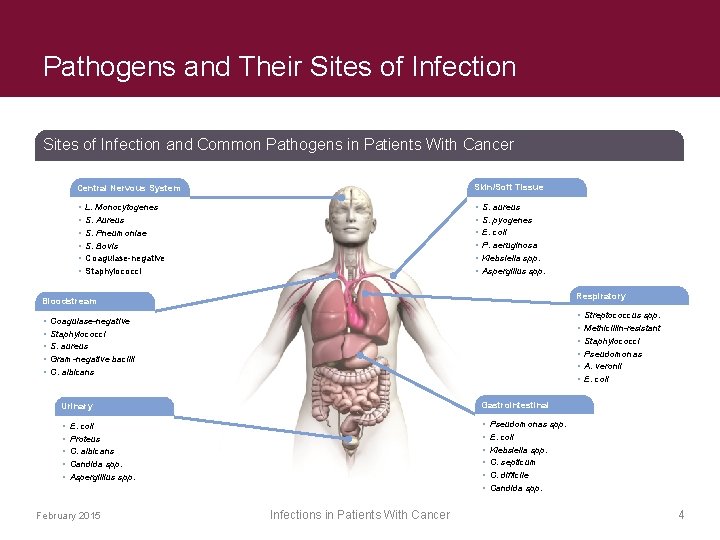
Pathogens and Their Sites of Infection and Common Pathogens in Patients With Cancer Central Nervous System Skin/Soft Tissue • • • L. Monocytogenes S. Aureus S. Pneumoniae S. Bovis Coagulase-negative Staphylococci S. aureus S. pyogenes E. coli P. aeruginosa Klebsiella spp. Aspergillus spp. Respiratory Bloodstream • • • Coagulase-negative Staphylococci S. aureus Gram-negative bacilli C. albicans Urinary Gastrointestinal • • • E. coli Proteus C. albicans Candida spp. Aspergillius spp. February 2015 Infections in Patients With Cancer Streptococcus spp. Methicillin-resistant Staphylococci Pseudomonas A. veronii E. coli Pseudomonas spp. E. coli Klebsiella spp. C. septicum C. difficile Candida spp. 4
Infections and Cancer Infections Associated With Different Cancers Disease Prominent Defect Predominant Infections Acute leukemia Neutropenia, skin and mucosmembrane lesions Gram-positive cocci, gram-negative bacilli, Candida spp. , Aspergillus spp. , Fusarium spp. , Trichosporon spp. Hairy cell leukemia Neutropenia, impaired T-cell function Gram-negative bacilli, gram-positive cocci, mycobacteria Chronic lymphocytic leukemia, multiple myeloma Hypogammaglobulinemia Encapsulated organisms, S. pneumoniae, H. influenzae; N. meningitides Hodgkin’s disease Impaired T-cell function Pneumocystis spp. , Cryptococcus spp. , mycobacteria, Toxoplasma spp. , Listeria spp. , Cryptosporidium spp. , Candida spp. Bone marrow transplant recipient Tissue necrosis Gram-positive cocci, gram-negative bacilli, anaerobes Breast cancer Local obstruction, tissue necrosis Gram-positive cocci, gram-negative bacilli, anaerobes Lung cancer Local obstruction, tissue necrosis Mixed aerobic and anaerobic enteric flora Non-Hodgkin’s lymphoma T- and B-cell dysfunction Pneumocystis spp. Adapted from Kufe DW, et al. eds. Holland-Frei Cancer Medicine. 6 th edition. Hamilton, ON: BC Decker, Inc; 2003. Adapted from Longo D, et al. Harrison’s Principles of Internal Medicine, 18 th edition. United States: Mc. Graw-Hill; 2011. February 2015 Infections in Patients With Cancer 5
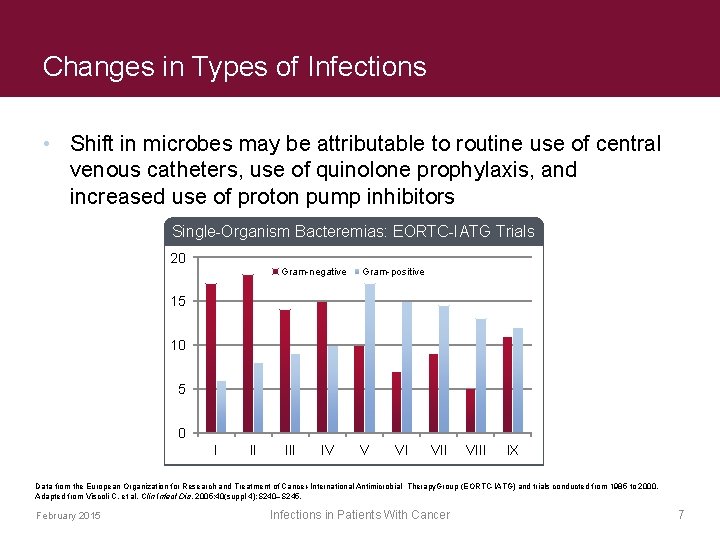
Microbial Etiology of Infection in Cancer Patients With Febrile Neutropenia • Patients with chemotherapy-induced neutropenia frequently developed fever − − 10%– 50% of patients with solid tumors >80% of patients with hematologic malignancies • Changing paradigms in the microbiology of infections is causing increasing concern in cancer patients with febrile neutropenia (FN) • Within the past 20 years the microbiology of infections has shifted with gram-positive organisms becoming increasingly common February 2015 Infections in Patients With Cancer 6
Changes in Types of Infections • Shift in microbes may be attributable to routine use of central venous catheters, use of quinolone prophylaxis, and increased use of proton pump inhibitors Single-Organism Bacteremias: EORTC-IATG Trials 20 Gram-negative Gram-positive 15 S 10 5 0 I II IV V VI VIII IX Data from the European Organization for Research and Treatment of Cancer-International Antimicrobial Therapy. Group (EORTC-IATG) and trials conducted from 1985 to 2000. Adapted from Viscoli C, et al. Clin Infect Dis. 2005; 40(suppl 4): S 240–S 245. February 2015 Infections in Patients With Cancer 7
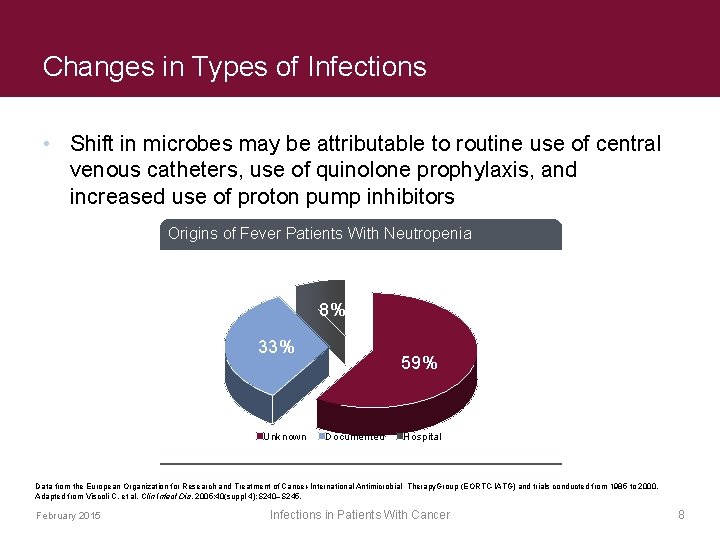
Changes in Types of Infections • Shift in microbes may be attributable to routine use of central venous catheters, use of quinolone prophylaxis, and increased use of proton pump inhibitors Origins of Fever Patients With Neutropenia 8% 33% Unknown 59% Documented Hospital Data from the European Organization for Research and Treatment of Cancer-International Antimicrobial Therapy. Group (EORTC-IATG) and trials conducted from 1985 to 2000. Adapted from Viscoli C, et al. Clin Infect Dis. 2005; 40(suppl 4): S 240–S 245. February 2015 Infections in Patients With Cancer 8
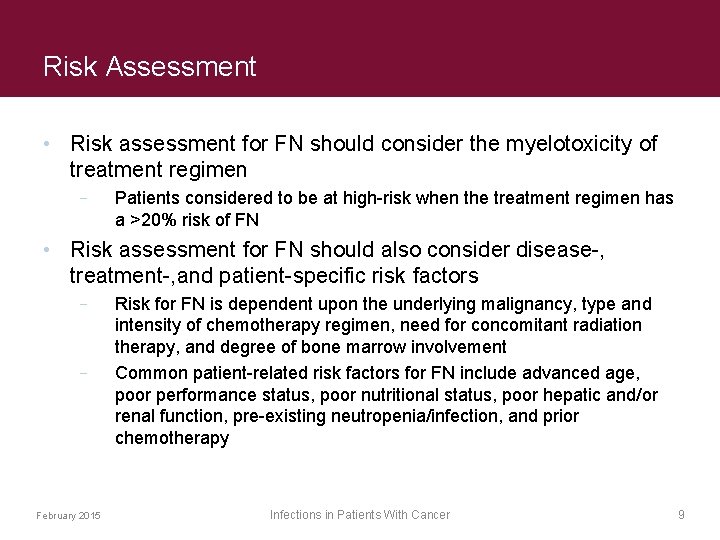
Risk Assessment • Risk assessment for FN should consider the myelotoxicity of treatment regimen − Patients considered to be at high-risk when the treatment regimen has a >20% risk of FN • Risk assessment for FN should also consider disease-, treatment-, and patient-specific risk factors − − February 2015 Risk for FN is dependent upon the underlying malignancy, type and intensity of chemotherapy regimen, need for concomitant radiation therapy, and degree of bone marrow involvement Common patient-related risk factors for FN include advanced age, poor performance status, poor nutritional status, poor hepatic and/or renal function, pre-existing neutropenia/infection, and prior chemotherapy Infections in Patients With Cancer 9
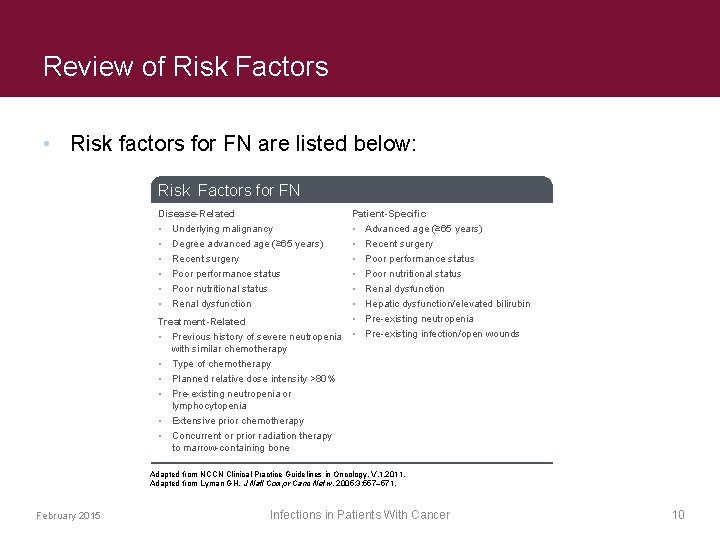
Review of Risk Factors • Risk factors for FN are listed below: Risk Factors for FN Disease-Related • Underlying malignancy Patient-Specific • Advanced age (≥ 65 years) • • • Treatment-Related • Previous history of severe neutropenia • with similar chemotherapy • Type of chemotherapy • Planned relative dose intensity >80% • Pre-existing neutropenia or lymphocytopenia • Extensive prior chemotherapy • Concurrent or prior radiation therapy to marrow-containing bone • • • Degree advanced age (≥ 65 years) Recent surgery Poor performance status Poor nutritional status Renal dysfunction Hepatic dysfunction/elevated bilirubin Pre-existing neutropenia Pre-existing infection/open wounds Adapted from NCCN Clinical Practice Guidelines in Oncology. V. 1. 2011. Adapted from Lyman GH. J Natl Compr Canc Netw. 2005; 3: 557– 571. February 2015 Infections in Patients With Cancer 10
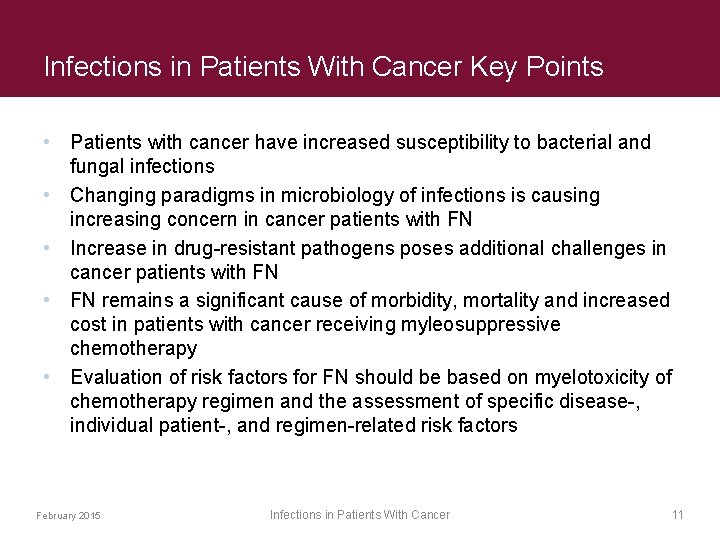
Infections in Patients With Cancer Key Points • Patients with cancer have increased susceptibility to bacterial and fungal infections • Changing paradigms in microbiology of infections is causing increasing concern in cancer patients with FN • Increase in drug-resistant pathogens poses additional challenges in cancer patients with FN • FN remains a significant cause of morbidity, mortality and increased cost in patients with cancer receiving myleosuppressive chemotherapy • Evaluation of risk factors for FN should be based on myelotoxicity of chemotherapy regimen and the assessment of specific disease-, individual patient-, and regimen-related risk factors February 2015 Infections in Patients With Cancer 11