
Infection with an amphibian pathogenic fungus is there
Infection with an amphibian pathogenic fungus: is there an altitudinal trend? ZOOL-502 UBC November 2010. Angie Nicolás
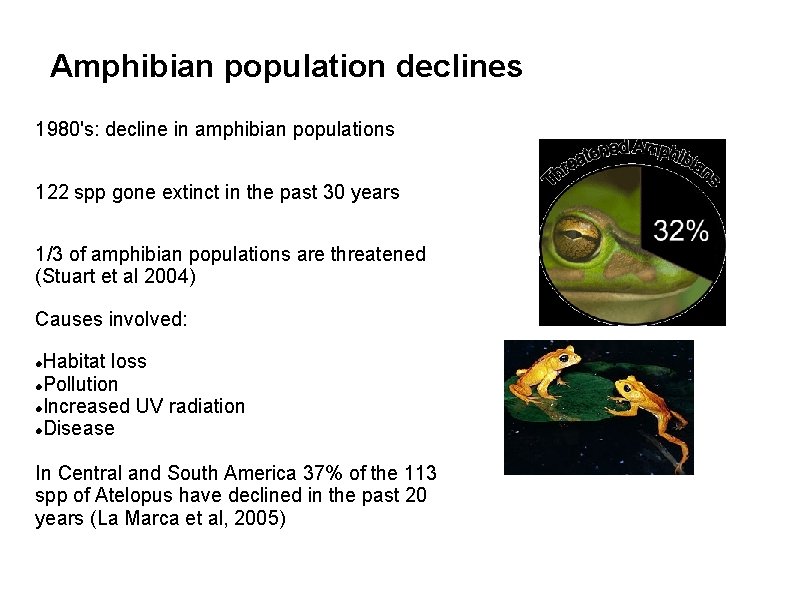
Amphibian population declines 1980's: decline in amphibian populations 122 spp gone extinct in the past 30 years 1/3 of amphibian populations are threatened (Stuart et al 2004) Causes involved: Habitat loss Pollution Increased UV radiation Disease In Central and South America 37% of the 113 spp of Atelopus have declined in the past 20 years (La Marca et al, 2005)
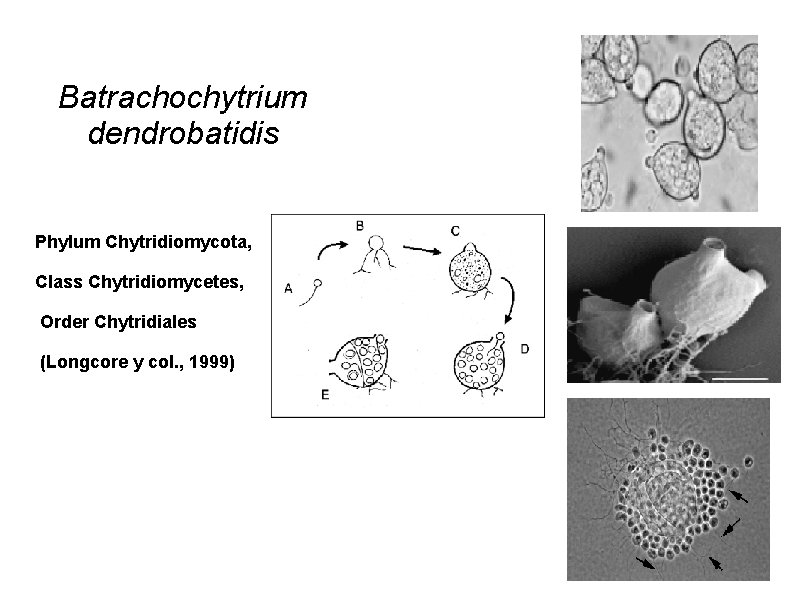
Batrachochytrium dendrobatidis Phylum Chytridiomycota, Class Chytridiomycetes, Order Chytridiales (Longcore y col. , 1999)
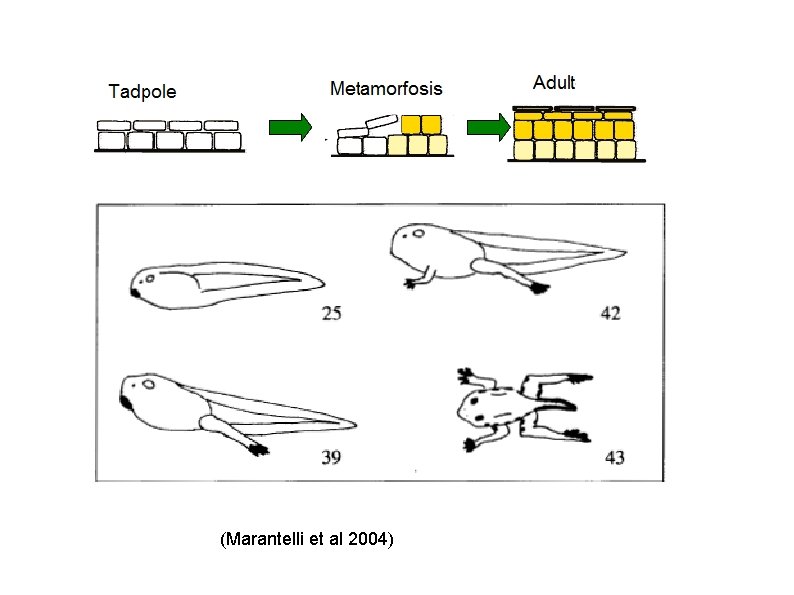
(Marantelli et al 2004)
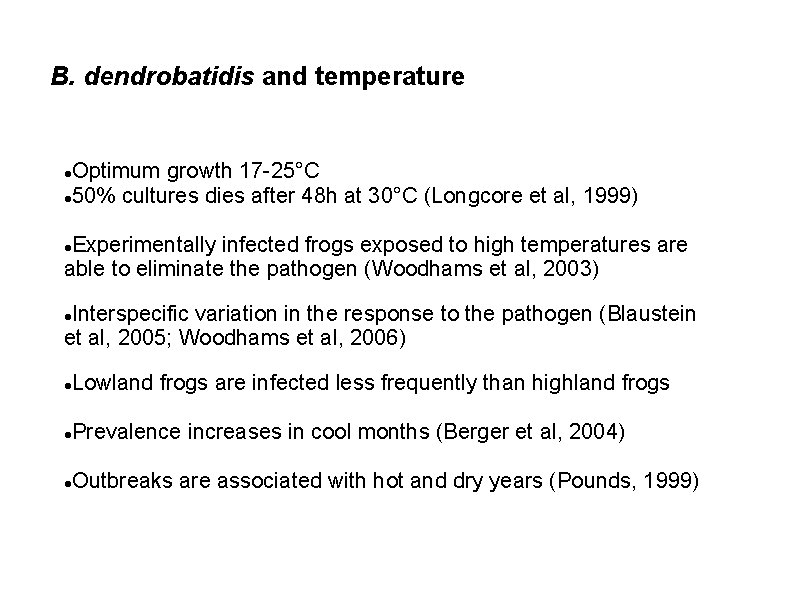
B. dendrobatidis and temperature Optimum growth 17 -25°C 50% cultures dies after 48 h at 30°C (Longcore et al, 1999) Experimentally infected frogs exposed to high temperatures are able to eliminate the pathogen (Woodhams et al, 2003) Interspecific variation in the response to the pathogen (Blaustein et al, 2005; Woodhams et al, 2006) Lowland frogs are infected less frequently than highland frogs Prevalence increases in cool months (Berger et al, 2004) Outbreaks are associated with hot and dry years (Pounds, 1999)

What happens if we consider only one species? Will prevalence increase with altitude? Can variations in temperature explain the tendency?
Hypothesis: Prevalence with Bd infection will be higher in populations of Mannophryne herminae outside of B. dendrobatidis optimum thermic range.
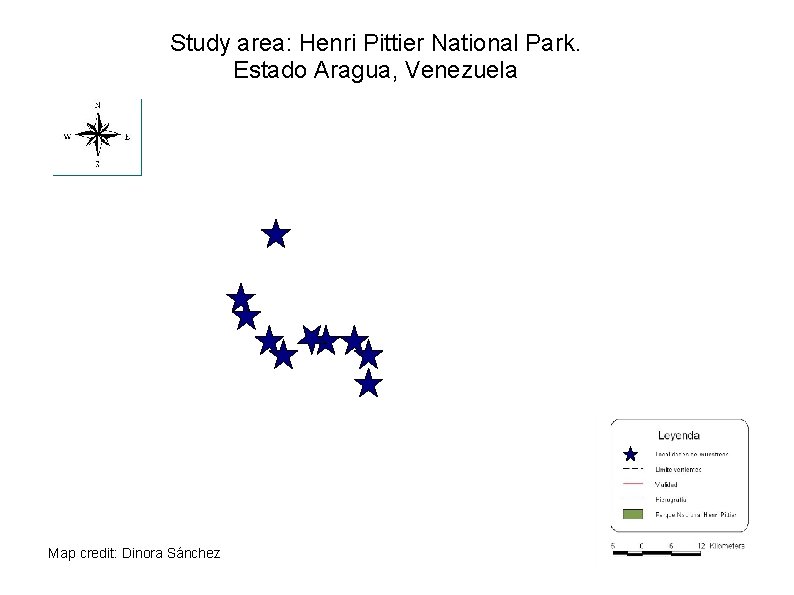
Study area: Henri Pittier National Park. Estado Aragua, Venezuela Map credit: Dinora Sánchez
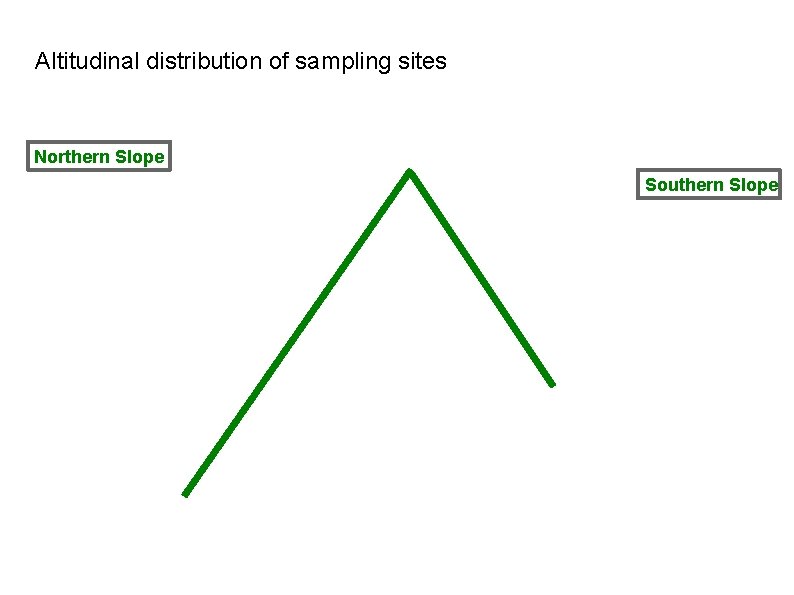
Altitudinal distribution of sampling sites Northern Slope Southern Slope

Methodology In the field 1 - Manually collected toads in each site (n=21± 4) 2 - Sexed and measured (SVL) 3 -Toe clipped and stored tissue samples in 70%ethanol. Recorded air temperature (every hour) for 9 weeks In the lab 1 -DNA extraction and amplification (q. PCR) following Boyle et al 2004. -Ran samples (duplicates) -0. 1, 1, 10 and 100 zoosp. eq. Standards -Positive and negative controls 2 -Zoosp. eq. >0. 1 = Positive sample 3 - Calculate parasitic load
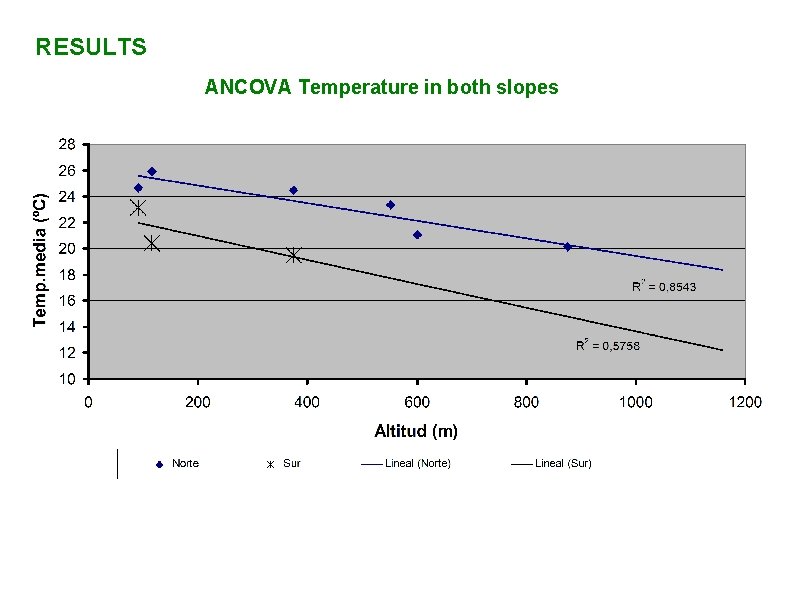
RESULTS ANCOVA Temperature in both slopes
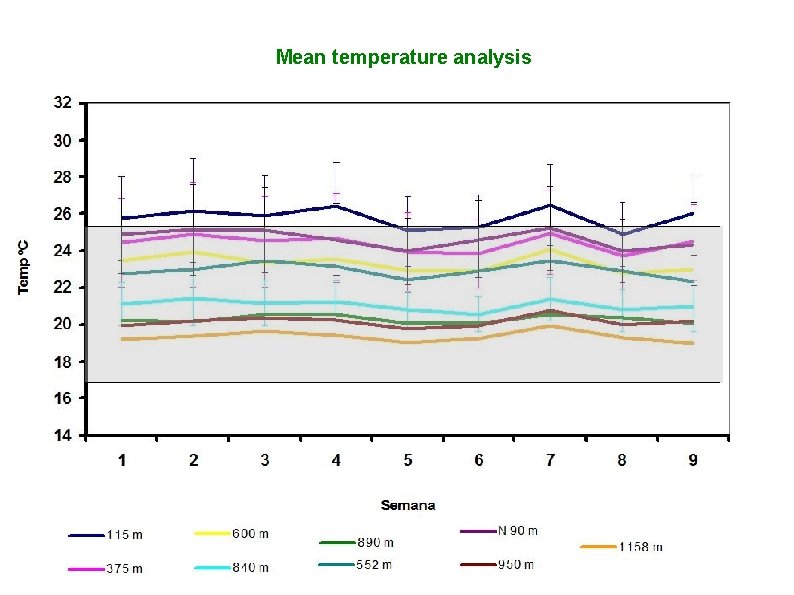
Mean temperature analysis
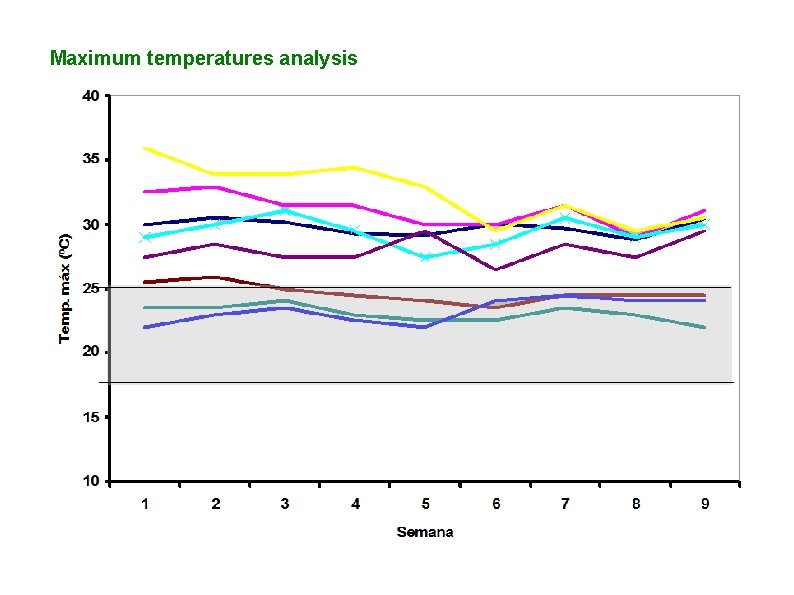
Maximum temperatures analysis
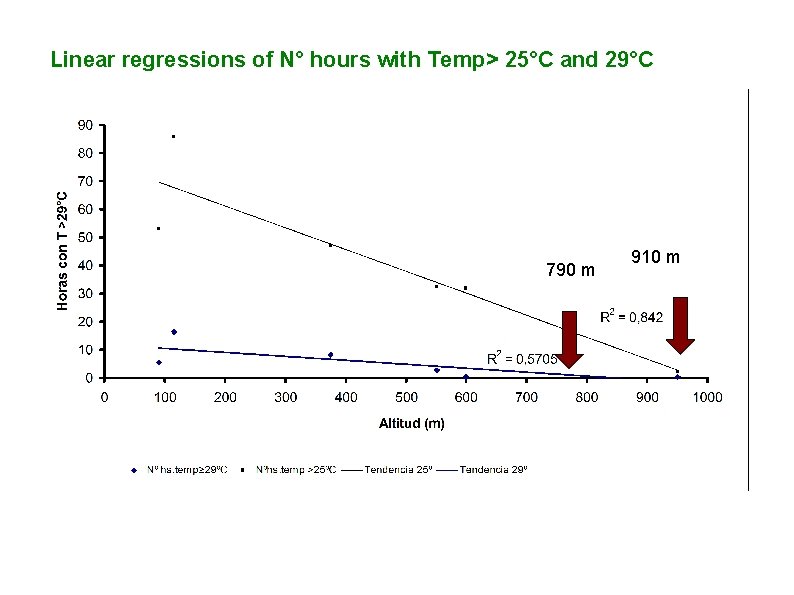
Linear regressions of N° hours with Temp> 25°C and 29°C 790 m 910 m
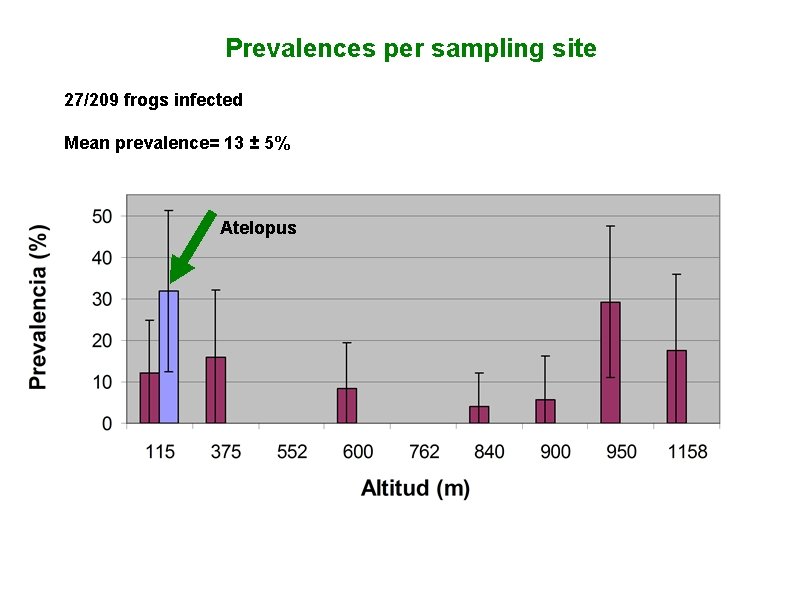
Prevalences per sampling site 27/209 frogs infected Mean prevalence= 13 ± 5% Atelopus
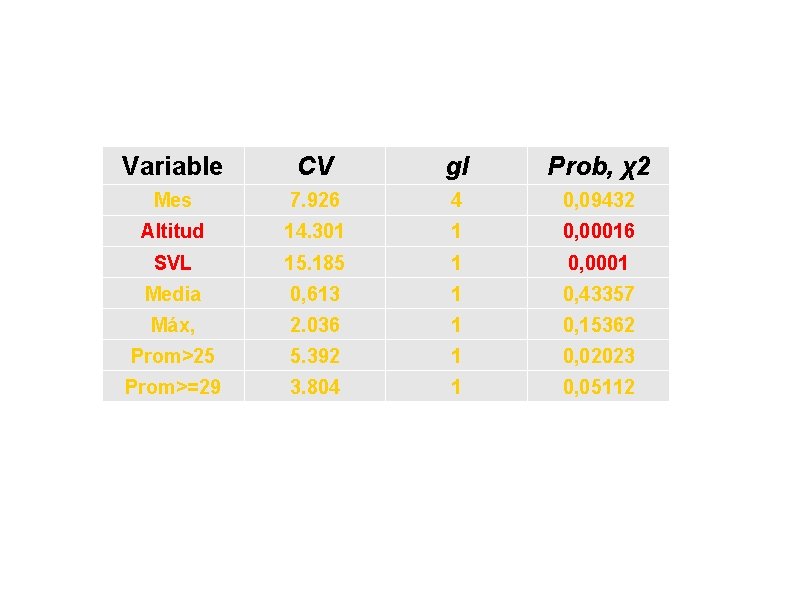
Variable CV gl Prob, χ2 Mes 7. 926 4 0, 09432 Altitud 14. 301 1 0, 00016 SVL 15. 185 1 0, 0001 Media 0, 613 1 0, 43357 Máx, 2. 036 1 0, 15362 Prom>25 5. 392 1 0, 02023 Prom>=29 3. 804 1 0, 05112
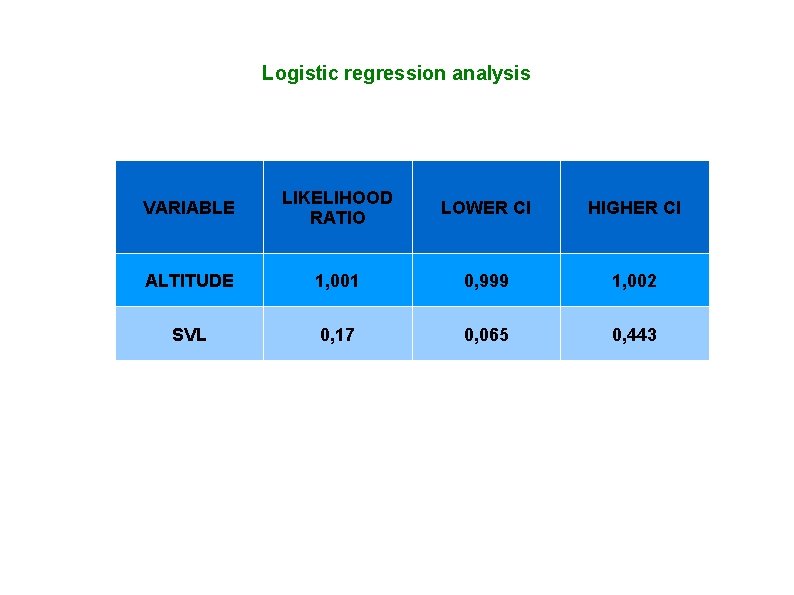
Logistic regression analysis VARIABLE LIKELIHOOD RATIO LOWER CI HIGHER CI ALTITUDE 1, 001 0, 999 1, 002 SVL 0, 17 0, 065 0, 443

Acknowledgments Fundación La Salle de Ciencias Naturales Estación Biológica Rancho Grande Margarita Lampo Dinora Sánchez Francisco Nava Javier Valera César Herrera Juan José Cruz QUESTIONS
- Slides: 19