
Infection Prevention in Design and Construction of the


- Slides: 69
Infection Prevention in Design and Construction of the Healthcare Environment Janet Haas Ph. D, RN, CIC Rich Vogel MS, CIC Disclosures: Haas - Hand Hygiene Study funded by 3 M Vogel - None Vog. Vela 1
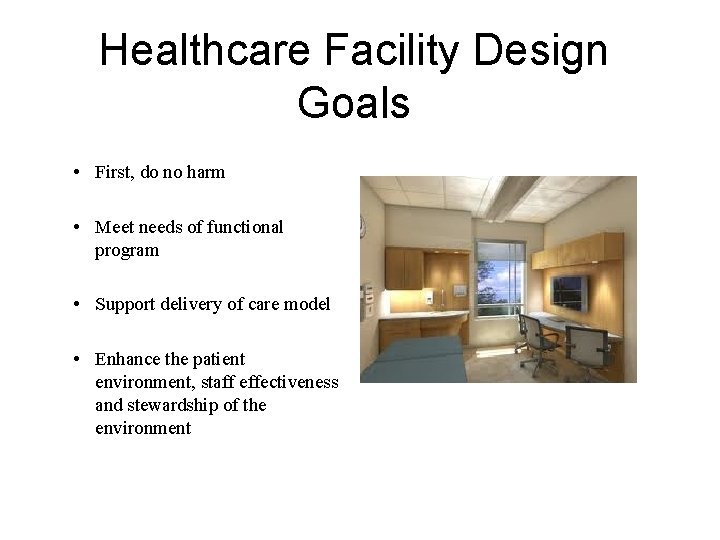
Healthcare Facility Design Goals • First, do no harm • Meet needs of functional program • Support delivery of care model • Enhance the patient environment, staff effectiveness and stewardship of the environment
Regulations • States may have individual requirements • Facilities Guidelines Institute – Publish "Guidelines for Design and Construction of Health Care Facilities" (2010) – New edition due in 2014
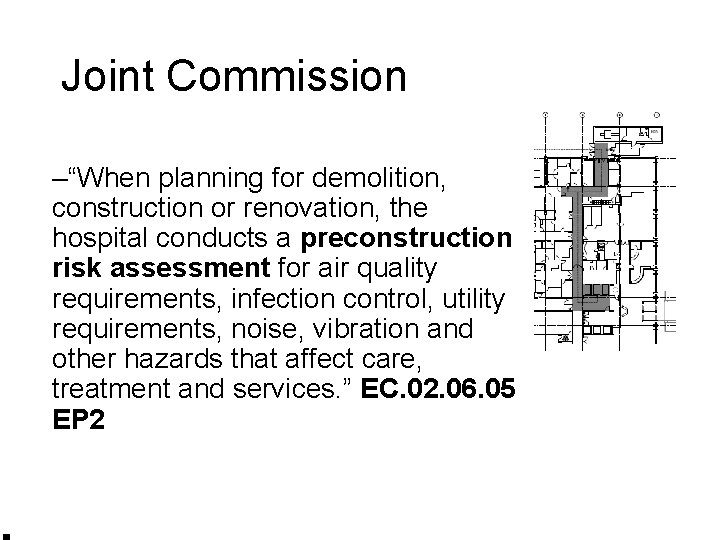
Joint Commission –“When planning for demolition, construction or renovation, the hospital conducts a preconstruction risk assessment for air quality requirements, infection control, utility requirements, noise, vibration and other hazards that affect care, treatment and services. ” EC. 02. 06. 05 EP 2
Infection Control Risk Assessment (ICRA) • • • Multi-disciplinary team Design Construction Compliance Risk mitigation
Design • Number, location and type of: –Airborne infection isolation and Protective environment rooms • These cannot be switchable –Hand washing sinks, sanitizer dispensers –Eyewash stations and deluge showers • HVAC systems to meet functional needs -e. g. Procedure rooms, laboratories etc. • Water systems to limit legionella
Air Requirements • General Principles - Clean to Dirty –Dirty areas (janitors closets, decontamination rooms, areas for bronchoscopy, laboratory with specimens) are negative pressure –Procedure areas, pharmacy compounding, sterile supply areas are positive pressure • Best Reference is ANSI/ASHRAE/ASHE Standard 170 -2008 Table 7 -1
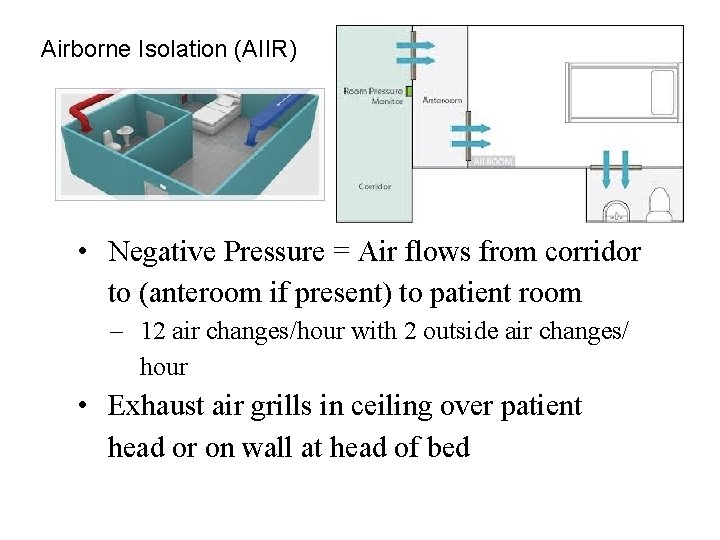
Airborne Isolation (AIIR) • Negative Pressure = Air flows from corridor to (anteroom if present) to patient room – 12 air changes/hour with 2 outside air changes/ hour • Exhaust air grills in ceiling over patient head or on wall at head of bed
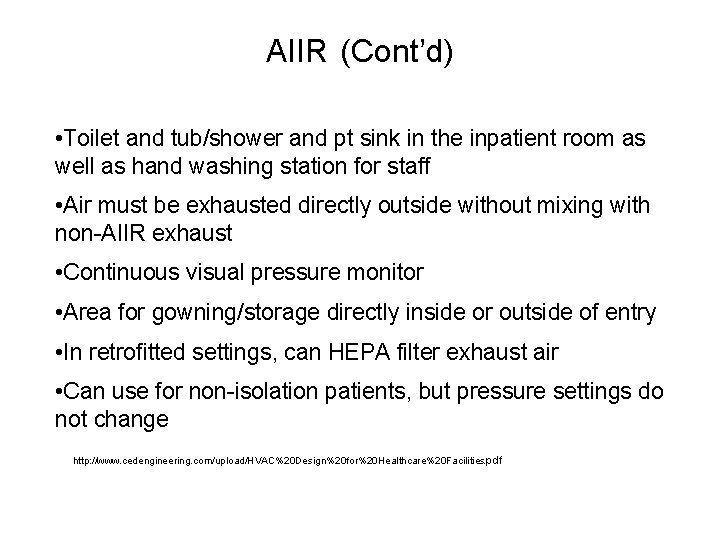
AIIR (Cont’d) • Toilet and tub/shower and pt sink in the inpatient room as well as hand washing station for staff • Air must be exhausted directly outside without mixing with non-AIIR exhaust • Continuous visual pressure monitor • Area for gowning/storage directly inside or outside of entry • In retrofitted settings, can HEPA filter exhaust air • Can use for non-isolation patients, but pressure settings do not change http: //www. cedengineering. com/upload/HVAC%20 Design%20 for%20 Healthcare%20 Facilities. pdf
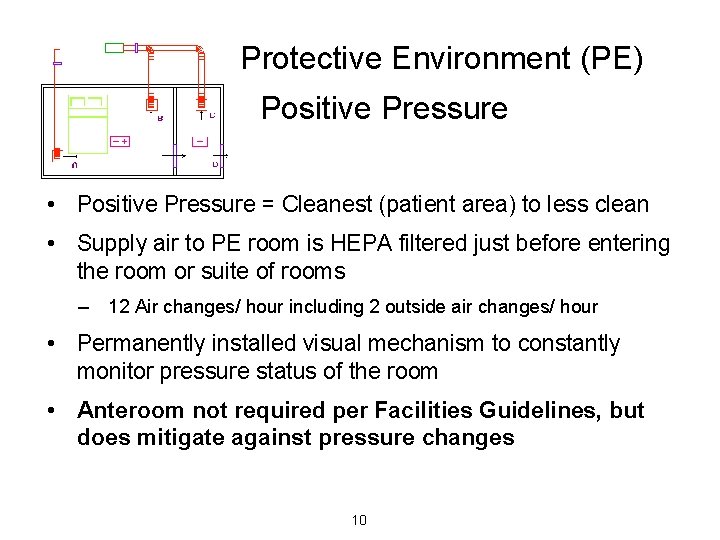
Protective Environment (PE) Positive Pressure • Positive Pressure = Cleanest (patient area) to less clean • Supply air to PE room is HEPA filtered just before entering the room or suite of rooms – 12 Air changes/ hour including 2 outside air changes/ hour • Permanently installed visual mechanism to constantly monitor pressure status of the room • Anteroom not required per Facilities Guidelines, but does mitigate against pressure changes 10
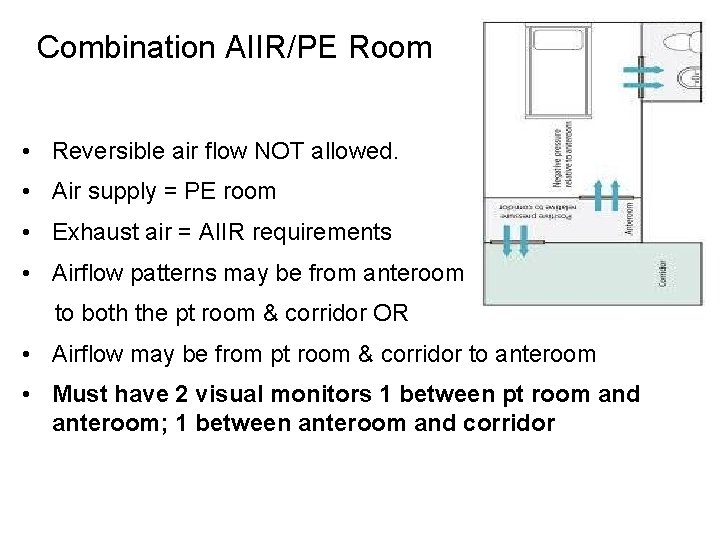
Combination AIIR/PE Room • Reversible air flow NOT allowed. • Air supply = PE room • Exhaust air = AIIR requirements • Airflow patterns may be from anteroom to both the pt room & corridor OR • Airflow may be from pt room & corridor to anteroom • Must have 2 visual monitors 1 between pt room and anteroom; 1 between anteroom and corridor
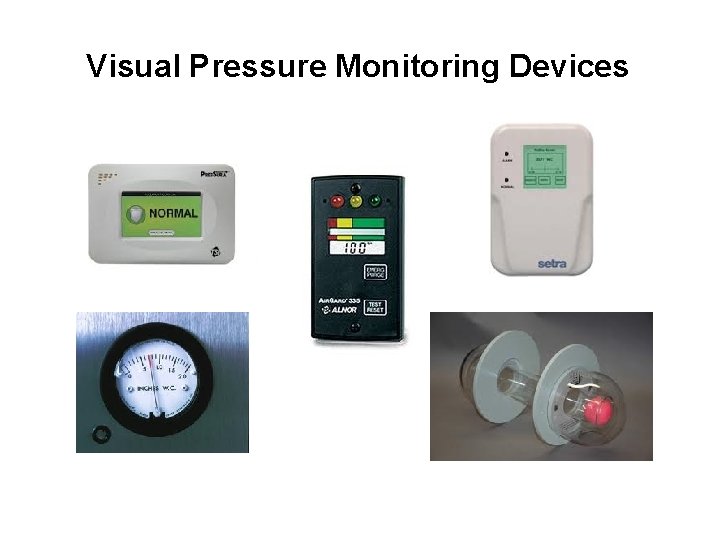
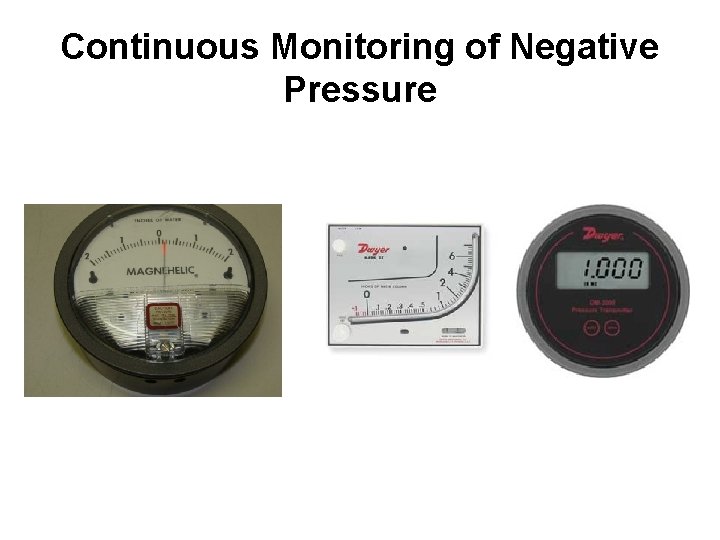
Visual Pressure Monitoring Devices
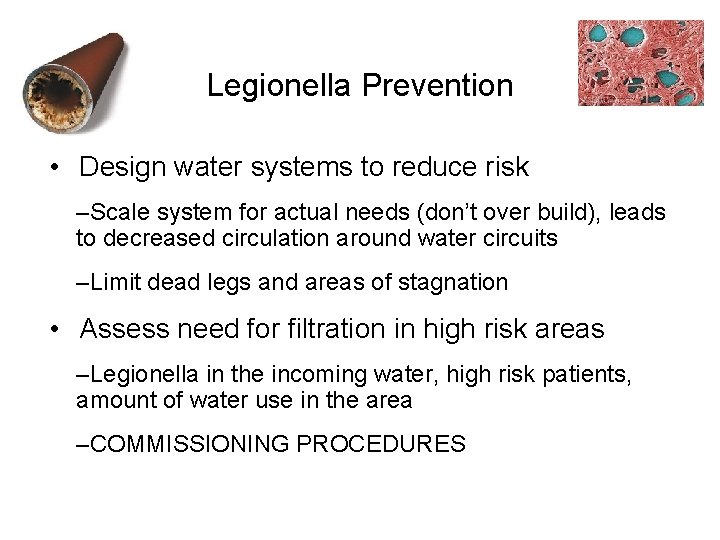
Legionella Prevention • Design water systems to reduce risk –Scale system for actual needs (don’t over build), leads to decreased circulation around water circuits –Limit dead legs and areas of stagnation • Assess need for filtration in high risk areas –Legionella in the incoming water, high risk patients, amount of water use in the area –COMMISSIONING PROCEDURES
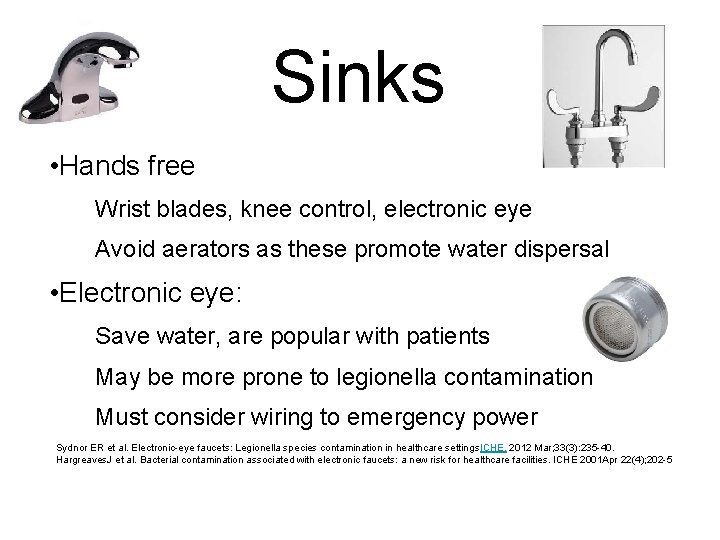
Sinks • Hands free Wrist blades, knee control, electronic eye Avoid aerators as these promote water dispersal • Electronic eye: Save water, are popular with patients May be more prone to legionella contamination Must consider wiring to emergency power Sydnor ER et al. Electronic-eye faucets: Legionella species contamination in healthcare settings. ICHE. 2012 Mar; 33(3): 235 -40. Hargreaves. J et al. Bacterial contamination associated with electronic faucets: a new risk for healthcare facilities. ICHE 2001 Apr 22(4); 202 -5
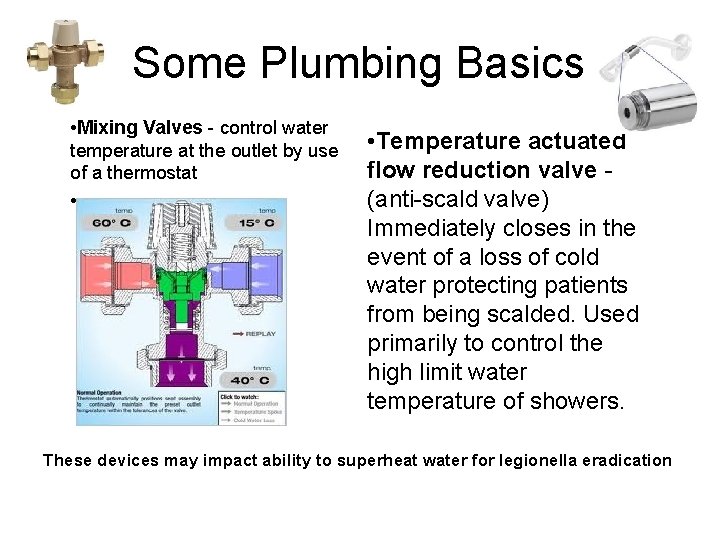
Some Plumbing Basics • Mixing Valves - control water temperature at the outlet by use of a thermostat • • Temperature actuated flow reduction valve (anti-scald valve) Immediately closes in the event of a loss of cold water protecting patients from being scalded. Used primarily to control the high limit water temperature of showers. These devices may impact ability to superheat water for legionella eradication
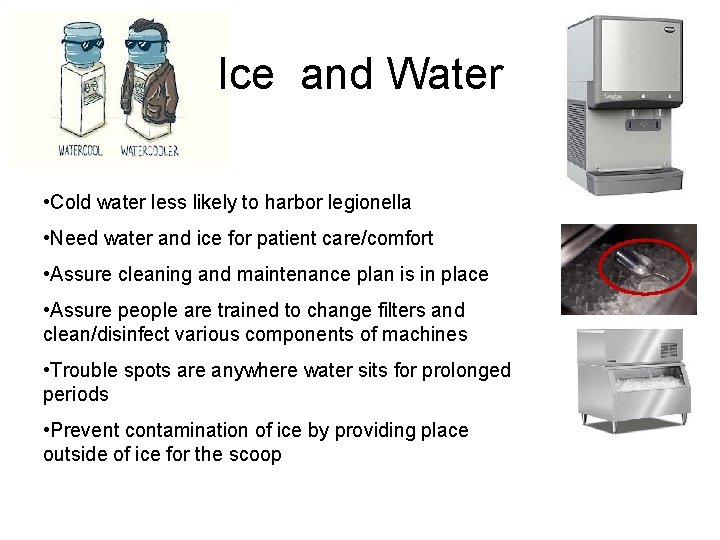
Ice and Water • Cold water less likely to harbor legionella • Need water and ice for patient care/comfort • Assure cleaning and maintenance plan is in place • Assure people are trained to change filters and clean/disinfect various components of machines • Trouble spots are anywhere water sits for prolonged periods • Prevent contamination of ice by providing place outside of ice for the scoop
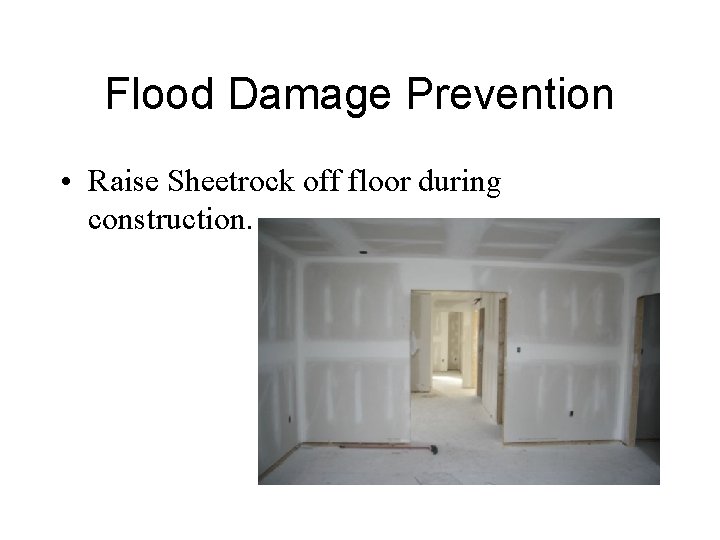
Flood Damage Prevention • Raise Sheetrock off floor during construction.
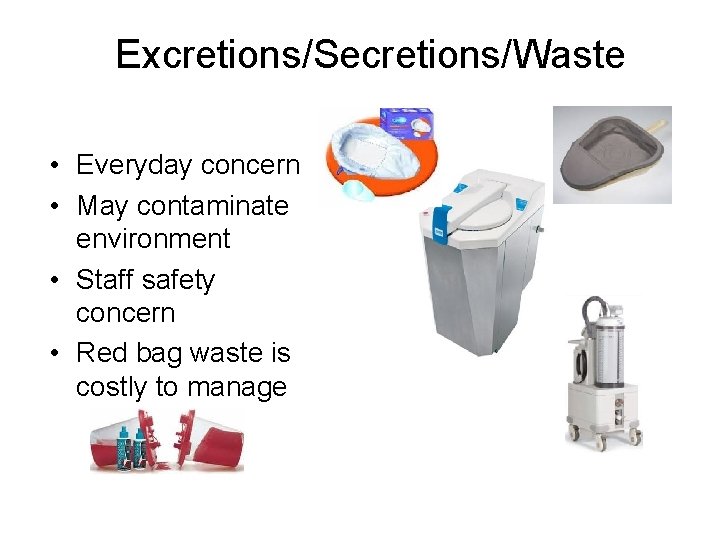
Excretions/Secretions/Waste • Everyday concern • May contaminate environment • Staff safety concern • Red bag waste is costly to manage
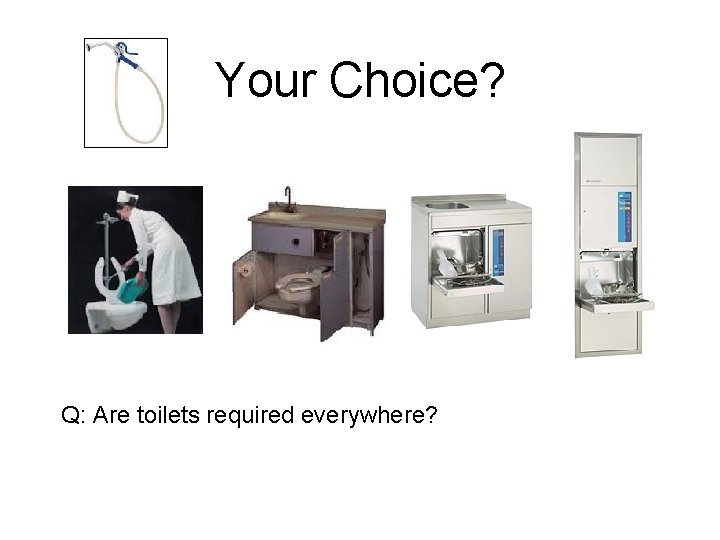
Your Choice? Q: Are toilets required everywhere?
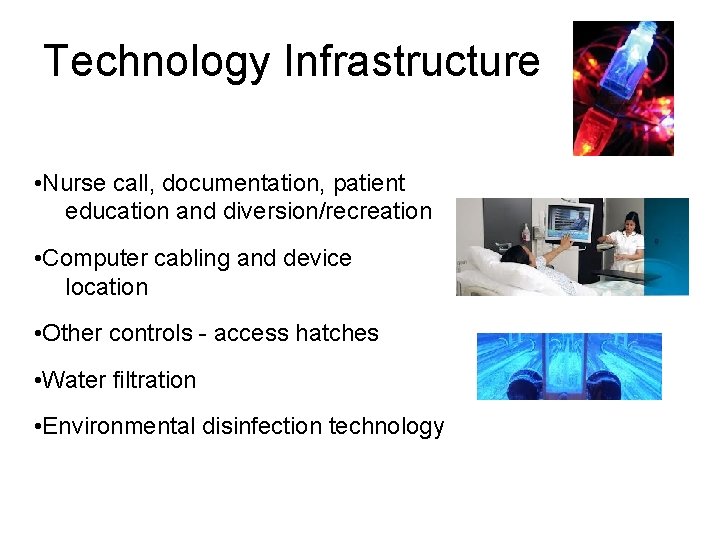
Technology Infrastructure • Nurse call, documentation, patient education and diversion/recreation • Computer cabling and device location • Other controls - access hatches • Water filtration • Environmental disinfection technology
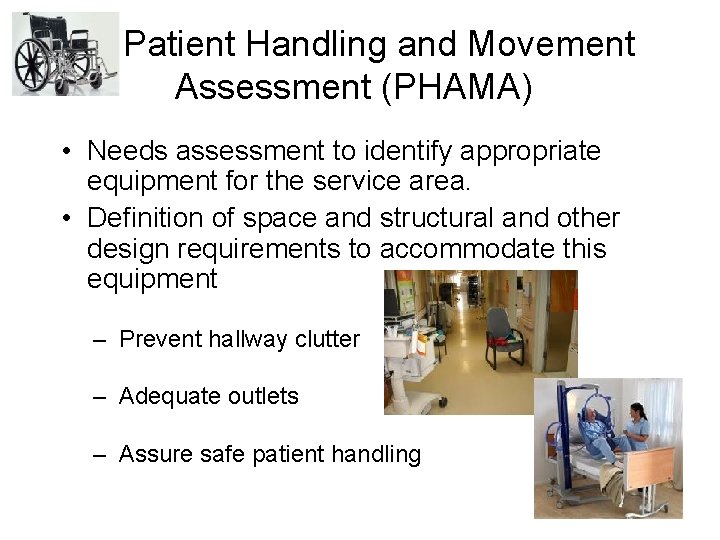
Patient Handling and Movement Assessment (PHAMA) • Needs assessment to identify appropriate equipment for the service area. • Definition of space and structural and other design requirements to accommodate this equipment – Prevent hallway clutter – Adequate outlets – Assure safe patient handling
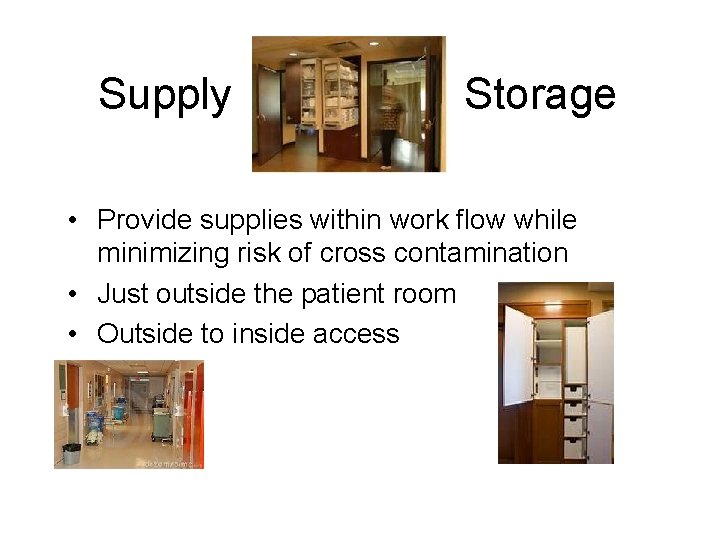
Supply Storage • Provide supplies within work flow while minimizing risk of cross contamination • Just outside the patient room • Outside to inside access
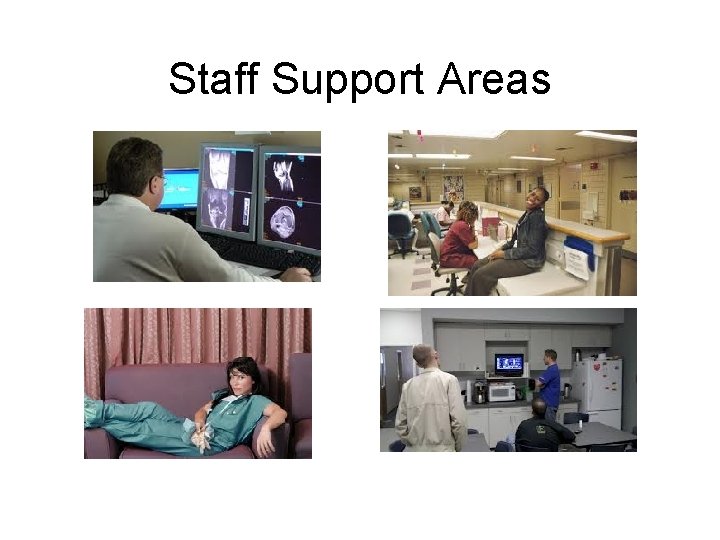
Staff Support Areas
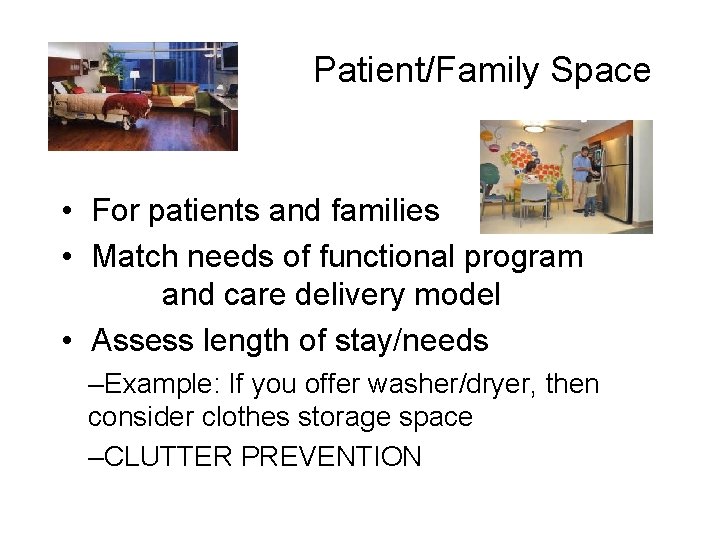
Patient/Family Space • For patients and families • Match needs of functional program and care delivery model • Assess length of stay/needs –Example: If you offer washer/dryer, then consider clothes storage space –CLUTTER PREVENTION
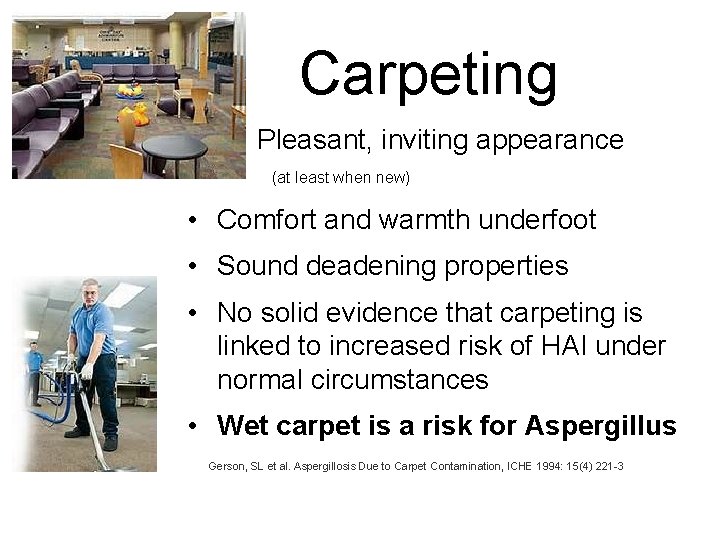
Carpeting Pleasant, inviting appearance (at least when new) • Comfort and warmth underfoot • Sound deadening properties • No solid evidence that carpeting is linked to increased risk of HAI under normal circumstances • Wet carpet is a risk for Aspergillus Gerson, SL et al. Aspergillosis Due to Carpet Contamination, ICHE 1994: 15(4) 221 -3
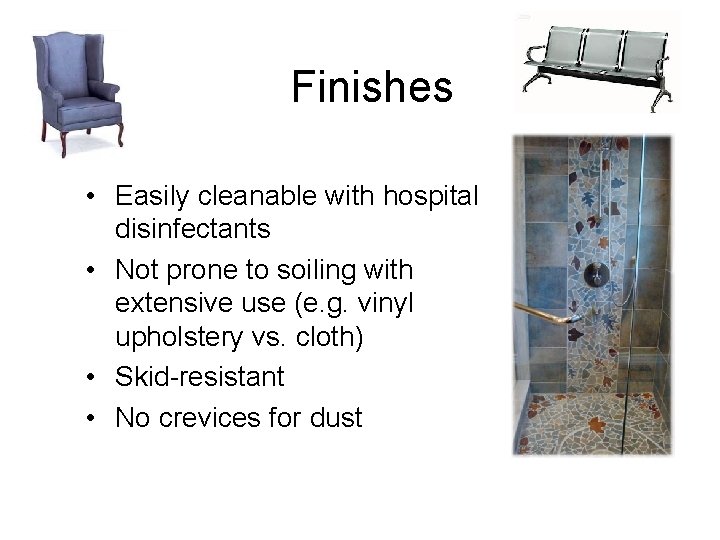
Finishes • Easily cleanable with hospital disinfectants • Not prone to soiling with extensive use (e. g. vinyl upholstery vs. cloth) • Skid-resistant • No crevices for dust
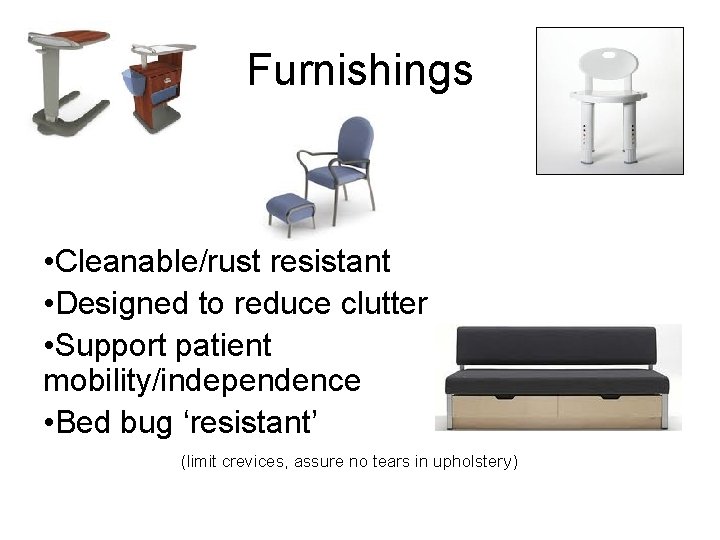
Furnishings • Cleanable/rust resistant • Designed to reduce clutter • Support patient mobility/independence • Bed bug ‘resistant’ (limit crevices, assure no tears in upholstery)
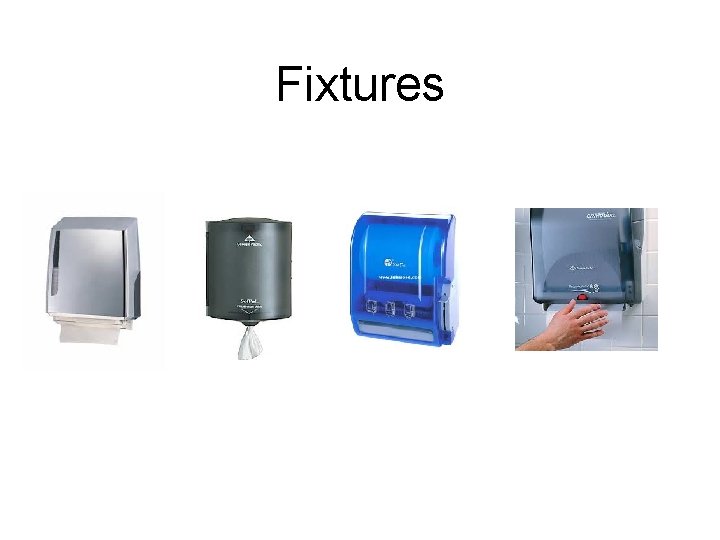
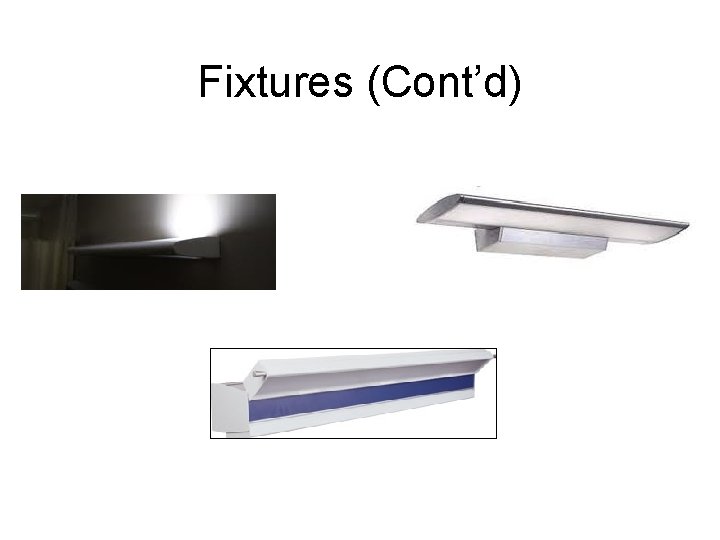
Fixtures
Fixtures (Cont’d)
Antimicrobial Surfaces • Copper Surfaces – Passive continuous activity; need info on exact alloys and application method; long term efficacy • Curtains – become contaminated again shortly after cleaning (within 1 week) – Antimicrobial curtains may delay contamination (to 2 weeks in recent study) – May be more effective vs certain pathogens – Consider alternatives (e. g. smartglass) Schweizer M et al. ICHE 2012 Nov; 33(11): 1081 -5, Trillis F et al. ICHE 2008 Nov; 29(11): 1074 -6, Ohl M et al. AJIC 2012 Dec; 40(10): 904 -6 Otter JA et al JHI 2007 Oct; 67(2): 182 -8 Bearman G et al ICHE 2012 Mar; 33(3): 268 -75 Salgado CD et al. ICHE 2013: 34(5)479 -86. Schmidt, MG et al. ICHE 2013: 34(5)530 -33. O’Gorman J & Humphreys H. 2012 JHI in Press
Summary • Attention to detail at all levels • ICRA is not just a permit for dust control during construction • Design is something you will live with for years • Don’t forget the fixtures and finishes – Thank You!
2010 FGI Guidelines 1. 2 -3. 1. 4 ICRA Recommendations Based on the results of the initial stage of the ICRA, the owner shall provide the following recommendations for incorporation in the functional program: (1) Design recommendations generated by the ICRA (2) Infection Control Risk Mitigation Recommendations (ICRMRs)
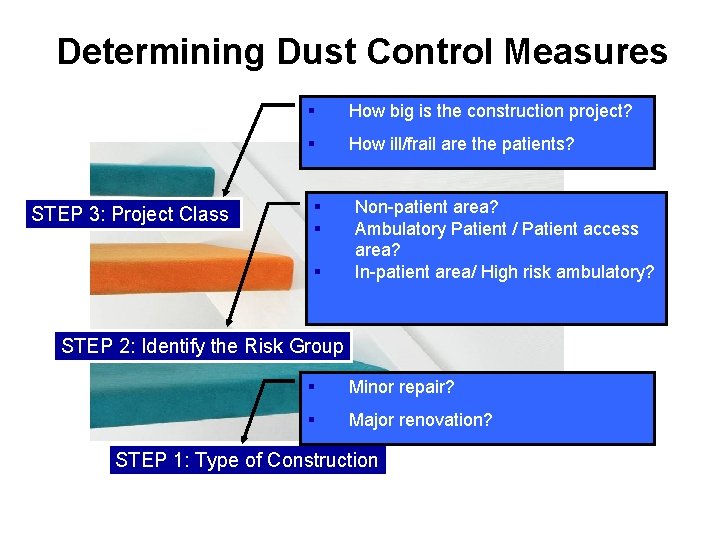
Determining Dust Control Measures STEP 3: Project Class How big is the construction project? How ill/frail are the patients? Non-patient area? Ambulatory Patient / Patient access area? In-patient area/ High risk ambulatory? STEP 2: Identify the Risk Group Minor repair? Major renovation? STEP 1: Type of Construction
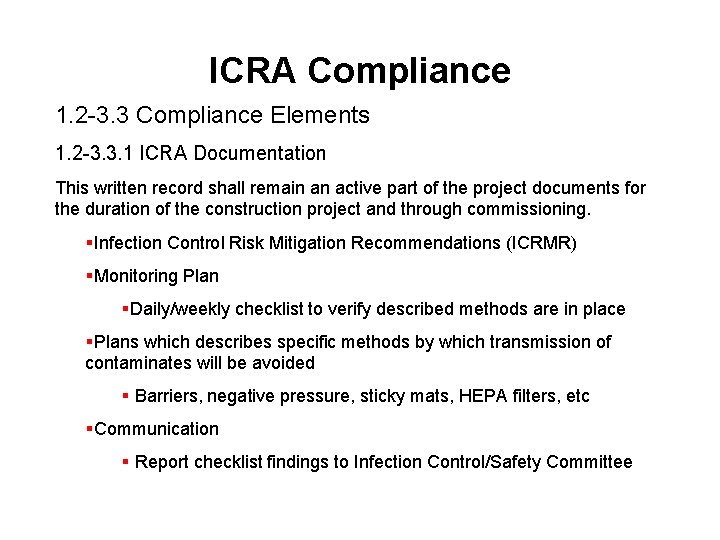
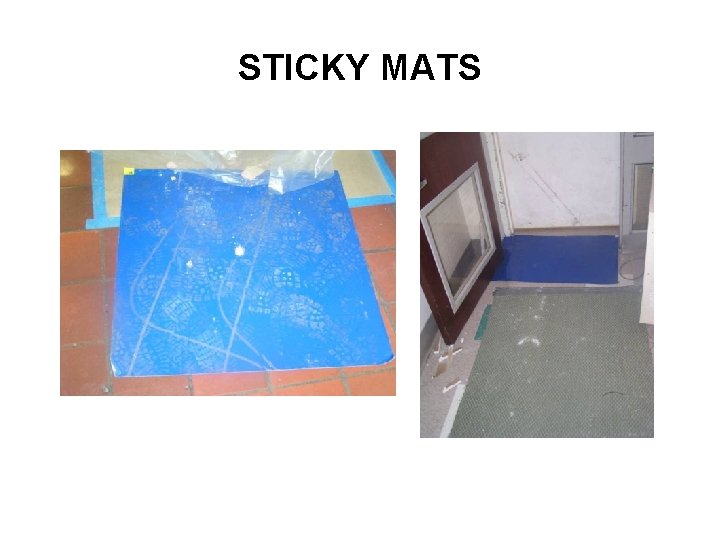
ICRA Compliance 1. 2 -3. 3 Compliance Elements 1. 2 -3. 3. 1 ICRA Documentation This written record shall remain an active part of the project documents for the duration of the construction project and through commissioning. Infection Control Risk Mitigation Recommendations (ICRMR) Monitoring Plan Daily/weekly checklist to verify described methods are in place Plans which describes specific methods by which transmission of contaminates will be avoided Barriers, negative pressure, sticky mats, HEPA filters, etc Communication Report checklist findings to Infection Control/Safety Committee
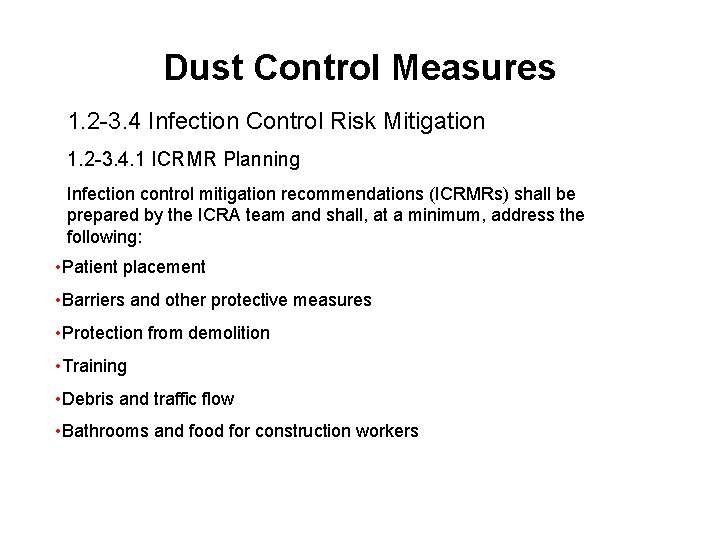
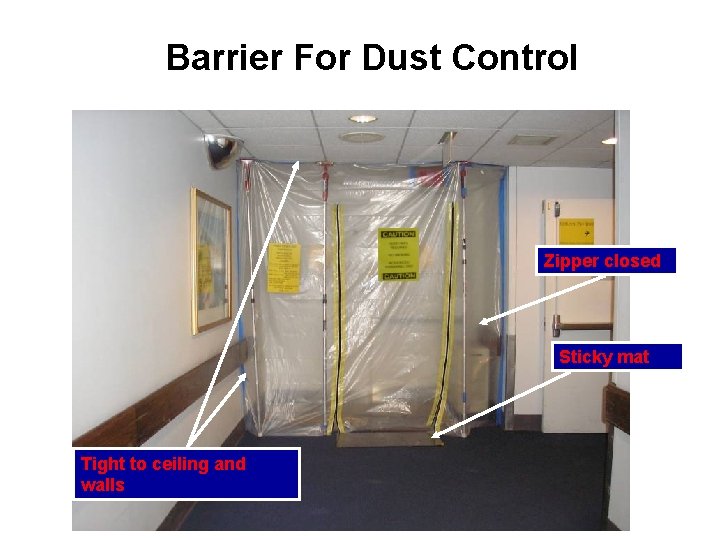
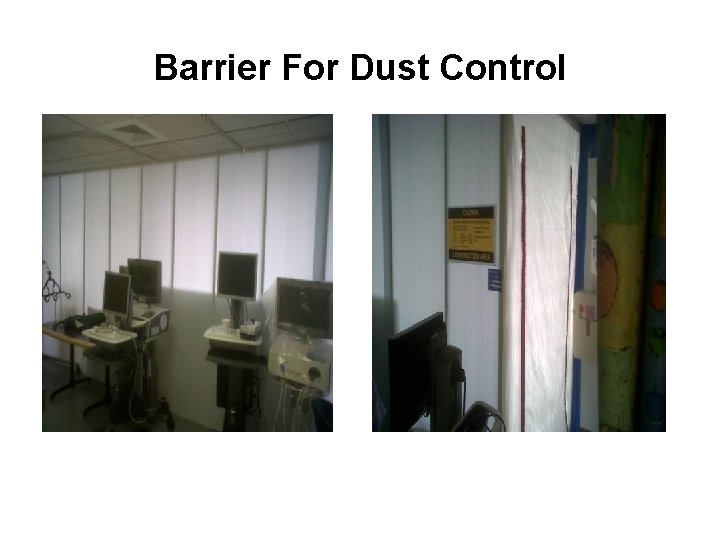
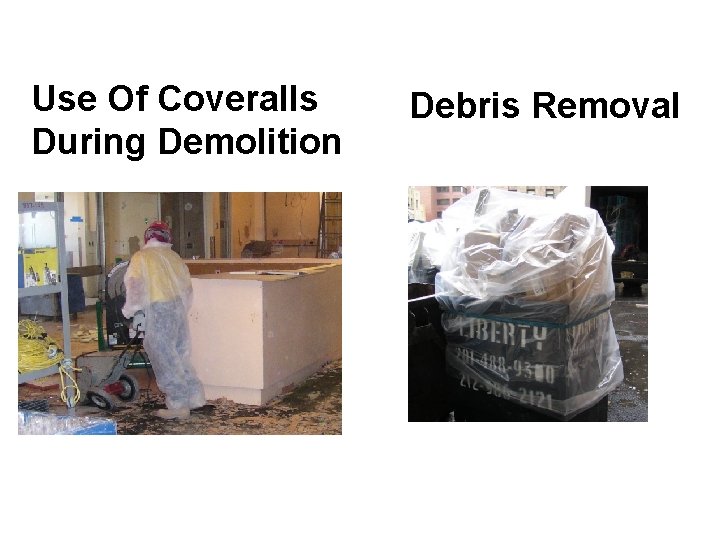
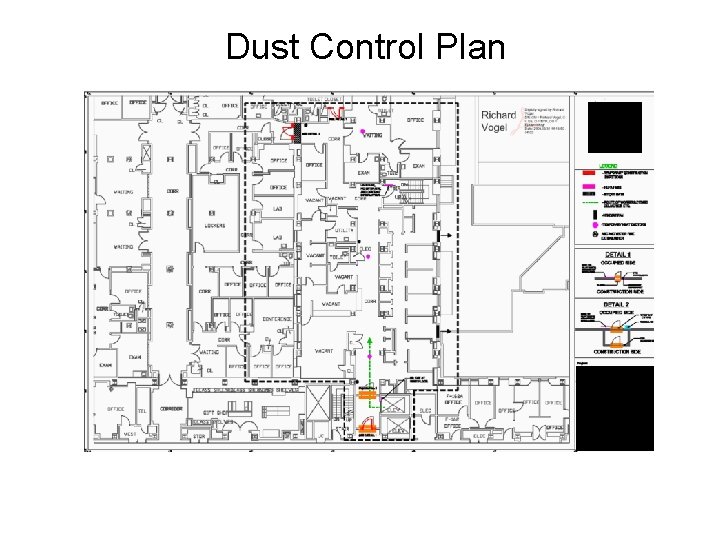
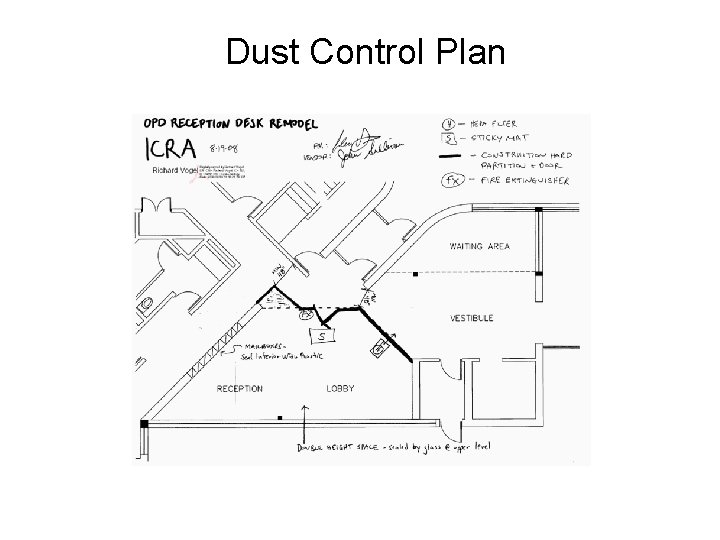
Dust Control Measures 1. 2 -3. 4 Infection Control Risk Mitigation 1. 2 -3. 4. 1 ICRMR Planning Infection control mitigation recommendations (ICRMRs) shall be prepared by the ICRA team and shall, at a minimum, address the following: • Patient placement • Barriers and other protective measures • Protection from demolition • Training • Debris and traffic flow • Bathrooms and food for construction workers
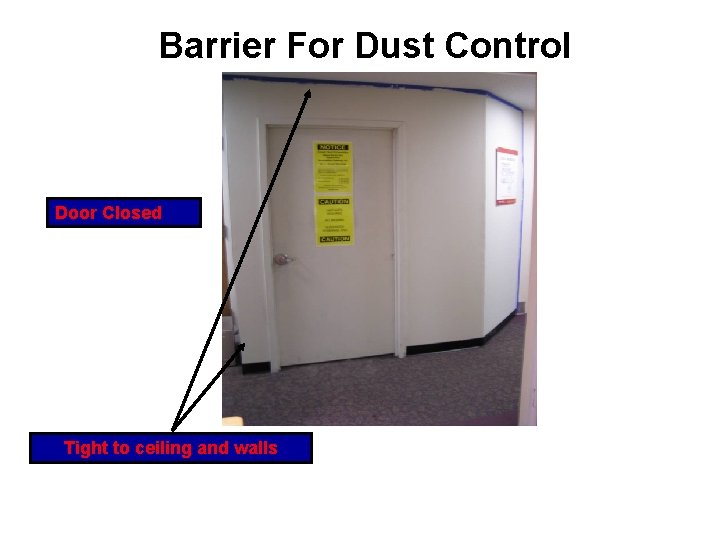
Barrier For Dust Control Door Closed Tight to ceiling and walls
Barrier For Dust Control Zipper closed Sticky mat Tight to ceiling and walls
Barrier For Dust Control
STICKY MATS
Use Of Coveralls During Demolition Debris Removal
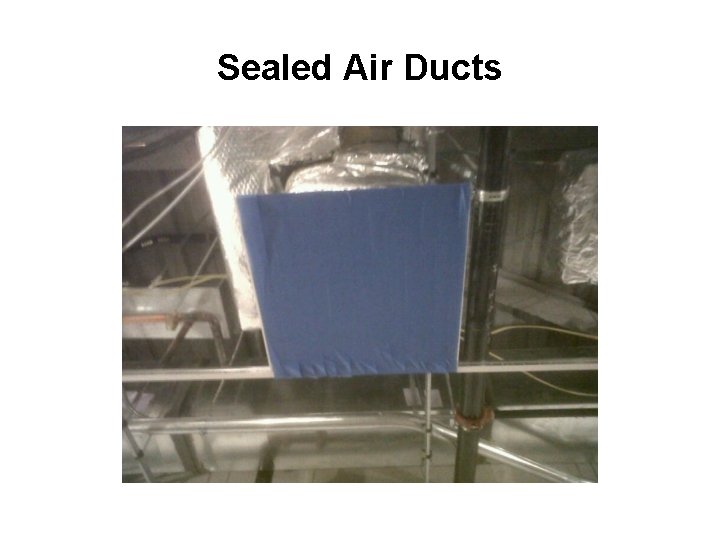
Sealed Air Ducts
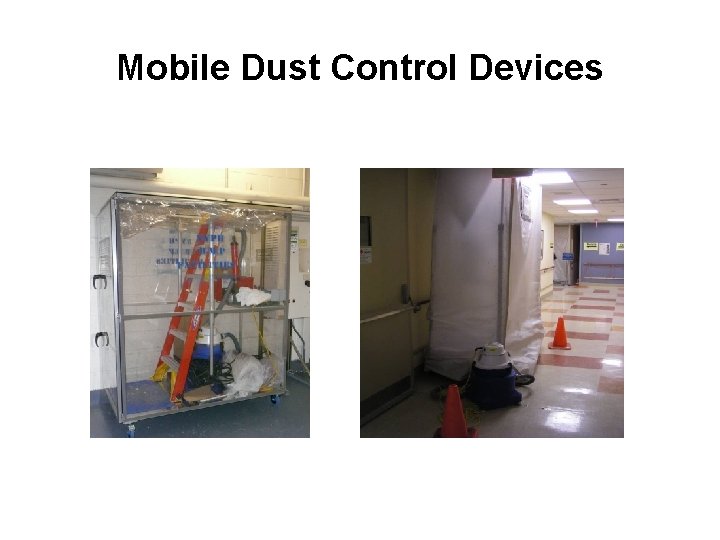
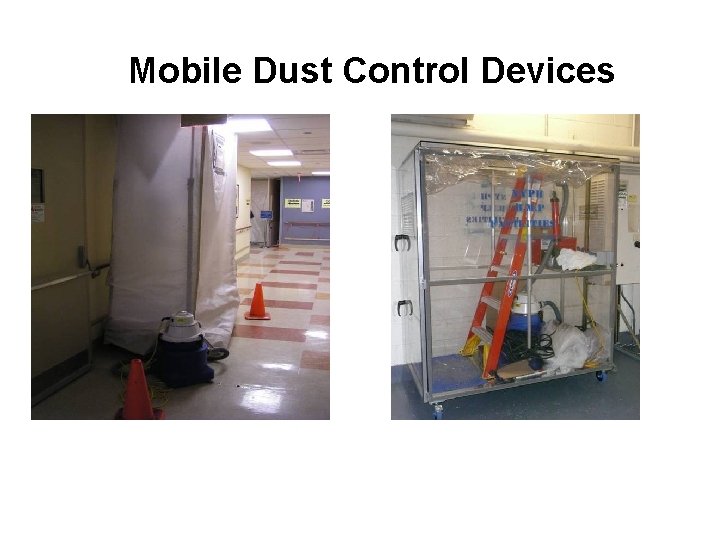
Mobile Dust Control Devices
Instructions to Contractors Guidelines for Reduction of Infection Risk During Construction & Renovation Infections associated with hospital renovations are a concern due to the vulnerability of patients who are near the construction activities. The control of infection risks (primarily airborne) during these periods is essential. Dust containment is a critical component in the control of fungi in patient areas as well as the prevention of irritation and illness in patients, visitors and staff. It is the policy of NYP that whenever work creates an open space between construction areas and other dust or possible fungi containing areas, EHS, the Department of Epidemiology and Facilities will conduct a careful evaluation of these areas. The degree to which the project will require dust abatement measures is determined by completing an Infection Control Risk Assessment (ICRA). EHS, Epidemiology and the NYP/PM will monitor compliance with the procedures described in this policy. Although each project is unique in items of required construction, and the location and vulnerability of nearby patients, certain general precautions are prudent. The purpose of these guidelines and the ICRA is to enhance the prevention of illness in patients who may be immune-compromised and susceptible to fungal infections and others who may be sensitive or otherwise allergic to materials found in or carried by dust. These guidelines apply to all activities in the hospital that may create dust, aerosolize fungal spores, or generate other antigenic or irritating materials that will cause illness or discomfort and obligates EHS, Department of Epidemiology and Facilities to evaluate and monitor all such activities. All GC/CM staff are expected to comply with these requirements.
Educational Material for Construction Workers
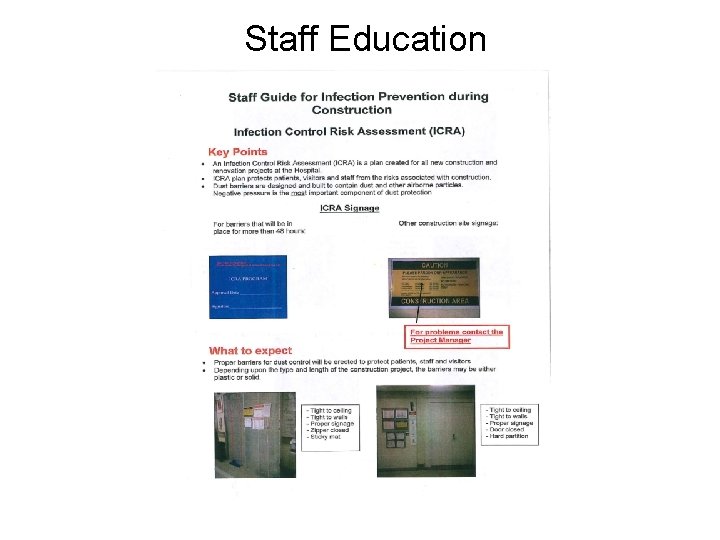
Staff Education
Dust Control Plan
Dust Control Plan
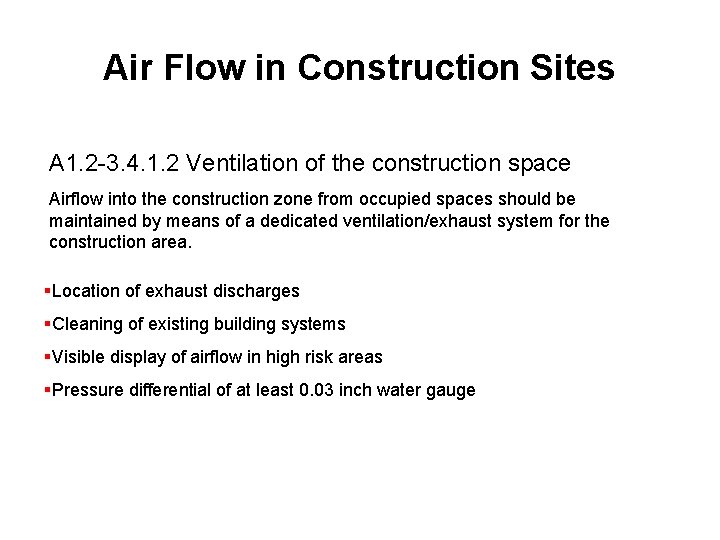
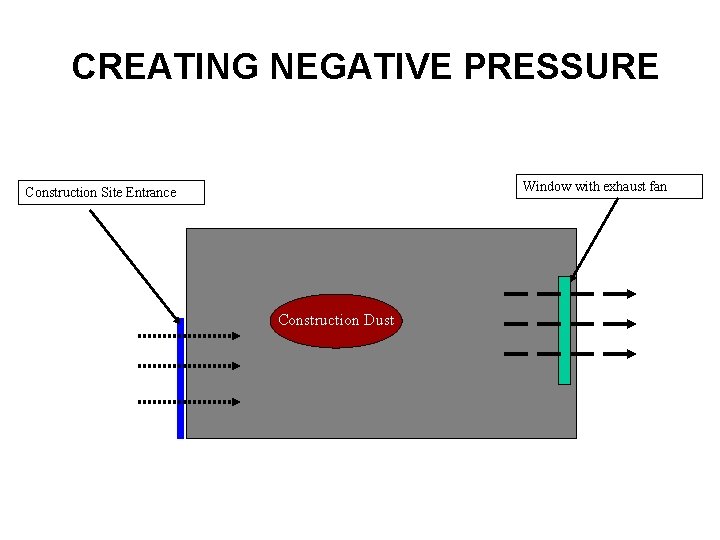
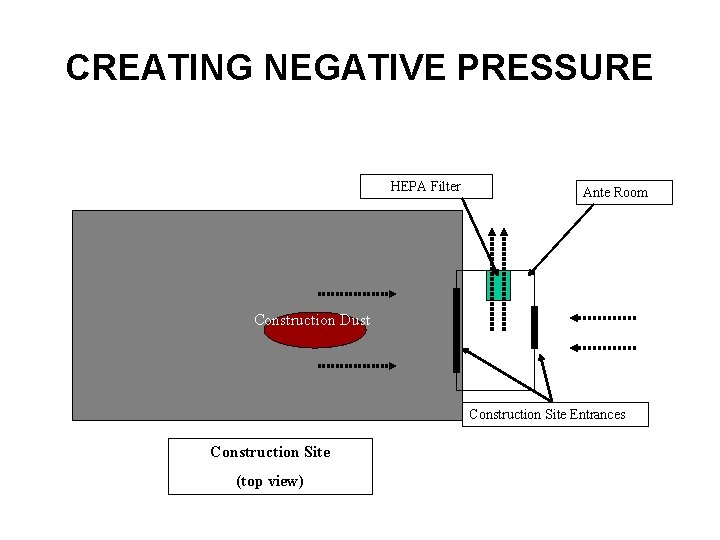
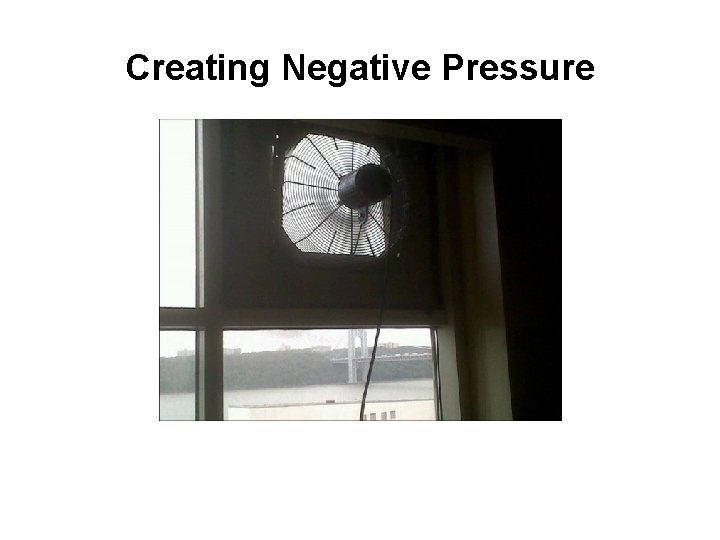
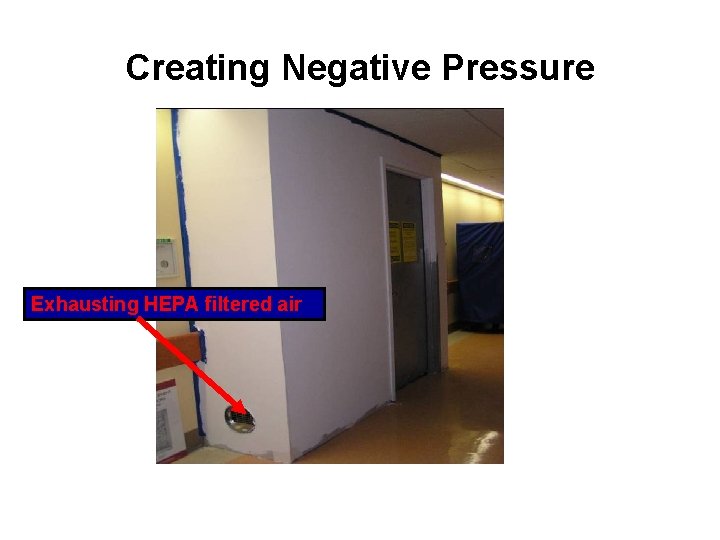
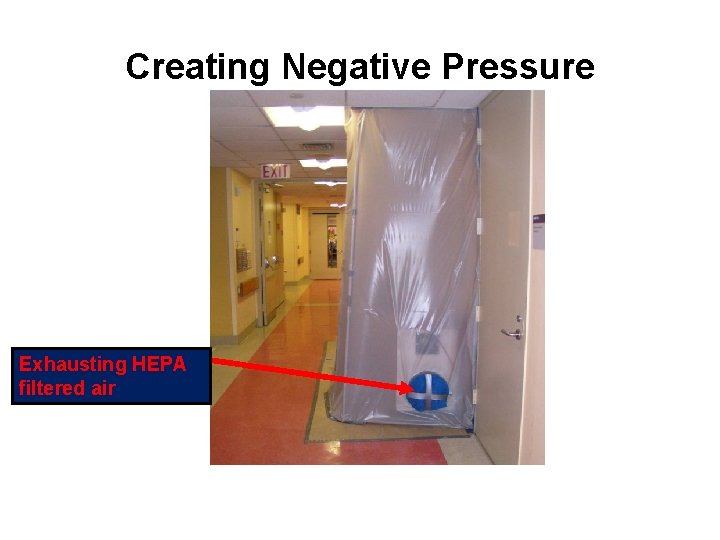
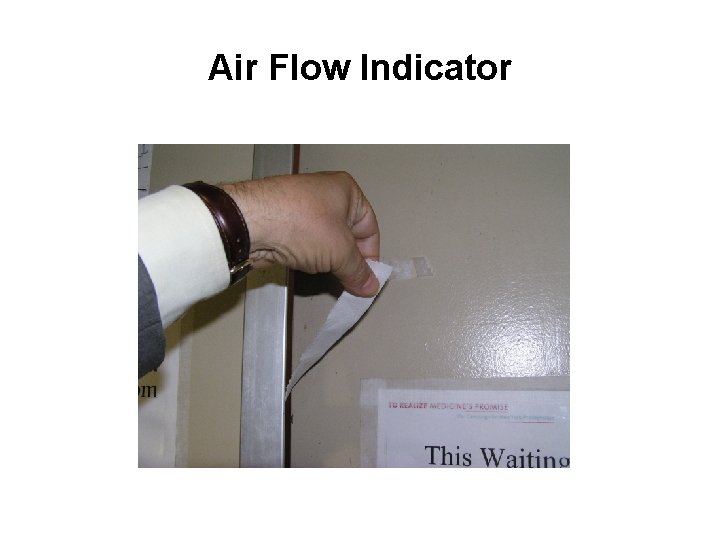
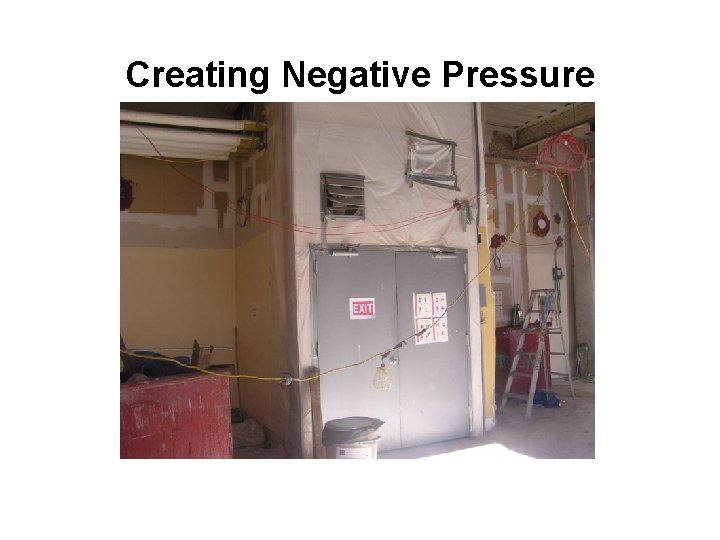
Air Flow in Construction Sites A 1. 2 -3. 4. 1. 2 Ventilation of the construction space Airflow into the construction zone from occupied spaces should be maintained by means of a dedicated ventilation/exhaust system for the construction area. Location of exhaust discharges Cleaning of existing building systems Visible display of airflow in high risk areas Pressure differential of at least 0. 03 inch water gauge
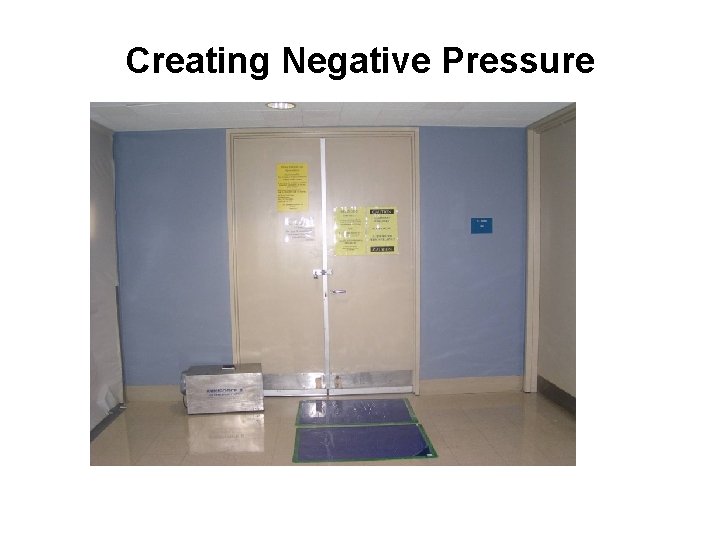
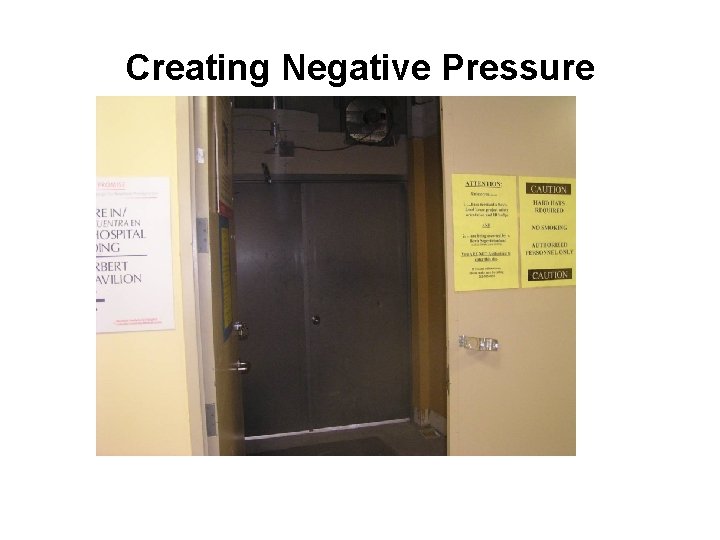
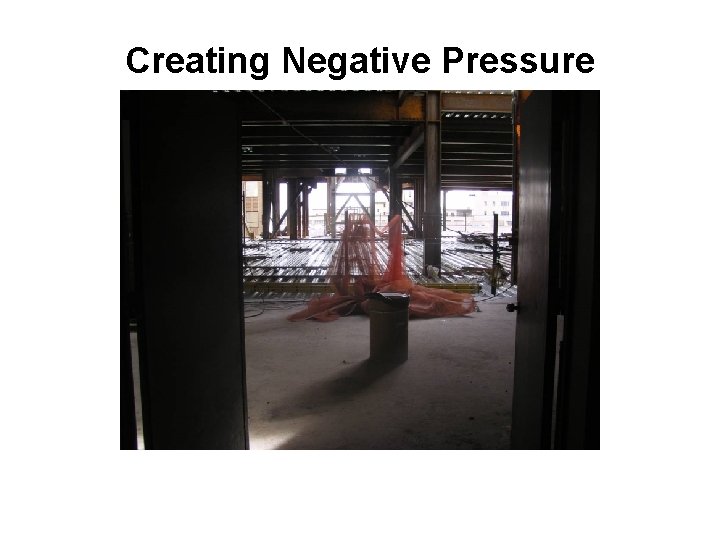
CREATING NEGATIVE PRESSURE Window with exhaust fan Construction Site Entrance Construction Dust Construction Site
CREATING NEGATIVE PRESSURE HEPA Filter Ante Room Construction Dust Construction Site Entrances Construction Site (top view)
Creating Negative Pressure
Creating Negative Pressure Exhausting HEPA filtered air
Creating Negative Pressure Exhausting HEPA filtered air
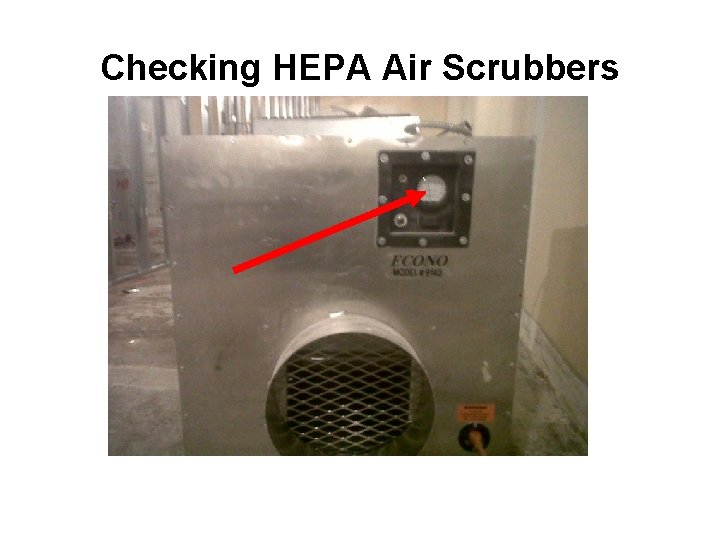
Checking HEPA Air Scrubbers
Air Flow Indicator
Continuous Monitoring of Negative Pressure
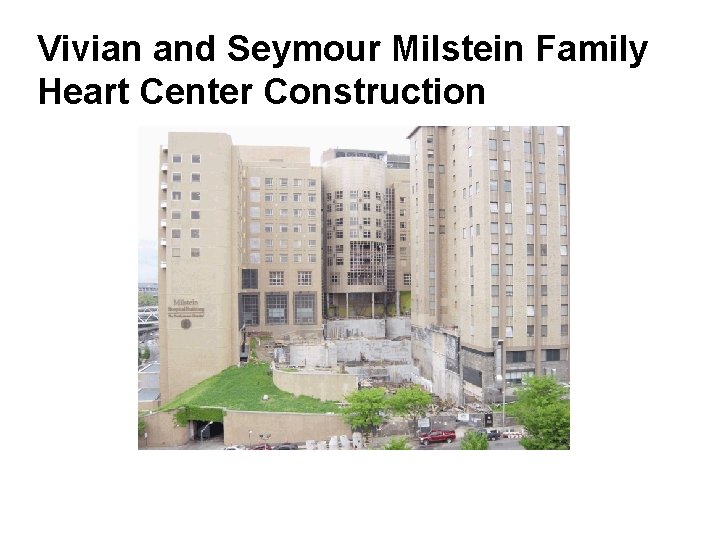
Vivian and Seymour Milstein Family Heart Center Construction
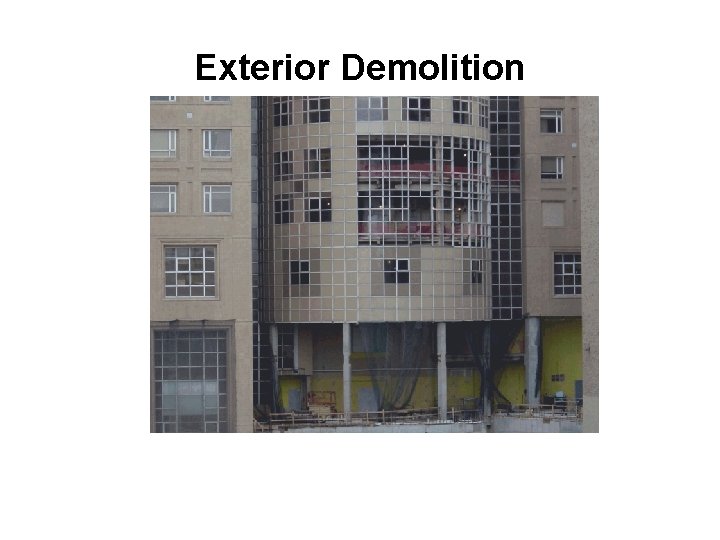
Exterior Demolition
Creating Negative Pressure
Creating Negative Pressure
Creating Negative Pressure
Creating Negative Pressure
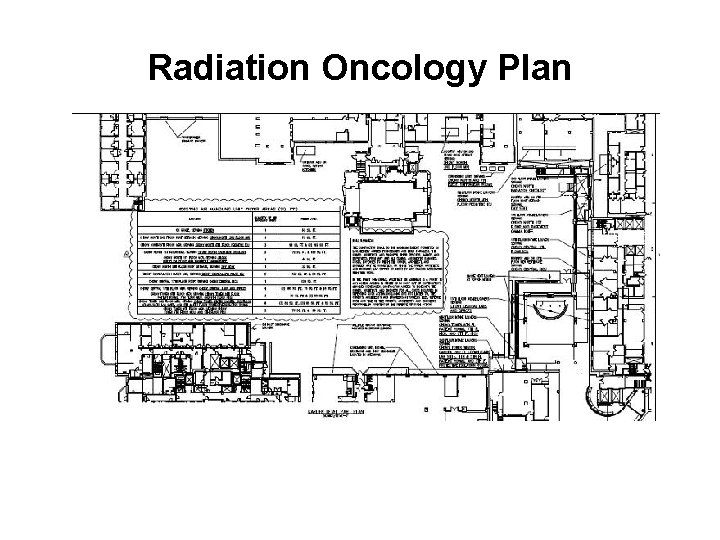
Radiation Oncology Plan
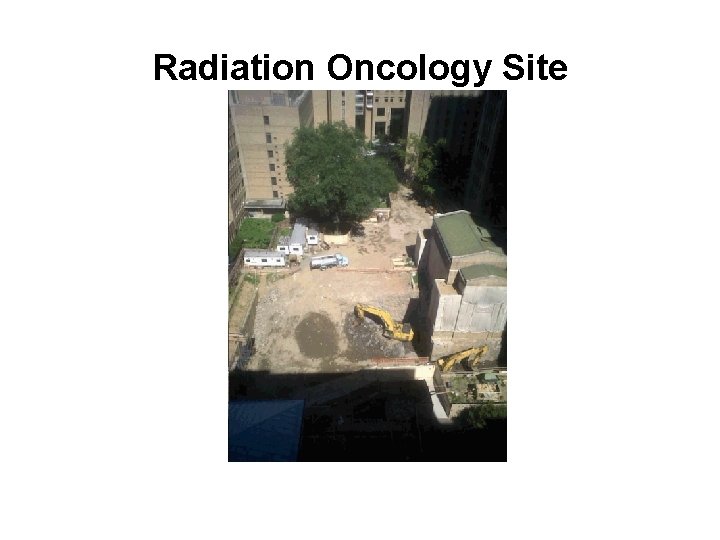
Radiation Oncology Site
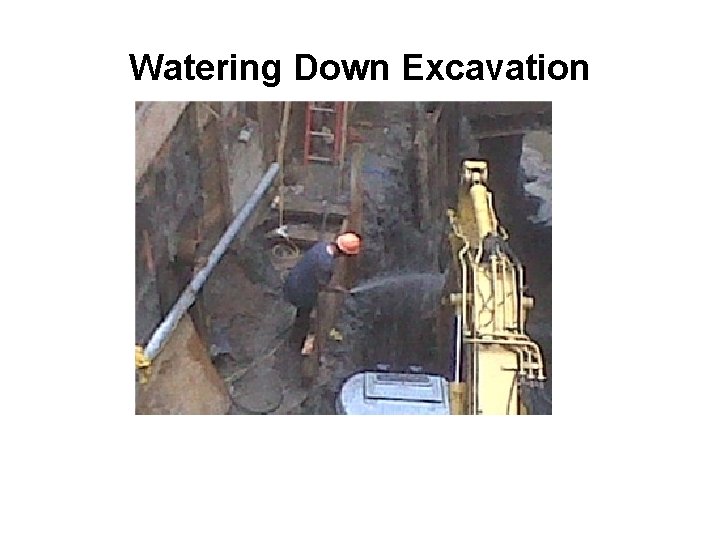
Watering Down Excavation
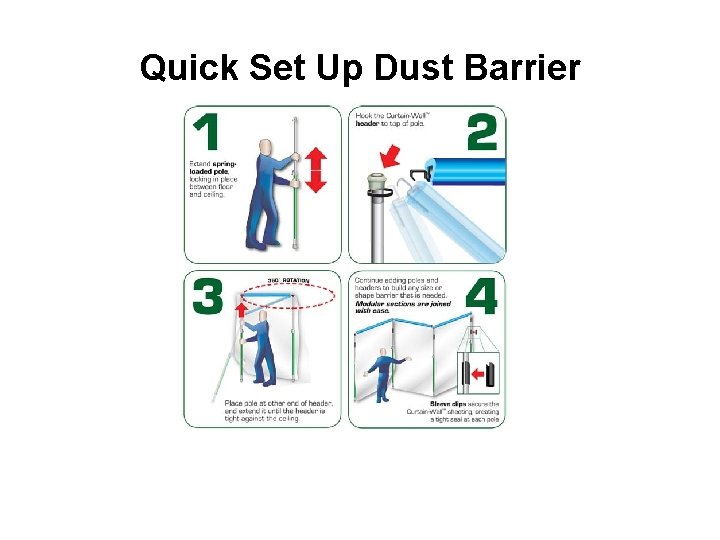
Quick Set Up Dust Barrier
Mobile Dust Control Devices VS
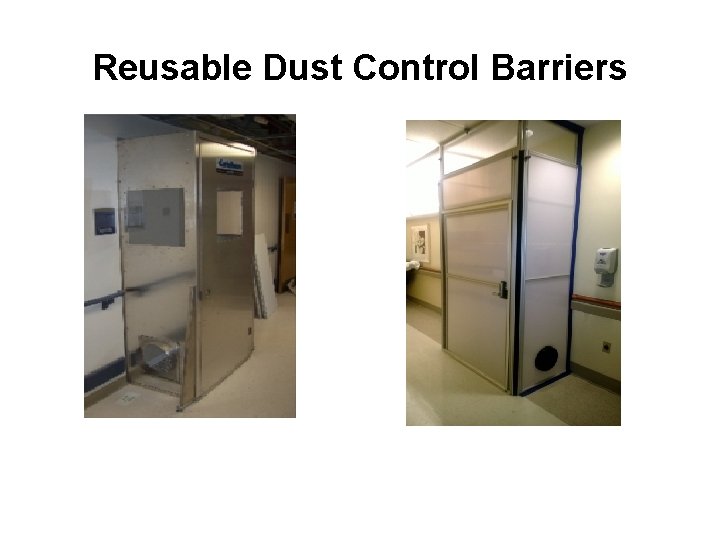
Reusable Dust Control Barriers VS
QUESTIONS?