
Infection Prevention in Construction and Renovation Linda R
- Slides: 50
Infection Prevention in Construction and Renovation Linda R. Greene, RN, MPS, CIC, FAPIC Barbara Russell, MPH, BS, RN, CIC, FAPIC
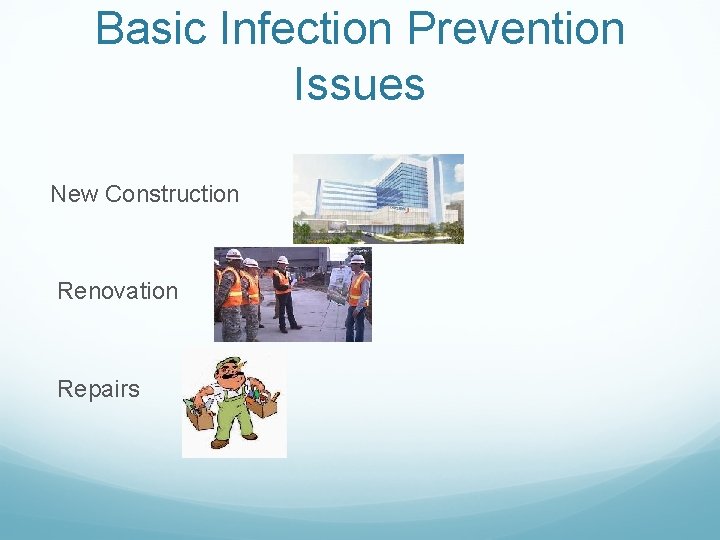
Basic Infection Prevention Issues New Construction Renovation Repairs
Let’s Start with New Construction Could be a new hospital, a new tower or a new ambulatory site. IP must have input for all of the following: Pre-design Design Build Preparation for occupancy Occupancy
Pre- Design Geographical ICRA Patient population Services and their scope Treatment areas Organizational structure What does the future look like?
Design Build relationship with the team, architect, etc. Think about potential infection prevention issues What does IP bring to the table? Room layout Med room Shower ? Nourishment stations
Other issues to consider Dirty and clean utility rooms Flow of clean and dirty items Any HLD, Sterilization What about OR’s
ICRA Elements in Design Number and location of all negative and positive pressure rooms Location of special ventilation Air handling Water ( Water management plan) Finishes and surfaces
Important Issues Research the literature- back up every request with literature Think critically Remember competing priorities Don’t forget about water issues
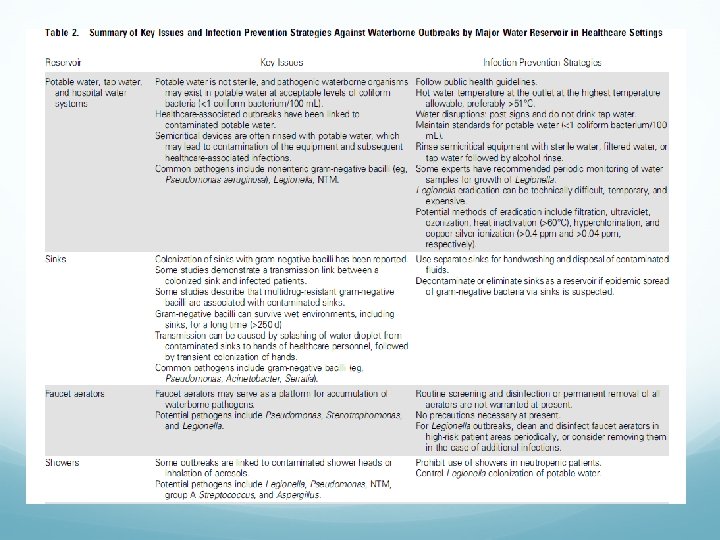
Other Issues Install alcohol-based hand-rub dispensers at the bedside and in other accessible locations to increase hand-washing compliance and reduce contact transmission of infection. Select easy-to-clean floor, wall, and furniture coverings, and employ proper cleaning and disinfection procedures. Design and maintain the water system at the proper temperature and adequate pressure; minimize stagnation and back flow; eliminate dead- end pipes; regularly clean point-of-use fixtures; and consider the location of decorative fountains and carefully maintain them to minimize the risk of waterborne infection. Provide single-bed rooms with private toilets to enable separation or isolation of patients on admission, so that those with unrecognized infections can be tested and identified without being mixed in with uninflected individuals
Negotiation and Critical Thinking Tools The IDEALS are to Identify, Define, Enumerate, Analyze, List, and Self. Correct: I Identify the Issue or Problem: What is the real question we are facing? D Define the Context: What are the facts that frame this issue or problem? E Enumerate the Choices: What are plausible options? A Analyze Options: What is the best course of action? L List Reasons Explicitly: Why is the best course of action? S Self-Correct: Look at it again … What did we miss? Six Steps to Effective Thinking and Problem Solving, or “IDEAL (Facione, 2007
Build Phase Have a very detailed ICRA for each phase Ensure ICRA is part of a multidisciplinary team; construction personnel must be at the table Understand the risks and the tools to mitigate the risk
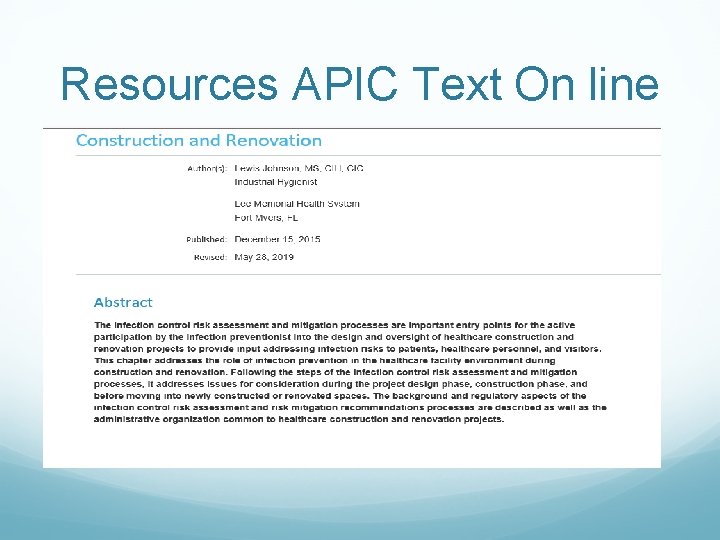
Resources APIC Text On line
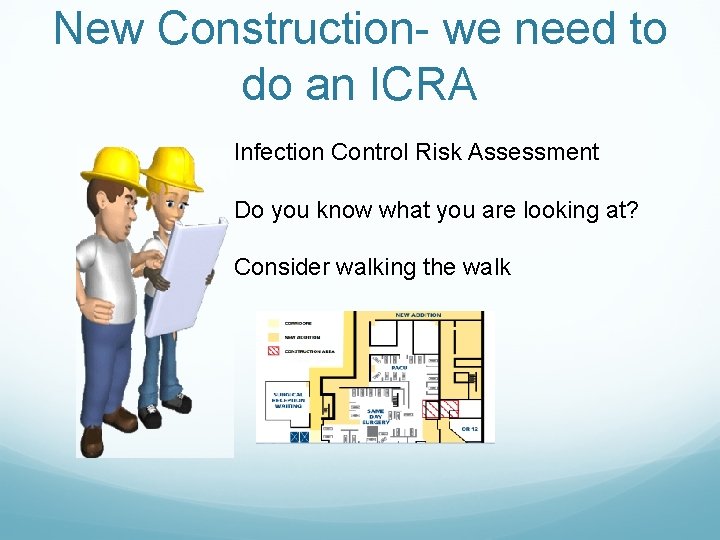
New Construction- we need to do an ICRA Infection Control Risk Assessment Do you know what you are looking at? Consider walking the walk
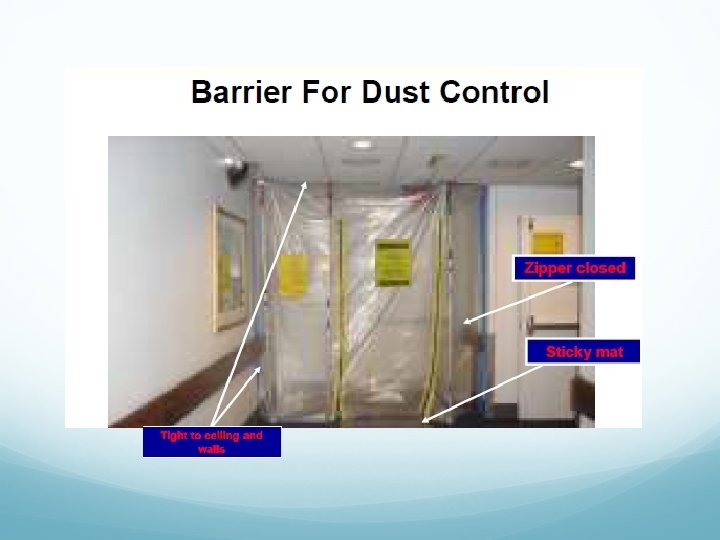
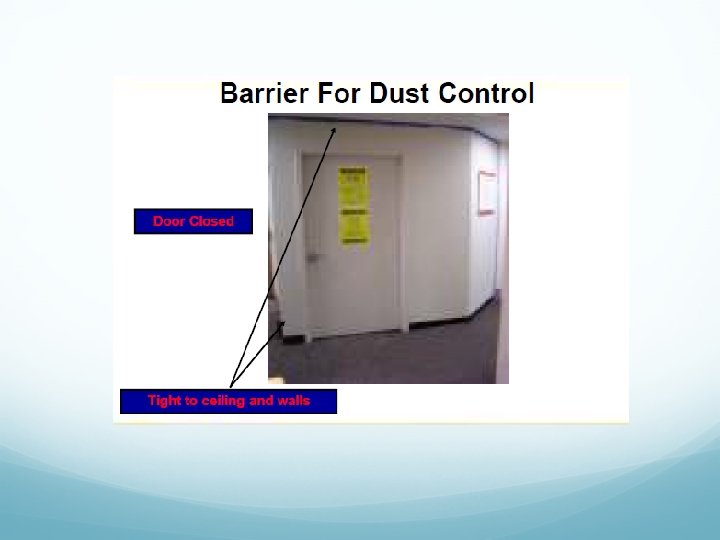
Build Phase Any special service disruption Identify specific hazards Any patient placement or relocation Barriers and protection How are we going to monitor?
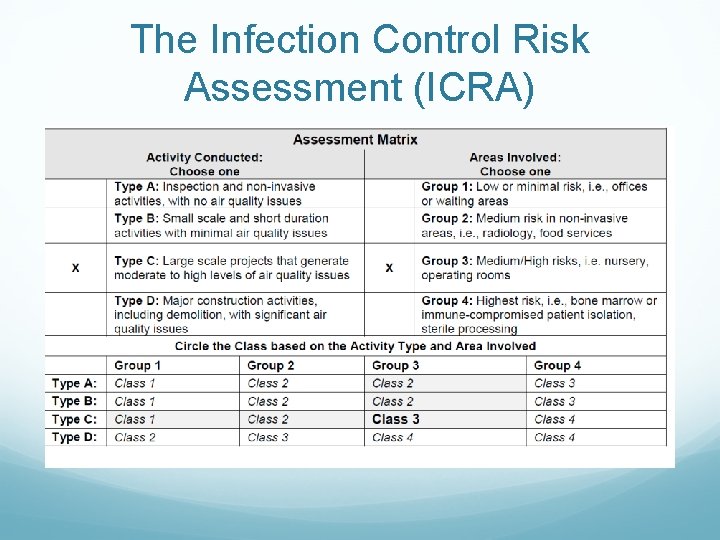
The Infection Control Risk Assessment (ICRA)
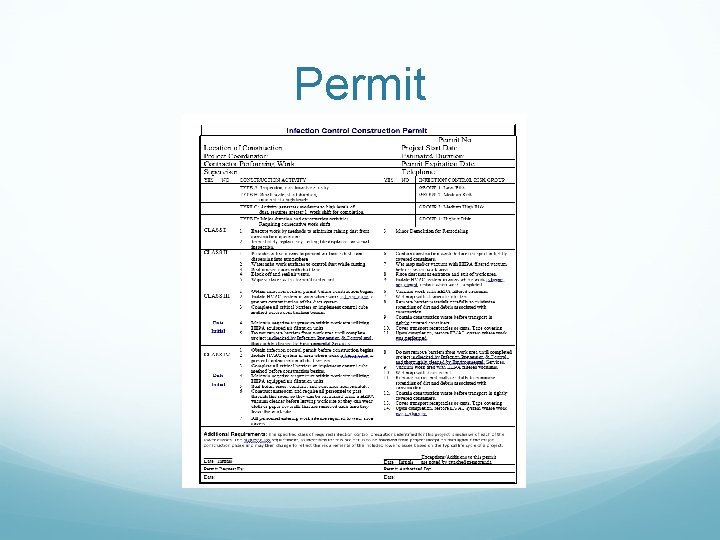
Permit
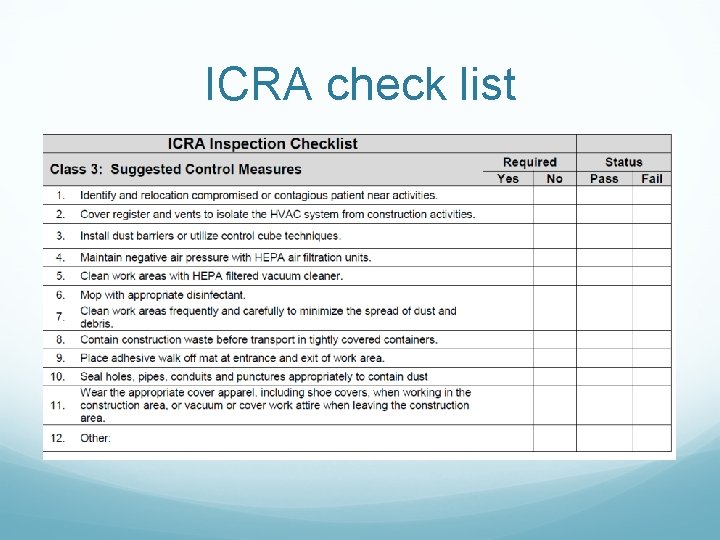
ICRA check list
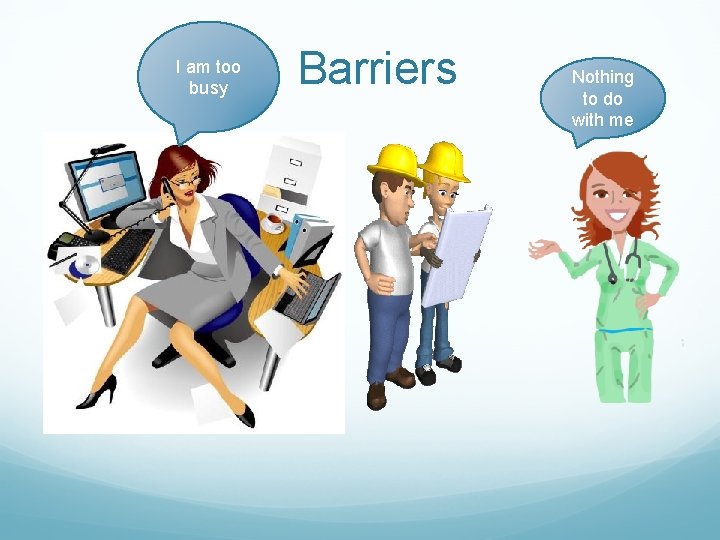
I am too busy Barriers Nothing to do with me
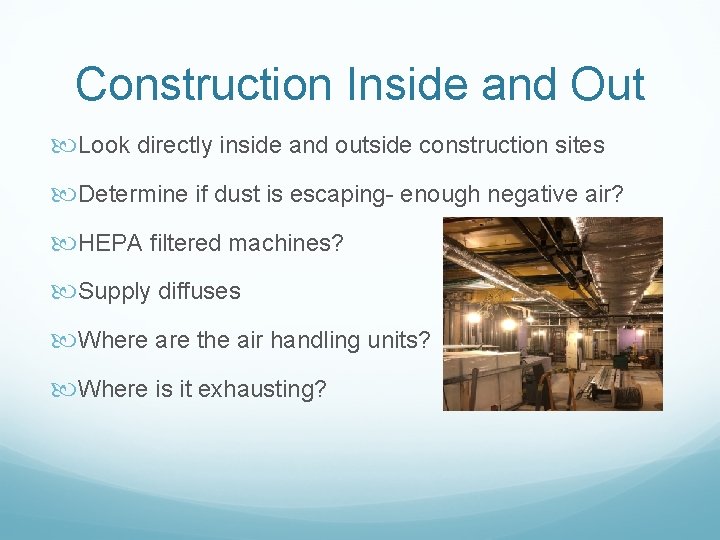
Construction Inside and Out Look directly inside and outside construction sites Determine if dust is escaping- enough negative air? HEPA filtered machines? Supply diffuses Where are the air handling units? Where is it exhausting?
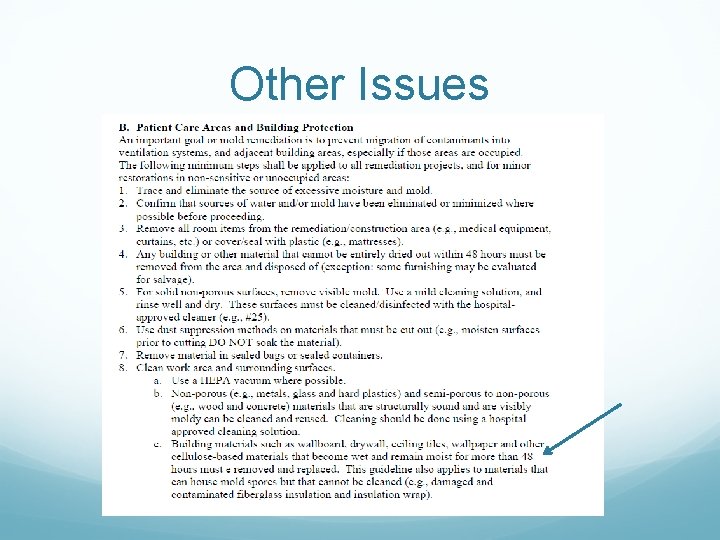
Other Issues
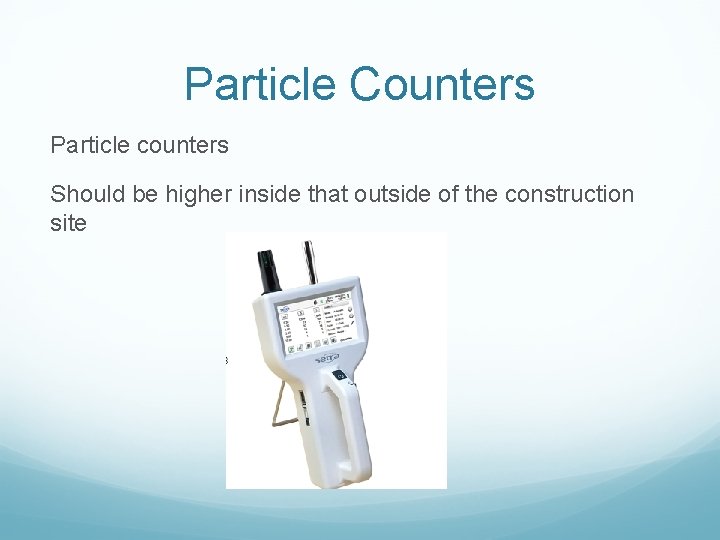
Particle Counters Particle counters Should be higher inside that outside of the construction site
Risk Factors Persons at Risk for Aspergillus/Fungal Infection: Any patient who is immunocompromised Bone marrow and solid organ transplant Chemotherapy Prolonged steroid / antibiotic therapy Dialysis
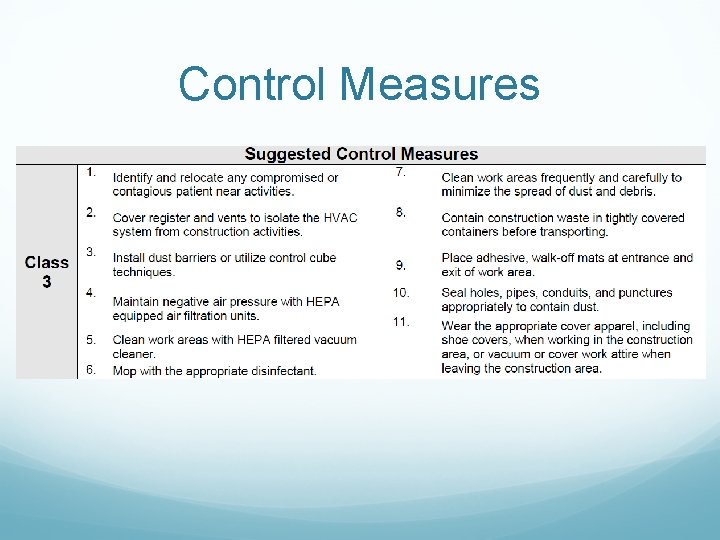
Control Measures
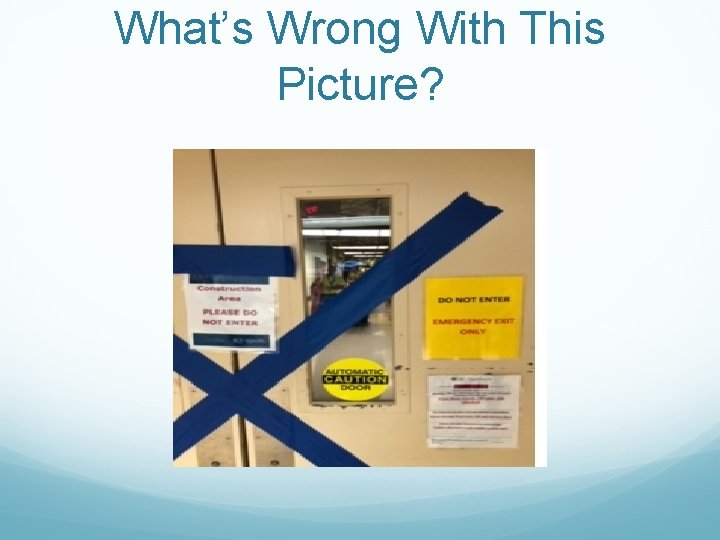
What’s Wrong With This Picture?
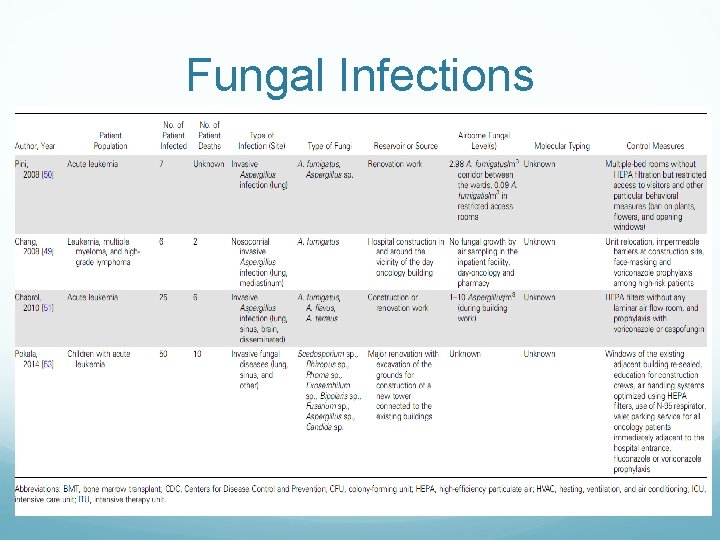
Documented Source of Spores in Construction Settings False ceilings Insulating material Fire-proofing material Open windows/doors Contaminated carpeting Dust from construction site • Dust from excavation site
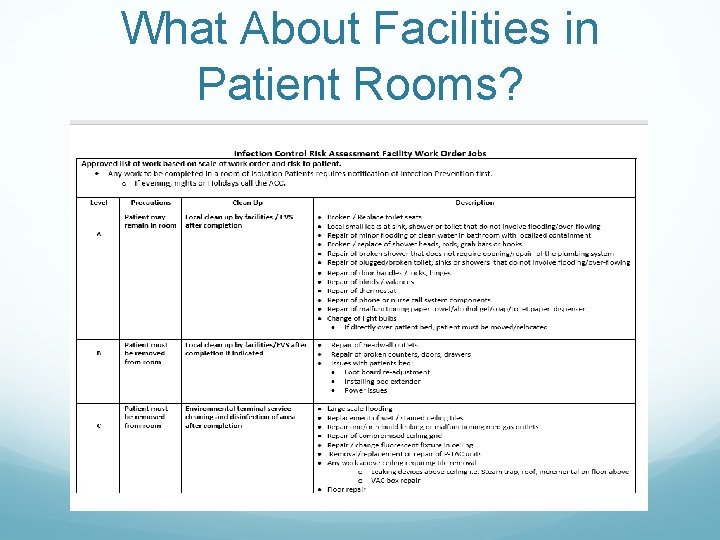
What About Facilities in Patient Rooms?
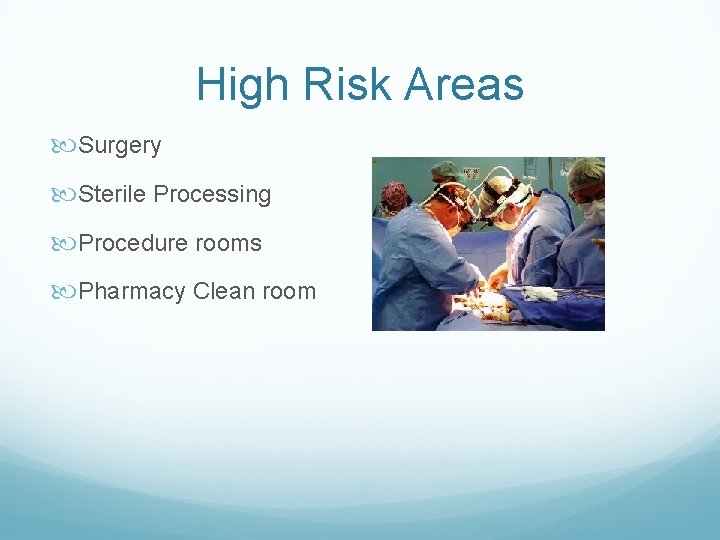
High Risk Areas Surgery Sterile Processing Procedure rooms Pharmacy Clean room
Emergency Repairs Call IP Immediately Assess the clinical impact Identify barriers Any cancellations Notify administration
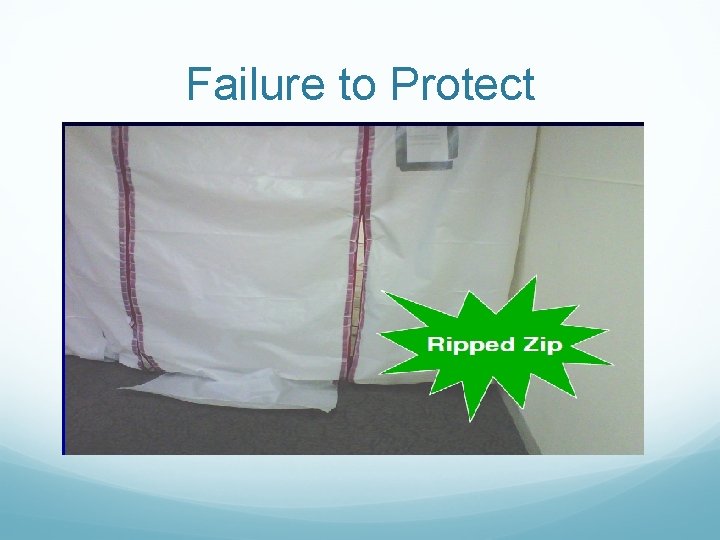
Failure to Protect
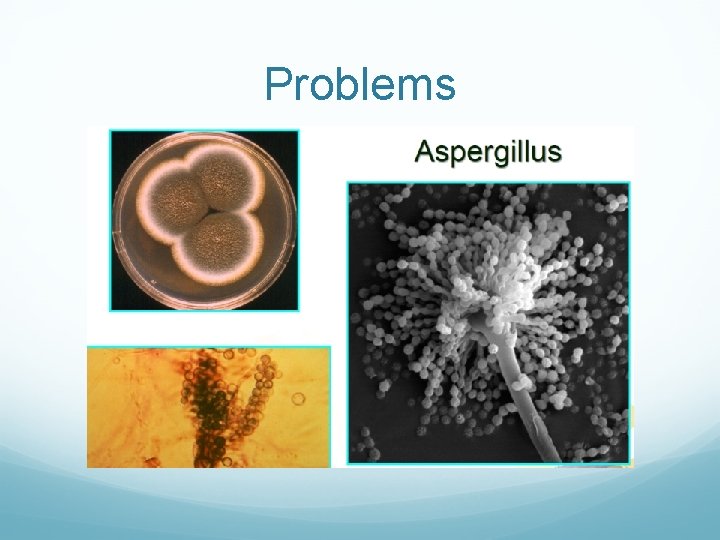
Problems
Fungal Infections
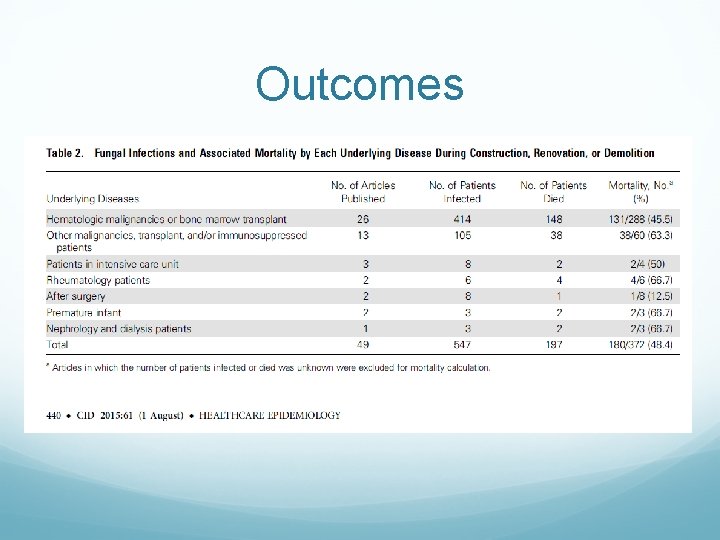
Outcomes
Vibration Five patients with severe postoperative Aspergillus endophthalmitis All five patients came from one hospital in January and February during a period of active hospital construction All five patients were subjected to aqueous or vitreous tap Three patients had removal of the vitreous gel from the middle of the eye Final outcome in each patient was evisceration (removal of the eye’s contents) or enucleation (removal of eye), despite an intensive course of antifungal therapy
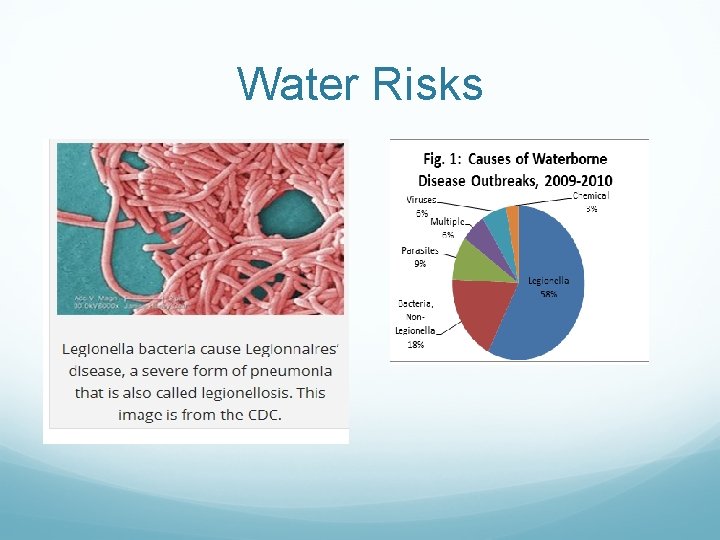
Water Risks
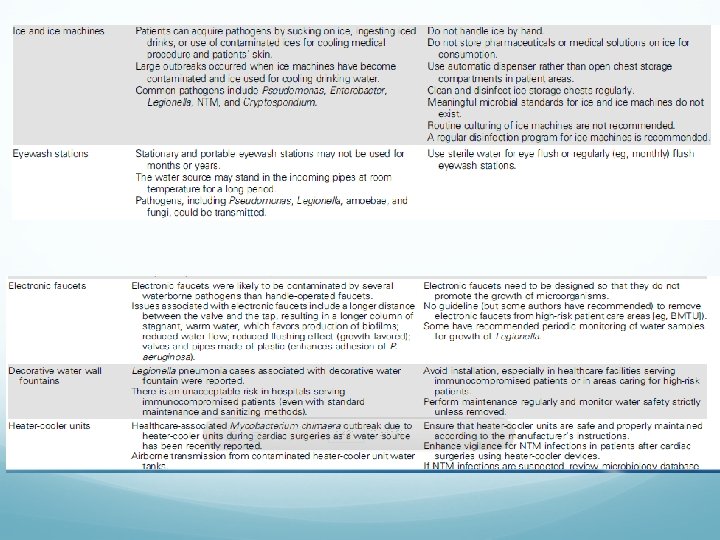
Water Risks Construction (including renovations and installation of new equipment): Vibrations and changes in water pressure can dislodge biofilm and release Legionella or other waterborne pathogens. Biofilm is a slimy layer in pipes in which pathogens can live; it can give pathogens a safe harbor from disinfectants.
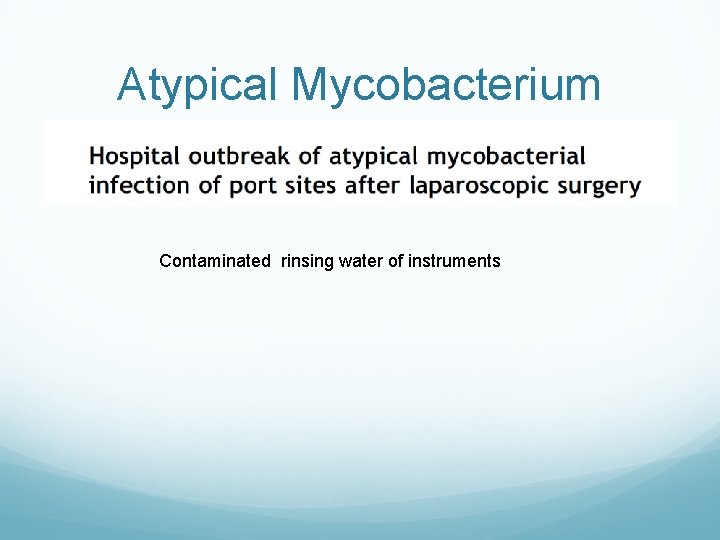
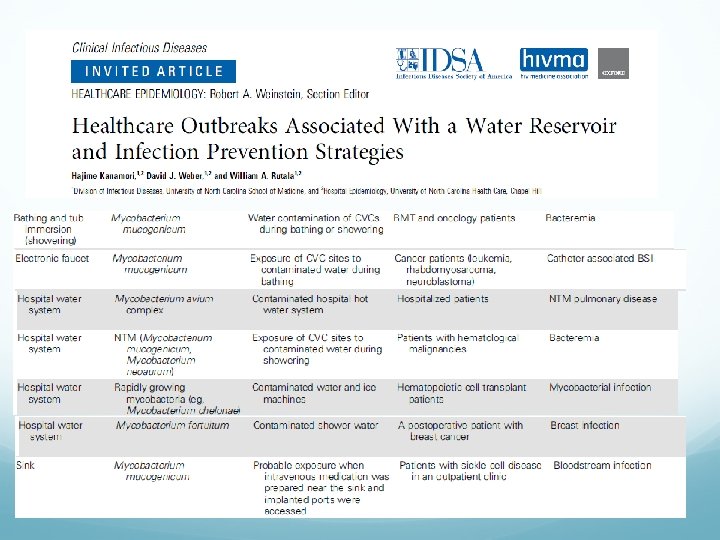
Atypical Mycobacterium Contaminated rinsing water of instruments
Other Water Related Issues Floods Sewage leaks Water back ups Requires a multidisciplinary team
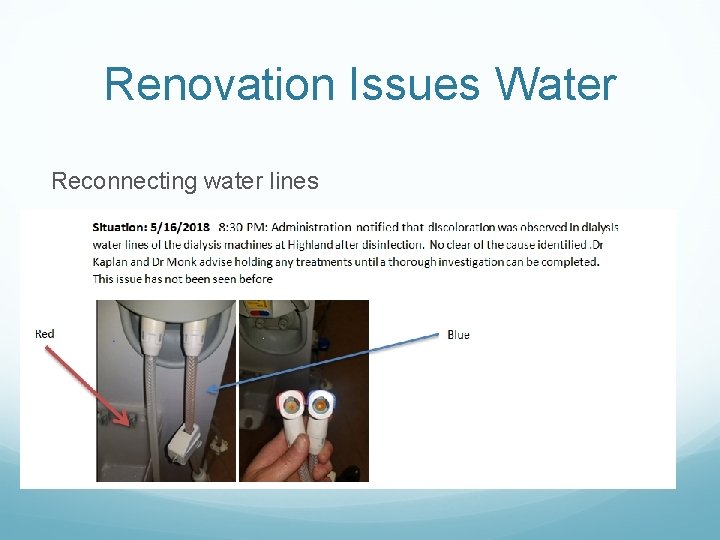
Renovation Issues Water Reconnecting water lines
Lessons Learned Communication to all affected areas Flush extensively before reconnection Involve multidisciplinary team Consult with experts
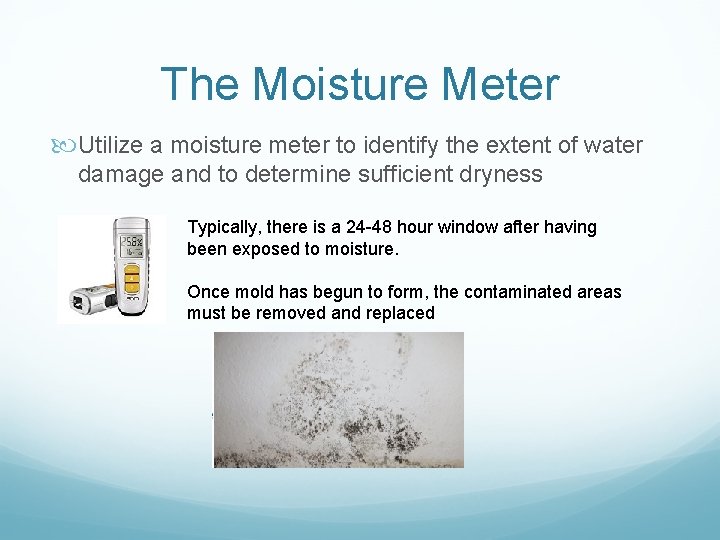
The Moisture Meter Utilize a moisture meter to identify the extent of water damage and to determine sufficient dryness Typically, there is a 24 -48 hour window after having been exposed to moisture. Once mold has begun to form, the contaminated areas must be removed and replaced
Tips for Assessment Infection Prevention know BEFORE Construction renovation activity is planned Take a walk with Architects and Construction before hand Visualizing the activity/location will help determine risk
Think The project may be small in scale but big in dust Painting a wall? Dust free BUT- do you have to patch and sand the wall first? Pulling off wall covering? Is there mold behind that? Pulling electrical cables?
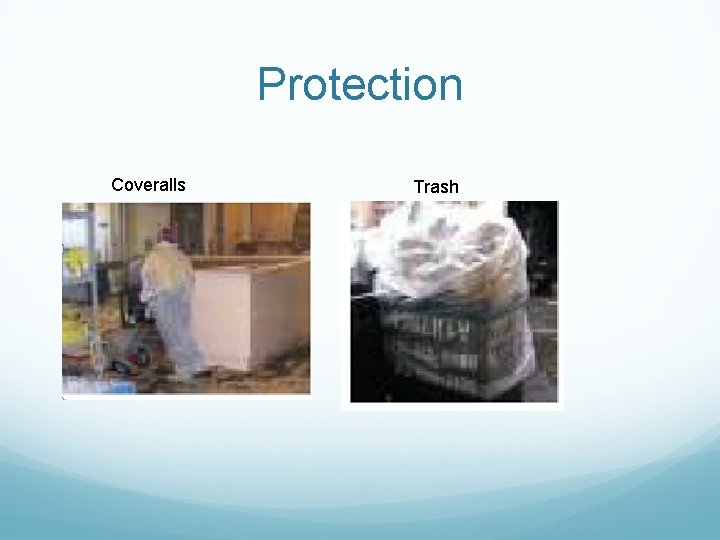
Protection Coveralls Trash
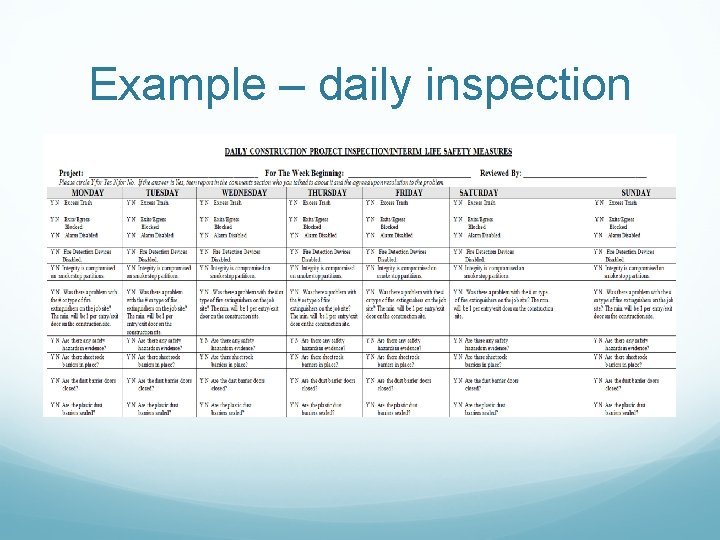
Example – daily inspection
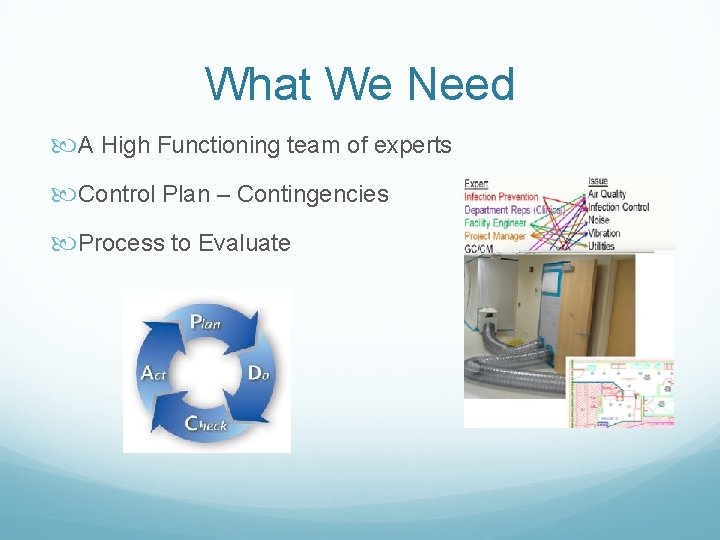
What We Need A High Functioning team of experts Control Plan – Contingencies Process to Evaluate