
Infection Prevention Control Champion Forum Back to Basics
Infection Prevention & Control Champion Forum Back to Basics
Back to Basics • • • Legislation Chain of infection Hand hygiene Glow Box PPE
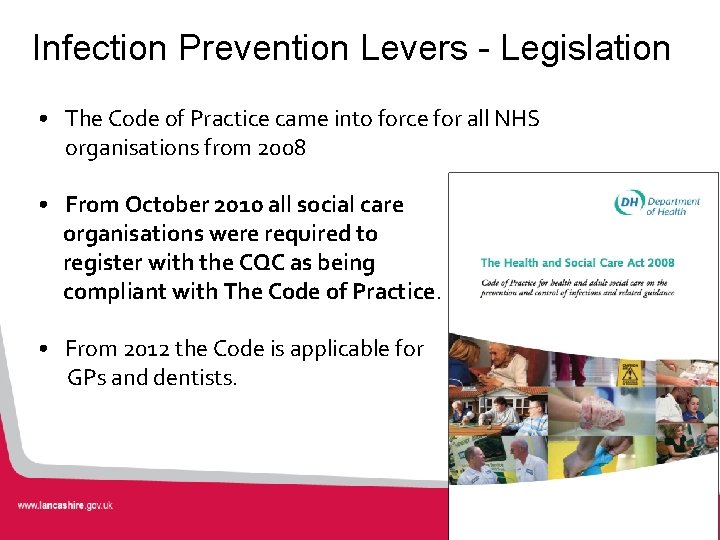
Infection Prevention Levers - Legislation • The Code of Practice came into force for all NHS organisations from 2008 • From October 2010 all social care organisations were required to register with the CQC as being compliant with The Code of Practice. • From 2012 the Code is applicable for GPs and dentists.
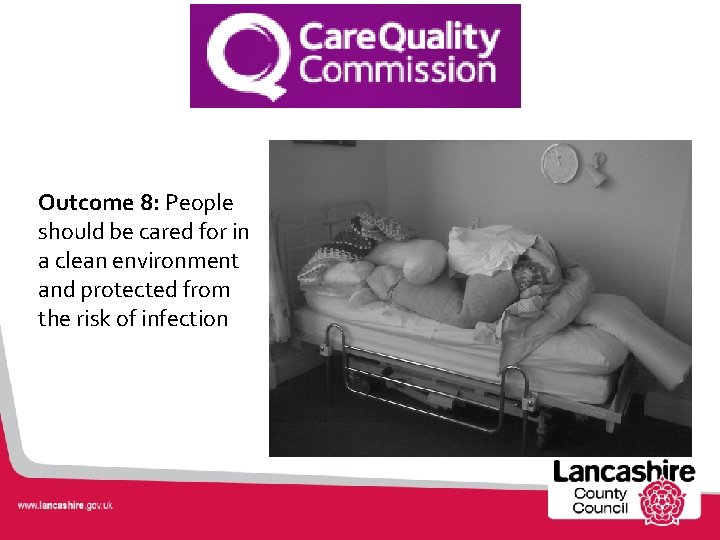
Outcome 8: People should be cared for in a clean environment and protected from the risk of infection
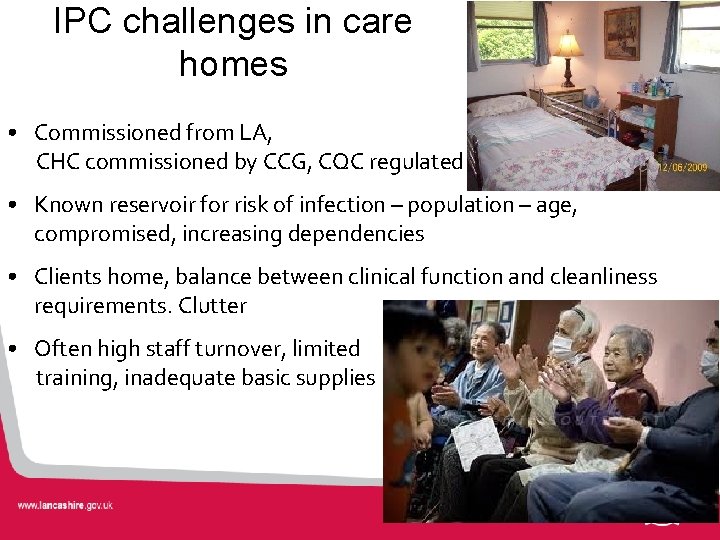
IPC challenges in care homes • Commissioned from LA, CHC commissioned by CCG, CQC regulated • Known reservoir for risk of infection – population – age, compromised, increasing dependencies • Clients home, balance between clinical function and cleanliness requirements. Clutter • Often high staff turnover, limited training, inadequate basic supplies
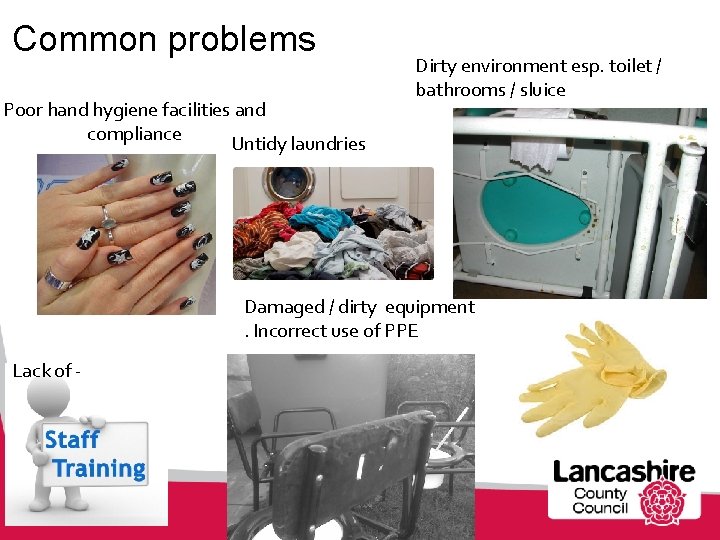
Common problems Poor hand hygiene facilities and compliance Untidy laundries Dirty environment esp. toilet / bathrooms / sluice Damaged / dirty equipment. Incorrect use of PPE Lack of -
Common infections and outbreaks in care homes Common infections include: • Urinary tract infections • Skin/soft tissue • Chest • CDI (causes diarrhoea) Outbreaks include (but not limited to) • Norovirus (causes sickness and diarrhoea) – most common • Scabies (skin) • MRSA (skin, urine or chest infections) / PVL (skin) • Streptococcus A (Scarlet fever, skin, invasive illness) • Influenza (chest symptoms)
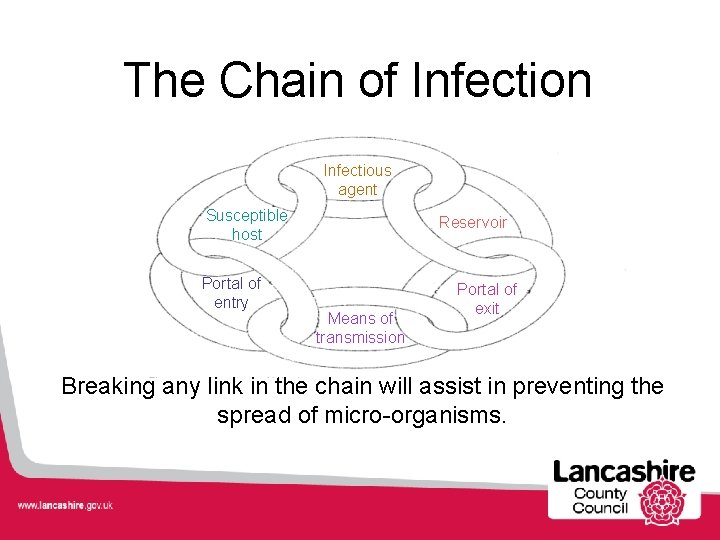
The Chain of Infection Infectious agent Susceptible host Portal of entry Reservoir Means of transmission Portal of exit Breaking any link in the chain will assist in preventing the spread of micro-organisms.
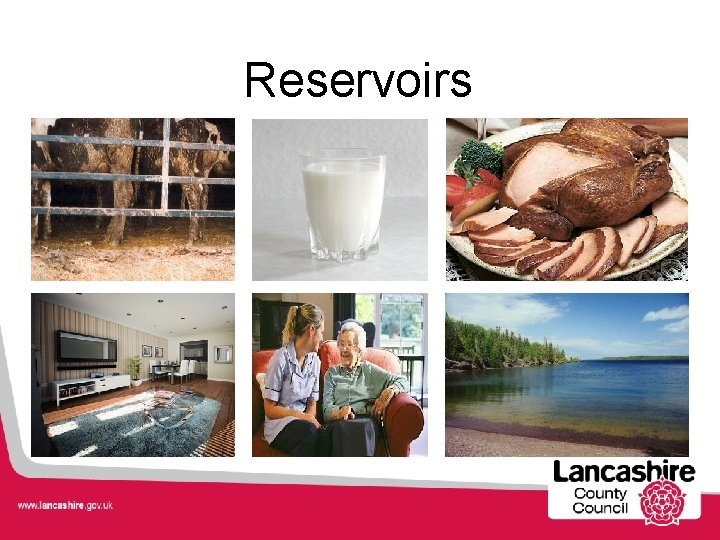
Reservoirs
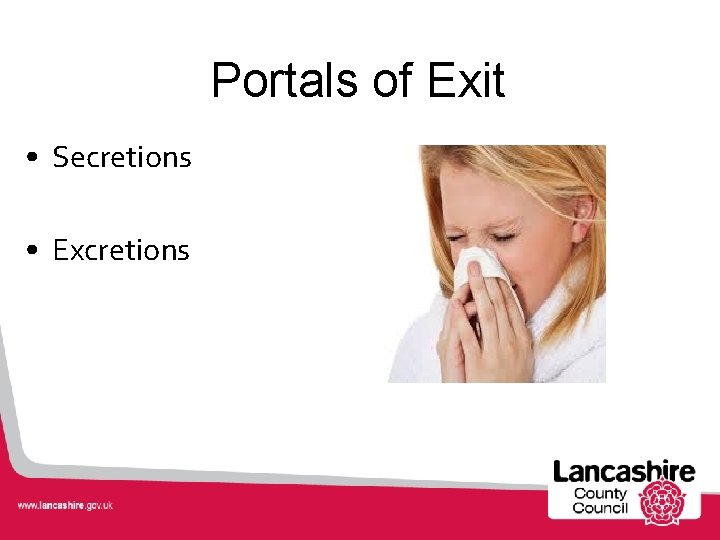
Portals of Exit • Secretions • Excretions
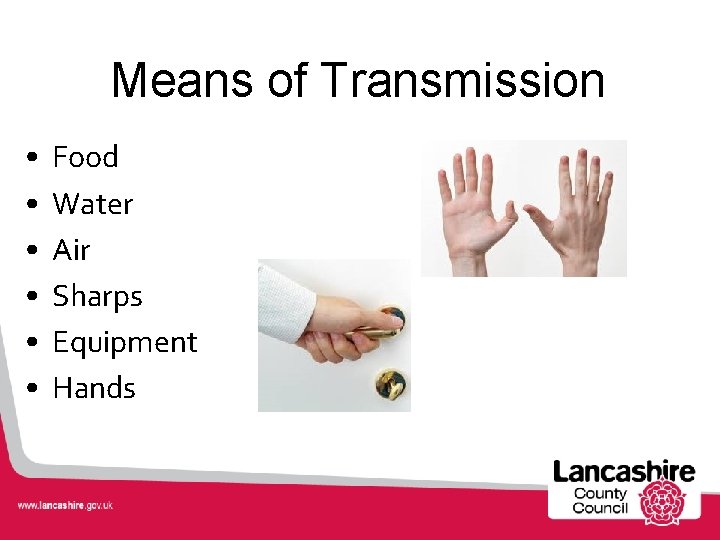
Means of Transmission • • • Food Water Air Sharps Equipment Hands
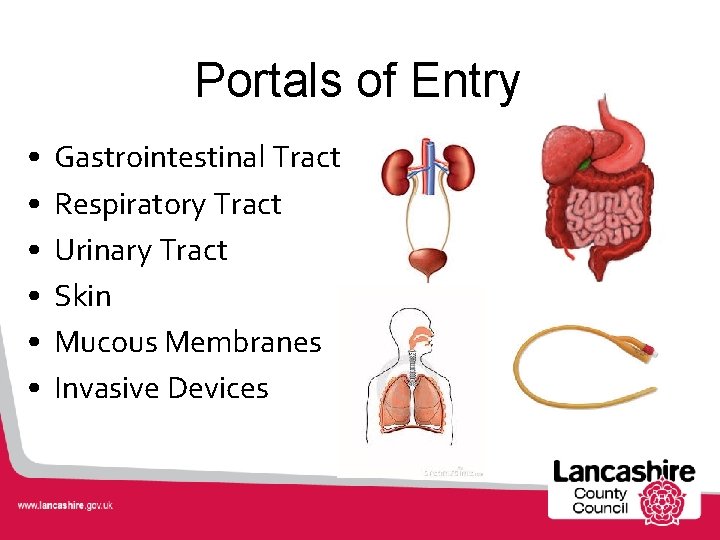
Portals of Entry • • • Gastrointestinal Tract Respiratory Tract Urinary Tract Skin Mucous Membranes Invasive Devices
Hand Hygiene

Glow Box
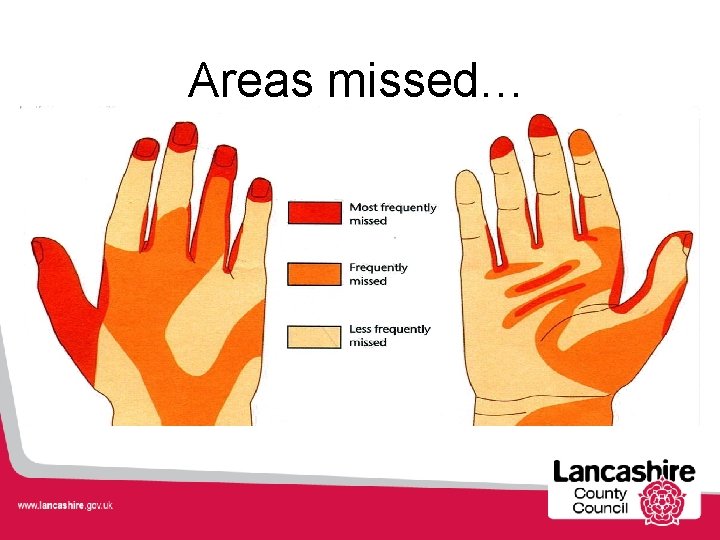
Areas missed…
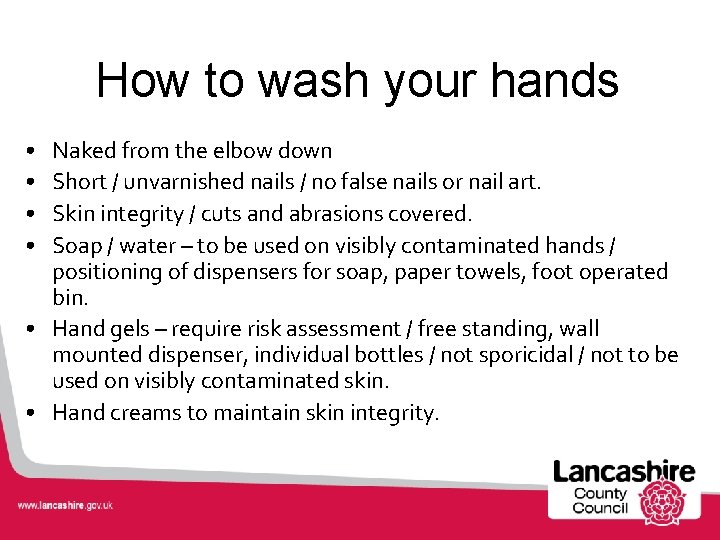
How to wash your hands • • Naked from the elbow down Short / unvarnished nails / no false nails or nail art. Skin integrity / cuts and abrasions covered. Soap / water – to be used on visibly contaminated hands / positioning of dispensers for soap, paper towels, foot operated bin. • Hand gels – require risk assessment / free standing, wall mounted dispenser, individual bottles / not sporicidal / not to be used on visibly contaminated skin. • Hand creams to maintain skin integrity.
Jewellery • • • Total bacteria counts higher when rings are worn Avoid rings with ridges / stones Rings interfere with thorough handwashing Difficulty donning gloves Gloves may tear Nails harbour largest number of micro-organisms – keep them short • Artificial nails may increase microbial load and discourage vigorous hand-washing
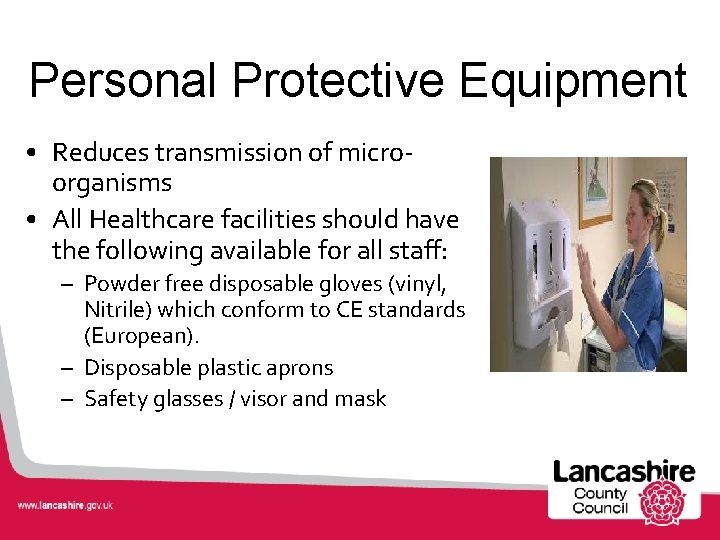
Personal Protective Equipment • Reduces transmission of microorganisms • All Healthcare facilities should have the following available for all staff: – Powder free disposable gloves (vinyl, Nitrile) which conform to CE standards (European). – Disposable plastic aprons – Safety glasses / visor and mask
PPE continued… • Necessary when carrying out invasive procedures or contact with sterile sites and activities that carry a risk of exposure to blood, body fluids, secretions or excretions and sharp or contaminated instruments. • They are all single use items. • Must be stored appropriately.
Use of Gloves • • Increase in use over recent years Gloves are not a substitute for handwashing Hand contamination is possible during glove removal Hand washing after glove removal is essential and also before sterile glove use • Hypersensitivity to latex is increasing and powder-free gloves should always be used • Gloves must be changed: – between clean and dirty tasks – between patients
Putting On PPE • • • Don’t=Decontaminate Ask=Apron My=Mask Great=Goggles Grandma=Gloves
Removing PPE • • • Go=Gloves And=Apron Get=Goggles My=Mask Dog=Decontaminate
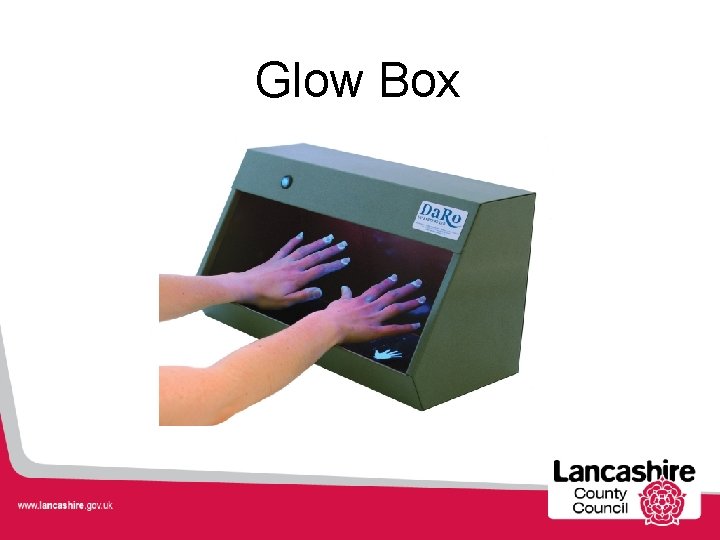
Glow Box
Cleaning and decontamination • Cleaning • Disinfection • Sterilisation

- Slides: 27