
INFECTION PREVENTION COLLABORATION IS THE KEY TO SUCCESS
INFECTION PREVENTION: COLLABORATION IS THE KEY TO SUCCESS DJ SHANNON, MPH, CIC, ESKENAZI HEALTH JAIME REDKEY, MS, CIC, RILEY HOSPITAL FOR CHILDREN
OBJECTIVES Review data about the diverse Infection Prevention workforce Understand the benefits of having a diverse Infection Prevention workforce Describe the strengths and weaknesses of each educational background Improve patient safety through enhanced collaboration
BEFORE WE DIVE IN…
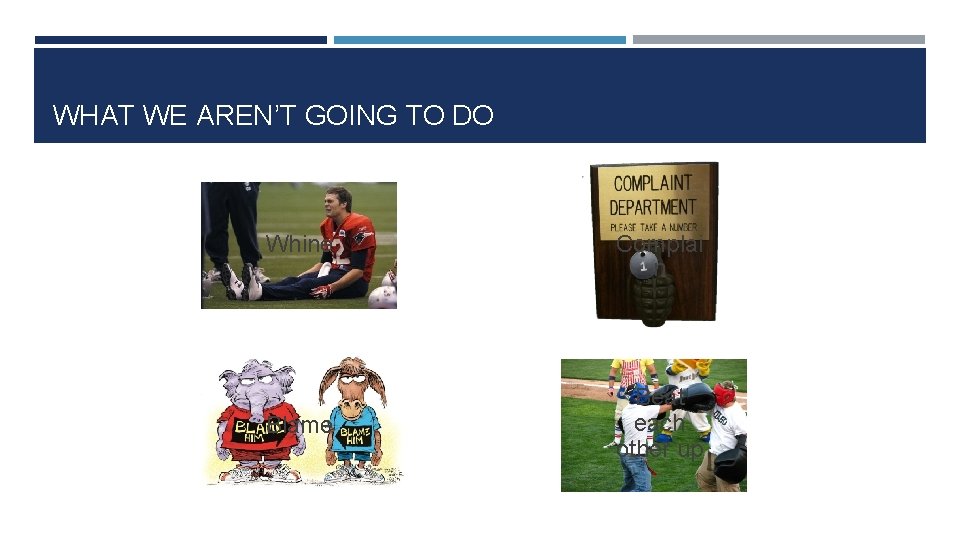
WHAT WE AREN’T GOING TO DO Whine Complai n Blame Beat each other up
JAIME’S STORY Master of Science in Microbiology at Witham Memorial Hospital: 2002 – 2007 Infection Preventionist at St. Vincent: 2007 – 2017 Infection Preventionist at Eskenazi Health: 2017 – 2018 Infection Preventionist at Riley Hospital for Children: 2018 – present
DJ’S STORY Bachelor of Science in Human Biology Master of Public Health in Epidemiology Pharmacy Technician: 2012 – 2016 Infectious disease academic research at Indiana University: 2015 – 2017 Antimicrobial Resistance Epidemiologist at ISDH: 2016 – 2019 Infection Preventionist at Eskenazi Health: 2019 – present
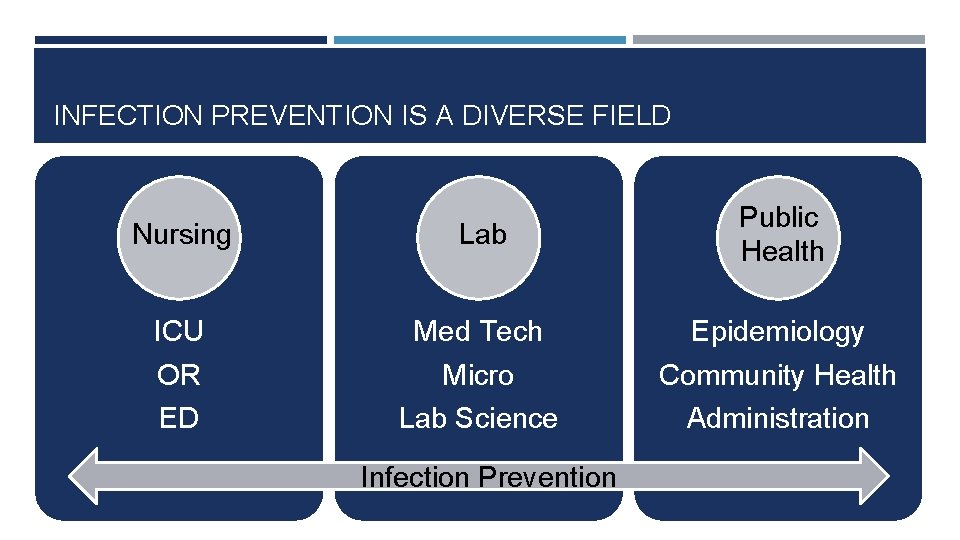
INFECTION PREVENTION IS A DIVERSE FIELD Nursing Lab Public Health ICU Med Tech Epidemiology OR ED Micro Lab Science Community Health Administration Infection Prevention
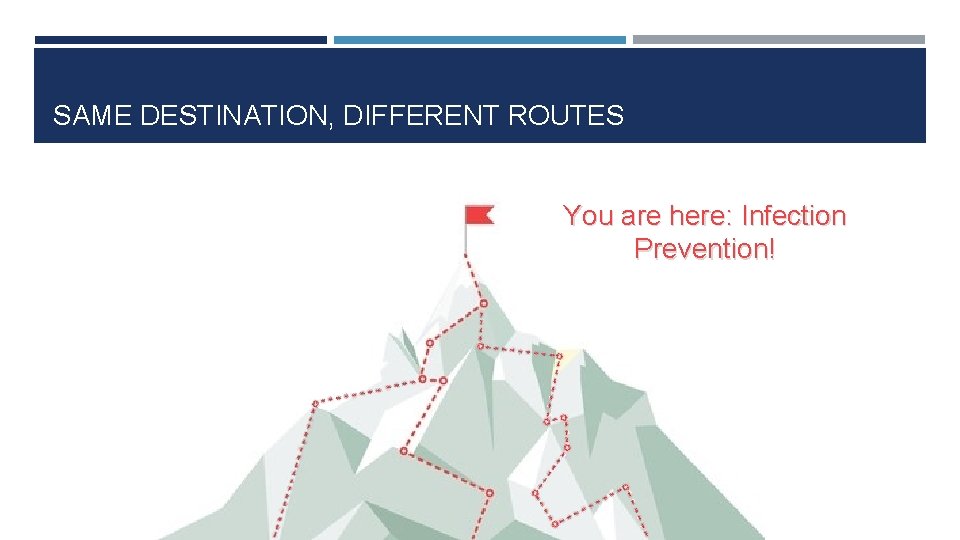
SAME DESTINATION, DIFFERENT ROUTES You are here: Infection Prevention!
WHY ARE WE TALKING ABOUT THIS? APIC National focus Nursing shortage 2015 APIC Mega. Survey Limited awareness of the Infection Prevention field
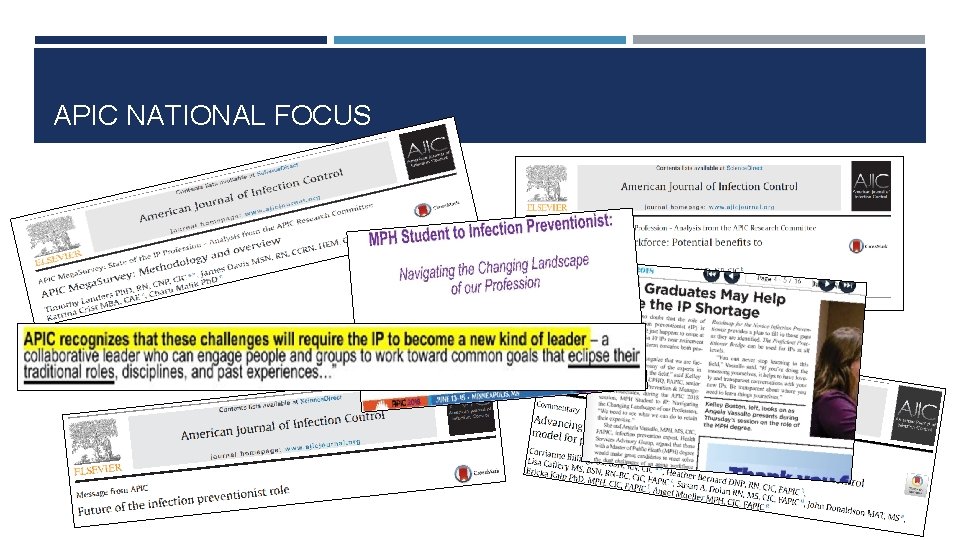
APIC NATIONAL FOCUS
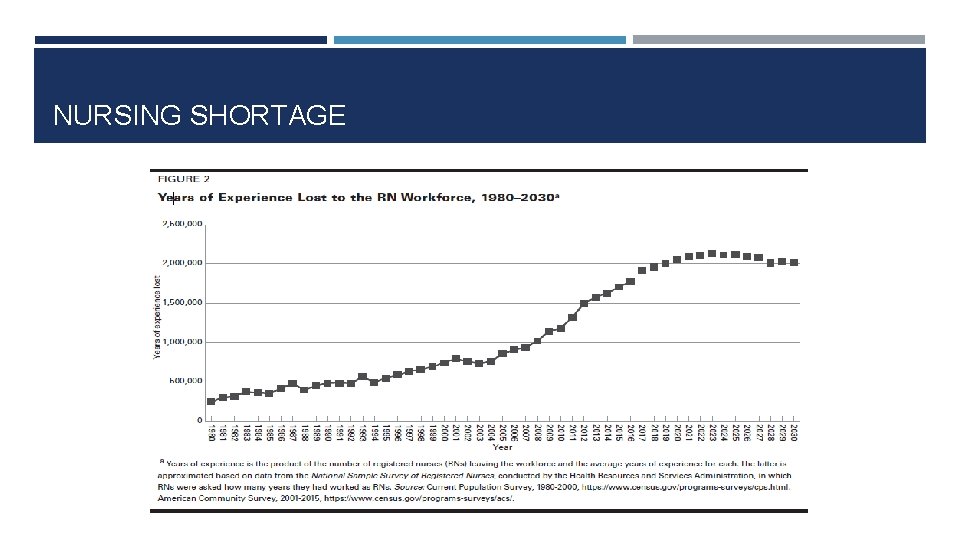
NURSING SHORTAGE National Council of State Boards of Nursing and the Forum of State Nursing Workforce Centers: (2018) 50. 9% of nurses are 50 or older Journal of Nursing Regulation, Peter Buerhaus et al. (2017): Since 2012, around 60, 000 nurses have retired annually By the end of the decade, ≥ 70, 000 nurses will retire annually An estimated one million nurses will retire from 2017 -2030
NURSING SHORTAGE
NURSING SHORTAGE Bureau of Labor Statistics: Projection of need for an additional 203, 700 new nurses each year through 2026 American Association of Colleges of Nurses (AACN) 3. 7% enrollment increase in 2018; not enough to cover projected demand Qualified applicants are turned away due to the lack of faculty, clinical sites, space, preceptors, and budget

APIC COMPETENCY MODEL
FOUR DOMAINS Leadership and Program Management Infection Prevention and Control Collaboration Use and interpretation of diagnostic tests Followership Antimicrobial stewardship Influence Program management Critical thinking skills Communication Education Research
FOUR DOMAINS Technology EMR and Electronic Data Warehouse Performance Improvement and Implementation Science Identification of need for PI Assembly of PI team Tools and methods Implementation Measuring success
INFECTION PREVENTION CORE COMPETENCIES Identification of infectious disease processes Surveillance and epidemiologic investigations Preventing/controlling the transmission of infectious agents Employee/occupational health Management and communication Education and research
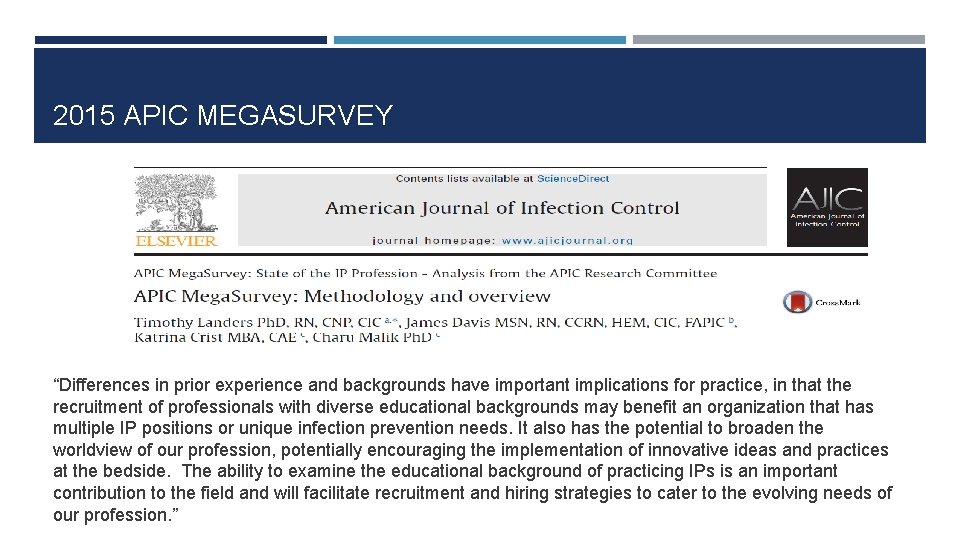
2015 APIC MEGASURVEY “Differences in prior experience and backgrounds have important implications for practice, in that the recruitment of professionals with diverse educational backgrounds may benefit an organization that has multiple IP positions or unique infection prevention needs. It also has the potential to broaden the worldview of our profession, potentially encouraging the implementation of innovative ideas and practices at the bedside. The ability to examine the educational background of practicing IPs is an important contribution to the field and will facilitate recruitment and hiring strategies to cater to the evolving needs of our profession. ”
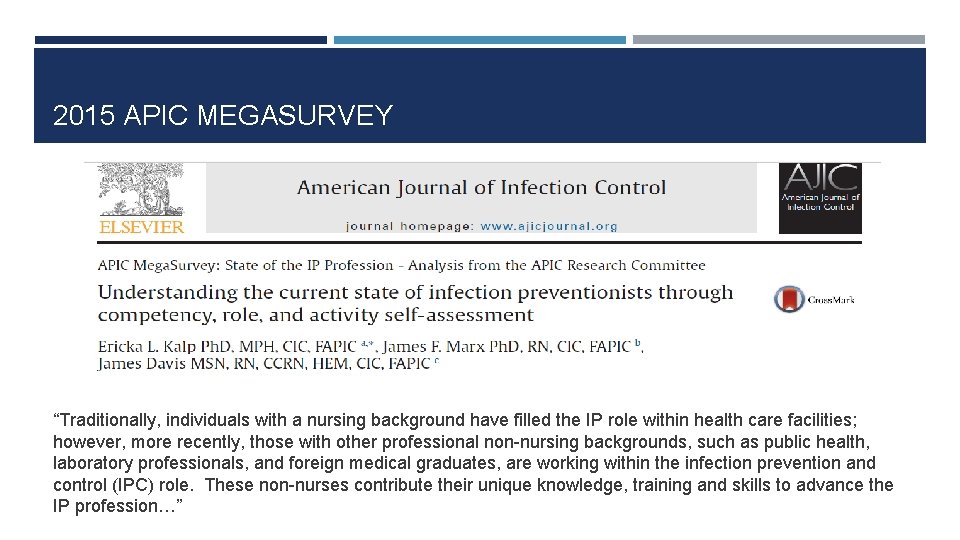
2015 APIC MEGASURVEY “Traditionally, individuals with a nursing background have filled the IP role within health care facilities; however, more recently, those with other professional non-nursing backgrounds, such as public health, laboratory professionals, and foreign medical graduates, are working within the infection prevention and control (IPC) role. These non-nurses contribute their unique knowledge, training and skills to advance the IP profession…”
2015 APIC MEGASURVEY Respondents 31% of all members participated 82% of respondents with primary discipline as nursing Nurses = 3342 Laboratory Workers = 402 Public Health Workers = 189 Foreign Medical Graduates = 25 Other = 107
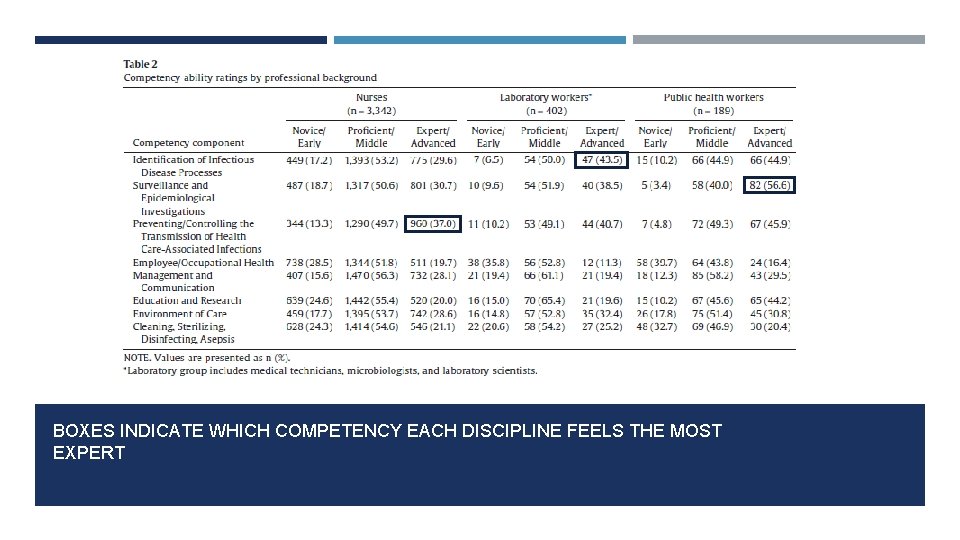
BOXES INDICATE WHICH COMPETENCY EACH DISCIPLINE FEELS THE MOST EXPERT
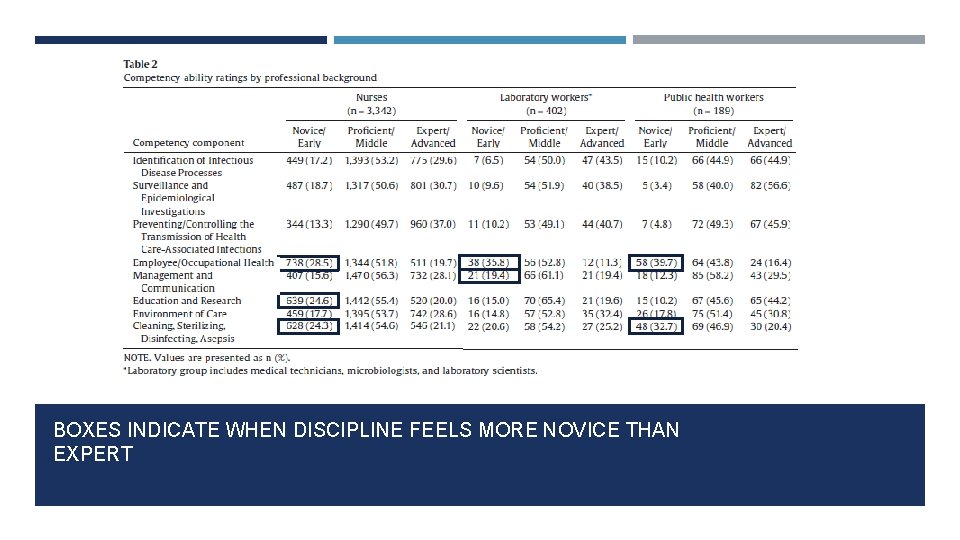
BOXES INDICATE WHEN DISCIPLINE FEELS MORE NOVICE THAN EXPERT
2015 APIC MEGASURVEY
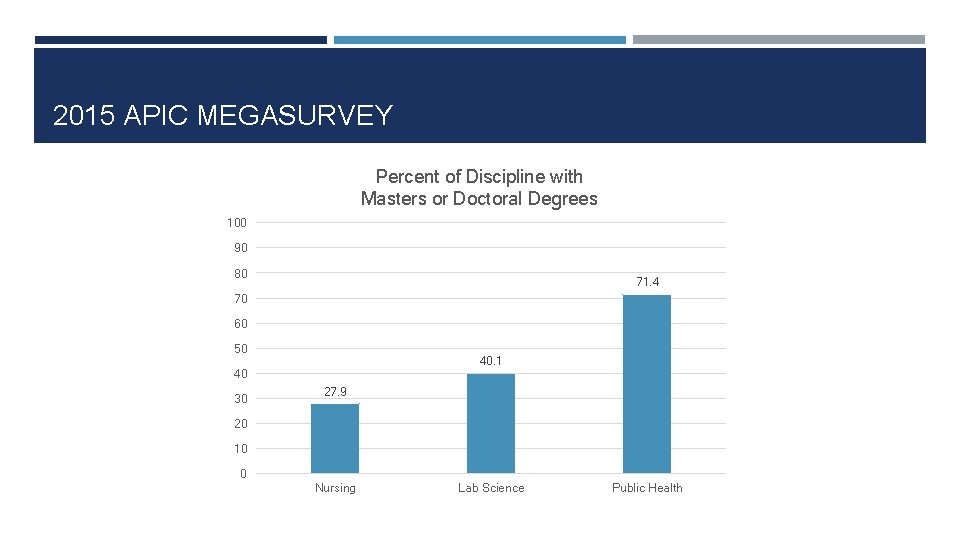
2015 APIC MEGASURVEY Percent of Discipline with Masters or Doctoral Degrees 100 90 80 71. 4 70 60 50 40. 1 40 30 27. 9 20 10 0 Nursing Lab Science Public Health
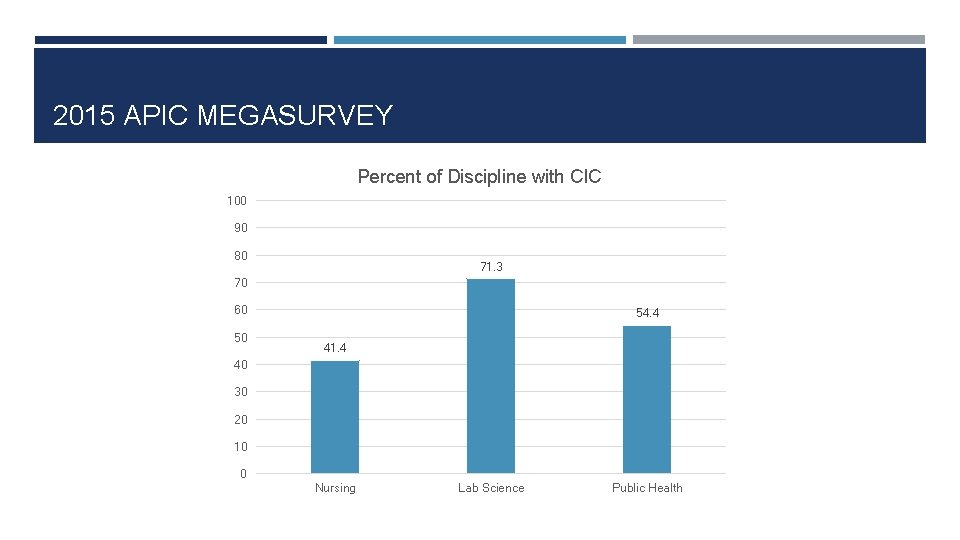
2015 APIC MEGASURVEY Percent of Discipline with CIC 100 90 80 71. 3 70 60 50 54. 4 41. 4 40 30 20 10 0 Nursing Lab Science Public Health
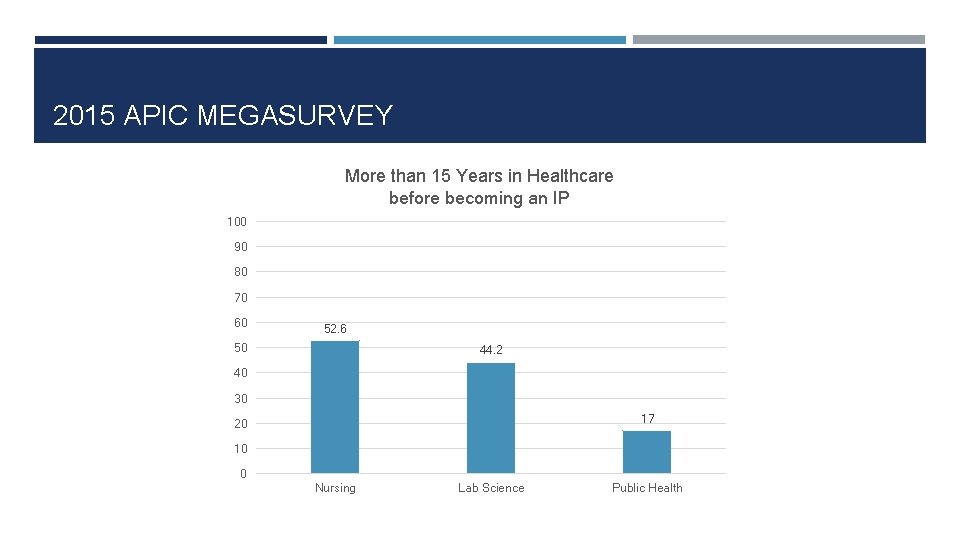
2015 APIC MEGASURVEY More than 15 Years in Healthcare before becoming an IP 100 90 80 70 60 52. 6 50 44. 2 40 30 17 20 10 0 Nursing Lab Science Public Health
LOCAL SURVEY…
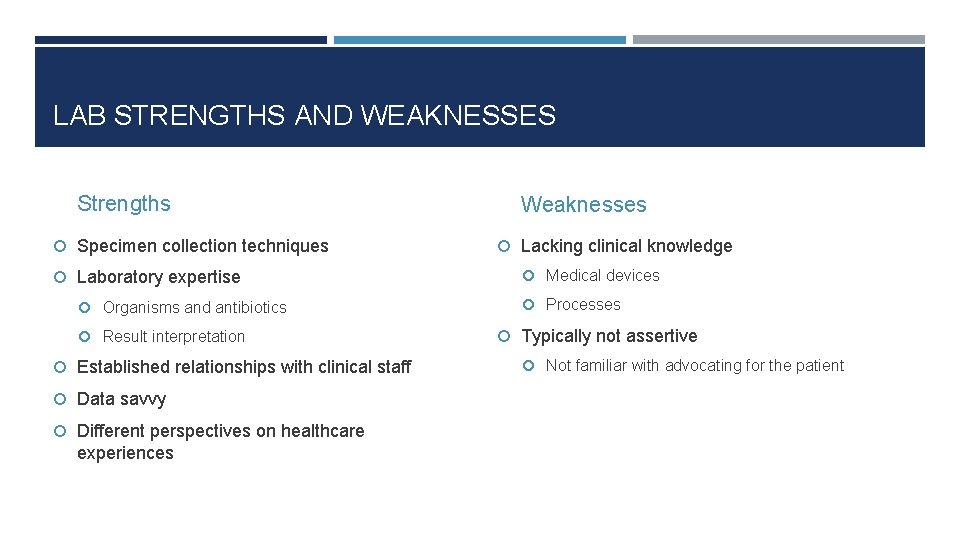
LAB STRENGTHS AND WEAKNESSES Strengths Specimen collection techniques Laboratory expertise Organisms and antibiotics Result interpretation Established relationships with clinical staff Data savvy Different perspectives on healthcare experiences Weaknesses Lacking clinical knowledge Medical devices Processes Typically not assertive Not familiar with advocating for the patient
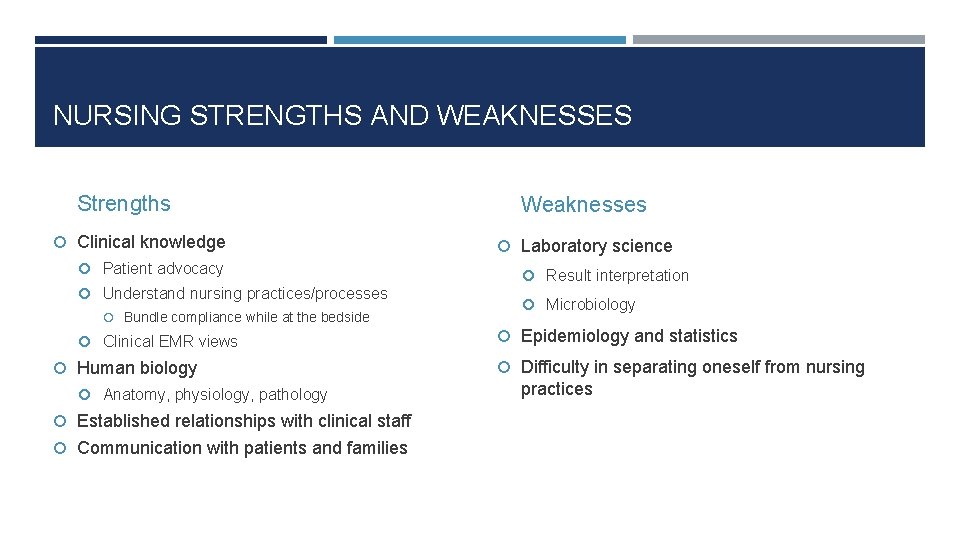
NURSING STRENGTHS AND WEAKNESSES Strengths Clinical knowledge Patient advocacy Understand nursing practices/processes Bundle compliance while at the bedside Clinical EMR views Human biology Anatomy, physiology, pathology Established relationships with clinical staff Communication with patients and families Weaknesses Laboratory science Result interpretation Microbiology Epidemiology and statistics Difficulty in separating oneself from nursing practices
PUBLIC HEALTH STRENGTHS AND WEAKNESSES Strengths Weaknesses Epidemiology and Data Little to no healthcare/clinical experience Behavioral science Lacking experience communicating with clinical Interdisciplinary communication Research experience Big picture on population health and prevention measures Different perspectives on healthcare experiences staff Interpreting laboratory results
WHAT WE CAN DO TO HELP THE GROWING FIELD Other disciplines in healthcare used to/comfortable with nurses as IPs Help each other learn Be patient Explain unfamiliar concepts Clinical (e. g. , terminology, processes) Laboratory (e. g. , lab interpretation) Epidemiology (e. g. , data) Be an advocate for one another Introduce us to your friends and colleagues Highlight each others’ strengths
WHAT WE SHOULDN’T DO TO HINDER THE GROWING FIELD Don’t pretend to know everything Be comfortable admitting you don’t know the answer Don’t be afraid to ask for help Don’t presume one’s knowledge based on their educational background
CONCLUSION We can utilize our diverse backgrounds to enhance patient safety We know we’re going to be facing an IP shortage (along with the nursing shortage) How do we leverage all educational backgrounds to bridge the gap? Attend career fairs Guest lectures in college Internship process APIC-IN workgroup
https: //www. youtube. com/watch? v=5 r. Pk 9 Xh. A 700 CONCLUSION
THANK YOU! DJ SHANNON, MPH, CIC, ESKENAZI HEALTH JAIME REDKEY, MS, CIC, RILEY HOSPITAL FOR CHILDREN
- Slides: 35