
Infection Exemplars MRSA VRE Cellulitis Taylor ch 27





- Slides: 62
Infection Exemplars: MRSA, VRE, Cellulitis Taylor, ch 27, 37
Exemplars • MRSA, VRE, Cellulitis, UTI, C-diff, and Herpes zoster (shingles) are representative of the infection concept for this semester.
MRSA—Methicillin-resistant Staphylococcus aureus • One of the most troublesome resistant bacteria in the country. • MRSA is resistant to all medicines in the betalactamase family that include all penicillins, cephalosporins (Ancef, Keflex), and carbapenems (Doribax, Invanz), as well as other antibiotics such as erythromicin. • Hospital-associated MRSA is more resistant than community-associated.
Pathology of Resistance • Resistance occurs when pathogens change in ways that decrease the ability of a drug or family of drugs to treat disease. • Bacteria are highly adaptable and have evolved to the point that their genetic and chemical makeup has changed.
Pathology of Resistance • The antibiotics have lost their effectiveness because the DNA and cell walls of the bacteria have changed and the antibiotic can no longer penetrate the cell wall. • Also, some bacteria now produce enzymes that destroy or inactivate antibiotics.
Contributory Practices to Resistance • • Giving antibiotics for viral infections Prescribing unnecessary antibiotics Inadequate drug regimens to tx cases Using broad-spectrum antibiotics when specificity would be better • Pts who don’t finish their course of tx • Pt lack of $ or other psychosocial issues
MRSA’s Importance • Pathogenicity—very virulent; frequently cause bloodstream, wound, ventilator, and catheter infections in hospitalized pts and skin and respiratory infections in community • Limited treatment options • Transmissible—colonized health care workers; close contact in community
Risk Factors • Repeated contact with health care system • Severity of illness • Previous exposure to antimicrobials • Underlying conditions • Invasive procedures • Previous colonization • Advanced age
Modes of Transmission • Main mode is via contaminated hands from: – colonized or infected patients – colonized or infected staff – contaminated articles or surfaces
Clinical Manifestations—HA-MRSA • Colonized patients and workers have no symptoms. • Colonies usually located in nose, respiratory or GI tract, or skin • S&S from persons infected with MRSA are no different from S&S from other infections. • Definitive dx is from a culture.
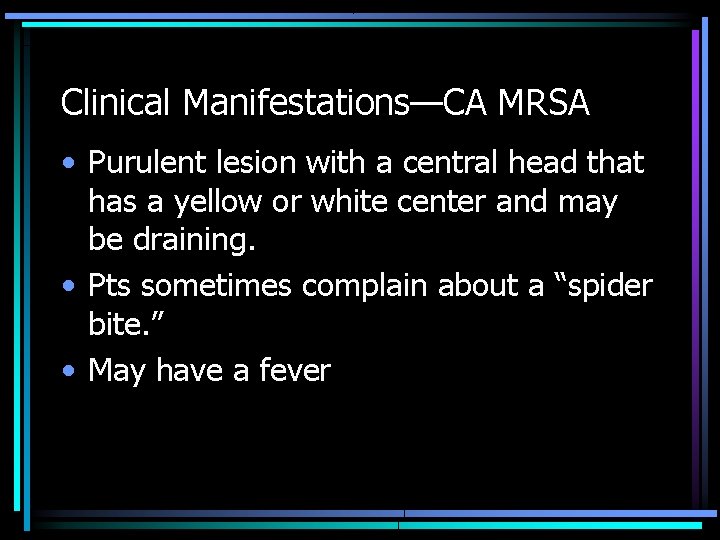
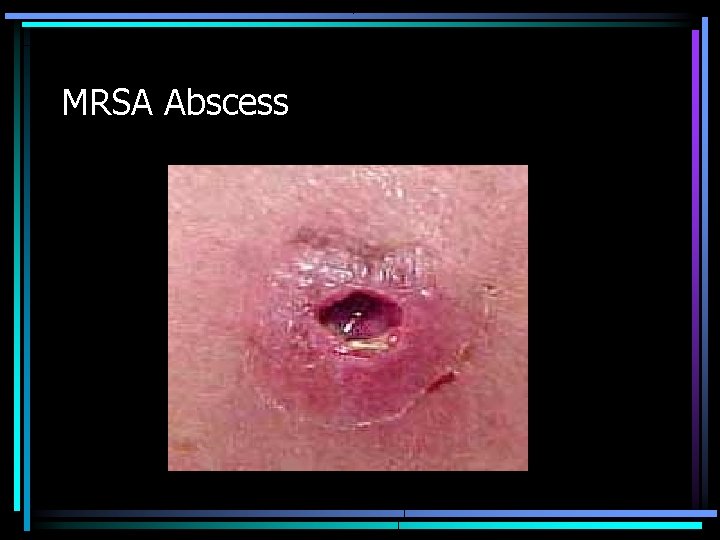
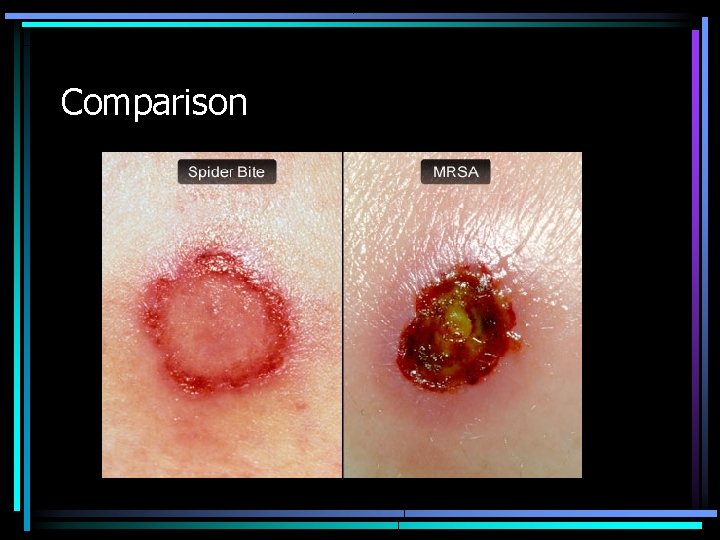
Clinical Manifestations—CA MRSA • Purulent lesion with a central head that has a yellow or white center and may be draining. • Pts sometimes complain about a “spider bite. ” • May have a fever
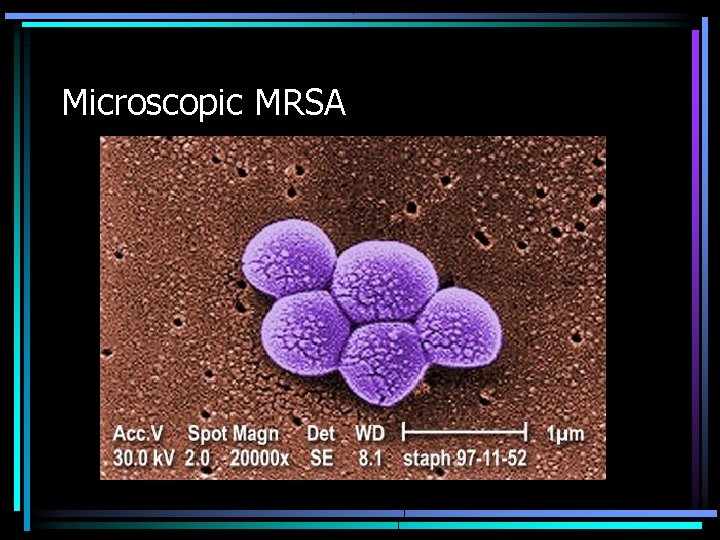
Microscopic MRSA
MRSA Abscess
Comparison
Recommendations • Standard Precautions, specifically handwashing guidelines • Transmission Based Precautions, specifically Contact Precautions – Donning gown and gloves upon entry to the room for all interactions involving contact with patient or areas in the patient’s environment. Gown and gloves should be discarded before exiting.
Additional Precautions • Private room is preferred. • Semi-private with another similar patient who does not have another infection or with patient who has no risk factors. • Allow socialization as long as wounds are covered, body fluids are contained, and handwashing is observed.
Prevention and the Nurse • Wash hands before and after patient contact. • Wear PPE as directed by the infection control team and dispose of contaminated articles in a manner that prevents spread. • Make sure visitors are protected. • Be aware of own health.
Treatment • Vancomycin and two newer agents, linezolid and daptomycin, are usually used to treat HA-MRSA. Isolation precautions are implemented. • CA-MRSA is usually treated by draining and culturing the skin lesion and giving clindamycin or doxycycline.
Nursing Care and Education • Administer antibiotic tx. • Follow infection control guidelines and teach visitors the guidelines. • Teach those in the community: – – Wash or use hand sanitizer Keep cuts and lesions covered Don’t touch other peoples cuts or lesions Do not share personal items like towels or razors
Vancomycin-Resistant Enterococcus (VRE) • Enterococcus is normally found in the GI and genital tracts • If it gets outside of those areas, it can cause an infection • If Enterococcus is resistant to vancomycin, it has a high morbidity and mortality rate.
Transmission • • Feces Urine Blood Can be from infected or colonized person
Risk Factors • • Immunocompromise Catheters Abdominal or chest surgery Prolonged hospitalization or antibiotics
Treatment • Handwashing • Contact precautions • Linzeloid or quinupristin-dalfopristin
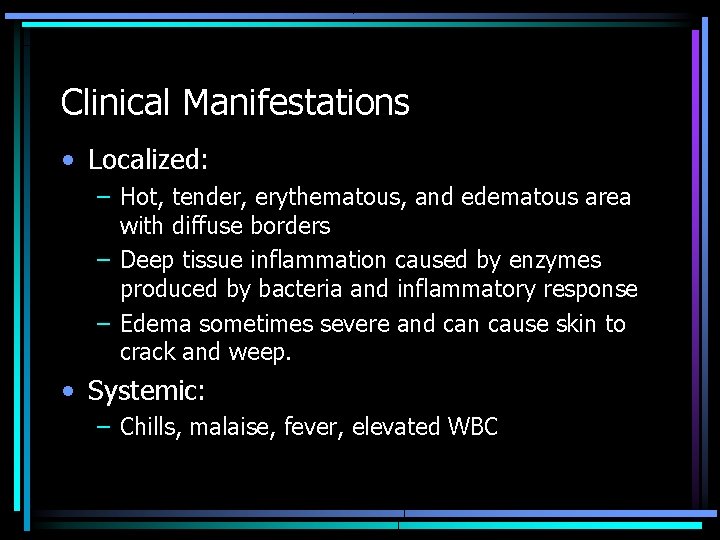
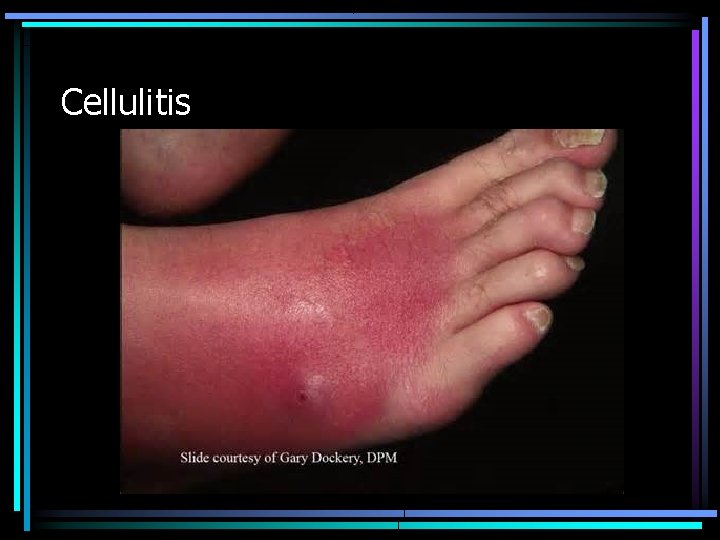
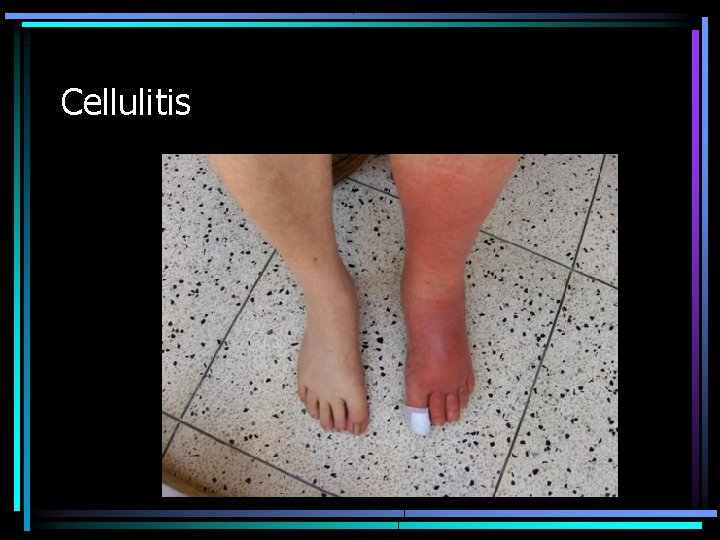
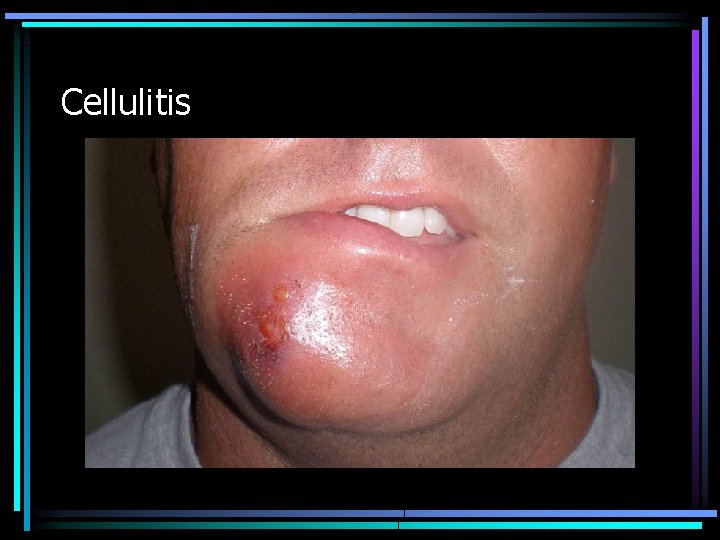
Cellulitis • Inflammation and infection of subcutaneous tissues—bacterial gain access thru a break in skin • Staphylococcus aureus and streptococci are usual causative agents • Most commonly found in feet or legs • Complicated by poor perfusion
Etiology (Cause) • Primary infection from trauma (sharp objects, burns) • Secondary infection from scratching – Insect bites – Impetigo Complication of leg ulcers in people with diabetes or peripheral vascular disease
Risk Factors • • • Diabetes Immunosuppression Peripheral Vascular Disease (PVD) Lymphedema Malnutrition
Clinical Manifestations • Localized: – Hot, tender, erythematous, and edematous area with diffuse borders – Deep tissue inflammation caused by enzymes produced by bacteria and inflammatory response – Edema sometimes severe and can cause skin to crack and weep. • Systemic: – Chills, malaise, fever, elevated WBC
Cellulitis
Cellulitis
Cellulitis
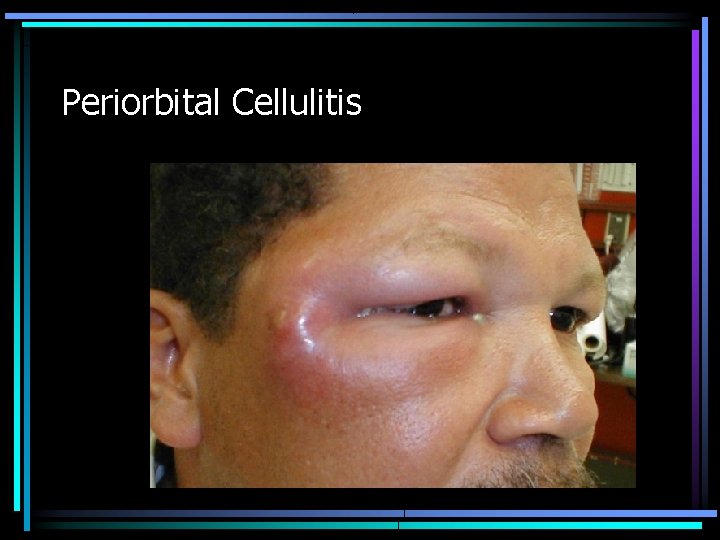
Periorbital Cellulitis
Treatment • • Moist heat Immobilization Elevation Systemic antibiotic therapy—usually with a penicillin derivative or cousin • Hospitalization may be necessary • Surgery may be necessary for debridement and to R/O fasciitis
Complications • Progression of inflammation and infection can lead to: – Necrotizing fasciitis (“flesh-eating”) – Gangrene (death of tissue)—skin turns black; purulent drainage present; foul odor – Amputation – Sepsis (blood infection)
Nursing Care • • • Assess area and record—outline area Check for blood culture order Administer meds for infection and pain Wound care as ordered Consider effects of immobility and practice prevention techniques • Assist with mobility when pt can be OOB • Address fears and concerns • Evaluate effectiveness of care
Infection Exemplars: UTI, C-diff, Shingles Taylor, ch 27, 37
UTI • A. K. A. urinary tract infection • Inflammation occurs concurrently with infection altho can occur without infection • Women are at greatest risk • 80% caused by Escherichia coli from cross-contamination from the rectum.
Classifications • Upper—kidney (pyelonephritis) • Lower—bladder (cystitis) and urethra (urethritis) • Initial—first or isolated • Recurrent—after first was resolved, new one occurs • Unresolved and persistent—continue even after antibiotic tx • Sepsis d/t UTI (previously called urosepsis)
Risk Factors • • Female Pregnancy Structural abnormalities Foreign bodies (stones, catheters, dx instruments) Obstruction (tumors, strictures)—causes urinary stasis Impaired immunity (age, disease) Multiple sex partners Poor personal hygiene
Contributory Medical Practices • • • Poor handwashing practices Use of urinary catheters Poor technique in inserting catheters Poor catheter care Poor perineal care Use of diagnostic instruments
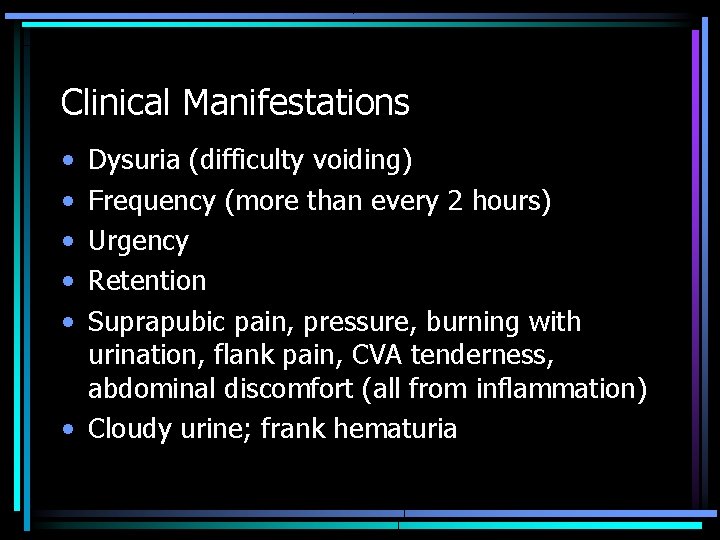
Clinical Manifestations • • • Dysuria (difficulty voiding) Frequency (more than every 2 hours) Urgency Retention Suprapubic pain, pressure, burning with urination, flank pain, CVA tenderness, abdominal discomfort (all from inflammation) • Cloudy urine; frank hematuria
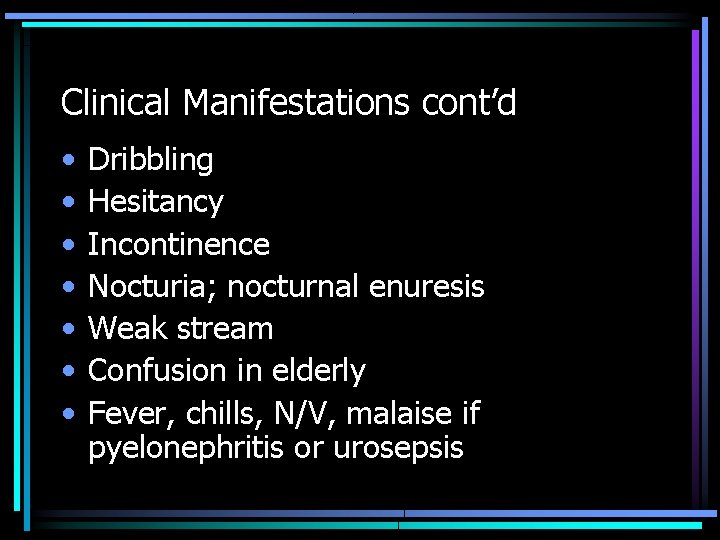
Clinical Manifestations cont’d • • Dribbling Hesitancy Incontinence Nocturia; nocturnal enuresis Weak stream Confusion in elderly Fever, chills, N/V, malaise if pyelonephritis or urosepsis
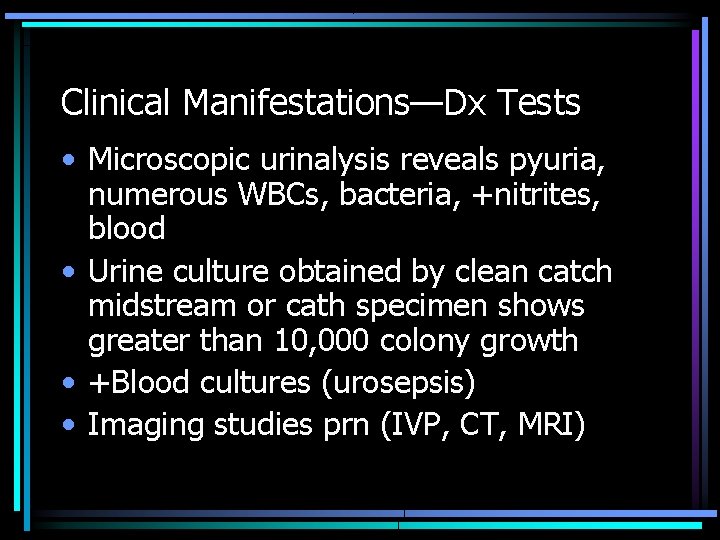
Clinical Manifestations—Dx Tests • Microscopic urinalysis reveals pyuria, numerous WBCs, bacteria, +nitrites, blood • Urine culture obtained by clean catch midstream or cath specimen shows greater than 10, 000 colony growth • +Blood cultures (urosepsis) • Imaging studies prn (IVP, CT, MRI)
Treatment • Antibiotics—oral, IM, or IV. Type empirically selected or by C & S testing. Usually need to start ASAP, but may need to change based on labs. • Urinary analgesic • Prophylactic antibiotic tx
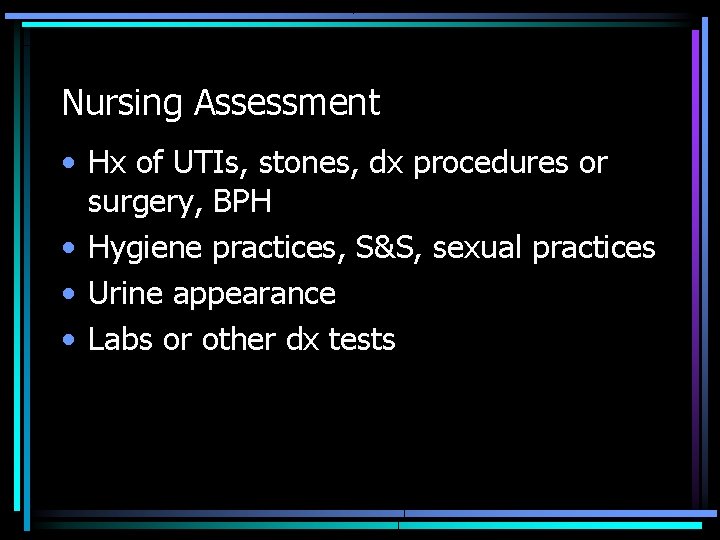
Nursing Assessment • Hx of UTIs, stones, dx procedures or surgery, BPH • Hygiene practices, S&S, sexual practices • Urine appearance • Labs or other dx tests
Goals/Evals • Pt will have relief from sx • Pt will have no complications or spread of UTI • Pt will have no recurrence
Interventions • Teach health promotion practices to prevent UTIs: – Empty bladder regularly and before and after intercourse – Good hygiene practices – Fluid intake 15 m. L/lb/day--20% from food – Daily cranberry juice – No douches, harsh soap, Bbaths, sprays – Teach S/S UTI
Interventions cont’d • Prevent hospital-aquired infections (HAIs) by: – Handwashing – Avoid catheterization if possible – Practice aseptic technique with procedures – Good cath care and perineal hygiene
Interventions • For acute care: – Encourage fluids – Avoid caffeine, ETOH, citrus, chocolate, spicy—cause bladder irritation – Heat application – Administer antibiotics (will need 14 -21 days) and analgesics – Teach pt about meds and to continue meds at home until all gone
Clostridium difficile (C-diff) • Normally found in the intestines • Accounts for 75% of all HA diarrhea • Overgrowth causes inflammation and damage to intestinal walls (colitis) • Abdominal cramping, watery stools (up to 15 x/d), blood or pus in stool
Transmission/Risk factors • Via healthcare workers’ hands • Contamination via fecal-oral route • Risk factors: – Antibiotic therapy – Elderly – Long term care residents
Other Risk Factors • • Surgery of the GI tract Diseases of the colon such as IBD or cancer Immunocompromise Chemo drugs Previous C. diff infection Kidney disease Use of drugs called proton-pump inhibitors, which lessen stomach acid
Treatment • Handwashing—soap and water preferred to alcohol-based cleansers • Contact precautions • Metronidazole (Flagyl) is preferred • Probiotics • Fluids
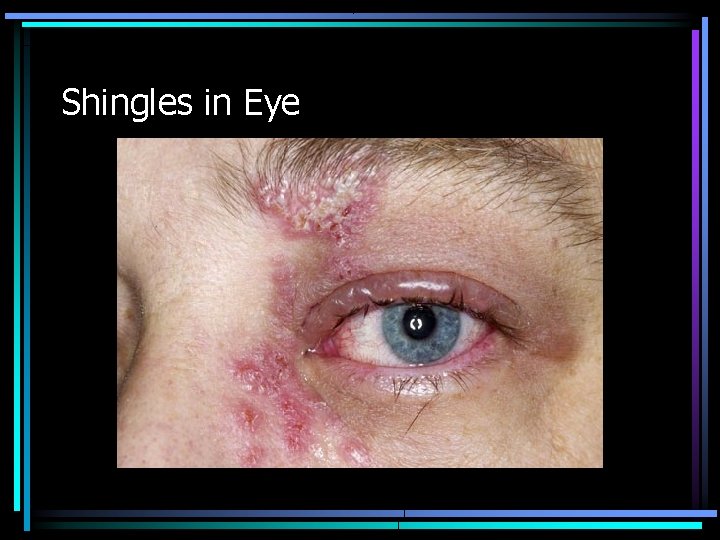
Herpes Zoster (shingles) • a. k. a. Varicella zoster, “chicken pox virus” • Re-emergence of the virus from a previous outbreak • After initial outbreak, virus goes dormant and comes back during times of physical or emotional stress
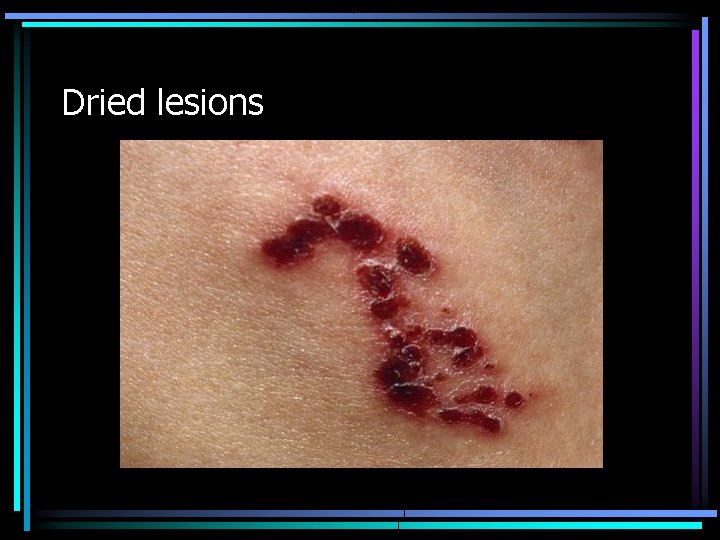
Transmission/Risk • Via contact with fluid from lesions. After lesions dry, no longer contagious • Only contagious if the person has not had c-pox. • Can give someone c-pox who has not had it, but can’t give someone shingles. • Risk factors are hx of c-pox, >50 yo, immunocompromised, pregnancy
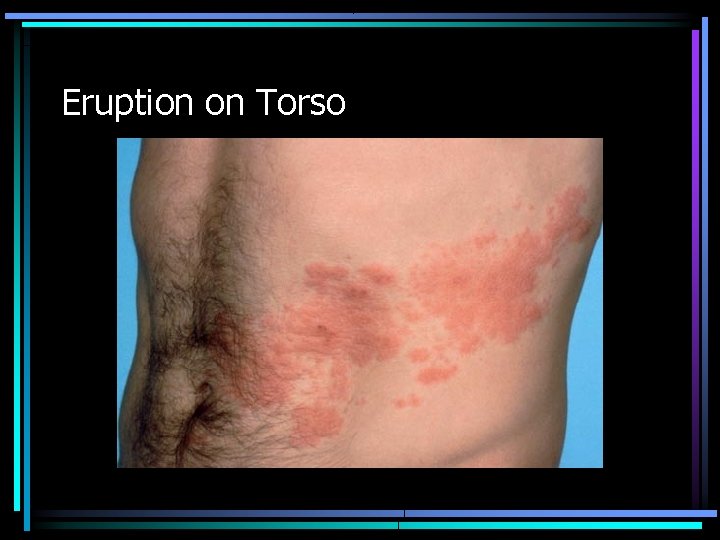
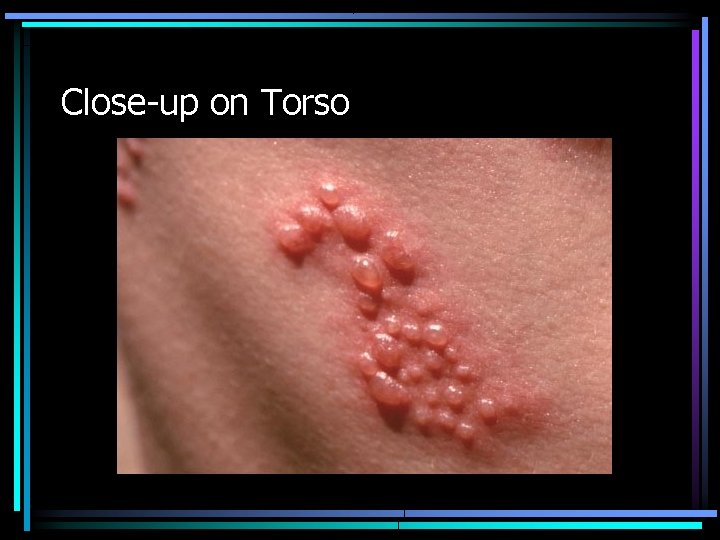
Manifestations • • • Headache Flu-like symptoms Pain under the skin Paresthesia Eruption of a vesicular, band-like rash which is very painful • Postherpetic neuralgia
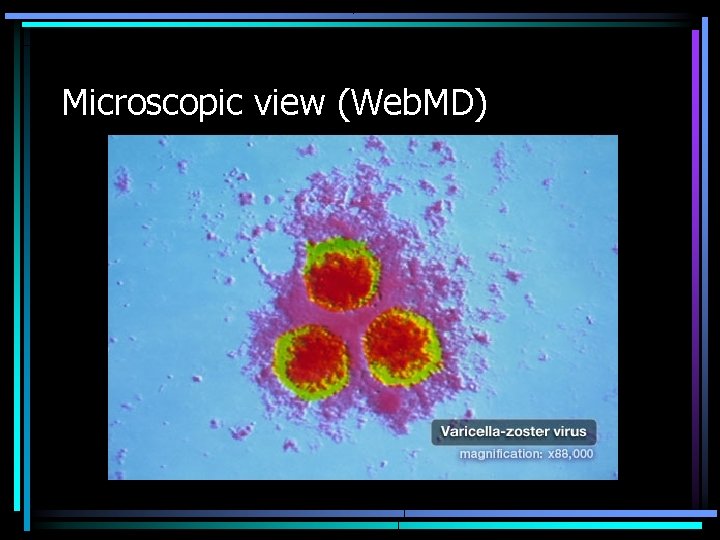
Microscopic view (Web. MD)
Eruption on Torso
Close-up on Torso
Dried lesions
Shingles in Eye
Treatment • • Antivirals (-virs) Pain meds Steroids Cool compresses