
Infection Control Knowledge Project Driving the Development and
- Slides: 1
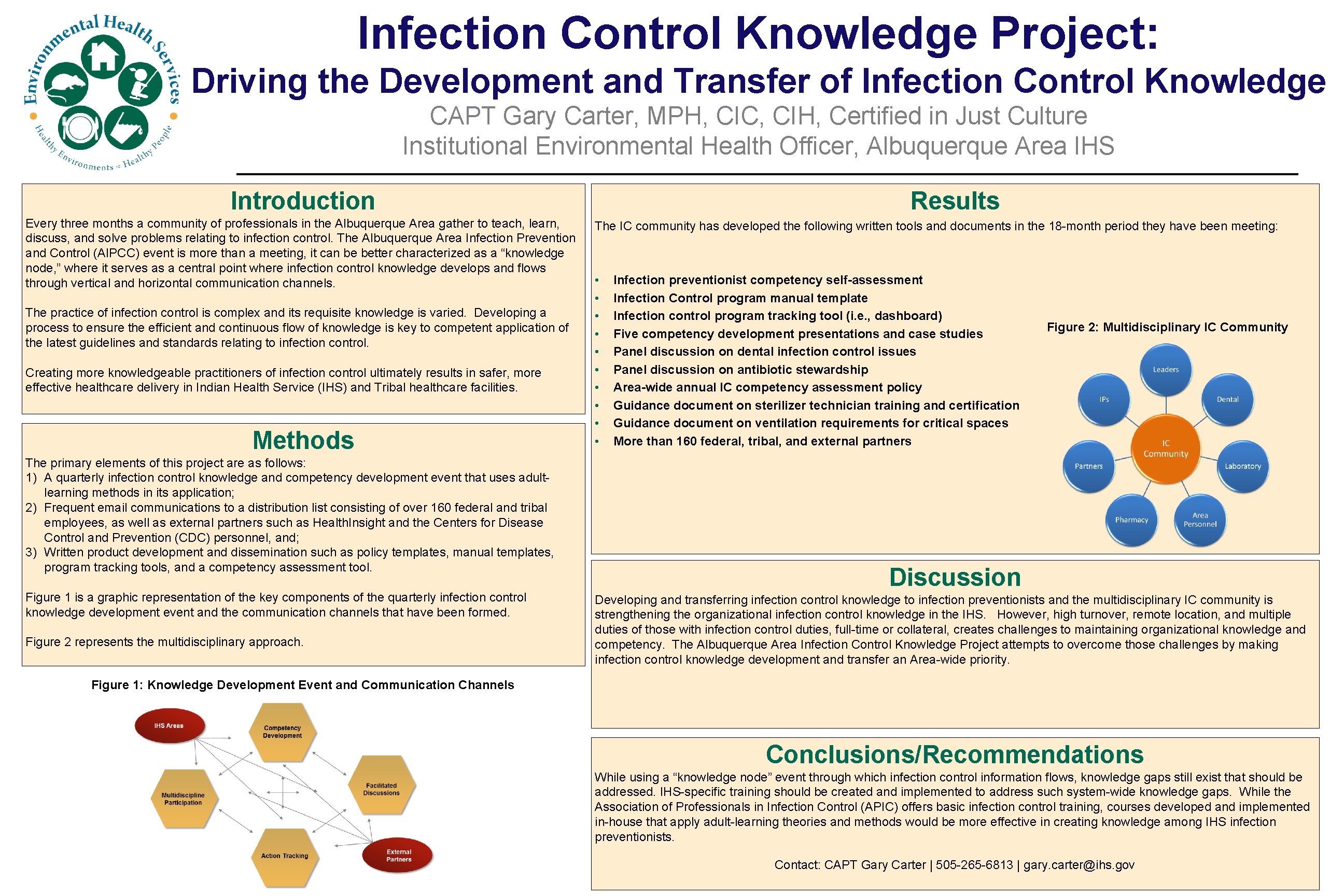
Infection Control Knowledge Project: Driving the Development and Transfer of Infection Control Knowledge CAPT Gary Carter, MPH, CIC, CIH, Certified in Just Culture Institutional Environmental Health Officer, Albuquerque Area IHS Introduction Every three months a community of professionals in the Albuquerque Area gather to teach, learn, discuss, and solve problems relating to infection control. The Albuquerque Area Infection Prevention and Control (AIPCC) event is more than a meeting, it can be better characterized as a “knowledge node, ” where it serves as a central point where infection control knowledge develops and flows through vertical and horizontal communication channels. The practice of infection control is complex and its requisite knowledge is varied. Developing a process to ensure the efficient and continuous flow of knowledge is key to competent application of the latest guidelines and standards relating to infection control. Creating more knowledgeable practitioners of infection control ultimately results in safer, more effective healthcare delivery in Indian Health Service (IHS) and Tribal healthcare facilities. Methods The primary elements of this project are as follows: 1) A quarterly infection control knowledge and competency development event that uses adultlearning methods in its application; 2) Frequent email communications to a distribution list consisting of over 160 federal and tribal employees, as well as external partners such as Health. Insight and the Centers for Disease Control and Prevention (CDC) personnel, and; 3) Written product development and dissemination such as policy templates, manual templates, program tracking tools, and a competency assessment tool. Figure 1 is a graphic representation of the key components of the quarterly infection control knowledge development event and the communication channels that have been formed. Figure 2 represents the multidisciplinary approach. Results The IC community has developed the following written tools and documents in the 18 -month period they have been meeting: • • • Infection preventionist competency self-assessment Infection Control program manual template Infection control program tracking tool (i. e. , dashboard) Five competency development presentations and case studies Panel discussion on dental infection control issues Panel discussion on antibiotic stewardship Area-wide annual IC competency assessment policy Guidance document on sterilizer technician training and certification Guidance document on ventilation requirements for critical spaces More than 160 federal, tribal, and external partners Figure 2: Multidisciplinary IC Community Discussion Developing and transferring infection control knowledge to infection preventionists and the multidisciplinary IC community is strengthening the organizational infection control knowledge in the IHS. However, high turnover, remote location, and multiple duties of those with infection control duties, full-time or collateral, creates challenges to maintaining organizational knowledge and competency. The Albuquerque Area Infection Control Knowledge Project attempts to overcome those challenges by making infection control knowledge development and transfer an Area-wide priority. Figure 1: Knowledge Development Event and Communication Channels Conclusions/Recommendations While using a “knowledge node” event through which infection control information flows, knowledge gaps still exist that should be addressed. IHS-specific training should be created and implemented to address such system-wide knowledge gaps. While the Association of Professionals in Infection Control (APIC) offers basic infection control training, courses developed and implemented in-house that apply adult-learning theories and methods would be more effective in creating knowledge among IHS infection preventionists. Contact: CAPT Gary Carter | 505 -265 -6813 | gary. carter@ihs. gov