
Infection Control in the GI Setting Lisa Maslak


- Slides: 26
Infection Control in the GI Setting Lisa Maslak BSN, RN, CIC Director of Infection Control Brooks Memorial Hospital
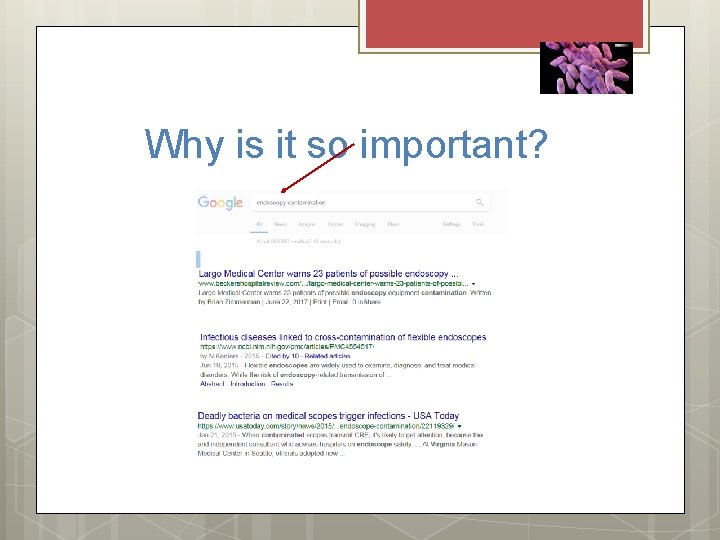
Why is it so important?
Microbial Transmission to Patients Most cases of microbial transmission to patients, via contaminated endoscopes, are a result of nonadherence to reprocessing guidelines Patients can be exposed to multiple organisms, both bacterial and viral. Pseudomonas, Serratia, Proteus, Staph, Clostridium difficile and more.
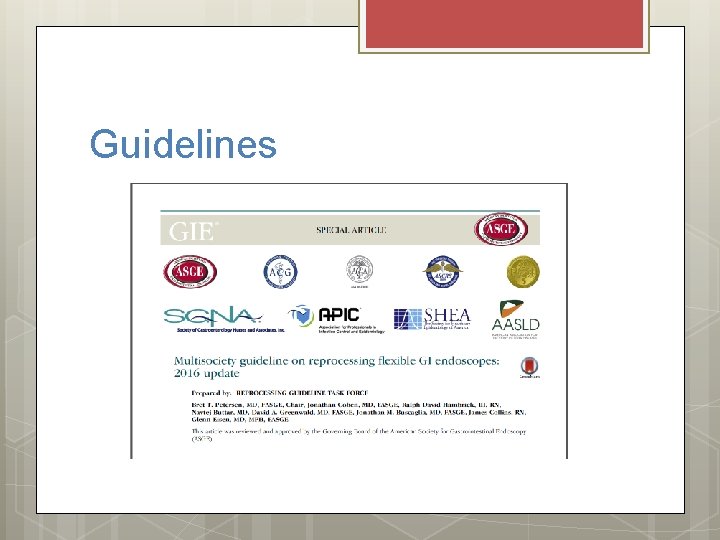
Guidelines
Reprocessing Errors Not removing patient biomaterial immediately after a procedure *dries and hardens making it difficult for disinfectants and sterilizing agents to penetrate and kill microorganisms Did you know? Patient biomaterial can inactivate disinfectants?
Not cleaning all channels… including unused ones *Fluid and debris can enter the channels at the distal tip
Not soaking in appropriate enzymatic detergent when pre-cleaning is not initiated within one hour *debris dries and hardens Why would this happen?
Using worn or damaged channel brushes *ineffective cleaning or damage to the channels. The brush has to contact the channel wall to cause abrasion and remove debris.
Failure to fully submerge the scope in the disinfectant for the required amount of time. *timing is important-use a timer too little- not clean enough too much-can damage scope not submerged-residual debris
Not rinsing with water *residual detergent can interfere with disinfectant solution which can inhibit or cause staining. Can cause chemical irritation to the patient.
Not storing scopes in clean, dry, and wellventilated area *minimize the possibility of recontamination. Remove all valves and caps during storage. Do you use distal tip protectors?
Cleaning Verification The scope is free of damage and debris before being high level disinfected.
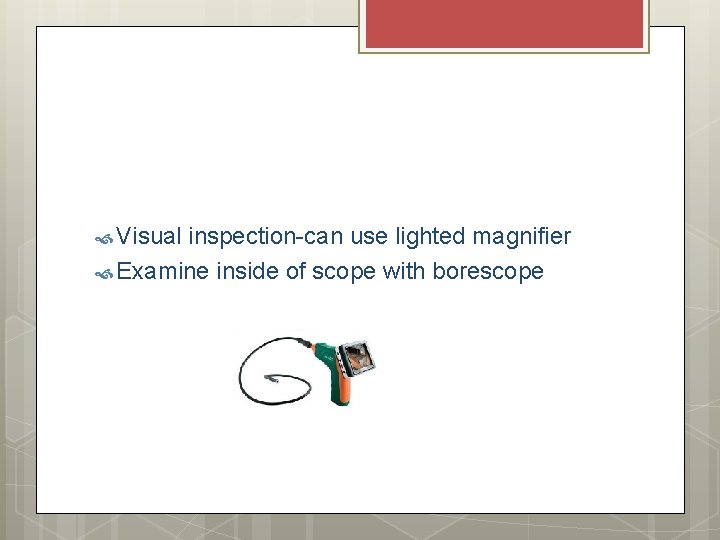
Visual inspection-can use lighted magnifier Examine inside of scope with borescope
Verification Tests Check for residual blood, protein or organic matter Chemistry ATP swab test Can be done by the tech after manual cleaning either periodically or routinely.
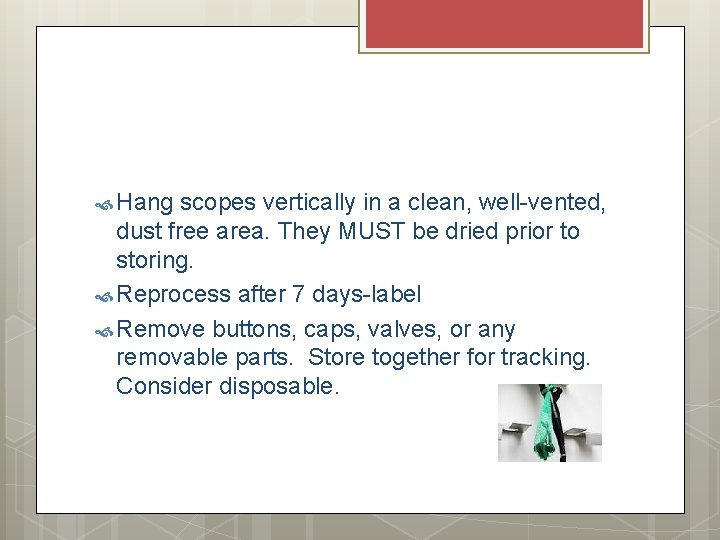
Hang scopes vertically in a clean, well-vented, dust free area. They MUST be dried prior to storing. Reprocess after 7 days-label Remove buttons, caps, valves, or any removable parts. Store together for tracking. Consider disposable.
Option B Disposable scopes-FDA approved -pros and cons Sterile sheaths -pros and cons
Environmental Cleaning Surfaces should be cleaned with an EPA disinfectant Contact time Between cases Terminal
PPE Gown, gloves and mask - when directly involved in the endoscopy, or any procedure that splashing or contamination is possible - Remove prior to leaving procedure area
Device Failures Report any device failure to the manufacturer or FDA Keep logs
Hand Hygiene Soap and water or hand sanitizer No artificial nails Nail polish Remove jewelry
Medication Handling Single patient use vials Multi dose vials Aseptic technique Prep area Syringe use
Staff training Staff competency Staff accountability
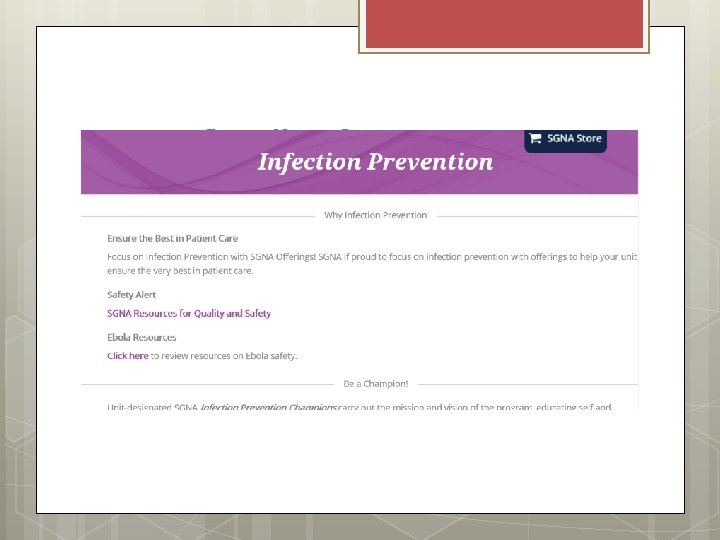
Infection Prevention Champions Check the SGNA website for information on the Infection Prevention Champion program. Resources and support for those interested in this area
Quality Assurance Audits logs, refrig, outdates
Thank you Questions?