
Infection Control DNT 482 Lecture 1 By Dr
Infection Control DNT 482 (Lecture -1) By. Dr. Kifaya
Introduction 1)Definition of infection 2)Microbiology 3)Infection control 4)Importance of infection control 5)Exposure incidence 6)Pathogens 7)Blood Born Pathogens 8)Definition of OSHA 9)Universal Precaution 10)Communicable Disease 11)Contaminated Sharp 12 )Parenteral 13)Standard precaution of infection control
Introduction 1)Dentist, Dental Nurse , Dental Hygienist Dental technicians are risk of exposure to diseases agent through contact with blood or other potentially infected materials. 2)Can minimize the disease transmission by, . Carefully following the Infection control. Safety guide 3)All the practioners should follow, Recommended ADA&OSHA
Definition of Infection When harm full micro-organism enter the body multiple and cause some adverse effect and leads to disease known as infection. Infection cause some signs &symptoms in the body. pain. swelling. redness. functional disorders. rising in temperature. increase pulse rate. lecocytosis
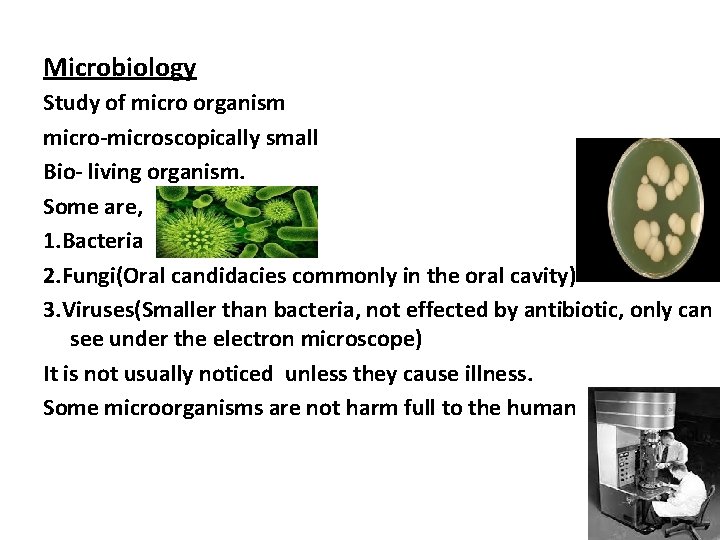
Microbiology Study of micro organism micro-microscopically small Bio- living organism. Some are, 1. Bacteria 2. Fungi(Oral candidacies commonly in the oral cavity) 3. Viruses(Smaller than bacteria, not effected by antibiotic, only can see under the electron microscope) It is not usually noticed unless they cause illness. Some microorganisms are not harm full to the human
Infection Control; It is designed to protect personnel against risk of exposure to infection. Importance of Infection Control 1)Patients and dental health care team is always in contact with infections. 2)Proper procedures can prevent transmission of infection among patient and dental health care team. 3)Reduce the pathogenic micro-organism Exposure incidence Eye, mouth, mucous membrane, non intact skin can contact with blood or other potential infected material. Pathogens Is a micro-organism or other substance that can cause a disease (Bacteria , fungi , virus or parasites)
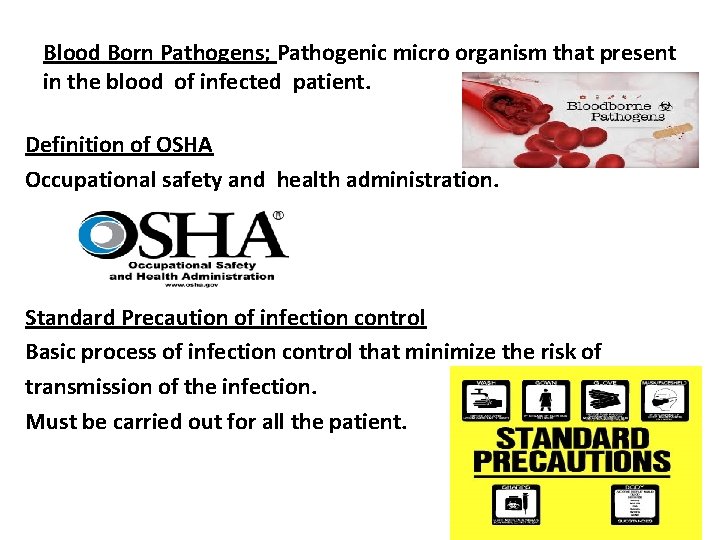
Blood Born Pathogens; Pathogenic micro organism that present in the blood of infected patient. Definition of OSHA Occupational safety and health administration. Standard Precaution of infection control Basic process of infection control that minimize the risk of transmission of the infection. Must be carried out for all the patient.
Communicable disease; Infectious diseases that can be spread from one person to another. Universal Precaution; Universal precaution are infection control guide lines designed to protect workers /patients from exposure to disease spread by blood and certain body fluids. Always treat body fluids broken skin and mucous membrane as if they were infected. Always follow Universal precautions. You cannot tell by looking at a person whether they have a contagious disease

- Slides: 9