
Infection Control and Prevention 1 Objectives Learn about
Infection Control and Prevention 1
Objectives • Learn about the basic principles of infection and disease. • Understand how disease is transmitted. • Review infection control measures. 2

Definition of Terms (1) Host: living animal or plant Agent: something that produces or is capable of producing an effect, i. e. infection Vector: an organism (as an insect) that transmits an agent from one organism or source to another Vehicle: inanimate object (food, water, etc) that can carry an agent from one organism to another 3

Definition of Terms (2) Disease: impairment of normal functioning, manifested by signs and symptoms Infection: the state produced by the establishment of an infective agent in or on a suitable host , host may or may not have signs or symptoms Carrier: individual harbors the agent but does not have symptoms. Person can infect others. Reservoir: habitat (man, animal, etc. ) in which the agent normally lives, grows, and multiplies 4
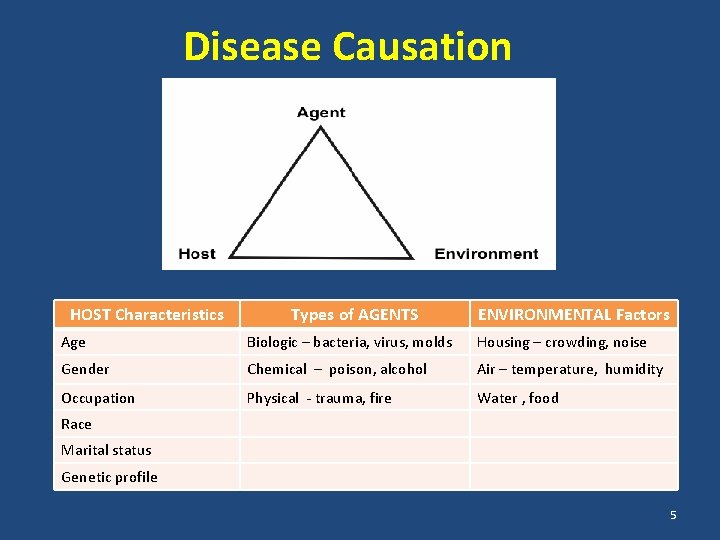
Disease Causation HOST Characteristics Types of AGENTS ENVIRONMENTAL Factors Age Biologic – bacteria, virus, molds Housing – crowding, noise Gender Chemical – poison, alcohol Air – temperature, humidity Occupation Physical - trauma, fire Water , food Race Marital status Genetic profile 5
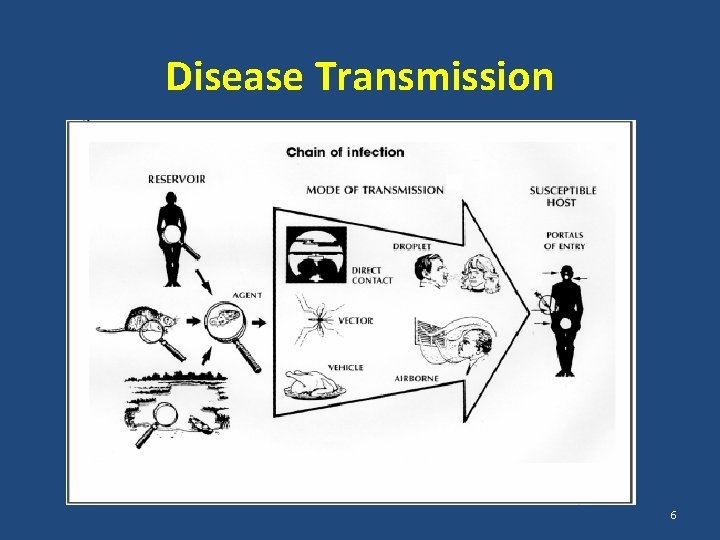
Disease Transmission 6
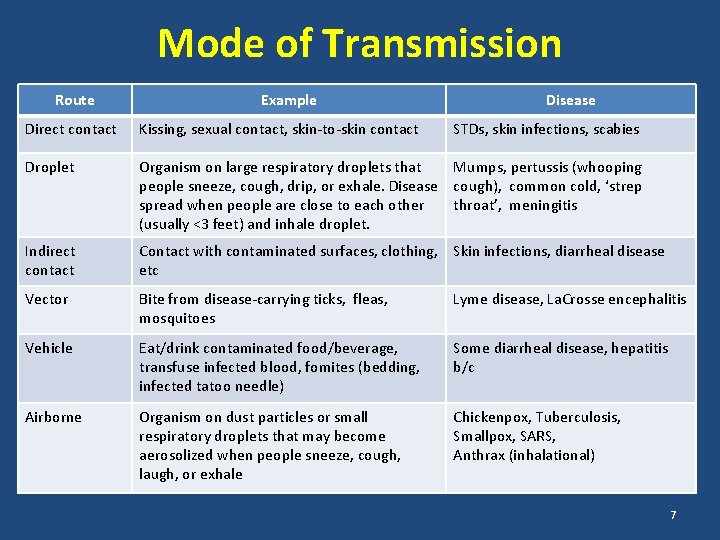
Mode of Transmission Route Example Disease Direct contact Kissing, sexual contact, skin-to-skin contact STDs, skin infections, scabies Droplet Organism on large respiratory droplets that Mumps, pertussis (whooping people sneeze, cough, drip, or exhale. Disease cough), common cold, ‘strep spread when people are close to each other throat’, meningitis (usually <3 feet) and inhale droplet. Indirect contact Contact with contaminated surfaces, clothing, Skin infections, diarrheal disease etc Vector Bite from disease-carrying ticks, fleas, mosquitoes Lyme disease, La. Crosse encephalitis Vehicle Eat/drink contaminated food/beverage, transfuse infected blood, fomites (bedding, infected tatoo needle) Some diarrheal disease, hepatitis b/c Airborne Organism on dust particles or small respiratory droplets that may become aerosolized when people sneeze, cough, laugh, or exhale Chickenpox, Tuberculosis, Smallpox, SARS, Anthrax (inhalational) 7
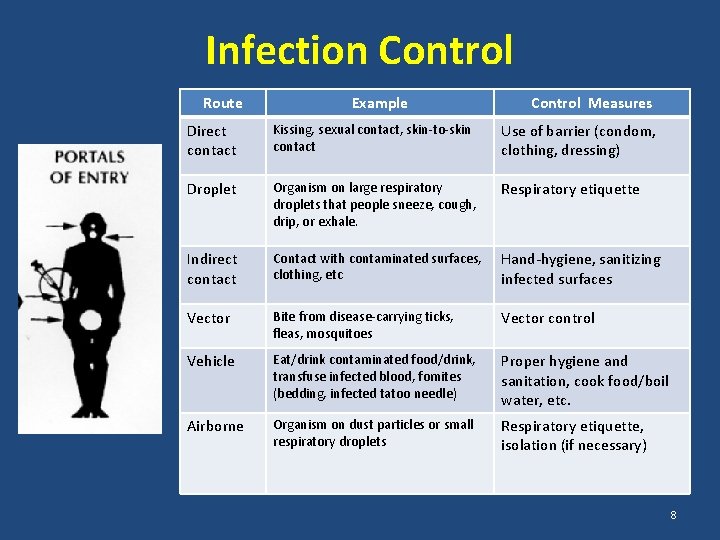
Infection Control Route Example Control Measures Direct contact Kissing, sexual contact, skin-to-skin contact Use of barrier (condom, clothing, dressing) Droplet Organism on large respiratory droplets that people sneeze, cough, drip, or exhale. Respiratory etiquette Indirect contact Contact with contaminated surfaces, clothing, etc Hand-hygiene, sanitizing infected surfaces Vector Bite from disease-carrying ticks, fleas, mosquitoes Vector control Vehicle Eat/drink contaminated food/drink, transfuse infected blood, fomites (bedding, infected tatoo needle) Proper hygiene and sanitation, cook food/boil water, etc. Airborne Organism on dust particles or small respiratory droplets Respiratory etiquette, isolation (if necessary) 8
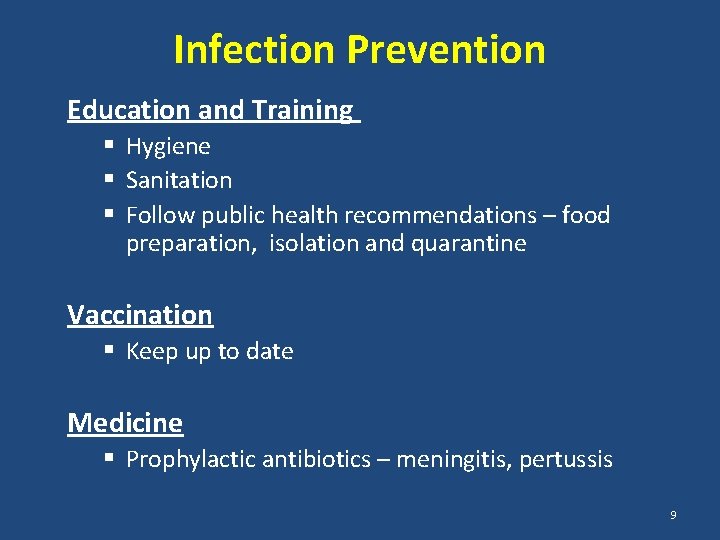
Infection Prevention Education and Training § Hygiene § Sanitation § Follow public health recommendations – food preparation, isolation and quarantine Vaccination § Keep up to date Medicine § Prophylactic antibiotics – meningitis, pertussis 9
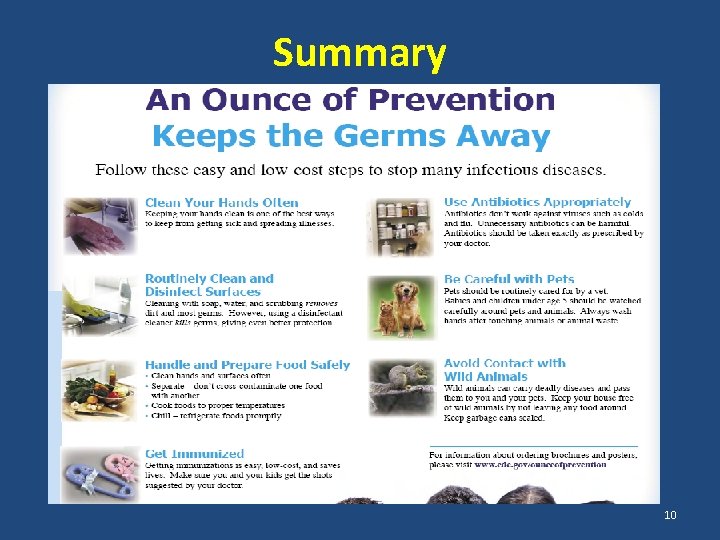
Summary 10
- Slides: 10