
INFECTION CONTROL AND CLINICAL SETTING What is Infection
- Slides: 76
INFECTION CONTROL AND CLINICAL SETTING
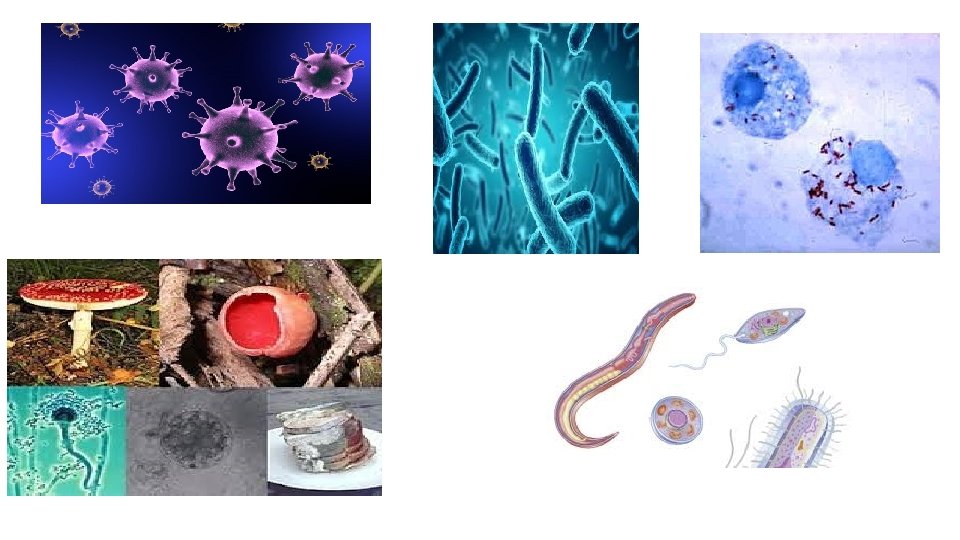
What is Infection? • An infection is the colonization of a host by Microbial species. Infecting Microbes seek to use the host's resources to reproduce, often resulting in disease. Infections are usually considered to be caused by microscopic organisms like viruses, bacteria, though larger organisms like macro parasites and fungi can also infect.
• Invasion by and multiplication of pathogenic microorganisms in a bodily part or tissue, which may produce subsequent tissue injury and progress to overt disease through a variety of cellular or toxic mechanisms. • The pathological state resulting from having been infected.
Types of microbes • Microbe – a pathogenic microorganism • Classifications of plant and animal microbes: – Bacteria – Viruses – Fungi – Rickettsia – Protozoa
Types of infection • Colonization – infection present on surface of body – – Organism propagating at a rate sufficient to maintain its numbers without producing identifiable evidence of any reaction in host • Inapparent or subclinical infection – organism not only multiplying but also causes a measurable reaction that is however not clinically detectable • Symptomatic infection – Organism causes clinically detectable reaction
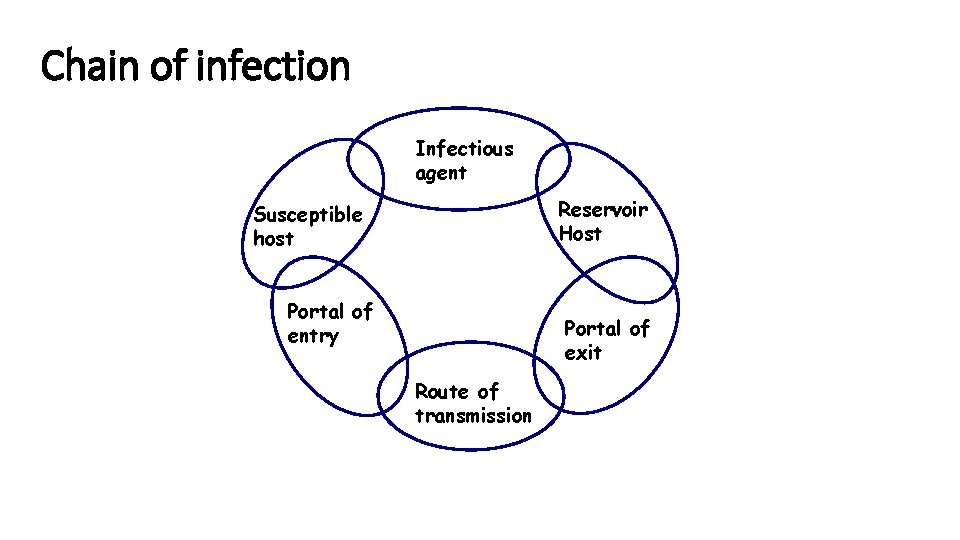
Chain of infection Infectious agent Reservoir Host Susceptible host Portal of entry Portal of exit Route of transmission
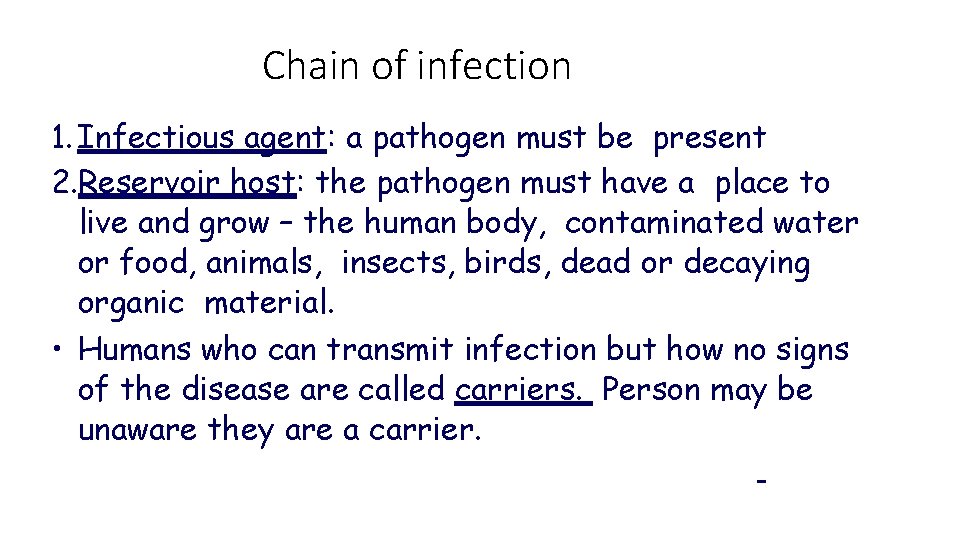
Chain of infection 1. Infectious agent: a pathogen must be present 2. Reservoir host: the pathogen must have a place to live and grow – the human body, contaminated water or food, animals, insects, birds, dead or decaying organic material. • Humans who can transmit infection but how no signs of the disease are called carriers. Person may be unaware they are a carrier.
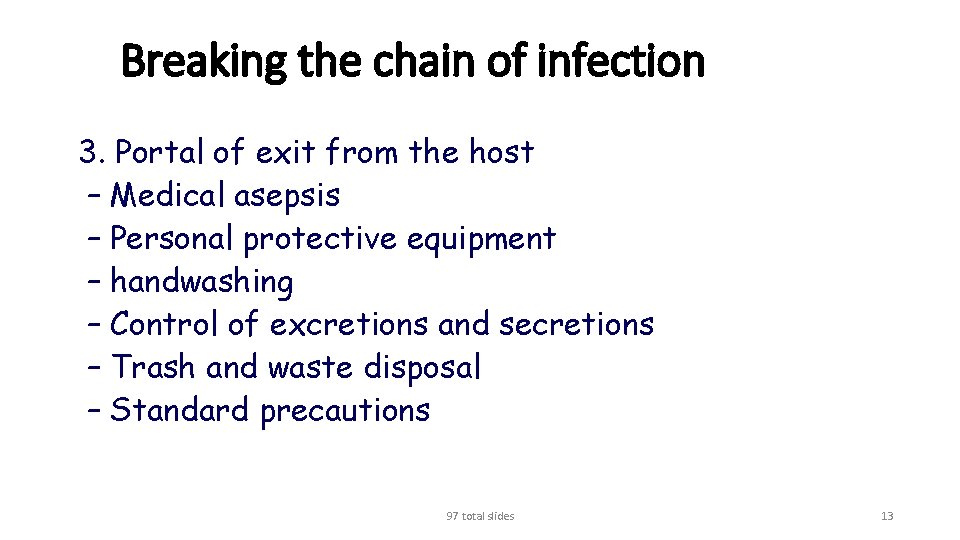
Chain of infection 3. Portal of exit: the pathogen must be able to escape from the reservoir host where it has been growing. • Examples of portals of exit are blood, urine, feces, breaks in the skin, wound drainage, and body secretions like saliva, mucus and reproductive fluids
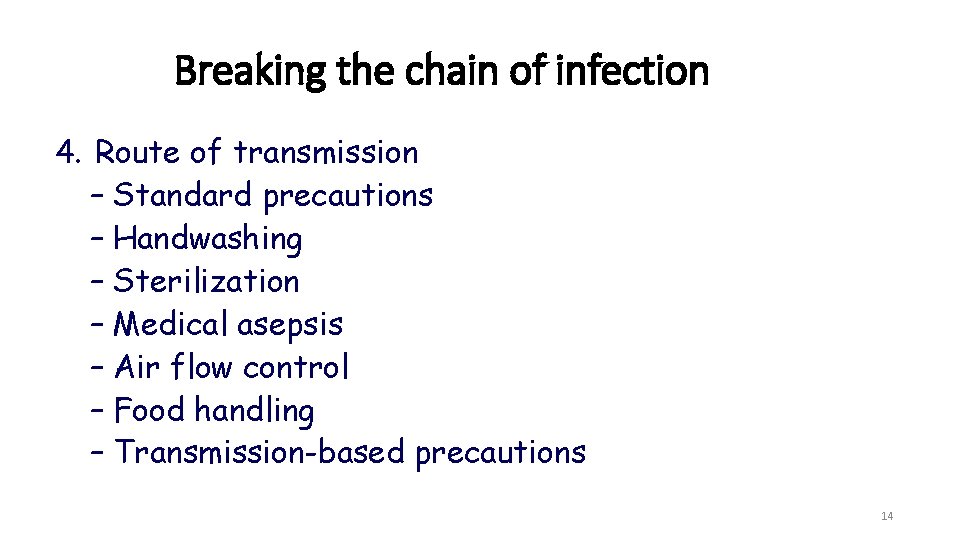
4. Route of transmission: When the pathogen leaves the reservoir host through the portal of exit, it must have a way of being transmitted to a new host. • Examples of routes of transmission are air, food, insects, and direct contact with an infected person
5. Portal of entry: The pathogen must have a way of entering the new host. Common ports of entry are the mouth, nostrils, and breaks in the skin 6. Susceptible host: An individual who has a large number of pathogens invading the body or does not have adequate resistance to the invading pathogen will get the infectious disease
Breaking the chain of infection • Breaking at least one link stops the spread of infectious disease 1. The infectious agent – early recognition of signs of infection – Rapid, accurate identification of organisms 2. Reservoir host • Medical asepsis • Standard precautions • Good employee health • Environmental sanitation 37 • Disinfectant
Breaking the chain of infection 3. Portal of exit from the host – Medical asepsis – Personal protective equipment – handwashing – Control of excretions and secretions – Trash and waste disposal – Standard precautions 97 total slides 13
Breaking the chain of infection 4. Route of transmission – Standard precautions – Handwashing – Sterilization – Medical asepsis – Air flow control – Food handling – Transmission-based precautions 14
Defense Mechanisms • A number of defense mechanisms exist outside and in the body to break the chain, including decreasing the sources of microorganisms; preventing the transmission of microorganisms; and maximizing the host’s resistance to the microorganism 15
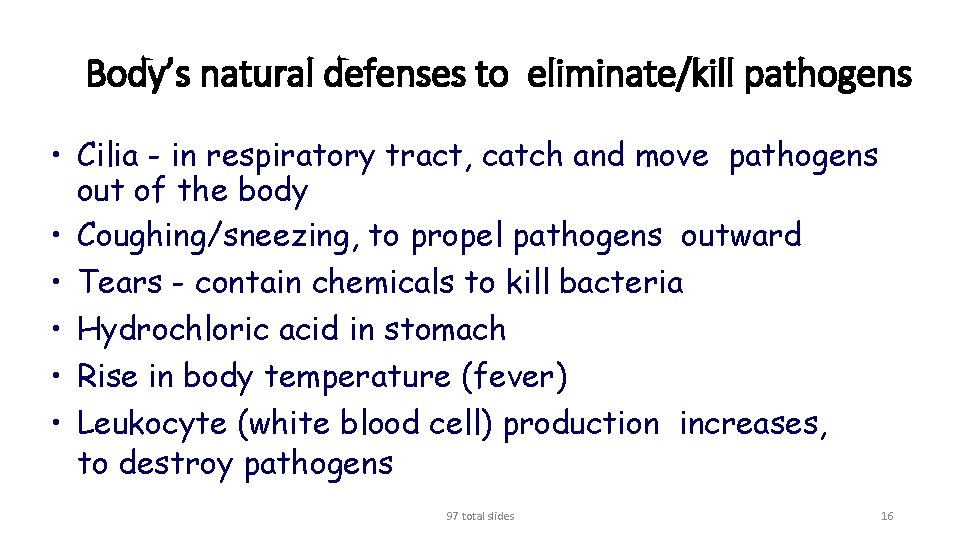
Body’s natural defenses to eliminate/kill pathogens • Cilia - in respiratory tract, catch and move pathogens out of the body • Coughing/sneezing, to propel pathogens outward • Tears - contain chemicals to kill bacteria • Hydrochloric acid in stomach • Rise in body temperature (fever) • Leukocyte (white blood cell) production increases, to destroy pathogens 97 total slides 16
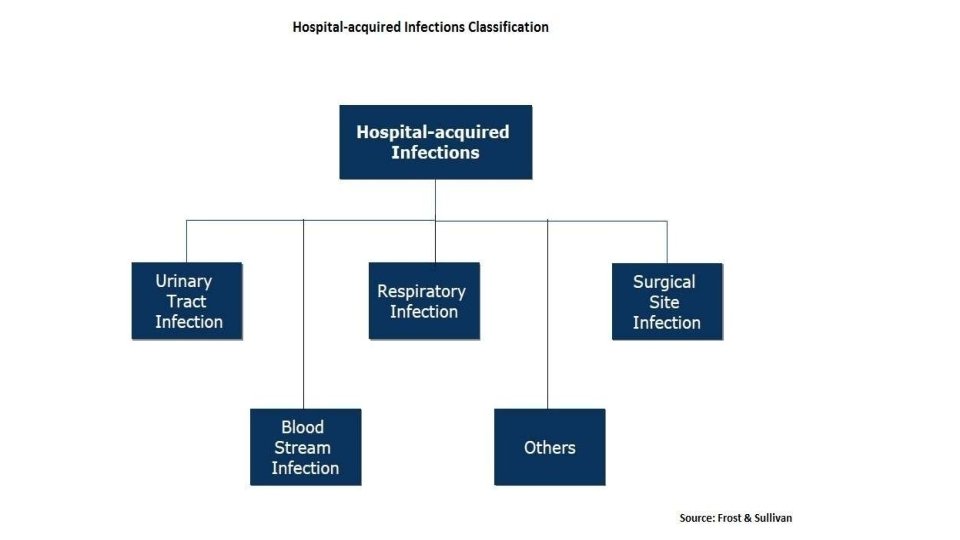
Definition • Hospital acquired infection / nosocomial infection are infection acquired during hospital care which are not present or incubating at admission. • Infection occurring more than 48 hours after admission are usually considered nosocomial.
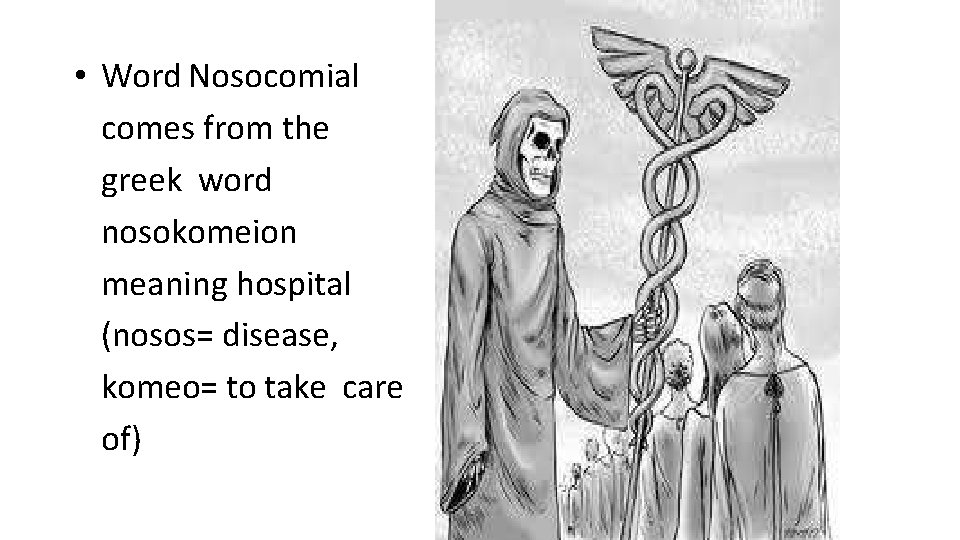
• Word Nosocomial comes from the greek word nosokomeion meaning hospital (nosos= disease, komeo= to take care of)
Definition by CDC • Infection that patients acquire during the course of receiving treatment for other conditions or that health workers acquire while performing their duties within healthcare setting
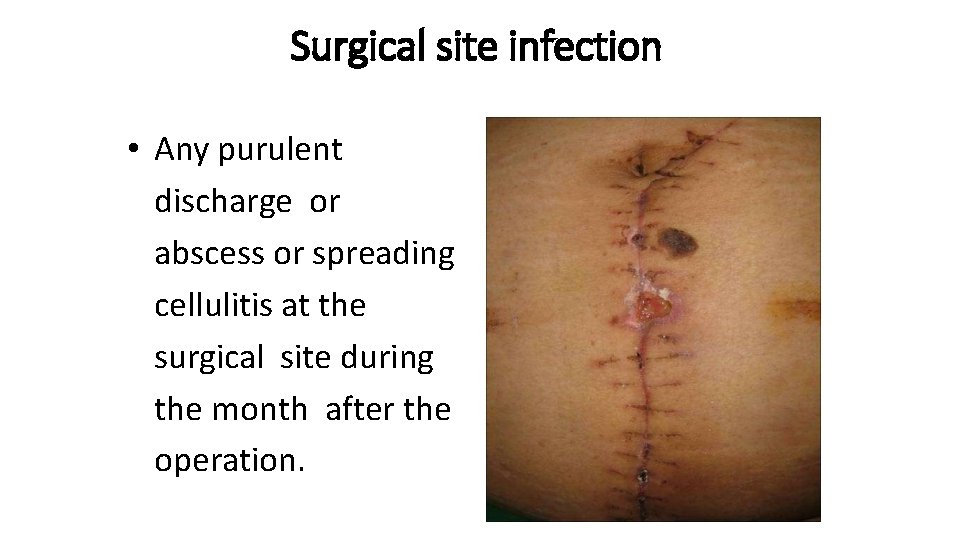
Surgical site infection • Any purulent discharge or abscess or spreading cellulitis at the surgical site during the month after the operation.
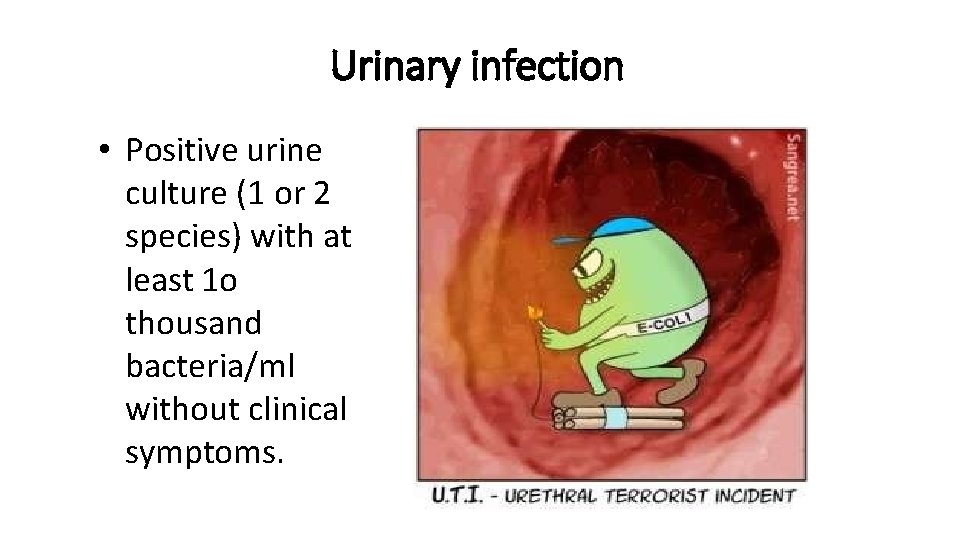
Urinary infection • Positive urine culture (1 or 2 species) with at least 1 o thousand bacteria/ml without clinical symptoms.
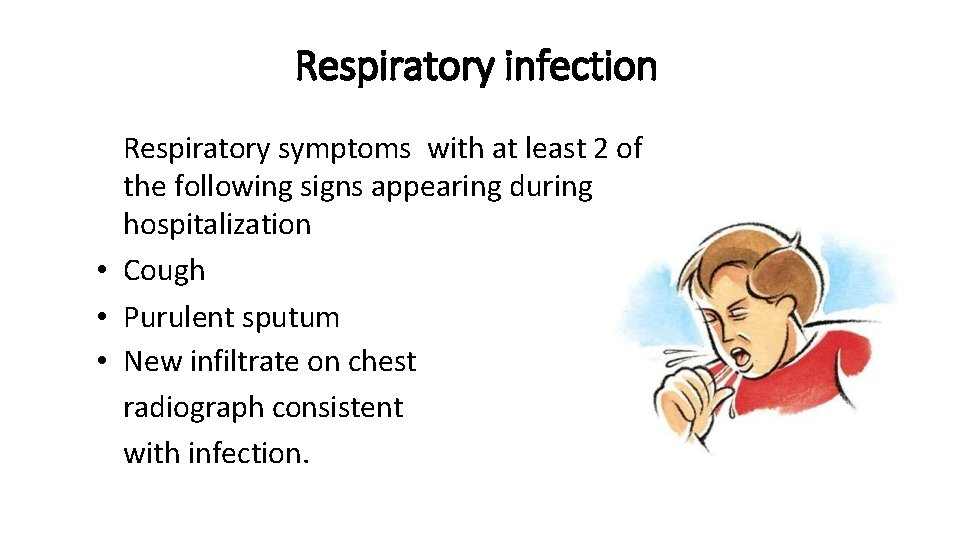
Respiratory infection Respiratory symptoms with at least 2 of the following signs appearing during hospitalization • Cough • Purulent sputum • New infiltrate on chest radiograph consistent with infection.
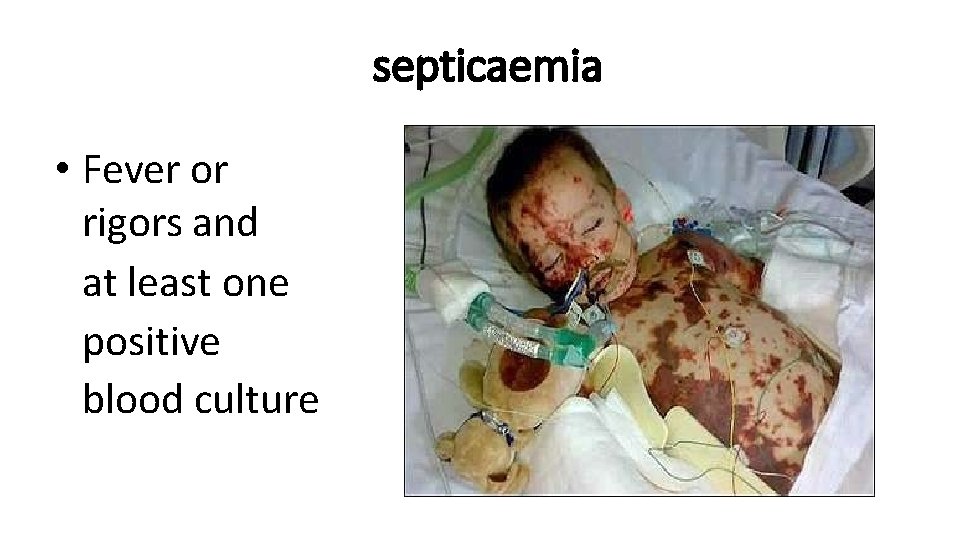
septicaemia • Fever or rigors and at least one positive blood culture
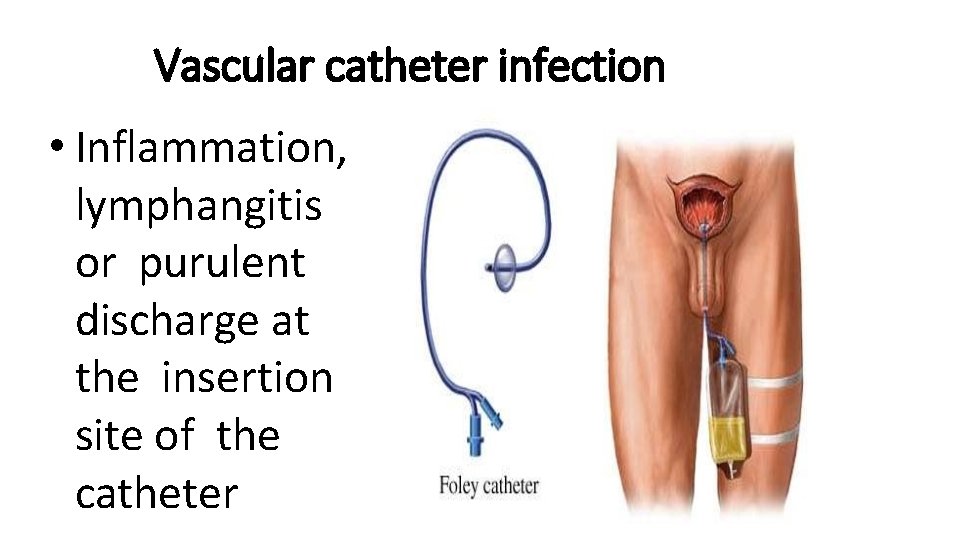
Vascular catheter infection • Inflammation, lymphangitis or purulent discharge at the insertion site of the catheter
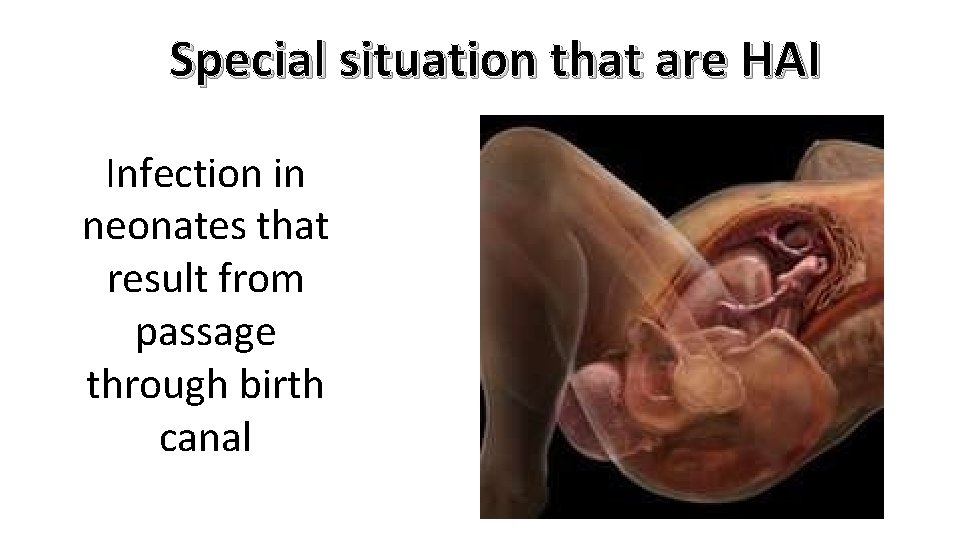
Special situation that are HAI Infection in neonates that result from passage through birth canal
Special situation that are not HAI Complication or extension of infection(s) already present on admission unless a change in pathogen or symptoms strongly suggest the acquisition of new infection
Infection in an infant that is known or proven to have been acquire transplacentally & become evident before 48 hour of birth
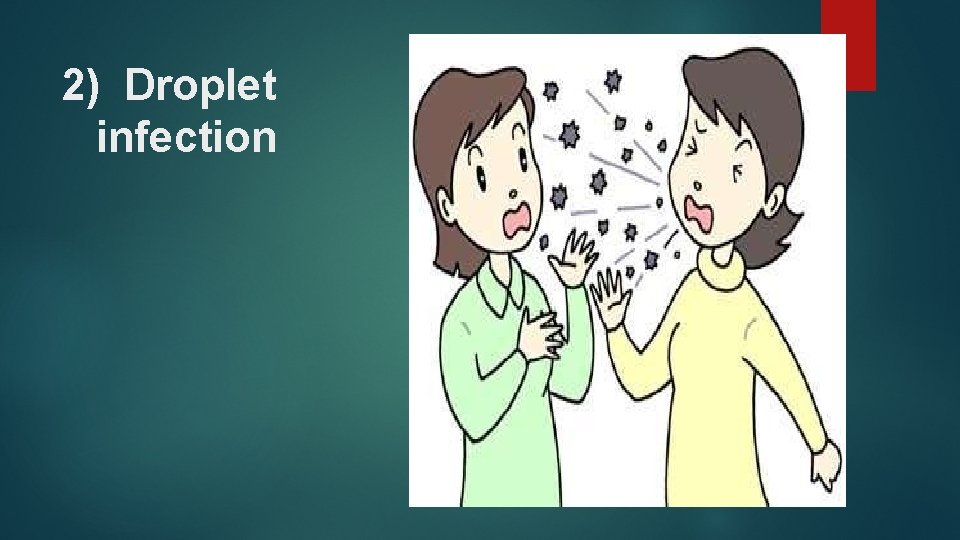
TRANSMISSION OF NOSOCOMIAL INFECTION 1) Contact transmission a) Direct – contact transmission b) Indirect – contact transmission 2) Droplet – transmission 3) Airborne transmission 4) Common vehicle transmission 5) Vector borne transmission
1) CONTACT a) DIRECT – CONTACT TRANSMISSION § It involves a direct body surface – to – body surface contact and physical transfer of microorganism between susceptible host and an infected or colonized person such as occurs when a person turns a patient, gives a patient a bath or performs other patient – care activities that require direct personal contact. § Direct contact transmission also can occur between two patients, with one serving as a source of infectious microorganism and other as a susceptible host.
b) Indirect – contact transmission It involves a contact of susceptible host with a contaminated intermediate object, usually inanimate, such as contaminated instruments, needles or dressing, or contaminated gloves that are not changed between patients.
2) Droplet infection
3) Air borne transmission
4) Common vehicle transmission It applies to microorganisms transmitted to the host by contaminated items such as food, water, medication, devices, and equipments. 5) Vector borne transmission It occurs when vectors such as mosquitoes, flies, rats transmit microorganism.
PREVENTION A) Isolation B) Hand washing and gloving C) Apron D) Mitigation
UNIVERSAL PRECAUTION Universal precautions refers to the practice, in medicine, of avoiding contact with patients' bodily fluids, by means of the wearing of nonporous articles such as medical gloves, goggles, and face shields. The practice of universal precautions was adjusted by a set of rules known as body substance isolation. Under universal precautions all patients were considered to be possible carriers of blood-borne pathogens. The guideline recommended wearing gloves when collecting or handling blood and body fluids contaminated with blood, wearing face shields when there was danger of blood splashing on mucous membranes and disposing of all needles and sharp objects in puncture-resistant containers.
Universal precautions were designed for doctors, nurses, patients, and health care support workers who were required to come into contact with patients or bodily fluids. This included staff and others who might not come into direct contact with patients. Pathogens fall into two broad categories, bloodborne (carried in the body fluids) and airborne. Universal precautions were typically practiced in any environment where workers were exposed to bodily fluids, such as: Blood, Semen, Vaginal secretions, Synovial fluid, Amniotic fluid, Cerebrospinal fluid, Pleural fluid, Peritoneal fluid, Pericardial fluid, Feces, Urine. Bodily fluids that did not require such precautions[4][5][6] included: Nasal secretions, Vomitus, Perspiration, Sputum, Saliva
Universal precautions were the infection control techniques that were recommended following the AIDS outbreak in the 1980 s. Every patient was treated as if infected and therefore precautions were taken to minimize risk. Essentially, universal precautions were good hygiene habits, such as hand washing and the use of gloves and other barriers, correct handling of hypodermic needlesand scalpels, and aseptic techniques. Protective clothing's are Barrier gowns, shoe covering, eye wear, hair nets, gloves…
BODY SUBSTANCE ISOLATION Body substance isolation is a practice of isolating all body substances (blood, urine, feces, tears, etc. ) of individuals undergoing medical treatment, particularly emergency medical treatment of those who might be infected with illnesses such as HIV, or hepatitis so as to reduce as much as possible the chances of transmitting these illnesses. [1] BSI is similar in nature to universal precautions, but goes further in isolating workers from pathogens, including substances now known to carry HIV. Types of body substance isolation included: Hospital gowns, Medical gloves, Shoe covers, Surgical mask, Safety Glasses.
ASEPSIS Asepsis is the state of being free from disease-causing microorganisms (such as pathogenic bacteria, viruses, pathogenic fungi, and parasites). The term often refers to those practices used to promote or induce asepsis in an operative field of surgery or medicine to prevent infection. The goal of asepsis is to eliminate infection, not to achieve sterility. Ideally, a surgical field is sterile, meaning it is free of all biological contaminants (e. g. fungi, bacteria, viruses), not just those that can cause disease.
MEDICAL ASEPSIS Medical asepsis or clean technique include the procedure used to reduce the number of microorganisms and prevent their spread. Essential components of maintaining medical asepsis in a facility include: 1. handwashing 2. utilizing gloves, gown and mask as indicated 3. cleaning equipment 4. handling linens in ways that prevent germs from spreading Medical asepsis protects both residents and caregivers from becoming ill.
Microorganisms can be spread by: 1. touching someone who has an infection. 2. touching the linens or other belongings of a person who has an infection. 3. sneezing or coughing 4. handling or consuming contaminated food, medications or water. Medical aseptic practices are involved in all nursing activities because microorganisms are always present in the environment. An awareness of how microorganisms are transmitted is essential for safe caregiving practices.
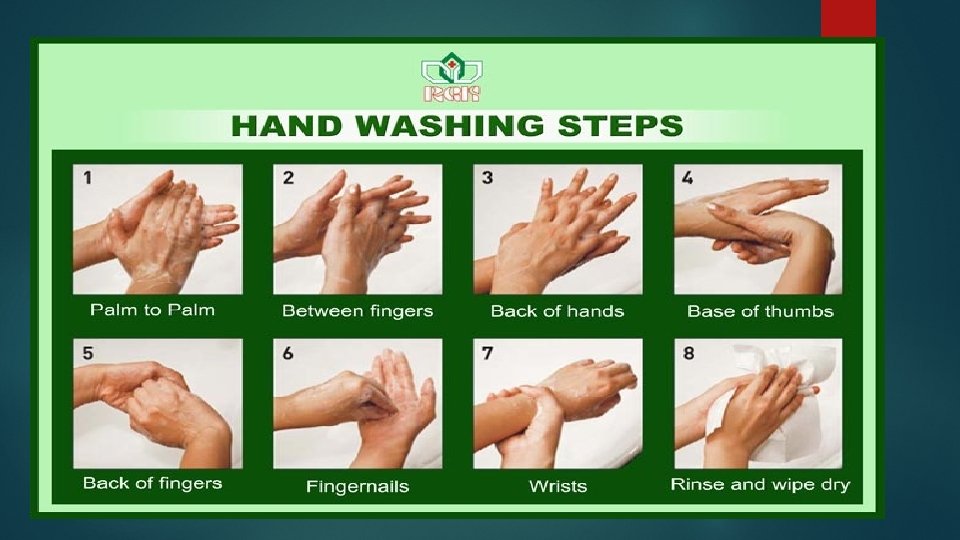
MEDICAL HAND WASHING Hand washing (or handwashing), also known as hand hygiene, is the act of cleaning hands for the purpose of removing soil, dirt, and microorganisms. If water and soap is not available, hands can be cleaned with ash instead. Hand washing with sop consistently at critical moments during the day prevents the spread of diseases like diarrhea and cholera which are transmitted through fecal-oral routes. People can become infected with respiratory diseases such as influenza or the common cold, for example, if they do not wash their hands before touching their eyes, nose, or mouth.
The World Health Organization has "Five Moments" for washing hands: 1. before patient care 2. after environmental contact 3. after exposure to blood/body fluids 4. before an aseptic task, and 5. after patient care.
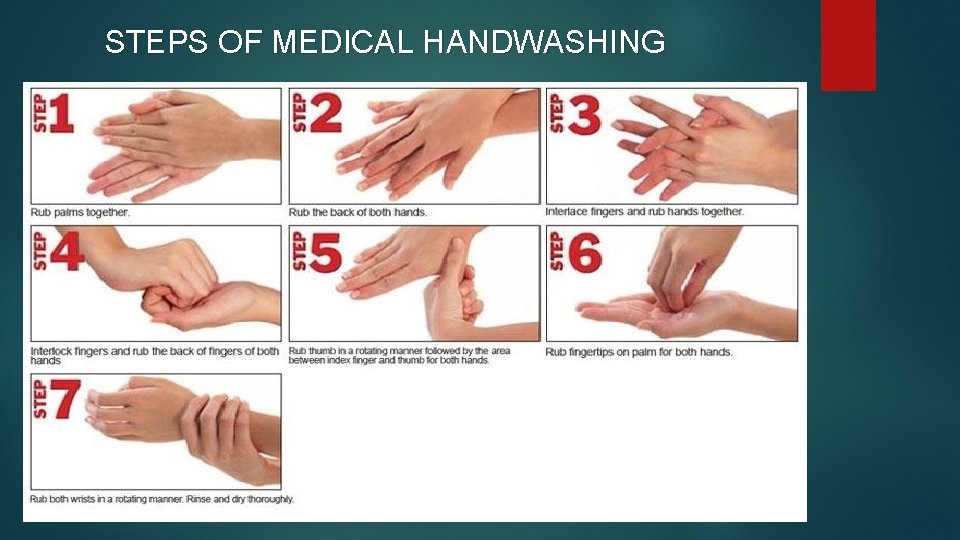
STEPS OF MEDICAL HANDWASHING
SURGICAL ASEPSIS Surgical asepsis is the absence of all microorganisms within any type of invasive procedure. Sterile technique is a set of specific practices and procedures performed to make equipment and areas free from all microorganisms and to maintain that sterility.
PRICIPLES OF SURGICAL ASEPSIS Hand hygiene is a priority before any aseptic procedure. When performing a procedure, ensure the patient understands how to prevent contamination of equipment and knows to refrain from sudden movements or touching, laughing, sneezing, or talking over the sterile field. Choose appropriate PPE to decrease the transmission of microorganisms from patients to health care worker. Review hospital procedures and requirements for sterile technique prior to initiating any invasive procedure. Health care providers who are ill should avoid invasive procedures or, if they can’t avoid them, should double mask
GOWNING AND GLOVING OBJECTIVE: To prevent contamination to the surgical wound and help control infection via aseptic principles. STANDARD: Attention of surgical team to aseptic principles and standard precautions help ensure the control of infection and microbial contamination by skin flora.
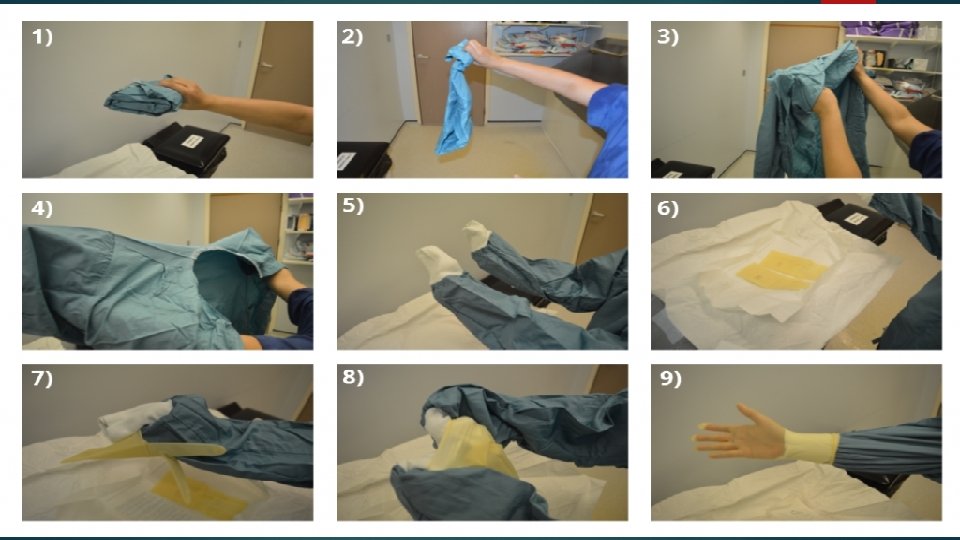
PROCEDURE: I. Gowning and Gloving 1. Gowning: To don the gown, the scrub person: a. Lifts the folded gown directly upward from the sterile package. b. Steps back from the table into an unobstructed area; c. Carefully locates the neckband holds the inside front of the gown just below the neckband with both hands; d. Lets the gown unfold while keeping the inside of the gown toward the body without touching the sterile exterior of the gown with bare hands 6 NCif. E: IF the gown does not unfold completely, then the circulating nurse may assist by pulling down the unfolded bottom inside the gown); e. Holds the hands shoulder level and slips both arms into the armhole simultaneously.
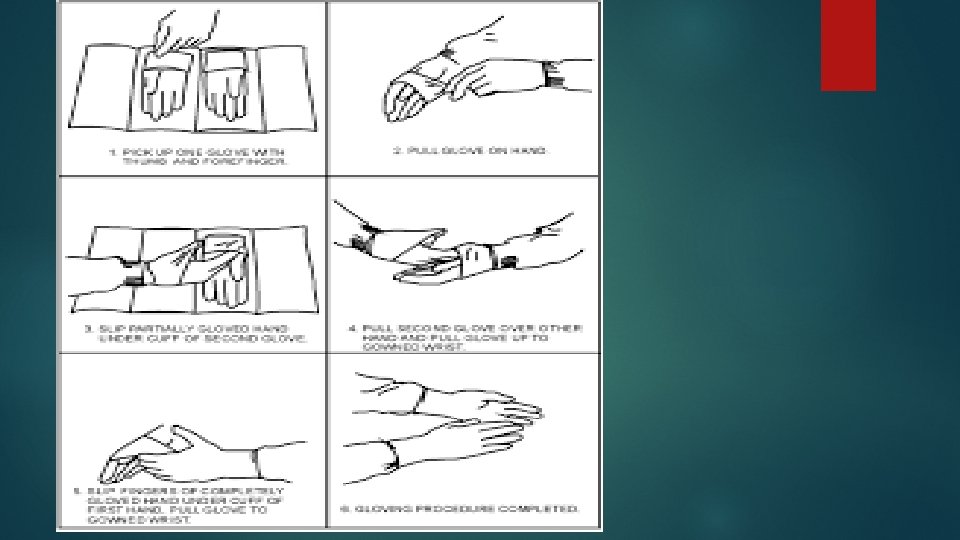
2. Gloving: a) Pick up one glove with thumb and forefinger. b) pull glove on hand. c) slip partially gloved hand under the cuff of second glove. d) pull second glove over other hand pull glove up to gloved wrist. e) slipping fingers of completely gloved hand under cuff of first hand. Pull glove to glove the wrist.
BIOMEDICAL WASTE MANAGEMENT Biomedical waste is any kind of waste containing infectious materials. It may also include waste associated with the generation of biomedical waste that visually appears to be of medical or laboratory origin (e. g. , packaging, unused bandages, infusion kits, etc. ), as well research laboratory waste containing biomolecules or organisms that are restricted from environmental release.
Biomedical waste is generated from biological and medical sources and activities, such as the diagnosis, prevention, or treatment of diseases. Common generators (or producers) of biomedical waste include hospitals, health clinics, nursing homes, emergency medical services, medical research laboratories, offices of physicians, dentists, and veterinarians, home health care, and morgues or funeral homes. In healthcare facilities (i. e. , hospitals, clinics, doctor's offices, veterinary hospitals and clinical laboratories), waste with these characteristics may alternatively be called medical or clinical waste.
Biomedical waste is distinct from normal trash or general waste, and differs from other types of hazardous waste, such as chemical, radioactive, universal or industrial waste. Medical facilities generate waste hazardous chemicals and radioactive materials. While such wastes are normally not infectious, they require proper disposal. Some wastes are considered multihazardous, such as tissue samples preserved in formalin.
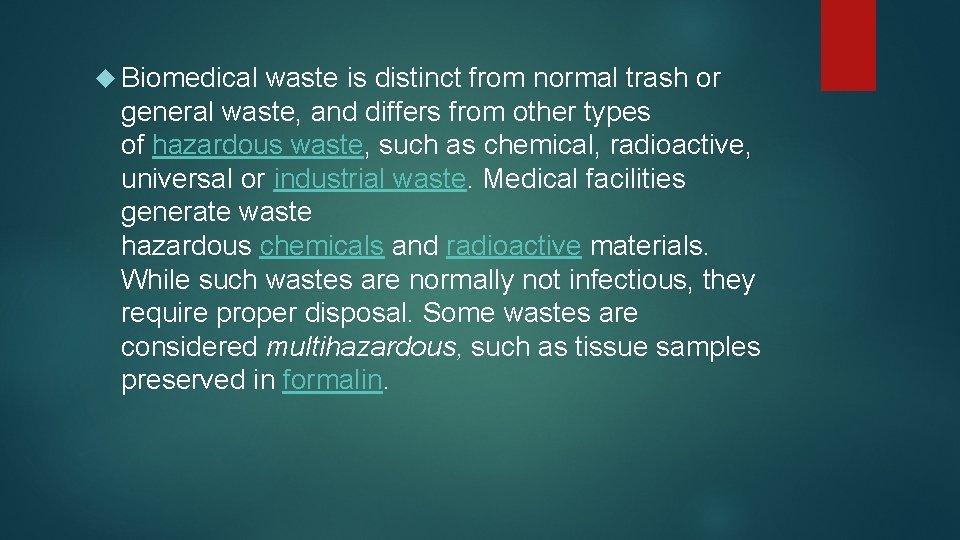
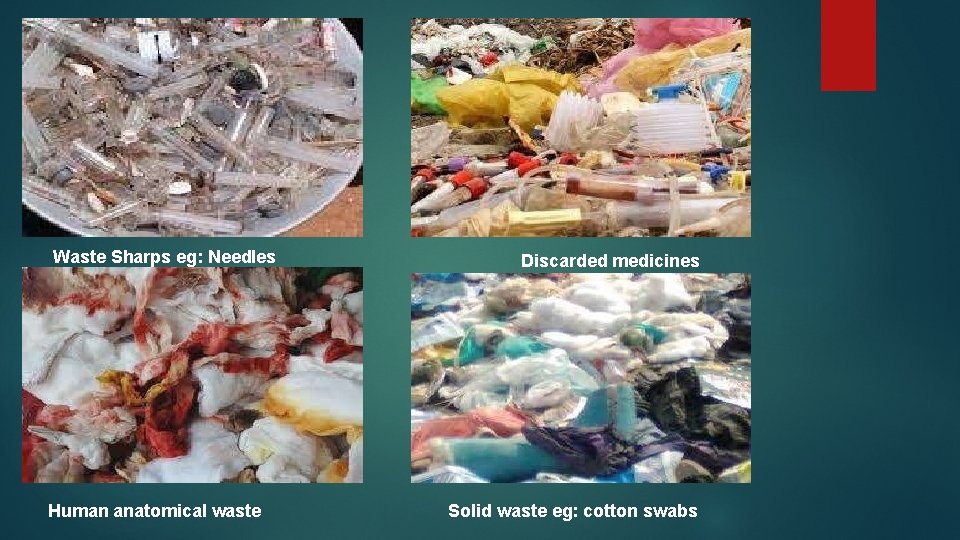
Waste Sharps eg: Needles Human anatomical waste Discarded medicines Solid waste eg: cotton swabs
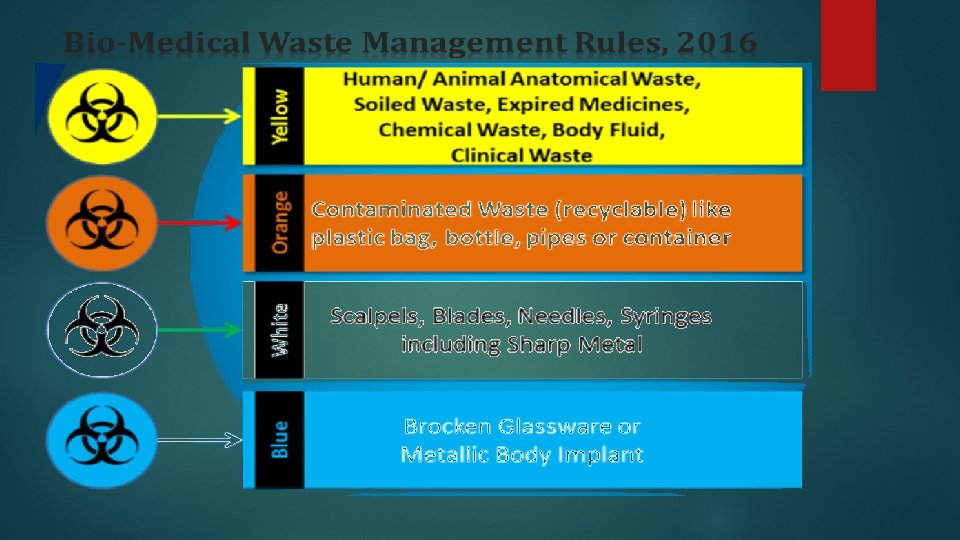
Bio Medical waste consists of • Human anatomical waste like tissues, organs and body parts • Animal wastes generated during research from veterinary hospitals • Microbiology and biotechnology wastes • Waste sharps like hypodermic needles, syringes, scalpels and broken glass • Discarded medicines and cytotoxic drugs • Soiled waste such as dressing, bandages, plaster casts, material contaminated with blood, tubes and catheters • Liquid waste from any of the infected areas • Incineration ash and other chemical wastes
Need of biomedical waste management in hospitals…. The reasons due to which there is great need of management of hospitals waste such as: • Injuries from sharps leading to infection to all categories of hospital personnel and waste handlers • nosocomial infections in patients from poor infection control practices and poor waste management. • Risk of infection outside the hospital for waste handlers and scavengers and sometimes general public living in the vicinity of hospitals.
• Risk associated with hazardous chemicals, drugs to persons handling wastes • “Disposable” being repacked and sold by unscrupulous elements without even being washed. • Drugs which have been disposed of, being repacked and sold off to unsuspecting buyers. • Risk of air, water and soil pollution directly due to waste, or due to defective incineration emissions and ash.
NEED OF BIOMEDICAL WASTE
Types of hospital waste 1) NON – HAZARDOUS WASTE 2) HAZARDOUS WASTE A) POTENTIALLY INFECTIOUS WASTE B) POTENTIALLY TOXIC WASTE
1) NON – HAZARDOUS WASTE It incudes kitchen waste, general office waste, (stationary, wrappers, papers, newspapers, bouquets) etc… 2) HAZARDOUS WASTE This waste is dangerous e. g. blood, body fluids, chemicals, toxic drugs… A) Potentially infectious waste includes dressings soiled with blood, pus, body fluids, laboratory samples, syringes, needles, sharp instruments, placenta, tissues, limb, organs etc… b) Potentially toxic wastes include radioactive waste (liquids, solids) chemical waste (toxics, corrosive and inflammable), pharmaceutical waste (expired drugs).
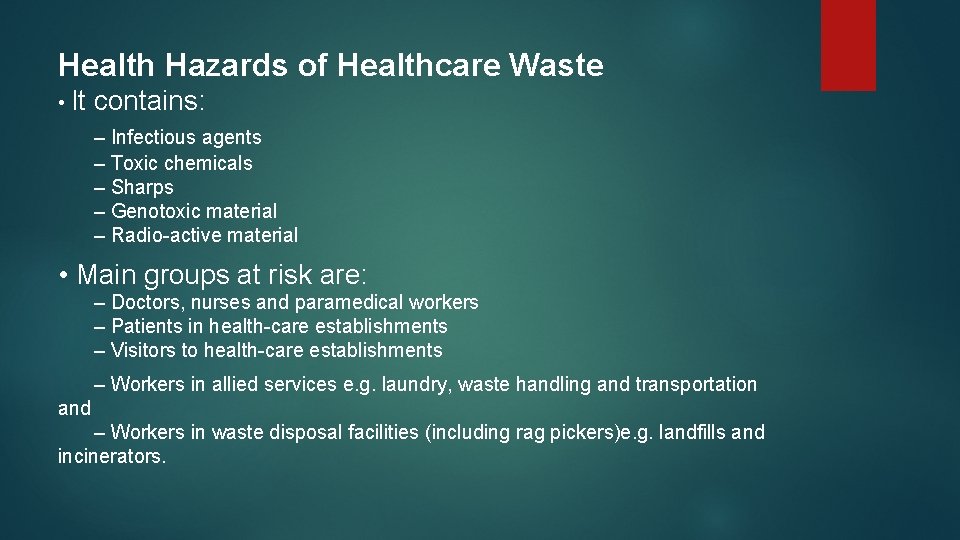
Health Hazards of Healthcare Waste • It contains: – Infectious agents – Toxic chemicals – Sharps – Genotoxic material – Radio-active material • Main groups at risk are: – Doctors, nurses and paramedical workers – Patients in health-care establishments – Visitors to health-care establishments – Workers in allied services e. g. laundry, waste handling and transportation and – Workers in waste disposal facilities (including rag pickers)e. g. landfills and incinerators.
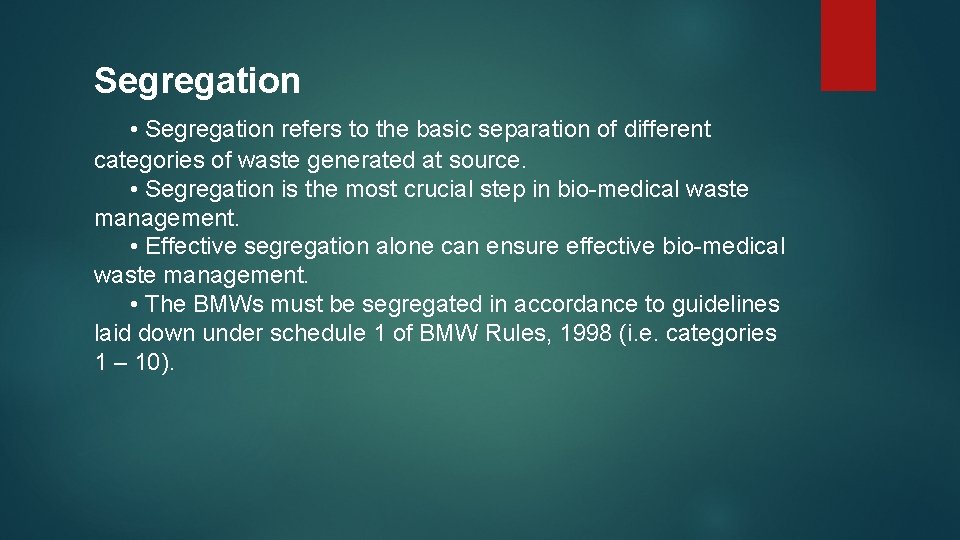
Segregation • Segregation refers to the basic separation of different categories of waste generated at source. • Segregation is the most crucial step in bio-medical waste management. • Effective segregation alone can ensure effective bio-medical waste management. • The BMWs must be segregated in accordance to guidelines laid down under schedule 1 of BMW Rules, 1998 (i. e. categories 1 – 10).
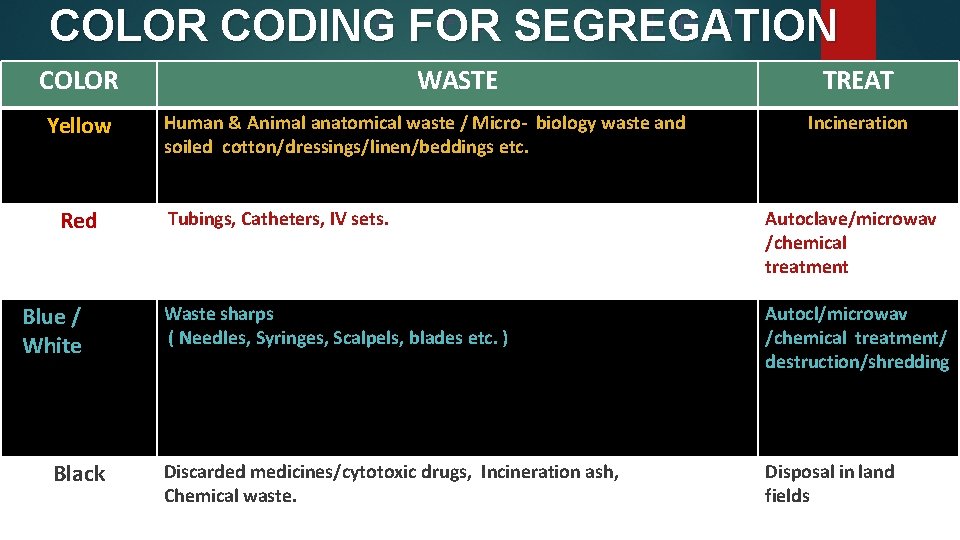
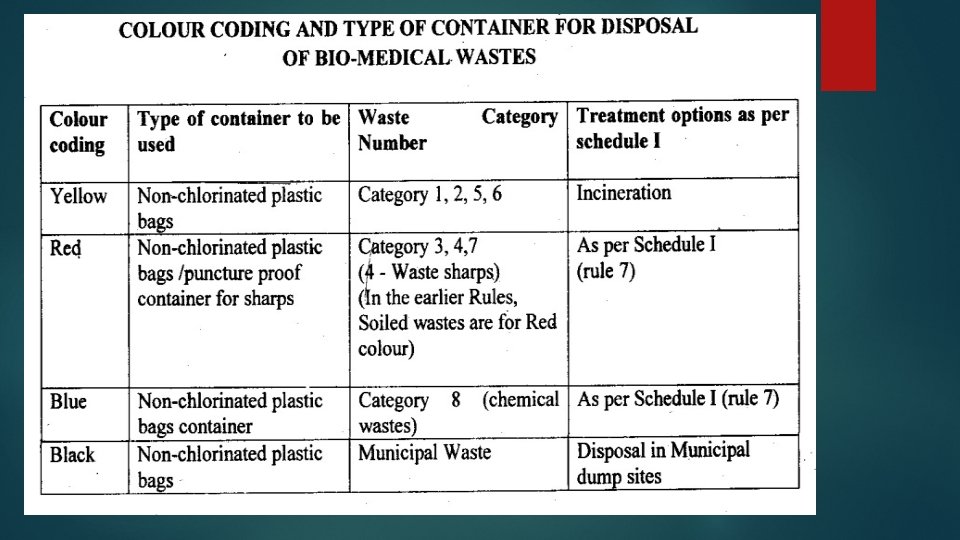
COLOR CODING FOR SEGREGATION COLOR Yellow Red Blue / White Black WASTE Human & Animal anatomical waste / Micro- biology waste and soiled cotton/dressings/linen/beddings etc. TREAT Incineration Tubings, Catheters, IV sets. Autoclave/microwav /chemical treatment Waste sharps ( Needles, Syringes, Scalpels, blades etc. ) Autocl/microwav /chemical treatment/ destruction/shredding Discarded medicines/cytotoxic drugs, Incineration ash, Chemical waste. Disposal in land fields
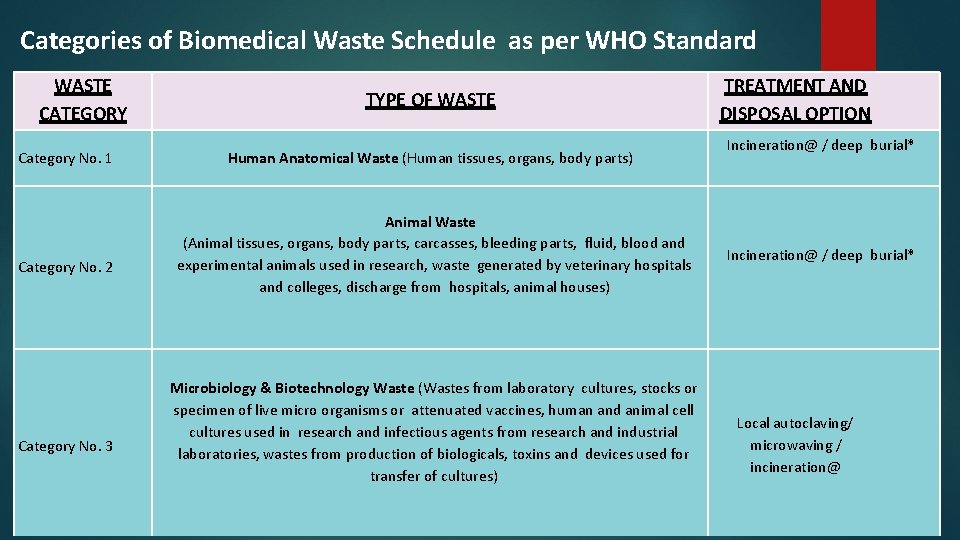
Categories of Biomedical Waste Schedule as per WHO Standard WASTE CATEGORY Category No. 1 Category No. 2 Category No. 3 TYPE OF WASTE Human Anatomical Waste (Human tissues, organs, body parts) Animal Waste (Animal tissues, organs, body parts, carcasses, bleeding parts, fluid, blood and experimental animals used in research, waste generated by veterinary hospitals and colleges, discharge from hospitals, animal houses) Microbiology & Biotechnology Waste (Wastes from laboratory cultures, stocks or specimen of live micro organisms or attenuated vaccines, human and animal cell cultures used in research and infectious agents from research and industrial laboratories, wastes from production of biologicals, toxins and devices used for transfer of cultures) TREATMENT AND DISPOSAL OPTION Incineration@ / deep burial* Local autoclaving/ microwaving / incineration@ 36
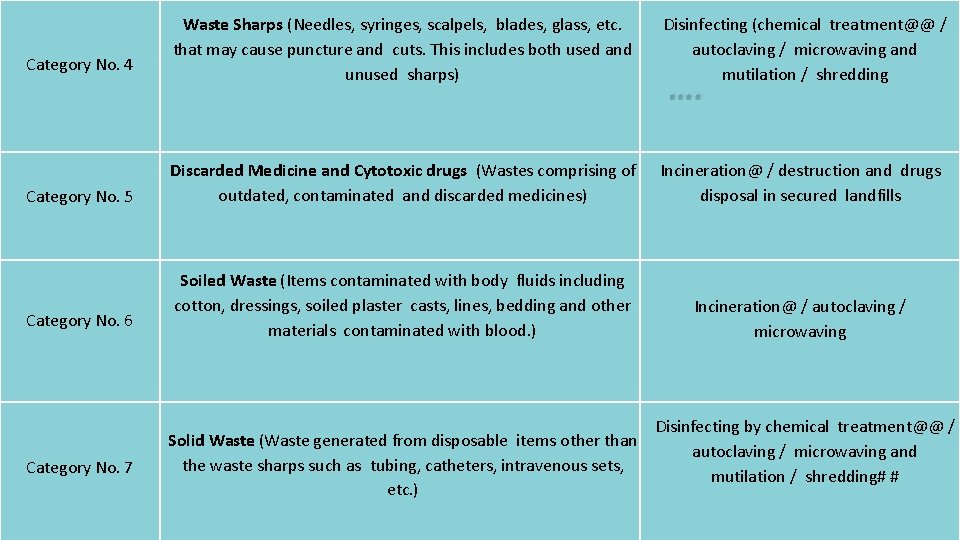
Category No. 4 Category No. 5 Category No. 6 Category No. 7 Waste Sharps (Needles, syringes, scalpels, blades, glass, etc. that may cause puncture and cuts. This includes both used and unused sharps) Disinfecting (chemical treatment@@ / autoclaving / microwaving and mutilation / shredding Discarded Medicine and Cytotoxic drugs (Wastes comprising of outdated, contaminated and discarded medicines) Incineration@ / destruction and drugs disposal in secured landfills Soiled Waste (Items contaminated with body fluids including cotton, dressings, soiled plaster casts, lines, bedding and other materials contaminated with blood. ) Incineration@ / autoclaving / microwaving Solid Waste (Waste generated from disposable items other than the waste sharps such as tubing, catheters, intravenous sets, etc. ) Disinfecting by chemical treatment@@ / autoclaving / microwaving and mutilation / shredding# # 37
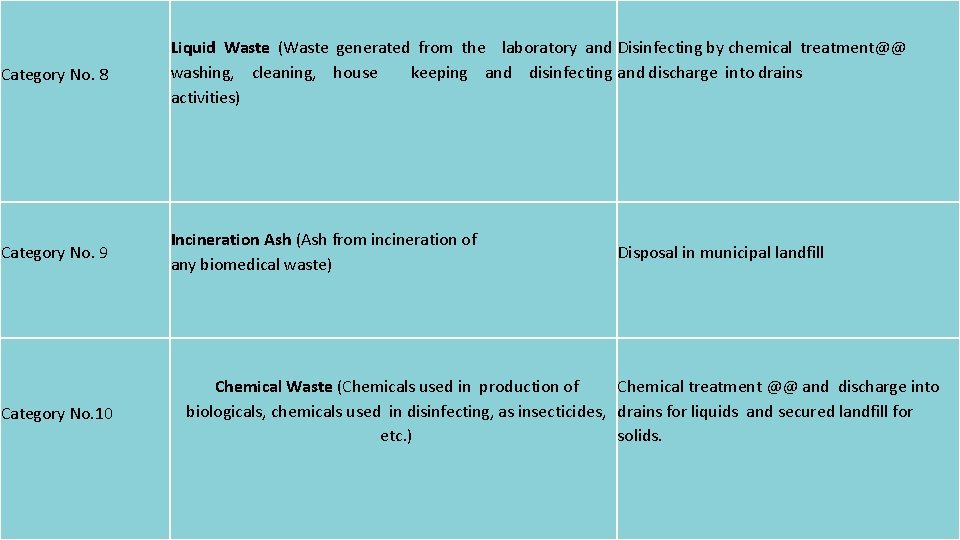
Category No. 8 Liquid Waste (Waste generated from the laboratory and Disinfecting by chemical treatment@@ washing, cleaning, house keeping and disinfecting and discharge into drains activities) Category No. 9 Incineration Ash (Ash from incineration of any biomedical waste) Category No. 10 Disposal in municipal landfill Chemical Waste (Chemicals used in production of Chemical treatment @@ and discharge into biologicals, chemicals used in disinfecting, as insecticides, drains for liquids and secured landfill for etc. ) solids. 38
2011
Collection • The collection of biomedical waste involves use of different types of container from various sources of biomedical wastes like Operation Theatre, laboratory, wards, kitchen, corridor etc. • The containers/ bins should be placed in such a way that 100% collection is achieved. Sharps must always be kept in puncture-proof containers to avoid injuries and infection to the workers handling them.
Storage • Once collection occurs then biomedical waste is stored in a proper place. Segregated wastes of different categories need to be collected in identifiable containers. • The duration of storage should not exceed for 8 -10 hrs in big hospitals (more than 250 bedded) and 24 hrs in nursing homes. • Each container may be clearly labelled to show the ward or room where it is kept. The reason for this labelling is that it may be necessary to trace the waste back to its source. • Besides this, storage area should be marked with a caution sign.
Transportation § The waste should be transported for treatment either in trolleys or in covered wheelbarrow. § Manual loading should be avoided as far as for as possible. The bags / Container containing BMWs should be tied/ lidded before transportation. § Before transporting the bag containing BMWs, it should be accompanied with a signed document by Nurse/ Doctor mentioning date, shift, quantity and destination. § Special vehicles must be used so as to prevent access to, and direct contact with, the waste by the transportation operators, the scavengers and the public. § The effects of traffic accidents should be considered in the design, and the driver must be trained in the procedures he must follow in case of an accidental spillage
Treatment and Disposal Technologies for BMW • Incineration – Double – chamber pyrolytic incinerator – Rotatory kilns • Chemical disinfection • Wet and dry thermal treatment – High pressure steam – Non-burn, dry thermal disinfection • Microwave irradiation • Land disposal – Not to be dumped in open dumps – Sanitary landfills should be used • Inertization – Mixing with cement and other substances before disposal – Reduces the risk of migration into surface or ground water