
Infection and response revision Keywords pathogen microorganism white
- Slides: 4
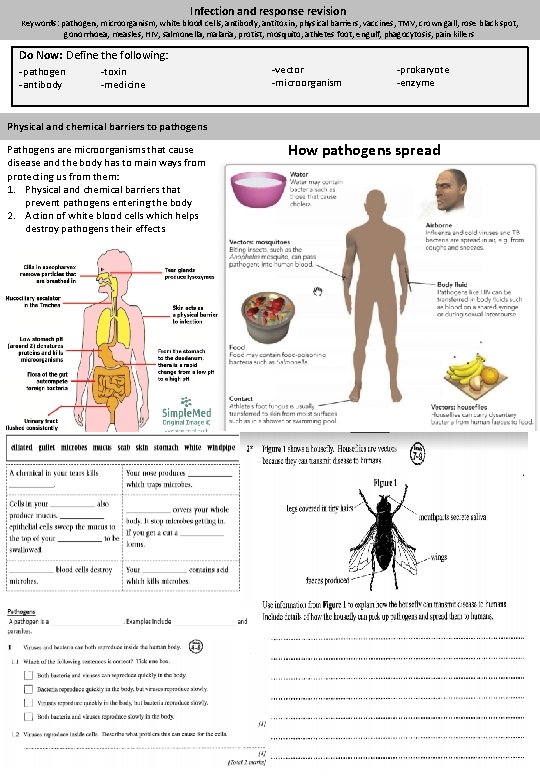
Infection and response revision Keywords: pathogen, microorganism, white blood cells, antibody, antitoxin, physical barriers, vaccines, TMV, crown gall, rose black spot, gonorrhoea, measles, HIV, salmonella, malaria, protist, mosquito, athletes foot, engulf, phagocytosis, pain killers Do Now: Define the following: -pathogen -antibody -toxin -medicine -vector -microorganism -prokaryote -enzyme Physical and chemical barriers to pathogens Pathogens are microorganisms that cause disease and the body has to main ways from protecting us from them: 1. Physical and chemical barriers that prevent pathogens entering the body 2. Action of white blood cells which helps destroy pathogens their effects How pathogens spread
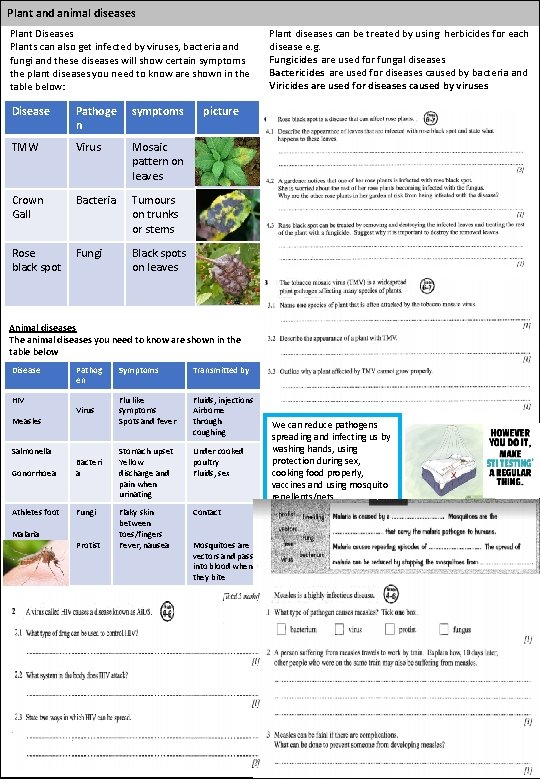
Plant and animal diseases Plant Diseases Plants can also get infected by viruses, bacteria and fungi and these diseases will show certain symptoms the plant diseases you need to know are shown in the table below: Disease Pathoge n symptoms TMW Virus Mosaic pattern on leaves Plant diseases can be treated by using herbicides for each disease e. g. Fungicides are used for fungal diseases Bactericides are used for diseases caused by bacteria and Viricides are used for diseases caused by viruses picture Crown Bacteria Inhaling vs exhaling Parts of the breathing system. Tumours Gall on trunks or stems Rose black spot Fungi Black spots on leaves Animal diseases The animal diseases you need to know are shown in the table below Disease HIV Measles Salmonella Pathog en Virus Gonorrhoea Bacteri a Athletes foot Fungi Malaria Protist Symptoms Transmitted by Flu like symptoms Spots and fever Fluids, injections Airborne through coughing Stomach upset Yellow discharge and pain when urinating Under cooked poultry Fluids, sex Flaky skin between toes/fingers Fever, nausea Contact Mosquitoes are vectors and pass into blood when they bite We can reduce pathogens spreading and infecting us by washing hands, using protection during sex, cooking food properly, vaccines and using mosquito repellents/nets
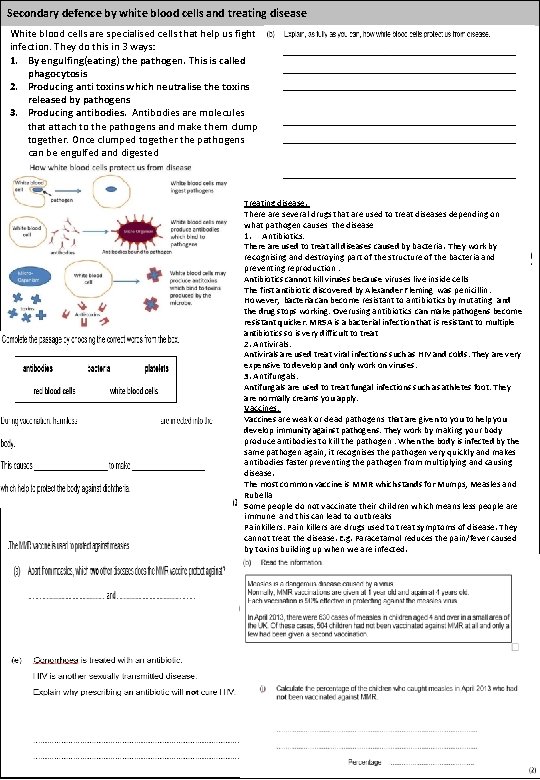
Secondary defence by white blood cells and treating disease White blood cells are specialised cells that help us fight infection. They do this in 3 ways: 1. By engulfing(eating) the pathogen. This is called phagocytosis 2. Producing anti toxins which neutralise the toxins released by pathogens 3. Producing antibodies. Antibodies are molecules that attach to the pathogens and make them clump together. Once clumped together the pathogens can be engulfed and digested Treating disease. There are several drugs that are used to treat diseases depending on what pathogen causes the disease 1. Antibiotics: There are used to treat all diseases caused by bacteria. They work by recognising and destroying part of the structure of the bacteria and preventing reproduction. Antibiotics cannot kill viruses because viruses live inside cells The first antibiotic discovered by Alexander Fleming was penicillin. However, bacteria can become resistant to antibiotics by mutating and the drug stops working. Overusing antibiotics can make pathogens become resistant quicker. MRSA is a bacterial infection that is resistant to multiple antibiotics so is very difficult to treat 2. Antivirals: Antivirals are used treat viral infections such as HIV and colds. They are very expensive to develop and only work on viruses. 3. Antifungals: Antifungals are used to treat fungal infections such as athletes foot. They are normally creams you apply. Vaccines: Vaccines are weak or dead pathogens that are given to you to help you develop immunity against pathogens. They work by making your body produce antibodies to kill the pathogen. When the body is infected by the same pathogen again, it recognises the pathogen very quickly and makes antibodies faster preventing the pathogen from multiplying and causing disease. The most common vaccine is MMR which stands for Mumps, Measles and Rubella Some people do not vaccinate their children which means less people are immune and this can lead to outbreaks Painkillers: Pain killers are drugs used to treat symptoms of disease. They cannot treat the disease. E. g. Paracetamol reduces the pain/fever caused by toxins building up when we are infected.
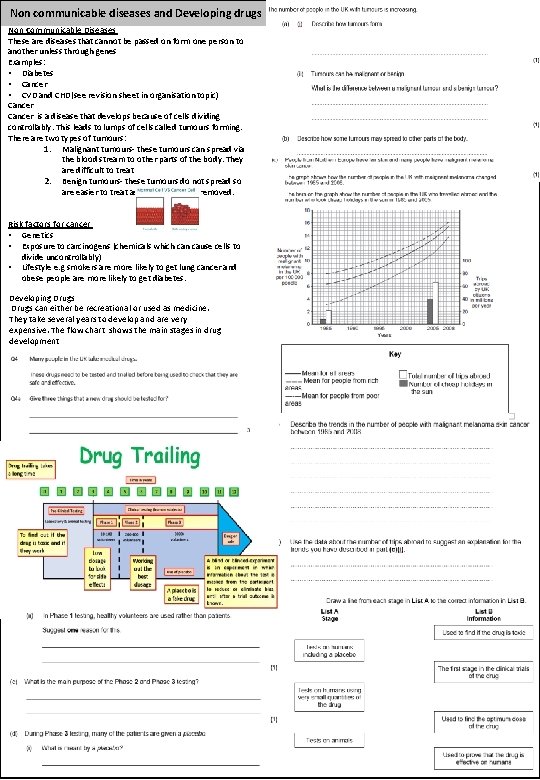
Non communicable diseases and Developing drugs Non Communicable Diseases These are diseases that cannot be passed on form one person to another unless through genes Examples: • Diabetes • Cancer • CVD and CHD(see revision sheet in organisation topic) Cancer is a disease that develops because of cells dividing controllably. This leads to lumps of cells called tumours forming. There are two types of tumours: 1. Malignant tumours- these tumours can spread via the blood stream to other parts of the body. They are difficult to treat 2. Benign tumours- these tumours do not spread so are easier to treat as they can just be removed. Risk factors for cancer • Genetics • Exposure to carcinogens (chemicals which can cause cells to divide uncontrollably) • Lifestyle e. g smokers are more likely to get lung cancer and obese people are more likely to get diabetes. Developing Drugs can either be recreational or used as medicine. They take several years to develop and are very expensive. The flow chart shows the main stages in drug development