
Infants Children and Adolescents Laura E Berk 6
Infants, Children, and Adolescents Laura E. Berk 6 th edition Chapter 13 Emotional and Social Development in Middle Childhood This multimedia product and its contents are protected under copyright law. The following are prohibited by law: Any public performance or display, including transmission of any image over a network; Preparation of any derivative work, including the extraction, in whole or in part of any images; Any rental, lease, or lending of the program.
Erikson’s Theory: Industry versus Inferiority Industry Developing a sense of competence at useful skills. School provides many opportunities. Inferiority Pessimism and lack of confidence in own ability to do things well. Family environment, teachers, peers, can contribute to negative feelings.

Self-Concept in Middle Childhood More refined me-self – Social comparisons – Emphasize competencies Both positive and negative Cognitive development affects structure of self-concept – Perspective taking Social & cultural development affect content of self-concept – Real self vs. ideal self
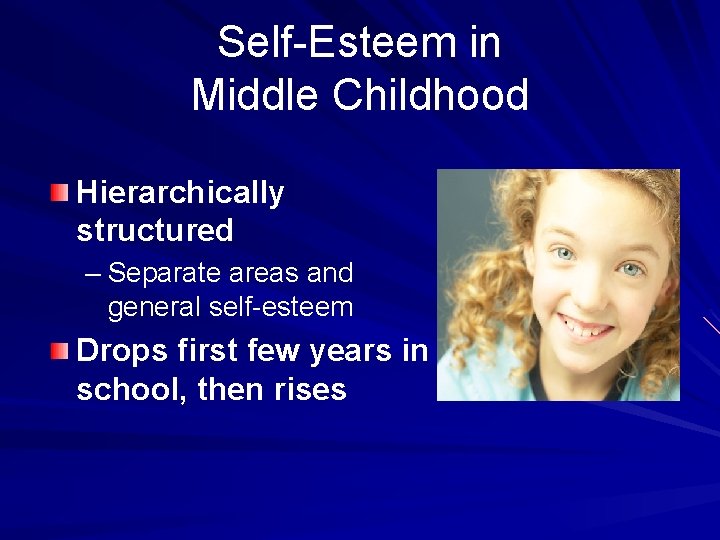
Self-Esteem in Middle Childhood Hierarchically structured – Separate areas and general self-esteem Drops first few years in school, then rises
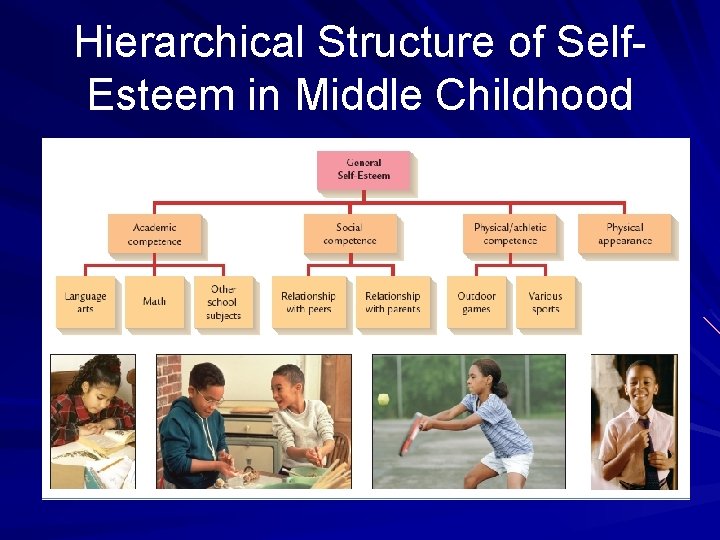
Hierarchical Structure of Self. Esteem in Middle Childhood
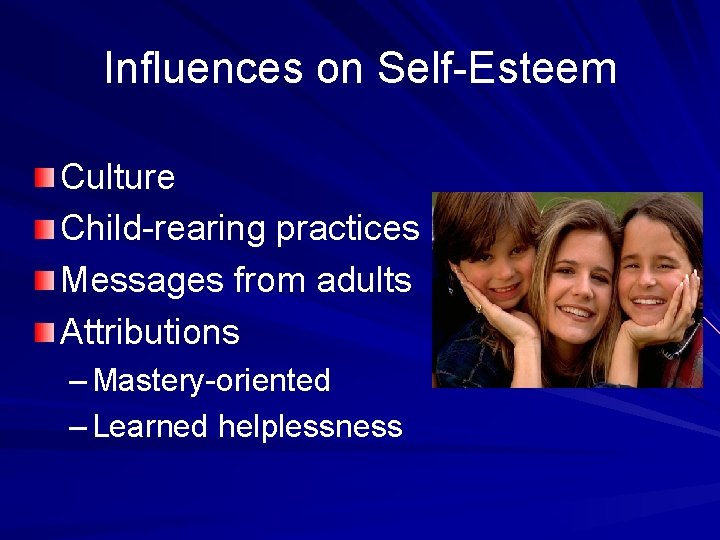
Influences on Self-Esteem Culture Child-rearing practices Messages from adults Attributions – Mastery-oriented – Learned helplessness
Achievement-Related Attributions Mastery-Oriented Attribute success to ability Incremental view of ability – Can improve by trying Focus on learning goals Learned Helplessness Attribute failure to ability Fixed view of ability – Cannot be changed Focus on performance goals
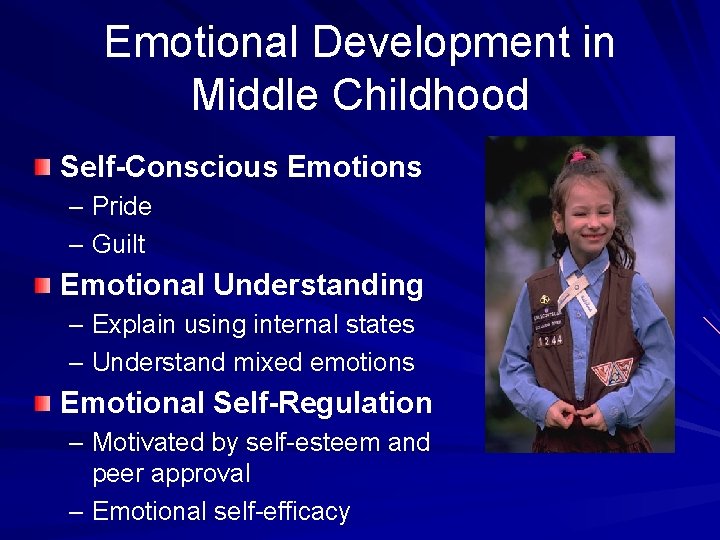
Emotional Development in Middle Childhood Self-Conscious Emotions – Pride – Guilt Emotional Understanding – Explain using internal states – Understand mixed emotions Emotional Self-Regulation – Motivated by self-esteem and peer approval – Emotional self-efficacy
Coping with Stress Problem-Centered Coping Used when situation is seen as changeable Identify the difficulty Decide what to do about it Emotion-Centered Coping Used if problemcentered coping does not work. – Situation is seen as unchangeable Internal private control of distress

Selman’s Stages of Perspective Taking Level 0 Undifferentiated 3 – 6 years Level 1 Social-informational 4 – 9 years Level 2 Self-reflective 7 – 12 years Level 3 Third-party 10 – 15 years Level 4 Societal 14 years to adult
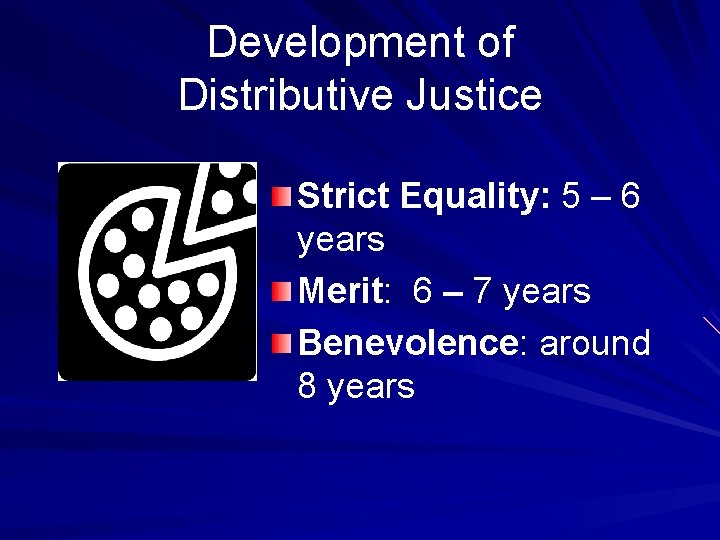
Development of Distributive Justice Strict Equality: 5 – 6 years Merit: 6 – 7 years Benevolence: around 8 years
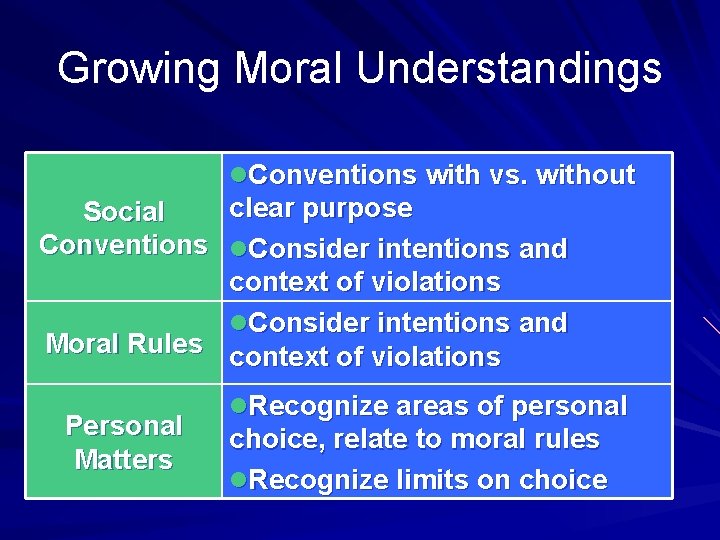
Growing Moral Understandings l. Conventions with vs. without clear purpose Social Conventions l. Consider intentions and context of violations l. Consider intentions and Moral Rules context of violations Personal Matters l. Recognize areas of personal choice, relate to moral rules l. Recognize limits on choice
Understanding Individual Rights When children challenge adult authority, they typically do it within the personal domain. Ideas of personal choice enhance children’s moral understanding. Older school-age children put limits on individual choice. They typically decide in favor of fairness, which is why prejudice generally declines in middle childhood.
Understanding Diversity and Inequality By the early school years, children associate power and privilege with white people and inferior status with people of color. In the absence of information, children may fill in the gaps with information they encounter in the media.
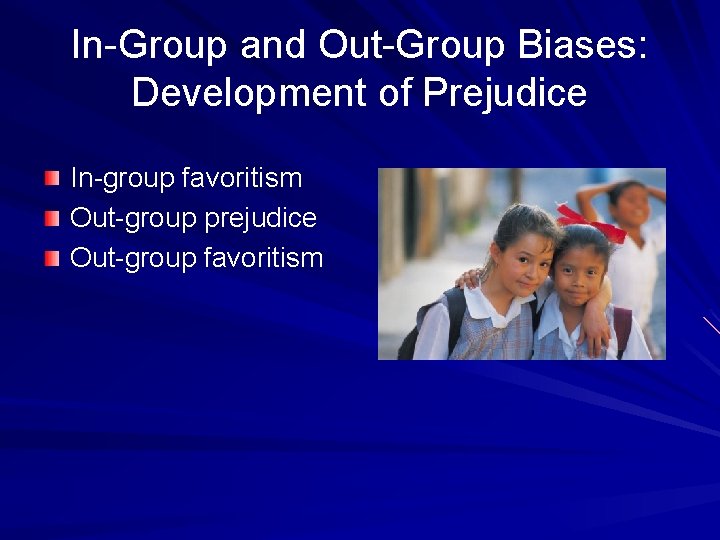
In-Group and Out-Group Biases: Development of Prejudice In-group favoritism Out-group prejudice Out-group favoritism
The Extent to Which Children Hold Racial and Ethnic Biases A fixed view of personality traits Overly high self-esteem A social world in which people are sorted into groups
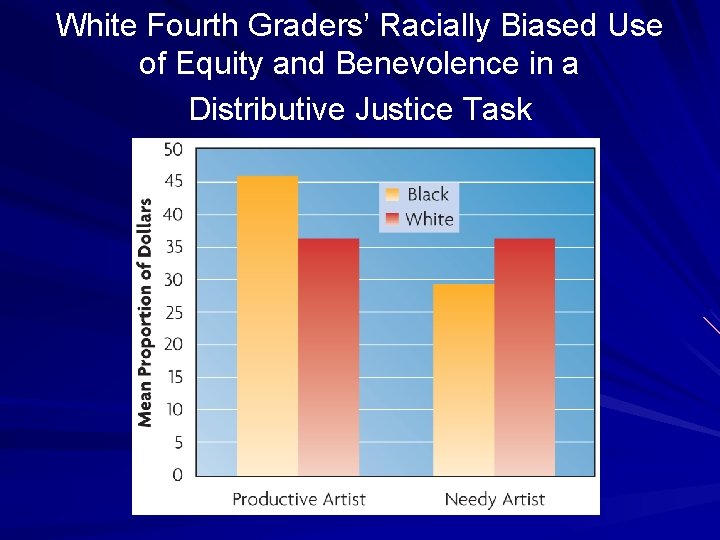
White Fourth Graders’ Racially Biased Use of Equity and Benevolence in a Distributive Justice Task
Peer Groups Formed from proximity, similarity Adopt similar dress and behavior Peer Culture – Relational aggression – Exclusion
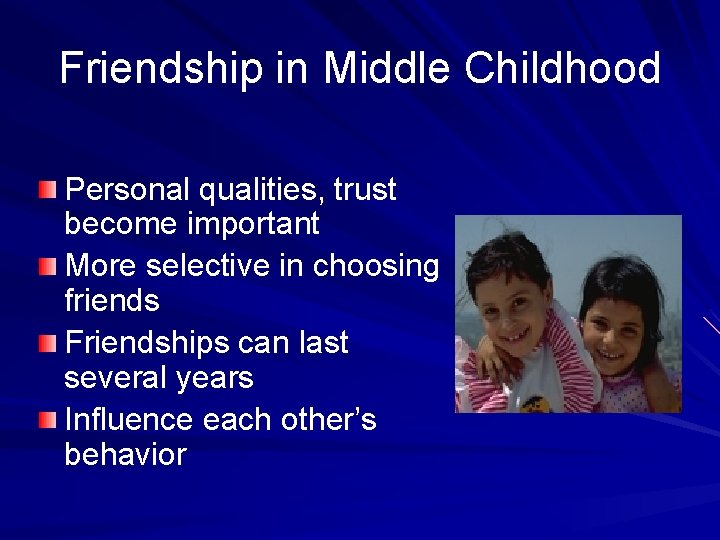
Friendship in Middle Childhood Personal qualities, trust become important More selective in choosing friends Friendships can last several years Influence each other’s behavior
Peer Acceptance Categories Popular – Popular-prosocial – Popular-antisocial Rejected – Rejected-aggressive – Rejected-withdrawn Controversial Neglected
Bullies and Their Victims About 10 to 20% of children are bullies, and about 15 to 30% are repeatedly victimized. Victimization leads to adjustment problems, including depression, loneliness, low selfesteem, and poor school performance. The best way to reduce bullying is to change youth environments, promote prosocial behaviors, and enlist young people’s cooperation.
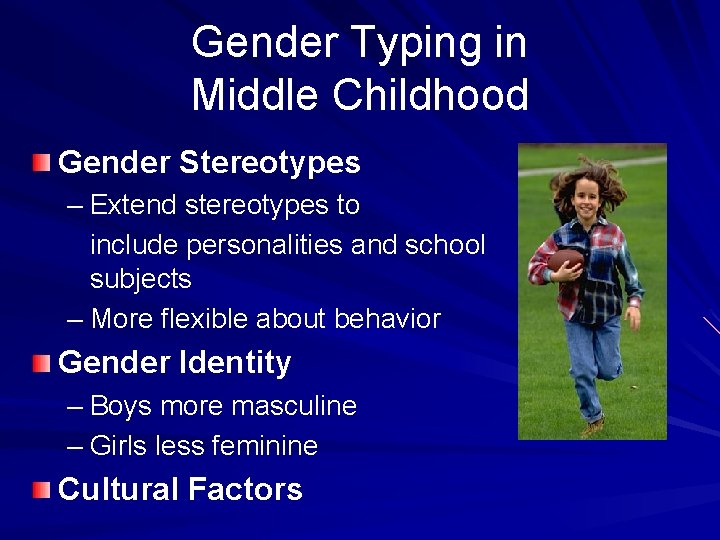
Gender Typing in Middle Childhood Gender Stereotypes – Extend stereotypes to include personalities and school subjects – More flexible about behavior Gender Identity – Boys more masculine – Girls less feminine Cultural Factors
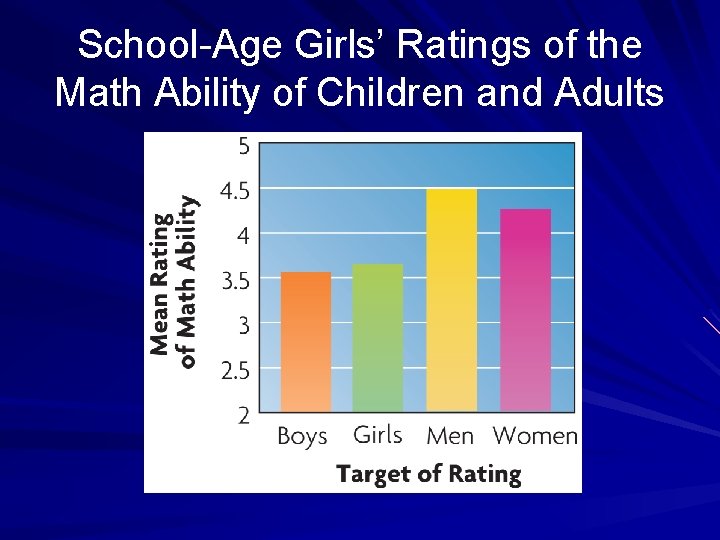
School-Age Girls’ Ratings of the Math Ability of Children and Adults
Gender Identity and Behavior Gender typicality Gender contentedness Pressure to conform to gender roles
Peers, Gender Typing, and Culture Sex-segregation strengthens during middle childhood. Interaction patterns vary with culture. Ethnically integrated classrooms might reduce gender-typed peer communication as some children’s interaction style influences others.
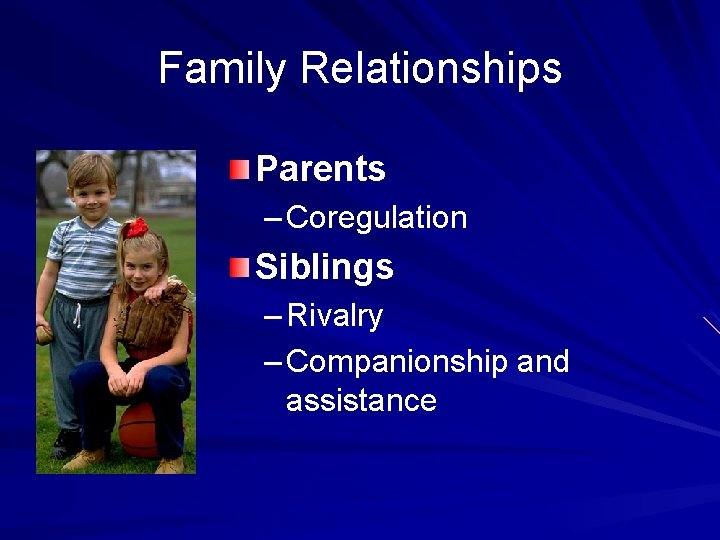
Family Relationships Parents – Coregulation Siblings – Rivalry – Companionship and assistance
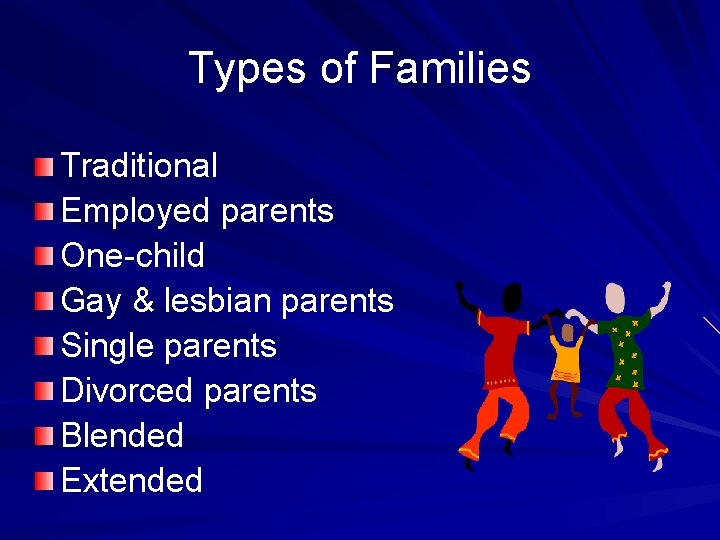
Types of Families Traditional Employed parents One-child Gay & lesbian parents Single parents Divorced parents Blended Extended
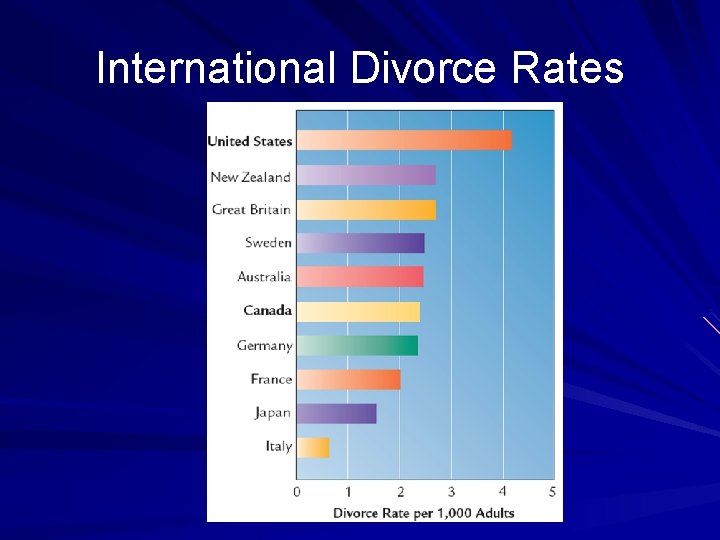
International Divorce Rates
Consequences of Parental Divorce Immediate Instability, conflict, drop in income Parental stress, disorganization Consequences affected by: – – – Age Temperament Sex Long-Term Improved adjustment after 2 years Boys, children with difficult temperaments more likely to have problems Father’s involvement affects adjustment
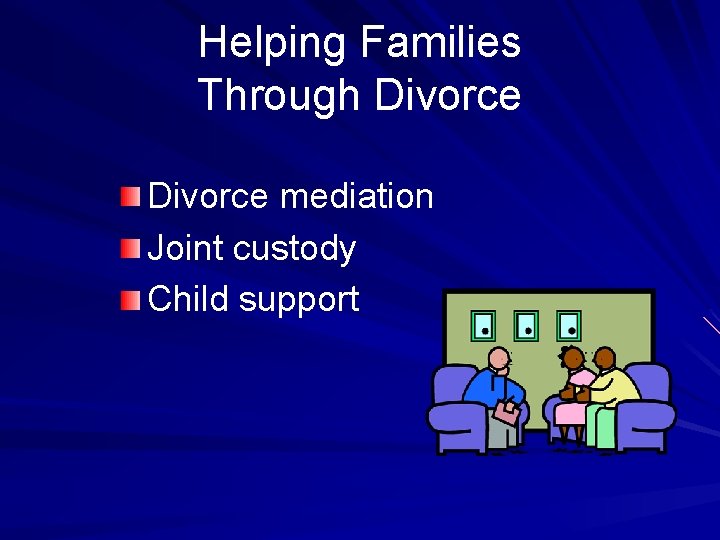
Helping Families Through Divorce mediation Joint custody Child support
Blended Families Mother-Stepfather Most frequent Boys usually adjust quickly Girls adapt less favorably Older children and adolescents of both sexes display more problems Father-Stepmother Often leads to reduced father-child contact Children in fathers’ custody often react negatively Girls & stepmothers slow to get along at first, more positive interaction later
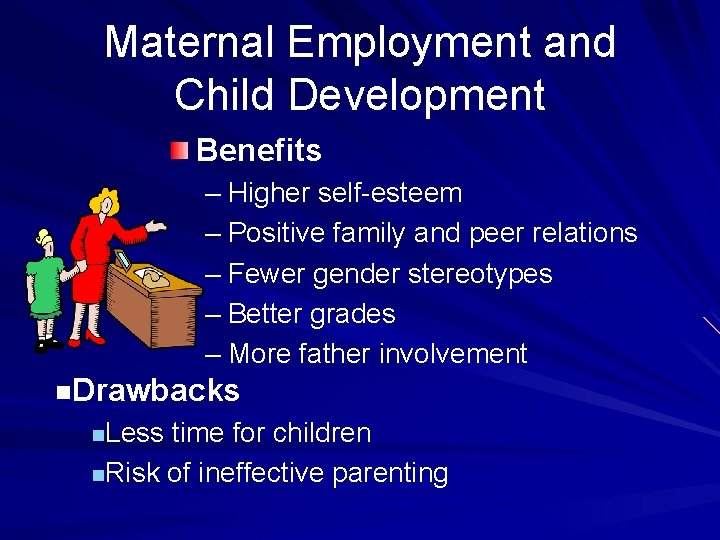
Maternal Employment and Child Development Benefits – Higher self-esteem – Positive family and peer relations – Fewer gender stereotypes – Better grades – More father involvement n. Drawbacks n. Less time for children n. Risk of ineffective parenting
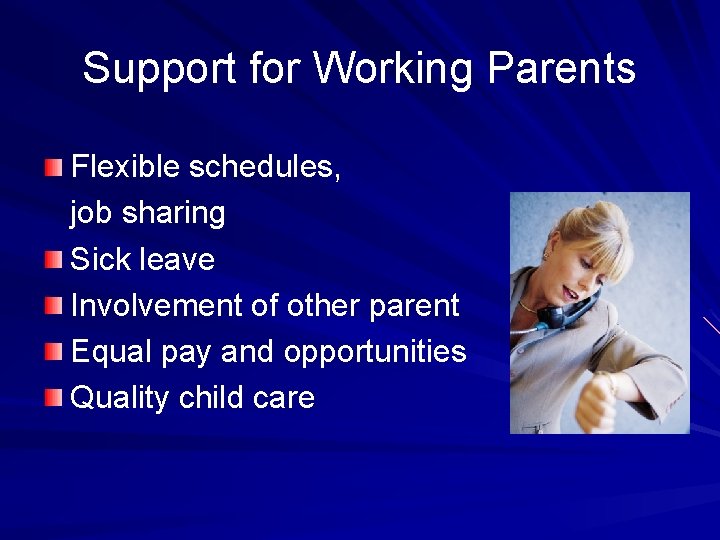
Support for Working Parents Flexible schedules, job sharing Sick leave Involvement of other parent Equal pay and opportunities Quality child care
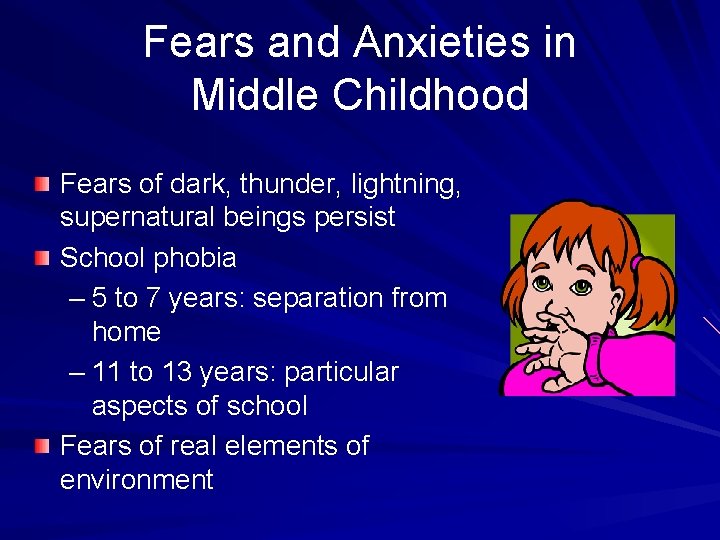
Fears and Anxieties in Middle Childhood Fears of dark, thunder, lightning, supernatural beings persist School phobia – 5 to 7 years: separation from home – 11 to 13 years: particular aspects of school Fears of real elements of environment
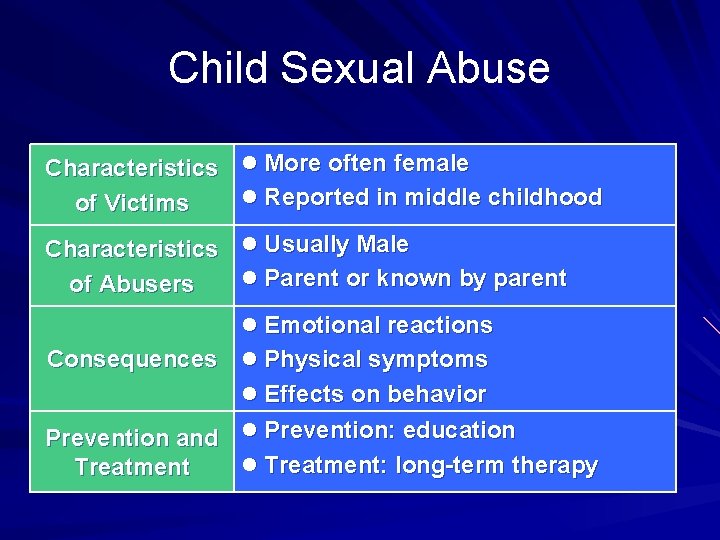
Child Sexual Abuse Characteristics l More often female l Reported in middle childhood of Victims Characteristics l Usually Male l Parent or known by parent of Abusers l Emotional reactions Consequences l Physical symptoms l Effects on behavior Prevention and l Prevention: education l Treatment: long-term therapy Treatment
Children’s Eyewitness Testimony Age Differences Suggestibility Interventions
Resources That Foster Resilience Personal Family School Community
- Slides: 37