
Infant and Early Childhood Mental Health What It


- Slides: 42
Infant and Early Childhood Mental Health What It Is and Why It Matters Lisa Mennet, Ph. D
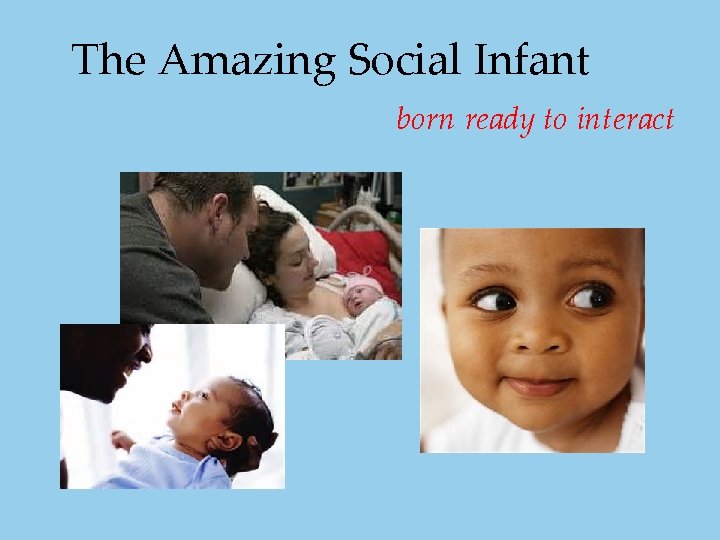
The Amazing Social Infant born ready to interact
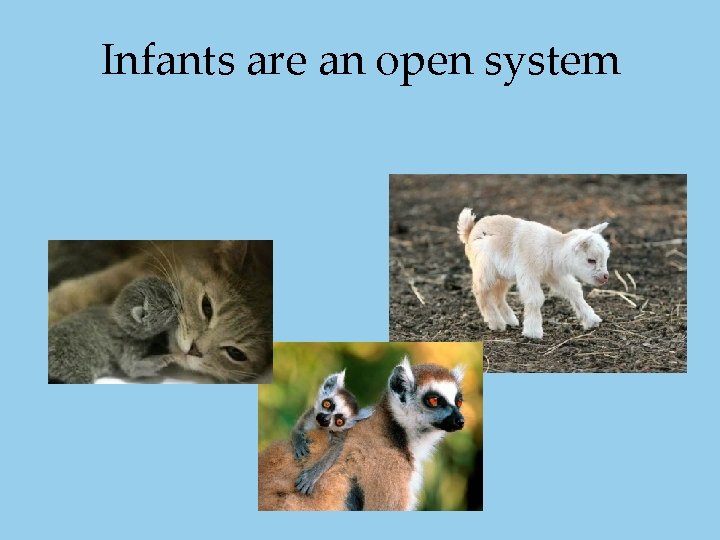
Infants are an open system
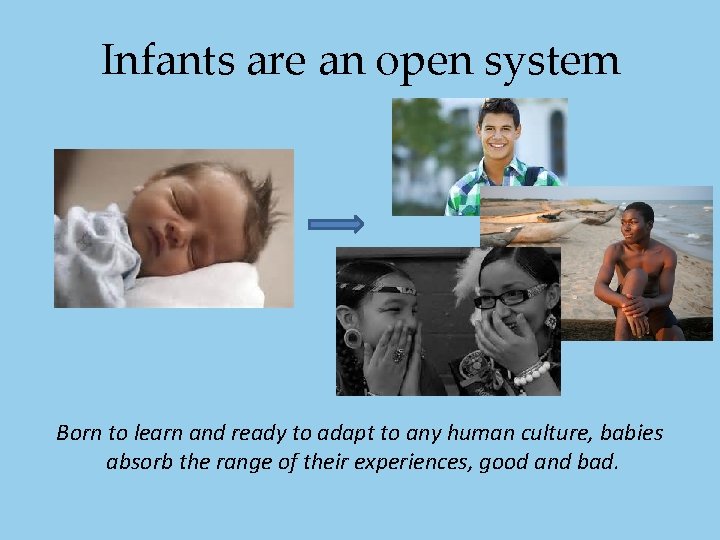
Infants are an open system Born to learn and ready to adapt to any human culture, babies absorb the range of their experiences, good and bad.
What is IECMH? Infant mental health is the developing capacity of the child from birth to three to: • Experience, regulate, and express emotions; • Form close and secure interpersonal relationships; • And explore the environment and learn all in the context of family, community, and cultural expectations for young children. Infant mental health is synonymous with healthy social and emotional development. Zero to Three, the National Center on Infants and Toddlers, 2001
What is IECMH? Expressing and Regulating Emotions – Forming Relationships -- Exploring
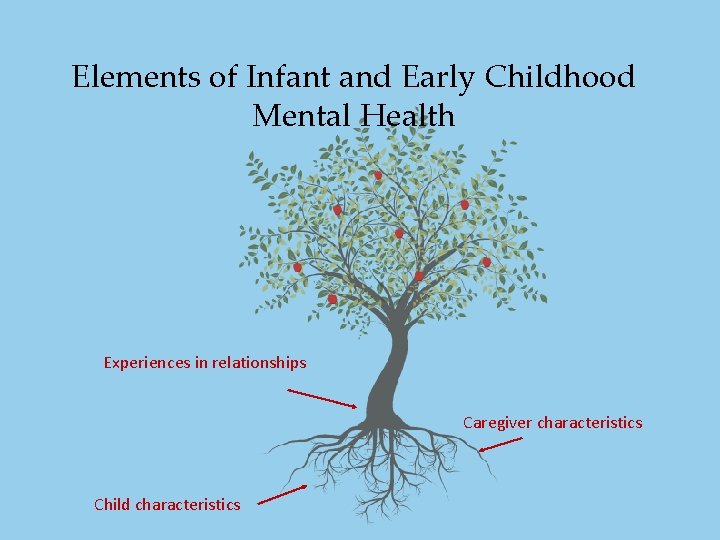
Elements of Infant and Early Childhood Mental Health Experiences in relationships Caregiver characteristics Child characteristics
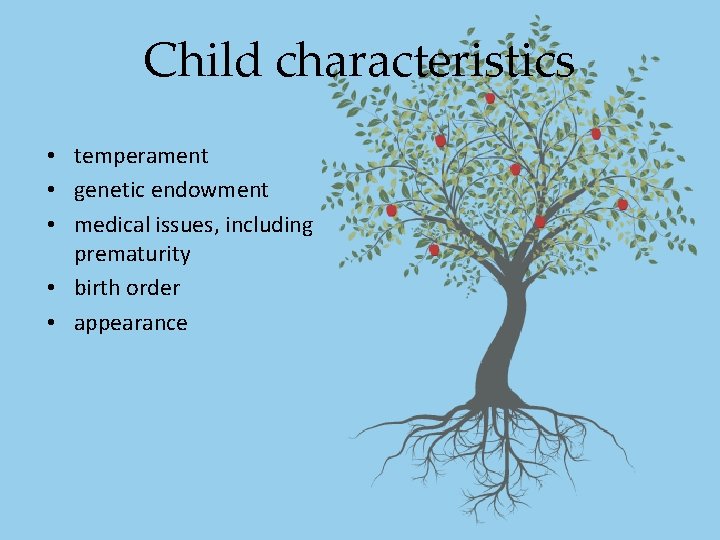
Child characteristics • temperament • genetic endowment • medical issues, including prematurity • birth order • appearance
Caregiver characteristics temperament family of origin environmental safety resources and supports (or lack thereof) • trauma history • mental health issues (including post-partum depression) • •
Post-Partum Depression • 20% of mothers experience depressive symptoms in the first 3 months following childbirth, 7% experiencing major depression • one in 25 fathers • young children: language skills, physical and cognitive development • older children: poor self-control, aggression, poor peer relationships, and difficulty in school • biggest impact when depression combines with other factors http: //zerotothree. org/
Experiences within Relationships nurturing, sensitive adult-child interactions • are crucial for the development of trust, empathy, generosity, and conscience • support the development of curiosity, self-direction, persistence, cooperation (Greenough, et. al. , 2001) • are a precursor of school readiness (Kaplan-Sanoff, 2000)
Learning through Close Relationships
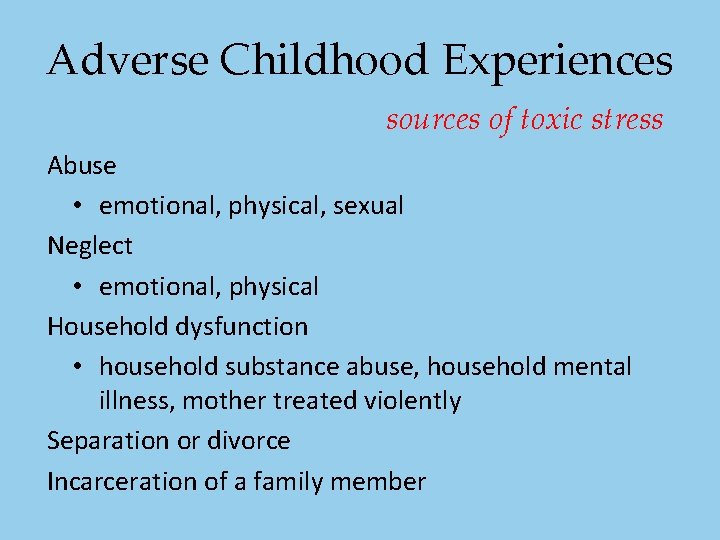
Adverse Childhood Experiences sources of toxic stress Abuse • emotional, physical, sexual Neglect • emotional, physical Household dysfunction • household substance abuse, household mental illness, mother treated violently Separation or divorce Incarceration of a family member
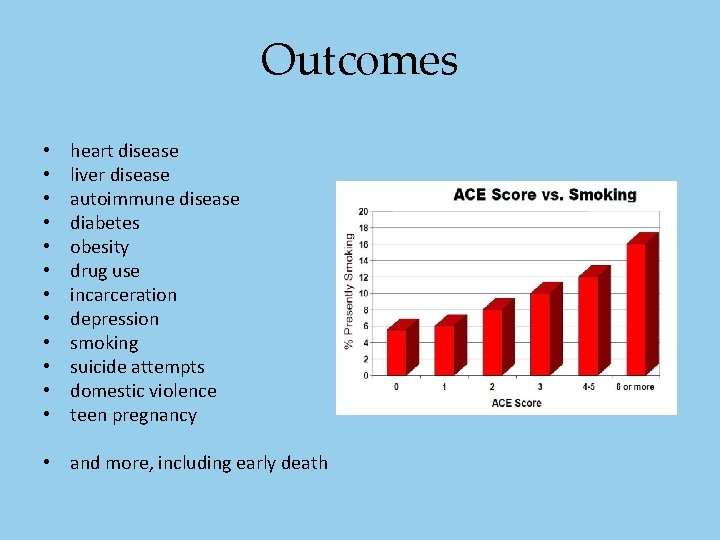
Outcomes • • • heart disease liver disease autoimmune disease diabetes obesity drug use incarceration depression smoking suicide attempts domestic violence teen pregnancy • and more, including early death
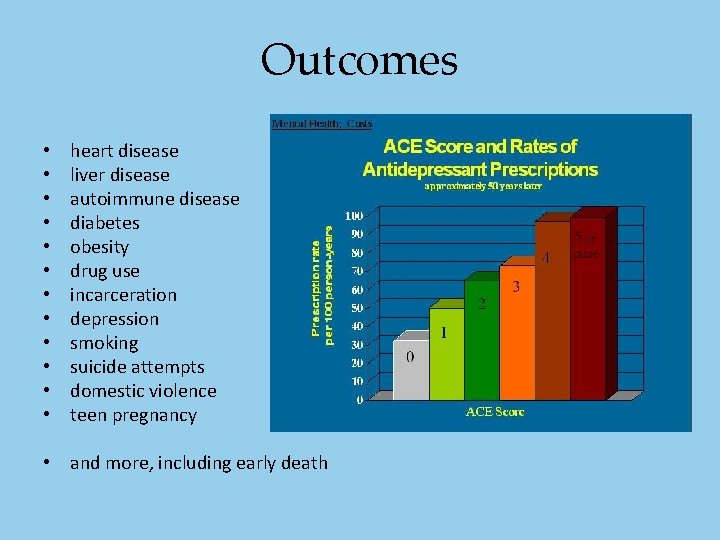
Outcomes • • • heart disease liver disease autoimmune disease diabetes obesity drug use incarceration depression smoking suicide attempts domestic violence teen pregnancy • and more, including early death
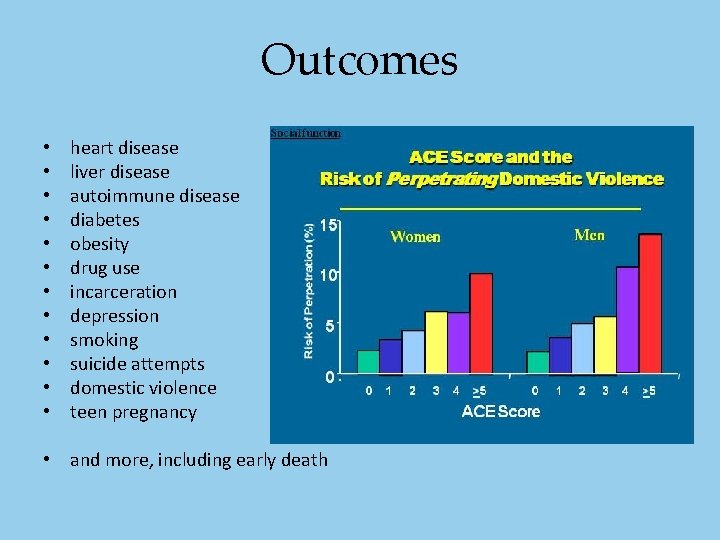
Outcomes • • • heart disease liver disease autoimmune disease diabetes obesity drug use incarceration depression smoking suicide attempts domestic violence teen pregnancy • and more, including early death
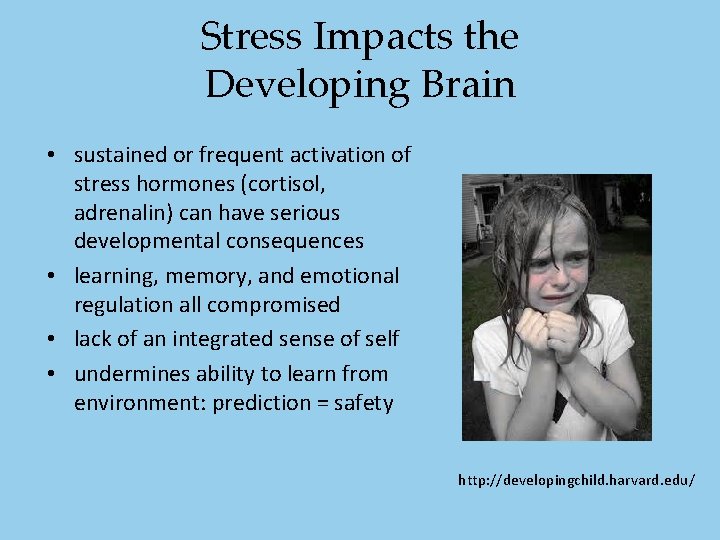
Stress Impacts the Developing Brain • sustained or frequent activation of stress hormones (cortisol, adrenalin) can have serious developmental consequences • learning, memory, and emotional regulation all compromised • lack of an integrated sense of self • undermines ability to learn from environment: prediction = safety http: //developingchild. harvard. edu/
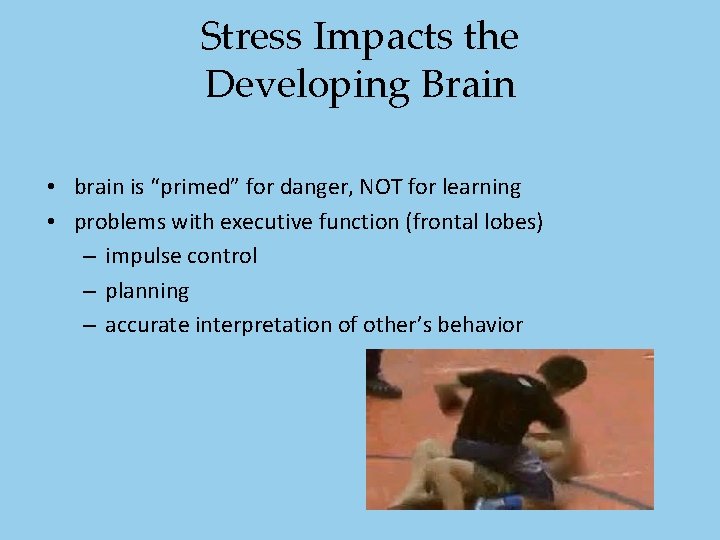
Stress Impacts the Developing Brain • brain is “primed” for danger, NOT for learning • problems with executive function (frontal lobes) – impulse control – planning – accurate interpretation of other’s behavior
The Scope of the Problem Infants and Toddlers are Especially Vulnerable • 26% of population in child welfare is under 4 y/o* • 34% of abused and neglected children are 0 -36 months old, making them the most vulnerable age group** • 26% of children 0 -2 and 32% of children 3 -5 have emotional or behavioral problems*** National Survey of Child & Adolescent Well Being, 1997 -2013 **Child Abuse & Neglect Fatality Victims by Age, 2010 ***National Center for Children in Poverty
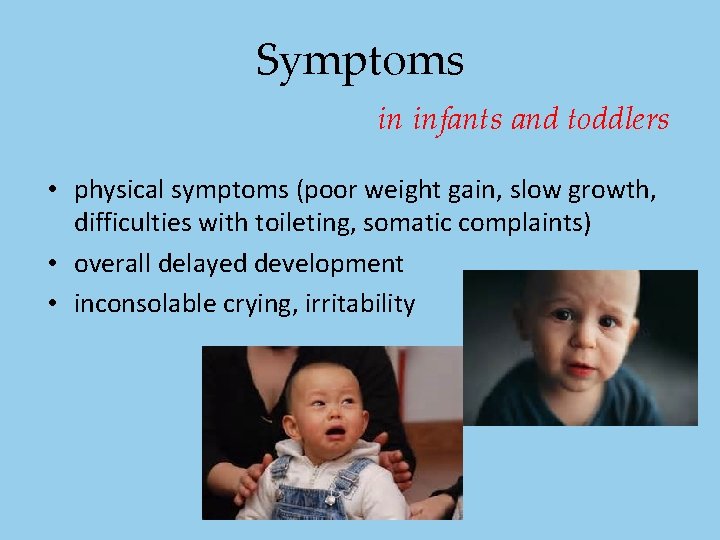
Symptoms in infants and toddlers • physical symptoms (poor weight gain, slow growth, difficulties with toileting, somatic complaints) • overall delayed development • inconsolable crying, irritability
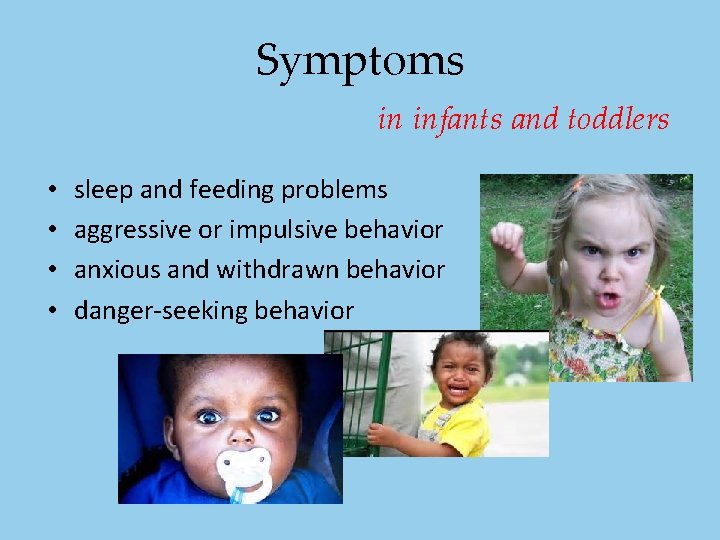
Symptoms in infants and toddlers • • sleep and feeding problems aggressive or impulsive behavior anxious and withdrawn behavior danger-seeking behavior
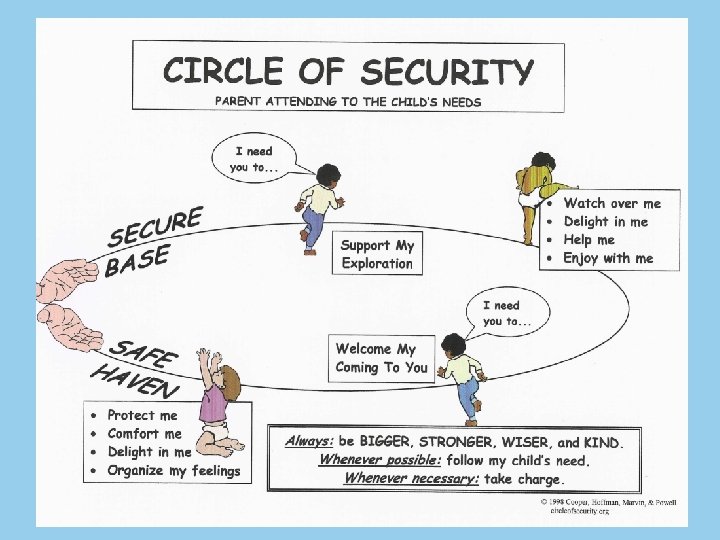
Attachment Theory • evolutionary advantage • activated by fear and distress • protection by caregiver, including co-regulation of fear, is gradually internalized
Attachment Theory • children maintain their attachment relationships at all costs • children will distort expression of needs to accommodate caregiver • distortions are stabilized because they work = some comfort is received • insecure attachment is an important adaptation to danger because it increases survival • distortions affect child’s developing structures for regulation, memory, thought and sense of self
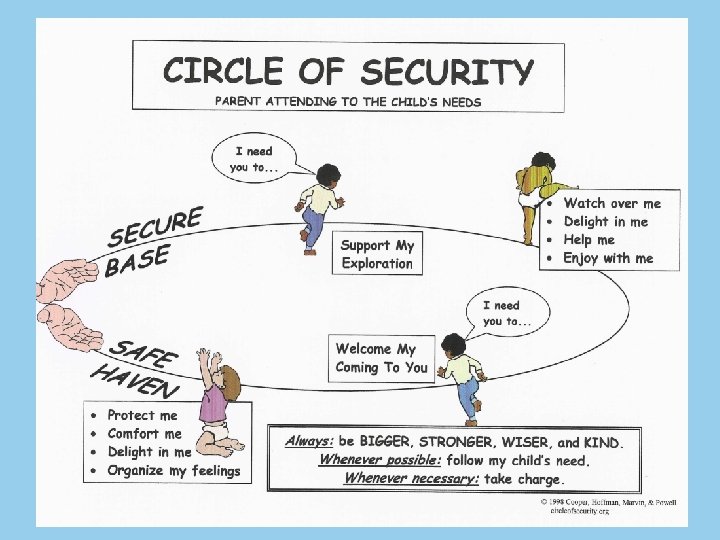
Attachment Theory: Security Across the Lifespan • free expression of needs: confidence they will be met • flexibility of attention • internalization of regulatory capacity • safety with a wide range of affects • free access to memory
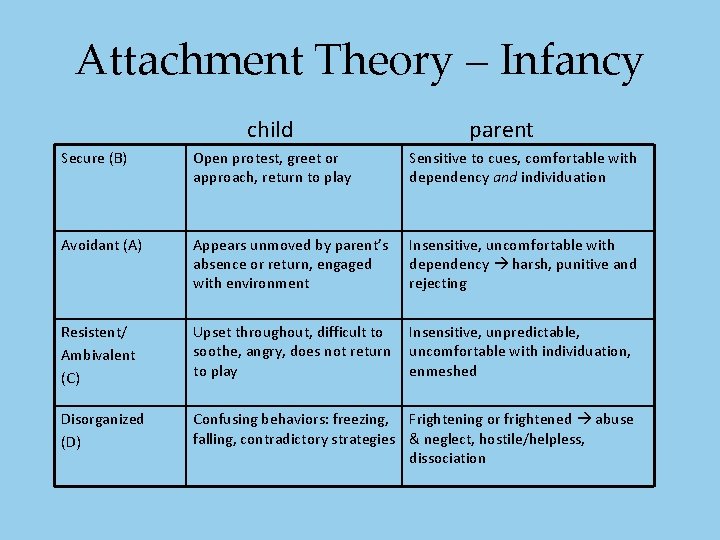
Attachment Theory – Infancy child parent Secure (B) Open protest, greet or approach, return to play Sensitive to cues, comfortable with dependency and individuation Avoidant (A) Appears unmoved by parent’s absence or return, engaged with environment Insensitive, uncomfortable with dependency harsh, punitive and rejecting Resistent/ Ambivalent (C) Upset throughout, difficult to soothe, angry, does not return to play Insensitive, unpredictable, uncomfortable with individuation, enmeshed Disorganized (D) Confusing behaviors: freezing, Frightening or frightened abuse falling, contradictory strategies & neglect, hostile/helpless, dissociation
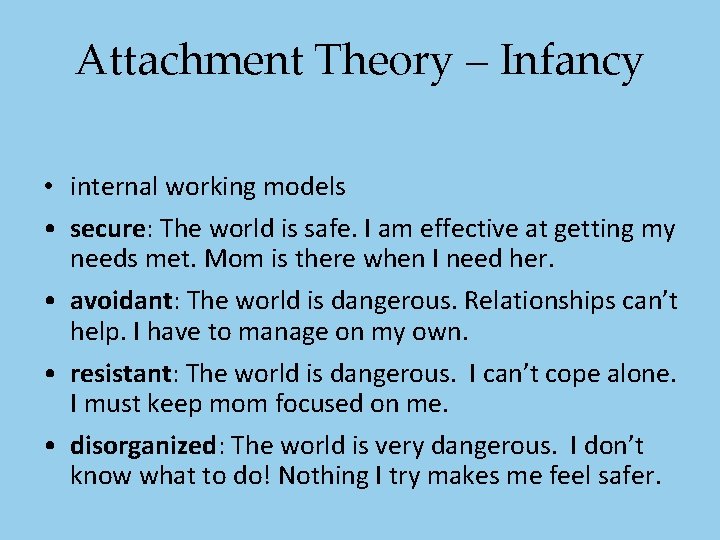
Attachment Theory – Infancy • internal working models • secure: The world is safe. I am effective at getting my needs met. Mom is there when I need her. • avoidant: The world is dangerous. Relationships can’t help. I have to manage on my own. • resistant: The world is dangerous. I can’t cope alone. I must keep mom focused on me. • disorganized: The world is very dangerous. I don’t know what to do! Nothing I try makes me feel safer.
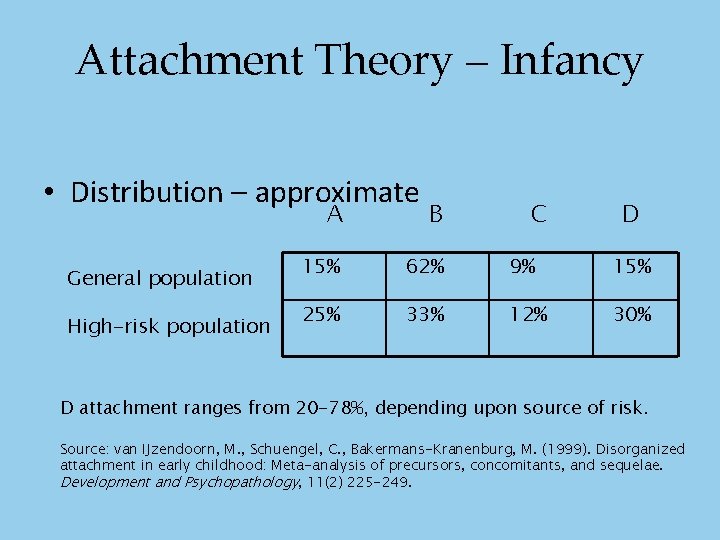
Attachment Theory – Infancy • Distribution – approximate General population High-risk population A B C D 15% 62% 9% 15% 25% 33% 12% 30% D attachment ranges from 20 -78%, depending upon source of risk. Source: van IJzendoorn, M. , Schuengel, C. , Bakermans-Kranenburg, M. (1999). Disorganized attachment in early childhood: Meta-analysis of precursors, concomitants, and sequelae. Development and Psychopathology, 11(2) 225 -249.
Attachment Theory - Toddlers • increased complexity due to developmental change • “goal-corrected partnership” • caregiver changing expectations about child’s new abilities • what activates attachment system is different • language and behavior can both be used to mis-cue
Attachment –Toddlers and Preschoolers • focus on function of behavior, not behaviors themselves. • distorted behavior comes from attempts to create more predictability = safety • what conditions cause the behavior to start and to stop?
Attachment - Toddlers and Preschoolers • secure (B) • use caregivers as a secure base – connections are more distal • negotiate separations, exploration • share responsibility for contact-maintenance • growing capacities for self-soothing (regulation)
Attachment – Toddlers and Preschoolers • avoidant (A) • avoid focus on relationship • take responsibility for contact maintenance, emotional regulation • actively monitor attachment figure • coy, cheerful or solicitous • anger – inhibited and displaced • focus on environment
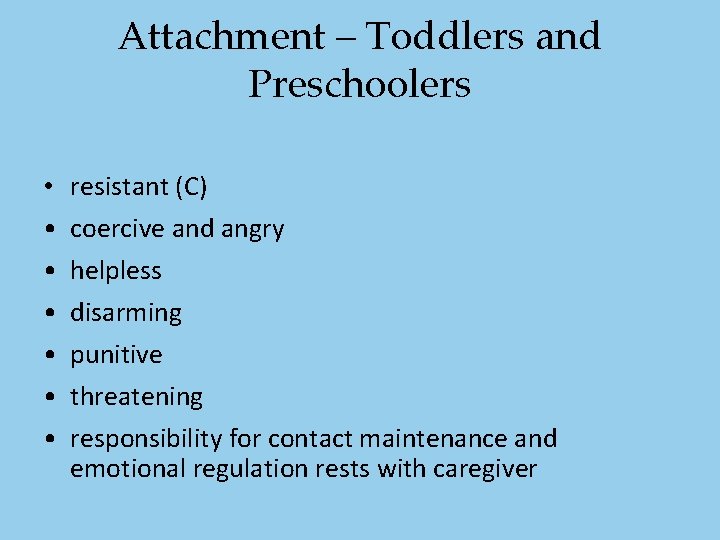
Attachment – Toddlers and Preschoolers • • resistant (C) coercive and angry helpless disarming punitive threatening responsibility for contact maintenance and emotional regulation rests with caregiver
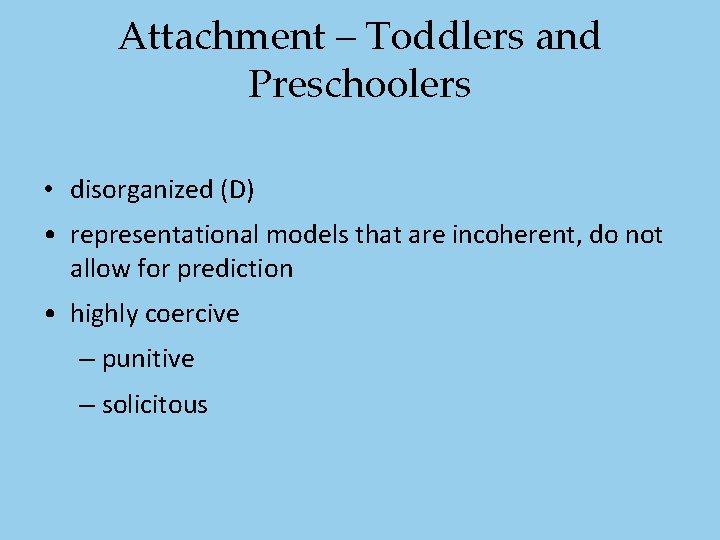
Attachment – Toddlers and Preschoolers • disorganized (D) • representational models that are incoherent, do not allow for prediction • highly coercive – punitive – solicitous
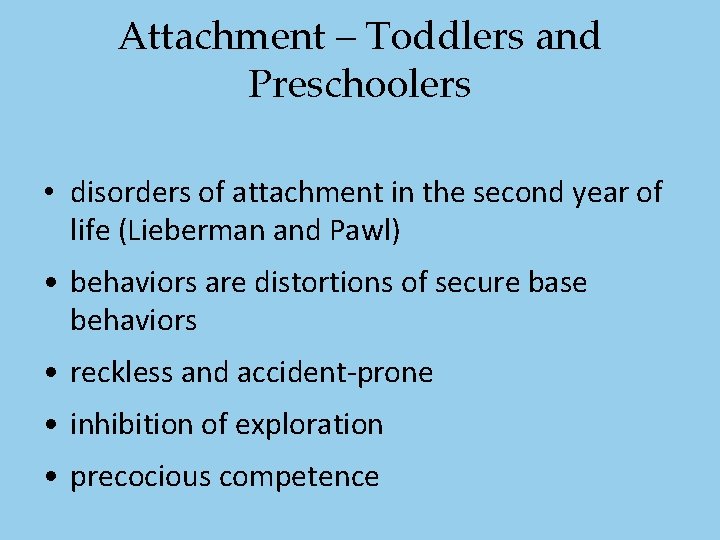
Attachment – Toddlers and Preschoolers • disorders of attachment in the second year of life (Lieberman and Pawl) • behaviors are distortions of secure base behaviors • reckless and accident-prone • inhibition of exploration • precocious competence
Dynamic Maturational Model – Treatment should take current sources of perceived danger seriously, and work to remove them – Uncover triggers that promote distortion of affect or cognition – Parents need to understand their own and child’s patterns of distorting thoughts and feelings as ways of dealing with fear – See passivity, coyness as warning signs of accommodation to danger
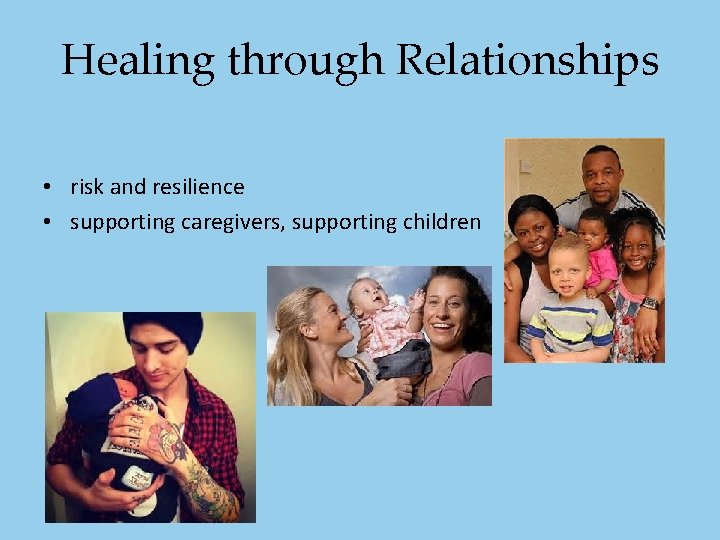
Healing through Relationships • risk and resilience • supporting caregivers, supporting children
“How you are is as important as what you do. ” - Jeree Pawl “Don't just do something— stand there and pay attention. ” -Sally Provence
How you are is as important as what you do – does this feeling belong? here? now? – strong feelings: impediments or important information? – mindful self-regulation – empathic inquiry and collaborative exploration: over-looked but powerful interventions – reflective supervision or consultation: critical for those who work with infants
Common Stories and how we can help Paula, Nick and Mateo, 6 months • fussy and inconsolable • PPD, isolation, lack of support Debra and Ellie, 2 years • withdrawn, fearful • domestic violence Jimmy, 4 years • aggressive and risk-taking • wetting • in foster care
Thank You! What are your questions?