
Industry Update SOLENIS Logan Muller SOLENIS Parent company
- Slides: 21
Industry Update SOLENIS Logan Muller
SOLENIS Parent company around since 1907 Now solely focused on Heavy industry Recent purchase of BASF Chemical division
APPROACH • R&D on unresolved Geothermal issues • Pre-empting new challenges for the industry: EGS • Collaboration is the key. 3 Confidential and proprietary.
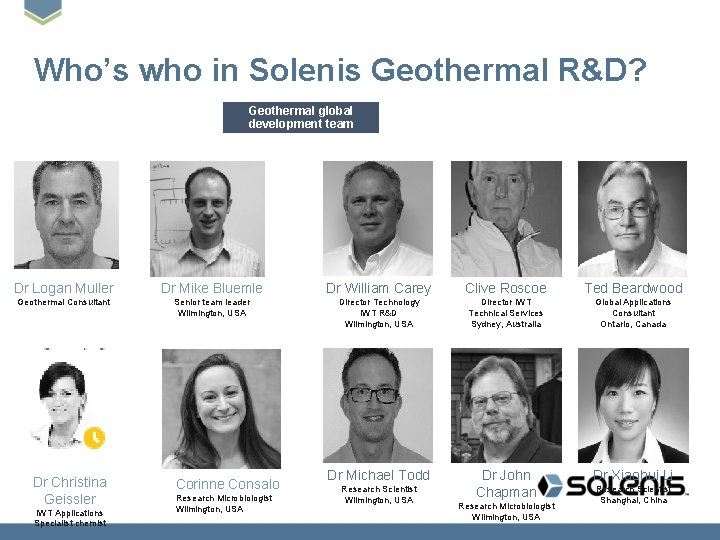
Who’s who in Solenis Geothermal R&D? Geothermal global development team Dr Logan Muller Dr Mike Bluemle Dr William Carey Clive Roscoe Ted Beardwood Geothermal Consultant Senior team leader Wilmington, USA Director Technology IWT R&D Wilmington, USA Director IWT Technical Services Sydney, Australia Global Applications Consultant Ontario, Canada Dr Michael Todd Dr John Chapman Dr Xiaohui Li Dr Christina Geissler IWT Applications Specialist chemist Corinne Consalo Research Microbiologist Wilmington, USA Research Scientist Wilmington, USA Research Microbiologist Wilmington, USA Research Scientist Shanghai, China
Measurable Results • Since last year over $20, 000 of measurable savings have been made in four companies • Some of these in improved production, some in reduced asset spend • That’s $20 million that can go into further in house development of those companies. • A direct result of focused collaboration 5 Confidential and proprietary.
Time to Collaborate • As the importance of the challenges facing the planet we are seeing more and more collaboration. • Our challenges are common ones. 6 Confidential and proprietary.
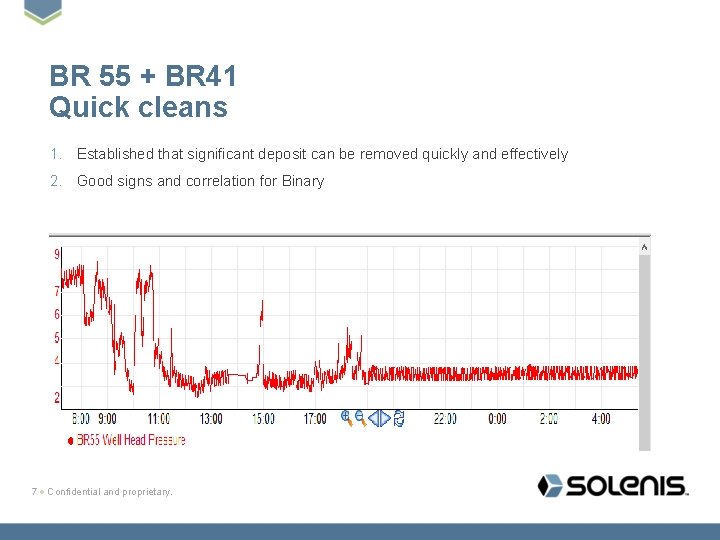
BR 55 + BR 41 Quick cleans 1. Established that significant deposit can be removed quickly and effectively 2. Good signs and correlation for Binary 7 Confidential and proprietary.
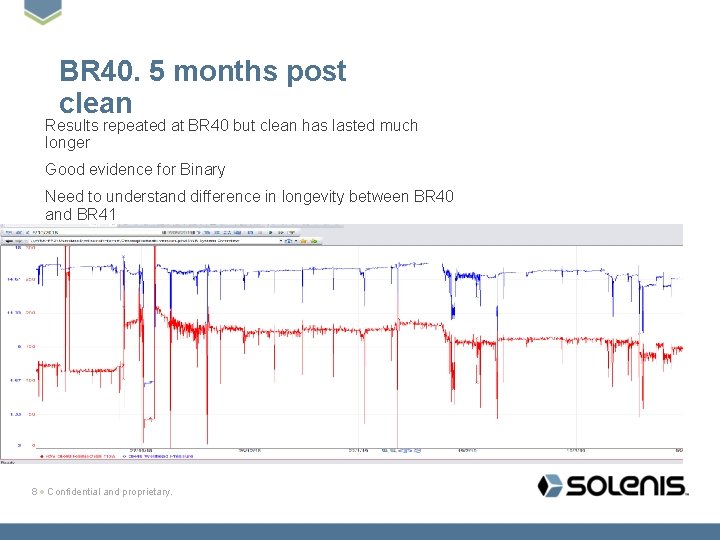
BR 40. 5 months post clean Results repeated at BR 40 but clean has lasted much longer Good evidence for Binary Need to understand difference in longevity between BR 40 and BR 41 8 Confidential and proprietary.
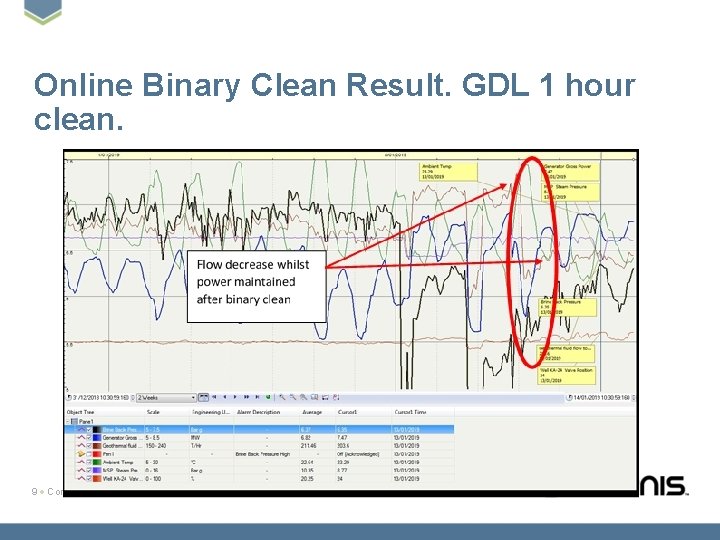
Online Binary Clean Result. GDL 1 hour clean. 9 Confidential and proprietary.
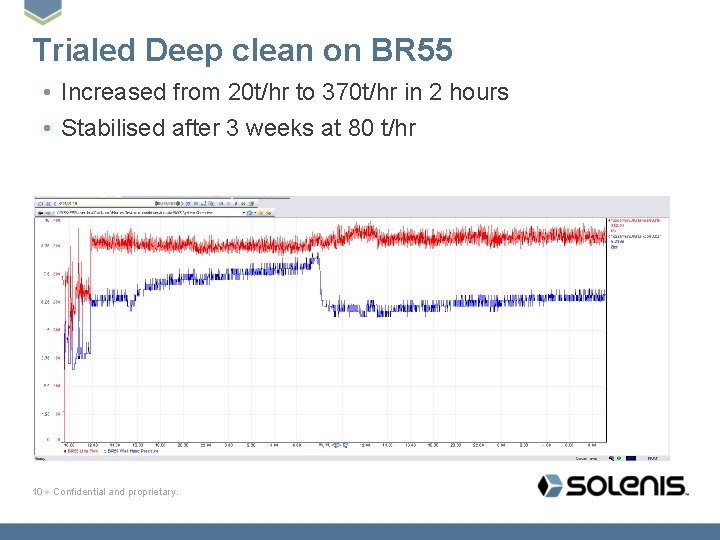
Trialed Deep clean on BR 55 • Increased from 20 t/hr to 370 t/hr in 2 hours • Stabilised after 3 weeks at 80 t/hr 10 Confidential and proprietary.
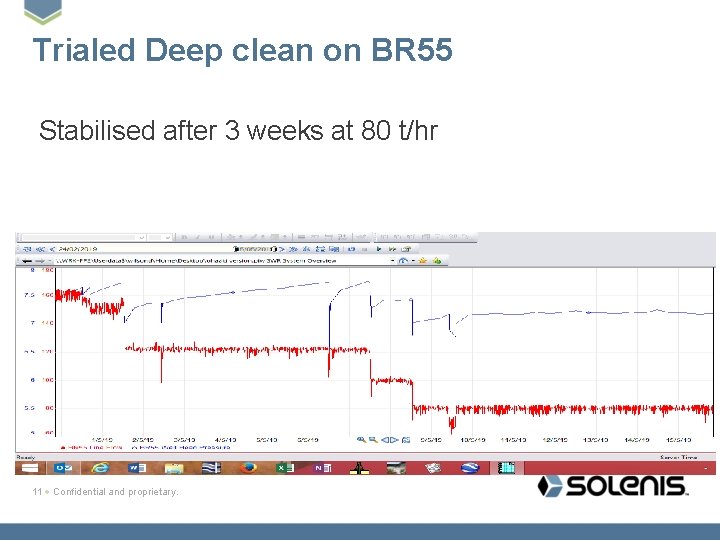
Trialed Deep clean on BR 55 Stabilised after 3 weeks at 80 t/hr 11 Confidential and proprietary.
Takeaways • The GS 1014 and DPI 824 clearly remove silica rapidly at 130 C. • Bounce back could be a result of pressure build in the reservoir, or near bore re-deposition. • Bounce back more pronounced on throttled wells. Which I suspect is forming finally dispersed amorphous silica. This would explain the rapid improvement when we dose. • The BR 40 well cleaned in November is maintaining a good flow. The difference being there is very little throttling of this well. It is however in a different location so it could be a higher permeable reservoir. • Wells like BR 55 are candidates for short more frequent cleans. Comes down to ROI for CEL. Fortunately we get good quick results clean price <$20. 12 Confidential and proprietary.
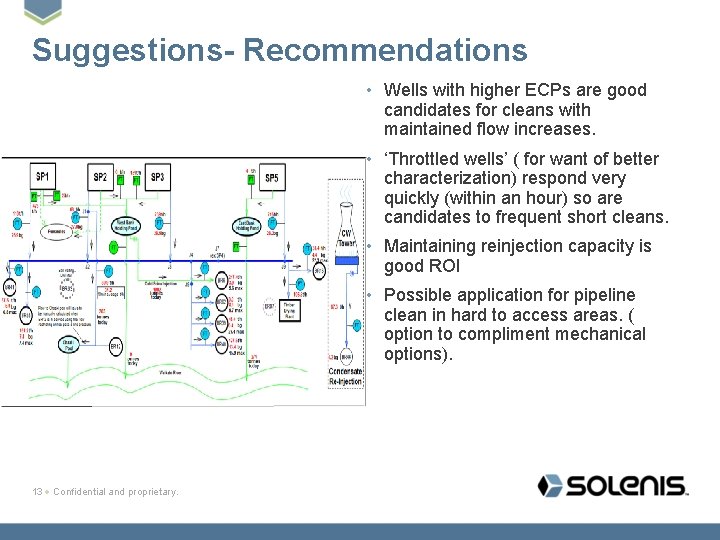
Suggestions- Recommendations • Wells with higher ECPs are good candidates for cleans with maintained flow increases. • ‘Throttled wells’ ( for want of better characterization) respond very quickly (within an hour) so are candidates to frequent short cleans. • Maintaining reinjection capacity is good ROI • Possible application for pipeline clean in hard to access areas. ( option to compliment mechanical options). 13 Confidential and proprietary.
Corrosion • Wells – Mild steel K 55 • Binary Options • Established deposits can be • Mixing study ( CFD) in removed online process to determine risk of • Corrosion dealt with two hot spots safe options found • Dose inhibitor results next slide • Replace acid with non aggressive acid. See results 14 Confidential and proprietary.
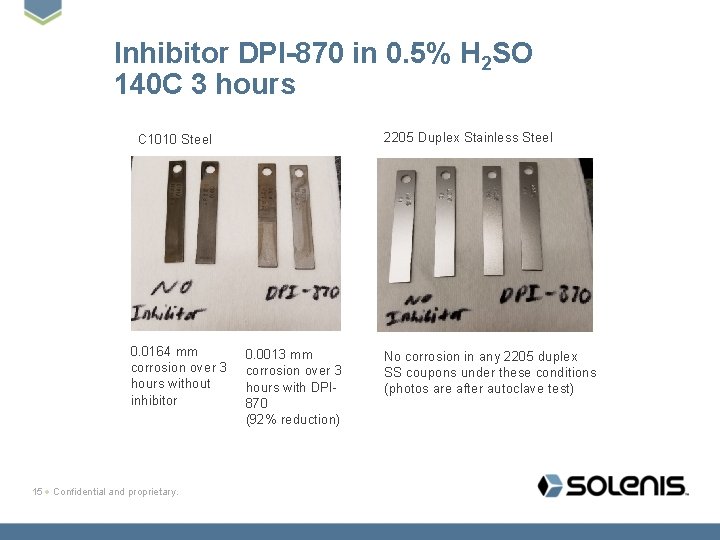
Inhibitor DPI-870 in 0. 5% H 2 SO 140 C 3 hours 2205 Duplex Stainless Steel C 1010 Steel 0. 0164 mm corrosion over 3 hours without inhibitor 15 Confidential and proprietary. 0. 0013 mm corrosion over 3 hours with DPI 870 (92% reduction) No corrosion in any 2205 duplex SS coupons under these conditions (photos are after autoclave test)
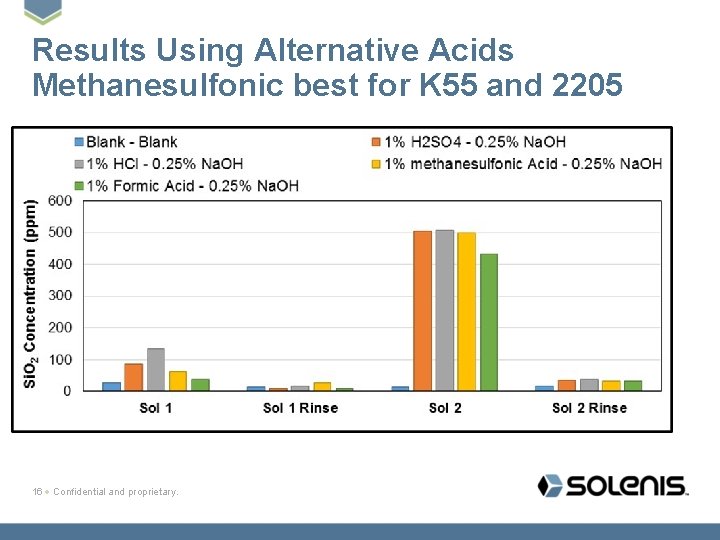
Results Using Alternative Acids Methanesulfonic best for K 55 and 2205 16 Confidential and proprietary.
Binary Challenges and solutions • Established fairly conclusively that deposits can be removed without shutting the binary plant down and without the use of aggressive acids. § Ability to maintain power output § No need to shut § No need for mechanical HP blasting § No need for aggressive acids to Binary metallurgy • Must solve the challenge of the by pass. • Dosing points installed so we are all set to go, save the bypass issue. 17 Confidential and proprietary.
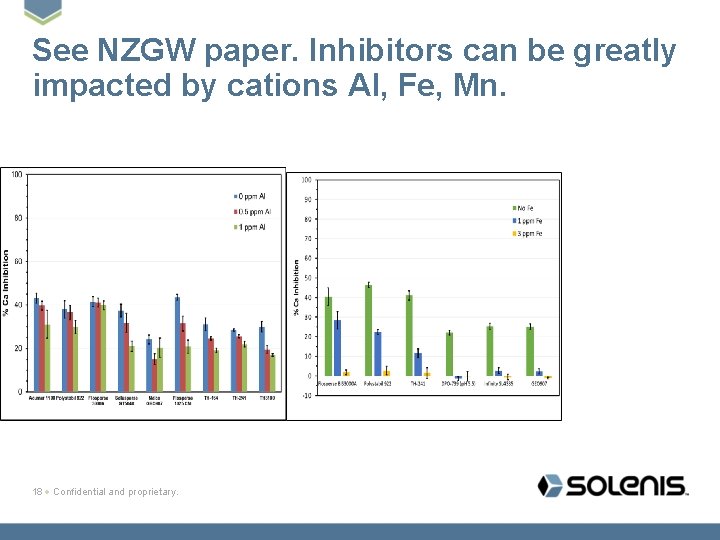
See NZGW paper. Inhibitors can be greatly impacted by cations Al, Fe, Mn. 18 Confidential and proprietary.
GNS Independent test results • . . DesktopNACE Solenis_2019041105. pdf 19 Confidential and proprietary.
Conclusions 1. Online well cleaning very effective. Short cheap cleans <$20 k on wells on SP 1 and SP 2 leg. More rigorous longer lasting viable on Br 40, 39, 16 and on Wairakei wells (constant flow and pressure). 2. Corrosion concern has three solutions: Inhibitor 2. Replace acid 3. Remove acid step 4. And study due for completion on mixing modelling 1. 3. Binary plant feasibility established, corrosion sorted only by pass issue to resolve. All set to go. 4. Calcite inhibitors. Worthy of a trial as problems have been identified, quantified and less risky alternatives available. 20 Confidential and proprietary.
Thanks • Thanks to CEL for being open and honest with your challenges, data and assistance to allow us to try and find better solutions for you. • Happy that this work has already benefited other Geothermal providers in NZ and abroad. • CEL will continue to get preferential pricing and priority in all our dealings together. We will continue the open book approach. 21 Confidential and proprietary.