
Industry and Transportation Focus How did transportation developments
- Slides: 23
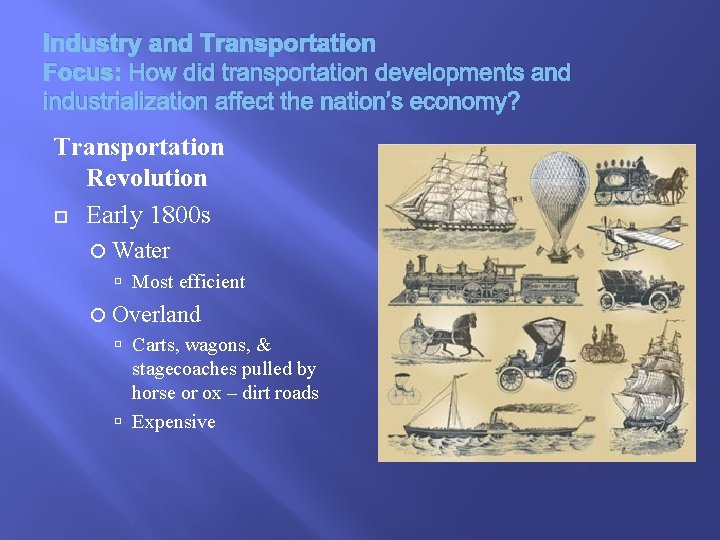
Industry and Transportation Focus: How did transportation developments and industrialization affect the nation’s economy? Transportation Revolution Early 1800 s Water Most efficient Overland Carts, wagons, & stagecoaches pulled by horse or ox – dirt roads Expensive
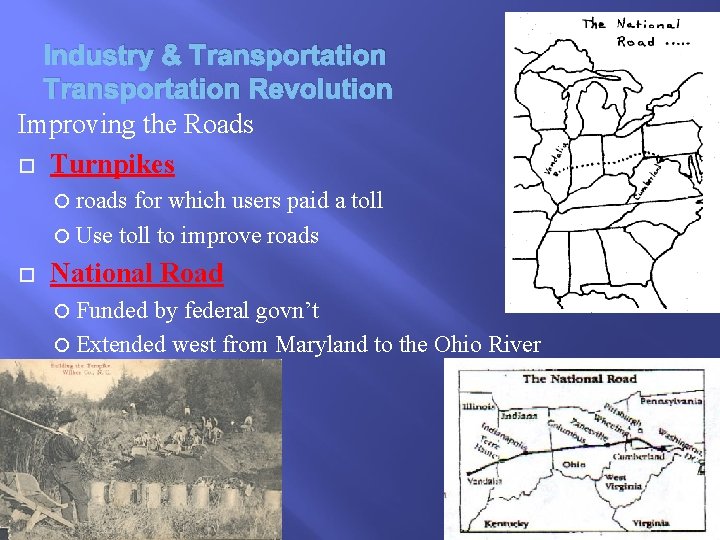
Industry & Transportation Revolution Improving the Roads Turnpikes roads for which users paid a toll Use toll to improve roads National Road Funded by federal govn’t Extended west from Maryland to the Ohio River
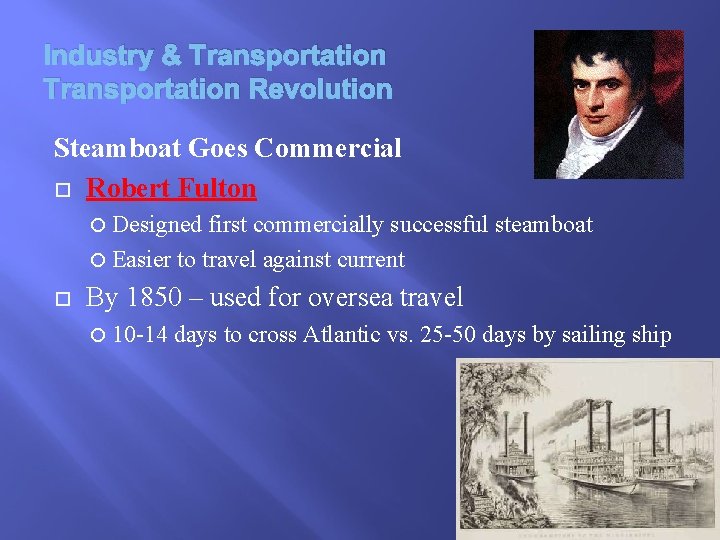
Industry & Transportation Revolution Steamboat Goes Commercial Robert Fulton Designed first commercially successful steamboat Easier to travel against current By 1850 – used for oversea travel 10 -14 days to cross Atlantic vs. 25 -50 days by sailing ship
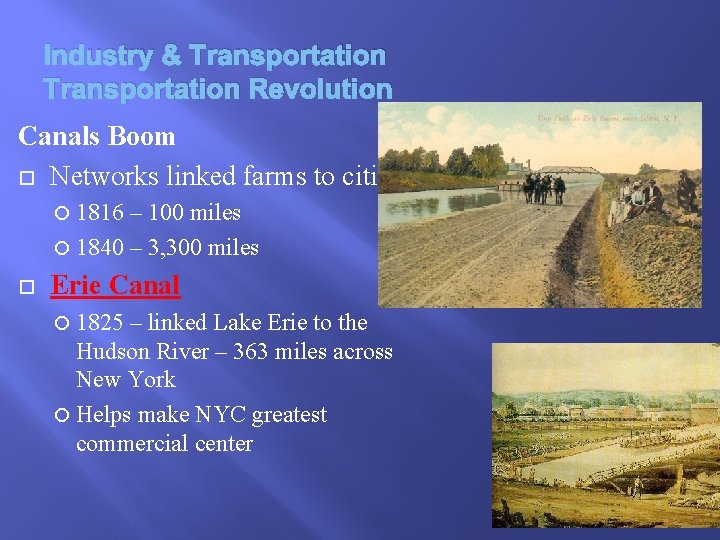
Industry & Transportation Revolution Canals Boom Networks linked farms to cities 1816 – 100 miles 1840 – 3, 300 miles Erie Canal 1825 – linked Lake Erie to the Hudson River – 363 miles across New York Helps make NYC greatest commercial center
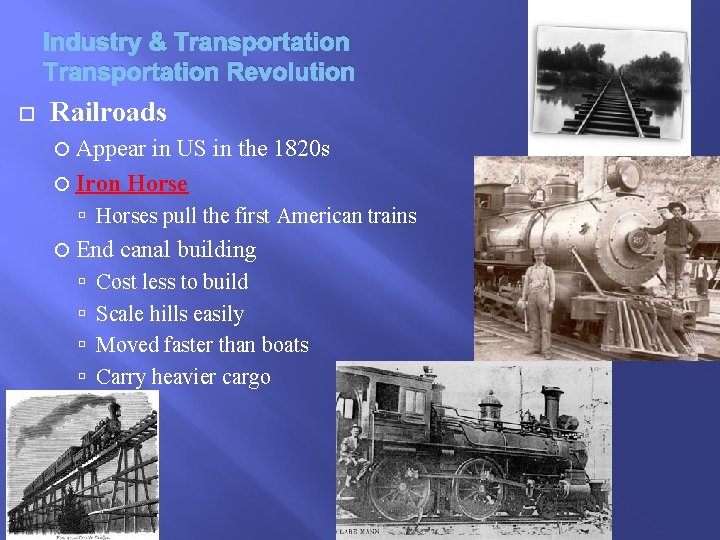
Industry & Transportation Revolution Railroads Appear in US in the 1820 s Iron Horses pull the first American trains End canal building Cost less to build Scale hills easily Moved faster than boats Carry heavier cargo
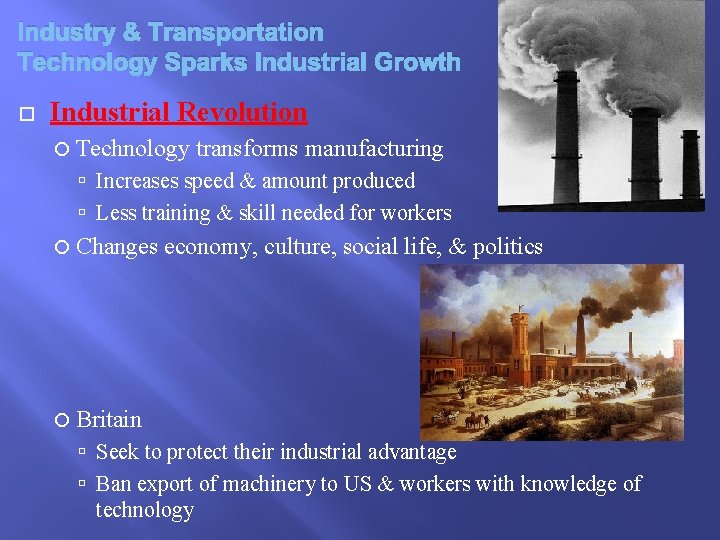
Industry & Transportation Technology Sparks Industrial Growth Industrial Revolution Technology transforms manufacturing Increases speed & amount produced Less training & skill needed for workers Changes economy, culture, social life, & politics Britain Seek to protect their industrial advantage Ban export of machinery to US & workers with knowledge of technology
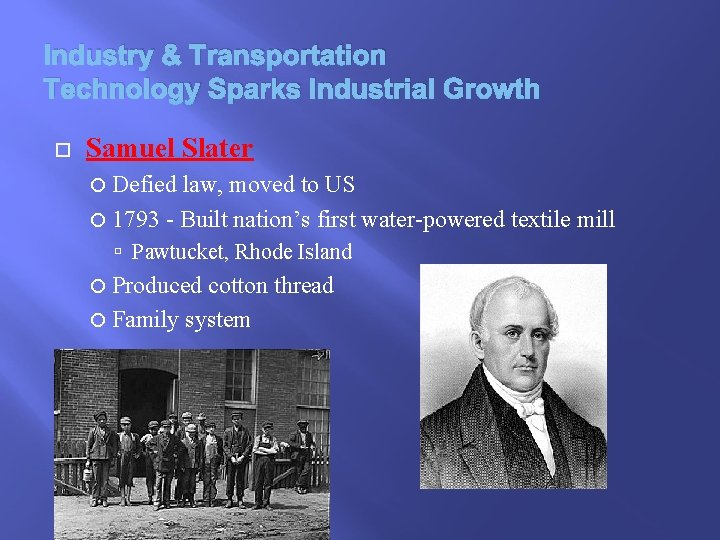
Industry & Transportation Technology Sparks Industrial Growth Samuel Slater Defied law, moved to US 1793 - Built nation’s first water-powered textile mill Pawtucket, Rhode Island Produced cotton thread Family system
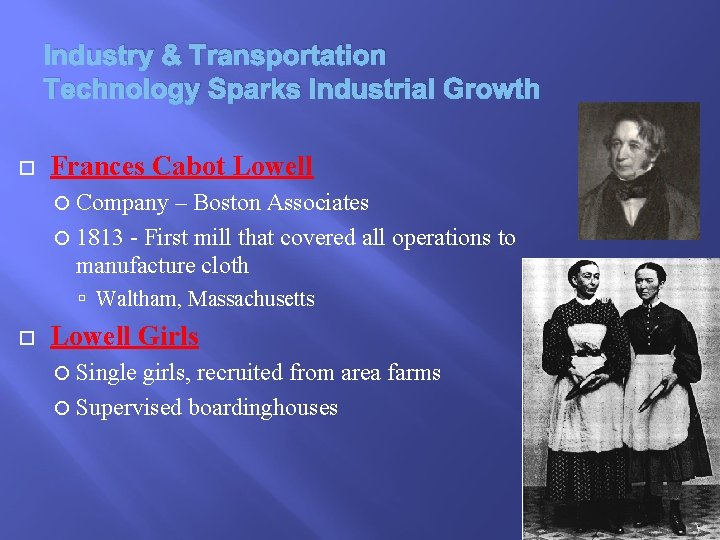
Industry & Transportation Technology Sparks Industrial Growth Frances Cabot Lowell Company – Boston Associates 1813 - First mill that covered all operations to manufacture cloth Waltham, Massachusetts Lowell Girls Single girls, recruited from area farms Supervised boardinghouses
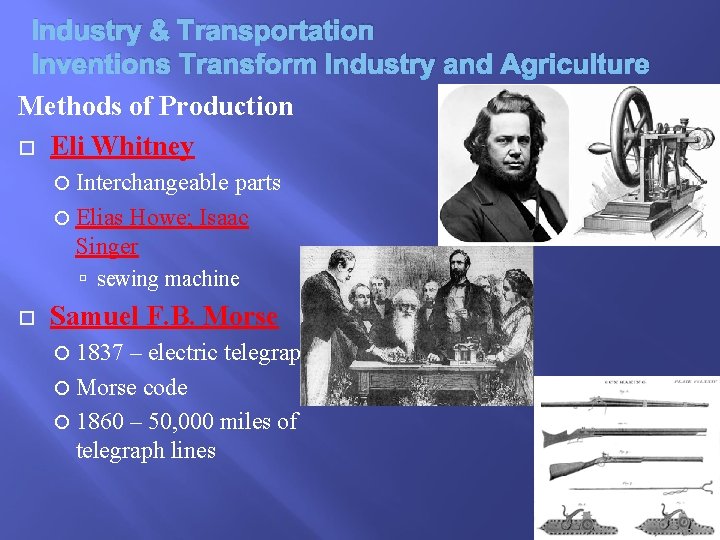
Industry & Transportation Inventions Transform Industry and Agriculture Methods of Production Eli Whitney Interchangeable parts Elias Howe; Isaac Singer sewing machine Samuel F. B. Morse 1837 – electric telegraph Morse code 1860 – 50, 000 miles of telegraph lines
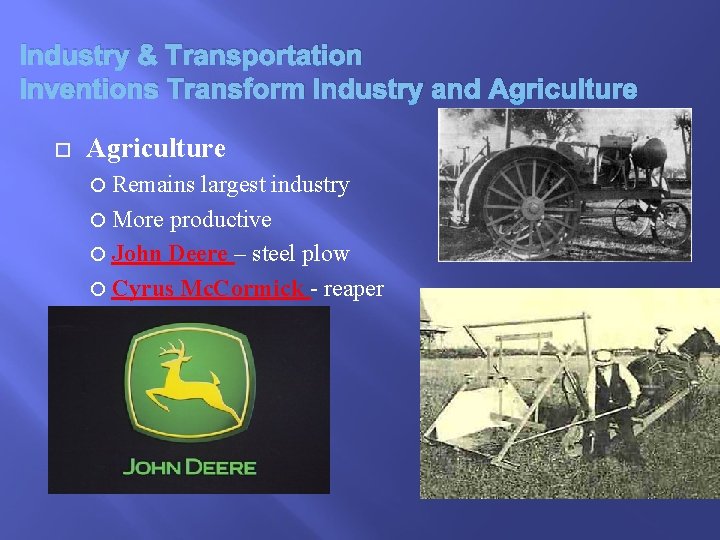
Industry & Transportation Inventions Transform Industry and Agriculture Remains largest industry More productive John Deere – steel plow Cyrus Mc. Cormick - reaper
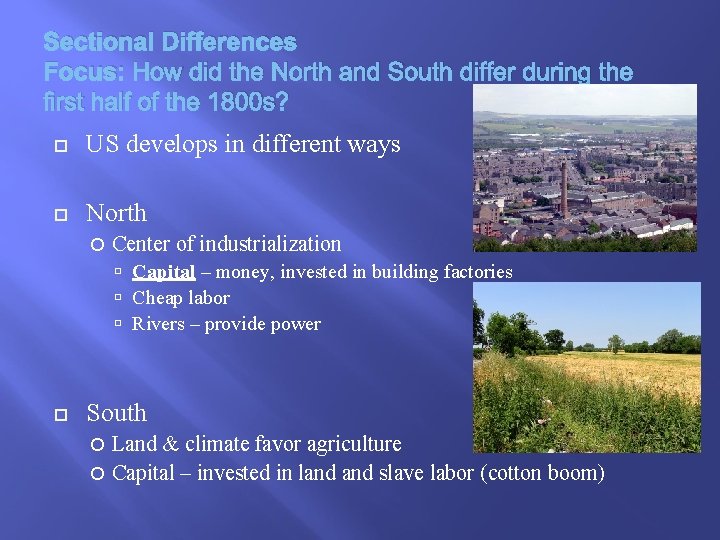
Sectional Differences Focus: How did the North and South differ during the first half of the 1800 s? US develops in different ways North Center of industrialization Capital – money, invested in building factories Cheap labor Rivers – provide power South Land & climate favor agriculture Capital – invested in land slave labor (cotton boom)
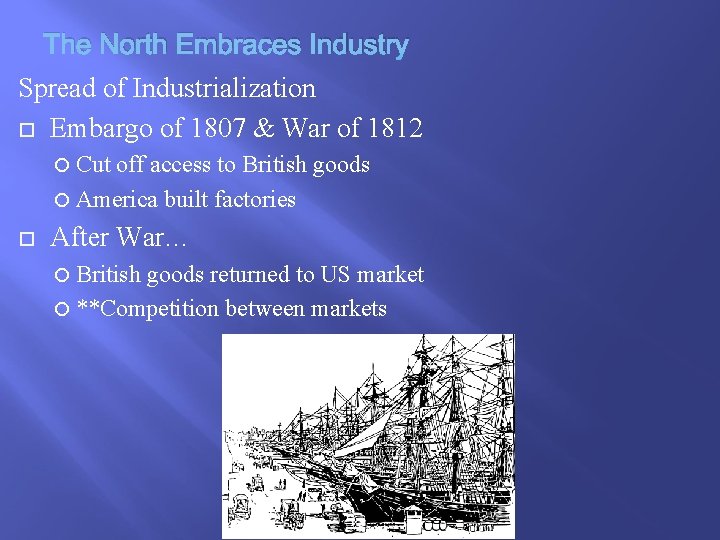
The North Embraces Industry Spread of Industrialization Embargo of 1807 & War of 1812 Cut off access to British goods America built factories After War… British goods returned to US market **Competition between markets
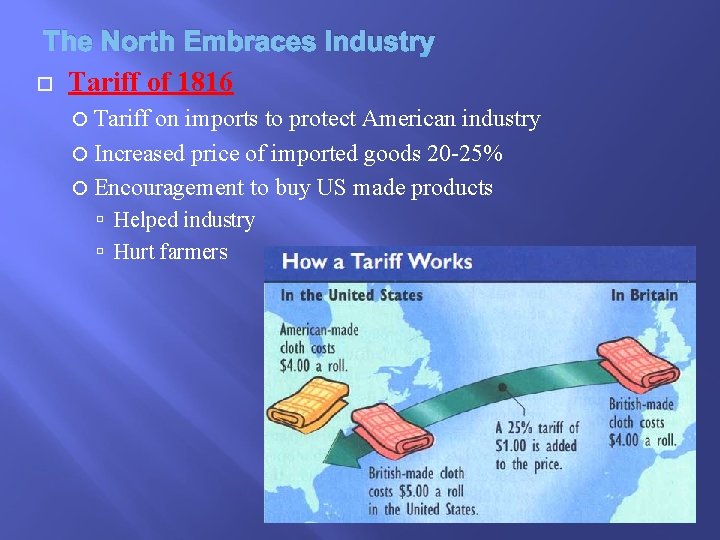
The North Embraces Industry Tariff of 1816 Tariff on imports to protect American industry Increased price of imported goods 20 -25% Encouragement to buy US made products Helped industry Hurt farmers
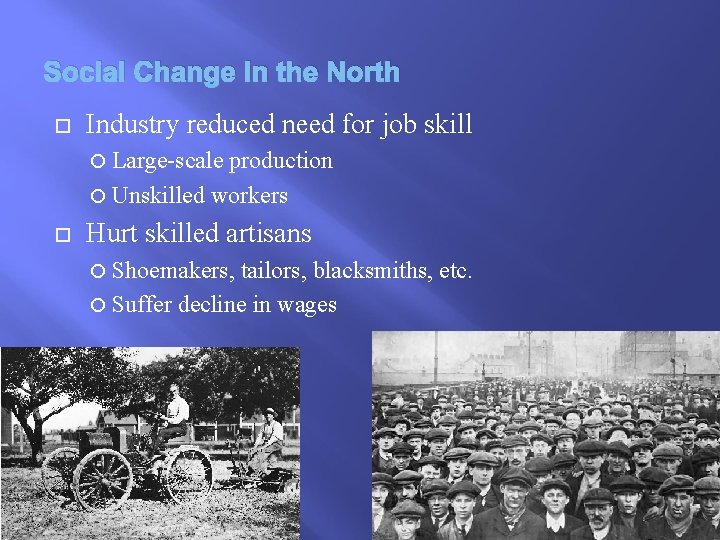
Social Change in the North Industry reduced need for job skill Large-scale production Unskilled workers Hurt skilled artisans Shoemakers, tailors, blacksmiths, etc. Suffer decline in wages
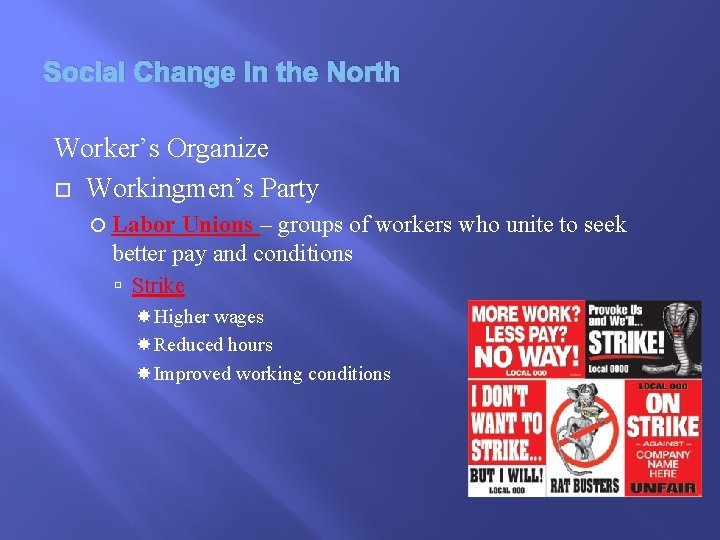
Social Change in the North Worker’s Organize Workingmen’s Party Labor Unions – groups of workers who unite to seek better pay and conditions Strike Higher wages Reduced hours Improved working conditions
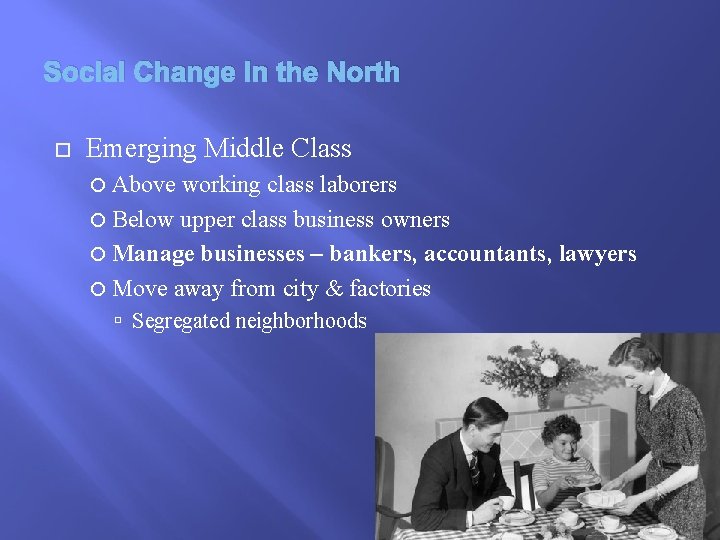
Social Change in the North Emerging Middle Class Above working class laborers Below upper class business owners Manage businesses – bankers, accountants, lawyers Move away from city & factories Segregated neighborhoods
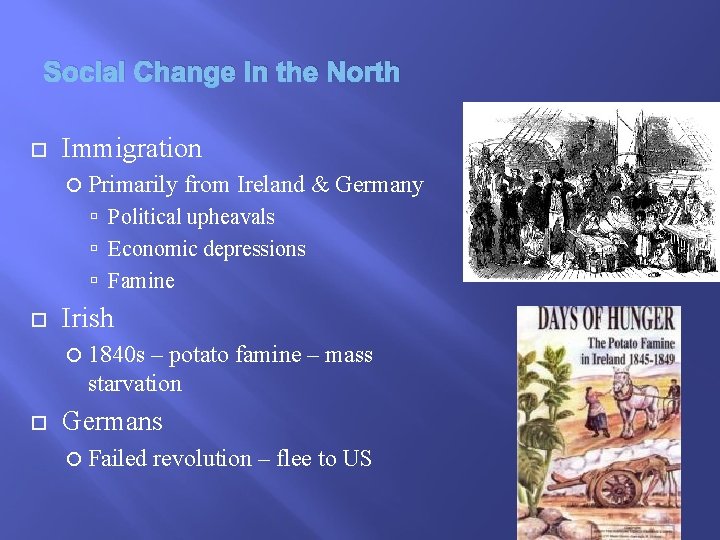
Social Change in the North Immigration Primarily from Ireland & Germany Political upheavals Economic depressions Famine Irish 1840 s – potato famine – mass starvation Germans Failed revolution – flee to US
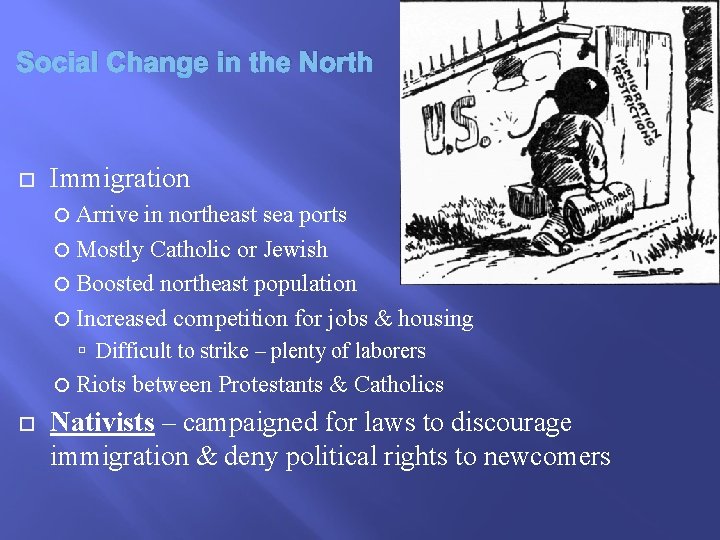
Social Change in the North Immigration Arrive in northeast sea ports Mostly Catholic or Jewish Boosted northeast population Increased competition for jobs & housing Difficult to strike – plenty of laborers Riots between Protestants & Catholics Nativists – campaigned for laws to discourage immigration & deny political rights to newcomers
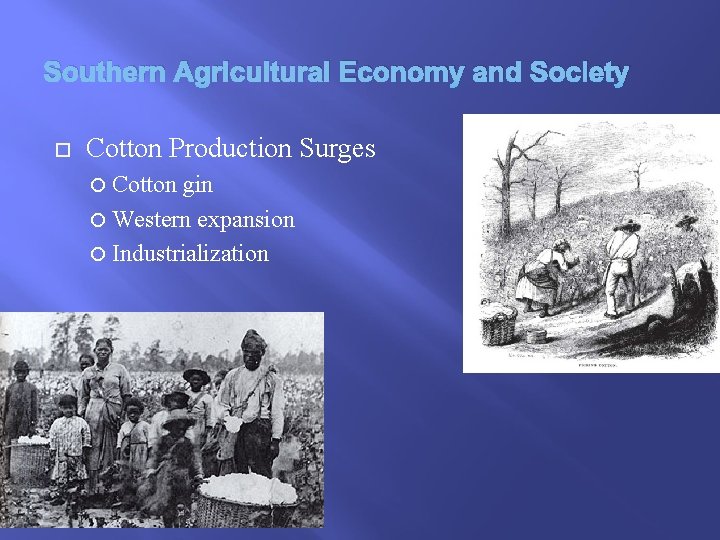
Southern Agricultural Economy and Society Cotton Production Surges Cotton gin Western expansion Industrialization
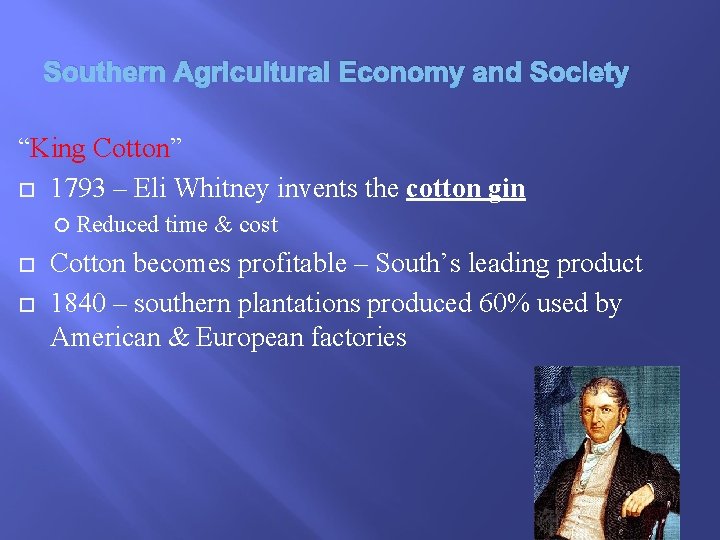
Southern Agricultural Economy and Society “King Cotton” 1793 – Eli Whitney invents the cotton gin Reduced time & cost Cotton becomes profitable – South’s leading product 1840 – southern plantations produced 60% used by American & European factories
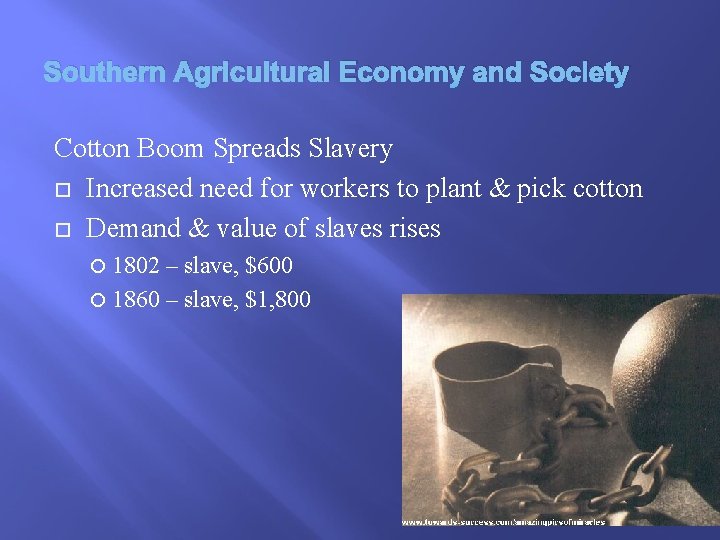
Southern Agricultural Economy and Society Cotton Boom Spreads Slavery Increased need for workers to plant & pick cotton Demand & value of slaves rises 1802 – slave, $600 1860 – slave, $1, 800
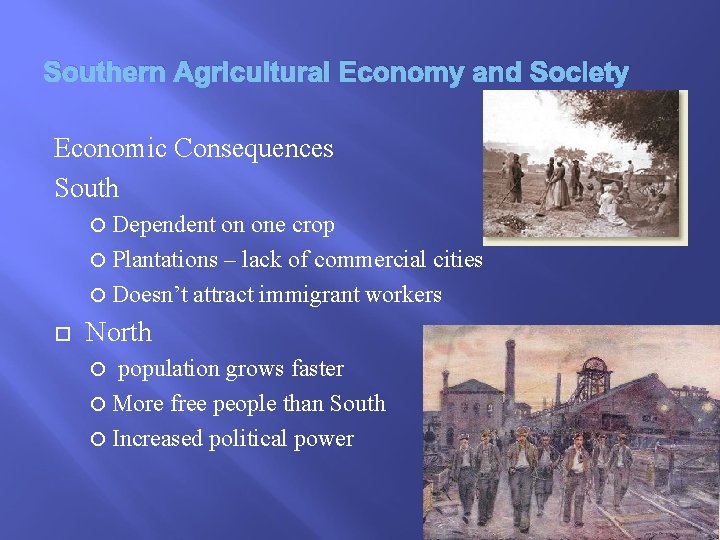
Southern Agricultural Economy and Society Economic Consequences South Dependent on one crop Plantations – lack of commercial cities Doesn’t attract immigrant workers North population grows faster More free people than South Increased political power
Southern Agricultural Economy and Society Cultural Consequences South Little or no education for slaves & poor whites Equality of rights among whites Farmers – pride in their independence Did not depend on wage labor for income Social structure – slaves at bottom