
Industry and market monitoring at the Electricity Authority

- Slides: 20
Industry and market monitoring at the Electricity Authority Phil Bishop, Electricity Commission and Ramu Naidoo, PSC 26 October 2010
Overview • • • Electricity Authority – objective and functions Key monitoring uses and activities Markets to be monitored Methods Next steps v. SPD (vee-SPu. D) • Overview of formulation • Applications to date • Future work 2
Focused objective • Authority’s objective • promote competition in, reliable supply by, and the efficient operation of, the electricity industry for the long-term benefit of consumers (clause 15, Electricity Industry Act 2010) • Commission objectives and outcomes that are not objectives of the Authority include: • • fairness environmental sustainability promotion of electricity efficiency c. f. sections 172 N and 172 O of the Electricity Act 1992 (as amended) 3
Functions of the Authority See clause 16: a) b) c) d) e) f) g) h) i) j) to maintain a register of industry participants to make and administer the Electricity Industry Participation Code to monitor compliance with the Act, the regulations, and the Code to investigate and enforce compliance with parts 2 and 4, the regulations, and the Code to investigate and enforce compliance with part 3 to undertake market-facilitation measures (such as providing education, guidelines, information, and model arrangements), and to monitor the operation and effectiveness of market facilitation measures to undertake industry and market monitoring, and carry out and make publicly available reviews, studies, and inquiries into any matter relating to the electricity industry to contract for market operation services and system operator services to promote to consumers the benefits of comparing and switching retailers to perform any other specific functions imposed on it under this or any other Act 4
Key uses and activities • Uses • Inform and assist the Authority’s code development activities • Provide interested parties with sufficient information to determine if the sector’s performance is in the long term interests of consumers • Provide additional discipline on participant’s pricing decisions (when they possess market power) • Activities • Routine measuring, testing, screening, comparing against benchmarks/thresholds and reporting • Provision of data and information (data warehouse project) • One-off reviews and studies The Authority does not seek to become the price police – that is the role of the Commerce Commission 5
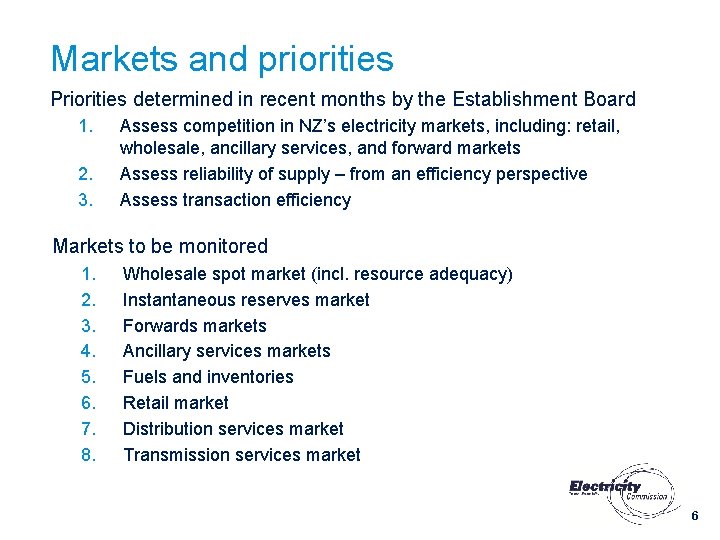
Markets and priorities Priorities determined in recent months by the Establishment Board 1. 2. 3. Assess competition in NZ’s electricity markets, including: retail, wholesale, ancillary services, and forward markets Assess reliability of supply – from an efficiency perspective Assess transaction efficiency Markets to be monitored 1. 2. 3. 4. 5. 6. 7. 8. Wholesale spot market (incl. resource adequacy) Instantaneous reserves market Forwards markets Ancillary services markets Fuels and inventories Retail market Distribution services market Transmission services market 6
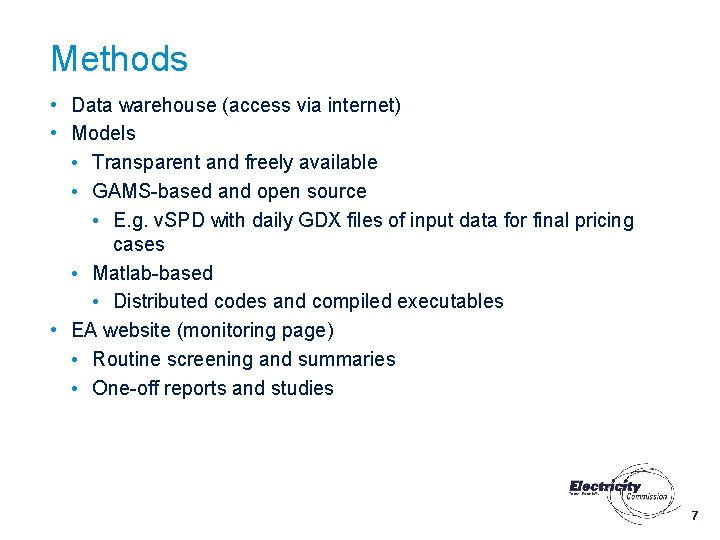
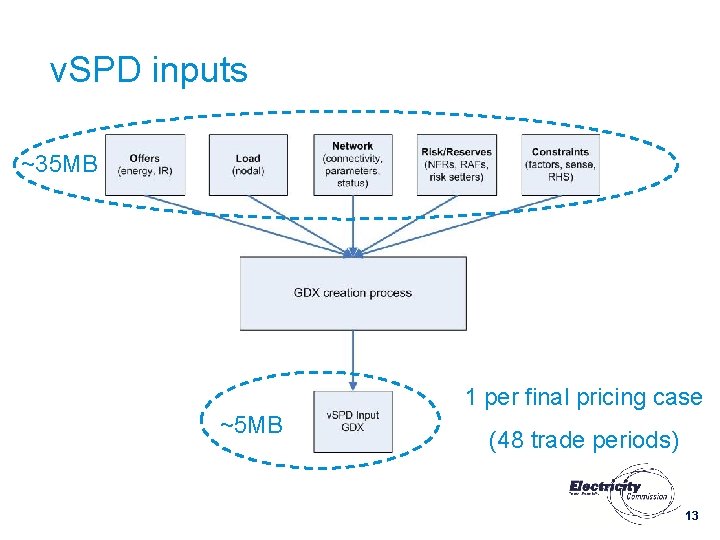
Methods • Data warehouse (access via internet) • Models • Transparent and freely available • GAMS-based and open source • E. g. v. SPD with daily GDX files of input data for final pricing cases • Matlab-based • Distributed codes and compiled executables • EA website (monitoring page) • Routine screening and summaries • One-off reports and studies 7
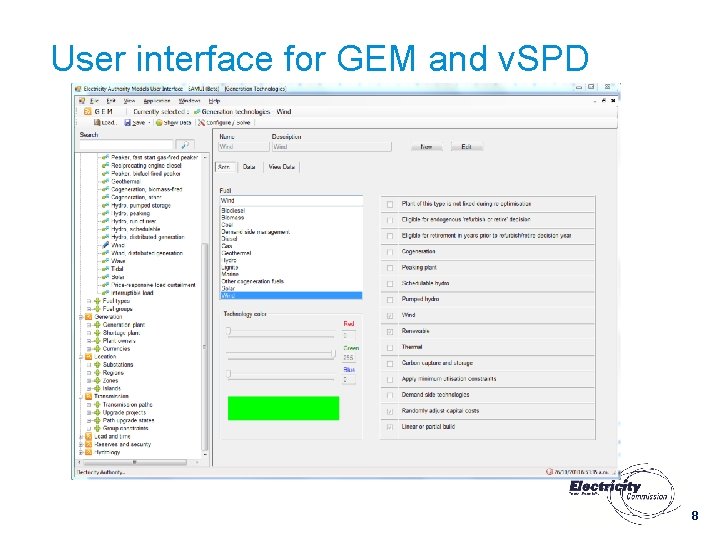
User interface for GEM and v. SPD 8
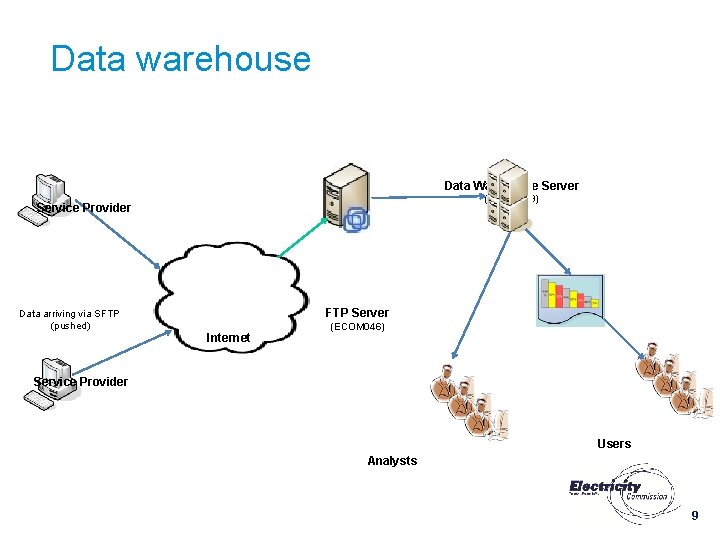
Data warehouse Data Warehouse Server (ECOM 039) Service Provider Data arriving via SFTP (pushed) FTP Server Internet (ECOM 046) Service Provider Users Analysts 9
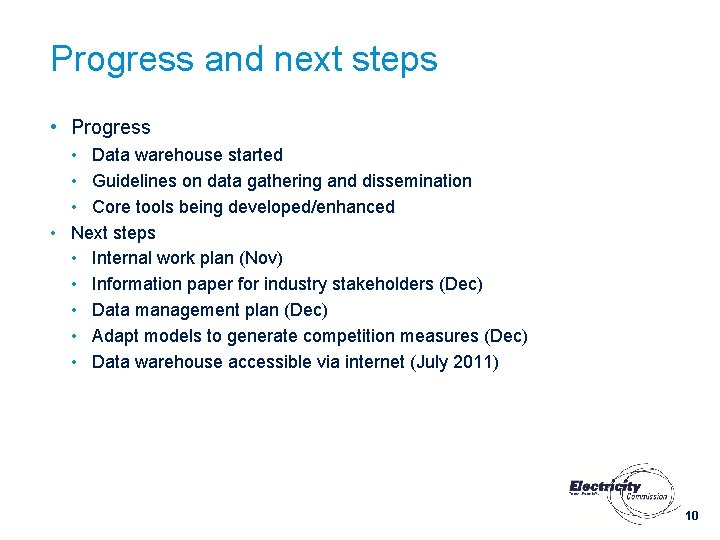
Progress and next steps • Progress • Data warehouse started • Guidelines on data gathering and dissemination • Core tools being developed/enhanced • Next steps • Internal work plan (Nov) • Information paper for industry stakeholders (Dec) • Data management plan (Dec) • Adapt models to generate competition measures (Dec) • Data warehouse accessible via internet (July 2011) 10
Overview - v. SPD • SPD used as the market clearing engine (MCE) in NZ electricity market • Mathematical formulation documented and publicly available • v. SPD based on the published mathematical formulation • Developed using GAMS • Estimation of some input parameters (e. g. loss segments) 11
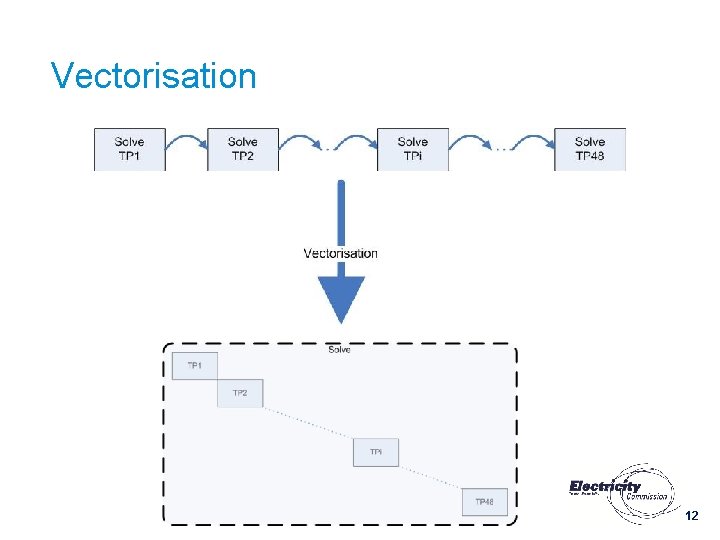
Vectorisation 12
v. SPD inputs ~35 MB 1 per final pricing case ~5 MB (48 trade periods) 13
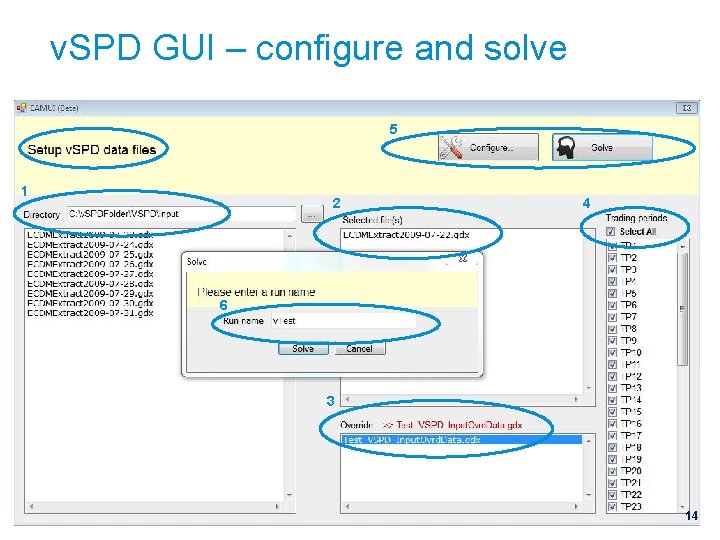
v. SPD GUI – configure and solve 5 1 2 4 6 3 14
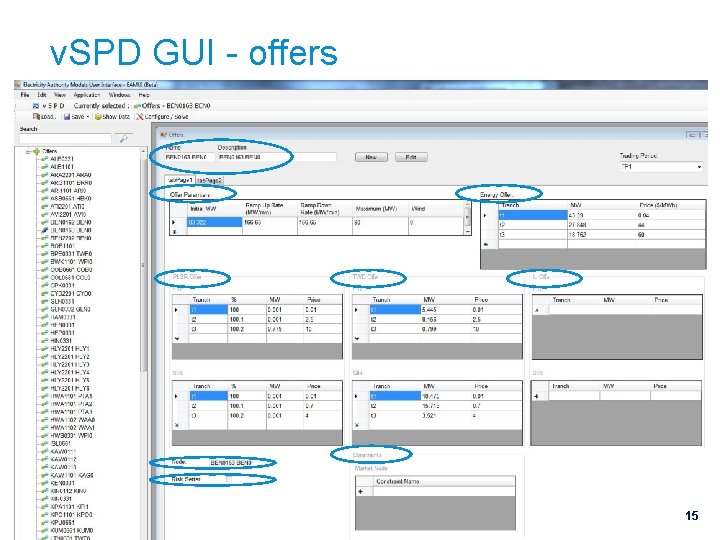
v. SPD GUI - offers 15
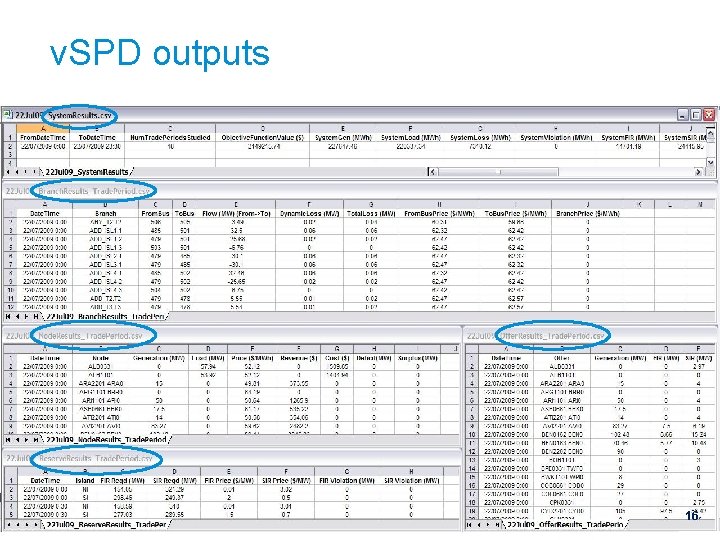
v. SPD outputs 16
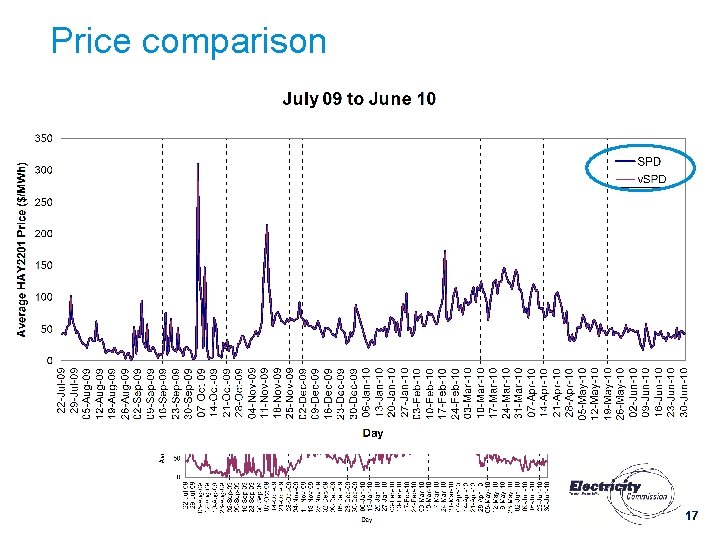
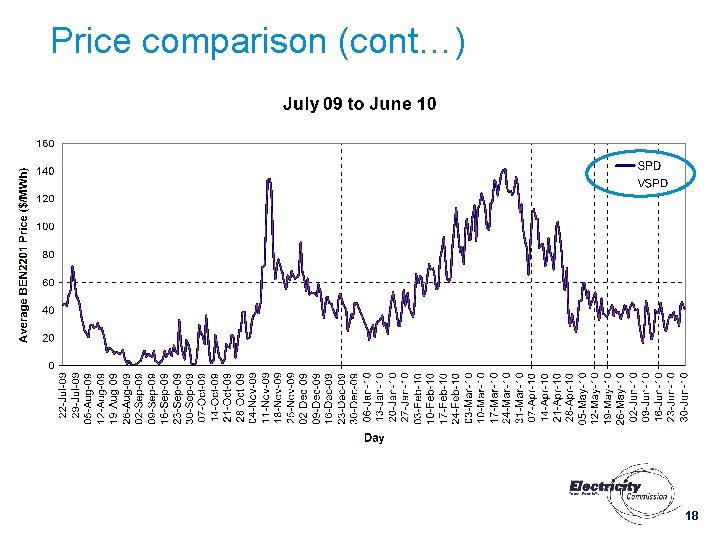
Price comparison 17
Price comparison (cont…) 18
Some applications of v. SPD • Variable reserves investigation • Investigation of scarcity pricing implementation options within the MCE • Market impact assessments of rule breaches 19
Ongoing and future work • • • Improving quality of input data into v. SPD Enhanced override functionality Additional reporting Further development of GUI Sensitivity module 20