
Industries and Business Industries Primary industries Secondary industries

Industries and Business • Industries – Primary industries – Secondary industries – Tertiary industries – Quaternary industries • Business: – Tertiary industries – Quaternary industries
Rationale for the Internal Analysis • When the external environment is subject to rapid change, internal resources and capabilities offer a more secure basis for strategy than market focus. • Resources and capabilities are the primary sources of profitability
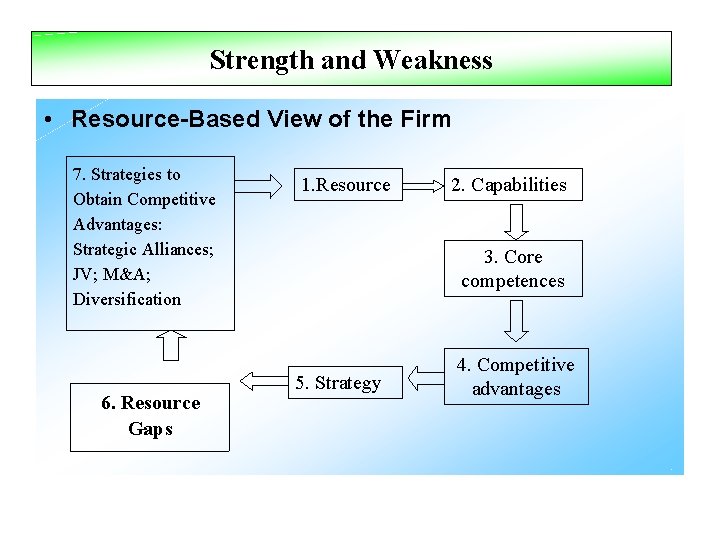
Strength and Weakness • Resource-Based View of the Firm 7. Strategies to Obtain Competitive Advantages: Strategic Alliances; JV; M&A; Diversification 6. Resource Gaps 1. Resource 2. Capabilities 3. Core competences 5. Strategy 4. Competitive advantages
Resources • Tangible resources –Financial assets (cash, debt, equity) –Physical assets (buildings, equipment, inventory, land, raw materials) • Intangible resources Such as: patent, human assets, relational assets, goodwill, brand loyalty, know-how, etc. • To create competitive advantages resources must be Rare / Uniqueness and Valuable
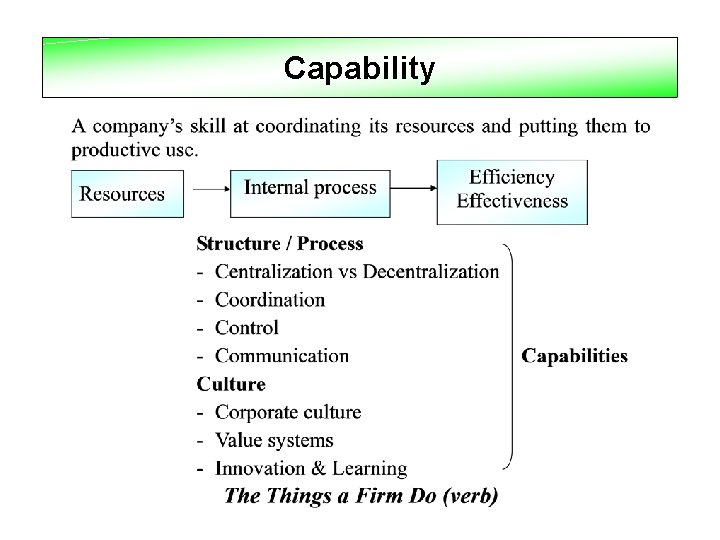
Capability
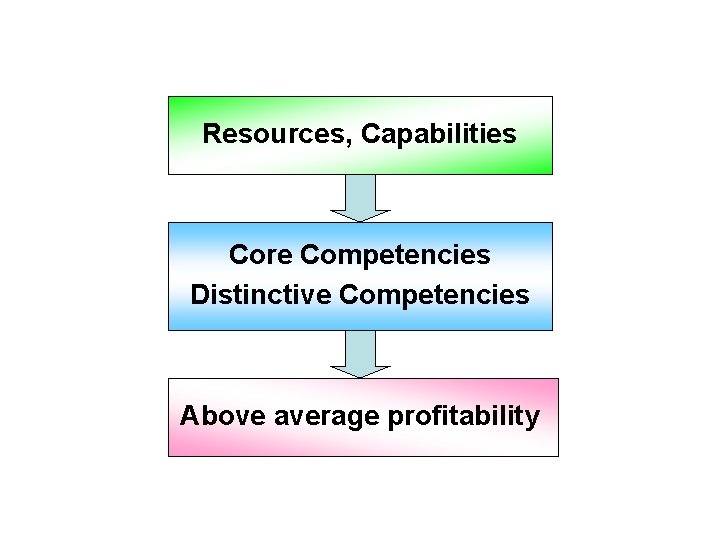
Resources, Capabilities Core Competencies Distinctive Competencies Above average profitability
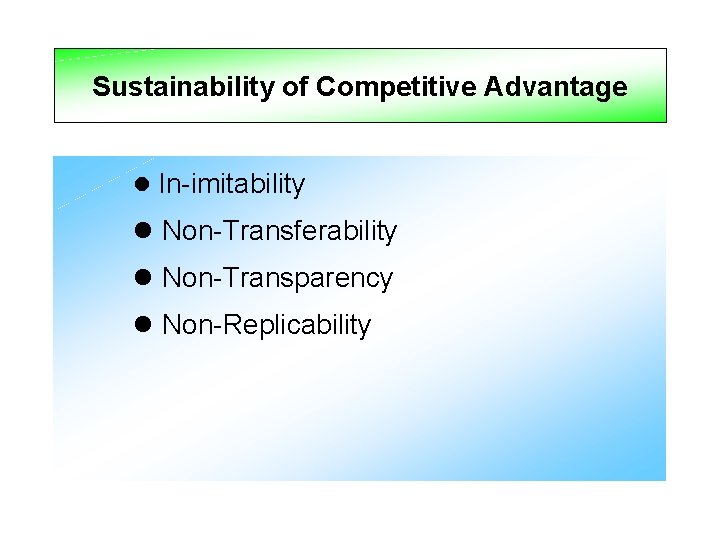
Sustainability of Competitive Advantage l In-imitability l Non-Transferability l Non-Transparency l Non-Replicability
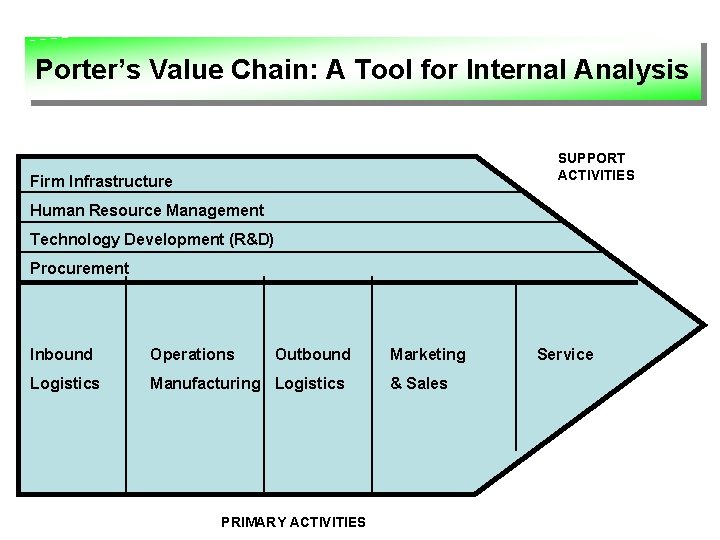
Porter’s Value Chain: A Tool for Internal Analysis SUPPORT ACTIVITIES Firm Infrastructure Human Resource Management Technology Development (R&D) Procurement Inbound Operations Outbound Logistics Manufacturing Logistics PRIMARY ACTIVITIES Marketing & Sales Service
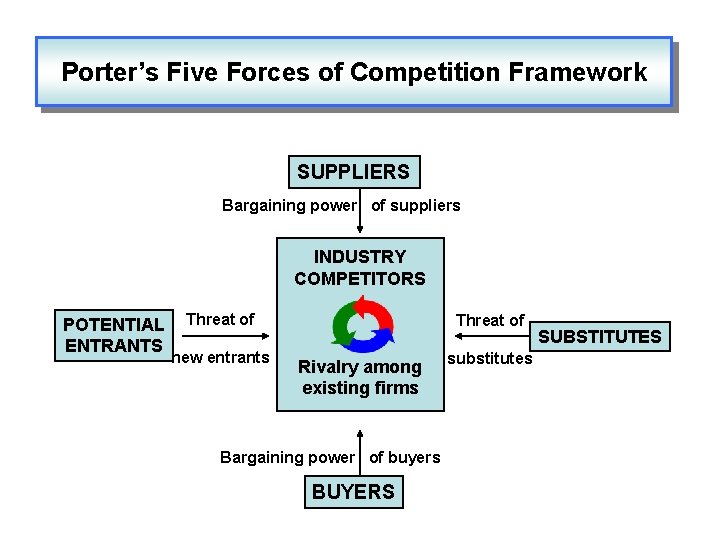
Porter’s Five Forces of Competition Framework SUPPLIERS Bargaining power of suppliers INDUSTRY COMPETITORS POTENTIAL ENTRANTS Threat of new entrants Threat of Rivalry among existing firms Bargaining power of buyers BUYERS substitutes SUBSTITUTES
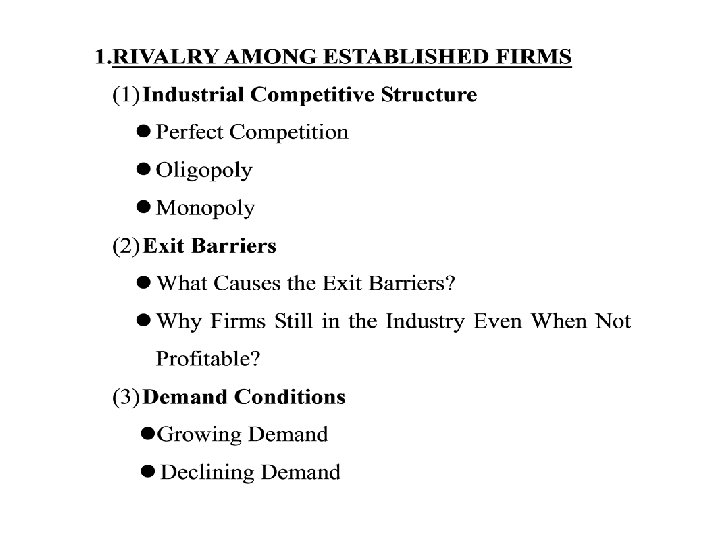
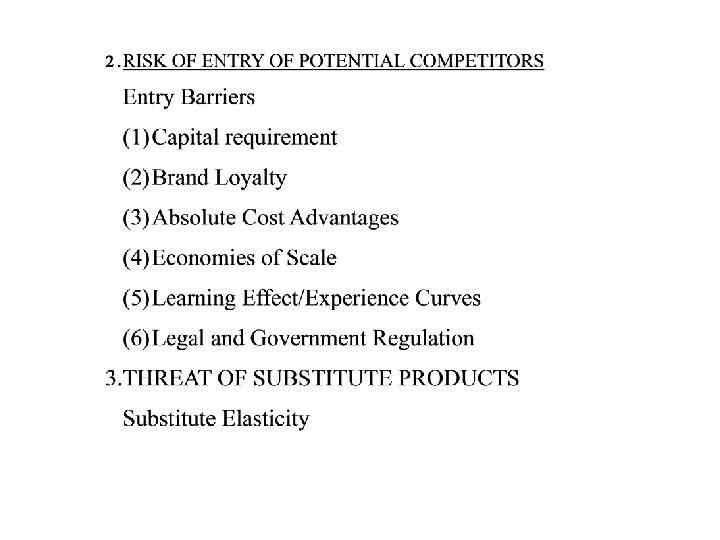
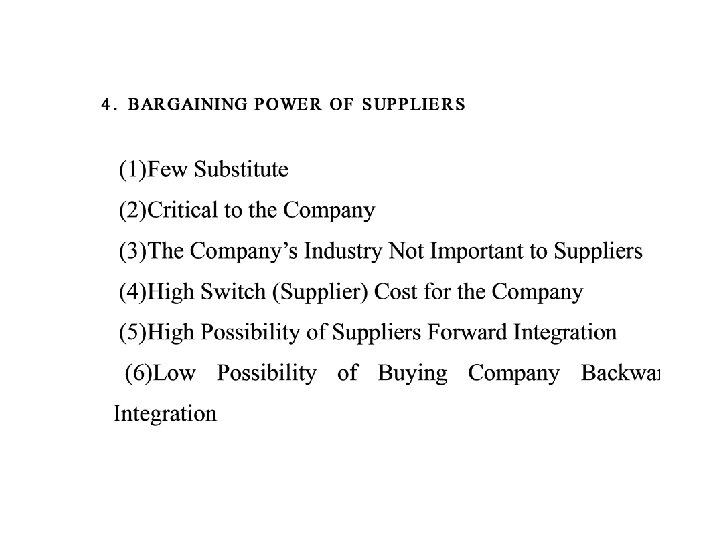
Business Chain • Regular Chain, RC • Voluntary Chain, VC • Franchise Chain, FC • Cooperation Chain, CC • Value Chain, VC
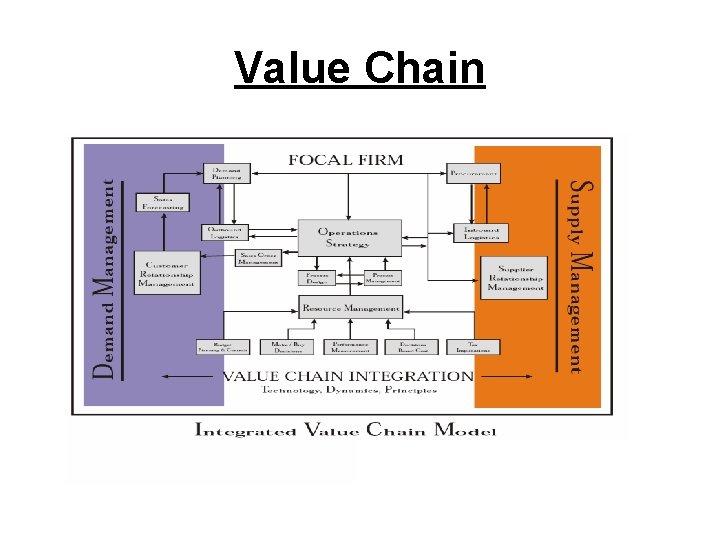
Value Chain
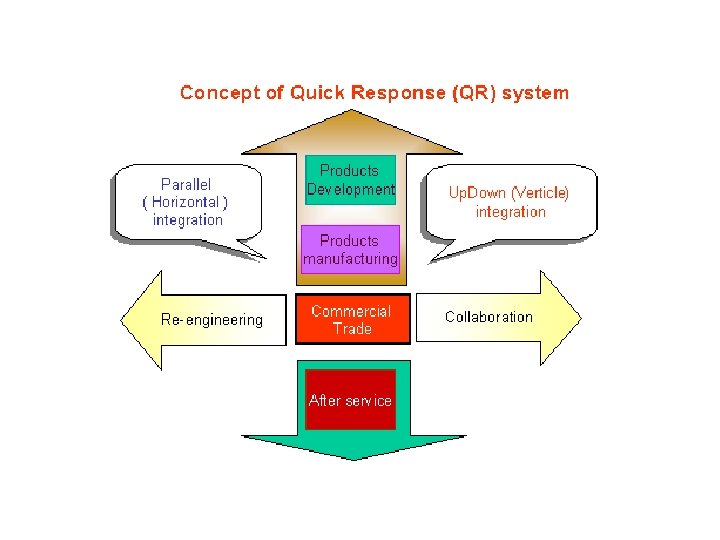
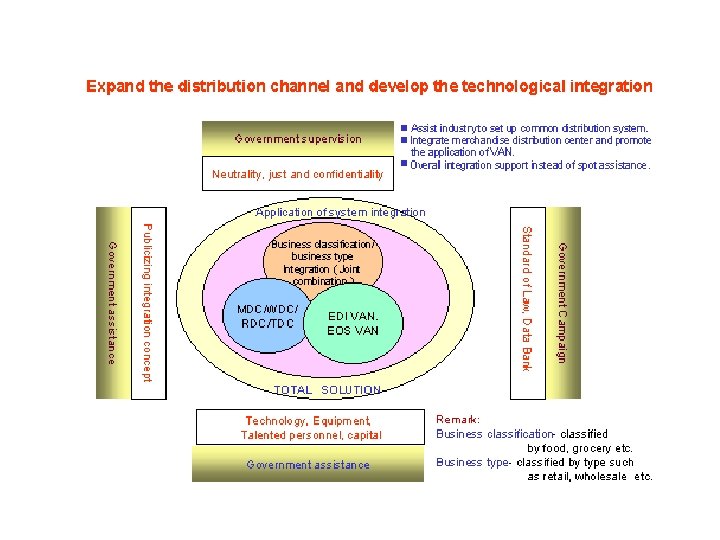
Efficient Consumer Response (ECR)/Quick Response (QR) • Used in grocery industry and by mass merchandisers • POS data used to trigger order • Keyed to more orderly, regular flow of product, smaller inventory
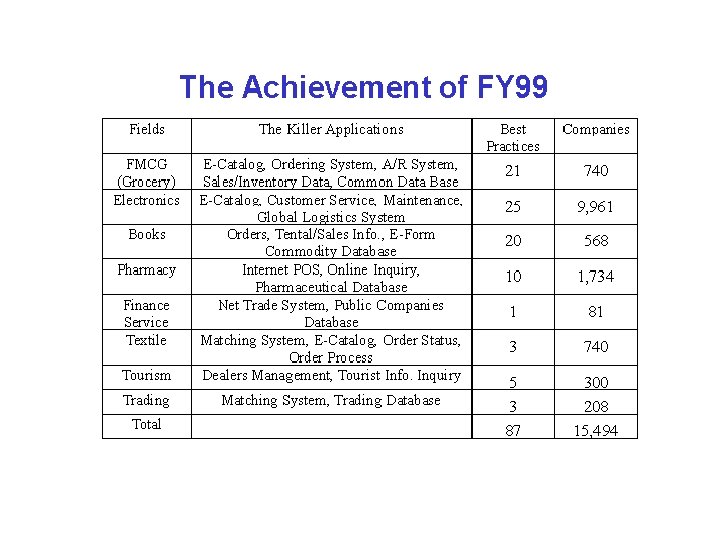
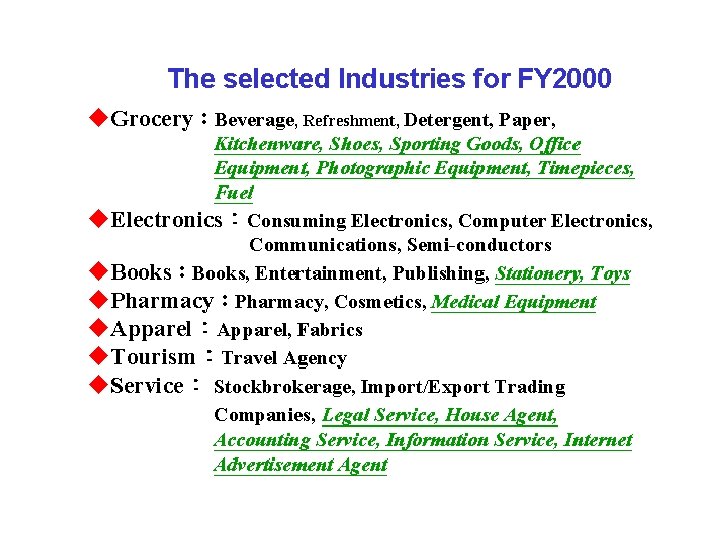
Benchmarking • The search for the best practices among competitors and noncompetitors that lead to their superior performance. • By analyzing and copying these practices, firms can improve their performance.
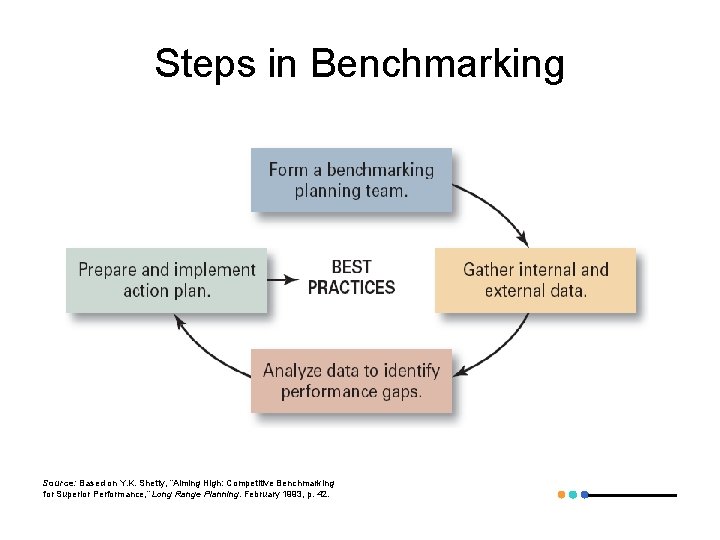
Steps in Benchmarking Source: Based on Y. K. Shetty, “Aiming High: Competitive Benchmarking for Superior Performance, ” Long Range Planning. February 1993, p. 42.
Customer Service Strategies • Giving the customers what they want. • Communicating effectively with them. • Providing employees with customer service training.
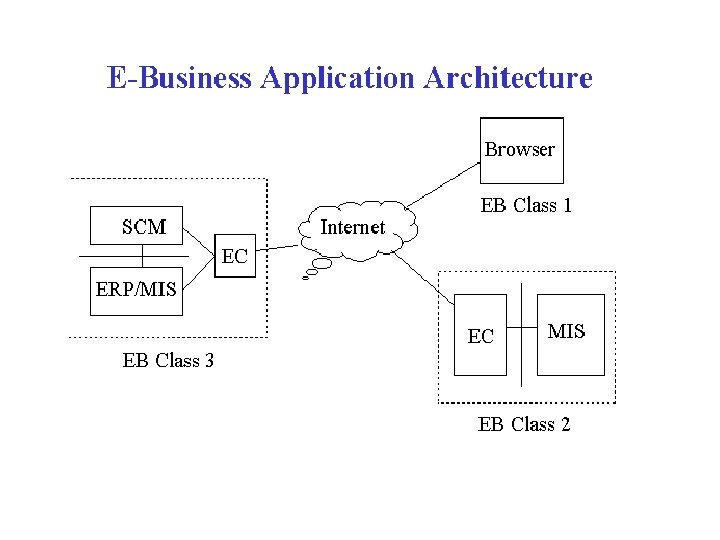
Current Trends and Issues (Cont’d) • E-Business (Electronic Business) – The work preformed by an organization using electronic linkages to its key constituencies – E-commerce: the sales and marketing component of an e-business • Categories of E-Businesses – E-business enhanced organization – E-business enabled organization – Total e-business organization
Real-Time e-Business (1) • Business Process Management (BPM) • Business- to- Business Integration (B 2 Bi) • Best-in-class Enterprise Application Integration (EAI) • Real-Time Process Analysis (RTA)
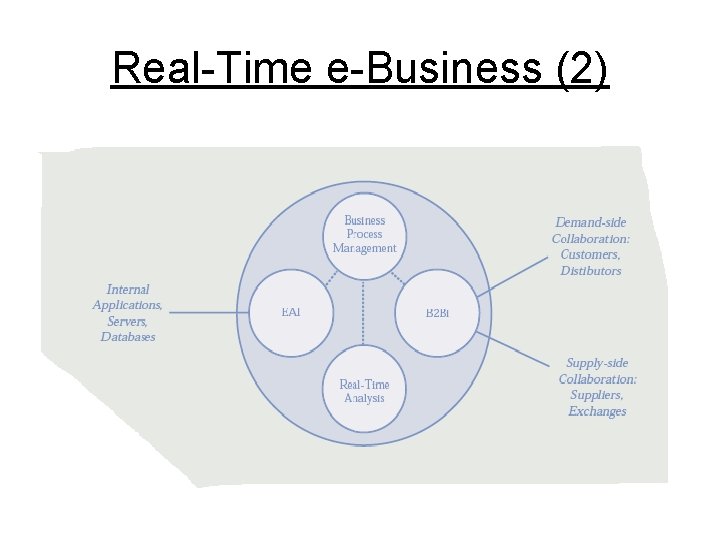
Real-Time e-Business (2)
- Slides: 29