
Industrialization The Industrial Revolution U S Global 9
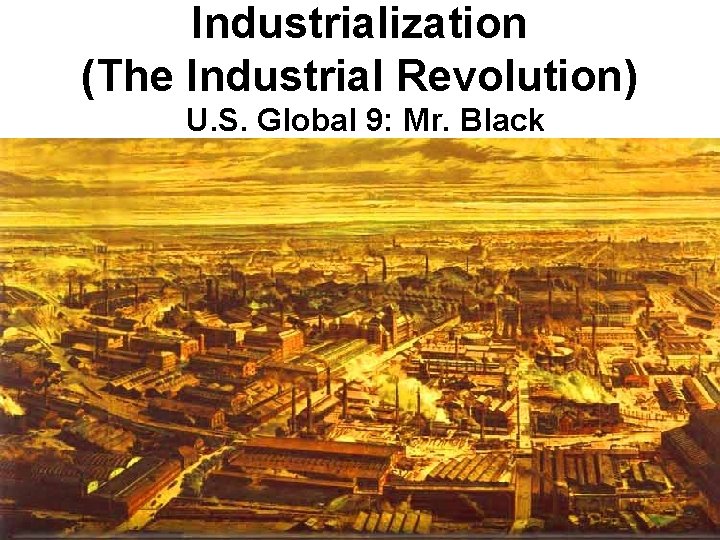
Industrialization (The Industrial Revolution) U. S. Global 9: Mr. Black
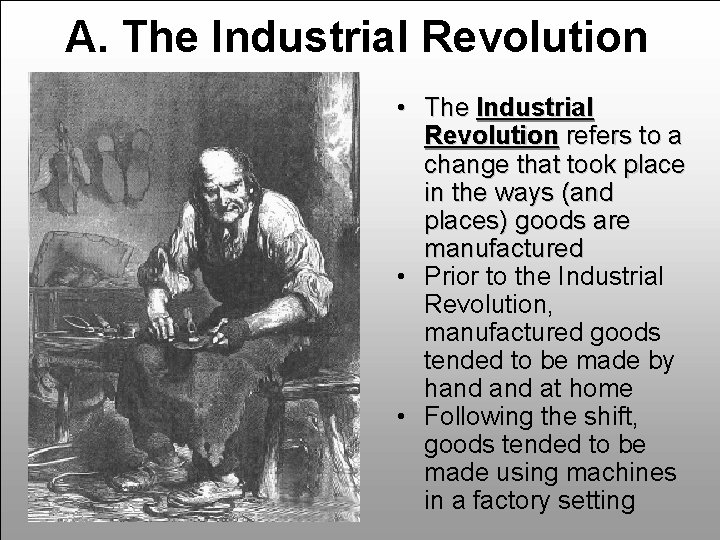
A. The Industrial Revolution • The Industrial Revolution refers to a change that took place in the ways (and places) goods are manufactured • Prior to the Industrial Revolution, manufactured goods tended to be made by hand at home • Following the shift, goods tended to be made using machines in a factory setting
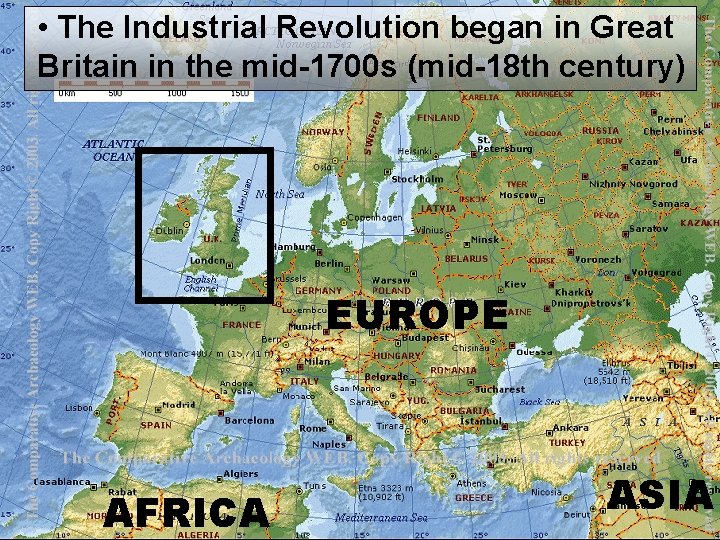
• The Industrial Revolution began in Great Britain in the mid-1700 s (mid-18 th century) EUROPE AFRICA ASIA
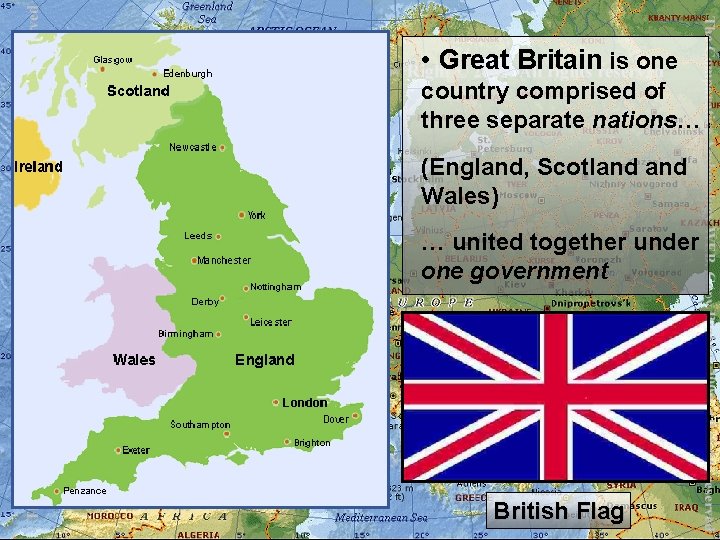
• Great Britain is one country comprised of three separate nations… (England, Scotland Wales) … united together under one government British Flag

A. The Industrial Revolution • The invention of new machines to manufacture textiles (cloth) played a large role in the birth of the Industrial Revolution • Spinning wheels were used in homes to spin a single thread from wool or cotton • The Spinning Jenny was eventually invented, allowing many thread to be spun at once
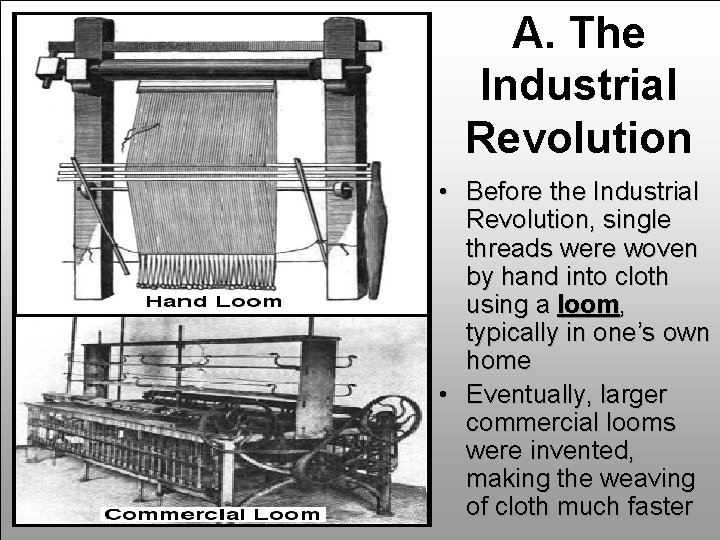
A. The Industrial Revolution • Before the Industrial Revolution, single threads were woven by hand into cloth using a loom, typically in one’s own home • Eventually, larger commercial looms were invented, making the weaving of cloth much faster
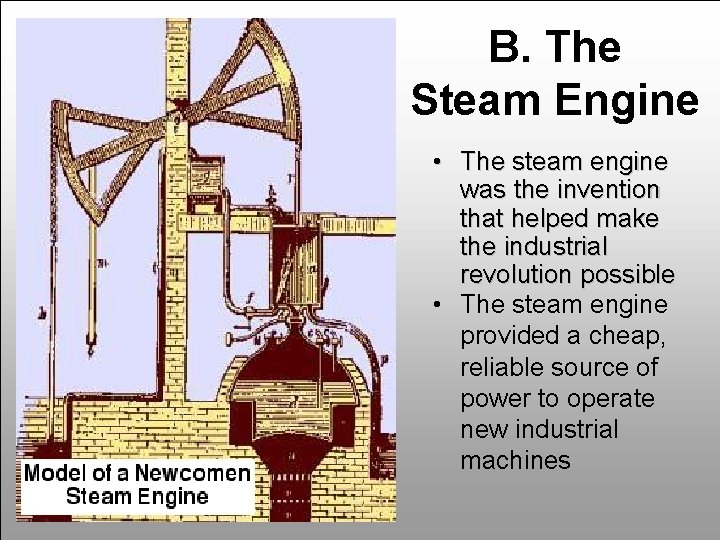
B. The Steam Engine • The steam engine was the invention that helped make the industrial revolution possible • The steam engine provided a cheap, reliable source of power to operate new industrial machines
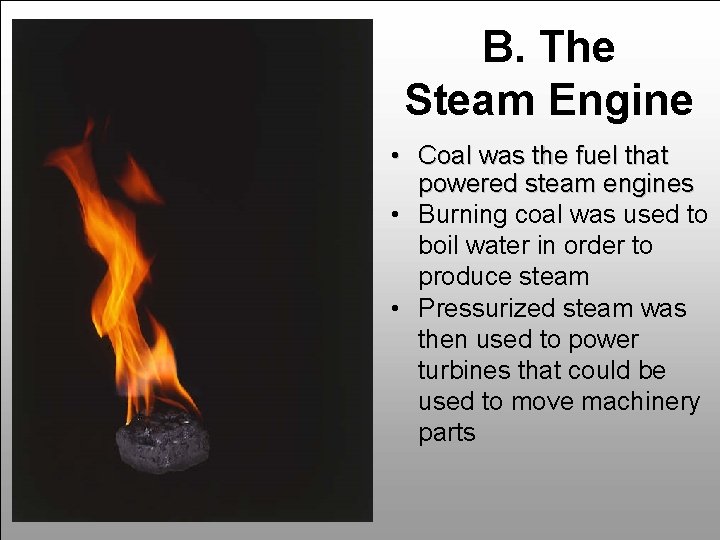
B. The Steam Engine • Coal was the fuel that powered steam engines • Burning coal was used to boil water in order to produce steam • Pressurized steam was then used to power turbines that could be used to move machinery parts
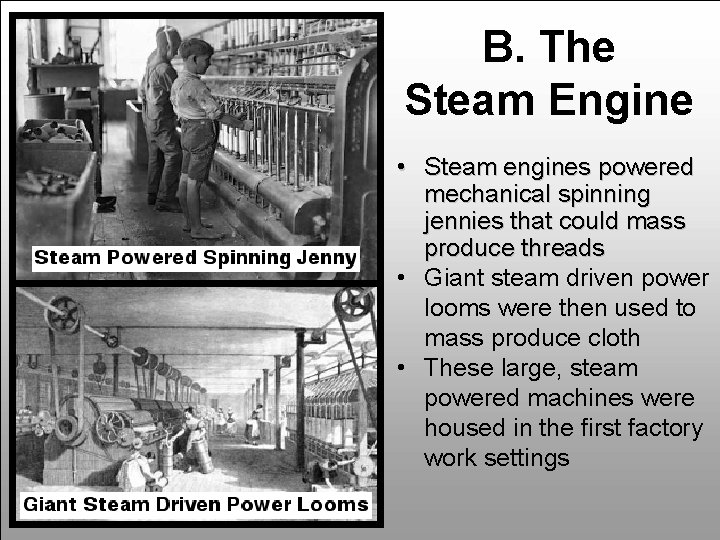
B. The Steam Engine • Steam engines powered mechanical spinning jennies that could mass produce threads • Giant steam driven power looms were then used to mass produce cloth • These large, steam powered machines were housed in the first factory work settings
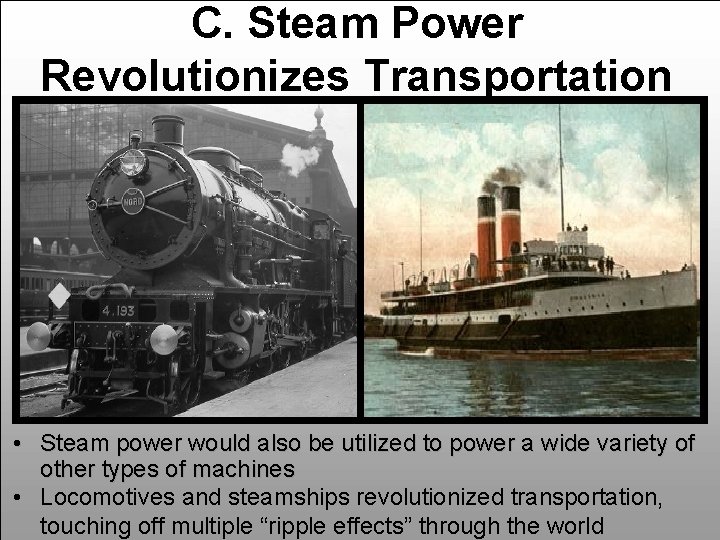
C. Steam Power Revolutionizes Transportation • Steam power would also be utilized to power a wide variety of other types of machines • Locomotives and steamships revolutionized transportation, touching off multiple “ripple effects” through the world
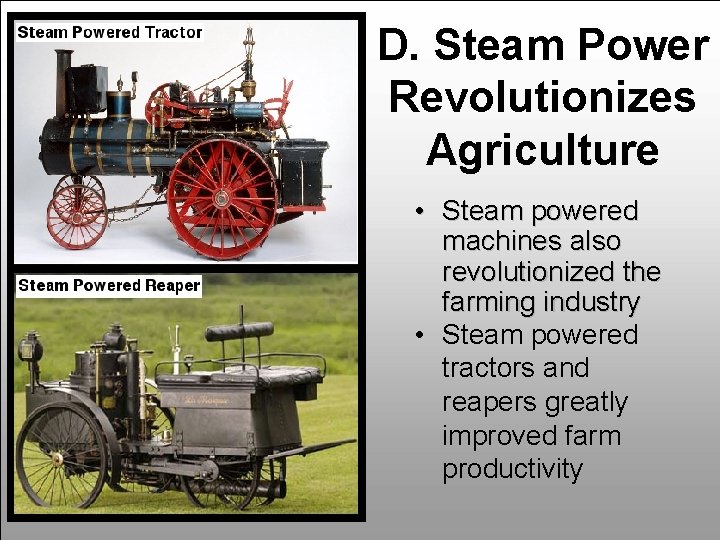
D. Steam Power Revolutionizes Agriculture • Steam powered machines also revolutionized the farming industry • Steam powered tractors and reapers greatly improved farm productivity
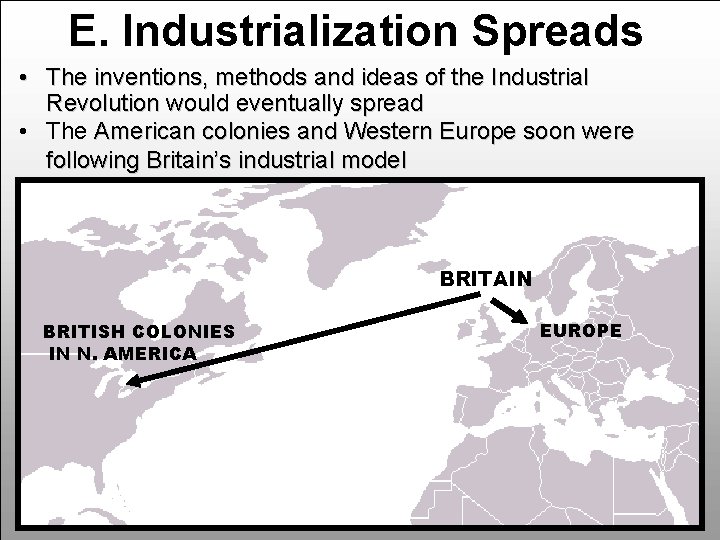
E. Industrialization Spreads • The inventions, methods and ideas of the Industrial Revolution would eventually spread • The American colonies and Western Europe soon were following Britain’s industrial model BRITAIN BRITISH COLONIES IN N. AMERICA EUROPE
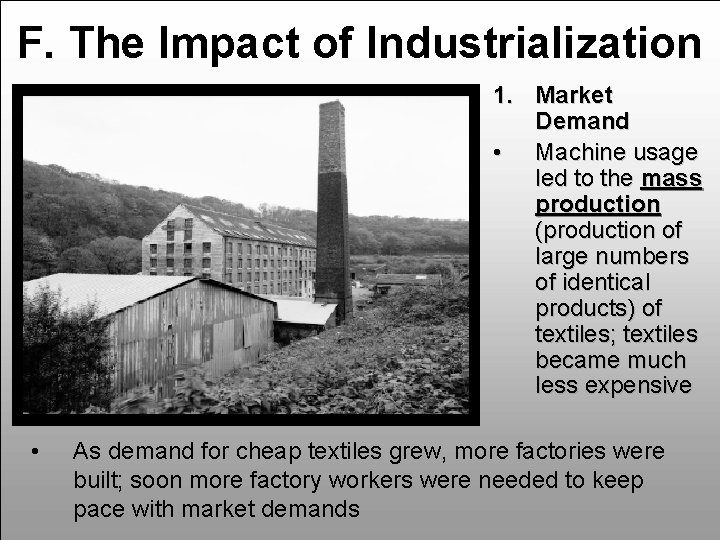
F. The Impact of Industrialization 1. Market Demand • Machine usage led to the mass production (production of large numbers of identical products) of textiles; textiles became much less expensive • As demand for cheap textiles grew, more factories were built; soon more factory workers were needed to keep pace with market demands
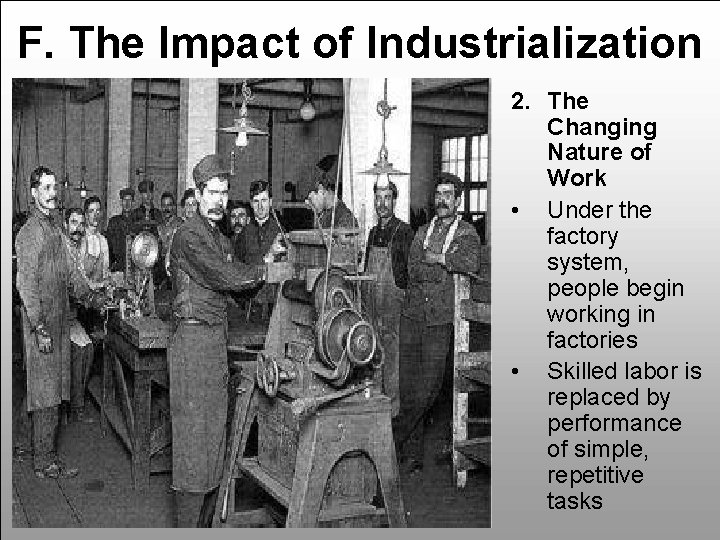
F. The Impact of Industrialization 2. The Changing Nature of Work • Under the factory system, people begin working in factories • Skilled labor is replaced by performance of simple, repetitive tasks
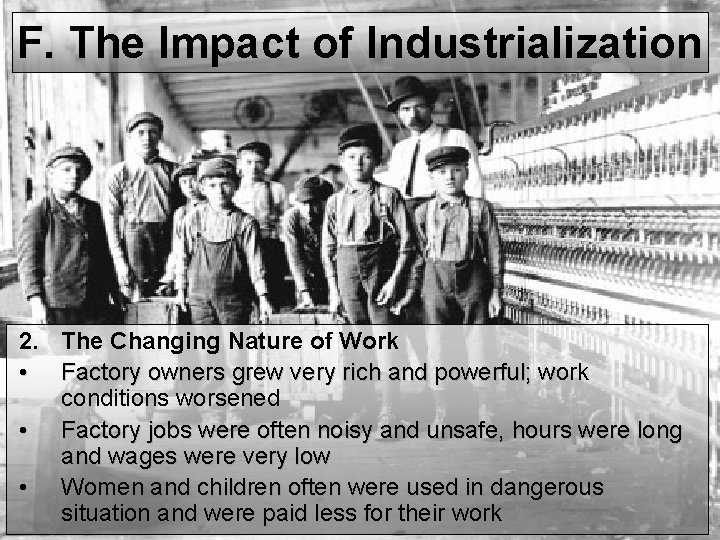
F. The Impact of Industrialization 2. The Changing Nature of Work • Factory owners grew very rich and powerful; work w conditions worsened • Factory jobs were often noisy and unsafe, hours were long and wages were very low • Women and children often were used in dangerous situation and were paid less for their work
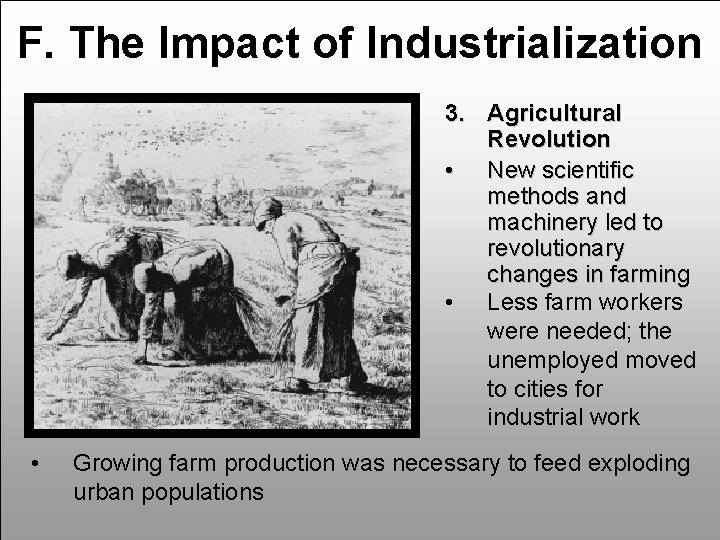
F. The Impact of Industrialization 3. Agricultural Revolution • New scientific methods and machinery led to revolutionary changes in farming • Less farm workers were needed; the unemployed moved to cities for industrial work • Growing farm production was necessary to feed exploding urban populations
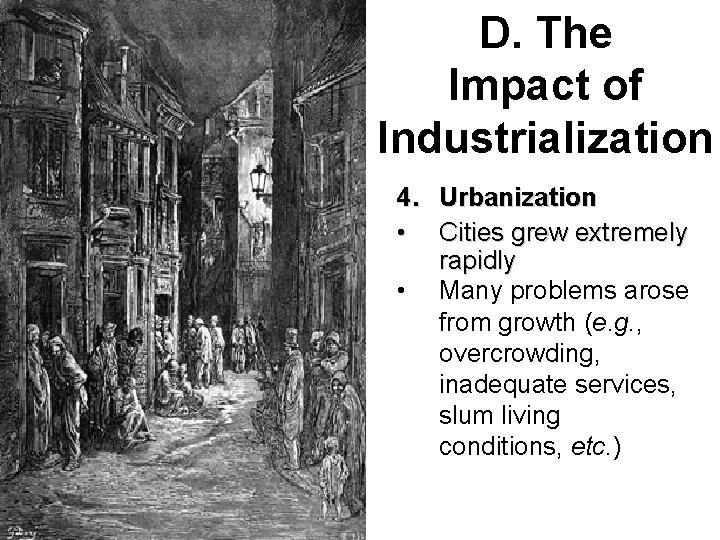
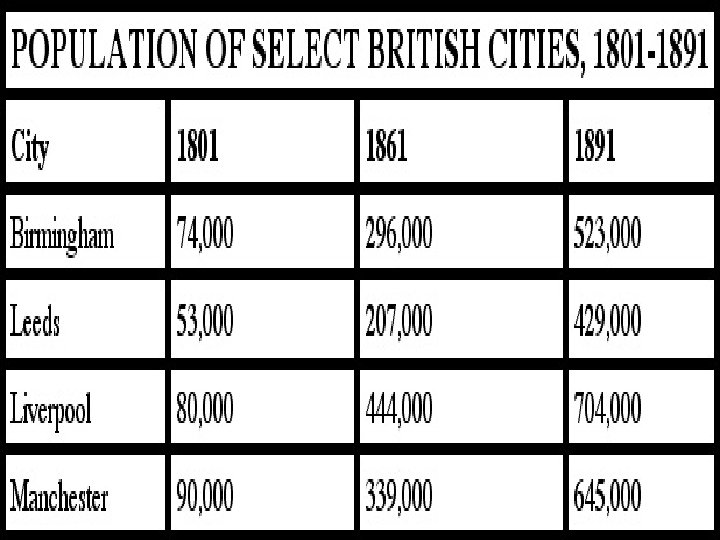
D. The Impact of Industrialization 4. Urbanization • Cities grew extremely rapidly • Many problems arose from growth (e. g. , overcrowding, inadequate services, slum living conditions, etc. )
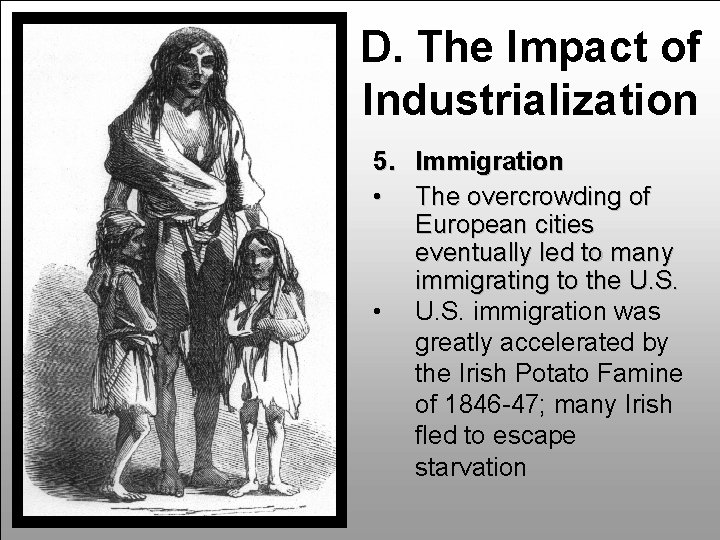
D. The Impact of Industrialization 5. Immigration • The overcrowding of European cities eventually led to many immigrating to the U. S. • U. S. immigration was greatly accelerated by the Irish Potato Famine of 1846 -47; many Irish fled to escape starvation
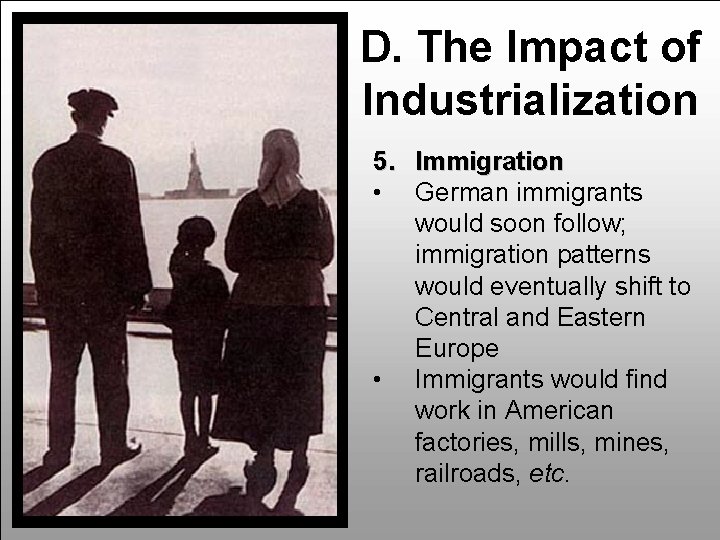
D. The Impact of Industrialization 5. Immigration • German immigrants would soon follow; immigration patterns would eventually shift to Central and Eastern Europe • Immigrants would find work in American factories, mills, mines, railroads, etc.
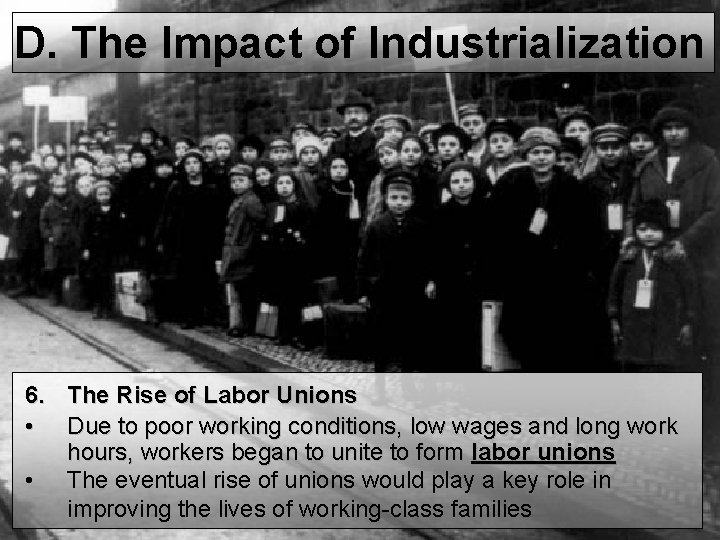
D. The Impact of Industrialization 6. The Rise of Labor Unions • Due to poor working conditions, low wages and long work hours, workers began to unite to form labor unions • The eventual rise of unions would play a key role in improving the lives of working-class families
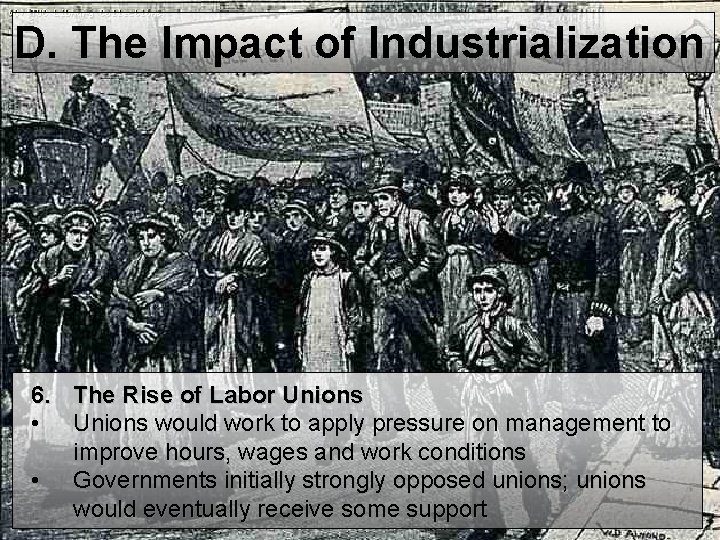
D. The Impact of Industrialization 6. The Rise of Labor Unions • Unions would work to apply pressure on management to improve hours, wages and work conditions • Governments initially strongly opposed unions; unions would eventually receive some support
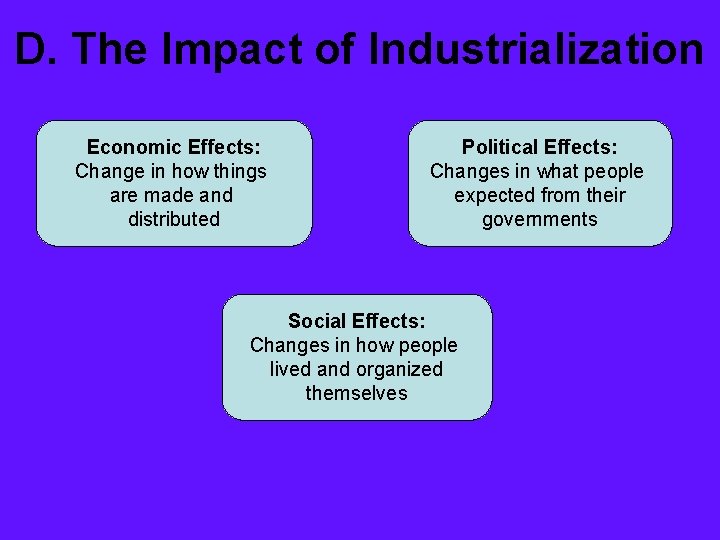
D. The Impact of Industrialization Economic Effects: Change in how things are made and distributed Political Effects: Changes in what people expected from their governments Social Effects: Changes in how people lived and organized themselves
- Slides: 23