
Industrialization of the 1800 s Mass Society and



- Slides: 43
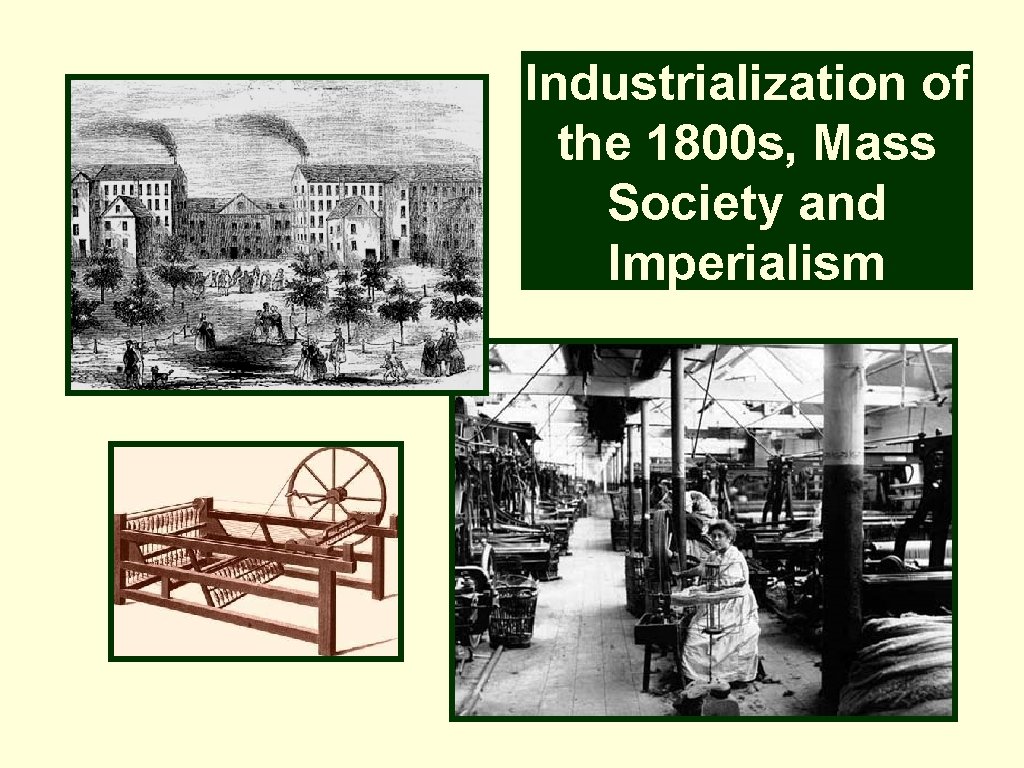
Industrialization of the 1800 s, Mass Society and Imperialism
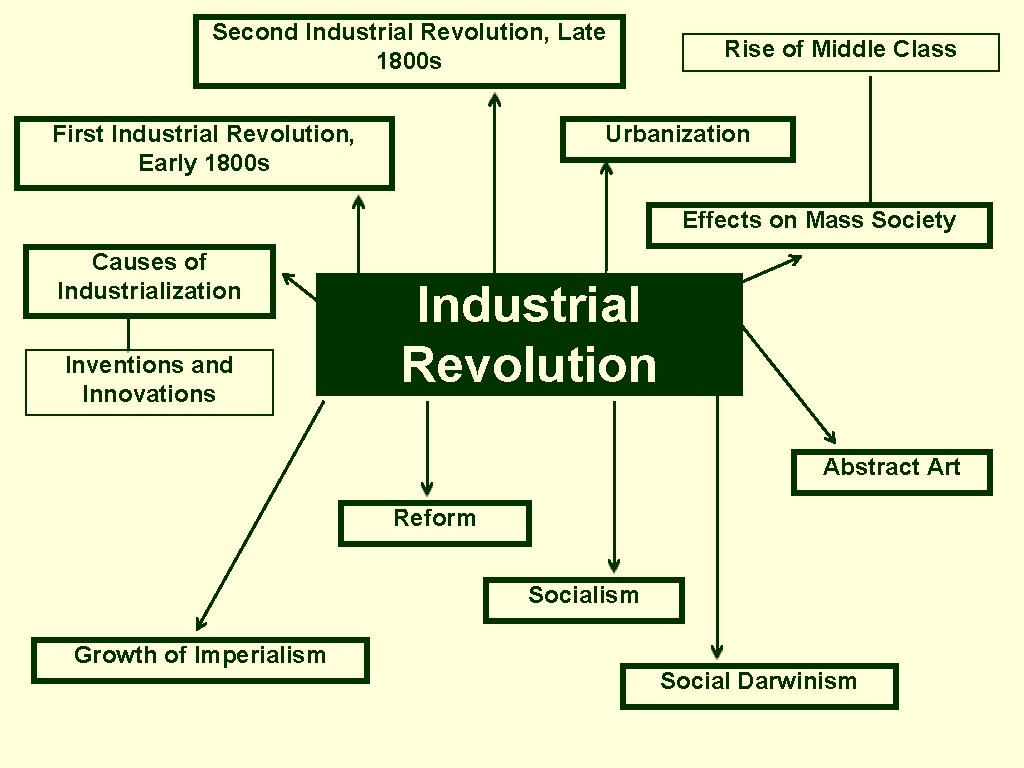
Second Industrial Revolution, Late 1800 s First Industrial Revolution, Early 1800 s Rise of Middle Class Urbanization Effects on Mass Society Causes of Industrialization Inventions and Innovations Industrial Revolution Abstract Art Reform Socialism Growth of Imperialism Social Darwinism
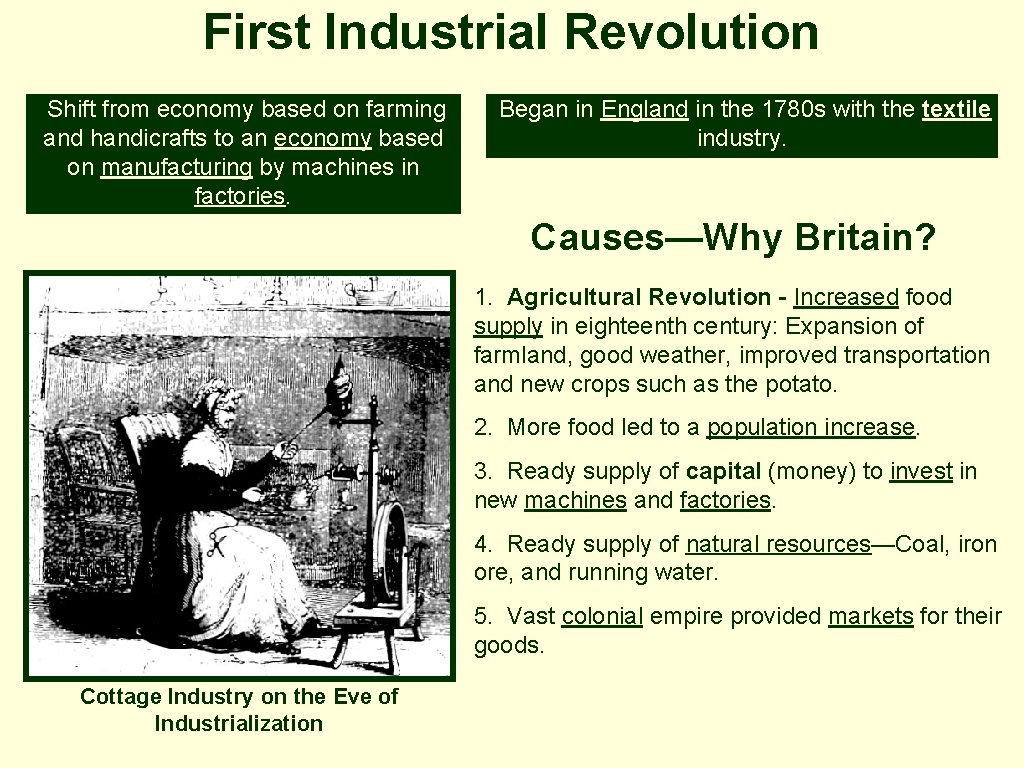
First Industrial Revolution Shift from economy based on farming and handicrafts to an economy based on manufacturing by machines in factories. Began in England in the 1780 s with the textile industry. Causes—Why Britain? 1. Agricultural Revolution - Increased food supply in eighteenth century: Expansion of farmland, good weather, improved transportation and new crops such as the potato. 2. More food led to a population increase. 3. Ready supply of capital (money) to invest in new machines and factories. 4. Ready supply of natural resources—Coal, iron ore, and running water. 5. Vast colonial empire provided markets for their goods. Cottage Industry on the Eve of Industrialization
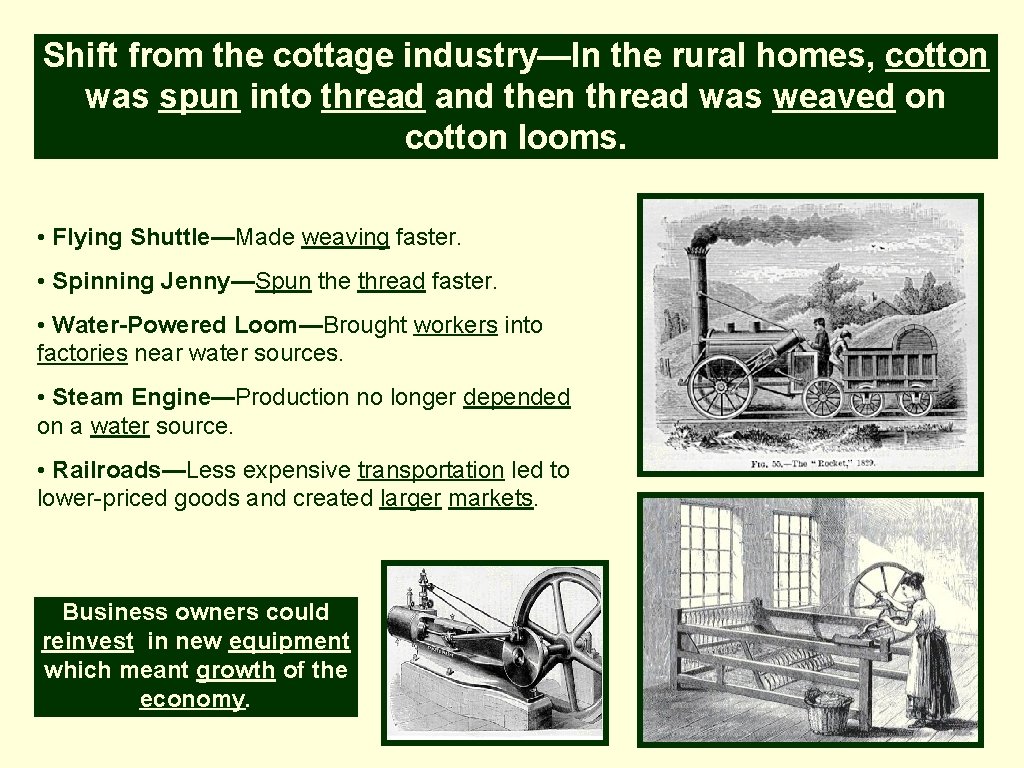
Shift from the cottage industry—In the rural homes, cotton was spun into thread and then thread was weaved on cotton looms. • Flying Shuttle—Made weaving faster. • Spinning Jenny—Spun the thread faster. • Water-Powered Loom—Brought workers into factories near water sources. • Steam Engine—Production no longer depended on a water source. • Railroads—Less expensive transportation led to lower-priced goods and created larger markets. Business owners could reinvest in new equipment which meant growth of the economy.
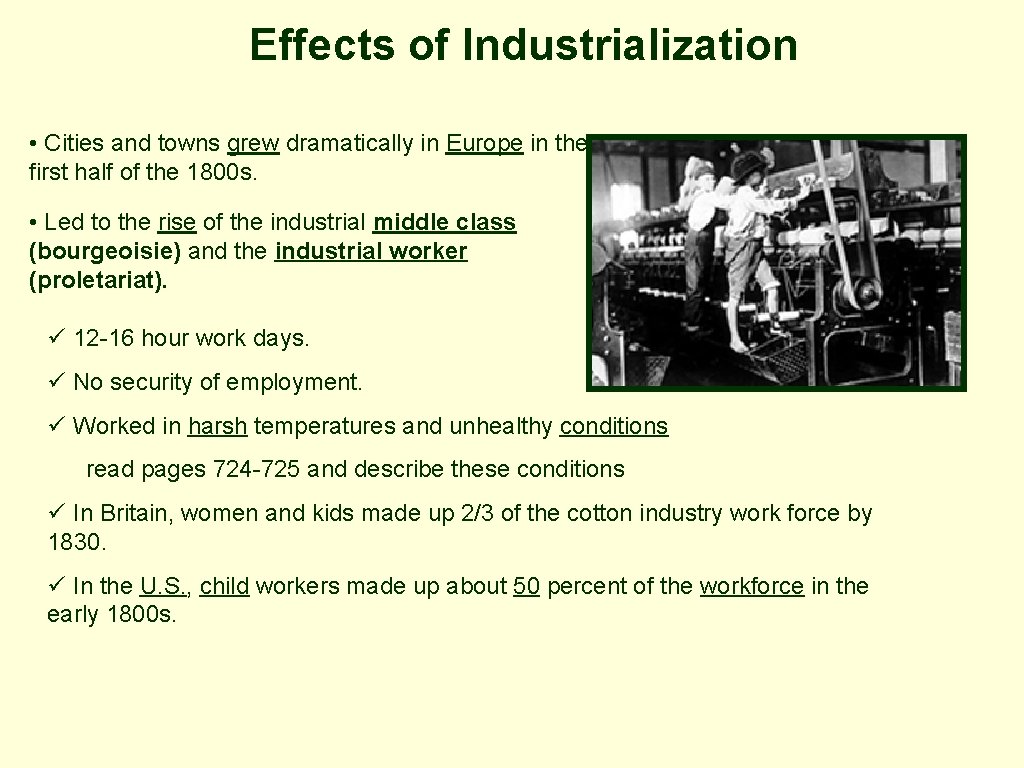
Effects of Industrialization • Cities and towns grew dramatically in Europe in the first half of the 1800 s. • Led to the rise of the industrial middle class (bourgeoisie) and the industrial worker (proletariat). ü 12 -16 hour work days. ü No security of employment. ü Worked in harsh temperatures and unhealthy conditions read pages 724 -725 and describe these conditions ü In Britain, women and kids made up 2/3 of the cotton industry work force by 1830. ü In the U. S. , child workers made up about 50 percent of the workforce in the early 1800 s.
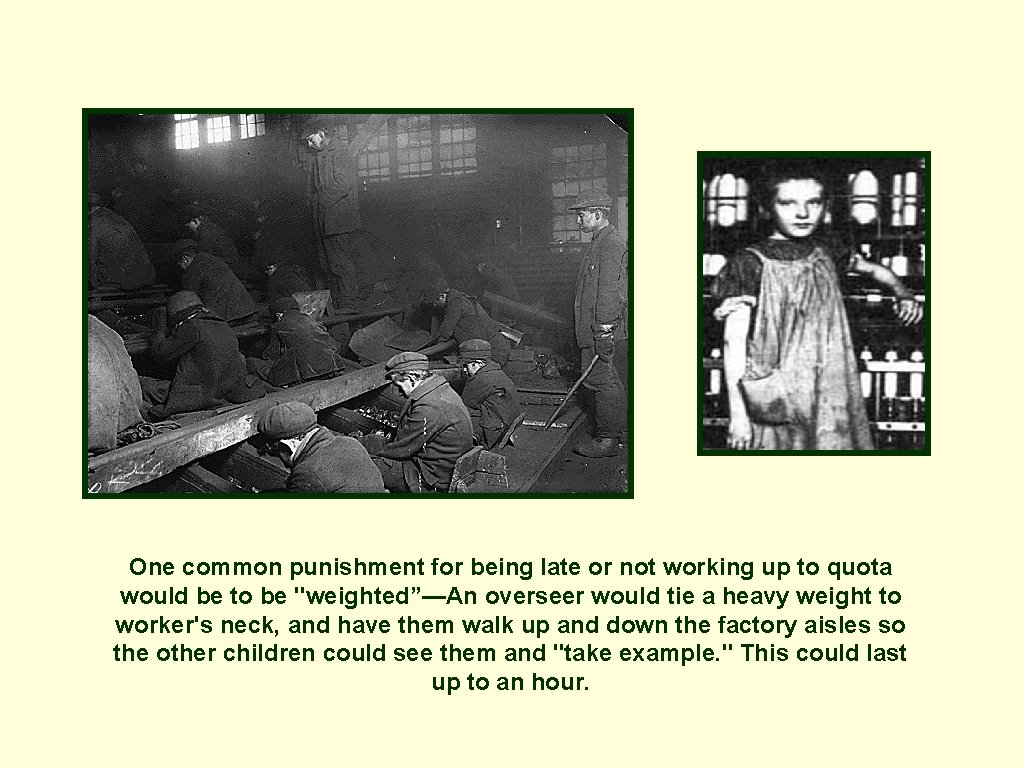
One common punishment for being late or not working up to quota would be to be "weighted”—An overseer would tie a heavy weight to worker's neck, and have them walk up and down the factory aisles so the other children could see them and "take example. " This could last up to an hour.
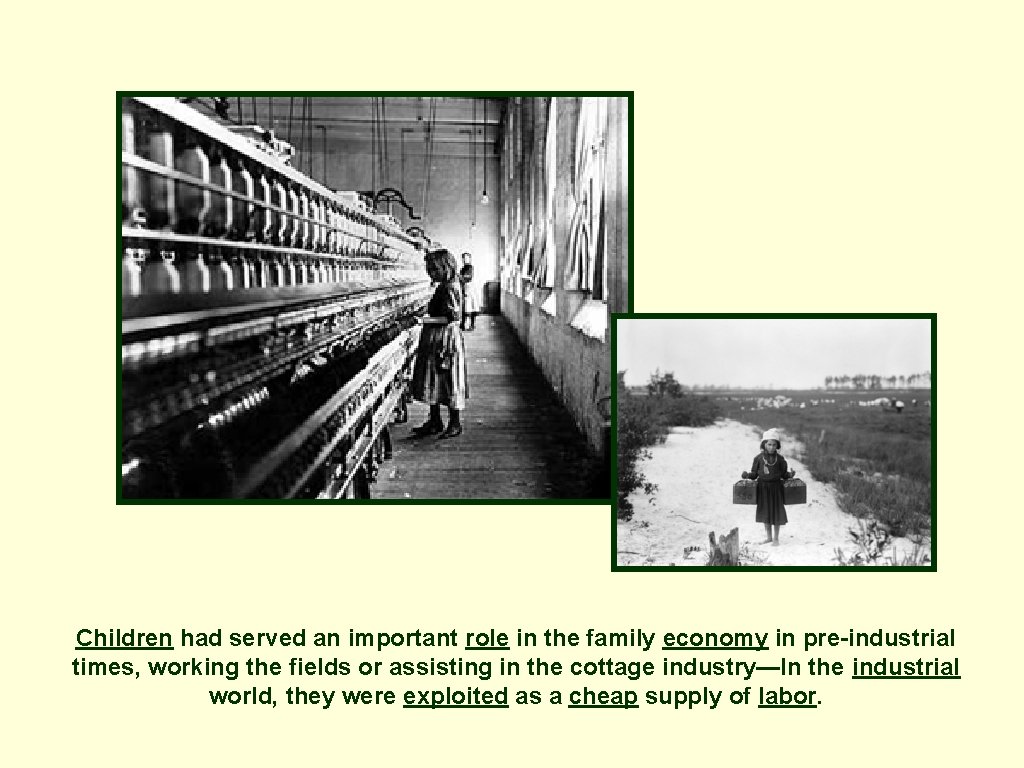
Children had served an important role in the family economy in pre-industrial times, working the fields or assisting in the cottage industry—In the industrial world, they were exploited as a cheap supply of labor.
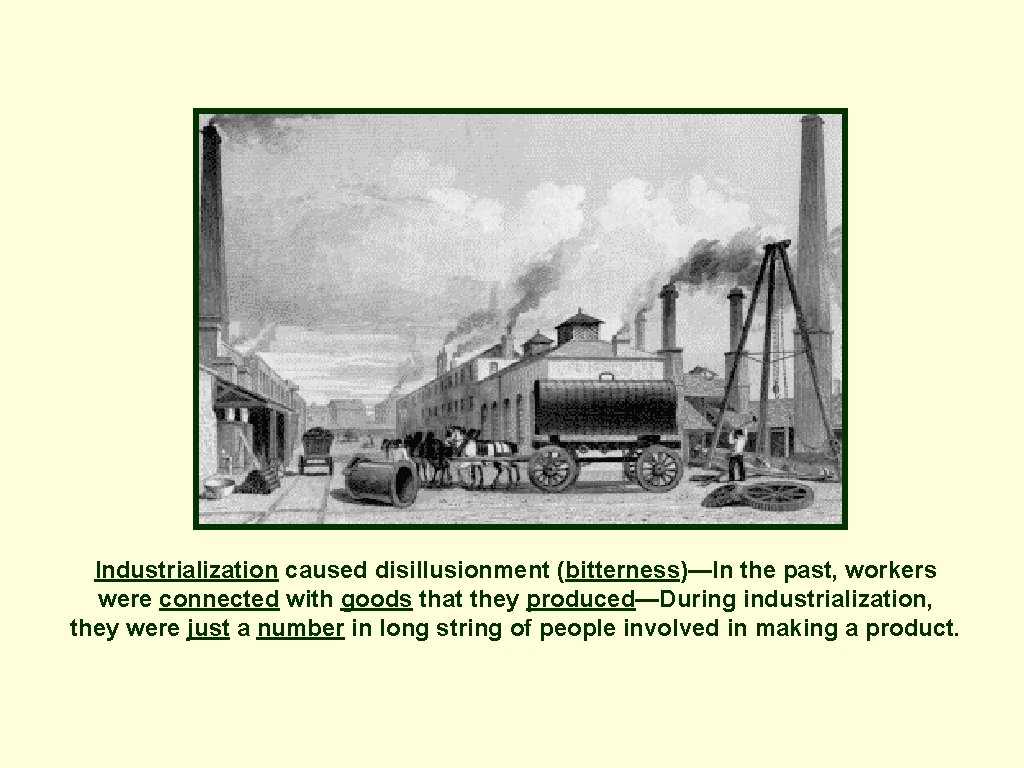
Industrialization caused disillusionment (bitterness)—In the past, workers were connected with goods that they produced—During industrialization, they were just a number in long string of people involved in making a product.
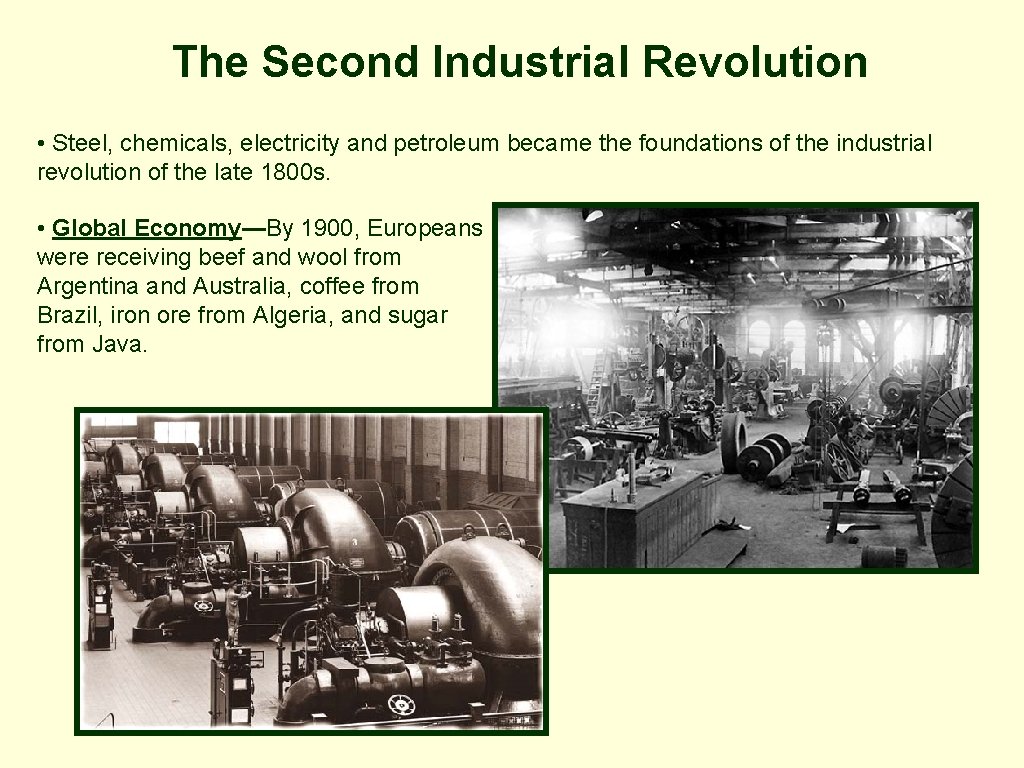
The Second Industrial Revolution • Steel, chemicals, electricity and petroleum became the foundations of the industrial revolution of the late 1800 s. • Global Economy—By 1900, Europeans were receiving beef and wool from Argentina and Australia, coffee from Brazil, iron ore from Algeria, and sugar from Java.
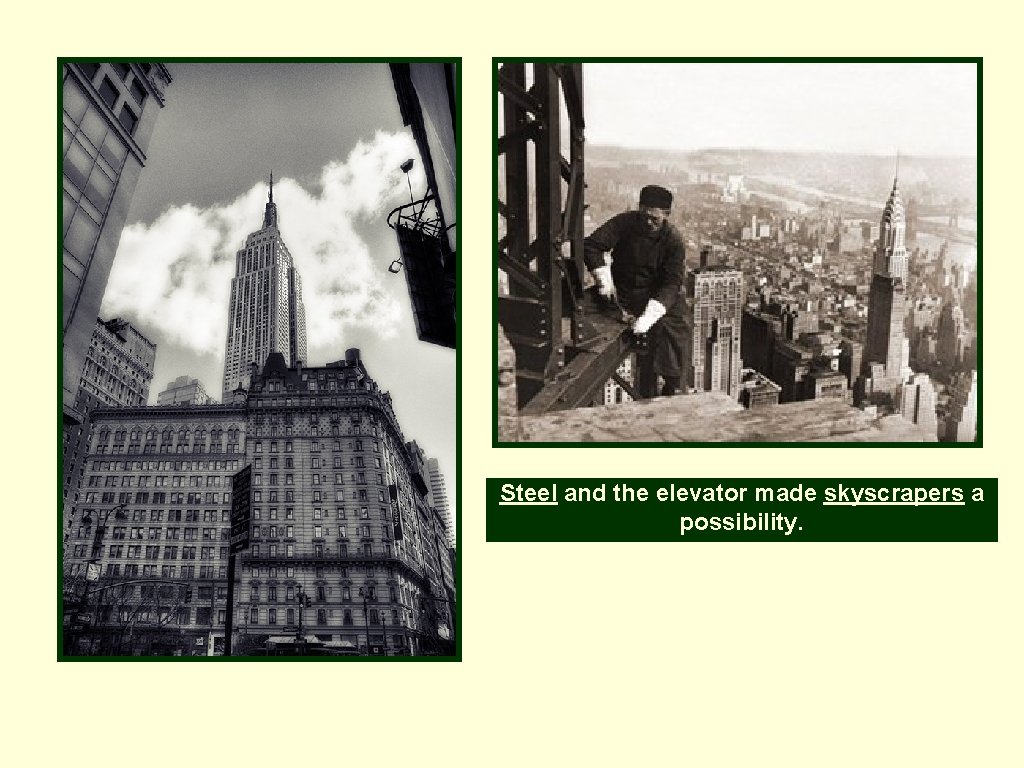
Steel and the elevator made skyscrapers a possibility.
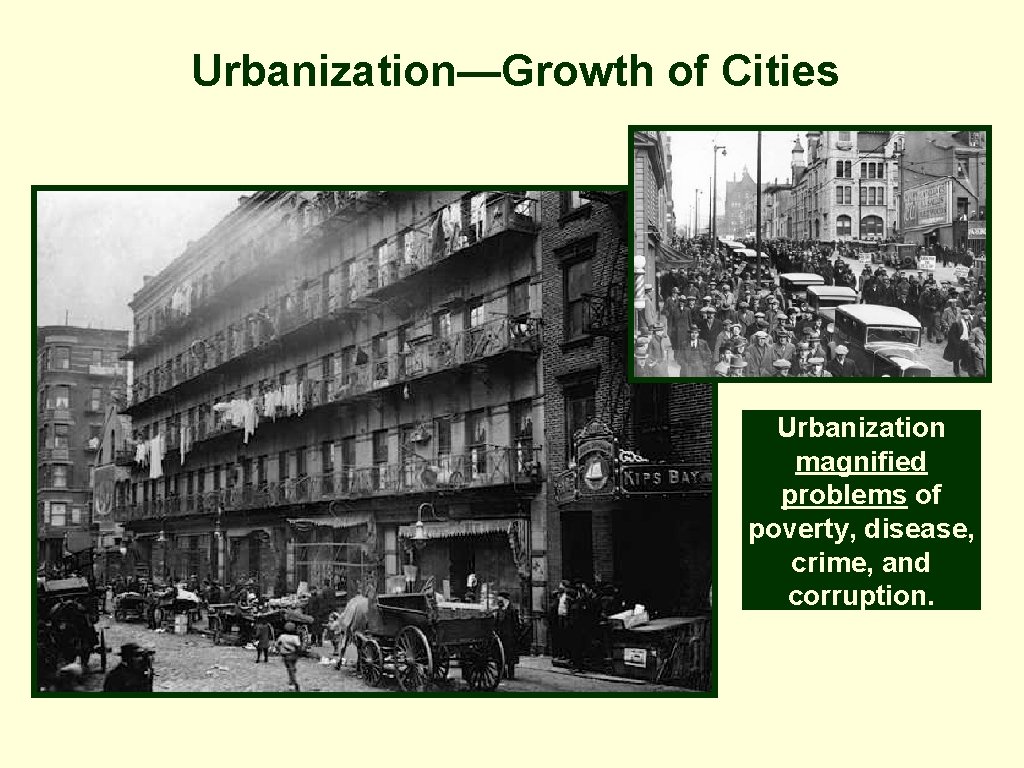
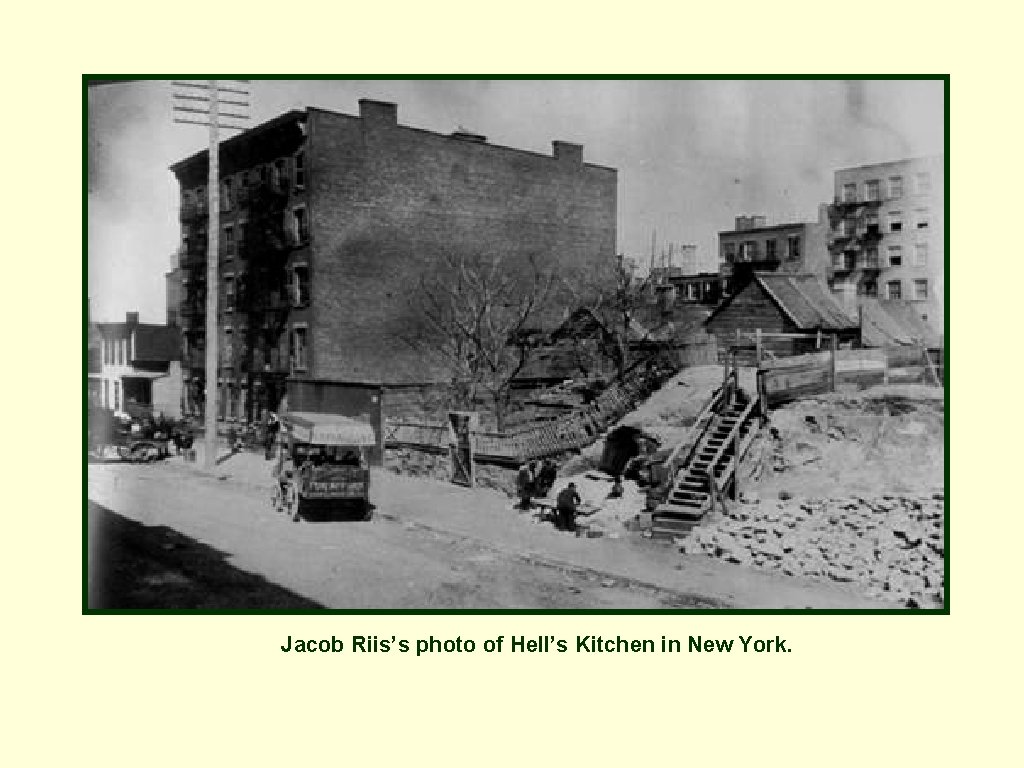
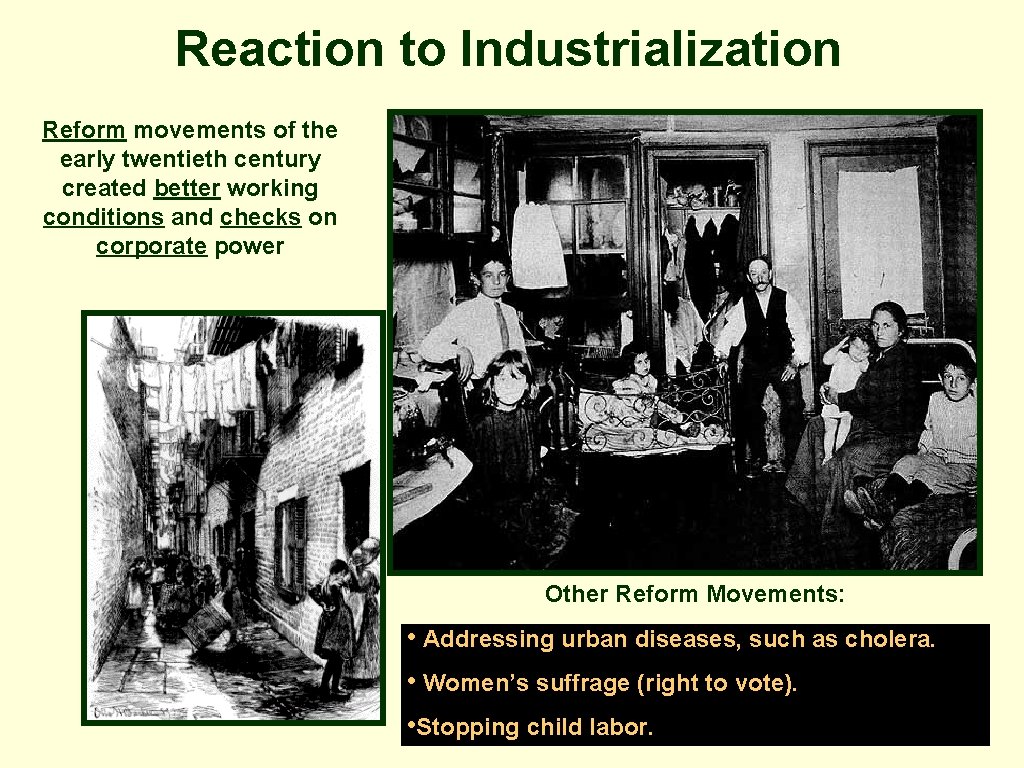
Urbanization—Growth of Cities Urbanization magnified problems of poverty, disease, crime, and corruption.
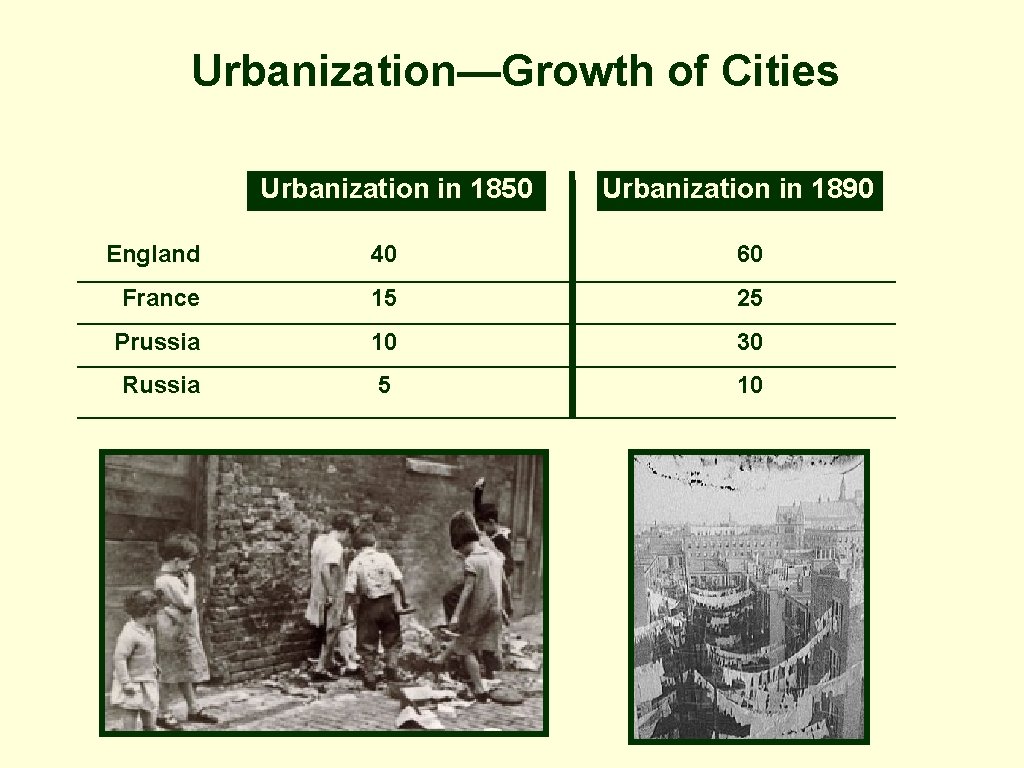
Urbanization—Growth of Cities Urbanization in 1850 Urbanization in 1890 England 40 60 France 15 25 Prussia 10 30 Russia 5 10
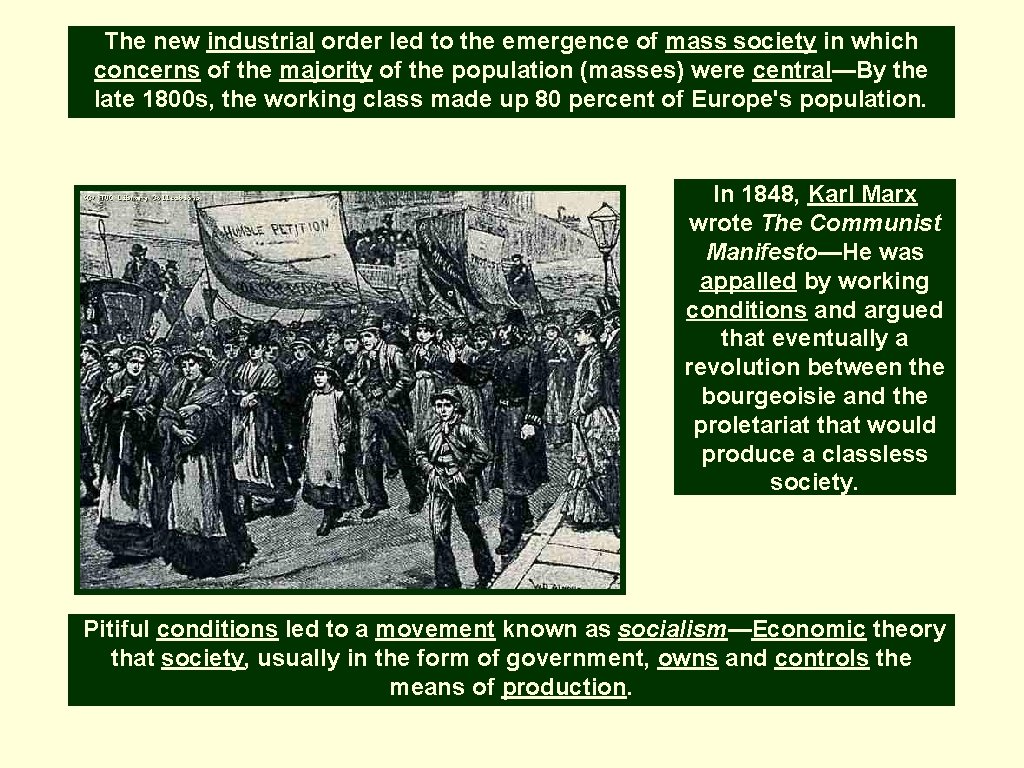
The new industrial order led to the emergence of mass society in which concerns of the majority of the population (masses) were central—By the late 1800 s, the working class made up 80 percent of Europe's population. In 1848, Karl Marx wrote The Communist Manifesto—He was appalled by working conditions and argued that eventually a revolution between the bourgeoisie and the proletariat that would produce a classless society. Pitiful conditions led to a movement known as socialism—Economic theory that society, usually in the form of government, owns and controls the means of production.
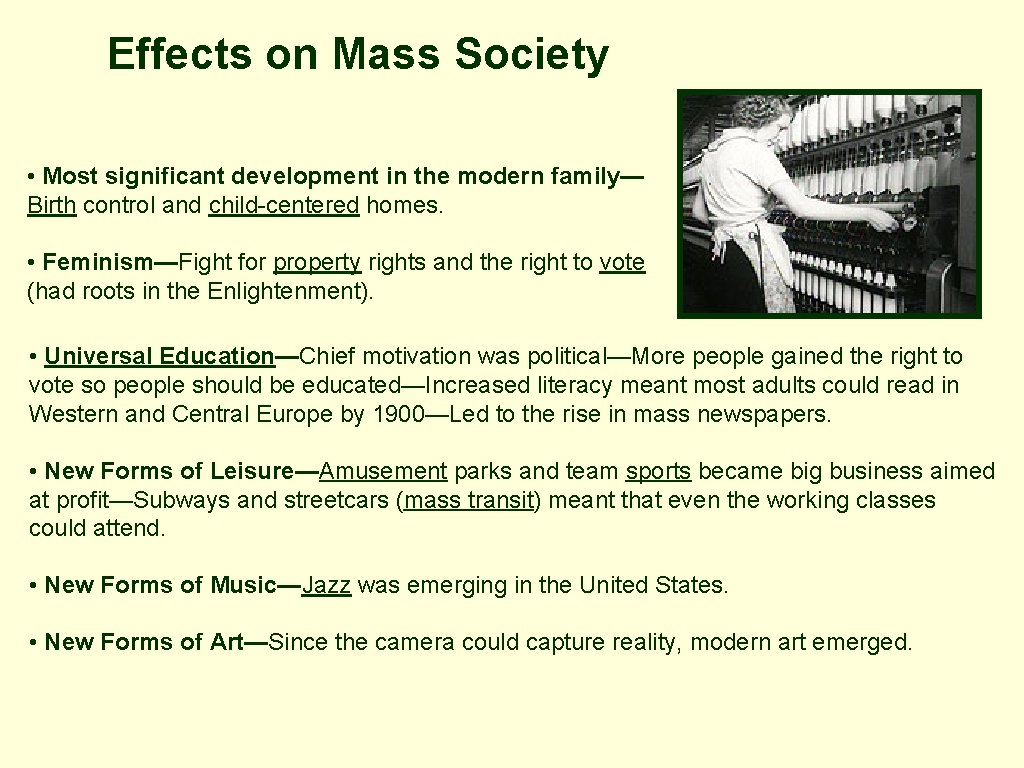
Effects on Mass Society • Most significant development in the modern family— Birth control and child-centered homes. • Feminism—Fight for property rights and the right to vote (had roots in the Enlightenment). • Universal Education—Chief motivation was political—More people gained the right to vote so people should be educated—Increased literacy meant most adults could read in Western and Central Europe by 1900—Led to the rise in mass newspapers. • New Forms of Leisure—Amusement parks and team sports became big business aimed at profit—Subways and streetcars (mass transit) meant that even the working classes could attend. • New Forms of Music—Jazz was emerging in the United States. • New Forms of Art—Since the camera could capture reality, modern art emerged.
Claude Monet’s Impressionism—Arose in the 1870 s
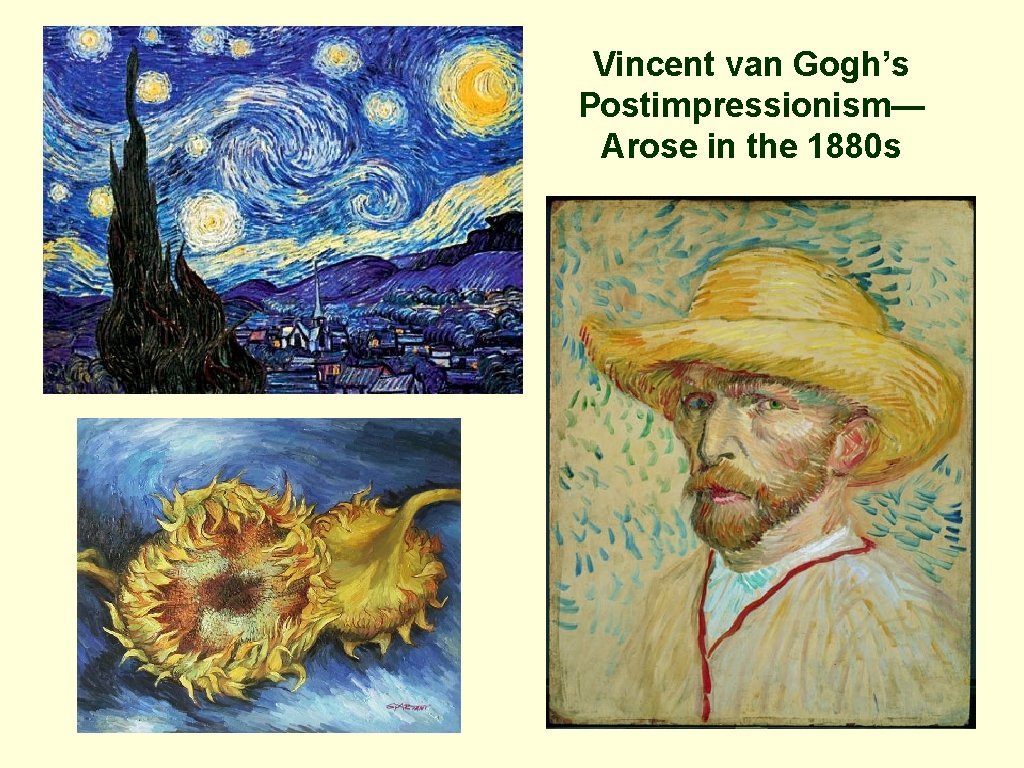
Vincent van Gogh’s Postimpressionism— Arose in the 1880 s
Russian Painter, Wassily Kandinsky, produced the first abstract art in 1910.
Pablo Picasso’s Cubism Demoiselles Gurenica, 1937—Shows the brutality and hopelessness of war.
Jacob Riis’s photo of Hell’s Kitchen in New York.
Reaction to Industrialization Reform movements of the early twentieth century created better working conditions and checks on corporate power Other Reform Movements: • Addressing urban diseases, such as cholera. • Women’s suffrage (right to vote). • Stopping child labor.
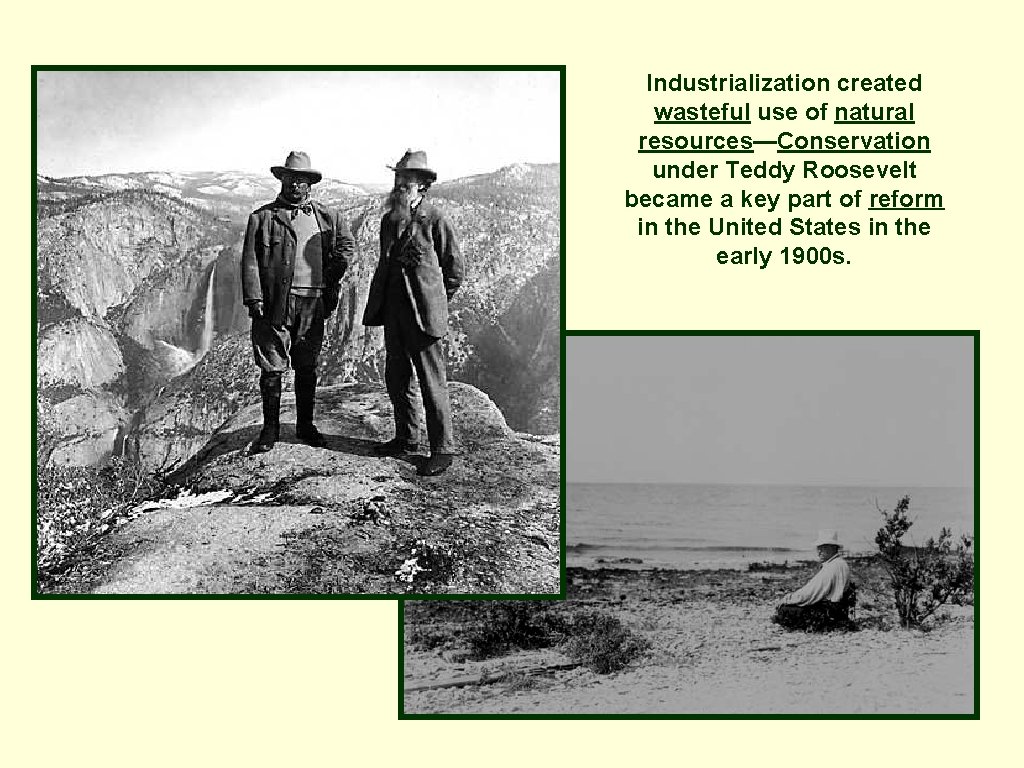
Industrialization created wasteful use of natural resources—Conservation under Teddy Roosevelt became a key part of reform in the United States in the early 1900 s.
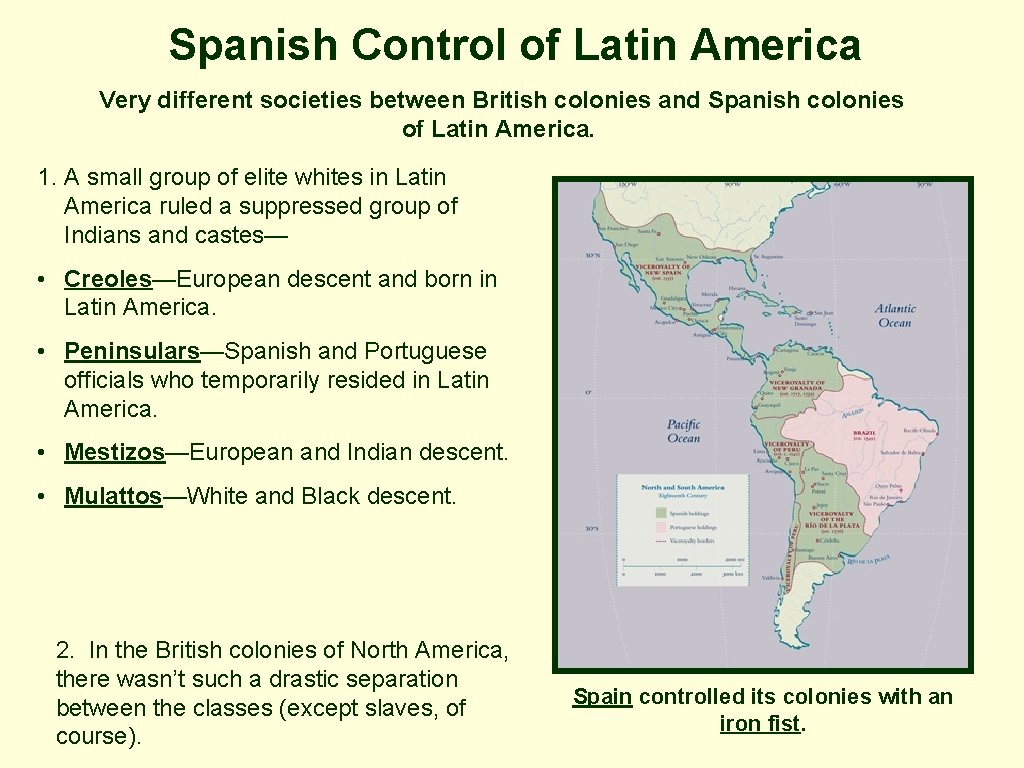
Spanish Control of Latin America Very different societies between British colonies and Spanish colonies of Latin America. 1. A small group of elite whites in Latin America ruled a suppressed group of Indians and castes— • Creoles—European descent and born in Latin America. • Peninsulars—Spanish and Portuguese officials who temporarily resided in Latin America. • Mestizos—European and Indian descent. • Mulattos—White and Black descent. 2. In the British colonies of North America, there wasn’t such a drastic separation between the classes (except slaves, of course). Spain controlled its colonies with an iron fist.
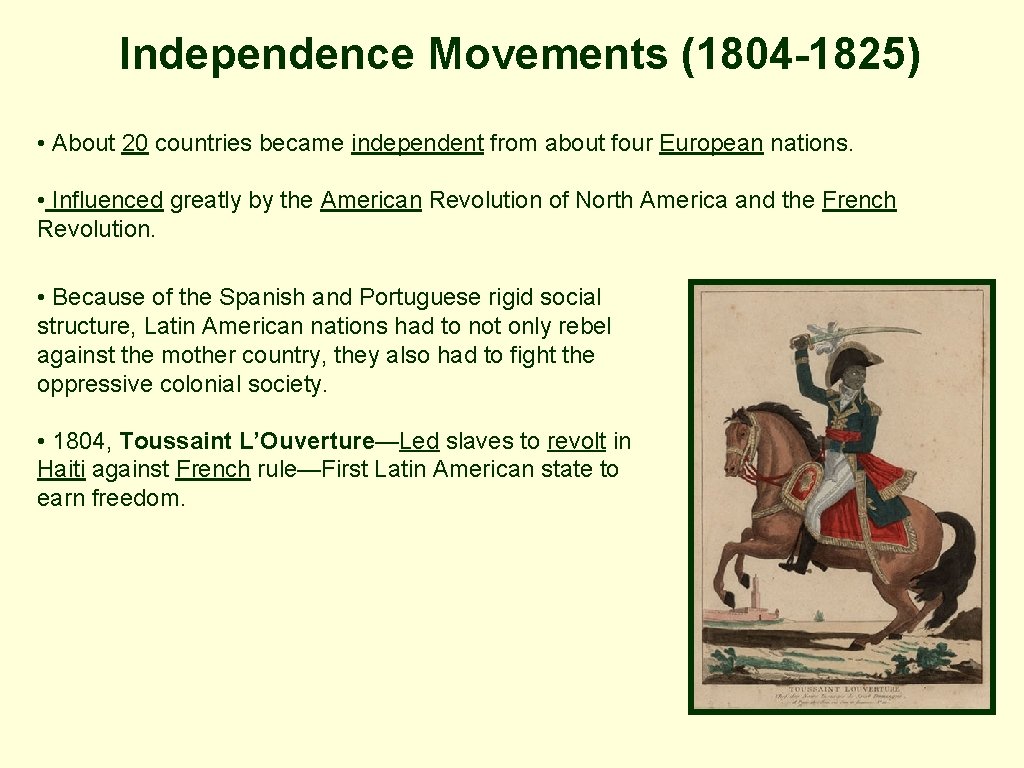
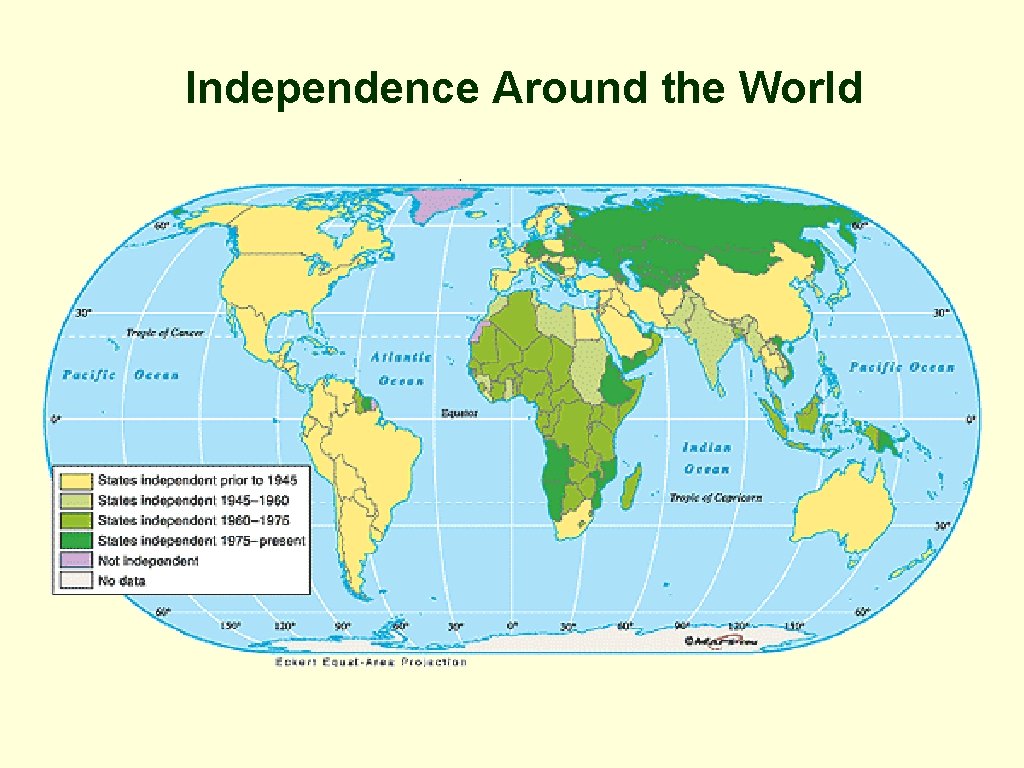
Independence Movements (1804 -1825) • About 20 countries became independent from about four European nations. • Influenced greatly by the American Revolution of North America and the French Revolution. • Because of the Spanish and Portuguese rigid social structure, Latin American nations had to not only rebel against the mother country, they also had to fight the oppressive colonial society. • 1804, Toussaint L’Ouverture—Led slaves to revolt in Haiti against French rule—First Latin American state to earn freedom.
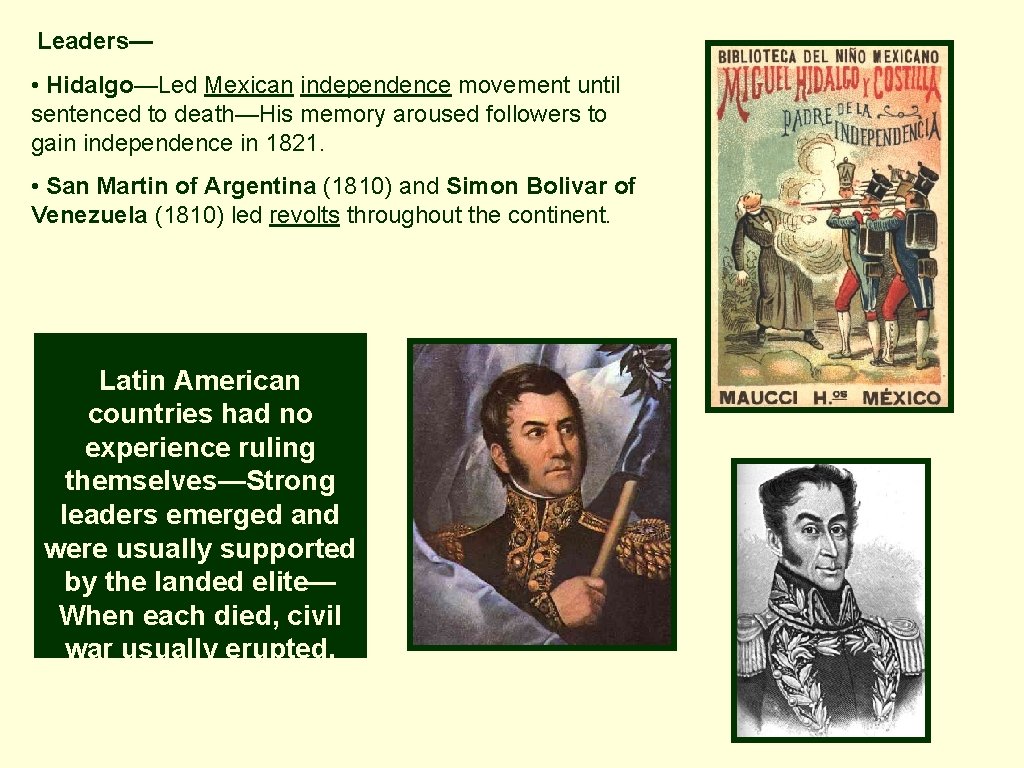
Leaders— • Hidalgo—Led Mexican independence movement until sentenced to death—His memory aroused followers to gain independence in 1821. • San Martin of Argentina (1810) and Simon Bolivar of Venezuela (1810) led revolts throughout the continent. Latin American countries had no experience ruling themselves—Strong leaders emerged and were usually supported by the landed elite— When each died, civil war usually erupted.
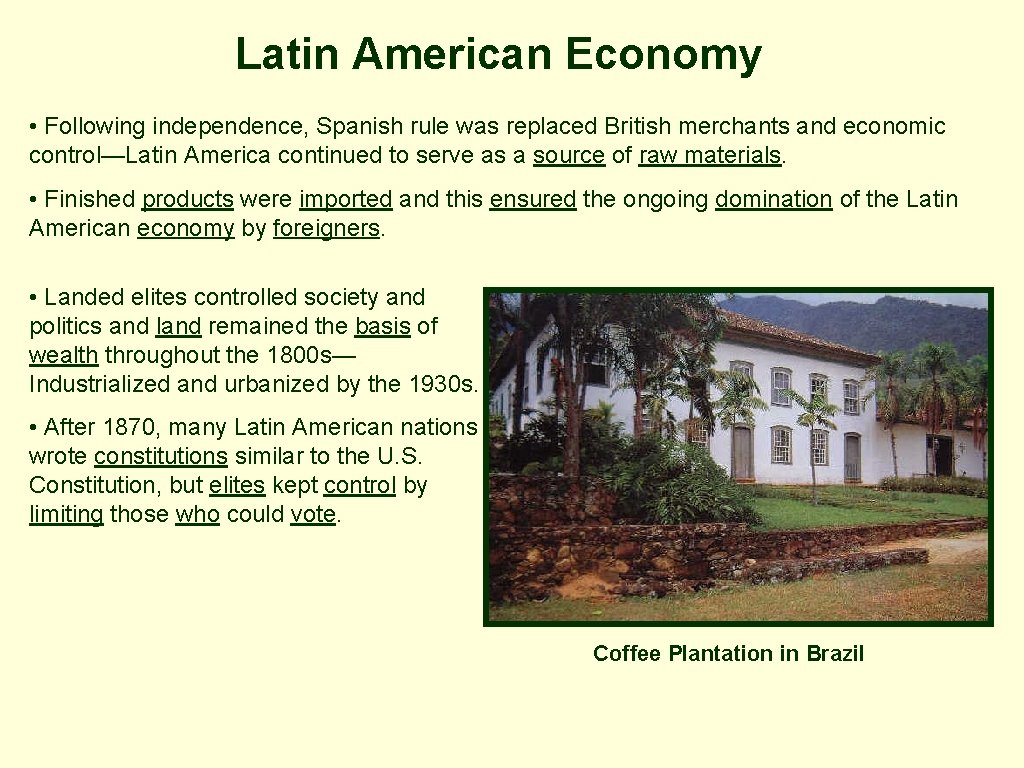
Latin American Economy • Following independence, Spanish rule was replaced British merchants and economic control—Latin America continued to serve as a source of raw materials. • Finished products were imported and this ensured the ongoing domination of the Latin American economy by foreigners. • Landed elites controlled society and politics and land remained the basis of wealth throughout the 1800 s— Industrialized and urbanized by the 1930 s. • After 1870, many Latin American nations wrote constitutions similar to the U. S. Constitution, but elites kept control by limiting those who could vote. Coffee Plantation in Brazil
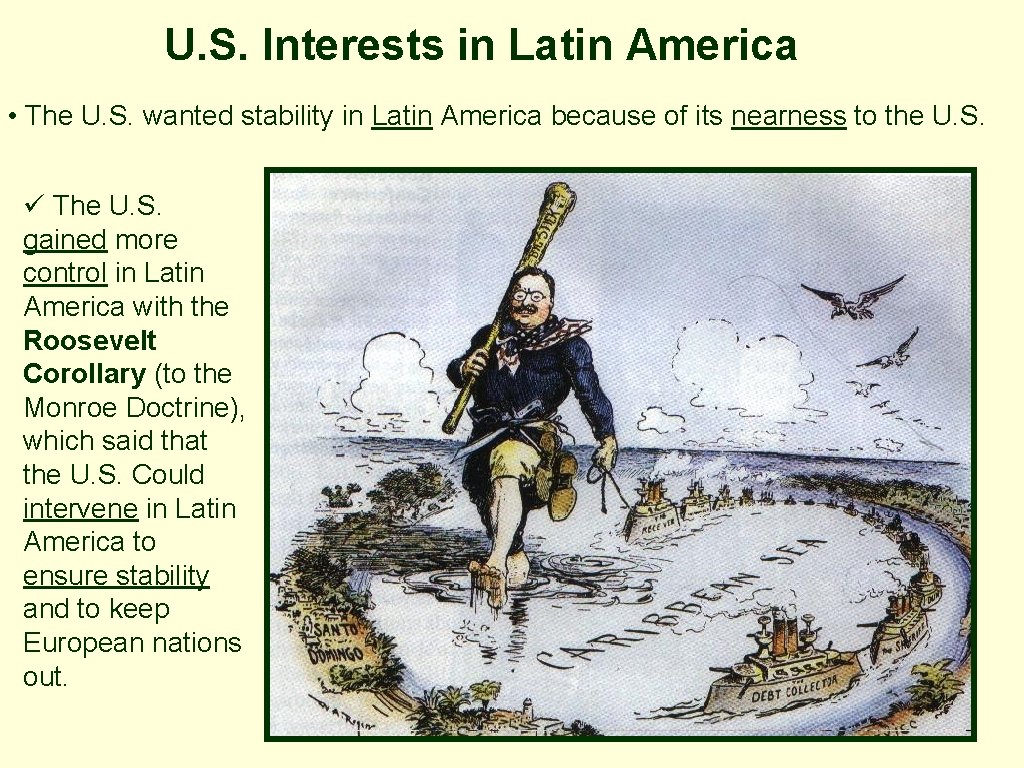
U. S. Interests in Latin America • The U. S. wanted stability in Latin America because of its nearness to the U. S. ü The U. S. gained more control in Latin America with the Roosevelt Corollary (to the Monroe Doctrine), which said that the U. S. Could intervene in Latin America to ensure stability and to keep European nations out.
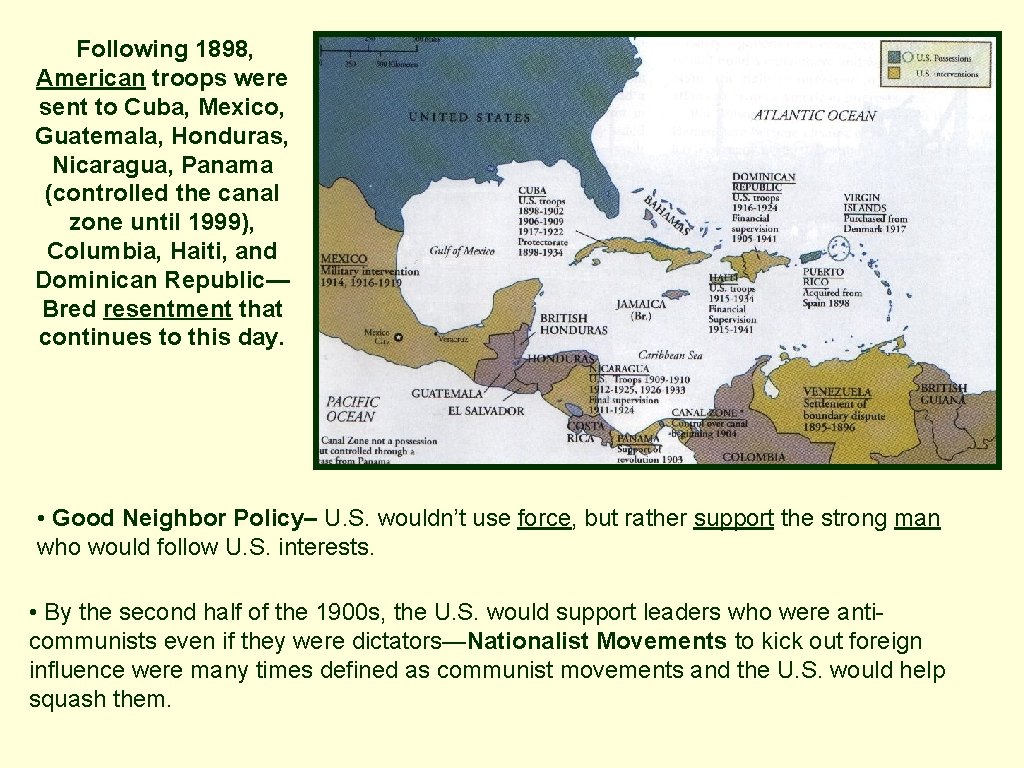
Following 1898, American troops were sent to Cuba, Mexico, Guatemala, Honduras, Nicaragua, Panama (controlled the canal zone until 1999), Columbia, Haiti, and Dominican Republic— Bred resentment that continues to this day. • Good Neighbor Policy– U. S. wouldn’t use force, but rather support the strong man who would follow U. S. interests. • By the second half of the 1900 s, the U. S. would support leaders who were anticommunists even if they were dictators—Nationalist Movements to kick out foreign influence were many times defined as communist movements and the U. S. would help squash them.
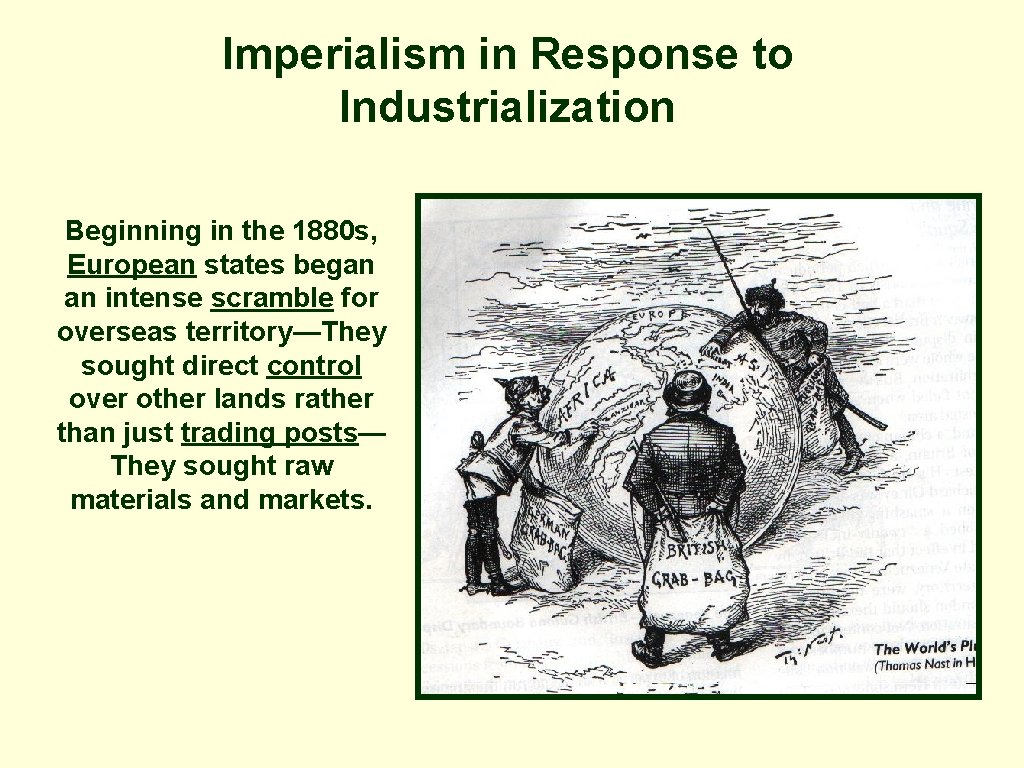
Imperialism in Response to Industrialization Beginning in the 1880 s, European states began an intense scramble for overseas territory—They sought direct control over other lands rather than just trading posts— They sought raw materials and markets.
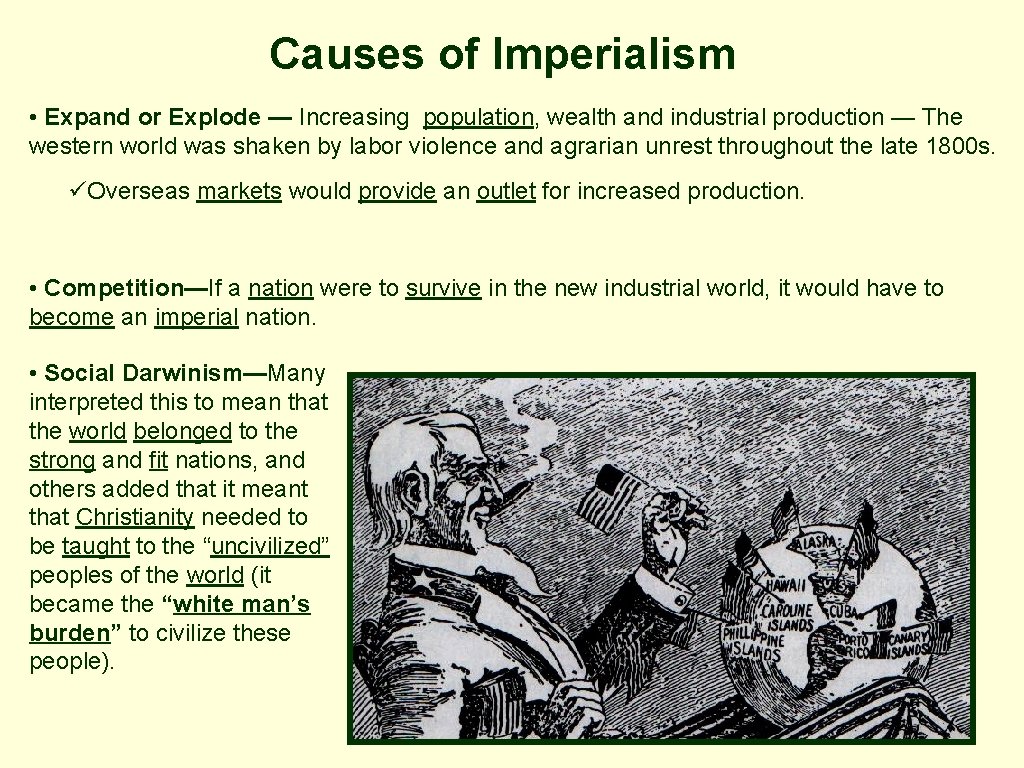
Causes of Imperialism • Expand or Explode — Increasing population, wealth and industrial production — The western world was shaken by labor violence and agrarian unrest throughout the late 1800 s. üOverseas markets would provide an outlet for increased production. • Competition—If a nation were to survive in the new industrial world, it would have to become an imperial nation. • Social Darwinism—Many interpreted this to mean that the world belonged to the strong and fit nations, and others added that it meant that Christianity needed to be taught to the “uncivilized” peoples of the world (it became the “white man’s burden” to civilize these people).
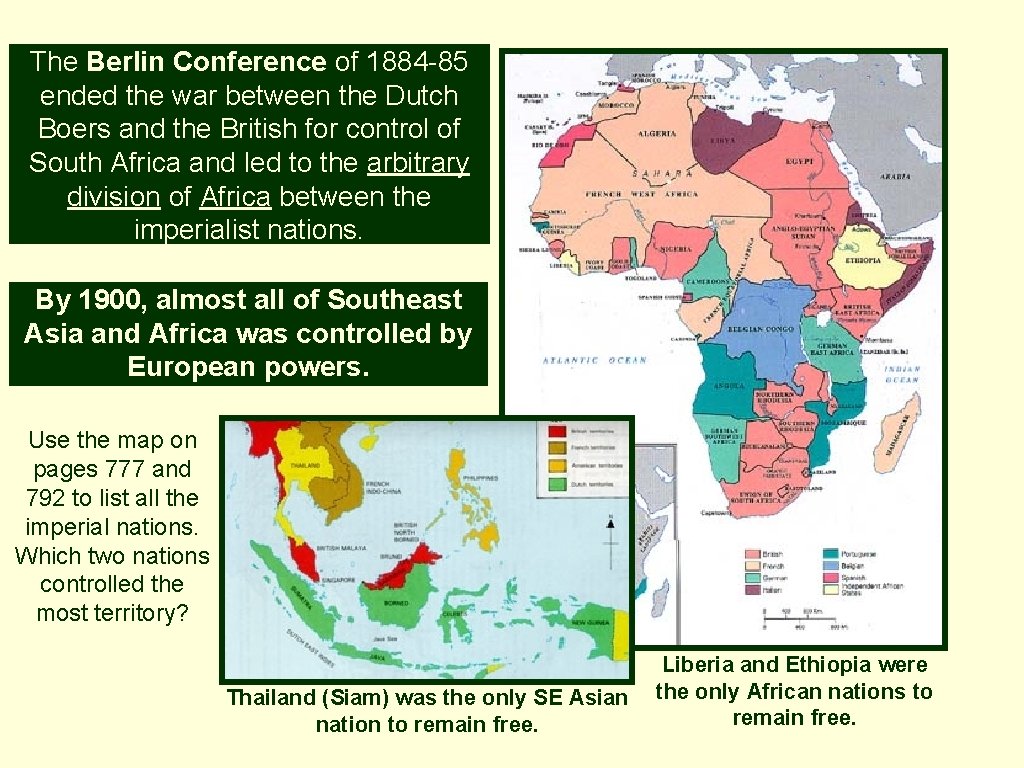
The Berlin Conference of 1884 -85 ended the war between the Dutch Boers and the British for control of South Africa and led to the arbitrary division of Africa between the imperialist nations. By 1900, almost all of Southeast Asia and Africa was controlled by European powers. Use the map on pages 777 and 792 to list all the imperial nations. Which two nations controlled the most territory? Thailand (Siam) was the only SE Asian nation to remain free. Liberia and Ethiopia were the only African nations to remain free.
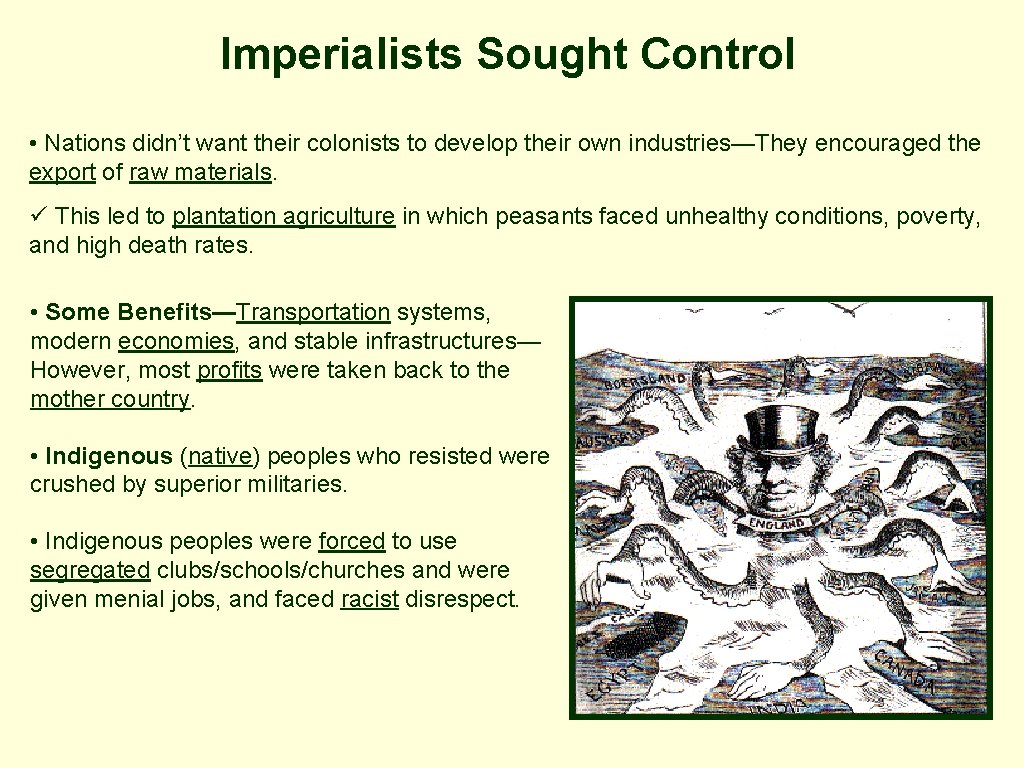
Imperialists Sought Control • Nations didn’t want their colonists to develop their own industries—They encouraged the export of raw materials. ü This led to plantation agriculture in which peasants faced unhealthy conditions, poverty, and high death rates. • Some Benefits—Transportation systems, modern economies, and stable infrastructures— However, most profits were taken back to the mother country. • Indigenous (native) peoples who resisted were crushed by superior militaries. • Indigenous peoples were forced to use segregated clubs/schools/churches and were given menial jobs, and faced racist disrespect.
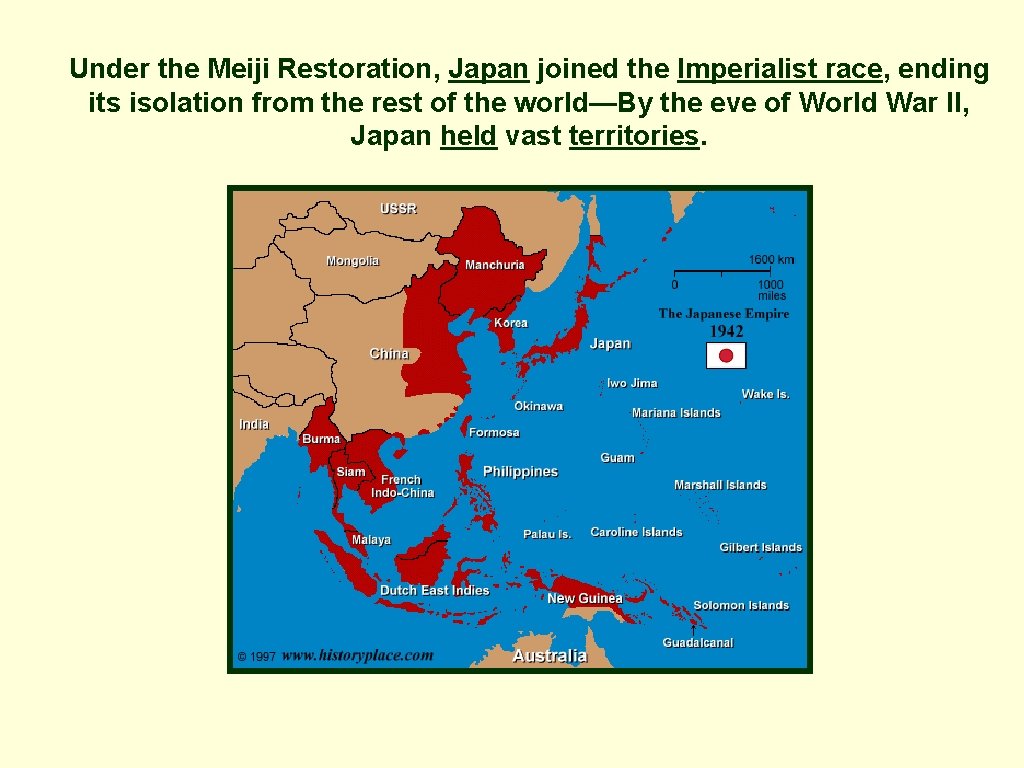
Under the Meiji Restoration, Japan joined the Imperialist race, ending its isolation from the rest of the world—By the eve of World War II, Japan held vast territories.
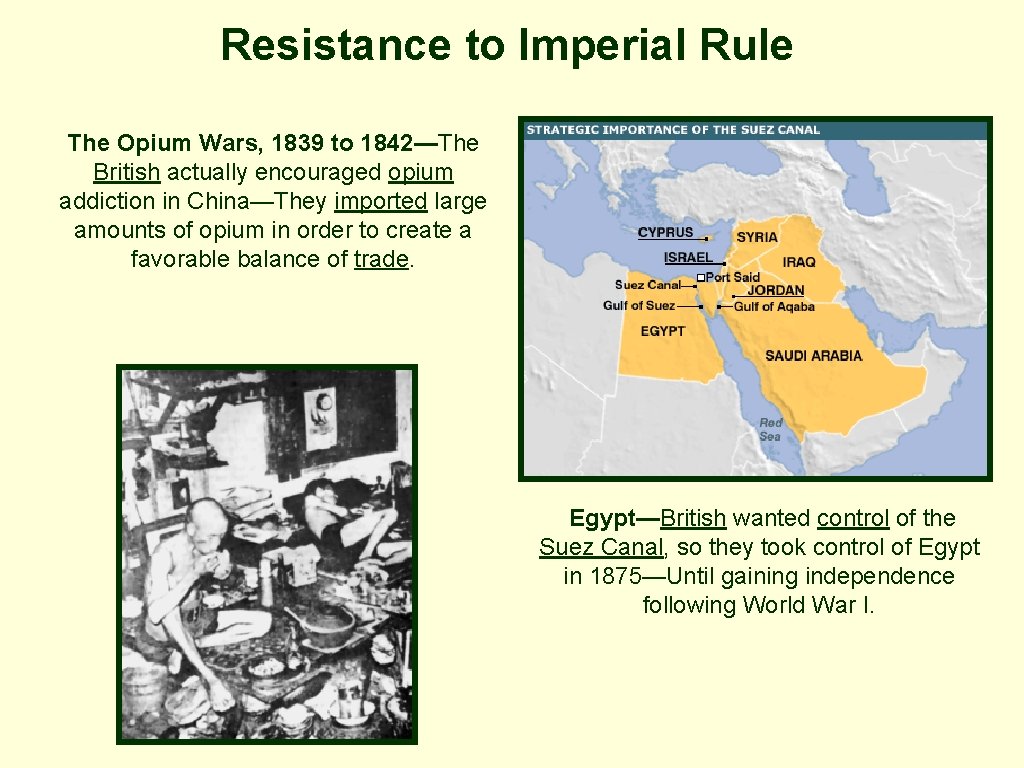
Resistance to Imperial Rule The Opium Wars, 1839 to 1842—The British actually encouraged opium addiction in China—They imported large amounts of opium in order to create a favorable balance of trade. Egypt—British wanted control of the Suez Canal, so they took control of Egypt in 1875—Until gaining independence following World War I.
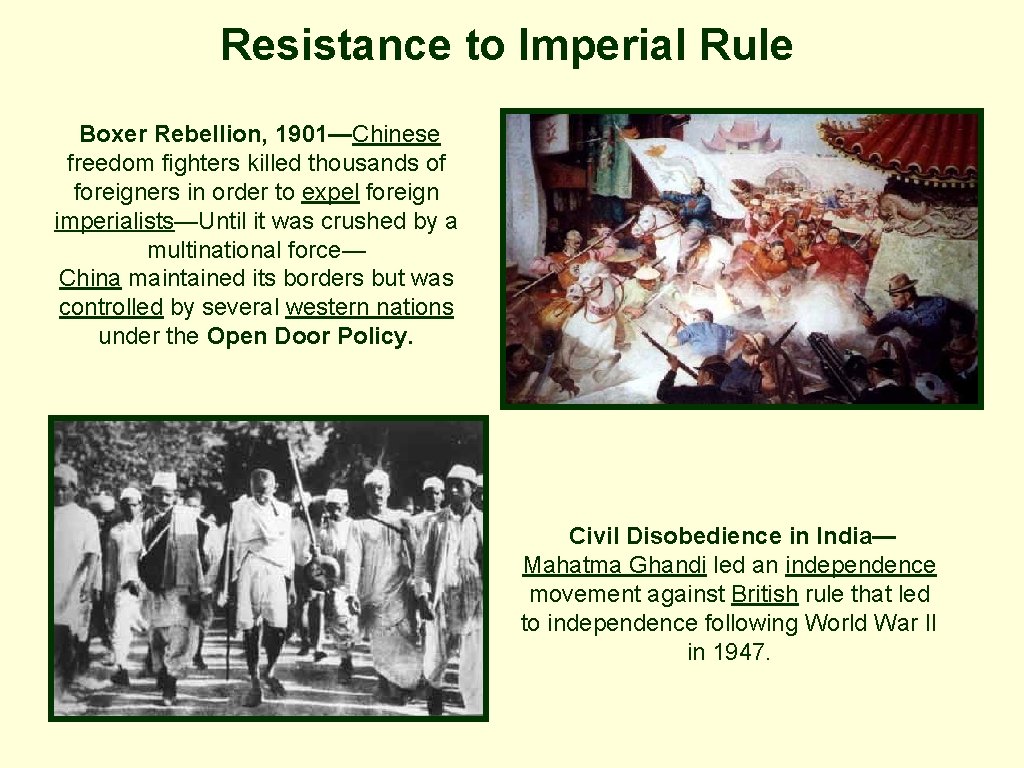
Resistance to Imperial Rule Boxer Rebellion, 1901—Chinese freedom fighters killed thousands of foreigners in order to expel foreign imperialists—Until it was crushed by a multinational force— China maintained its borders but was controlled by several western nations under the Open Door Policy. Civil Disobedience in India— Mahatma Ghandi led an independence movement against British rule that led to independence following World War II in 1947.
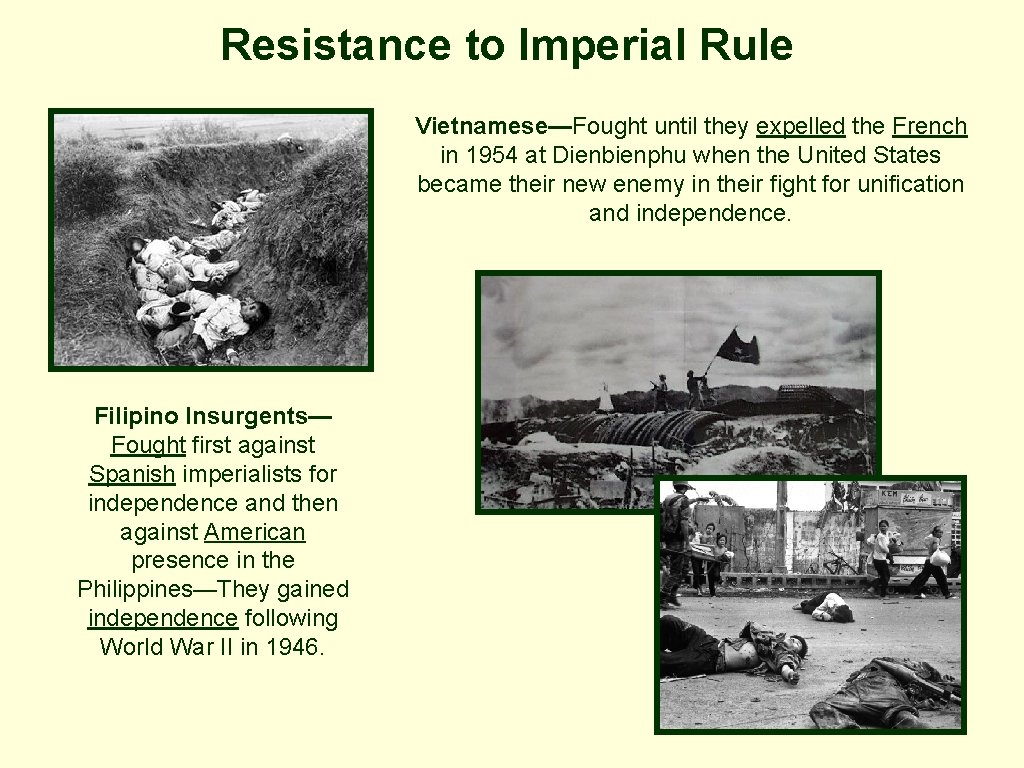
Resistance to Imperial Rule Vietnamese—Fought until they expelled the French in 1954 at Dienbienphu when the United States became their new enemy in their fight for unification and independence. Filipino Insurgents— Fought first against Spanish imperialists for independence and then against American presence in the Philippines—They gained independence following World War II in 1946.
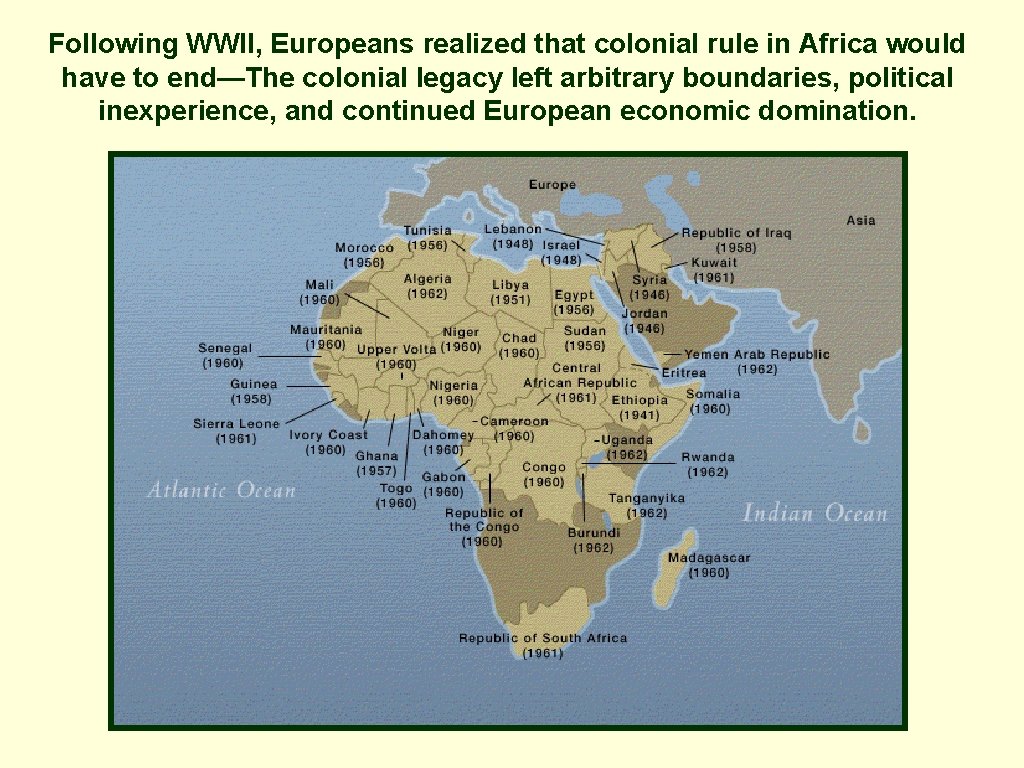
Following WWII, Europeans realized that colonial rule in Africa would have to end—The colonial legacy left arbitrary boundaries, political inexperience, and continued European economic domination.
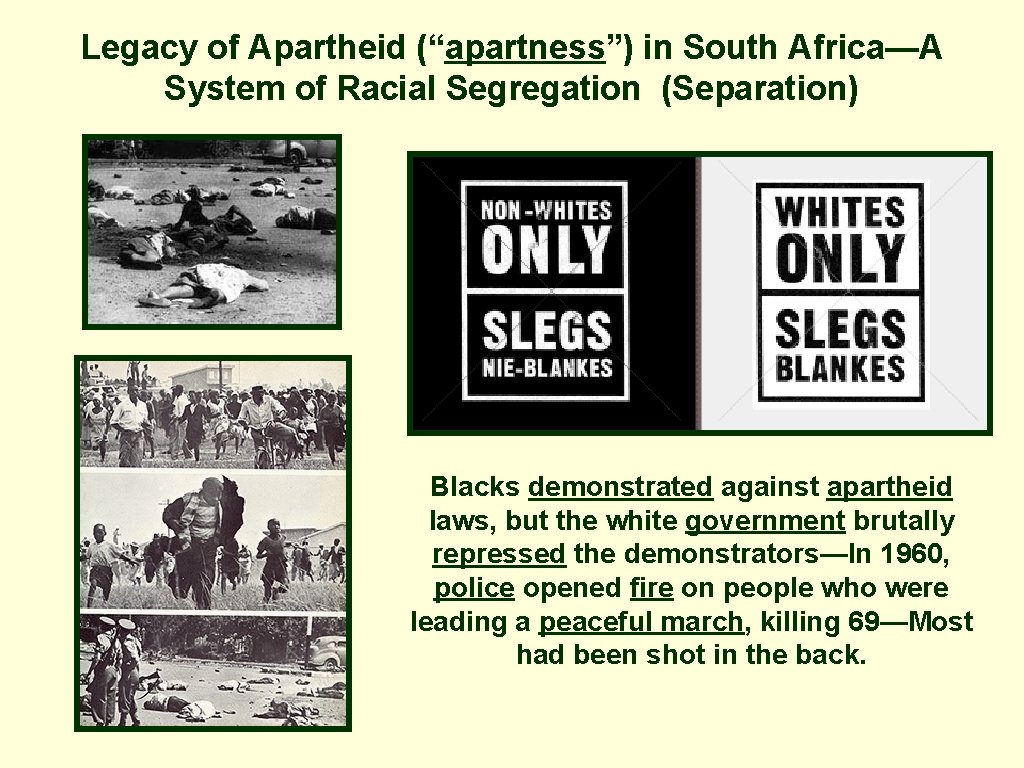
Legacy of Apartheid (“apartness”) in South Africa—A System of Racial Segregation (Separation) Blacks demonstrated against apartheid laws, but the white government brutally repressed the demonstrators—In 1960, police opened fire on people who were leading a peaceful march, killing 69—Most had been shot in the back.
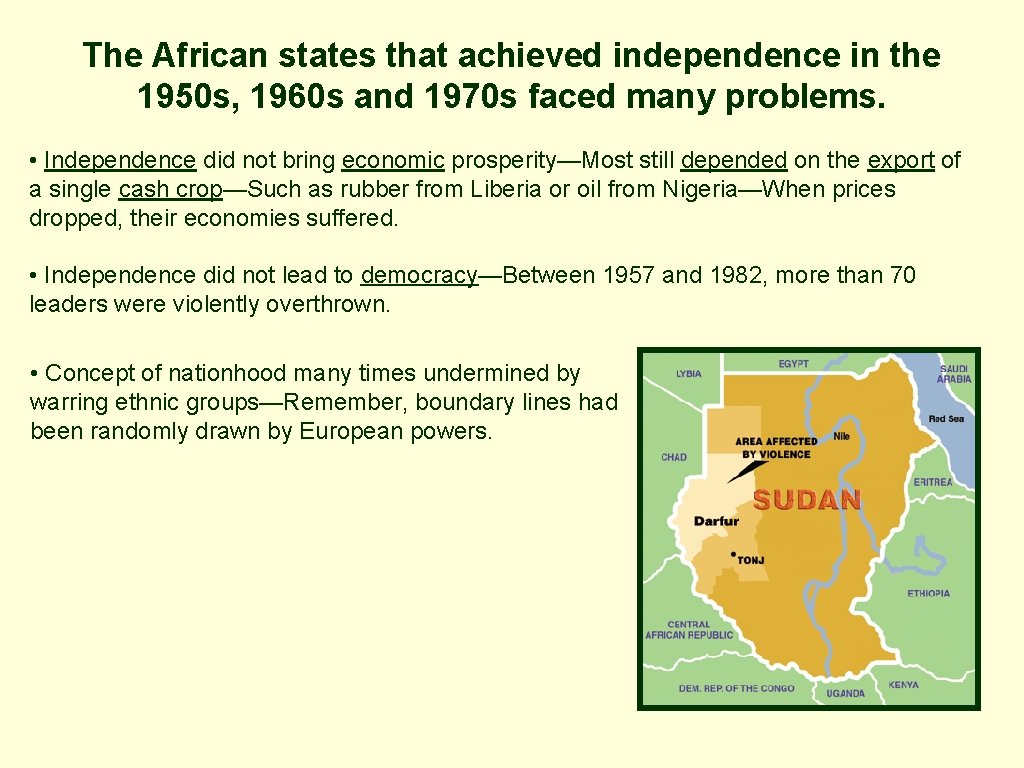
The African states that achieved independence in the 1950 s, 1960 s and 1970 s faced many problems. • Independence did not bring economic prosperity—Most still depended on the export of a single cash crop—Such as rubber from Liberia or oil from Nigeria—When prices dropped, their economies suffered. • Independence did not lead to democracy—Between 1957 and 1982, more than 70 leaders were violently overthrown. • Concept of nationhood many times undermined by warring ethnic groups—Remember, boundary lines had been randomly drawn by European powers.
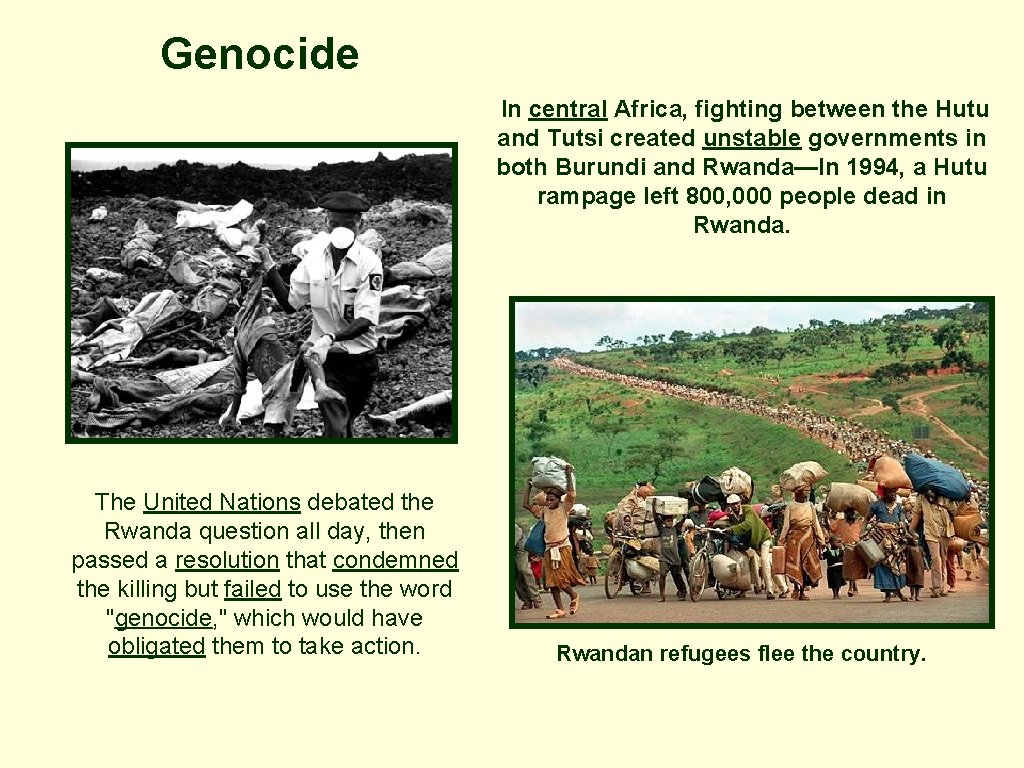
Genocide In central Africa, fighting between the Hutu and Tutsi created unstable governments in both Burundi and Rwanda—In 1994, a Hutu rampage left 800, 000 people dead in Rwanda. The United Nations debated the Rwanda question all day, then passed a resolution that condemned the killing but failed to use the word "genocide, " which would have obligated them to take action. Rwandan refugees flee the country.
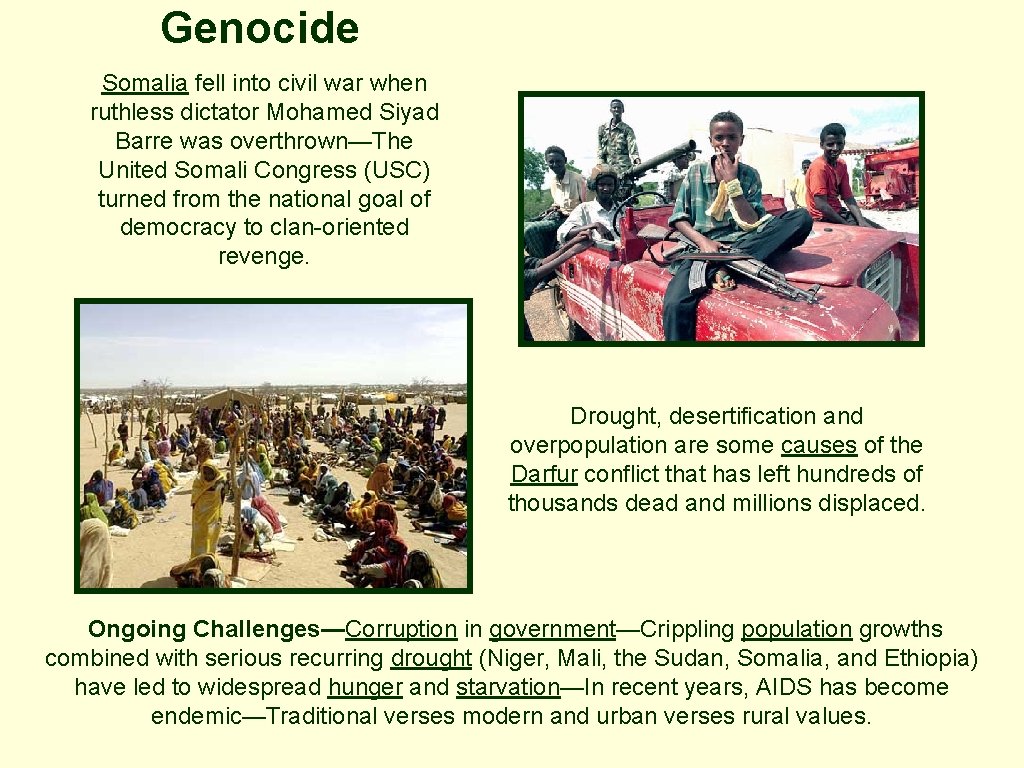
Genocide Somalia fell into civil war when ruthless dictator Mohamed Siyad Barre was overthrown—The United Somali Congress (USC) turned from the national goal of democracy to clan-oriented revenge. Drought, desertification and overpopulation are some causes of the Darfur conflict that has left hundreds of thousands dead and millions displaced. Ongoing Challenges—Corruption in government—Crippling population growths combined with serious recurring drought (Niger, Mali, the Sudan, Somalia, and Ethiopia) have led to widespread hunger and starvation—In recent years, AIDS has become endemic—Traditional verses modern and urban verses rural values.
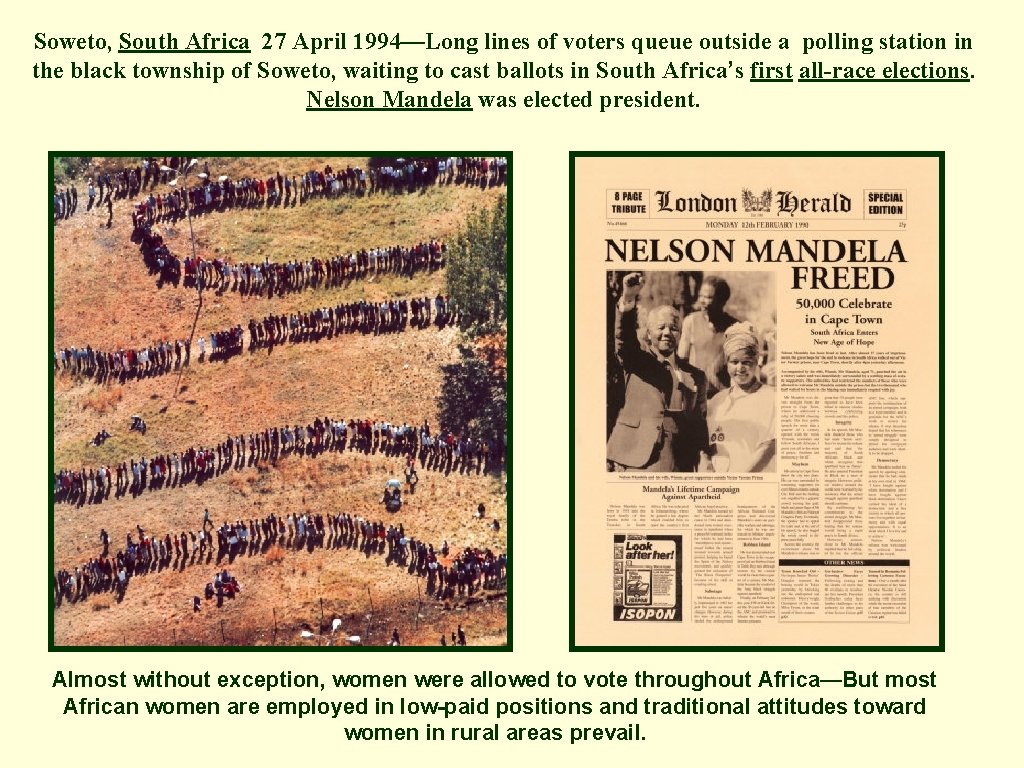
Soweto, South Africa 27 April 1994—Long lines of voters queue outside a polling station in the black township of Soweto, waiting to cast ballots in South Africa’s first all-race elections. Nelson Mandela was elected president. Almost without exception, women were allowed to vote throughout Africa—But most African women are employed in low-paid positions and traditional attitudes toward women in rural areas prevail.
Independence Around the World
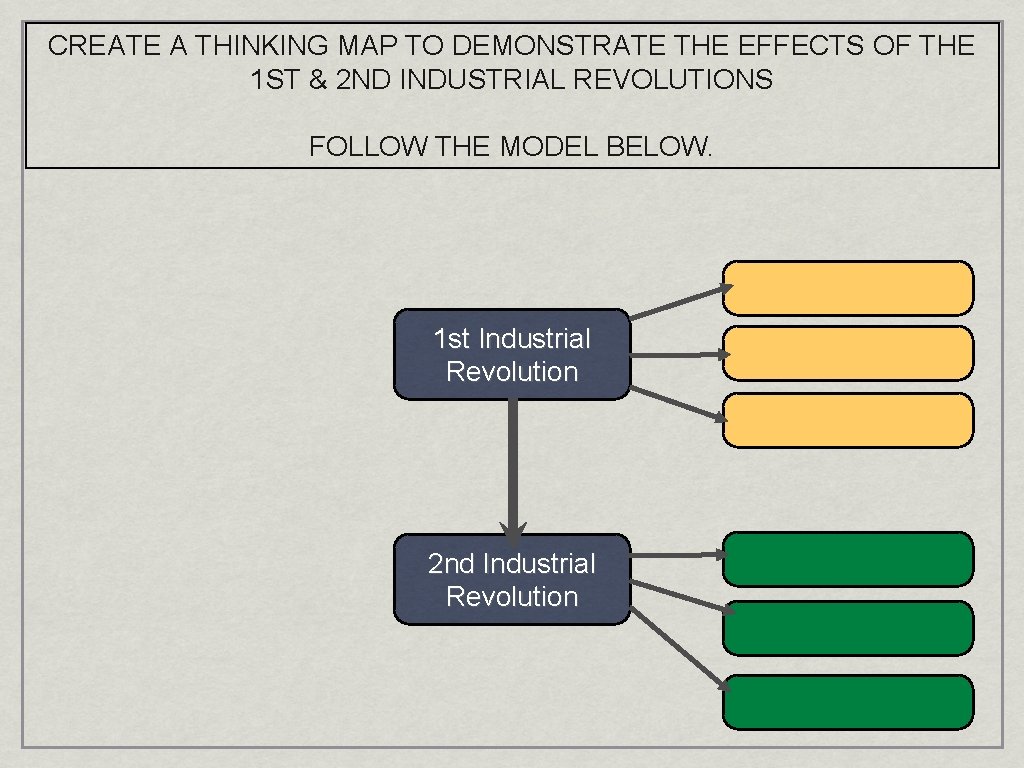
CREATE A THINKING MAP TO DEMONSTRATE THE EFFECTS OF THE 1 ST & 2 ND INDUSTRIAL REVOLUTIONS FOLLOW THE MODEL BELOW. 1 st Industrial Revolution 2 nd Industrial Revolution