
Industrialization Nationalism Imperialism Agricultural Revolution Crop rotation system









- Slides: 52
Industrialization, Nationalism, Imperialism
Agricultural Revolution • Crop rotation – system of growing a different crop in a field each year to preserve the fertility of the land
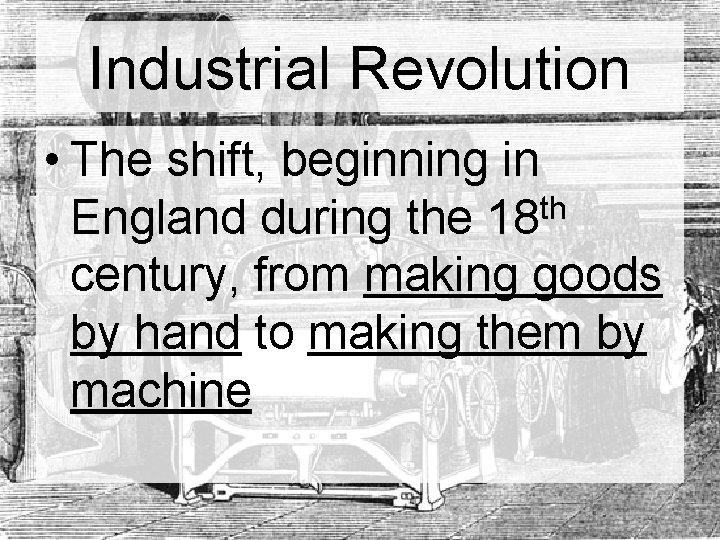
Industrial Revolution • The shift, beginning in th England during the 18 century, from making goods by hand to making them by machine
Why England? • Britain has all the factors for production – land, labor, and capital
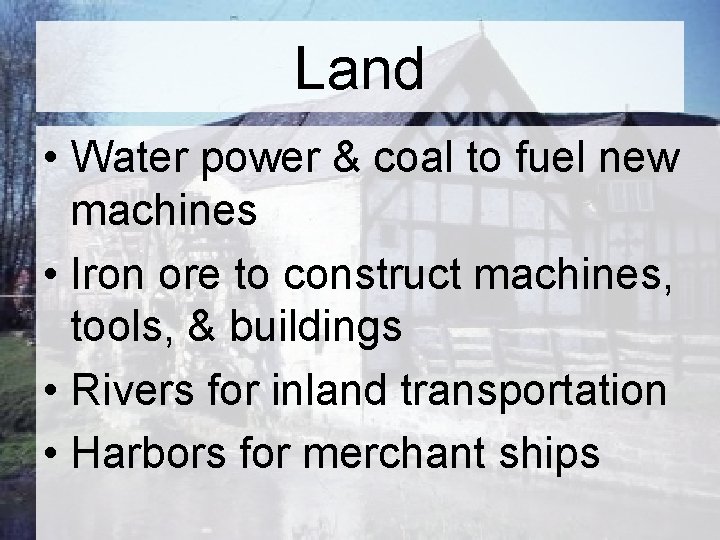
Land • Water power & coal to fuel new machines • Iron ore to construct machines, tools, & buildings • Rivers for inland transportation • Harbors for merchant ships
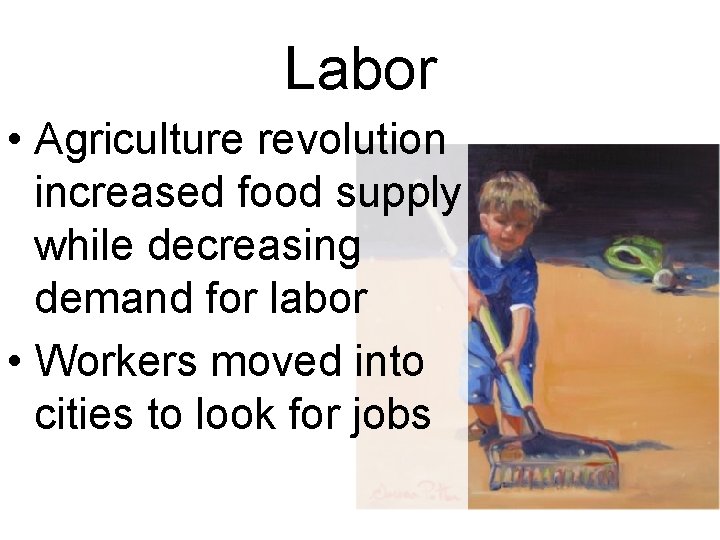
Labor • Agriculture revolution increased food supply while decreasing demand for labor • Workers moved into cities to look for jobs
Capital • Growing overseas trade • Highly developed banking system – encourage investment in new machinery and business
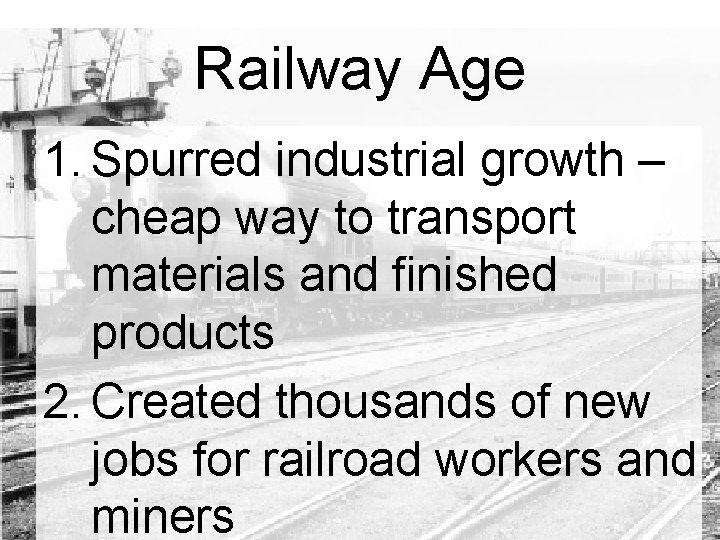
Railway Age 1. Spurred industrial growth – cheap way to transport materials and finished products 2. Created thousands of new jobs for railroad workers and miners
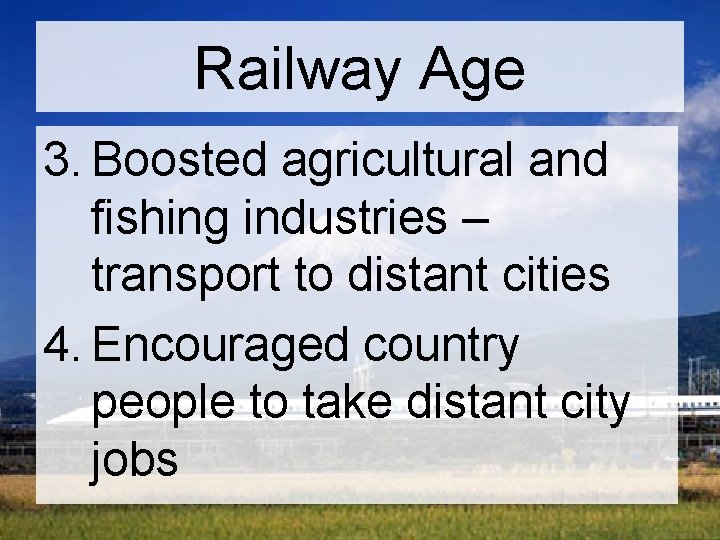
Railway Age 3. Boosted agricultural and fishing industries – transport to distant cities 4. Encouraged country people to take distant city jobs
Effects of Industrial Revolution Urbanization • Movement of people to cities • Number of cities doubled • Many cities doubled or even quadrupled in population
Effects of Industrial Revolution Large Middle Class (neither rich nor poor) • Upper middle – gov’t employees, doctors, lawyers, managers • Lower middle – factory overseers, skilled workers
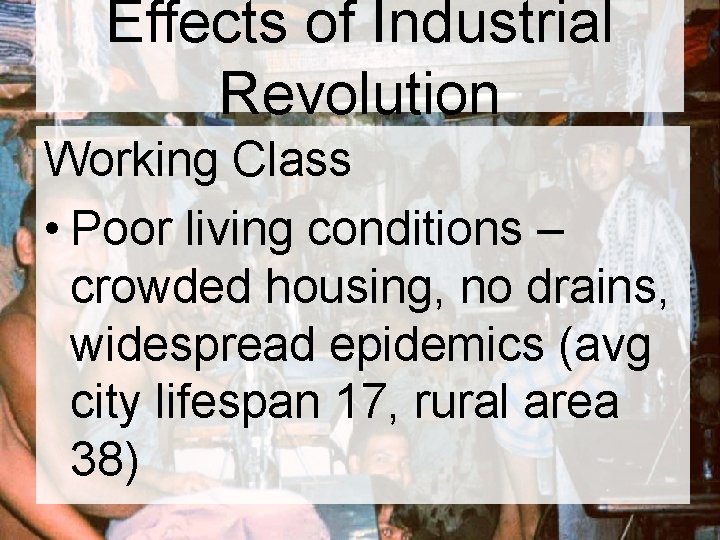
Effects of Industrial Revolution Working Class • Poor living conditions – crowded housing, no drains, widespread epidemics (avg city lifespan 17, rural area 38)
Effects of Industrial Revolution Working Class • Work 14 hours a day, 6 days a week – same as working on farm but more dangerous
Effects of Industrial Revolution • Demand for education - created demand for engineers, clerical and professional workers • Raised standard of living • Provided hope of improvement in people’s lives
Effects of Industrial Revolution • Mass-produced clothing
European Imperialism in Africa, 1870 -1898 In this lesson, students will be able to define the following terms: “Scramble for Africa” Berlin Conference of 1884 -1885 Effects of European Imperialism on Africa
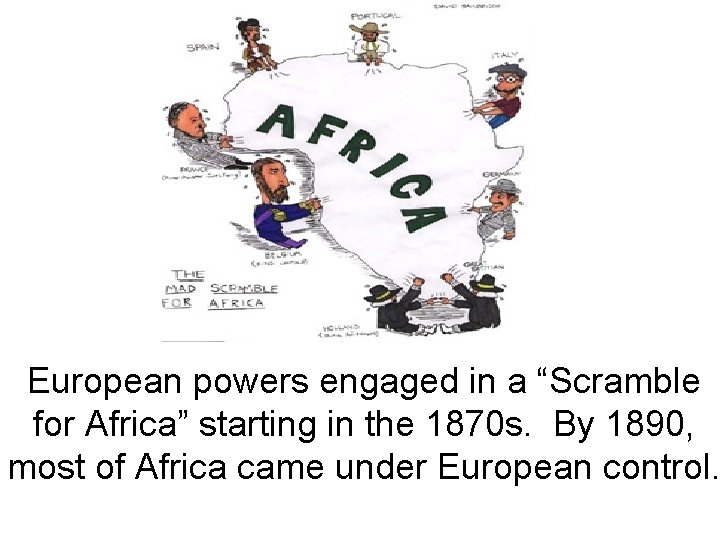
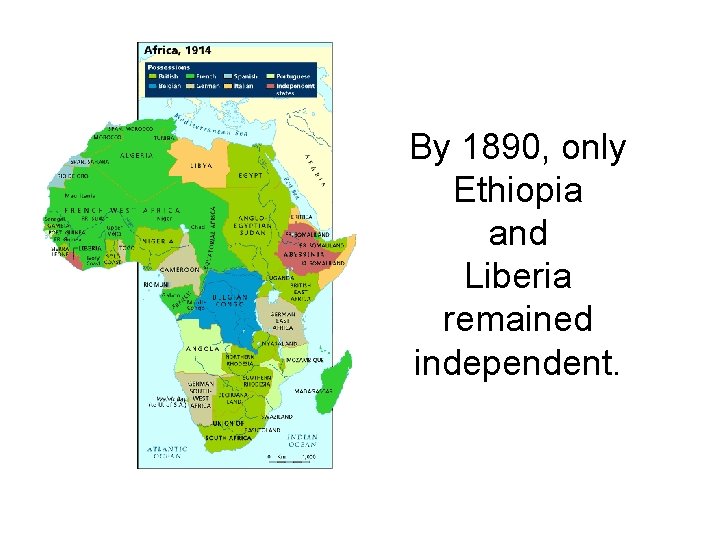
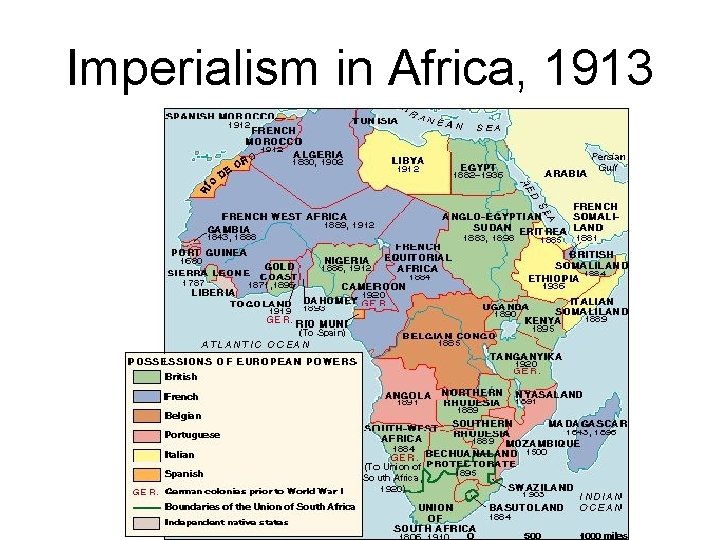
European powers engaged in a “Scramble for Africa” starting in the 1870 s. By 1890, most of Africa came under European control.
By 1890, only Ethiopia and Liberia remained independent.
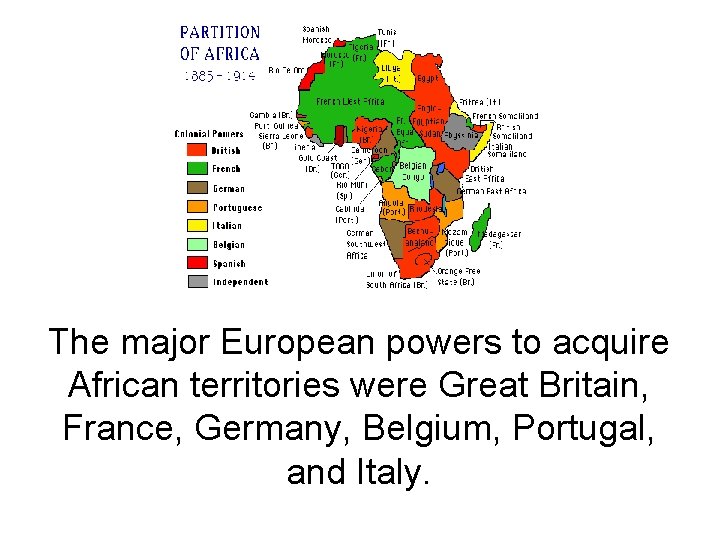
The major European powers to acquire African territories were Great Britain, France, Germany, Belgium, Portugal, and Italy.
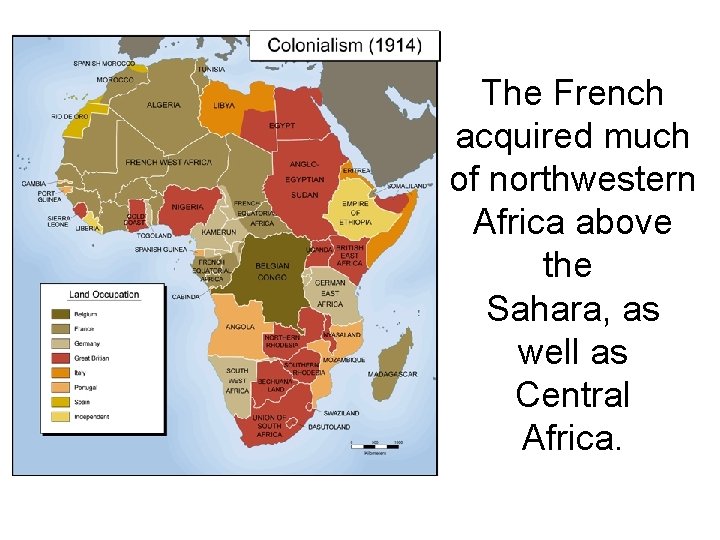
The French acquired much of northwestern Africa above the Sahara, as well as Central Africa.
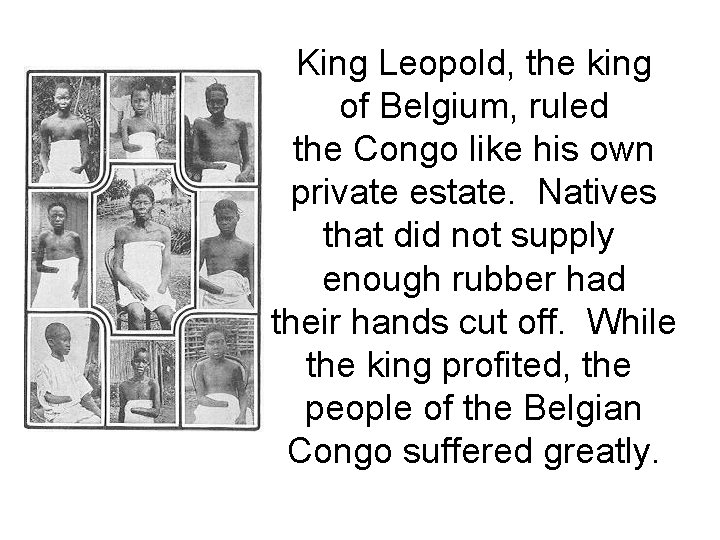
King Leopold, the king of Belgium, ruled the Congo like his own private estate. Natives that did not supply enough rubber had their hands cut off. While the king profited, the people of the Belgian Congo suffered greatly.
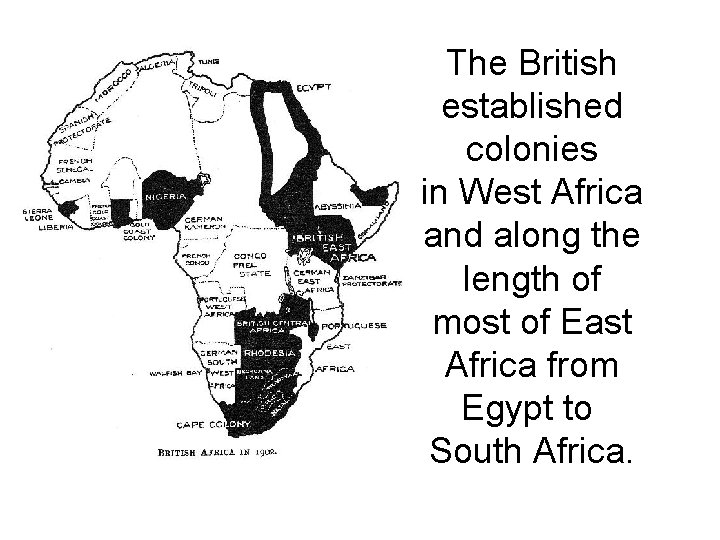
The British established colonies in West Africa and along the length of most of East Africa from Egypt to South Africa.
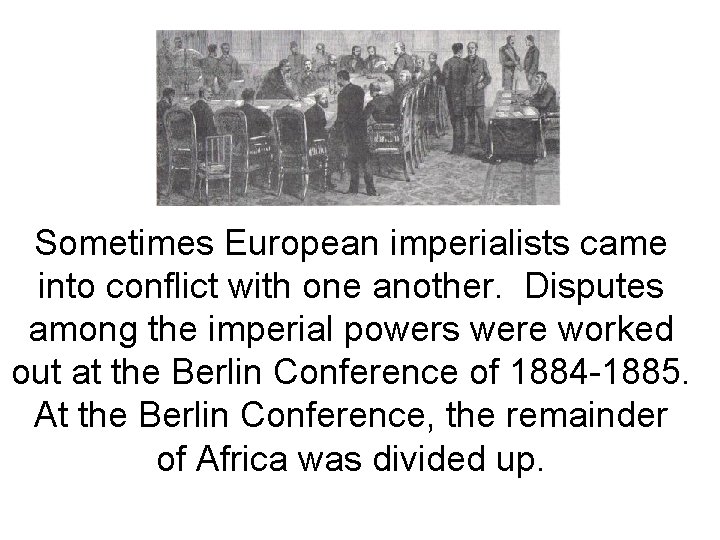
Sometimes European imperialists came into conflict with one another. Disputes among the imperial powers were worked out at the Berlin Conference of 1884 -1885. At the Berlin Conference, the remainder of Africa was divided up.
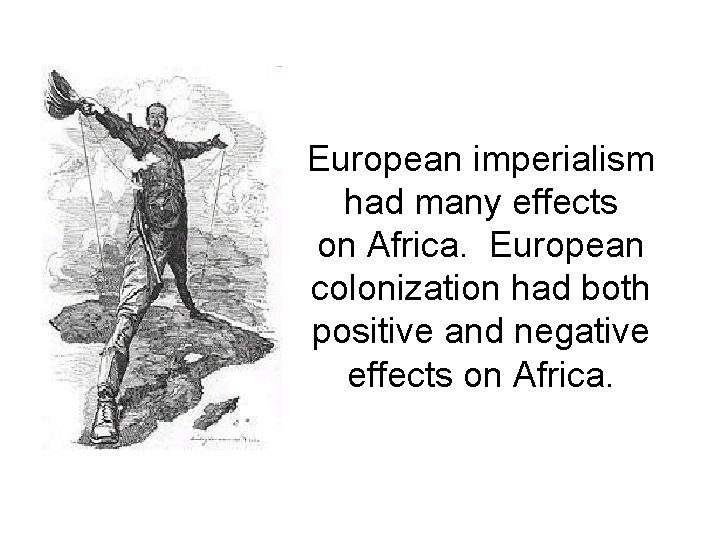
European imperialism had many effects on Africa. European colonization had both positive and negative effects on Africa.
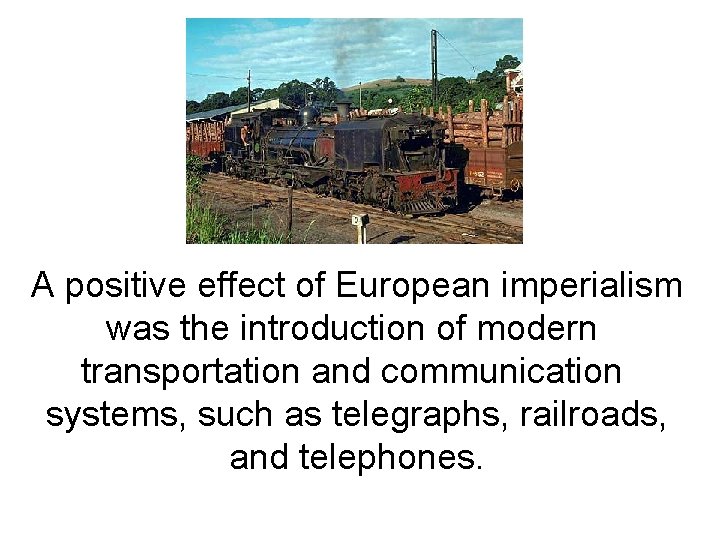
A positive effect of European imperialism was the introduction of modern transportation and communication systems, such as telegraphs, railroads, and telephones.
The introduction of European medicine and improved nutrition led to an expansion of population.
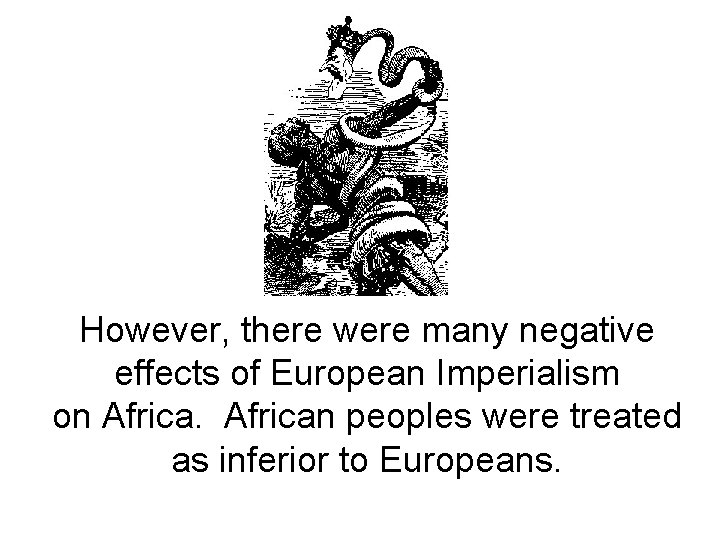
However, there were many negative effects of European Imperialism on African peoples were treated as inferior to Europeans.
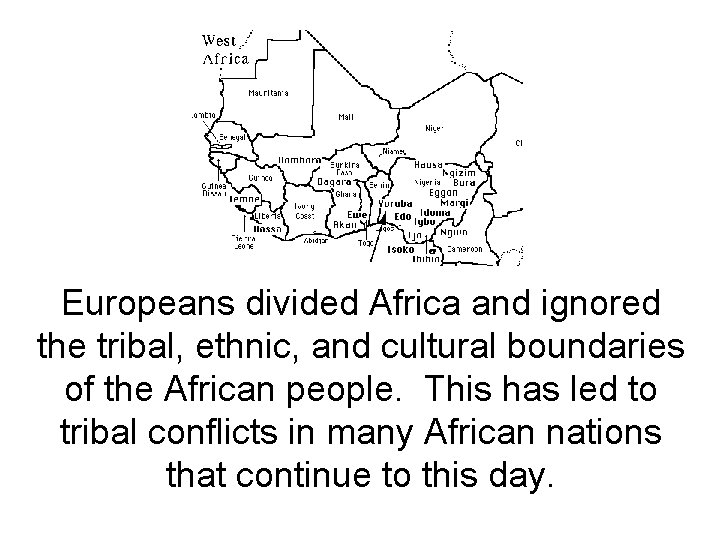
Europeans divided Africa and ignored the tribal, ethnic, and cultural boundaries of the African people. This has led to tribal conflicts in many African nations that continue to this day.
Questions for Reflection: • What was the “Scramble for Africa”? • Why did the Berlin Conference occur? • What European nations gained control of Africa? • What were the positive effects of European imperialism on Africa? • What were the negative effects of European imperialism on Africa?
Chapters 9 -11 Industrial Rev, Nationalism, Imperialism • • • 32 questions 22 Multiple Choice (Chap. 9) 10 True / False (Chapter 10 -11) 6 points each = 192 points ***Homework project due Friday 12/21 for 100 points • 292 points earned this Friday!!
Test Review • Blue bolded concepts…like Urbanization, Enclosure movement, etc… • Inventors such as John Kay, Robert Fulton etc. . • People (Quotes) Alex de Tocqueville, Elizabeth Gaskell, Charles Dickens, Marx and Engels, Adam Smith, Jane Addams, etc… • Child Labor Laws in England
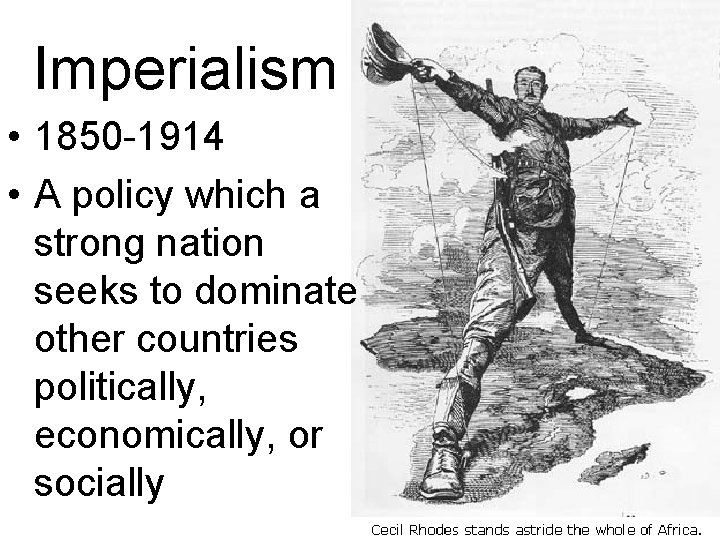
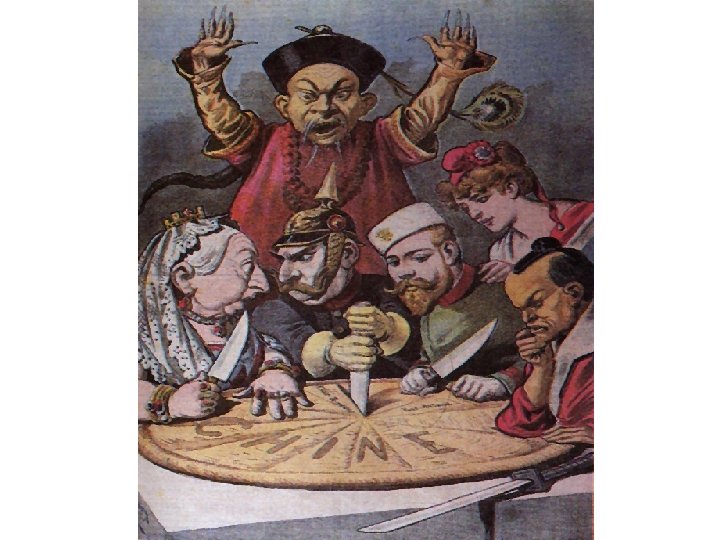
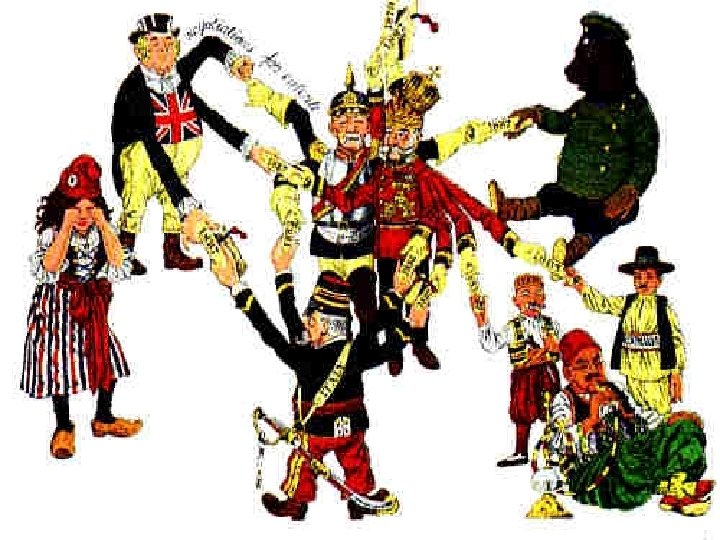
Imperialism • 1850 -1914 • A policy which a strong nation seeks to dominate other countries politically, economically, or socially
The New Imperialism Cause • Nationalism –To gain power, European nations compete for colonies and trade
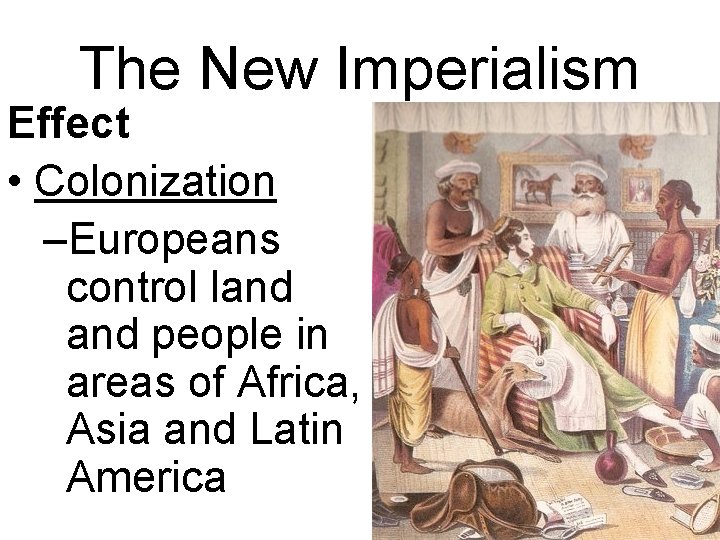
The New Imperialism Effect • Colonization –Europeans control land people in areas of Africa, Asia and Latin America
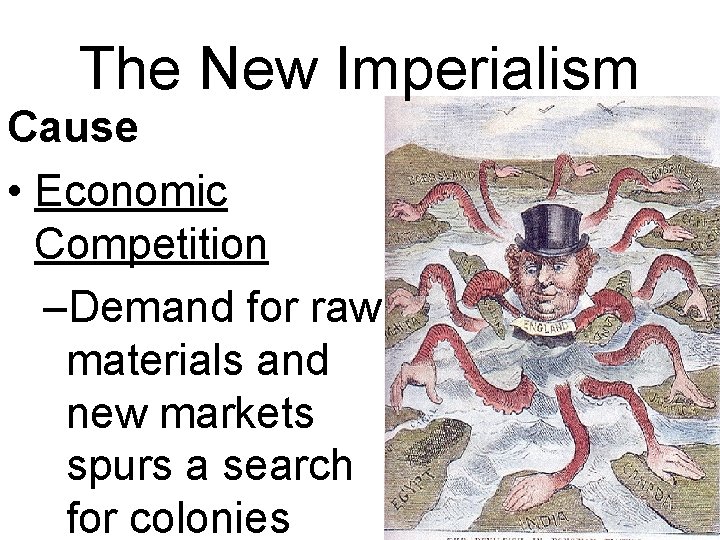
The New Imperialism Cause • Economic Competition –Demand for raw materials and new markets spurs a search for colonies
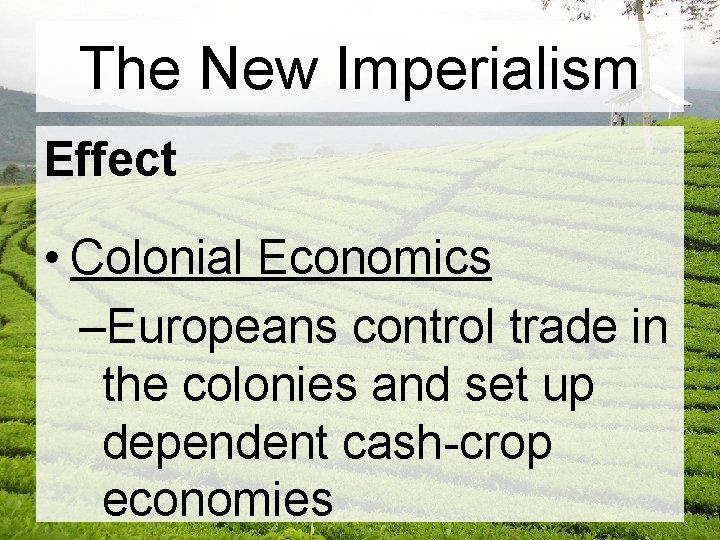
The New Imperialism Effect • Colonial Economics –Europeans control trade in the colonies and set up dependent cash-crop economies
The New Imperialism Cause • Missionary Spirit –Europeans believe they must spread their Christian teachings to the world
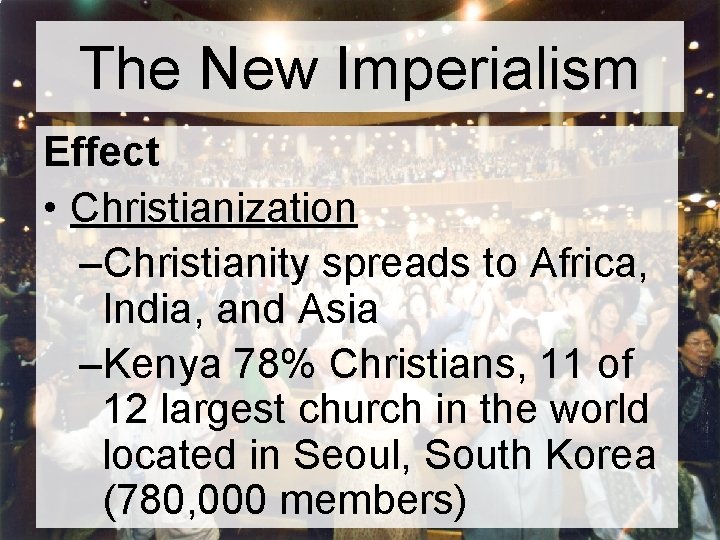
The New Imperialism Effect • Christianization –Christianity spreads to Africa, India, and Asia –Kenya 78% Christians, 11 of 12 largest church in the world located in Seoul, South Korea (780, 000 members)
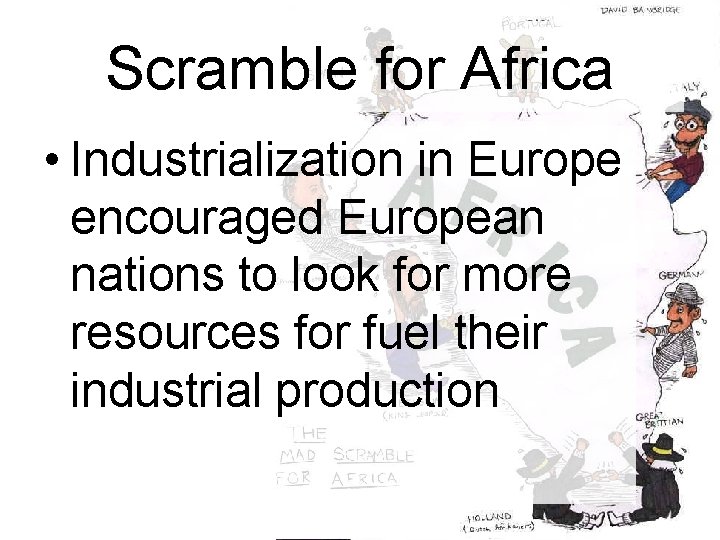
Scramble for Africa • Industrialization in Europe encouraged European nations to look for more resources for fuel their industrial production
Forces Driving Imperialism Social Darwinism • Europeans were superior due to scientific and technological progress • Europeans believed they had the right and the duty to bring the results of their progress to other countries
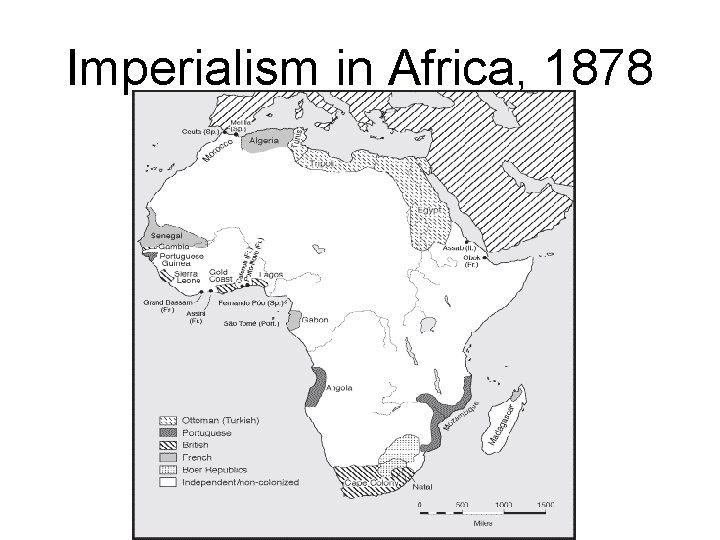
Imperialism in Africa, 1878
Imperialism in Africa, 1913
British East India Company • English company set up to pursue trade with East Indies, ended up trading with Indian subcontinent and China • Ruled India from 1757 to 1858 – “Jewel in the crown”
British East India Company • India became major supplier of raw materials for workshop in England during Industrial Revolution • Traded cotton, silk, indigo dye, tea, opium
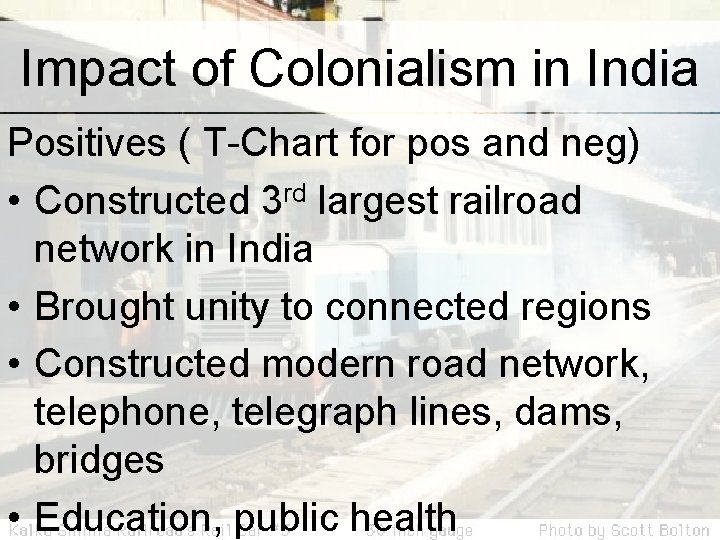
Impact of Colonialism in India Positives ( T-Chart for pos and neg) • Constructed 3 rd largest railroad network in India • Brought unity to connected regions • Constructed modern road network, telephone, telegraph lines, dams, bridges • Education, public health
Impact of Colonialism in India Negatives • British held political and economic power • Restricted Indian-owned industries (textile) • Emphasis on cash crops resulted in loss of self-sufficiency for people
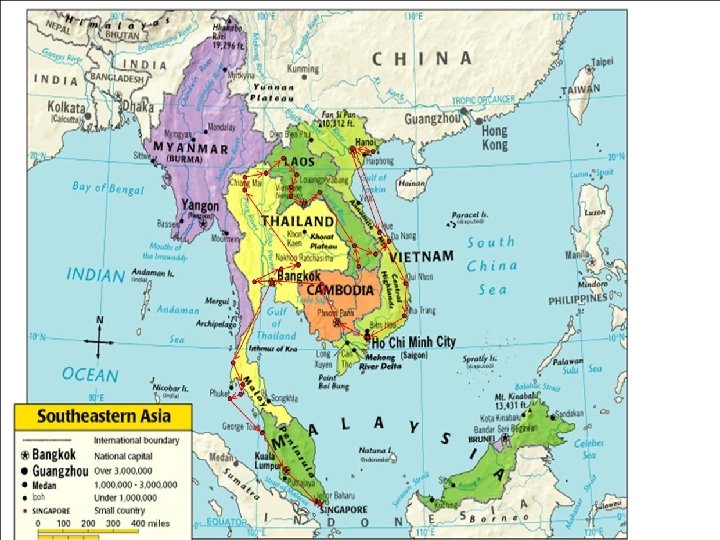
Colonialism in Southeast Asia • British purchased Singapore and build a harbor, becoming one of the busiest ports in the world • Malaysia became huge exporter for tin and rubber • British encouraged immigrants to move to Southeast Asia to work on plantation
Impact of Colonialism in Southeast Asia Positives • Cash crops helped boost the economy • Improved communication and transportation with roads, harbors, and rail systems • Improved education, health and sanitation
Impact of Colonialism in Southeast Asia Negatives • Immigrants from different regions creating a “melting pot” (or salad bowl? ) • Tensions between immigrants and natives due to race, culture, and religion