
Industrialization CHAPTER 12 The Rise of Industry Natural






- Slides: 36
Industrialization CHAPTER 12
The Rise of Industry • Natural Resources • an abundance of raw materials was one reason for the nations industrial success • timber, coal, iron and copper • Petroleum was in high demand because it could be turned into kerosene
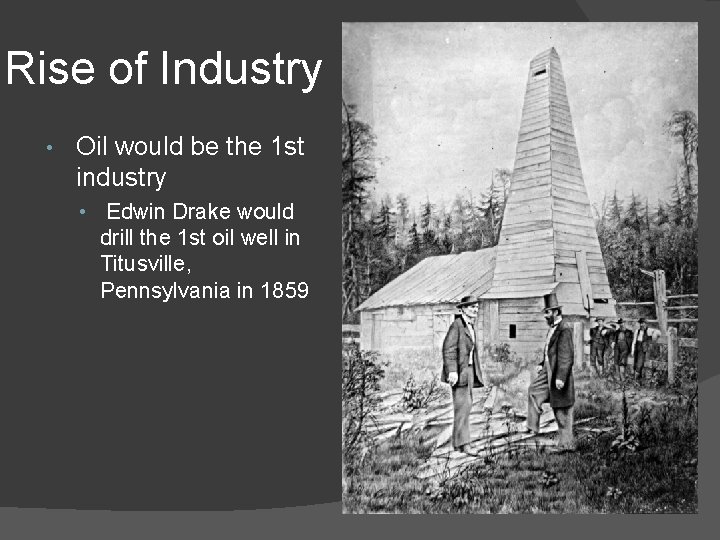
Rise of Industry • Oil would be the 1 st industry • Edwin Drake would drill the 1 st oil well in Titusville, Pennsylvania in 1859
Rise of Industry Between 1860 and 1910 population in U. S. tripled • Population growth stemmed from: large families and immigration • • 1. better living conditions • 2. social and economic conditions in Europe and China convinced many to search for a better life • 3. escape oppressive governments and religious persecution • Between 1870 and 1910 more than 17 million arrived in U. S.
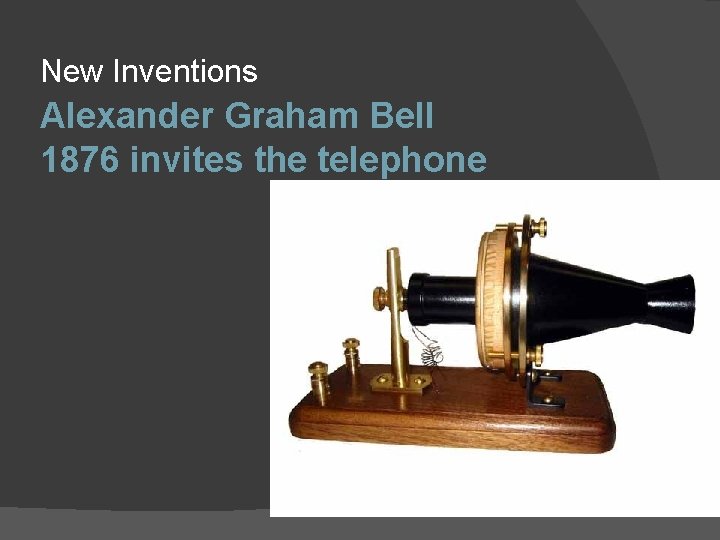
New Inventions Alexander Graham Bell 1876 invites the telephone
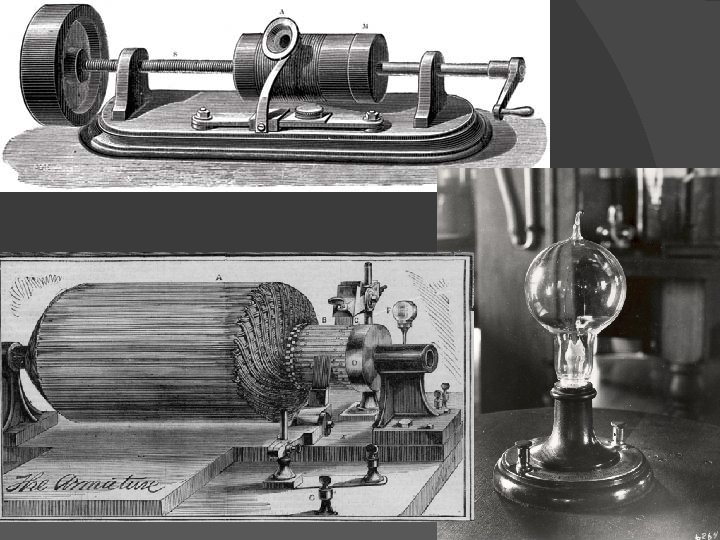
New Inventions • Thomas Alva Edison • by the time he died he held 1, 000 patents • 1877 invented the phonograph • 2 years later perfected the electric generator and light bulb • http: //www. history. co. uk/shows/the-men-who-built-america/videos
New Inventions • George Westinghouse • an air brake system for railroads • the Alternating Current (AC) system
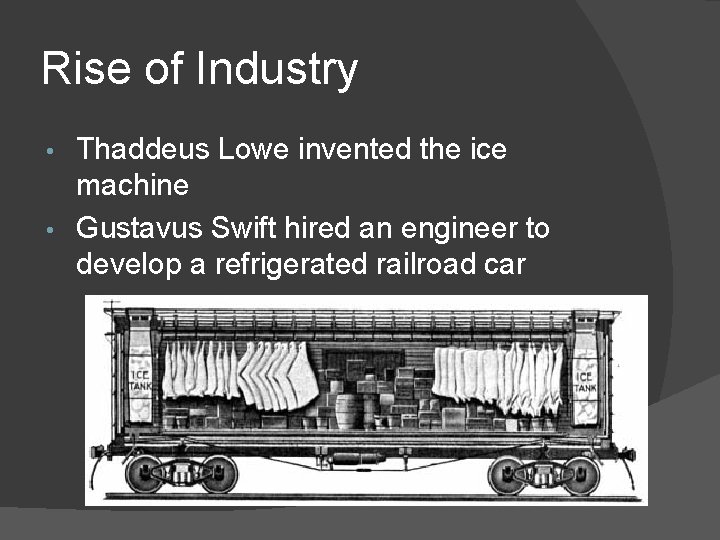
Rise of Industry Thaddeus Lowe invented the ice machine • Gustavus Swift hired an engineer to develop a refrigerated railroad car •
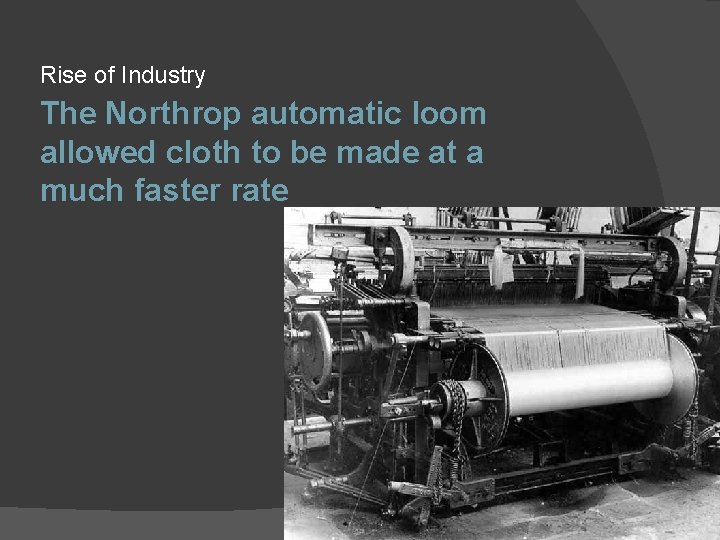
Rise of Industry The Northrop automatic loom allowed cloth to be made at a much faster rate
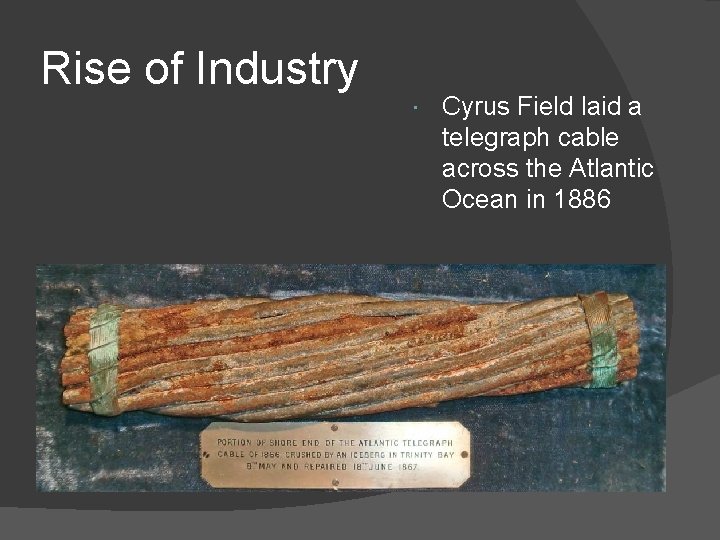
Rise of Industry Cyrus Field laid a telegraph cable across the Atlantic Ocean in 1886
Rise of Industry Another reason U. S. able to industrialized rapidly was its free enterprise system • Americans embraced the idea of laissez-faire • • • meaning " let people do as they choose ” relies on supply and demand Entrepreneurs - were attracted by the prospect of making money in manufacturing and transportation • Congress passed the Morrill Tariff which greatly increased tariff rates • • other countries began to increase their tariffs on trade - which would hurt American trade
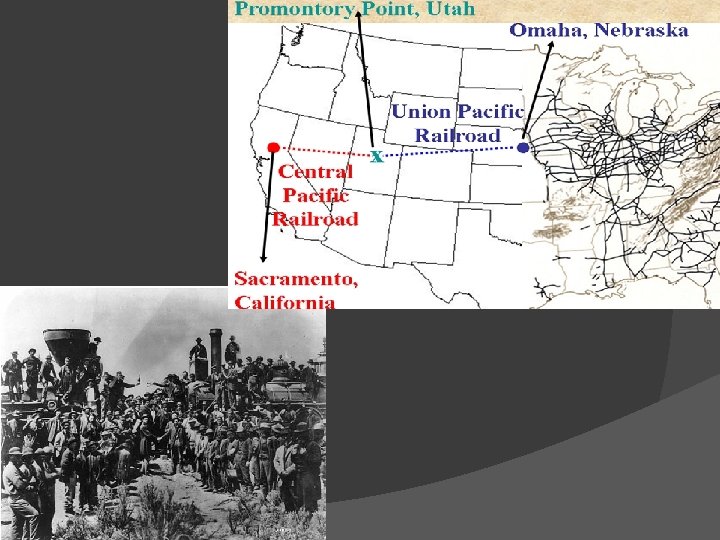
The Railroads The Transcontinental Railroad railroad boom began in 1862, when President Lincoln signed the Pacific Railroad Act 2 railroad corporations competed with one another and raced to obtain as much land money as possible • The Union Pacific • • engineer Grenville Dodge pushed westward from Omaha, Nebraska in 1865 The Central Pacific • • engineer Theodore Judah hired workers from China
Railroad • • • Completed in 4 yrs Central pacific laid 688 miles of track Union Pacific laid 1, 086 miles of track May 19, 1869 - Promontory Summit, Utah Railroads linked nation and increased markets spurring American industrial growth • huge spending amount of money on steel, coal, timber, and other materials
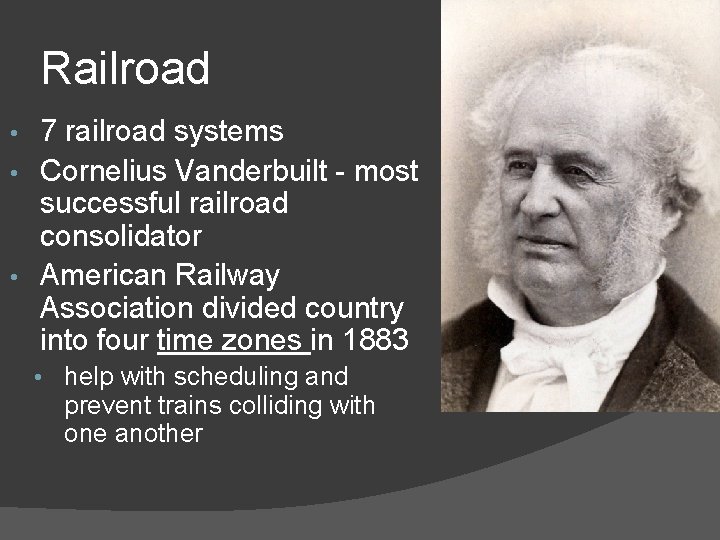
Railroad 7 railroad systems • Cornelius Vanderbuilt - most successful railroad consolidator • American Railway Association divided country into four time zones in 1883 • • help with scheduling and prevent trains colliding with one another
Railroads Government gave land grants to many railroad companies • railroads then sold the land to settlers, real estate companies, and other businesses to raise money to build the railroad • bribery and corruption would consume railroad entrepreneurs • Jay Gould most notorious corrupt railroad owner
Railroads Railroad industry corruption became public in 1872 • Credit Mobilier scandal • • construction company set up stockholders of the Union Pacific Railroad • Credit Mobilier overcharged Union Pacific http: //www. history. co. uk/shows/the-men-who-builtamerica/videos/the-men-who-built-americacornelius-vanderbil
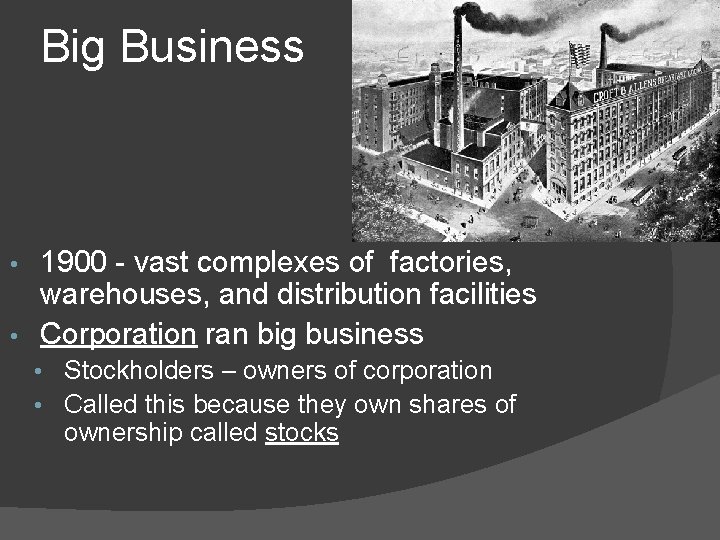
Big Business 1900 - vast complexes of factories, warehouses, and distribution facilities • Corporation ran big business • • Stockholders – owners of corporation • Called this because they own shares of ownership called stocks
Big Business • Money raised went to new technologies to increase efficiency • could achieve economies of scale • Business has two kinds of costs - fixed and operating costs • fixed - costs a company has to pay whether or not it is operating • operating - costs that occur when running a company
Consolidating Industry There was much competition between business and competitive prices cut into profits • Pools were organized to keep prices at a certain level • • did not last long because they were not legally supported by Legislature • competition left only a few larger and highly efficient corporations
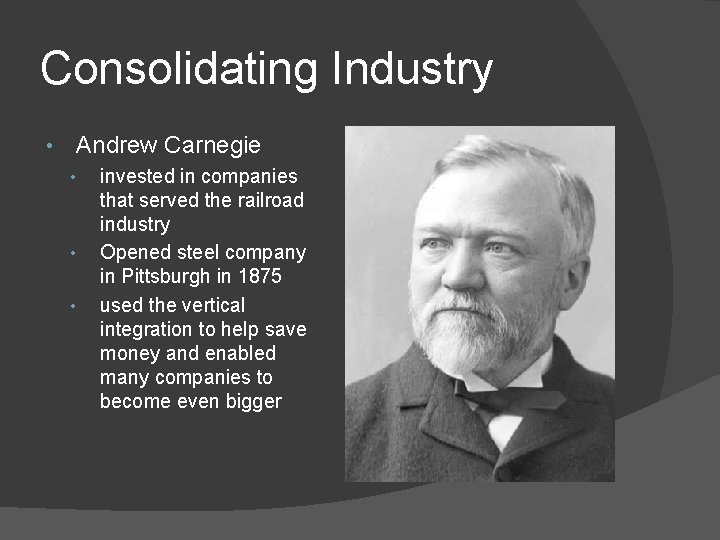
Consolidating Industry • Andrew Carnegie • • • invested in companies that served the railroad industry Opened steel company in Pittsburgh in 1875 used the vertical integration to help save money and enabled many companies to become even bigger
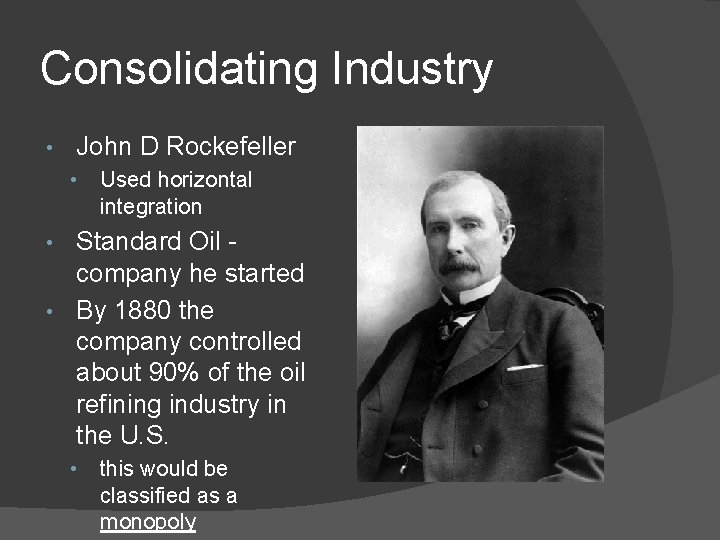
Consolidating Industry • John D Rockefeller • Used horizontal integration Standard Oil company he started • By 1880 the company controlled about 90% of the oil refining industry in the U. S. • • this would be classified as a monopoly
New Business Organizations Monopolies - charge whatever for its products • Many states made it illegal for one company to own stock in another company • 1882 Standard Oil formed 1 st trust • • new way of merging businesses that did not violate such laws holding company - it owns the stock of companies that do produce goods • Manages the companies it owns, effectively merging them into one large enterprise •
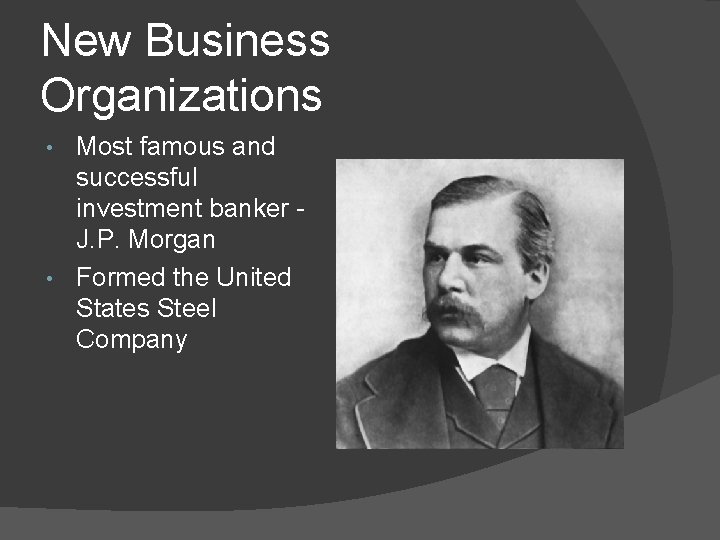
New Business Organizations Most famous and successful investment banker J. P. Morgan • Formed the United States Steel Company •
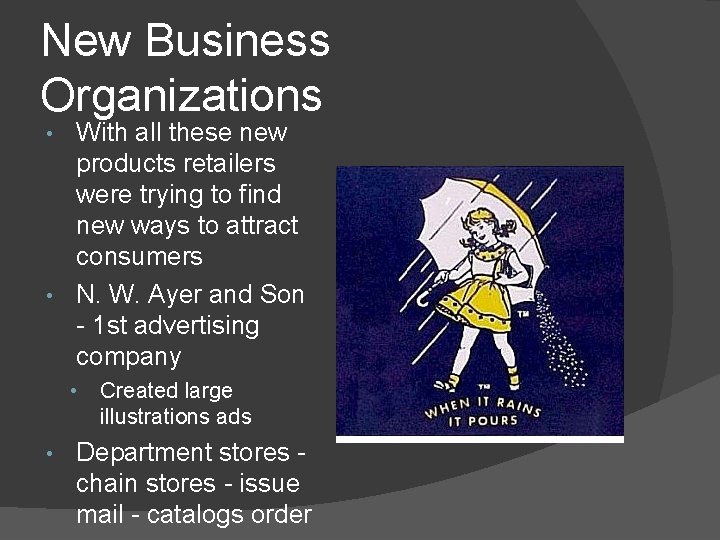
New Business Organizations With all these new products retailers were trying to find new ways to attract consumers • N. W. Ayer and Son - 1 st advertising company • • • Created large illustrations ads Department stores chain stores - issue mail - catalogs order
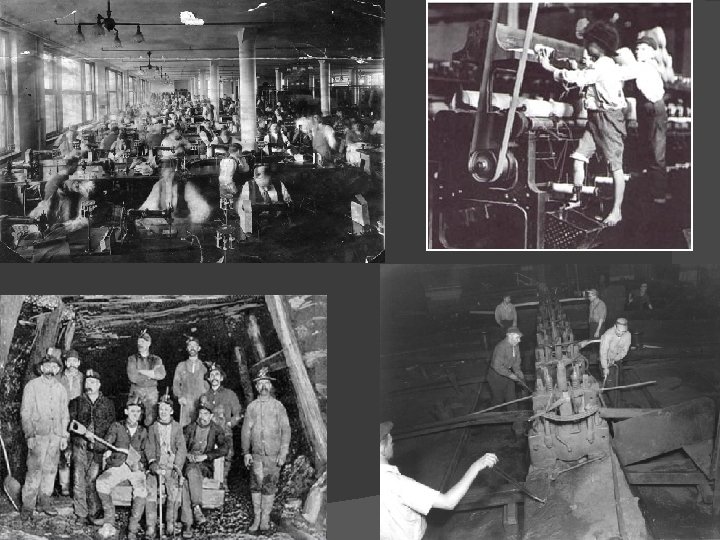
Unions • Work was difficult • perform dull, repetitive tasks in unhealthy and dangerous working conditions Division between income 1900 average industrial worker made 22 cents per/hr and worked 59 hours a week • Deflation between 1865 -1897 caused prices to fall, which increased the buying power of workers wages • 2 types of industrial workers • • craft workers and common laborers craft workers formed trade unions
Unions Employers often had to negotiate with trade unions because they represented whose skills they needed • Business leaders opposed industrial unions • Companies tried to stop workers from forming unions • workers who tried to organize unions were put on a black list • workers who formed union, companies used "lock outs” • if a union called a strike, employers would hire replacements • unions could be broke because there were no laws giving workers the right to form unions •
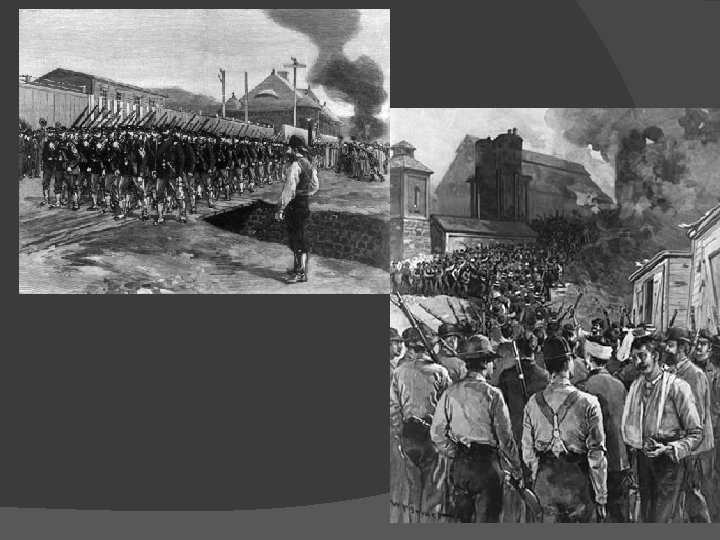
Unions Panic of 1873 – recession - companies to cut wages • Railroads cut wages in 1877 • • workers walked off job and blocked the tracks Gun battles between state militia and strikers • Took federal troops 12 days, 100 dead, $10 million in damage •
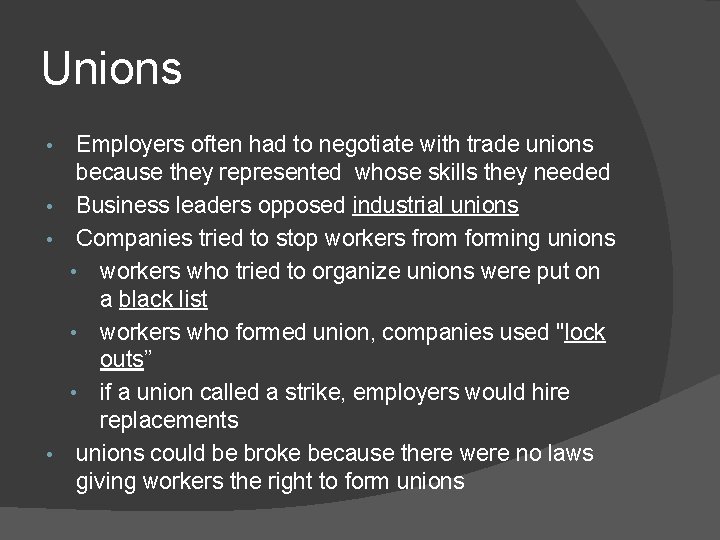
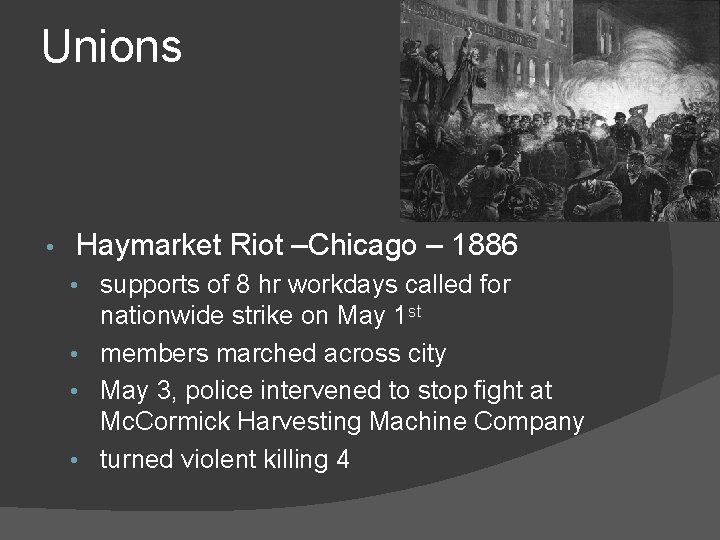
Unions Knights of Labor founded 1869 • Leader Terrence Powderly • • opposed strikes preferred boycotts • called for 8 hr workdays, equal pay for women, abolition of child labor, creation of worker-owned factories
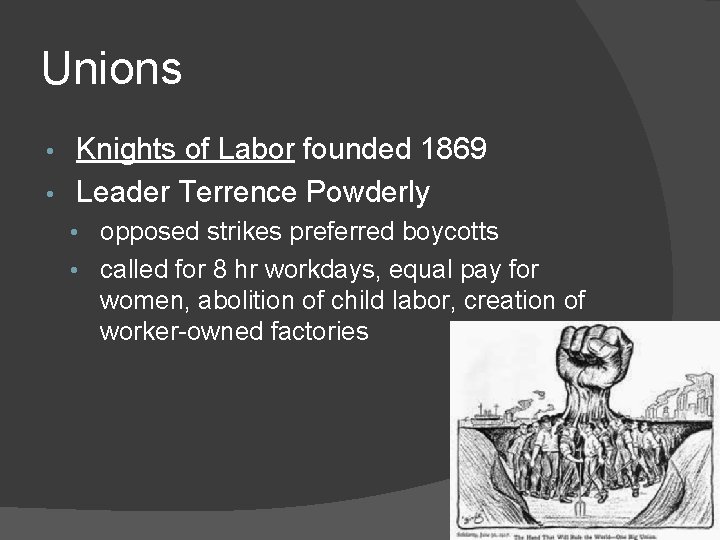
Unions • Haymarket Riot –Chicago – 1886 • supports of 8 hr workdays called for nationwide strike on May 1 st • members marched across city • May 3, police intervened to stop fight at Mc. Cormick Harvesting Machine Company • turned violent killing 4
Strikes • Homestead Strike – 1892 • Homestead, Pennsylvania • workers belonged to a craft union • manager proposed to cut wages when workers contracts were to expire and blocked workers from entering the mill • state militia ordered to protect replacement workers. • Strike collapsed after 4 months
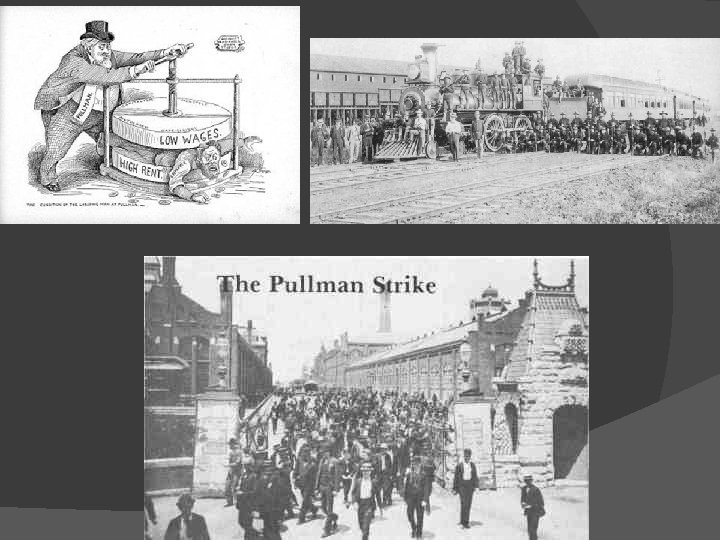
Strikes • The Pullman Strike Pullman Palace Car Company owner of the company required workers to live in the town he built and buy goods from the company stores cut wages which made it difficult to afford living there strike began boycott tied up railroads and threatened the economy to break strike, railroad managers arranged for U. S. mail cars to be attached to Pullman cars • • if strikers refused to handle the Pullman cars would be interfering with U. S. mail, a violation of federal law federal court issued an injunction