
INDUSTRIAL REVOLUTION What was the Industrial Revolution Major
- Slides: 19
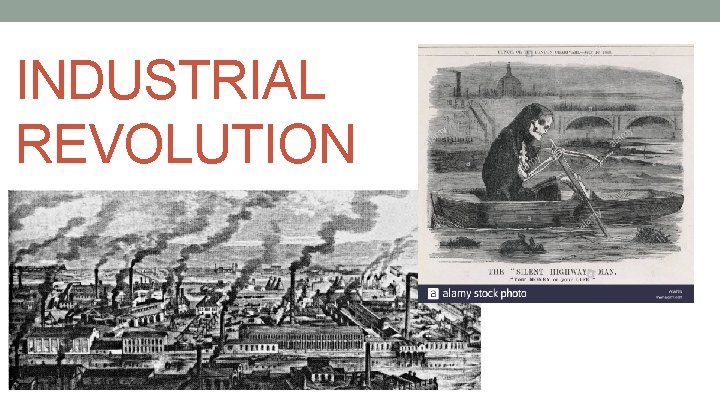
INDUSTRIAL REVOLUTION
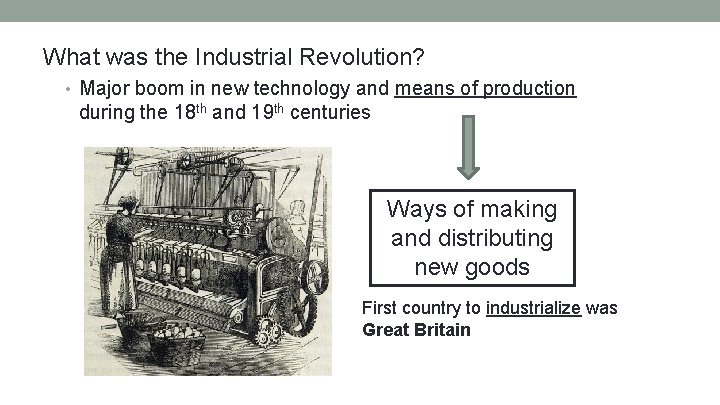
What was the Industrial Revolution? • Major boom in new technology and means of production during the 18 th and 19 th centuries Ways of making and distributing new goods First country to industrialize was Great Britain
The Industrial Revolution in Great Britain • Agricultural Revolution • More food meant cheaper prices; peasants can buy manufactured goods • Population increase • Common land fenced off • More peasants have to move to cities • Money for investments • Called Capital • Entrepreneurs found new businesses and ways to make money
The Industrial Revolution in Great Britain • Natural resources • Rivers for transportation and water power • Supplies of coal and iron • More markets to sell goods • Several British colonies • More commoners can purchase goods • Needed to increase cotton production
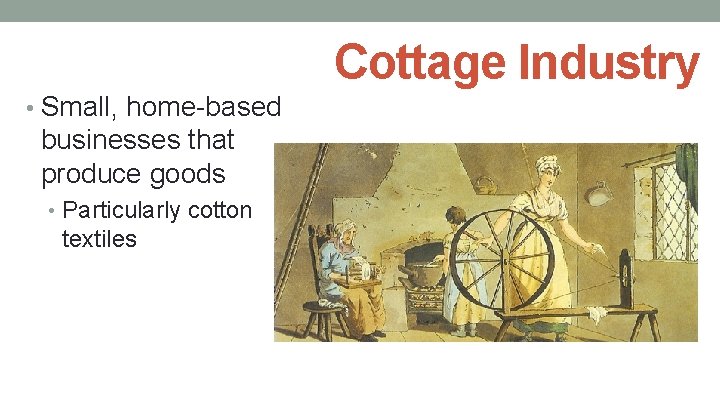
Cottage Industry • Small, home-based businesses that produce goods • Particularly cotton textiles
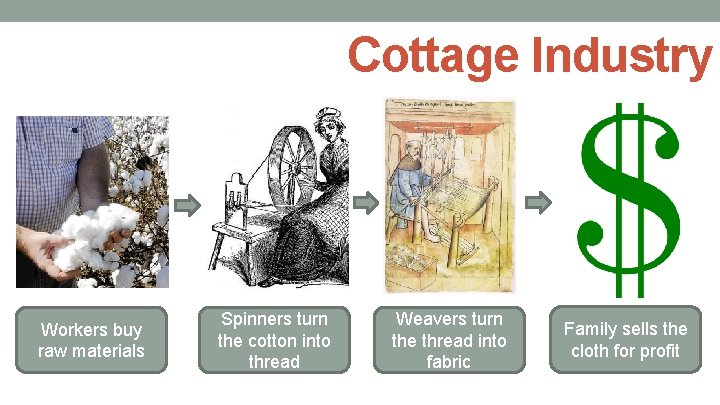
Cottage Industry Workers buy raw materials Spinners turn the cotton into thread Weavers turn the thread into fabric Family sells the cloth for profit
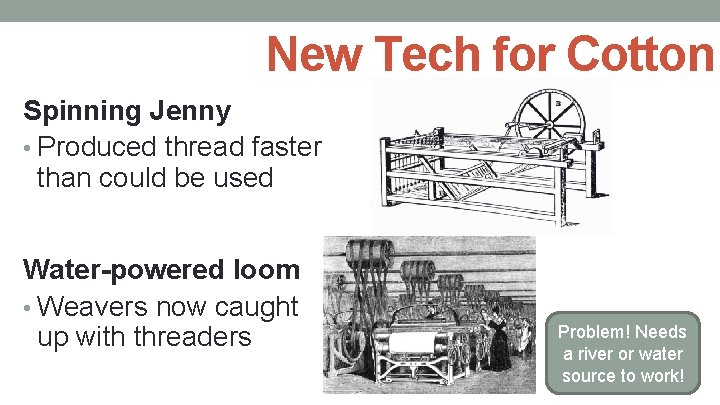
New Tech for Cotton Spinning Jenny • Produced thread faster than could be used Water-powered loom • Weavers now caught up with threaders Problem! Needs a river or water source to work!
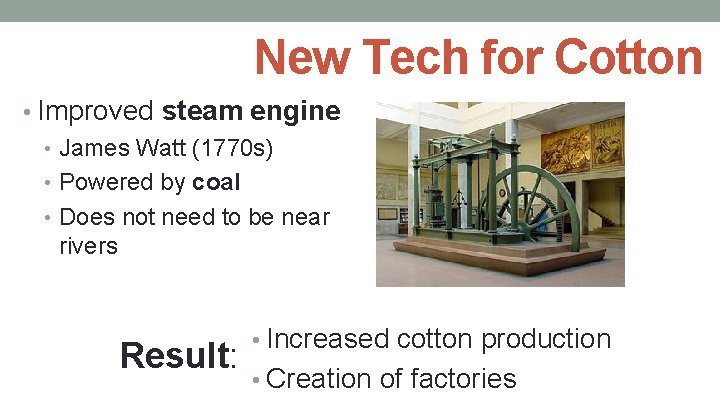
New Tech for Cotton • Improved steam engine • James Watt (1770 s) • Powered by coal • Does not need to be near rivers Result: • Increased cotton production • Creation of factories
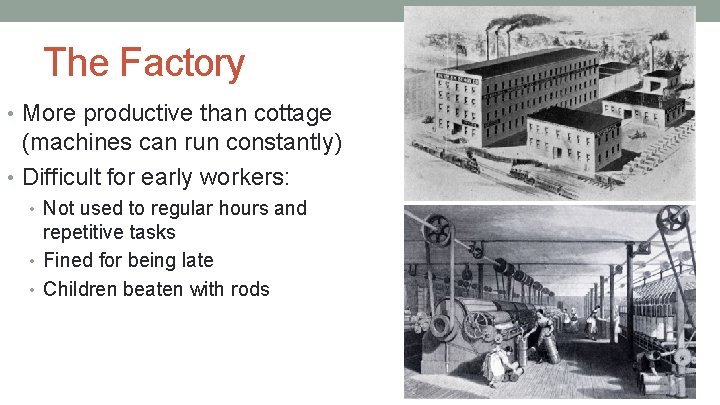
The Factory • More productive than cottage (machines can run constantly) • Difficult for early workers: • Not used to regular hours and repetitive tasks • Fined for being late • Children beaten with rods
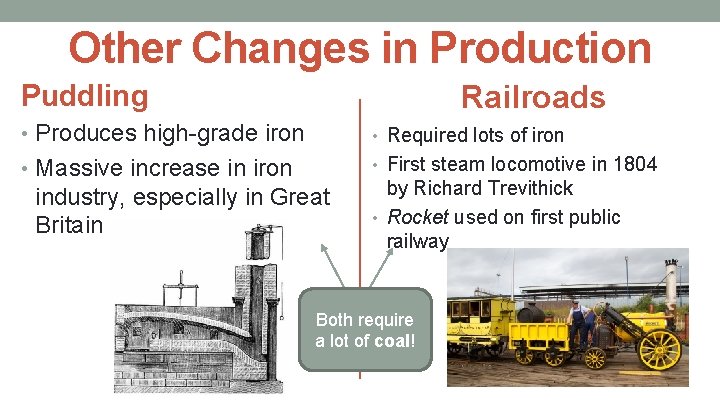
Other Changes in Production Puddling Railroads • Produces high-grade iron • Required lots of iron • Massive increase in iron • First steam locomotive in 1804 industry, especially in Great Britain by Richard Trevithick • Rocket used on first public railway Both require a lot of coal!
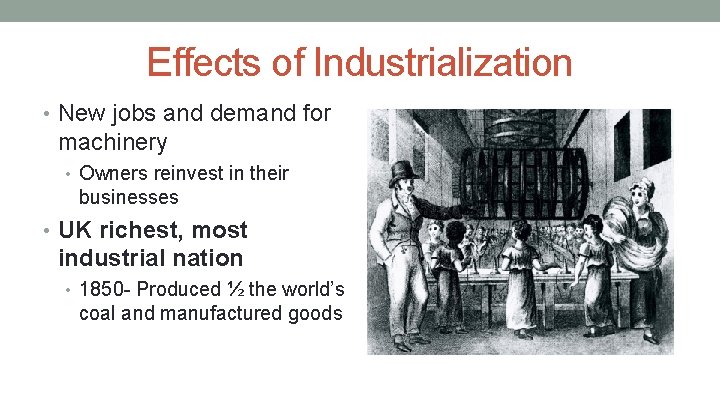
Effects of Industrialization • New jobs and demand for machinery • Owners reinvest in their businesses • UK richest, most industrial nation • 1850 - Produced ½ the world’s coal and manufactured goods
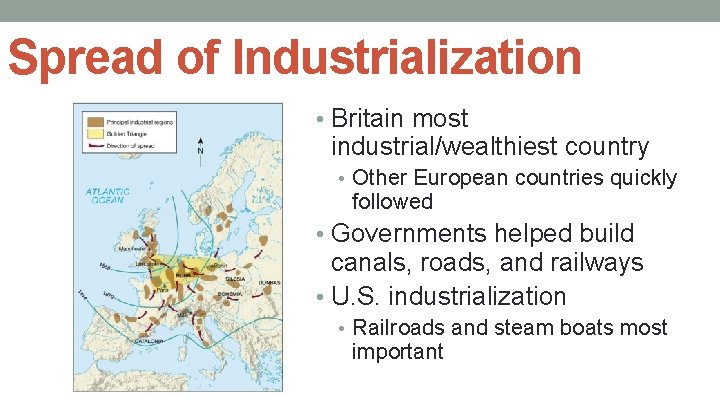
Spread of Industrialization • Britain most industrial/wealthiest country • Other European countries quickly followed • Governments helped build canals, roads, and railways • U. S. industrialization • Railroads and steam boats most important
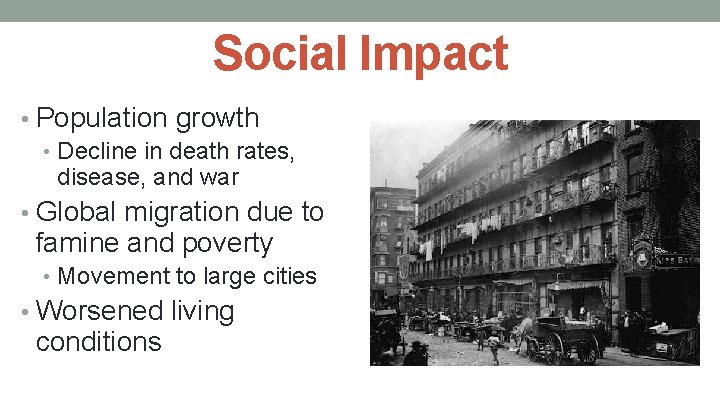
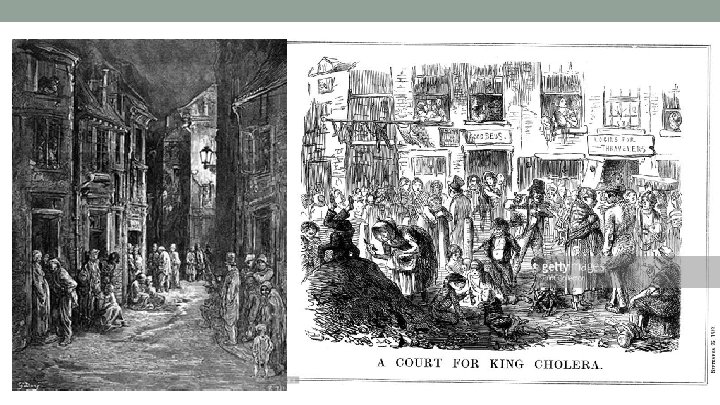
Social Impact • Population growth • Decline in death rates, disease, and war • Global migration due to famine and poverty • Movement to large cities • Worsened living conditions
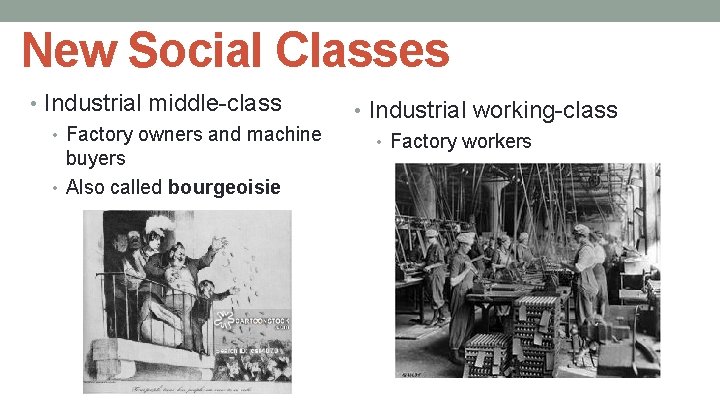
New Social Classes • Industrial middle-class • Factory owners and machine buyers • Also called bourgeoisie • Industrial working-class • Factory workers
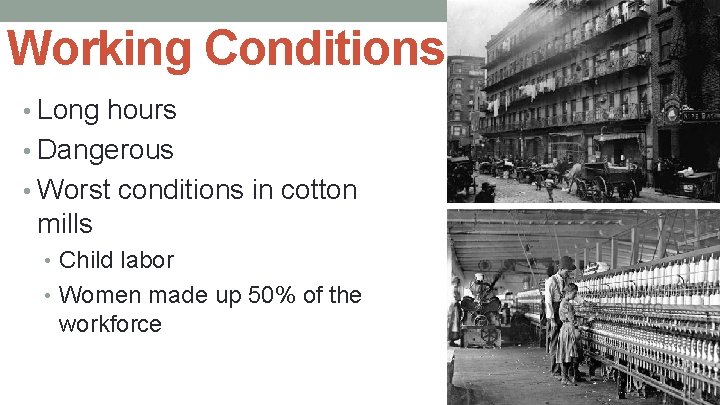
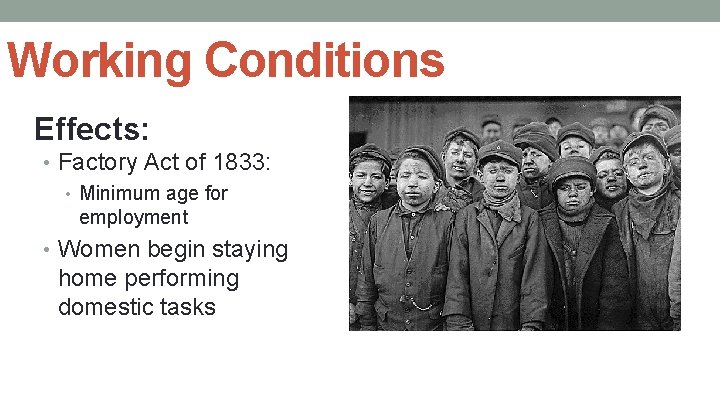
Working Conditions • Long hours • Dangerous • Worst conditions in cotton mills • Child labor • Women made up 50% of the workforce
Working Conditions Effects: • Factory Act of 1833: • Minimum age for employment • Women begin staying home performing domestic tasks
Socialism • Society controls some means of production in economy • Factories and utilities • Reaction against terrible social conditions • Early socialists were utopian (unrealistic)
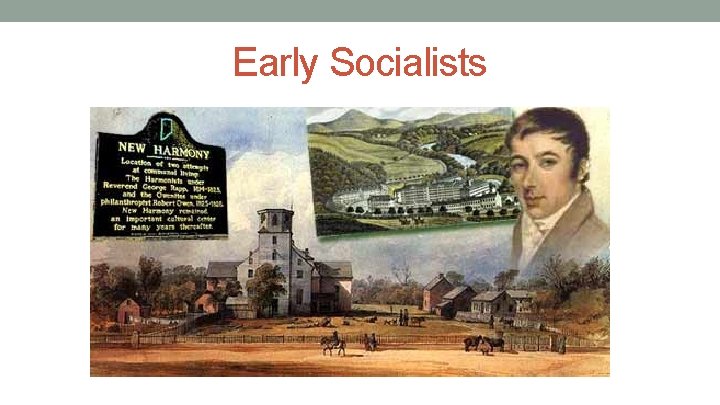
Early Socialists