
Industrial Revolution was Industrialization Beginning of Industrial Revolution
Industrial Revolution was:
Industrialization
Beginning of Industrial Revolution ® When and where did the industrial revolution begin? ® In Great Britain in the mid to late 1700 s ® Why Great Britain? Flow of capital ® Second agricultural revolution ® Mercantilism and cottage industries ® Resources: coal, iron ore, and water power ®
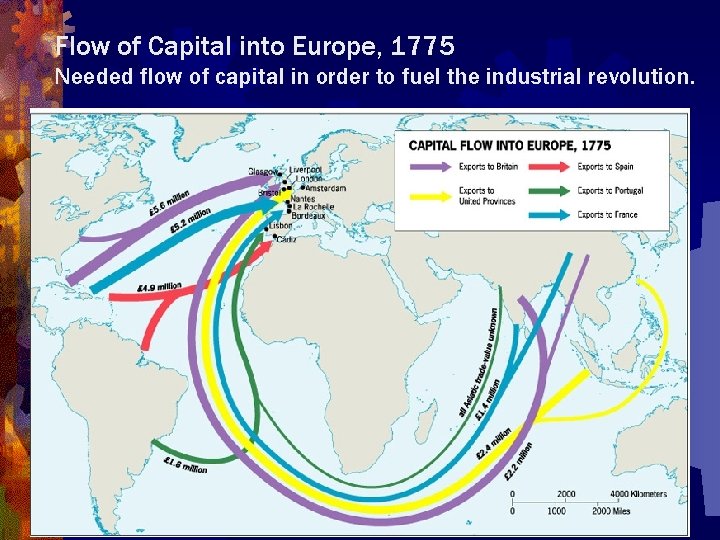
Flow of Capital into Europe, 1775 Needed flow of capital in order to fuel the industrial revolution.
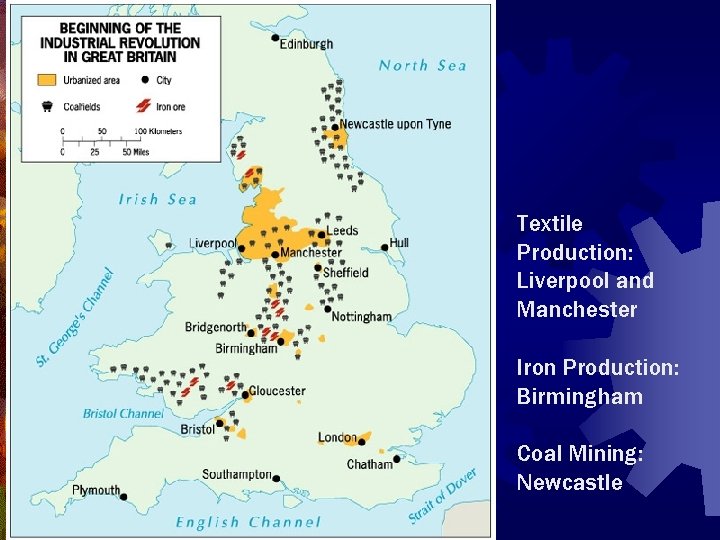
Textile Production: Liverpool and Manchester Iron Production: Birmingham Coal Mining: Newcastle
Diffusion to Mainland Europe In early 1800 s, innovations diffused into mainland Europe. Location criteria: proximity to coal fields connection via water to a port flow of capital
Later Diffusion In late 1800 s, innovations diffused to some regions without coal. Location criteria: access to railroad flow of capital
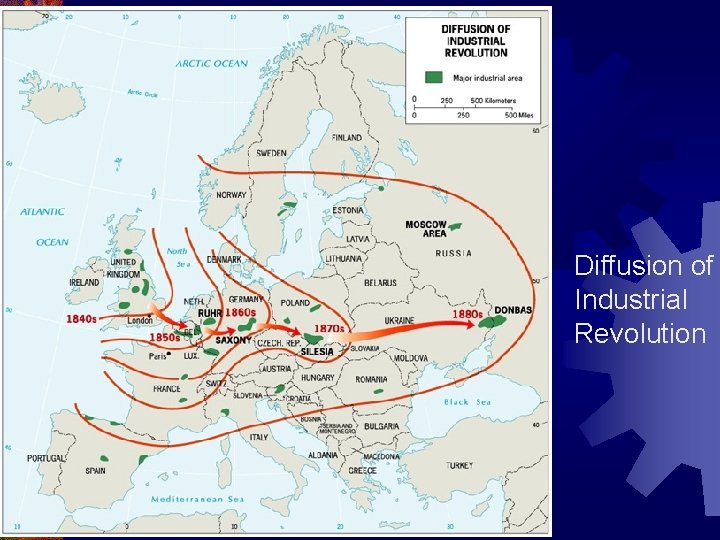
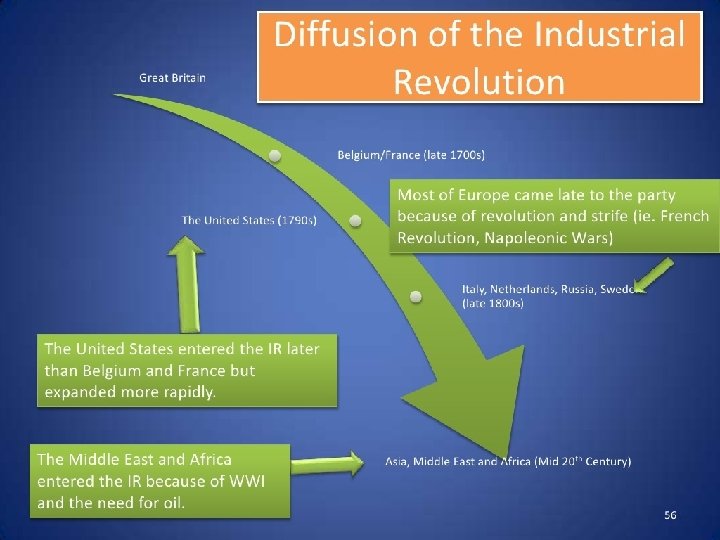
Diffusion of Industrial Revolution
Location Theory ® Location Theory – predicting where business will or should be located. Considers: - Variable costs - Friction of distance
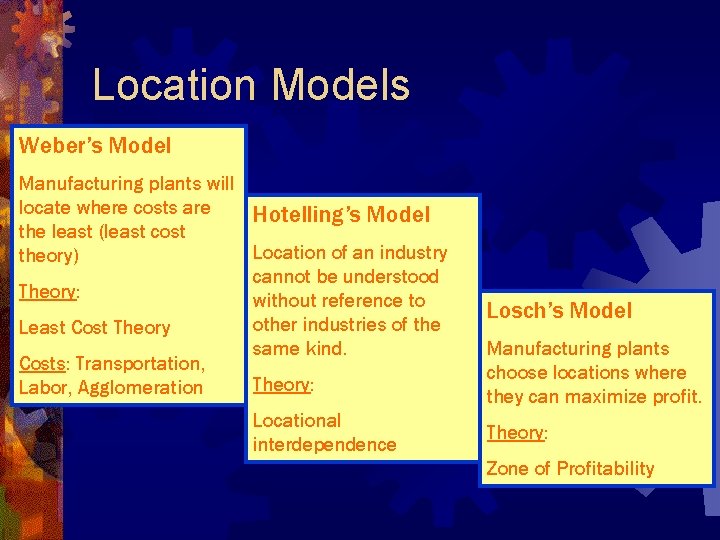
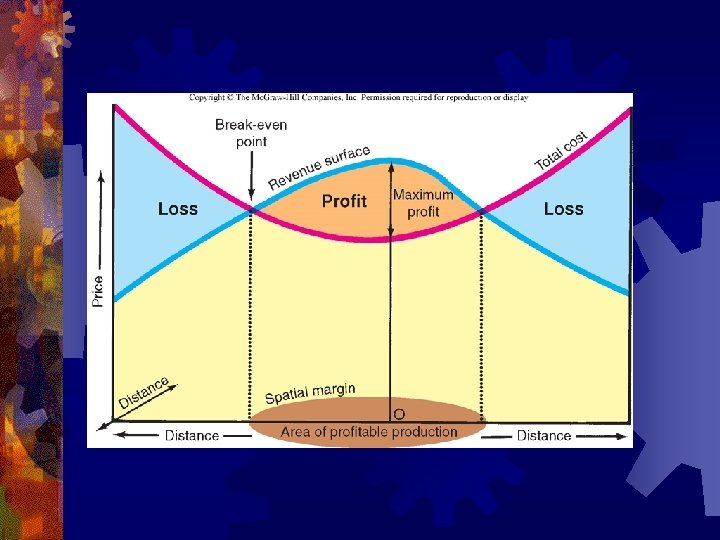
Location Models Weber’s Model Manufacturing plants will locate where costs are Hotelling’s Model the least (least cost Location of an industry theory) cannot be understood Theory: without reference to other industries of the Least Cost Theory same kind. Costs: Transportation, Theory: Labor, Agglomeration Locational interdependence Losch’s Model Manufacturing plants choose locations where they can maximize profit. Theory: Zone of Profitability
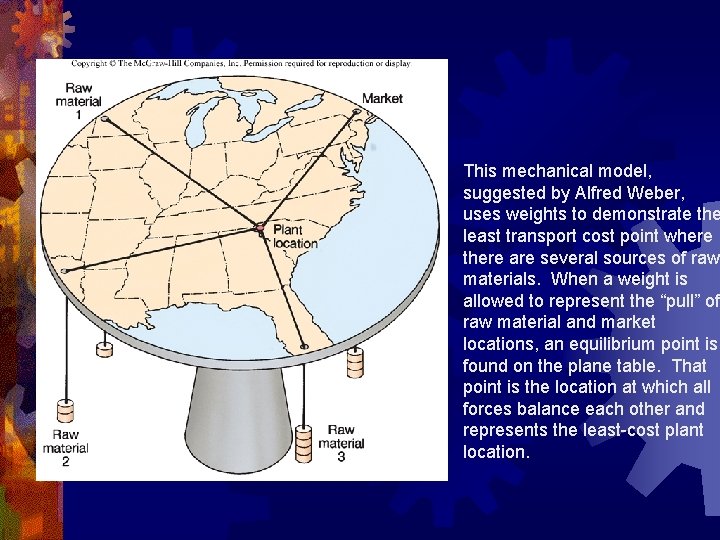
This mechanical model, suggested by Alfred Weber, uses weights to demonstrate the least transport cost point where there are several sources of raw materials. When a weight is allowed to represent the “pull” of raw material and market locations, an equilibrium point is found on the plane table. That point is the location at which all forces balance each other and represents the least-cost plant location.
Weber: ® In terms of location, manufactured goods can be classified into two categories: ® 1. Weight losing or bulk reducing – manufacturing involves a large amount of inputs that are reduced to a final product that weighs less or has less bulk than the inputs. ® Examples: Furniture; Seafood Packing
® 2. Weight-gaining or bulk gaining – manufacturing involves a number of inputs that are combined to make a final product that gains bulk or weight in the production process. ® These factories are located closer to the consumer because of transportation costs. Example: bread

Pakistan

Egypt

Vietnam

Vietnam
China
China

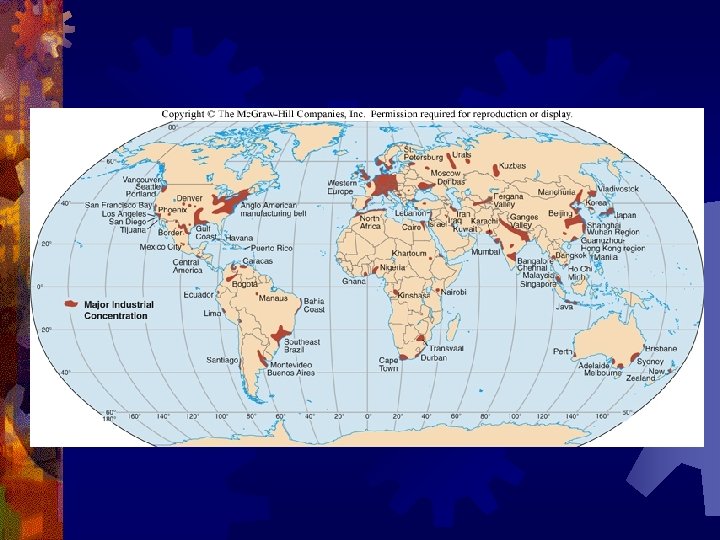
® Ninety of the top 100 transnational corporations are headquartered in: ® The European Union ® The United States ® Japan
- Slides: 24