
Industrial Revolution Charts Domestic System Factory System Methods
- Slides: 5
Industrial Revolution Charts
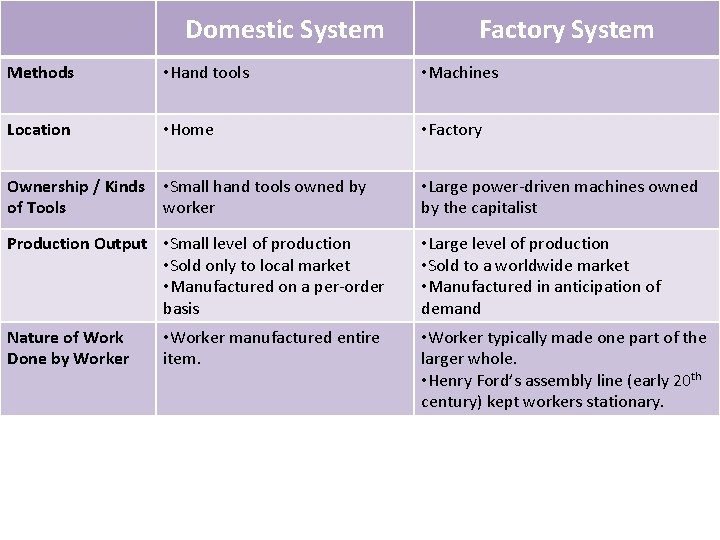
Domestic System Factory System Methods • Hand tools • Machines Location • Home • Factory Ownership / Kinds • Small hand tools owned by of Tools worker • Large power-driven machines owned by the capitalist Production Output • Small level of production • Sold only to local market • Manufactured on a per-order basis • Large level of production • Sold to a worldwide market • Manufactured in anticipation of demand Nature of Work Done by Worker • Worker typically made one part of the larger whole. • Henry Ford’s assembly line (early 20 th century) kept workers stationary. • Worker manufactured entire item.
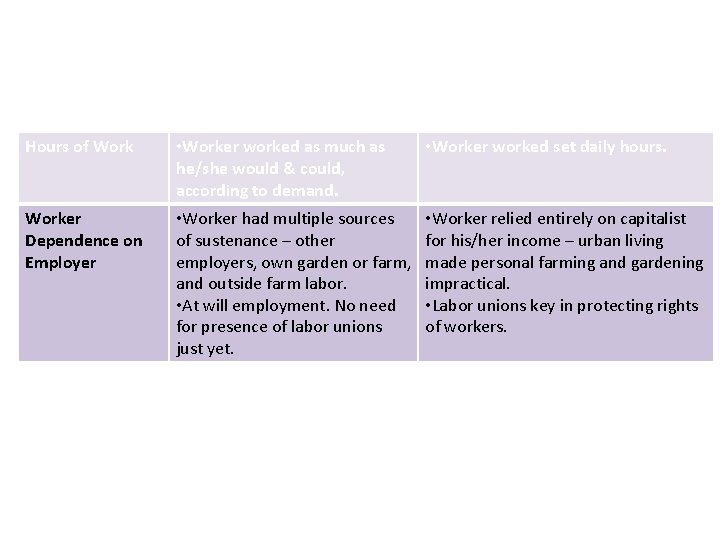
Hours of Work • Worker worked as much as he/she would & could, according to demand. • Worker worked set daily hours. Worker Dependence on Employer • Worker had multiple sources of sustenance – other employers, own garden or farm, and outside farm labor. • At will employment. No need for presence of labor unions just yet. • Worker relied entirely on capitalist for his/her income – urban living made personal farming and gardening impractical. • Labor unions key in protecting rights of workers.
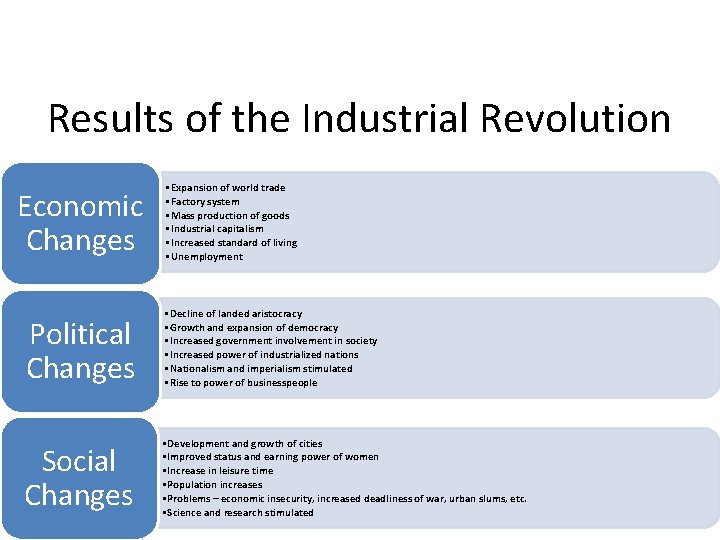
Results of the Industrial Revolution Economic Changes • Expansion of world trade • Factory system • Mass production of goods • Industrial capitalism • Increased standard of living • Unemployment Political Changes • Decline of landed aristocracy • Growth and expansion of democracy • Increased government involvement in society • Increased power of industrialized nations • Nationalism and imperialism stimulated • Rise to power of businesspeople Social Changes • Development and growth of cities • Improved status and earning power of women • Increase in leisure time • Population increases • Problems – economic insecurity, increased deadliness of war, urban slums, etc. • Science and research stimulated
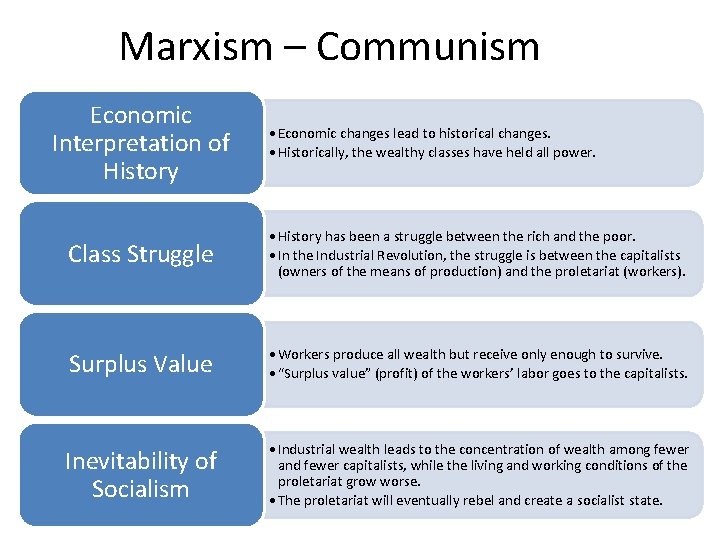
Marxism – Communism Economic Interpretation of History • Economic changes lead to historical changes. • Historically, the wealthy classes have held all power. Class Struggle • History has been a struggle between the rich and the poor. • In the Industrial Revolution, the struggle is between the capitalists (owners of the means of production) and the proletariat (workers). Surplus Value • Workers produce all wealth but receive only enough to survive. • “Surplus value” (profit) of the workers’ labor goes to the capitalists. Inevitability of Socialism • Industrial wealth leads to the concentration of wealth among fewer and fewer capitalists, while the living and working conditions of the proletariat grow worse. • The proletariat will eventually rebel and create a socialist state.