
Industrial Revolution Chapter 9 Sections 1 and 2


- Slides: 17
Industrial Revolution Chapter 9 Sections 1 and 2
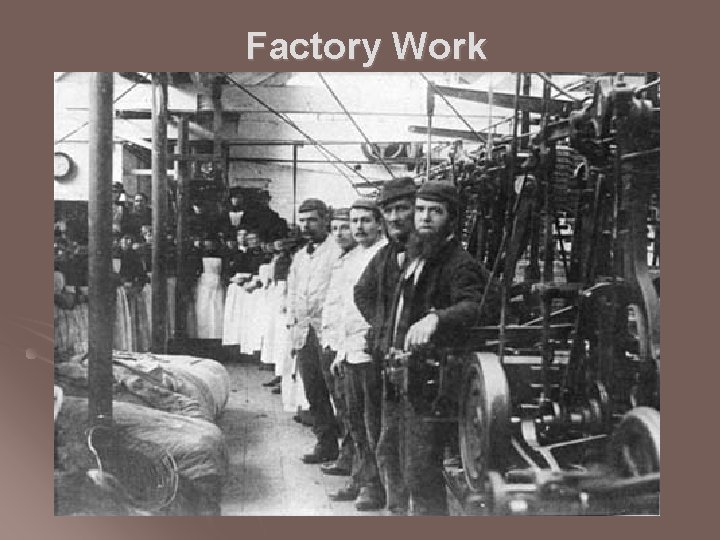
Factory Work
Factory Work
Factory Work
Factory Work
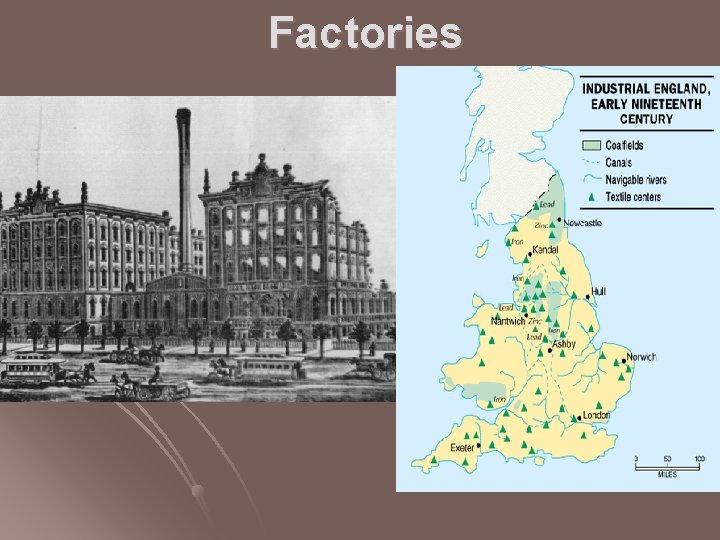
Factories
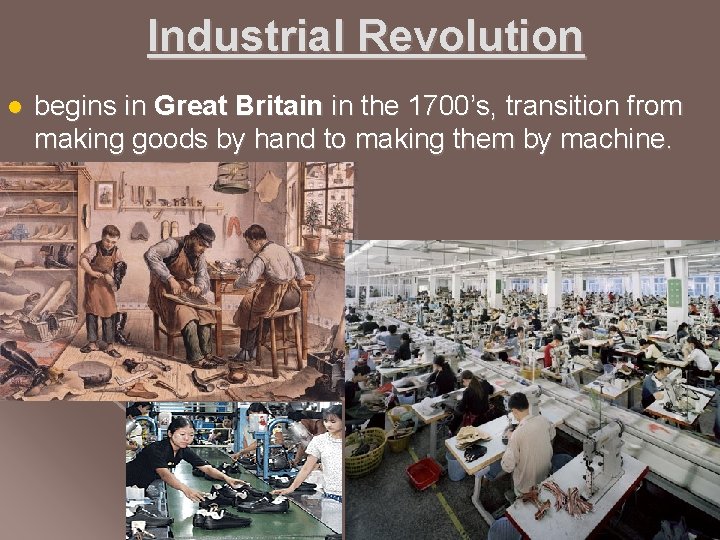
Industrial Revolution l begins in Great Britain in the 1700’s, transition from making goods by hand to making them by machine.
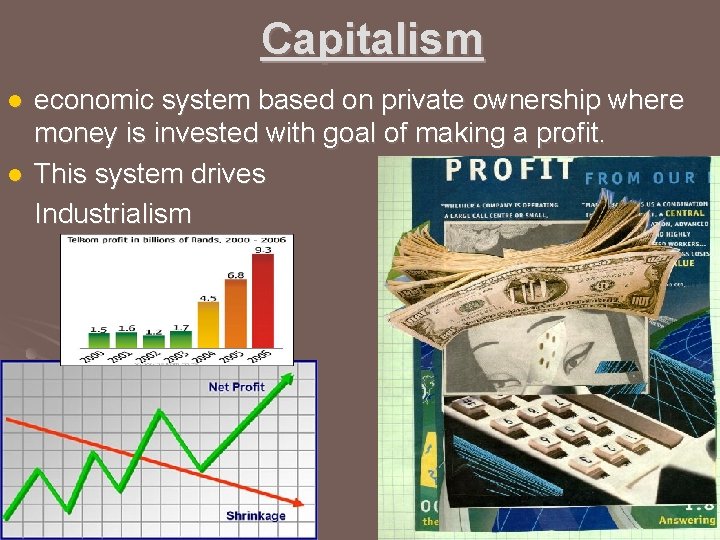
Capitalism l l economic system based on private ownership where money is invested with goal of making a profit. This system drives Industrialism
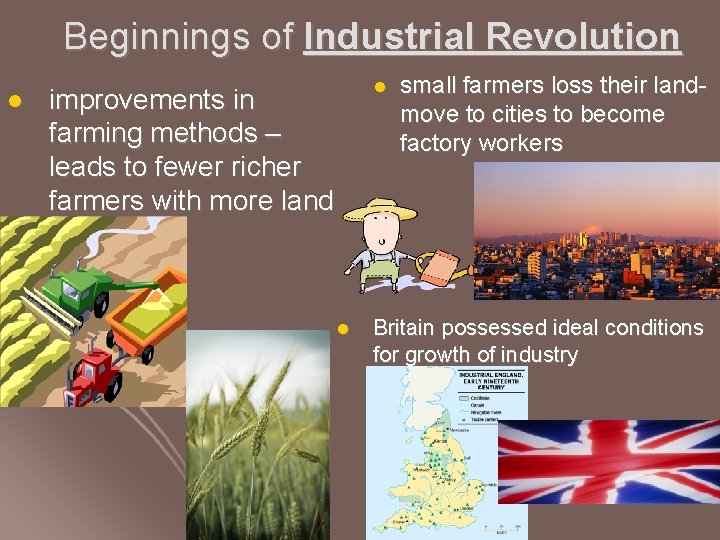
Beginnings of Industrial Revolution l l improvements in farming methods – leads to fewer richer farmers with more land l small farmers loss their landmove to cities to become factory workers Britain possessed ideal conditions for growth of industry
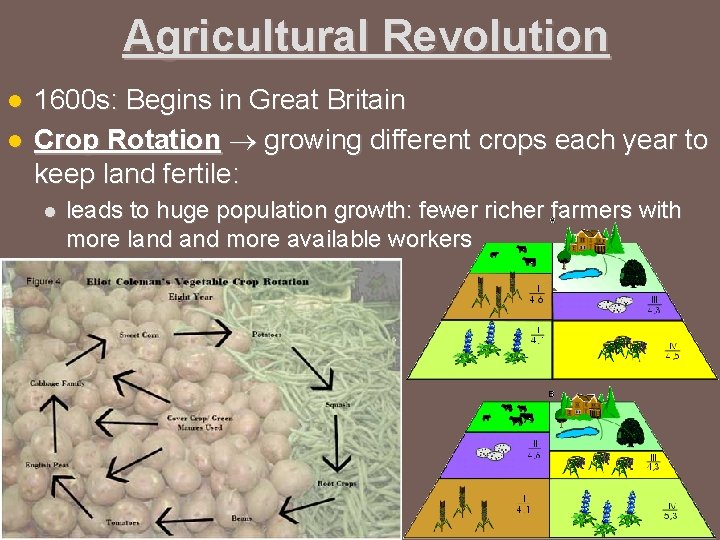
Agricultural Revolution l l 1600 s: Begins in Great Britain Crop Rotation growing different crops each year to keep land fertile: l leads to huge population growth: fewer richer farmers with more land more available workers
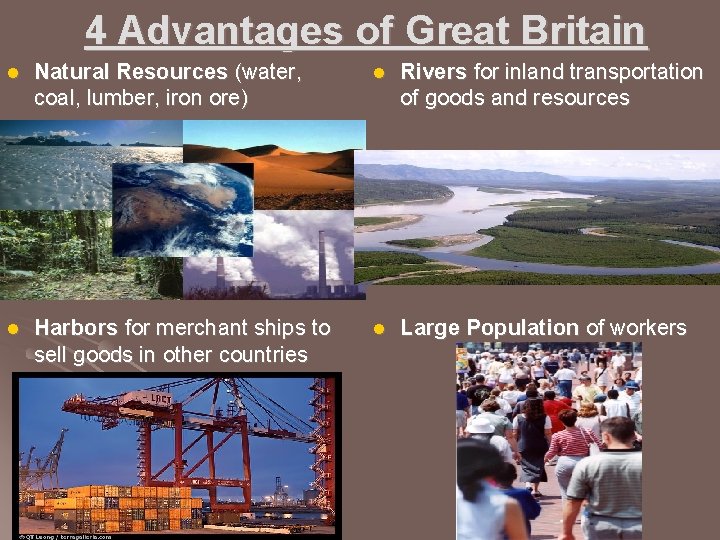
4 Advantages of Great Britain l Natural Resources (water, coal, lumber, iron ore) l Rivers for inland transportation of goods and resources l Harbors for merchant ships to sell goods in other countries l Large Population of workers
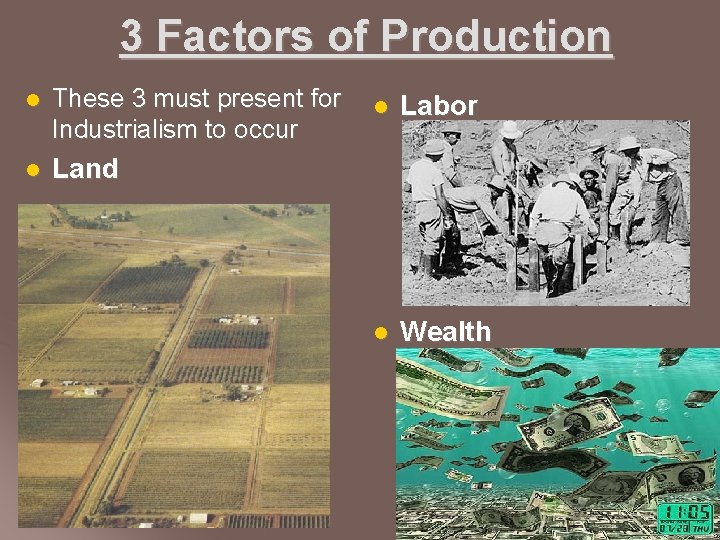
3 Factors of Production l These 3 must present for Industrialism to occur l Land l Labor l Wealth
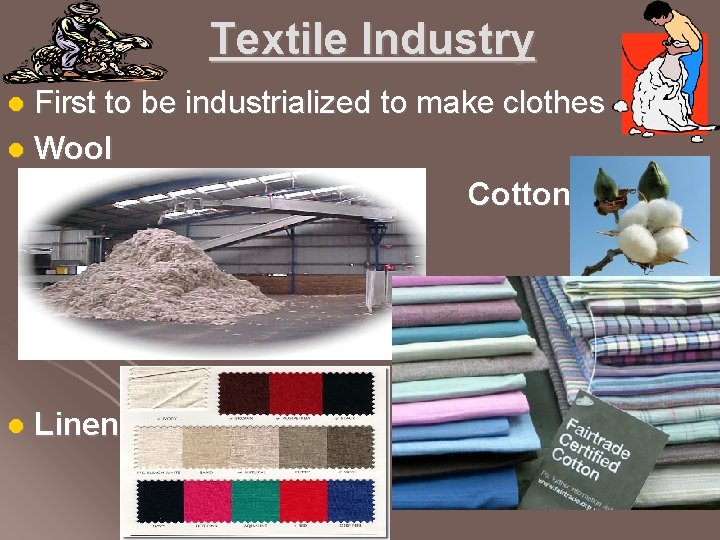
Textile Industry First to be industrialized to make clothes l Wool Cotton l l Linen
Industrial Improvements l l Spinning Jenny (weaves fabric into thread) l Steam Engine (used on ships & trains) l Cotton Gin 1793 (easily removes seeds from cotton plants) Roads Improved (better transportation of goods)
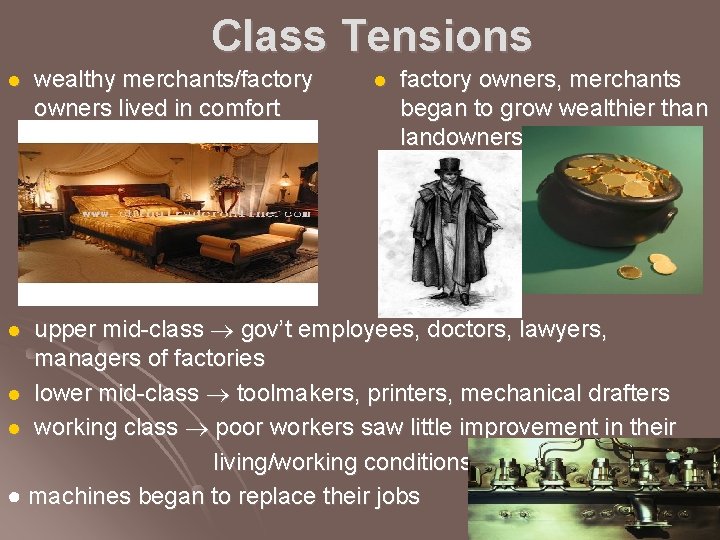
Class Tensions l wealthy merchants/factory owners lived in comfort l factory owners, merchants began to grow wealthier than landowners upper mid-class gov’t employees, doctors, lawyers, managers of factories l lower mid-class toolmakers, printers, mechanical drafters l working class poor workers saw little improvement in their living/working conditions, ● machines began to replace their jobs l
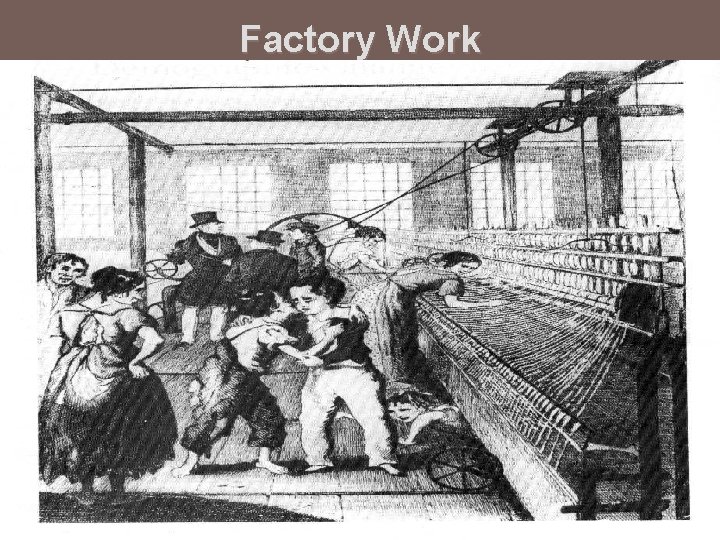
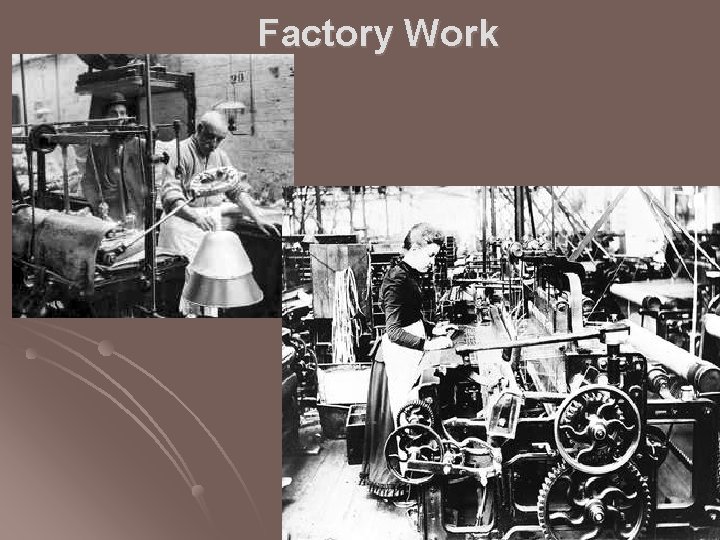
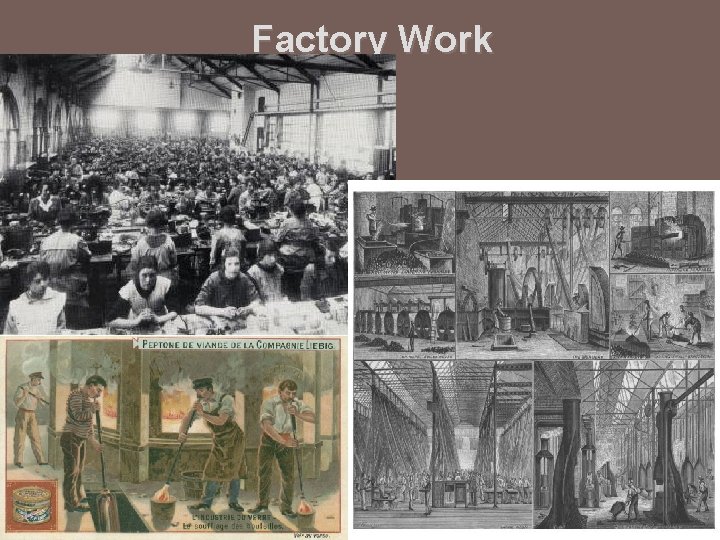
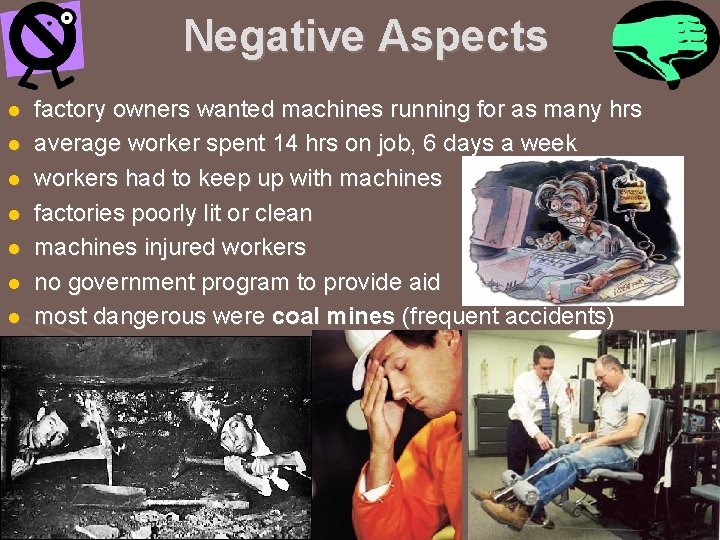
Negative Aspects l l l l factory owners wanted machines running for as many hrs average worker spent 14 hrs on job, 6 days a week workers had to keep up with machines factories poorly lit or clean machines injured workers no government program to provide aid most dangerous were coal mines (frequent accidents)
Positive Aspects l l l l created jobs for workers contributed to wealth of nation fostered technological progress/inventions increased production of goods raised standard of living healthier diets, better housing expanded educational opportunities