
Industrial Revolution Begins The Agricultural Revolution Enclosure Movement
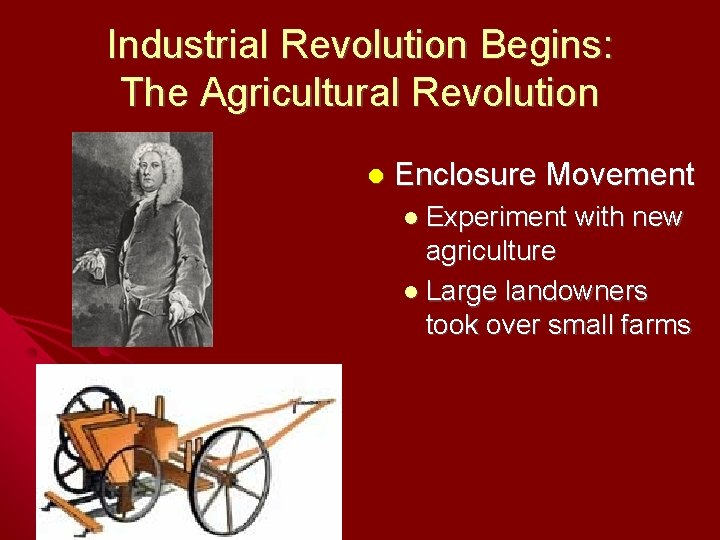
Industrial Revolution Begins: The Agricultural Revolution Enclosure Movement Experiment with new agriculture Large landowners took over small farms
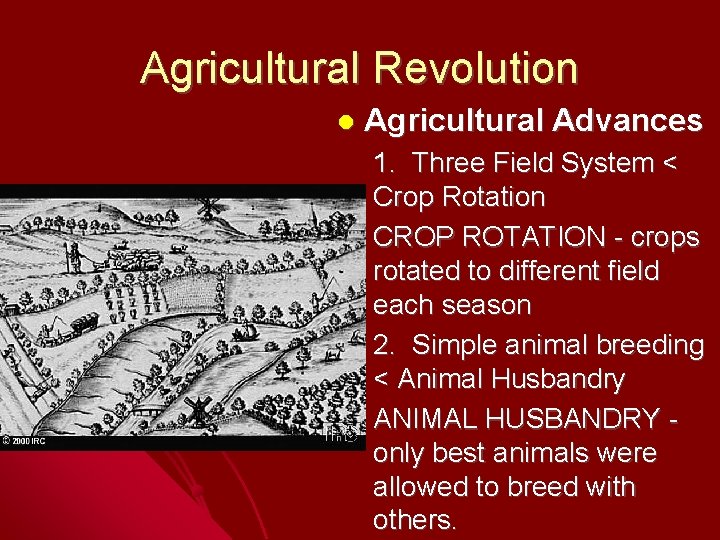
Agricultural Revolution Agricultural Advances 1. Three Field System < Crop Rotation CROP ROTATION - crops rotated to different field each season 2. Simple animal breeding < Animal Husbandry ANIMAL HUSBANDRY only best animals were allowed to breed with others.
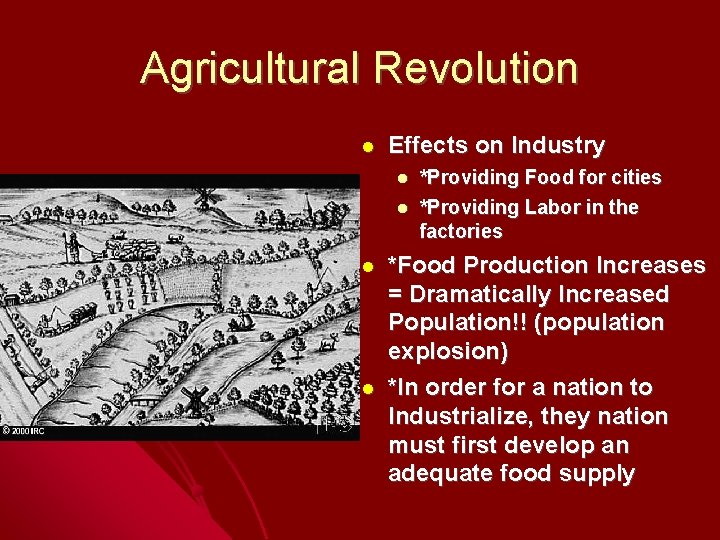
Agricultural Revolution Effects on Industry *Providing Food for cities *Providing Labor in the factories *Food Production Increases = Dramatically Increased Population!! (population explosion) *In order for a nation to Industrialize, they nation must first develop an adequate food supply
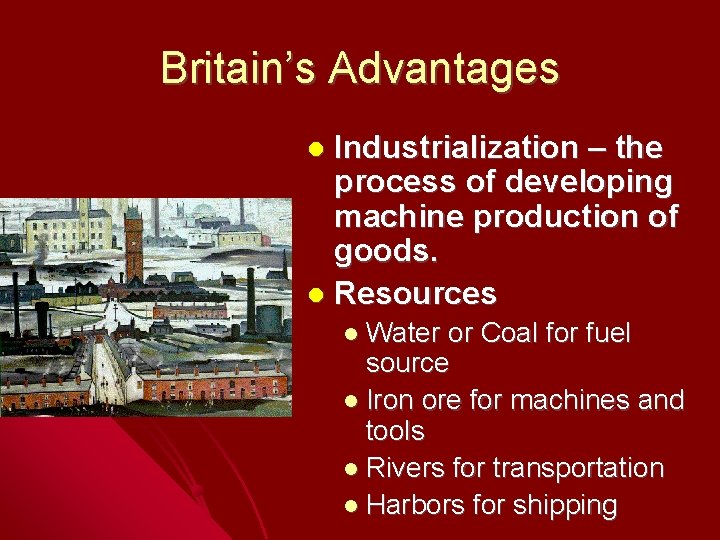
Britain’s Advantages Industrialization – the process of developing machine production of goods. Resources Water or Coal for fuel source Iron ore for machines and tools Rivers for transportation Harbors for shipping
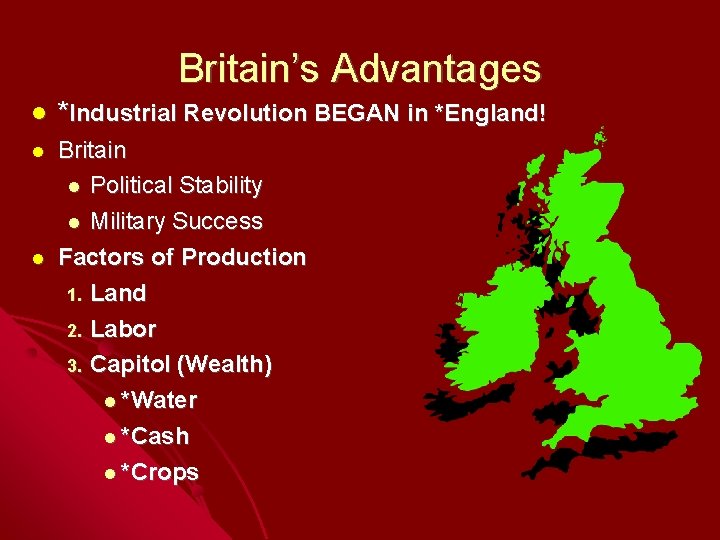
Britain’s Advantages *Industrial Revolution BEGAN in *England! Britain Political Stability Military Success Factors of Production 1. Land 2. Labor 3. Capitol (Wealth) *Water *Cash *Crops
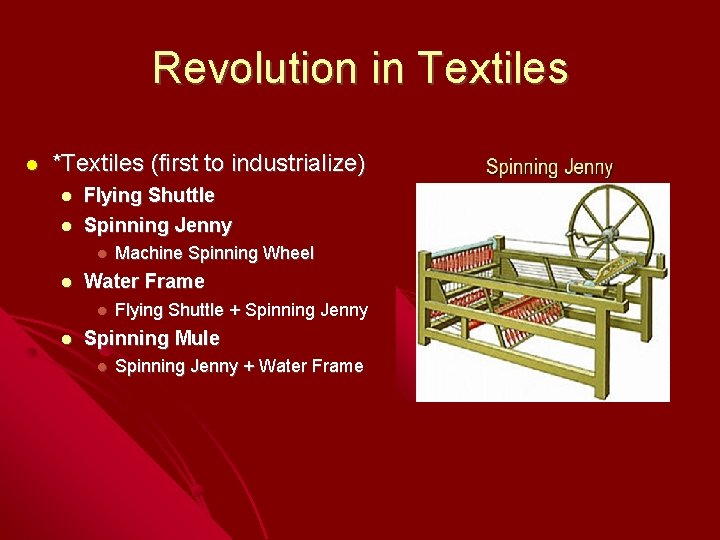
Revolution in Textiles *Textiles (first to industrialize) Flying Shuttle Spinning Jenny Water Frame Machine Spinning Wheel Flying Shuttle + Spinning Jenny Spinning Mule Spinning Jenny + Water Frame
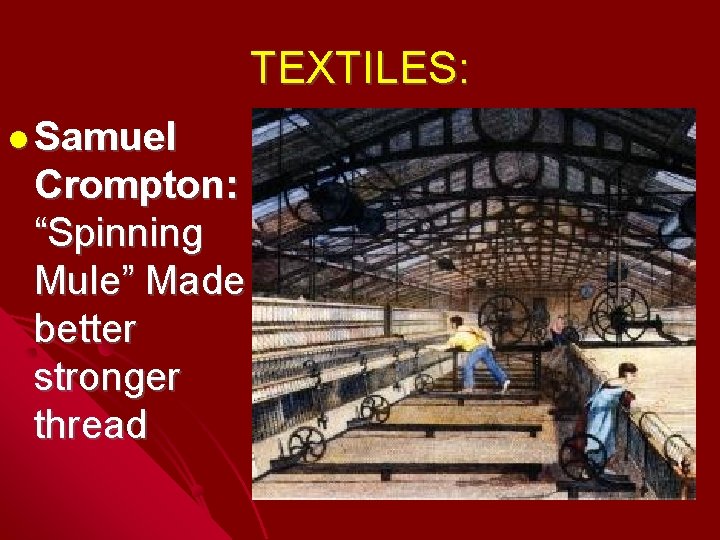
TEXTILES: Samuel Crompton: “Spinning Mule” Made better stronger thread
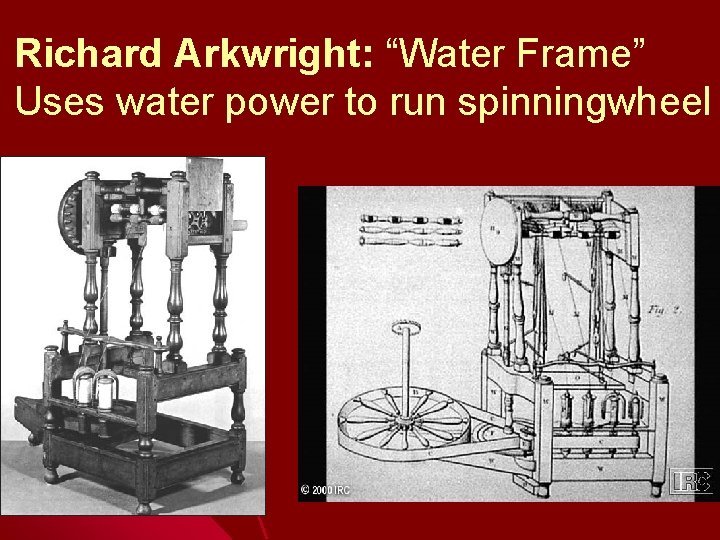
Richard Arkwright: “Water Frame” Uses water power to run spinningwheel
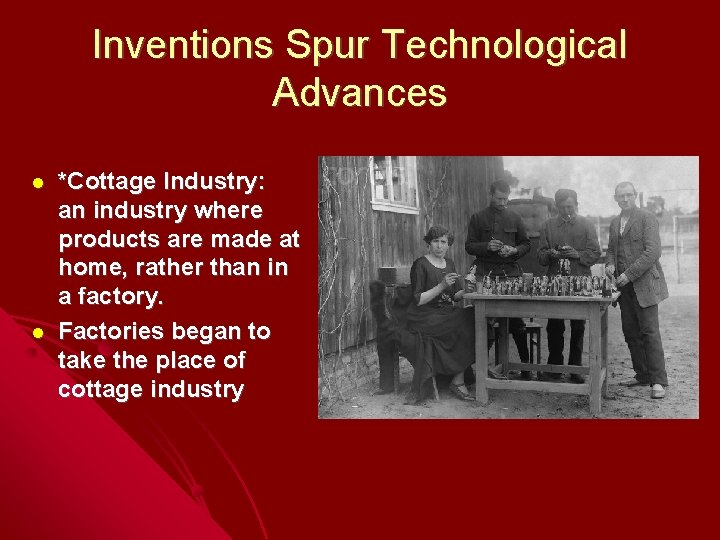
Inventions Spur Technological Advances *Cottage Industry: an industry where products are made at home, rather than in a factory. Factories began to take the place of cottage industry
Inventions Spur Technological Advances *FACTORY *Large place(s) where workers and machines are brought together to produce goods.
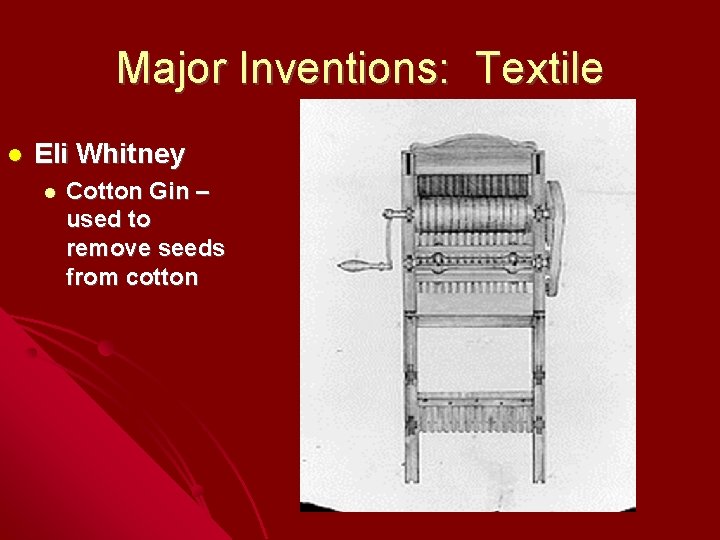
Major Inventions: Textile Eli Whitney Cotton Gin – used to remove seeds from cotton
Answer the Question FACTORIES ARE LARGE PLACES WHERE ________ AND _________ ARE BROUGHT TOGETHER TO PRODUCE GOODS. A. Workers and Textiles B. Workers and Machines C. Workers and Managers
Major Innovations Eli Whitney *Interchangeable Parts - Allowed parts of one item to fit into another product Gun barrels are made identical so any one gun barrel will fit another gun
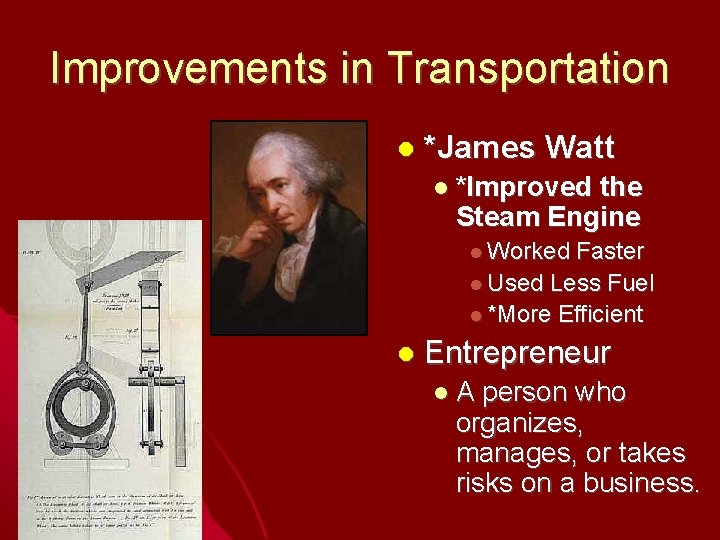
Improvements in Transportation *James Watt *Improved the Steam Engine Worked Faster Used Less Fuel *More Efficient Entrepreneur A person who organizes, manages, or takes risks on a business.
STEAM POWER Steam Power First reliable source of power for factories and developing industries *The development of steam power had the earliest impact on transportation technology during the I. R.
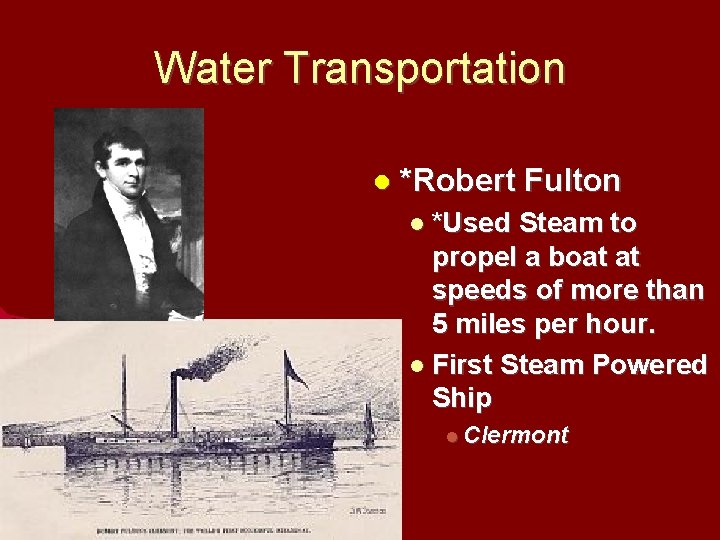
Water Transportation *Robert Fulton *Used Steam to propel a boat at speeds of more than 5 miles per hour. First Steam Powered Ship Clermont
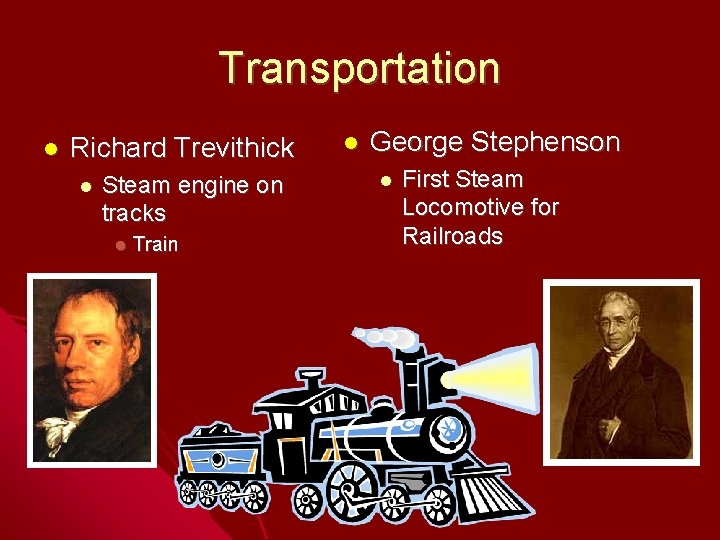
Transportation Richard Trevithick Steam engine on tracks Train George Stephenson First Steam Locomotive for Railroads
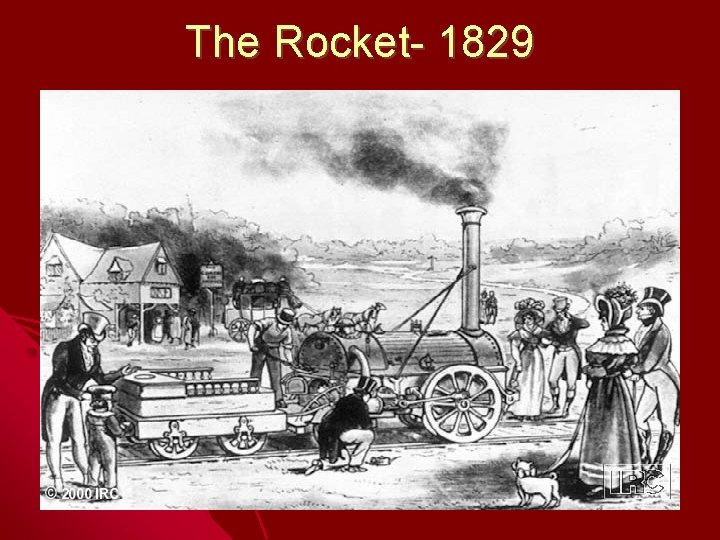
The Rocket- 1829
- Slides: 19