
Industrial Engineering College of Engineering Bayesian Kernel Methods
Industrial Engineering College of Engineering Bayesian Kernel Methods for Binary Classification and Online Learning Problems Theodore Trafalis Workshop on Clustering and Search Techniques in Large Scale Networks LATNA, Nizhny Novgorod, Russia, November 4, 2014
Part I. Bayesian Kernel Methods for Gaussian Processes
Why Bayesian Learning? • Returns a probability • Incorporates power of kernel methods with advantages of Bayesian updating • Can incorporate prior knowledge into estimation • Can “learn” fairly quickly if Gaussian process • Can be used for regression or classification
Outline 1. Bayesics 2. Relevance Vector Machine 3. Laplace Approximation 4. Results

Bayes’ Rule Calculated value Posterior Likelihood Prior
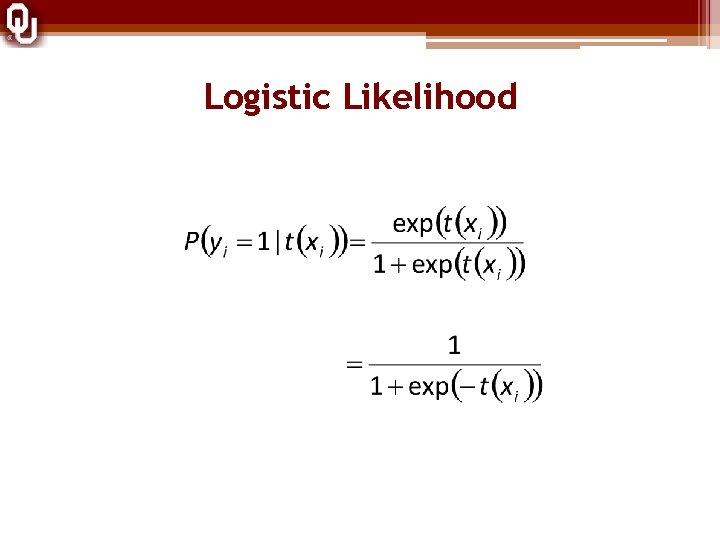
Logistic Likelihood
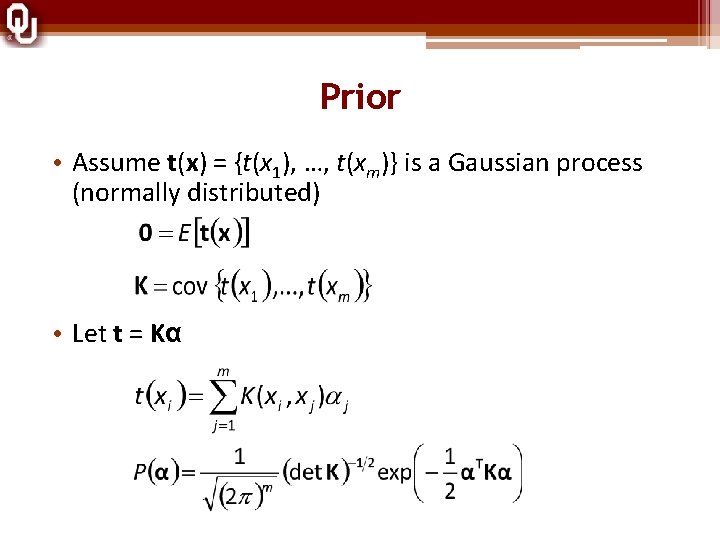
Prior • Assume t(x) = {t(x 1), …, t(xm)} is a Gaussian process (normally distributed) • Let t = Kα
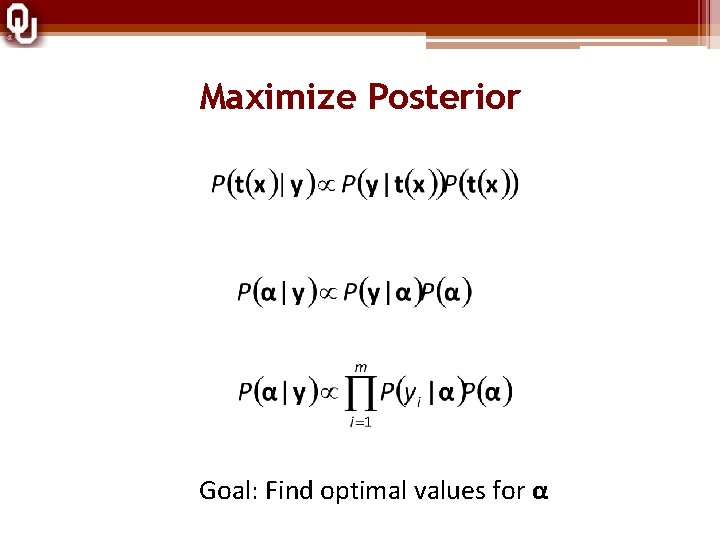
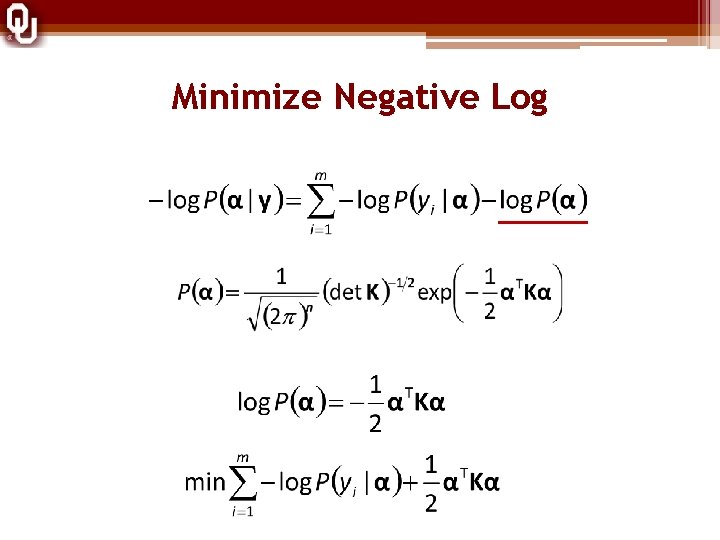
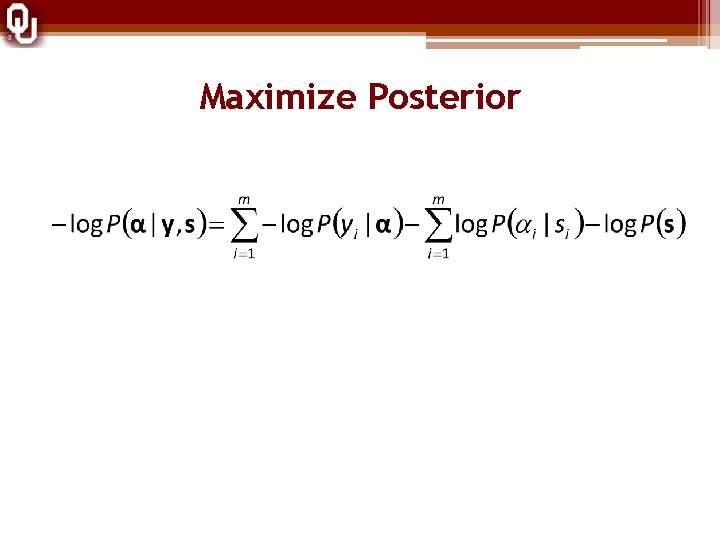
Maximize Posterior Goal: Find optimal values for α
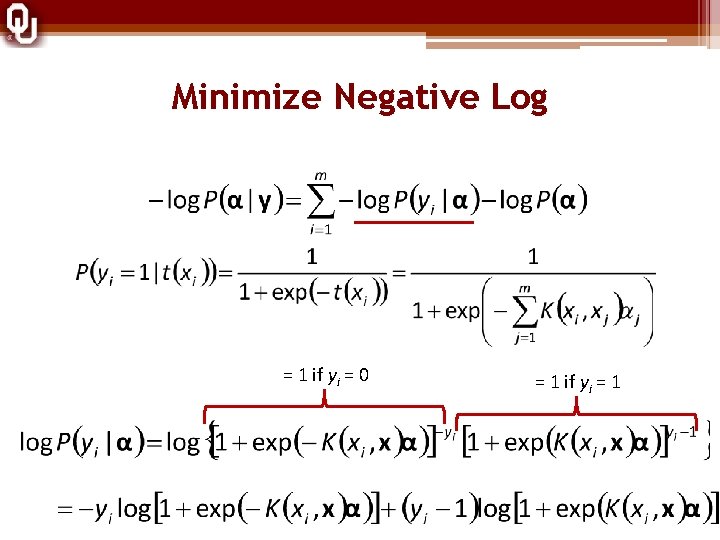
Minimize Negative Log = 1 if yi = 0 = 1 if yi = 1
Minimize Negative Log
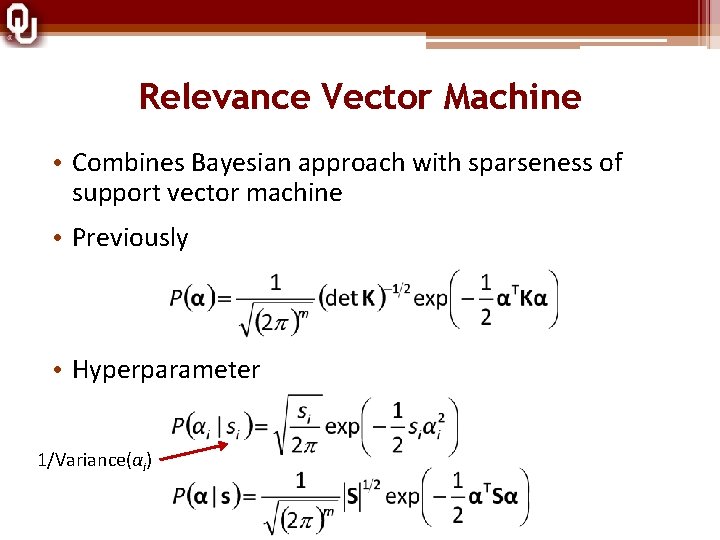
Relevance Vector Machine • Combines Bayesian approach with sparseness of support vector machine • Previously • Hyperparameter 1/Variance(αi)

Non-Informative (Flat) Prior Let a = b ≈ 0
Maximize Posterior
Laplace Approximation Newton-Raphson Method ci Cii
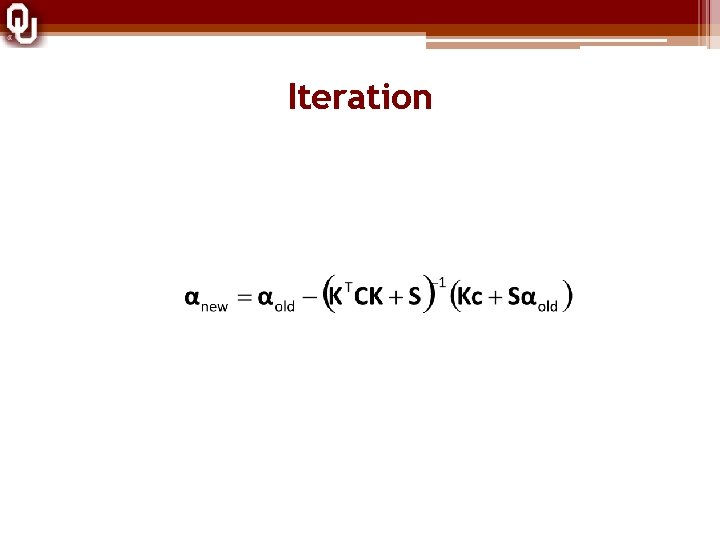
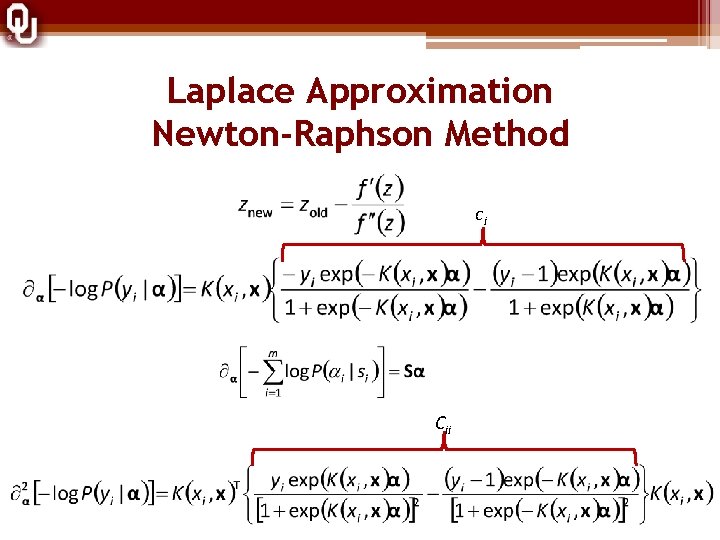
Iteration
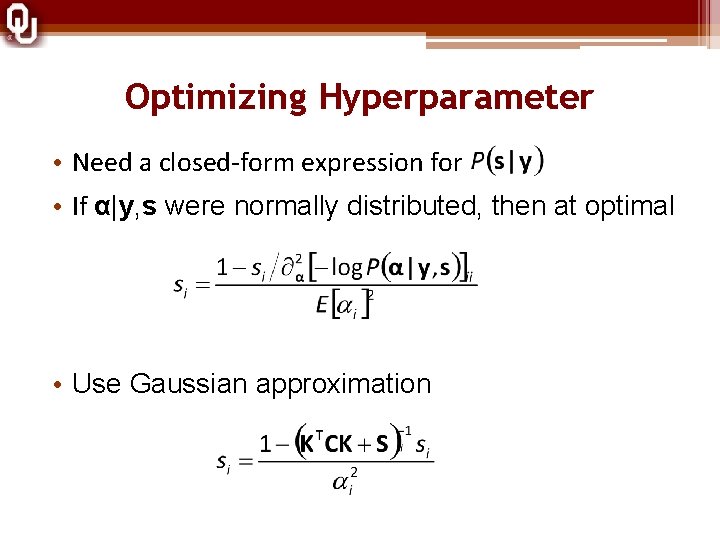
Optimizing Hyperparameter • Need a closed-form expression for • If α|y, s were normally distributed, then at optimal • Use Gaussian approximation
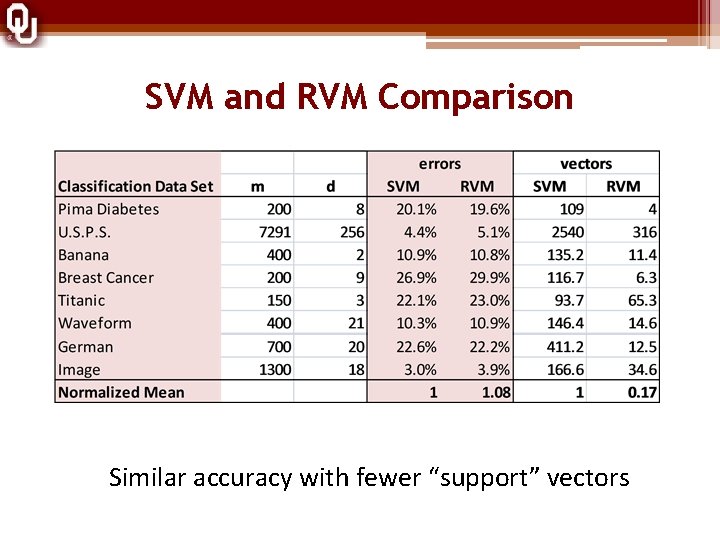
SVM and RVM Comparison Similar accuracy with fewer “support” vectors
Conclusion • Posterior Likelihood x Prior • Gaussian process ▫ Makes math easier ▫ Assumes that density is centered around mode • Relevance Vector Machine ▫ Similar accuracy to Support Vector Machine ▫ Fewer data points for RVM compared to SVM • In part 2 we discuss ▫ Non-Gaussian process ▫ Markov Chain Monte Carlo solution
References • B. Schӧlkopf and A. J. Smola, 2002. “Chapter 16: Bayesian Kernel Methods. ” Learning With Kernels: Support Vector Machines, Regularization, Optimization, and Beyond. Cambridge: MIT Press. • C. M. Bishop and M. E. Tipping, 2003. “Bayesian Regression and Classification. ” In J. Suykens, G. Horvath, S. Basu, C. Micchelli, and J. Vandewalle, eds. Advances in Learning Theory: Methods Models and Applications. Amsterdam: IOS Press.

Backup
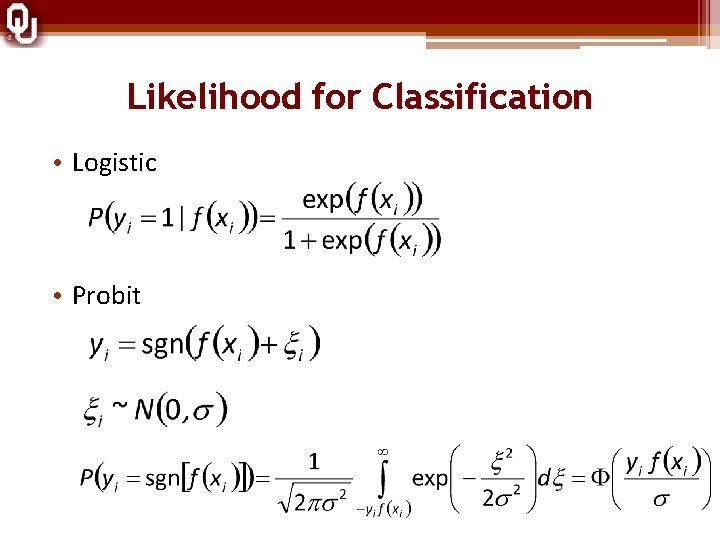
Likelihood for Classification • Logistic • Probit
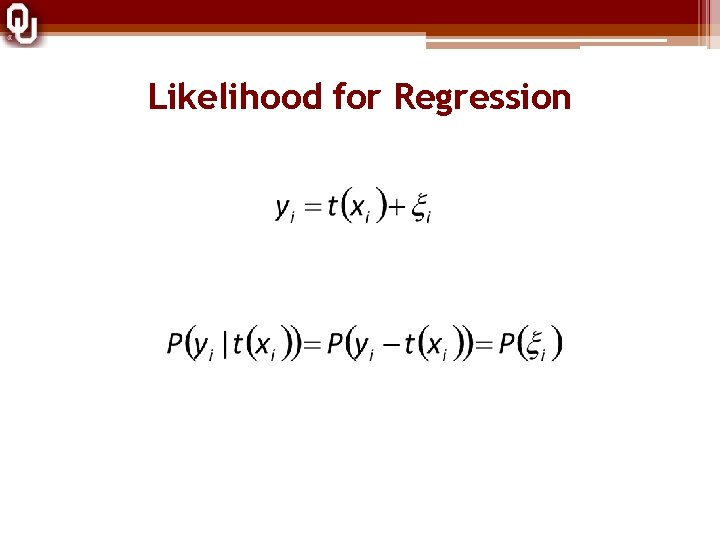
Likelihood for Regression
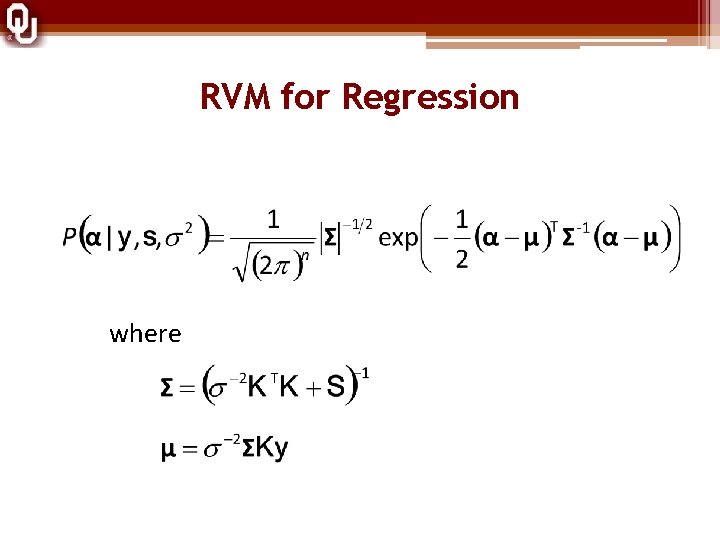
RVM for Regression where
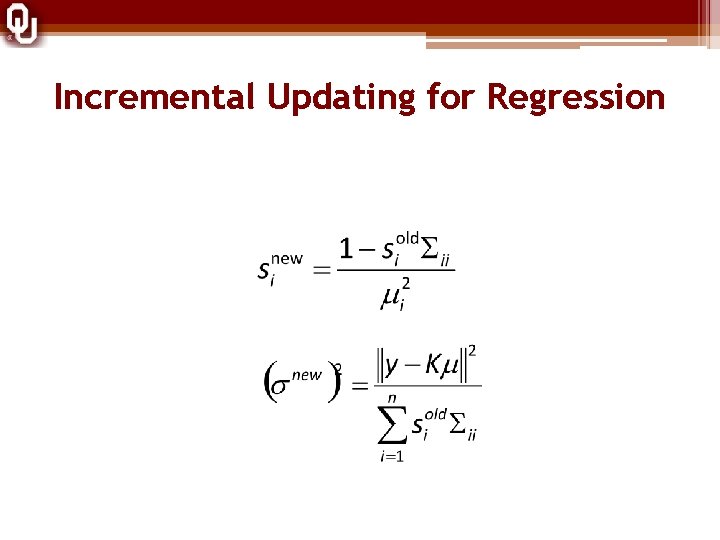
Incremental Updating for Regression

Industrial Engineering College of Engineering Part II. Bayesian Kernel Methods Using Beta Distributions Theodore Trafalis Workshop on Clustering and Search Techniques in Large Scale Networks LATNA, Nizhny Novgorod, Russia, November 4, 2014
Summary of Part 1 • Bayesian method: Posterior Likelihood x Prior • Gaussian process ▫ Makes math easier ▫ Assumes that density is centered around mode • Relevance Vector Machine • Solution concept: posterior maximization
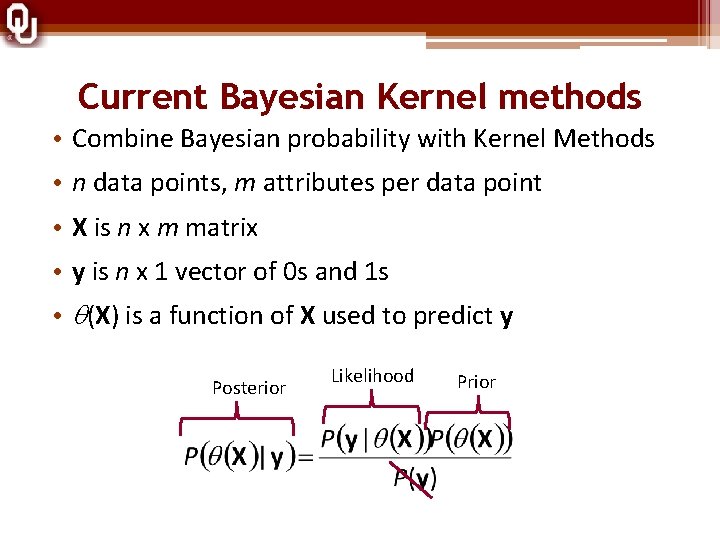
Current Bayesian Kernel methods • Combine Bayesian probability with Kernel Methods • n data points, m attributes per data point • X is n x m matrix • y is n x 1 vector of 0 s and 1 s • q(X) is a function of X used to predict y Posterior Likelihood Prior
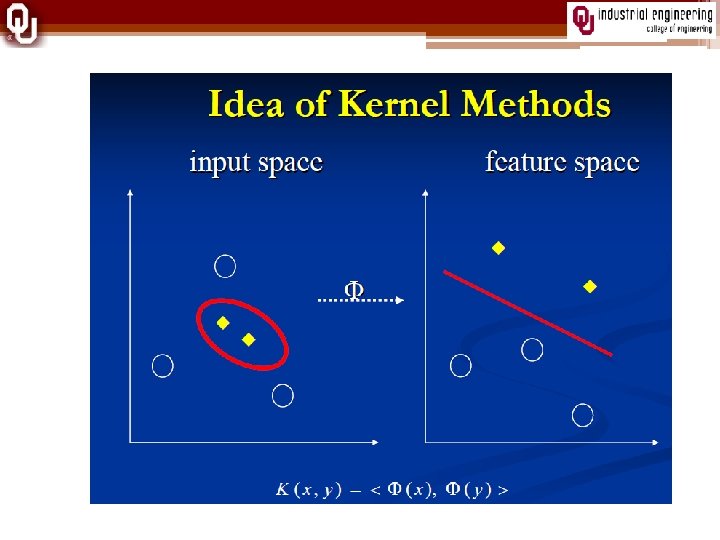
Support Vector Machines Mac. Kenzie and Trafalis 28
What’s new in part 2 • Beta distributions as priors • Adaptation of beta-binomial updating formula • Comparison of beta kernel classifiers with existing SVM classifiers • Online learning
Outline 1. Beta Distribution 2. Other Priors 3. Markov Chain Monte Carlo 4. Test Case
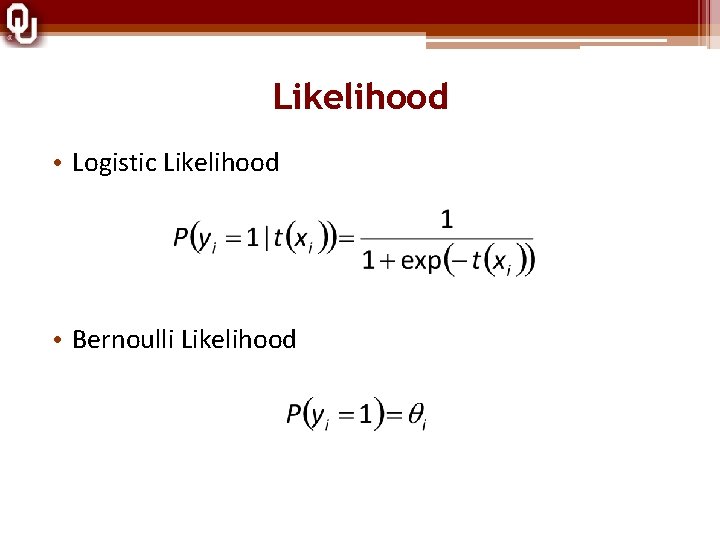
Likelihood • Logistic Likelihood • Bernoulli Likelihood
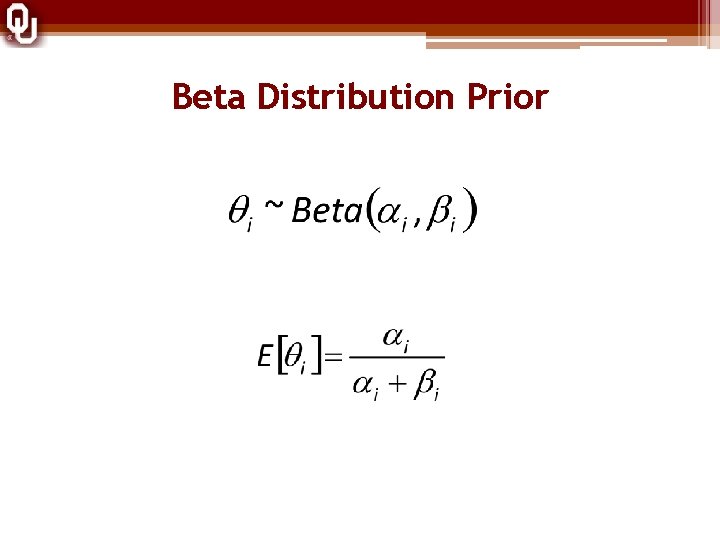
Beta Distribution Prior
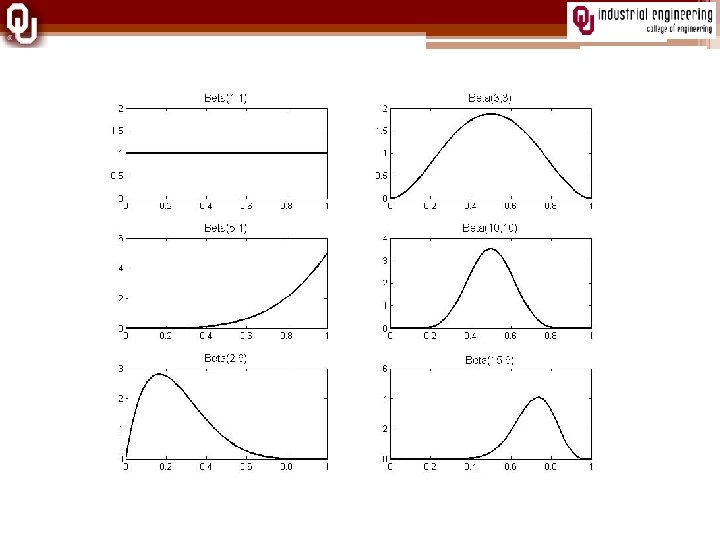
Shape of beta distribution Mac. Kenzie and Trafalis 33
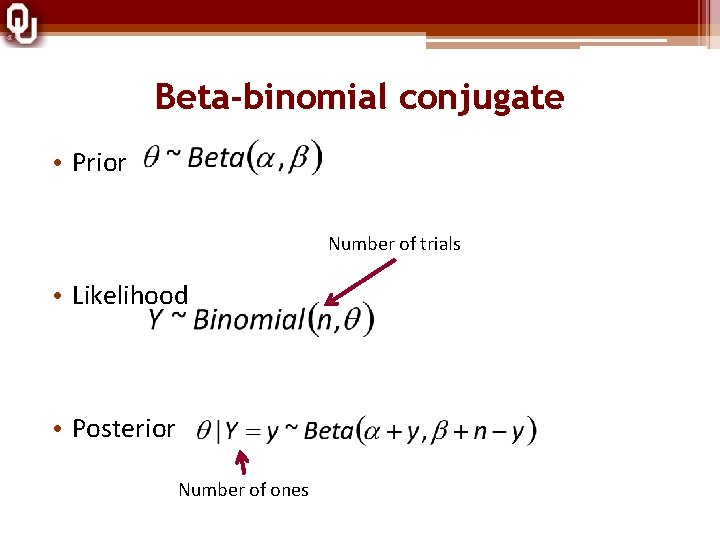
Beta-binomial conjugate • Prior Number of trials • Likelihood • Posterior Number of ones
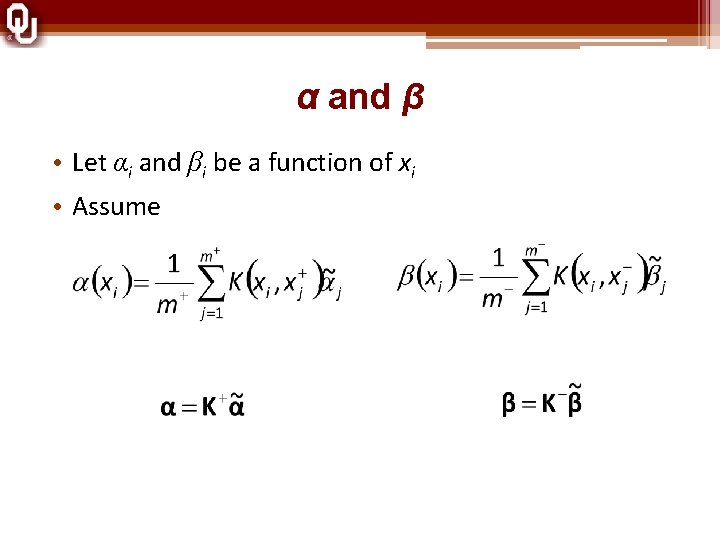
α and β • Let αi and βi be a function of xi • Assume
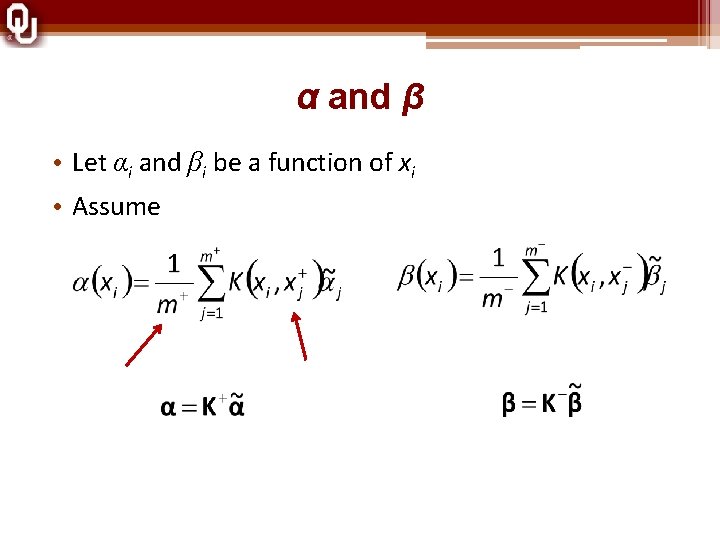
α and β • Let αi and βi be a function of xi • Assume
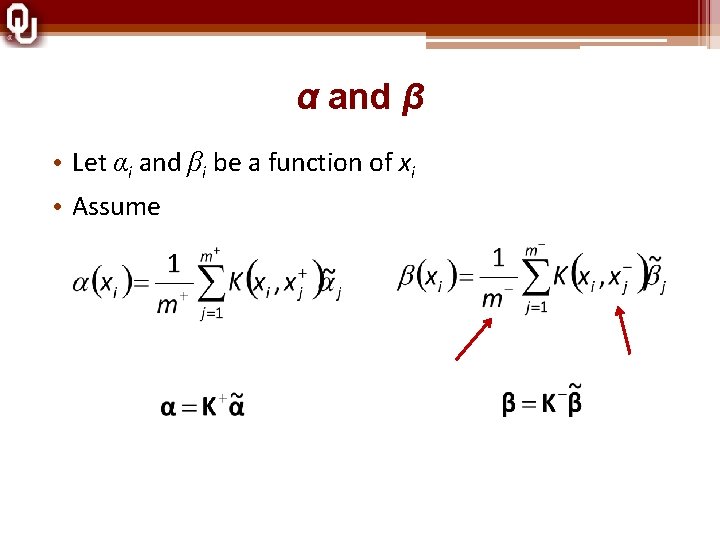
α and β • Let αi and βi be a function of xi • Assume
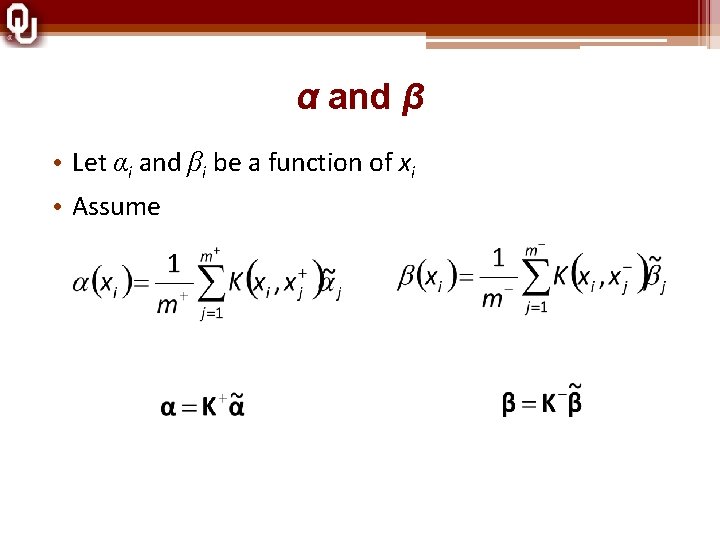
α and β • Let αi and βi be a function of xi • Assume
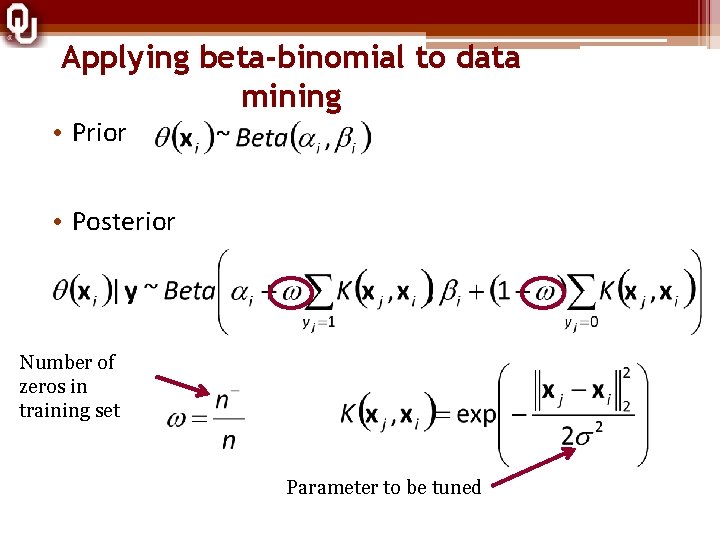
Applying beta-binomial to data mining • Prior • Posterior Number of zeros in training set Parameter to be tuned
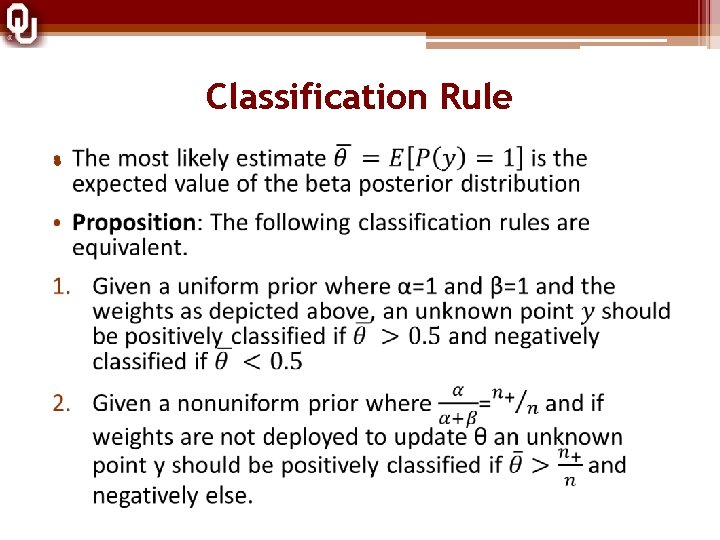
Classification Rule •
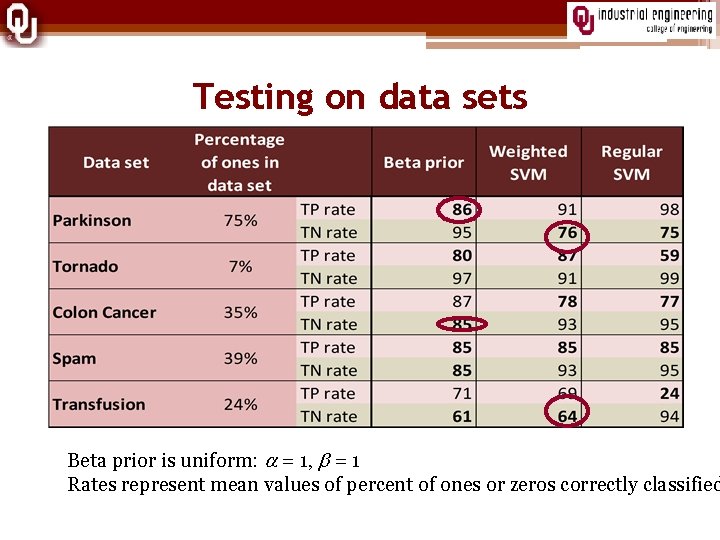
Testing on data sets Beta prior is uniform: a = 1, b = 1 Rates represent mean values of percent of ones or zeros correctly classified Mac. Kenzie and Trafalis 41
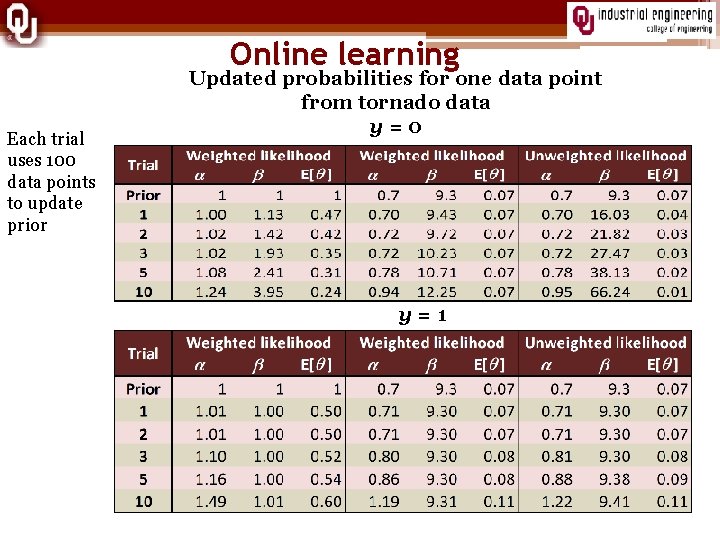
Online learning Each trial uses 100 data points to update prior Updated probabilities for one data point from tornado data y=0 y=1 Mac. Kenzie and Trafalis 42
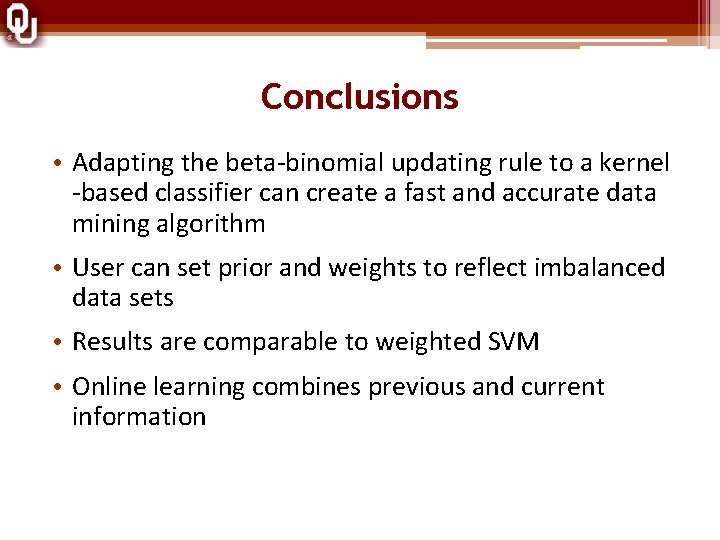
Conclusions • Adapting the beta-binomial updating rule to a kernel -based classifier can create a fast and accurate data mining algorithm • User can set prior and weights to reflect imbalanced data sets • Results are comparable to weighted SVM • Online learning combines previous and current information
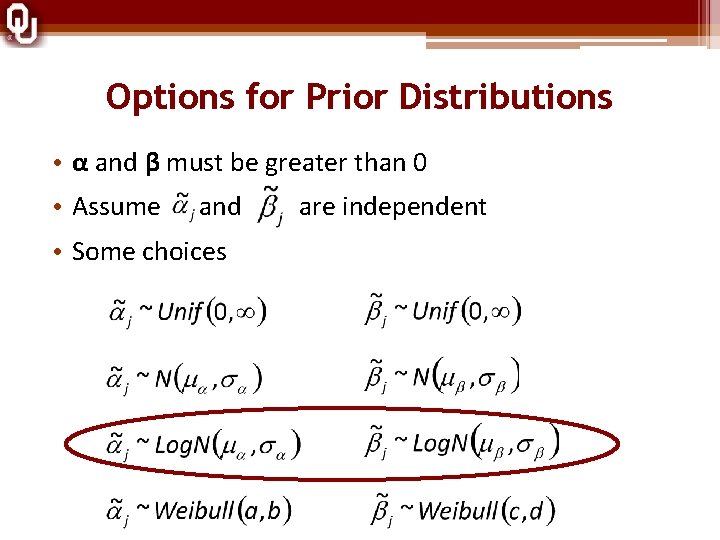
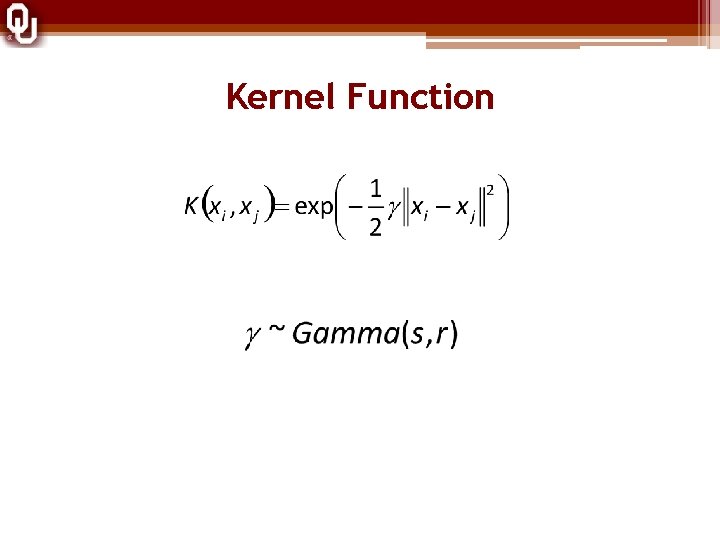
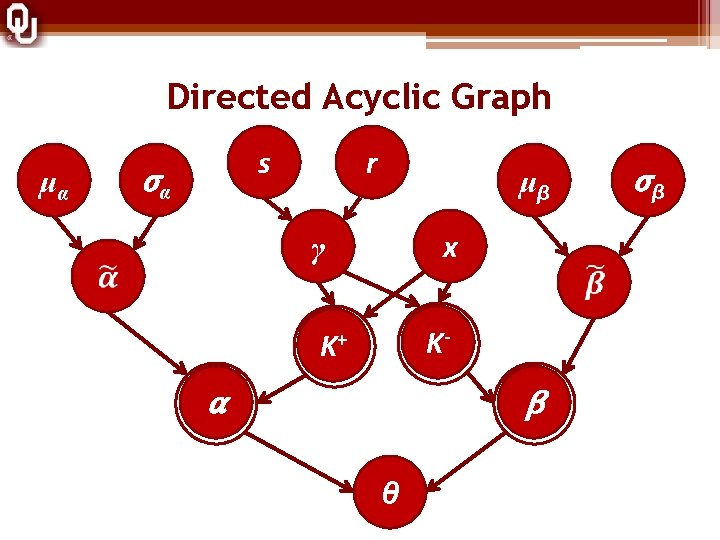
Options for Prior Distributions • α and β must be greater than 0 • Assume and • Some choices are independent
Kernel Function
Directed Acyclic Graph μα s σα r μβ x γ K- K+ α β θ σβ
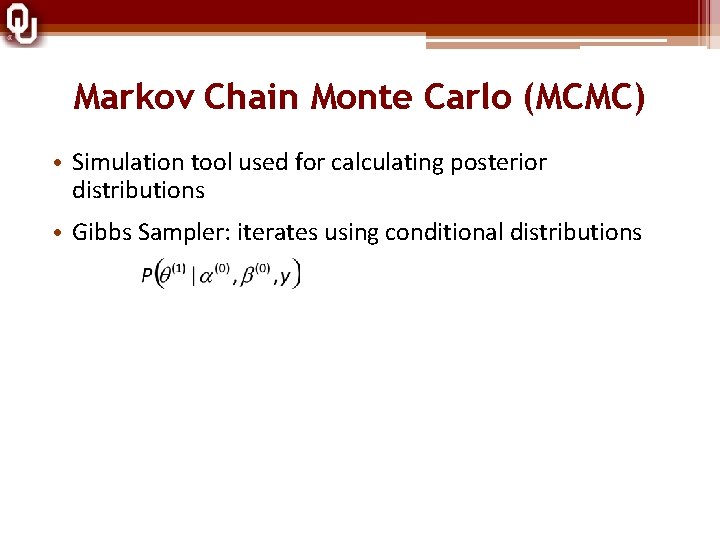
Markov Chain Monte Carlo (MCMC) • Simulation tool used for calculating posterior distributions • Gibbs Sampler: iterates using conditional distributions
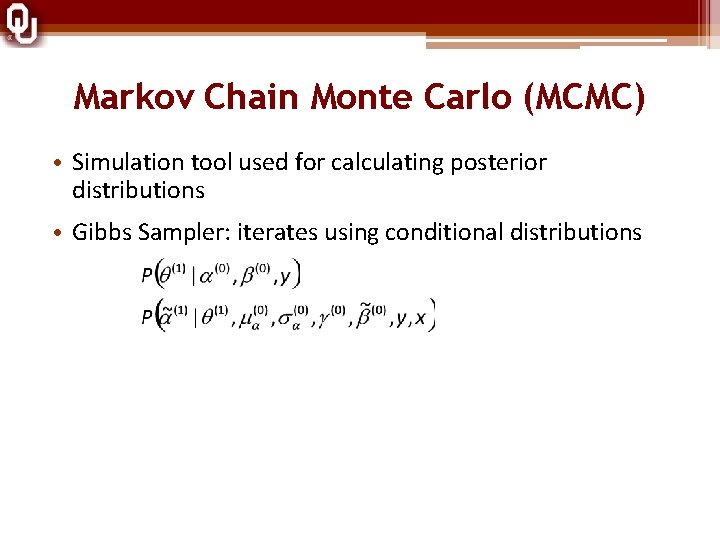
Markov Chain Monte Carlo (MCMC) • Simulation tool used for calculating posterior distributions • Gibbs Sampler: iterates using conditional distributions
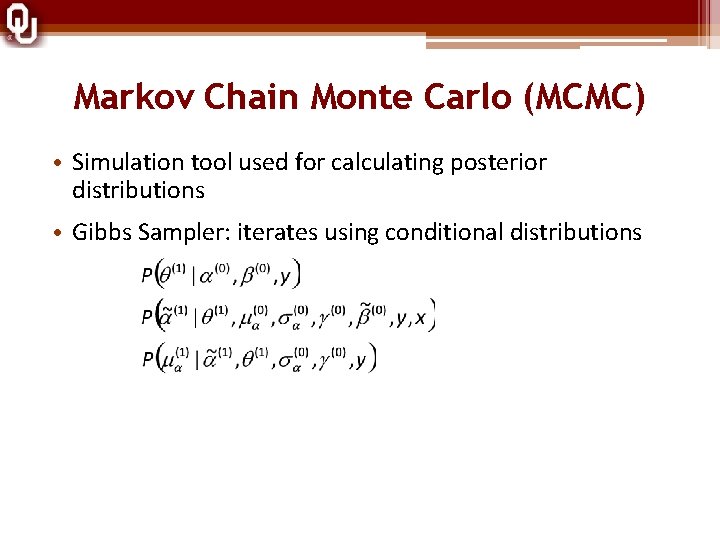
Markov Chain Monte Carlo (MCMC) • Simulation tool used for calculating posterior distributions • Gibbs Sampler: iterates using conditional distributions
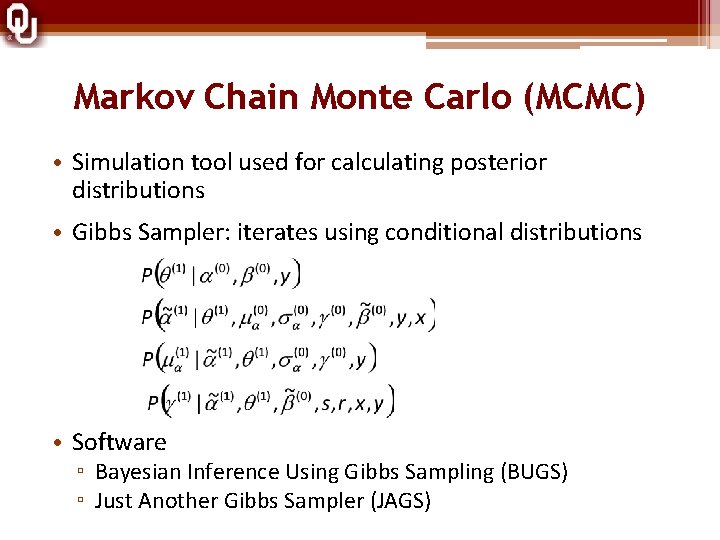
Markov Chain Monte Carlo (MCMC) • Simulation tool used for calculating posterior distributions • Gibbs Sampler: iterates using conditional distributions • Software ▫ Bayesian Inference Using Gibbs Sampling (BUGS) ▫ Just Another Gibbs Sampler (JAGS)
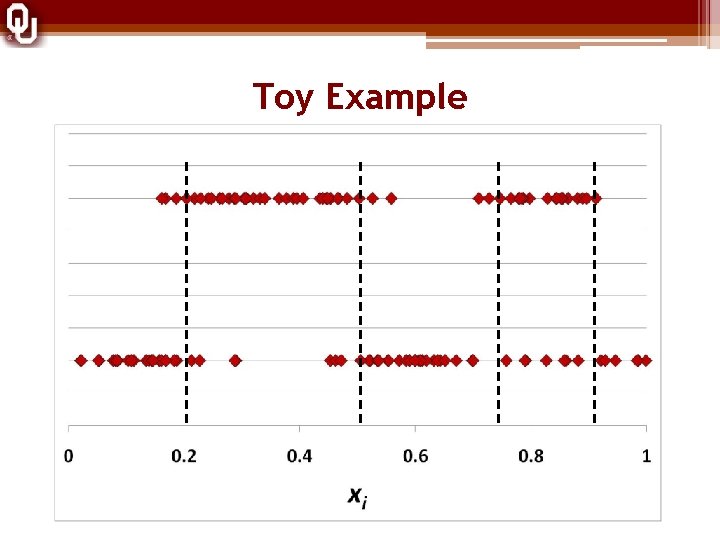
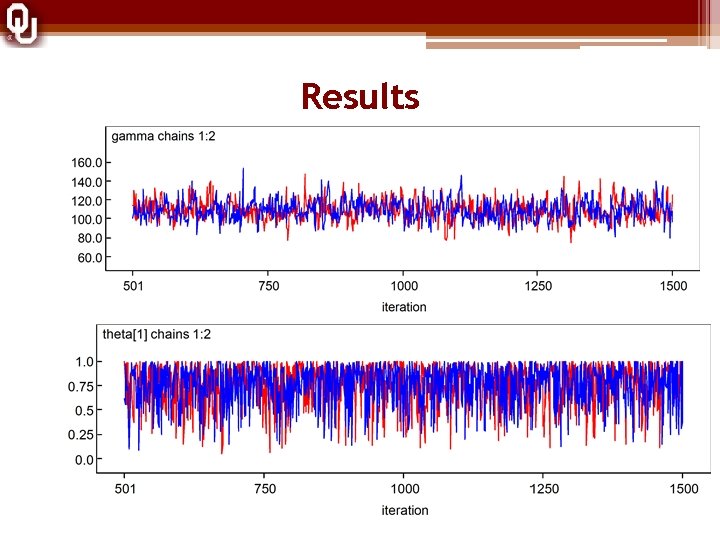
Toy Example
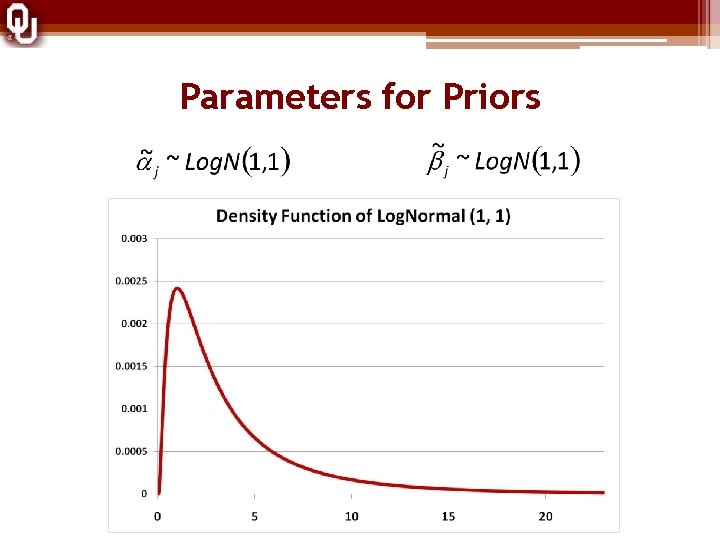
Parameters for Priors

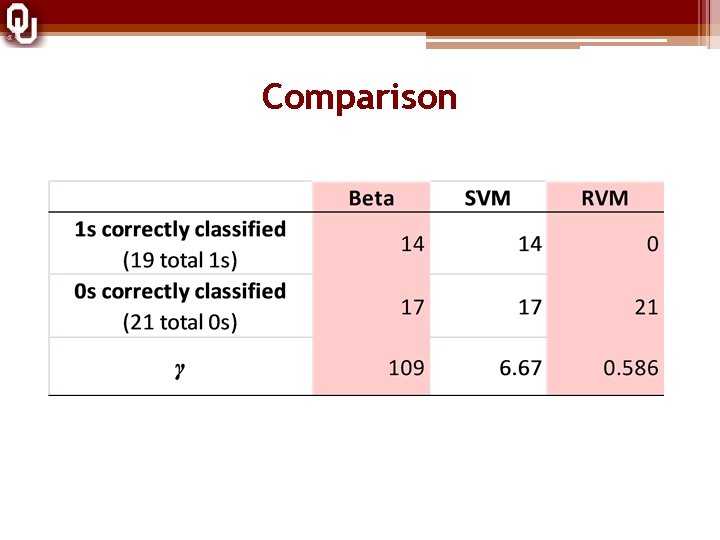
Large Gamma Needed
Results
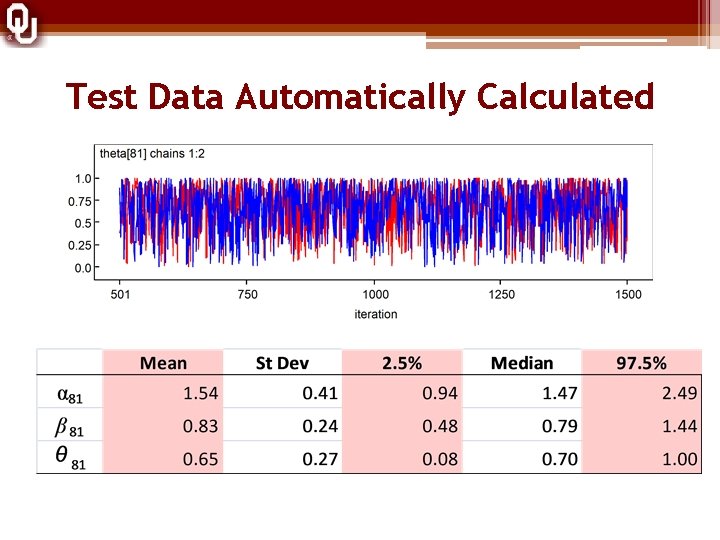
Test Data Automatically Calculated
Comparison
Conclusion • Advantages of Beta-Bayesian Method ▫ Incorporate non-Gaussian process ▫ Results of example equal to SVM ▫ Testing data automatically calculated with MCMC • Disadvantages ▫ MCMC slow algorithm ▫ Analytical solution may not be possible ▫ Difficult to determine prior distributions • Future Work ▫ Real data ▫ More comparisons with existing methods
References • Cameron A. Mac. Kenzie, Theodore B. Trafalis and Kash Barker, “A Bayesian Beta Kernel Model for Binary Classification and Online Learning Problems”, Statistical Analysis and Data Mining, Vol. (In press 2014)
- Slides: 58